Mikko Myrskylä is Director at the Max Planck Institute for Demographic Research (MPIDR) and Professor of Social Data Science at the University of Helsinki. Previously, he served as Professor of Demography at the London School of Economics. His academic training includes a PhD in Demography from the University of Pennsylvania and a PhD in Statistics from the University of Helsinki. His research focuses on population health, fertility dynamics, and demographic forecasting. Key areas include: Low fertility determinants through the ERC Synergy project BIOSFER Social inequalities in health via the Max Planck-University of Helsinki Center Labor demography and population aging He leads MPIDR's Laboratory of Population Health, Laboratory of Fertility and Well-Being, and Research Group Labor Demography. Myrskylä's recent publications show strong emphasis on: Fertility trends under economic uncertainty Health disparities across migration/life course stages Family dynamics and aging societies Methodological innovations in demographic analysis Work frequently employs large-scale register data and cross-national comparisons, particularly in Nordic contexts. He leads major collaborative initiatives including: ERC Synergy project BIOSFER (low fertility causes) MaxHel Center (social inequalities in health) with extensive interdisciplinary teams across Europe.
Michele Dolce is a Lecturer and Scientist at the École Polytechnique Fédérale de Lausanne (EPFL), affiliated with the School of Basic Sciences (SB) and the Chair of Mathematical Analysis, Calculus of Variations and PDEs (AMCV). He previously held positions as a Postdoc at EPFL and a Research Associate at Imperial College London, where he worked under Prof. Michele Coti Zelati. His academic journey includes a PhD from the Gran Sasso Science Institute. Current affiliation: EPFL, School of Basic Sciences (SB), Department of Mathematics (MATH), AMCV Past affiliation: Imperial College London His research focuses on the mathematical analysis of Partial Differential Equations (PDEs) in fluid dynamics and kinetic theory. Key areas include hydrodynamic stability, long-time behavior of viscous vortex systems, and time-decay properties of kinetic models like the Boltzmann and Wave Kinetic Equations. Recent work explores vortex merging phenomena and Taylor dispersion in rotationally symmetric flows. Scientific activities include organizing workshops such as "Long time dynamics in random and deterministic systems" (2025) and co-organizing events like the "Deterministic and random features of fluids" summer school (2023) and the "Enjoying Probability and Fluids in Lausanne" workshop (2023). His publications span journals including Communications in Mathematical Physics, Archive for Rational Mechanics and Analysis, and Journal of Mathematical Fluid Mechanics. Supported by Swiss National Science Foundation (SNF Ambizione grant PZ00P2_223294) Partially funded by GNAMPA (INdAM group)
Prof. Dr. Ralf Merz serves as Head of the Department of Catchment Hydrology at the Helmholtz Centre for Environmental Research (UFZ) and holds a Full Professorship in Catchment Hydrology at Martin-Luther University Halle-Wittenberg since 2011. His career bridges hydrological modeling, flood risk assessment, and water quality analysis across diverse climates from Central Asia to Europe. MSc in Civil Engineering (Technical University of Karlsruhe, 1997) PhD in Hydrology (Vienna University of Technology, 2002) Habilitation in Hydrology (Vienna University of Technology, 2009) Research Interests span comparative hydrology, flood generation mechanisms, climate change impacts on water resources, and nitrate dynamics in river systems. His work emphasizes process-based understanding of runoff events and regional flood modeling through innovative approaches like the PHEV distribution framework. Scientific Contributions include over 100 publications (2003-2025) on: Flood frequency analysis in changing climates Groundwater recharge in arid regions Hydrochemical response to droughts Remote sensing applications for groundwater studies Multi-response calibration of hydrological models Key projects involve MOSES observatory development, TRACER research school, and Pamir Mountains glaciological studies. Recognitions : APART research grant (Austrian Academy of Sciences, 2006) Leadership extends to directing the Catchment Hydrology department and participating in European hydrological networks like the Bode Hydrological Observatory and TERENO infrastructure. His methodological advancements include flood time-scale analysis and event runoff coefficient regionalization.
Paul Daly is Professor and University Research Chair in Administrative Law & Governance at the University of Ottawa's Faculty of Law (Common Law Section), appointed in July 2019. Fluent in English and French, he maintains an active external role as part-time member of Canada's Environmental Protection Tribunal since 2019 and has held prior positions at the University of Cambridge and Université de Montréal, with visiting appointments at Harvard Law School, Université Paris II, Louvain Global College of Law, Trinity College Dublin, and Ireland's Law Reform Commission. His academic credentials include: BCL and LLM from University College Cork LLM from University of Pennsylvania Law School PhD from University of Cambridge Professor Daly's research centers on public law with exceptional focus on administrative law, examining judicial review standards, deference principles, and the constitutional foundations of administrative decision-making. His scholarship on the Vavilov framework and Doré duty has reshaped understanding of reasonableness review and fundamental rights application in administrative contexts. He pioneers interdisciplinary approaches connecting legal theory with practical governance challenges, emphasizing procedural fairness and accountability within the administrative state. Analysis of his publication trends reveals deep engagement with Canadian administrative law evolution while maintaining strong comparative perspectives across common law jurisdictions. His work consistently bridges doctrinal analysis with practical implications for tribunals, courts, and policymakers, particularly regarding standard of review methodologies and rights protection mechanisms. Scientific recognition includes: Lexpert Rising Stars Award (2023) for outstanding contributions to public law While specific doctoral students aren't documented, Professor Daly actively mentors through judicial training seminars and continuing legal education events nationwide. His scholarly influence extends through over 150 judicial citations internationally and frequent expert testimony. Grant funding details aren't specified, but his University Research Chair position signifies substantial institutional support for his administrative governance research program. His influential blog Administrative Law Matters serves as a central hub for global administrative law discourse, featuring case commentaries and theoretical analyses that directly inform judicial reasoning as evidenced by multiple Supreme Court of Canada citations.
Professor David Thomas holds the position of Professor in Computer Engineering at the University of Southampton's Electronics and Computer Science Department. His research focuses on the intersection of software and hardware, particularly leveraging FPGAs for novel digital architectures and event-driven computing. He has a notable academic trajectory, having previously served as a Lecturer and Senior Lecturer at Imperial College London before joining Southampton in 2021. Dr. Thomas is actively involved in supervising PhD students and contributes to interdisciplinary research projects funded by the EPSRC, such as the SONNETS initiative exploring scalable event-triggered systems. Education: BSc in Computer Science (Imperial College London), PhD in Digital Architectures (Imperial College London). Postdoctoral roles included Research Associate and Research Fellow at Imperial's Department of Computing. Research Interests: Event-driven computing, FPGA-based systems, high-level synthesis, and high-performance computing. His work emphasizes practical implementations of theoretical models, such as custom processors and application-specific accelerators. Current projects include optimizing random number generation for FPGAs and exploring meta-programming techniques for hardware design. Advising and Grants: Supervises multiple PhD students in areas like neuromorphic computing and algorithm optimization. Active in securing funding for distributed system architectures and FPGA-based solutions. Labs/Teams: Member of the Cyber Physical Systems research group. Collaborates with interdisciplinary teams on projects like POETS (Partially Ordered Event-Triggered Systems) for large-scale parallel computing.
Dr. Zhigang Peng is a Professor in the School of Earth & Atmospheric Sciences at Georgia Institute of Technology, part of the College of Sciences. His research focuses on seismicity dynamics, fault zone imaging, and data science applications in geophysics. He holds a Ph.D. in Geological Sciences from the University of Southern California (2004), an M.S. in Electrical Engineering (2002), and a B.S. in Geophysics from the University of Science and Technology of China (1998). Dr. Peng’s work spans seismological studies of earthquake triggering mechanisms, fault zone structures, and deep-focus earthquakes. He has pioneered dense seismic array techniques to image fault systems and employs machine learning for event detection and phase picking. His recent projects include analyzing the 2023 Kahramanmaraş earthquake sequence in Türkiye and the 2024 Noto earthquake in Japan. He leads initiatives like the Center for Collective Impact in Earthquake Science (C-CIES), promoting inclusive scientific collaboration. Research Highlights: Fault zone imaging, dynamic triggering, AI-driven seismology Labs: ES&T 2235 (Seismology Lab), ES&T 2256 (Office) His awards include the 2002 AGU Outstanding Student Paper Award. He actively contributes to earthquake hazard assessment, nuclear explosion monitoring, and volcano-seismic interactions, with over 150 peer-reviewed publications.
Neelakantan R. Krishnaswami is a Professor of Computer Science at the University of Cambridge's Computer Laboratory , and a Fellow of Trinity College . His research focuses on the intersection of program verification, programming language design, and foundational topics like type theory and semantics. His work spans areas such as refinement types, parser design, separation logic for systems software, and the semantics of reactive programming. Notable contributions include the Datafun language for higher-order Datalog and the λert type theory for explicit refinement types. He has also developed foundational frameworks for verifying imperative programs using advanced type systems and logical relations. Key publications include 'Explicit Refinement Types' (ICFP 2023), 'flap: A Deterministic Parser with Fused Lexing' (PLDI 2023), and 'CN: Verifying Systems C Code' (POPL 2023). His work frequently addresses challenges in efficiency, correctness, and modularity for both functional and imperative systems. His awards include Distinguished Paper Awards at PLDI 2019 and POPL 2020. His research integrates theoretical rigor with practical tooling, exemplified by contributions to languages like Coq, Lean, and Haskell.
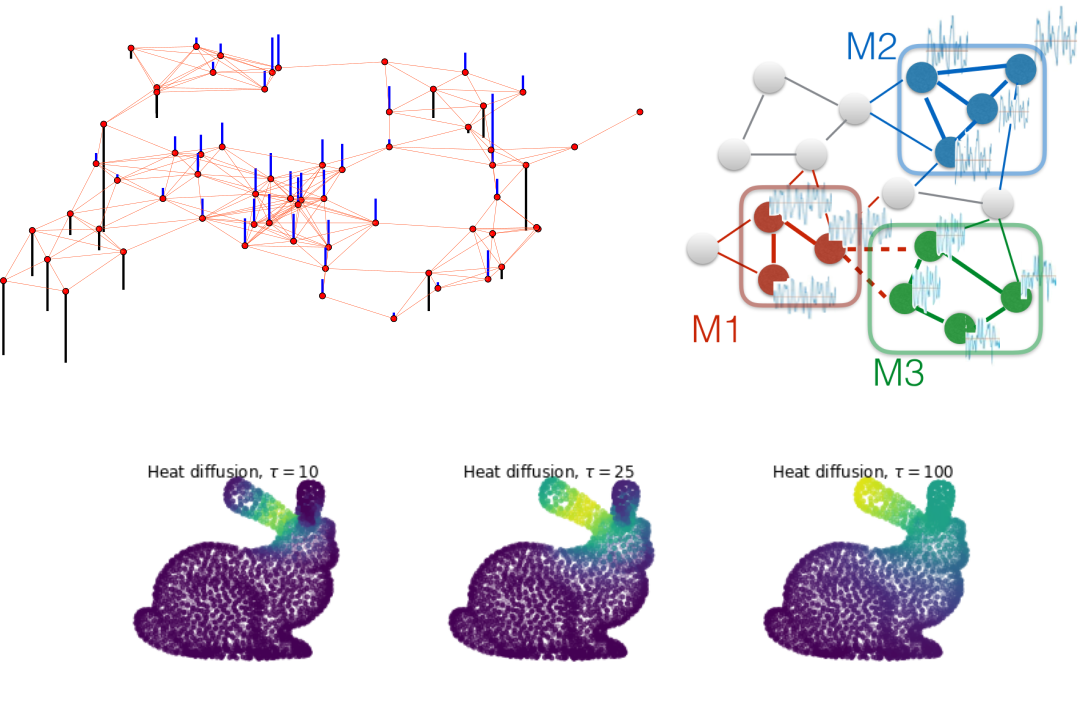
Benjamin Ricaud is an Associate Professor and Group Leader in Machine Learning at UiT The Arctic University of Norway's Department of Physics and Technology. His core affiliations include membership in the Machine Learning Group, Visual Intelligence center, and co-directorship of the Digital Technology Innovation Lab focused on Arctic-region tech startups. He also co-chairs the annual Northern Light Deep Learning conference. Ricaud's research spans: Fundamental ML : Graph signal processing, explainable AI, and generative models Applications : Microfossil classification, medical diagnostics (retinal aging), drug analysis, and climate data interpretation Emerging domains : Self-supervised learning and biological data analysis using Raman spectroscopy His recent publications (2020-2025) cluster in three domains: Graph ML methodologies (35%) Biomedical/biological applications (40%) Geoscience/climate informatics (25%) with consistent focus on interpretability and real-world data challenges. Teaching includes Image Processing (FYS-2010), Pattern Recognition (FYS-3012), and Machine Learning (FYS-2021). He leads outreach initiatives developing AI exhibits for Tromsø Science Centre.
Peter Newman, Ph.D., serves as Dean of the Rubenstein School of Environment and Natural Resources at the University of Vermont since July 1, 2024, and holds the Suzie and Allen Martin Professor title. With a career spanning decades, he has conducted extensive research on visitor management in protected areas, soundscape management, and transportation planning, partnering with the National Park Service's Natural Sounds and Night Sky Division since 2012. Education Ph.D. in Natural Resources, University of Vermont M.S. in Forest Resource Management, SUNY College of Environmental Science and Forestry B.A. in Political Science, University of Rochester His research focuses on social carrying capacity decision-making in protected area management, with fieldwork across major U.S. parks including Denali, Grand Canyon, and Great Smokies. He has developed frameworks for acoustic management and Leave No Trace efficacy, contributing to sustainable outdoor recreation practices. Scientific Awards: Cooperative Ecosystem Studies Unit National Award (2012) George Wright Society National Award for Achievement in Social Sciences (2013) Throughout his career, Newman has led high-quality teaching at Penn State's Graduate Degree Program in Acoustics and mentored numerous students through research projects on wildlife approach norms, pandemic recreation shifts, and waste management strategies in national parks. He previously served as a Park Ranger in Yosemite and Backcountry Patrol member in Idaho.
Joanna Austin is a Professor of Aerospace and serves as the Graduate Option Representative for Aeronautics and Space Engineering, as well as the Undergraduate Option Representative for Aerospace at the California Institute of Technology (Caltech). She leads the Caltech Hypersonics Group, which operates facilities like the T5 Reflected Shock Tunnel and the Hypervelocity Expansion Tube (HET). Her research focuses on reactive, compressible flows in applications such as hypervelocity flight, planetary entry, supersonic combustion, bubble dynamics, and explosive geological events. Key projects include studying shock-boundary layer interactions, Martian atmospheric entry aerothermodynamics, and high-speed fluid-structure interactions. She advises four Ph.D. students and collaborates with a team including staff members like Liza Bradulina and research assistants such as Noel Esparza-Duran. Her work bridges experimental fluid dynamics with geophysical phenomena, leveraging advanced diagnostics like Focused Laser Differential Interferometry (FLDI) and laser spectroscopy. The group’s facilities enable studies of high-enthalpy flows and hypersonic aerodynamics critical for aerospace and planetary exploration. Research highlights include investigations into CO₂ Martian entry conditions, boundary layer transition mechanisms, and fluid-structure coupling in high-speed flows. The Hypersonics Group’s experimental setups replicate extreme environments to advance predictive models for aerospace systems. Her contributions span both fundamental fluid mechanics and applied engineering challenges, with a focus on real-gas effects and shock dynamics. Collaborations with institutions like NASA and academic partners further her interdisciplinary impact.
Dr. Francisco Vitor Santos da Silva is a Senior Lecturer at University College Cork (UCC), Ireland, with a joint appointment between the School of Microbiology and the School of Engineering and Architecture. He holds a PhD from Otto von Guericke University Magdeburg (2017, Summa Cum Laude) and a first-class honours degree from Federal University of Paraná (2012). His research focuses on reducing uncertainty in bioprocess development through hybrid modelling techniques combining first-principles and statistical inference. He has contributed to novel strategies for monoclonal antibody capture and sustainable biopharmaceutical production. Key academic milestones include a FAPESP postdoctoral fellowship (2018) and leadership roles in the Bernal Bio Labs at University of Limerick. His work has been published in journals like Journal of Chromatography A and supported by grants from FAPESP and CAPES. He actively engages in science communication, including Wikipedia contributions and public outreach events. Dr. da Silva teaches bioprocess design using modern data-driven approaches and serves as a peer reviewer for multiple journals. His research spans bioprocess optimization, PAT implementation, and sustainable chemical/biotechnological processes for food and pharmaceuticals. Education: BSc (Hons) Bioprocess Engineering & Biotechnology, Federal University of Paraná (2012) PhD (Summa Cum Laude), Otto von Guericke University Magdeburg (2017) Awards: Top Student of the Year Award, Federal University of Paraná (2012) Summa Cum Laude PhD Distinction (2017) Grants: FAPESP Postdoctoral Fellowship (2018) CAPES Brazil grants His professional activities include organizing international conferences, reviewing PhD funding applications, and advising on industry collaborations. He leads UCC's efforts in integrating cutting-edge simulation tools into bioprocess education and research.
Hamidreza Karami is an Associate Professor in the School of Petroleum and Geological Engineering at the University of Oklahoma. His research focuses on multiphase flow, production engineering, artificial lift, and flow assurance, with applications in unconventional wells, geothermal systems, and hydrogen transportation. BSc, Petroleum Engineering, Sharif University of Technology (2009) MSc, Petroleum Engineering, The University of Tulsa (2011) PhD, Petroleum Engineering, The University of Tulsa (2015) Karami's work combines experimental and computational fluid dynamics (CFD) with machine learning to address challenges in gas lift, downhole separators, well cleanout, and leak detection. Recent publications emphasize data-driven modeling of multiphase flow systems and optimization of artificial lift methods. His lab at the University of Oklahoma investigates advanced technologies for flow assurance, including paraffin and asphaltene deposition, foam lifting, and surfactant applications. Collaborative projects involve Tulsa University Fluid Flow Projects (TUFFP) and industry stakeholders.
Rebecca Ingber serves as Professor of Law at Cardozo School of Law, Yeshiva University, and holds dual leadership roles as Co-Director of the Floersheimer Center for Constitutional Democracy and Senior Fellow at NYU School of Law's Reiss Center on Law and Security. Her institutional affiliations extend to high-level governmental roles including U.S. Substitute Member to the Council of Europe's Venice Commission, Advisory Committee member to the U.S. Department of State's Office of the Legal Adviser, and U.S. representative to the OSCE Moscow Mechanism roster of experts. Her academic foundation includes a BA from Yale University and JD from Harvard Law School, complemented by a clerkship with Judge Robert P. Patterson, Jr. of the Southern District of New York. These credentials underpin her expertise in constitutional and international legal frameworks. Professor Ingber's research centers on the critical intersection of international law, national security, and constitutional separation of powers, with particular focus on executive war powers, bureaucratic resistance mechanisms, and the erosion of international legal norms. Her work consistently examines how domestic institutions interact with international legal constraints, especially regarding military actions, treaty compliance, and accountability mechanisms. Recent scholarship demonstrates increasing urgency in analyzing challenges to the rules-based international order. Analysis of her 2020-2025 publications reveals dominant themes in war powers legitimacy, state responses to international criminal jurisdiction, and the systemic weakening of legal constraints on executive action. Her scholarship uniquely bridges theoretical legal analysis with immediate real-world applications, frequently addressing contemporaneous events like the Soleimani strike, ICC arrest warrants, and torture prohibitions through rigorous doctrinal examination. Her scientific recognition includes: Dean’s Award for Scholarship from BU Law Mike Lewis Prize for National Security Law Scholarship (2017) for 'Co-Belligerency' Professor Ingber maintains significant policy influence through congressional testimony on war powers and executive authority, while her scholarly impact extends through editorial leadership at Just Security and contributions to Lawfare . Her advisory roles in The American Law Institute and the ALI’s Foreign Relations Law Restatement demonstrate sustained contribution to legal doctrine development, though specific grant funding details remain undisclosed in source materials. She actively shapes discourse through the Floersheimer Center for Constitutional Democracy, which examines democratic governance challenges, and the Reiss Center on Law and Security, where she contributes to interdisciplinary national security research initiatives addressing evolving threats to legal frameworks.
Pekka Martikainen is a leading researcher in population health and demography, affiliated with the Population Research Unit at the Faculty of Social Sciences, University of Helsinki . He is also actively involved with the MaxHel Center and the Laboratory of Population Health , contributing to major research initiatives such as the Monitoring Mortality Inequalities Consortium and studies on immigrant-native health disparities. His research focuses on social and economic determinants of health and mortality over the life course, using extensive Finnish register data. Key interests include fertility and family dynamics , health inequalities , migration and health , early-life determinants of health, and behavioral factors influencing mortality. His work often explores intergenerational linkages and the role of socioeconomic status in shaping health outcomes. The most recent publications reflect a strong emphasis on mental health , genetic and social interactions , educational and occupational influences on health , and disparities in cancer and reproductive health . Studies frequently employ longitudinal, register-based designs across Nordic and European populations, highlighting cross-national comparative insights. Behavioral Determinants of Health and Mortality Costs and Gains of Postponing Parenthood Immigrant-Native Health Disparities Over the Life Course Linked Lives: Family and Socioeconomic Attainment Medically Assisted Reproduction Mortality Disparities at Subnational Level His research has been published in top journals including The Lancet , Demography , Social Science and Medicine , and European Journal of Epidemiology . He collaborates extensively with researchers at the Max Planck Institute for Demographic Research and leads or contributes to multiple large-scale projects analyzing health and demographic trends in Finland and beyond. Martikainen’s work informs public health policy and contributes to understanding how social structures and individual behaviors interact to shape population health and longevity. He plays a central role in advancing register-based demographic research in Europe.
Professor Tim Rogers is affiliated with the University of Bath as a faculty member in the Department of Mathematical Sciences . He is actively involved in research spanning complex systems, network theory, and stochastic processes. PhD in Random Matrix Theory from King's College London (2010) His research focuses on emergent behavior in random systems , including: Collective Behavior : Crowd dynamics, lane formation, and noise-enhanced synchronization Epidemics & Networks : Spread prediction, node risk assessment, and misinformation impacts Ecology & Evolution : Trait emergence, species boundaries, and demographic noise effects Random Matrix Theory : Spectral analysis and applications to complex systems Publication trends reflect interdisciplinary work bridging Physics, Biology, and Mathematics , with a focus on network structures , stochastic modeling , and emergence phenomena . Scientific awards include: 2015 : Editor's Choice for Europhys. Lett. 109, 28005 2016 : Highlight of Journal of Physics A 2017 : Editor's Suggestion for Phys. Rev. E 92, 032708 He has supervised numerous PhD students and postdocs on projects related to stochastic dynamics , network modeling , and mathematical biology , with ongoing grants from agencies like EPSRC and The Leverhulme Trust .