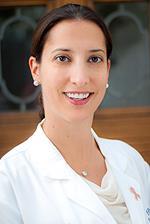
Dr. Annie Yessaian is a Clinical Assistant Professor in Obstetrics & Gynecology at the Keck School of Medicine, University of Southern California, specializing in Gynecologic Oncology. She directs the Gynecology/Oncology Outreach Program at USC. Dr. Yessaian graduated with high honors from the University of Baghdad Medical School, completed surgical residencies at Maimonides Medical Center, and pursued fellowship training in molecular oncology at Memorial Sloan Kettering Cancer Center. Her research focuses on gynecologic malignancies including ovarian cancer angiogenesis, cervical cancer therapeutics, endometrial cancer surgical outcomes, and thrombosis in cancer patients. She explores minimally invasive surgical techniques and novel treatment approaches. Her publications demonstrate a strong focus on surgical outcomes in gynecologic cancers, with recent work on perioperative complications and novel therapeutic trials. Research trends include optimizing surgical techniques and targeted therapies for gynecologic malignancies. Best Chief Resident of the Year (Maimonides Medical Center) Society of Gynecologic Oncologist Award for Best Paper (2002) Dr. Yessaian leads the Gynecology/Oncology Outreach Program and participates in clinical trials investigating new chemotherapy and immunotherapy protocols for gynecologic cancers.
Dr. Janine Simons is a Researcher in the Department of Radiotherapy at Erasmus University Medical Center, specializing in breast cancer treatment and surgical oncology. Her work focuses on optimizing treatment protocols through clinical trials and patient-centered outcomes research. Her primary research interests include: Breast Cancer Sentinel Lymph Node Biopsy techniques Neoadjuvant chemotherapy approaches Radiation therapy protocols Patient-reported quality of life outcomes Implementation of cancer treatments in resource-limited settings Dr. Simons' recent publications (2025) demonstrate a strong focus on breast cancer management, particularly examining lymph node procedures, treatment omission strategies, and implementation science. Her work spans clinical trials, systematic reviews, and international collaborative research assessing radiotherapy readiness in sub-Saharan Africa. The research shows consistent emphasis on patient-centered outcomes, surgical decision-making, and evidence-based protocol development in breast cancer care. Dr. Simons actively collaborates with numerous institutions across Europe and Africa, contributing to multi-center clinical trials and international research initiatives focused on optimizing breast cancer treatment pathways.
Aziz Bulut is an Assistant Professor at Gaziantep University Faculty of Medicine, Department of Surgical Medical Sciences and General Surgery. He specializes in organ transplantation, general surgery, and psychosocial aspects of critical care. His work bridges clinical practice with research on pandemic impacts, surgical innovations, and post-transplant outcomes. Education includes a Medical Specialization in General Surgery from Health Sciences University (2011), an Associate Degree in Law from Anadolu University (2019), and a Licence in Medicine from Fırat University (2005). Research Interests : General Surgery, Organ Transplantation, Surgical Oncology, Minimally Invasive Surgery, Colorectal Pathology, Medical Education Key Article Trends (15 most recent) focus on burnout in healthcare workers during pandemics, innovative surgical techniques for biliary fistulas, psychosocial adjustment in cancer patients, and transplantation outcomes. His work appears in DOAJ , SCI-Expanded , and TR DİZİN indexed journals. Theses Supervised examine postoperative thyroid markers, renal graft function, and sentinel lymph node sampling in breast cancer. He has presented 28 conference papers, notably at Turkey’s Organ Transplantation Congresses (2024) and the 22nd National Surgery Congress (2022).
Dr. Vinay Aakalu serves as Professor in the Department of Ophthalmology and Visual Sciences at the University of Michigan, where he holds dual leadership roles as Section Leader and Medical Director for Eye Plastic, Orbital and Facial Cosmetic Surgery and Director of the Ocular Surface Disease Research Program. He additionally serves as Associate Preceptor for the ASOPRS Approved Oculofacial Plastic Surgery Fellowship, training future specialists in oculofacial reconstruction. His academic training includes: Medical Degree from Mount Sinai School of Medicine (2006) Ophthalmology Residency at University of Illinois at Chicago (2010) Oculoplastics and Reconstructive Surgery Fellowship at University of Illinois at Chicago (2012) Dr. Aakalu's research program integrates basic science and clinical innovation across three interconnected domains: ocular surface biology with emphasis on histatin peptide therapeutics for corneal wound healing; advanced oculoplastic techniques including 3D-printed orbital implants and virtual reality surgical training; and translational studies on tear film biomarkers for systemic disease detection. His laboratory has pioneered discoveries regarding histatin-5's anti-inflammatory mechanisms in alkali injury models and its potential for treating dry eye disease. Analysis of his 2023-2025 publications reveals dominant research trajectories in corneal wound healing therapeutics (particularly histatin peptide applications), evidence-based oculoplastic guidelines for the American Academy of Ophthalmology, and surgical innovation through 3D printing and virtual reality. His work consistently bridges molecular mechanisms with clinical applications, with recent studies addressing soft tissue filler complications, eyelid motion biomechanics, and novel reconstruction techniques for periocular malignancies. No scientific awards were documented in the provided source material. As Associate Preceptor for the ASOPRS fellowship, Dr. Aakalu mentors oculofacial surgery trainees in complex reconstruction techniques. While specific grant details weren't provided, his active research program in ocular surface disease and surgical innovation indicates substantial ongoing funding supporting laboratory investigations and clinical trials. He directs the Ocular Surface Disease Research Program, which employs multidisciplinary approaches combining cell biology, peptide therapeutics, and advanced imaging to develop novel treatments for corneal disorders. The program maintains strong clinical integration through collaborations with cornea specialists and oculoplastic surgeons at the Kellogg Eye Center.
Elissa Price, MD, is a Professor of Radiology in the Breast Imaging section at the University of California, San Francisco (UCSF). She has been part of the Breast Imaging Division since July 2011 and actively contributes to 9 departmental committees. Dr. Price holds academic roles including Associate Director of the Breast Imaging Fellowship Program. Her expertise focuses on breast imaging, breast cancer, and molecular profiling, with a strong commitment to medical education and training of breast imaging fellows. Education: Medical School: University of Toronto Medical School (2004) Residency: Radiology, University of Toronto Medical School (2009) Fellowship: Breast and Body Imaging, Memorial Sloan-Kettering Cancer Center (2010) Research Interests: Dr. Price leads studies on BIRADS 3 category evaluations in breast MRI, MRI-ultrasound correlation, and screening mammography in 40-49-year-olds. Her work integrates genetic profiling of breast cancer, as highlighted by her 2012 RSNA presentation. Her research spans over 6 peer-reviewed articles, 2 book chapters, and 8 abstracts, focusing on diagnostic imaging advancements and oncology applications. Awards: Inducted into the Society of Breast Imaging (2016) Minagi Chair Award (2012) Cody Gold Medal (2004) Dr. Herbert Alexander Bruce Medal (2004) Advancing Care: Dr. Price collaborates on initiatives like the I-SPY 2 TRIAL, exploring MRI-driven treatment personalization. Her work bridges clinical practice and innovation, emphasizing early detection and precision medicine. She also advocates for breast density legislation awareness and patient navigation in imaging facilities. Labs/Teams: Active in UCSF’s Breast Imaging Division and the I-SPY 2 Imaging Working Group, contributing to multi-institutional studies on breast cancer treatment response.
John Cramer, M.D., serves as Associate Professor and Residency Program Director in the Department of Otolaryngology – Head and Neck Surgery at Wayne State University School of Medicine. He specializes in head and neck surgical oncology, with expertise in thyroid/parathyroid surgery, transoral robotic surgery (TORS), and sentinel lymph node biopsy. B.Sc. in Cell and Molecular Biology (University of Michigan) M.D. (Case Western Reserve University School of Medicine) Otolaryngology Residency (Northwestern University) Head and Neck Oncologic Surgery Fellowship (University of Pittsburgh) His research explores the intersection of otolaryngology and health policy, focusing on Medicaid expansion impacts on cancer diagnosis and air pollution associations with head/neck malignancies. He has over 68 peer-reviewed publications in journals like Nature Reviews Clinical Oncology , JAMA , and The New England Journal of Medicine , with podium presentations at major conferences including the American Society of Clinical Oncology. Scientific awards include recognition from the Triological Society American Head and Neck Society . He co-invented the Intranasal Occlusion Device , enabling office-based nasal procedures, and holds multiple leadership roles including Director of Medical Student Program and Chair of the Resident Review Committee.
Dr. Jeffrey S. Wolf serves as Professor of Otorhinolaryngology-Head & Neck Surgery at the University of Maryland School of Medicine, where he holds dual administrative leadership as Medical Director of Frenkil Clinic and Associate Chief Clinical Officer at UMMC. His clinical practice focuses on head and neck oncology and complex airway management, supported by extensive research in tumor immunology and medical device innovation. Dr. Wolf's educational foundation includes: B.S. in Biology with Vertebrate Physiology Option, Pennsylvania State University (1992) M.D., University of Pennsylvania School of Medicine (1996) Residency in Otorhinolaryngology-Head & Neck Surgery, University of Maryland Medical System (1997-2001) His research program spans three interconnected domains: Head and Neck Oncology : Investigating tumor microenvironment interactions and immunotherapeutic approaches for squamous cell carcinoma Sleep Apnea Diagnostics : Developing ultrasound-based detection systems and automated CPAP titration methods Medical Device Engineering : Creating emergency airway solutions including apneic oxygenation and tracheostomy devices Analysis of his 15 most recent publications (2022-2025) reveals a pronounced shift toward proton therapy outcomes for recurrent head/neck cancer and continued innovation in airway management devices. Approximately 60% of recent work focuses on genomic analysis of treatment response, while 30% involves novel medical device development, demonstrating his dual commitment to translational oncology and biomedical engineering. Dr. Wolf has received exceptional clinical recognition: Baltimore Magazine Top Doc (Otolaryngology: 2010,2012,2014,2016; Head/Neck Oncology: 2010,2012,2014,2017) Castle-Connolly Top Doc (2011-2018) University of Maryland Teaching Award (2012,2016) While student advising details are unavailable in source materials, his leadership extends to founding Maryland ENT Abroad (www.Mentabroad.org), an international surgical outreach organization. Dr. Wolf maintains active research teams through the University of Maryland Program in Oncology and serves as Co-Director of General Otolaryngology, directing clinical protocols and multidisciplinary tumor board operations.
Kerstin Lüdtke-Buzug is a Senior Research Scientist at the Institute of Medical Engineering, University of Lübeck, where she has been a member of the scientific team since 2007. She also serves as Radiation Protection Officer at IMT, Vice Equal Opportunity Manager at the University of Lübeck, and is a Member of the Equal Opportunity Council. Her academic background includes a Diplom-Chemikerin degree from Christian-Albrechts-University of Kiel (1990) and a Ph.D. from the Medical University of Lübeck (1994). Dr. Lüdtke-Buzug's research focuses on Magnetic Particle Imaging (MPI), nanoparticle synthesis, and tracer development for medical applications. Her work spans biochemical engineering, magnetic resonance imaging, nuclear imaging, and X-ray based imaging. She has made significant contributions to the development of superparamagnetic iron oxide nanoparticles (SPIONs) for sentinel lymph node biopsy in breast cancer and other medical applications. Her publication record shows consistent research output with 15+ publications annually in high-impact journals. The research trends demonstrate a strong focus on MPI technology development, medical instrumentation, and clinical applications particularly in interventional radiology, cardiovascular medicine, and oncology. Her work often involves collaboration with clinical departments for translational research. As Radiation Protection Officer, she oversees safety protocols related to radiation and magnetic fields in research settings. Her role as Vice Equal Opportunity Manager reflects her commitment to diversity and inclusion in academic environments. Dr. Lüdtke-Buzug has supervised student projects and contributed to teaching in the Medical Engineering Science program. She also consults for Nandatec, a nano-biotechnology start-up, since 2013, bridging academic research with commercial applications.
Edward W. Nelson is a Professor in the Department of Surgery at the University of Utah School of Medicine, specializing in breast cancer treatment, surgical oncology, and transplantation. He practices at the Huntsman Cancer Institute and Hospital and focuses on sentinel lymph node biopsy, splenectomy, and parathyroidectomy. Primary Department: Surgery Division: Surgical Oncology Board Certification: National Board of Medical Examiners Dr. Nelson pioneered the Comprehensive Breast Care Center at Huntsman Cancer Institute and served as principal investigator in national trials like NSABP B-32 and ACOSOG Z0010/Z0011. His expertise spans kidney transplantation, hernia repair, and surgical education. His publications emphasize breast cancer outcomes, surgical techniques, and transplantation. He has authored books including Blueprints in Surgery and contributed chapters on hernia repair.
Shahab F. Abdessalam is a Professor in the Department of Surgery at Creighton University School of Medicine. His work focuses on pediatric surgical conditions, particularly minimally invasive techniques and complex congenital anomalies. Research Interests span Pediatric Surgery , Surgical Oncology , and Urachal Anomalies , with an emphasis on improving outcomes for conditions like gastroschisis, tracheoesophageal fistulas, and appendiceal pathologies. Over the past two decades, his publications highlight advancements in Minimally Invasive Procedures Surgical Complication Management Neonatal and Adolescent Surgical Care
Kristina Åhsberg is affiliated with Lund University through the Lund University Cancer Centre (LUCC), serving as a Breast Cancer Surgery Researcher and Research Project Participant. She leads the active PROCEM study, investigating the clinical utility of contrast-enhanced mammography in breast cancer staging (funded by Bröstcancerfonden and BRO). Her research focuses on surgical outcomes, breast reconstruction, and diagnostic imaging techniques in oncology. Roles: Breast Cancer Surgery Researcher, Research Project Participant Affiliation: Lund University Cancer Centre (LUCC) Active Project: PROCEM (2017–present) Her research explores topics such as mastectomy outcomes, breast reconstruction efficacy, and lymph node management in breast cancer patients. Recent studies emphasize long-term patient-reported outcomes and the impact of surgical interventions on quality of life. Collaborations span multidisciplinary teams within oncology and radiology. Key contributions include protocol development for imaging techniques (e.g., contrast-enhanced mammography) and analysis of adjuvant chemotherapy efficacy in specific breast cancer subtypes.
Prof. Ate van der Zee is a Professor at the University of Groningen, specializing in Gynecologic Oncology. His research focuses on ovarian, vulvar, and cervical cancers, particularly exploring epigenetic mechanisms and clinical applications in cancer therapy. He has contributed to major guidelines such as the European Society of Gynaecological Oncology's vulvar cancer management protocols (2023) and pioneered studies on sentinel node procedures in vulvar cancer. His work includes establishing patient-derived xenograft models for ovarian cancer and investigating the role of decitabine in epigenetic therapy. He has supervised 43 students and authored over 321 publications. Notable collaborations include the GROINSS-V clinical trials for vulvar cancer treatment. Media engagements include expert commentary on healthcare policy and pediatric heart surgery controversies. His research integrates molecular biology with clinical oncology, emphasizing translational studies to improve cancer diagnostics and treatment strategies.
John Thompson is a Professor of Melanoma and Surgical Oncology at the University of Sydney since 1999, affiliated with the Central Clinical School. He previously served as Executive Director of Melanoma Institute Australia (1998–2016) and held leadership roles such as Chairman of the Australian and New Zealand Melanoma Trials Group (2002–2013) and Chairman of the Australian Melanoma Management Guidelines Working Party (since 2013). His research focuses on pioneering surgical techniques like isolated limb infusion (ILI) for melanoma and soft-tissue sarcoma, and advancing sentinel node biopsy (SNB) methodologies to reduce unnecessary lymph node dissections. He also contributed to international cancer staging systems, including the AJCC 6th, 7th, and 8th editions for cutaneous melanoma, leveraging data from Melanoma Institute Australia. Thompson developed an online melanoma prognosis prediction tool as part of the AJCC Melanoma Staging Taskforce. Thompson has authored 785 peer-reviewed articles and book chapters, edited 11 books, and held editorial roles in journals like Journal of Clinical Oncology and Annals of Surgical Oncology . His awards include the Officer of the Order of Australia (AO) for contributions to oncology research and medical education, and Honorary Fellowships from the American College of Surgeons, American Surgical Association, and Australian Academy of Health and Medical Sciences. Key Achievements: Developed ILI and SNB techniques; co-created the AJCC staging system updates and melanoma guidelines. Global Impact: His work is widely adopted in Australia, North America, Europe, and South America, influencing melanoma treatment standards. Education & Mentorship: Supervised 6 PhD students (including Marc Moncrieff, Hidde Kroon, Richard Martin) and mentored researchers who now lead in melanoma management internationally. Advising & Grants: Thompson’s advisory roles include: Chairman of NHMRC-endorsed melanoma management guidelines (2008–ongoing) Member of UICC TNM Expert Panel (Skin) Taskforce member of Cochrane Skin Group on excision margins for melanoma His research has secured grants for large-scale trials, such as the Multicenter Selective Lymphadenectomy Trial (MSLT-II), and collaborations on cost-effectiveness of imaging strategies for stage III melanoma. He advocates for balanced approaches to sentinel node biopsy and adjuvant therapy in modern practice. Lab/Teams: Collaborates with the Melanoma Institute Australia, AJCC Melanoma Staging Committee, and international groups like the EORTC Melanoma Taskforce and Cochrane Skin Group to advance melanoma research and clinical standards.
Amy Hakim, M.D., M.S. serves as an Assistant Clinical Professor in the Division of Gynecologic Oncology within the Department of Surgery at City of Hope. She is a board-certified gynecologic oncologist specializing in the surgical treatment of gynecological cancers with expertise in ovarian, cervical, and uterine cancers, as well as HIPEC (Hyperthermic Intraperitoneal Chemotherapy) procedures. Dr. Hakim's educational background includes: Medical Doctor from University of Minnesota Medical School (2001) Master of Science in Epidemiology from University of Virginia (1997) Master of Arts in Economics from University of Virginia (1993) Bachelor of Arts in Economics from Carleton College (1987) Dr. Hakim's research primarily focuses on gynecologic oncology with particular emphasis on the relationship between human papillomavirus (HPV) and gynecological cancers. Her work spans multiple areas including surgical techniques for vulvar cancer, intraperitoneal chemotherapy protocols, and the impact of HPV vaccination on cancer prevention worldwide. Through her extensive publication record, she has contributed significantly to understanding ovarian cancer genomics, cytoreductive surgery, and molecular pathways in hormone-related cancers. Her recent research trends show a progression from foundational work in HPV vaccine efficacy (2006-2009) to more complex genomic analyses of ovarian cancer (2013-2023), reflecting the evolution of precision medicine in gynecologic oncology. Her publications demonstrate consistent focus on improving surgical outcomes, understanding molecular mechanisms of gynecological cancers, and implementing preventive strategies through vaccination. Professional recognition includes: Member of the Society of Gynecologic Oncologists (2016) American College of Obstetrics & Gynecology (ACOG) membership (2015) American Medical Association (AMA) membership (2013) Dr. Hakim maintains active clinical practice across multiple locations including Mission Hills, Simi Valley, and Thousand Oaks, California. Her patient-centered approach is reflected in consistently high patient satisfaction ratings, with particular strengths in communication, respect, and thorough explanations of treatment options. She has been instrumental in developing clinical protocols for gynecologic cancer treatment and has contributed to national guidelines through her work with professional organizations. Her clinical teams specialize in comprehensive care for ovarian cancer, cervical cancer, uterine and endometrial cancers, and advanced surgical techniques including HIPEC procedures. Dr. Hakim's work bridges clinical practice with research, ensuring that the latest scientific findings are translated into improved patient outcomes.
Dr. James Clune is an Associate Professor of Surgery at Yale School of Medicine and a member of the Yale Cancer Center. He specializes in plastic and reconstructive surgery for complex malignancies, focusing on melanoma, Merkel cell carcinoma, and sarcoma. His multidisciplinary collaborations include surgical oncology, orthopedic oncology, neurosurgery, and dermatology. Bachelor’s degree from Wesleyan University (1999) MD from George Washington University School of Medicine (2008) Postdoctoral research in craniofacial reconstruction at Children's Hospital Boston/Harvard (2009) Plastic surgery residency at Yale (2015) Fellowship in upper extremity surgery at University of California/Shriners Hospital (2016) Additional training in brachial plexus reconstruction in Spain (2016) His research integrates oncoplastic reconstruction and targeted muscle reinnervation to improve prosthetic functionality and quality of life for cancer patients. Recent work explores immunotherapy resistance in melanoma, global surgery education , and anatomical variations in extremity tumors. Key trends in his 15 most recent publications (2025–2020) span melanoma immunology , reconstructive surgical outcomes , global surgery training , and peripheral nerve anatomy . These studies appear in journals like Surgical Oncology Insight , Journal of Surgical Education , and Pigment Cell & Melanoma Research . Notable scientific awards include: Top Doctors for Reconstructive Oncology (Connecticut Magazine, 3 years) Yale Cancer Center Clinician of the Year (2024) Teaching Award in Plastic Surgery (2017–2018) He leads the Multidisciplinary Care for Melanoma at Yale and has performed over 800 annual procedures. His clinical focus includes skin cancer, soft tissue tumors, and peripheral nerve reconstruction, with expertise in toe-to-finger transfers and brachial plexus surgery.