Armin Falk is a Professor of Economics at the University of Bonn, leading the BonnEconLab since 2004 and co-founding the briq Institute on Behavior & Inequality. He holds affiliations with the IZA, DIW, CEPR, and Max-Planck-Institut. His research focuses on behavioral economics, exploring how social preferences like fairness and trust influence decision-making, and investigates early childhood development's role in inequality. Falk has received prestigious awards, including the Leibniz Prize and Yrjö Jahnsson Award. His work combines lab experiments, field studies, and representative data analysis. Education includes a PhD in Economics from the University of Zurich after studies in Economics, Philosophy, and History at the University of Cologne. Key research highlights include global climate action support studies (Nature Climate Change, 2024), socioeconomic disparities in child development (JPE, 2021), and global economic preferences surveys (QJE, 2018). He co-authored the book *Warum es so schwer ist, ein guter Mensch zu sein* to popularize behavioral economics. Awards include recognition for contributions to behavioral and development economics. Mentoring programs like *Balu und Du* aim to reduce educational inequality. His work bridges academic research with public discourse through media contributions and policy engagement.
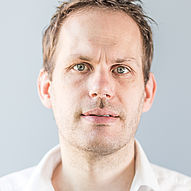
Prof. Mark Heitmann is a Professor of Marketing & Customer Insight at the University of Hamburg Business School. He holds a visiting appointment at Nova School of Business and Economics. His research focuses on AI-driven marketing strategies, social media analytics, brand equity, and consumer decision-making. He has held academic roles at institutions including the University of St. Gallen and Christian-Albrechts-University in Kiel before joining Hamburg in 2011. Academic Career: Holds a PhD (2004) and post-doctoral Habilitation (2007) from the University of St. Gallen. Visiting researcher at Columbia University and the Max Planck Institute for Human Development. Research Interests: Applications of artificial intelligence in marketing Social media and digital transformation Ethical consumer behavior Brand self-expression and visual design Marketing technology (MarTech) innovations Key Achievements: Over 20 peer-reviewed publications in top journals like Journal of Marketing Research and Harvard Business Review . Award-winning research includes the MSI/H. Paul Root Award and IJRM-EMAC Best Article Award. Active in translating research into scalable commercial solutions through software-as-a-service ventures. Team & Collaborations: Leads a research team including M.Sc. candidates Sammar Rath, Julia Rosada, Maximilian Witte, Tijmen Jansen, Claus Hegmann-Napp, and Magdalena Heynicke. Engages in interdisciplinary projects with industry partners.
Prof. Dr. Christian Homburg holds the Chair of Business-to-Business Marketing, Sales & Pricing at the University of Mannheim's Faculty of Business Administration. Since 2007, he has been a Professorial Fellow at the University of Melbourne. His research spans marketing strategy, sales management, pricing, and customer relationship management, with a focus on business-to-business contexts. He collaborates with global firms such as Accenture, BOSCH, SAP, and BASF. Research Interests: Prof. Homburg explores topics like sales force automation, key account management, IoT in marketing, and augmented reality in sales. His work bridges academic theory and practical implementation, emphasizing organizational systems driving customer and competitor responsiveness. Scientific Awards: Hermann Billing Prize (1989) Multiple Best Paper Awards from the American Marketing Association (1997-2010) Louis W. Stern Award (2009) Best Paper Awards from Journal of the Academy of Marketing Science and Journal of Business to Business Marketing Publications: Author of 7+ editions of Marketing Management , co-editor of the Handbook of Customer Loyalty Management , and contributor to leading journals like Journal of Marketing and Strategic Management Journal .
Prof. Dr. Peter Gomber is Chair of e-Finance at the Faculty of Economics and Business, Goethe University of Frankfurt, Germany. He serves as Co-Chairman and member of the Board of the 'efl – the Data Science Institute', an industry-academic partnership between Frankfurt and Darmstadt Universities and leading industry partners. Additionally, he is a member of the Exchange Council of the Frankfurt Stock Exchange, Supervisory Board of Clearstream Banking AG, and Research Fellow at the Leibniz Institute for Financial Research SAFE in Frankfurt. Prof. Gomber received his Ph.D. at the Institute of Information Systems at the University of Giessen in 1999 after graduating in Business Administration. Before joining Goethe University in 2004, he worked for five years as Director, Head of Market Development Cash Markets and Xetra Research at Deutsche Börse AG, where he developed new market models and products for cash market trading on Xetra. His research focuses on market microstructure theory, digital finance and fintech, regulatory impact on financial markets, and electronic trading systems. With over 150 publications in leading international journals, his work has significantly influenced the field, particularly his highly cited papers on the Fintech Revolution. His recent research examines market fragmentation, circuit breakers, research unbundling under MiFID II, and the application of AI in financial markets. Prof. Gomber's extensive publication record shows a clear evolution from traditional market microstructure and electronic trading systems toward digital finance, fintech innovations, and regulatory impact analysis. His work bridges technical aspects of financial markets with regulatory considerations, demonstrating how technological innovations interact with market structure and regulation. His scientific recognition includes: IBM Shared University Research Grant (2007) Reuters Innovation Award (2000) Best Paper Award of the Journal of the Association for Information Systems (2020) Best Information Systems Publications Award (2020) Top 1 and Top 3 most cited articles in Fintech research (2025 bibliometric analysis) Prof. Gomber has successfully supervised numerous PhD students, including Tino Cestonaro who won the Best PhD Paper Award 2025. He has acquired significant research funds from both public institutions and the private sector. Notably, a market model invention by Prof. Gomber was granted a patent by the United States Patent and Trademark Office, with two additional market model inventions filed for patent in Europe and the US. He leads an active research team at the Chair of e-Finance, including researchers like Benjamin Clapham, Micha Bender, and Tino Cestonaro. The team collaborates closely with the efl – the Data Science Institute and the Leibniz Institute for Financial Research SAFE, bridging academic research with practical applications in financial markets.
Christian Schlag is a Professor at the Finance Department of Goethe University Frankfurt’s Faculty of Economics and Business , where he also serves as Dean. He leads the Chair of Derivatives and Financial Engineering and coordinates young researchers at the Leibniz Institute for Financial Research SAFE. His research focuses on equilibrium asset pricing, derivative securities, and empirical capital market analysis. Research Trends : Schlag’s recent work explores volatility dynamics, climate risk in asset pricing, return predictability, and investor behavior. His 2023 publications examine time-varying consumption growth risk, equity factors, and individual stock volatility models. Earlier studies (2021–2015) address pricing kernels, welfare costs of temperature volatility, and model mis-specification in hedging. Student Placements : Former advisees hold positions at institutions like the European Central Bank, INSEAD, Australian National University, and Warwick Business School. His Chair of Derivatives and Financial Engineering collaborates with networks across Europe, North America, and Asia.
Prof. Jochen Hartmann holds the Digital Marketing professorship at the TUM School of Management (Munich). Previously, he was an assistant professor at the University of Groningen's School of Business and Economics and worked as a management consultant at McKinsey & Company. He earned his doctorate from the University of Hamburg and coordinated the DFG research group FOR 1452 (2019-2022). His research focuses on digital marketing and machine learning, particularly analyzing unstructured data (computer vision, NLP) and generative AI. Key themes include social media, algorithmic fairness, diversity in advertising, and human-machine interactions. Education: Ph.D. in Business Administration (University of Hamburg), Management Consulting experience at McKinsey & Company. Research interests combine cutting-edge AI techniques with marketing challenges. Recent work explores generative AI's impact on advertising, algorithmic bias in finance, and visual search innovations. His text/image mining studies rank among top-cited articles in marketing journals like the International Journal of Research in Marketing and Journal of Marketing Research. Awards include the EMAC-Sheth Sustainability Award, Lindau Nobel Laureate Meetings' Young Economist distinction, and multiple best dissertation awards. Grants: Led DFG-funded research group (2019-2022). Affiliated with Columbia Business School (visiting scholar) and Mannheim Business School (lecturer in machine learning). Labs/Teams: Active in interdisciplinary research groups focusing on AI applications in marketing and business analytics.
Prof. Dr. Peter Gomber is a Professor of e-Finance at the Faculty of Economics and Business Administration , Goethe University Frankfurt, since 2004. He co-chairs the Data Science Institute (efl) and holds adjunct professorships at the University of Bamberg (2004), Mannheim (2009), and Luxembourg (2018). His roles include board memberships at the Frankfurt Stock Exchange, Clearstream Banking AG, and advisory positions for European regulatory bodies. Education : Diplom-Kaufmann in Economics, University of Gießen (1999), PhD in Business Informatics. Research Interests focus on market microstructure , FinTech , electronic trading , and regulatory impacts on financial markets. His work explores algorithmic trading , liquidity dynamics , and AI-driven compliance . Publication Trends (15 most recent) emphasize digital finance , market fragmentation , regulatory analysis , and AI applications in trading and compliance. Key subfields include blockchain , high-frequency trading , and news-driven liquidity shocks . Scientific Awards : Reuters Innovation Award (2000) Hochschulpreis des Deutschen Aktieninstituts (1999) IBM SUR Grant (2007) Best Paper Awards (multiple conferences) Best Information Systems Publications Award (2020) Advising & Grants : Teaches in executive programs (Goethe Business School, Amsterdam Institute of Finance). Secured grants from public/private institutions, including a U.S. patent for market model innovation. Labs & Teams : Leads the e-Finance professorship and contributes to the Data Science Institute (efl) , fostering industry-academia collaborations with Deutsche Börse, Capveriant, and others.
Jonathan Külz is a Researcher at the Technical University of Munich (TUM) , affiliated with the Department of Informatics 6 - Chair for Cyber Physical Systems under Prof. Matthias Althoff. His research focuses on Modular Robotics , Reinforcement Learning , Cyber-Physical Systems , and Control Systems . His work includes algorithmic synthesis of modular robot compositions, model-based manipulator co-design, and unifying benchmarks for robotics. He has supervised multiple Master’s theses Bachelor’s theses Practical courses on topics like Robot Workspace Representation and Dynamic Model Identification . Notable supervised projects include Autonomous Navigation of Reachbot and Task-Based Modular Robot Configuration Synthesis . His recent publications span Robotics , Benchmarking , and Computational Social Science . Key trends include Computationally efficient assessment of robot capabilities Deep reinforcement learning for robotics Analysis of political discourse polarization Jonathan emphasizes structured thesis supervision, requiring exposés, shared folders, and protocol-driven meetings. He advocates for LaTeX in scientific writing and tools like NotebookLM and Zettlr for research documentation.
Dr. Koustuv Saha is an Assistant Professor of Computer Science at the University of Illinois Urbana-Champaign (UIUC), leading the OnCARE lab. He holds a PhD from Georgia Tech and a B.Tech from IIT Kharagpur. His research focuses on computational social science, social computing, and ethical AI applications in mental health and wellbeing. His work bridges computer science with psychology, sociology, and public policy to address societal challenges. Education: PhD in Computer Science (Georgia Tech, 2021), B.Tech in CSE (IIT Kharagpur, 2012). Previous roles include Senior Researcher at Microsoft Research Montreal (FATE group) and industry research experience in Silicon Valley. Research interests include wellbeing sensing technologies, algorithmic fairness, and large language models’ societal impacts. Recent work examines caregiver mental health, deceptive wellness apps, and AI ethics in content moderation. His studies combine causal inference, NLP, and multimodal data analysis. Publications span top venues like CHI, CSCW, ICWSM, and JMIR. Notable awards include Georgia Tech’s Outstanding Dissertation Award (2022) and Snap Research Fellowship (2020). He advises on AI governance and collaborates with policymakers, clinicians, and industry. OnCARE lab explores human-centered AI for societal good, with projects on mental health support systems, ethical tech design, and algorithmic transparency in health contexts. Current focus includes caregiver AI tools, LLM-based empathetic systems, and workplace wellbeing interventions.
Prof. Dr. Bernd Skiera is a leading Marketing Professor at Goethe University Frankfurt since 1999 and a member of the managing board of the efl - The Data Science Institute. His work bridges information systems and marketing, with a focus on data-driven decision making and digital transformation.
Jonas Kuhn is a professor at the Institute for Natural Language Processing (IMS) at University of Stuttgart. He is working at the interface between language and computers, combining linguistics and computer science. Kuhn's research interests span a wide range of computational linguistics topics including: Language models and spatial reasoning Analysis of large language models (LLMs) through linguistic theories Political text analysis and discourse networks Computational approaches to literature and cultural studies Retrieval-augmented language modeling Semantic change detection Dependency parsing and syntactic analysis His recent publications (2023-2025) focus on the intersection of neural language processing with fields as diverse as spatial reasoning, literary analysis, and political discourse. This reflects his interdisciplinary approach that bridges fundamental language research with practical technology development. As a faculty member at one of Germany's largest computational linguistics centers, Kuhn contributes to both fundamental research and technological development in language processing systems.
Prof. Dr. Wolfgang Nejdl is a Professor at the Institute for Data Science within the Faculty of Electrical Engineering and Computer Science at Leibniz University Hannover. He serves as Executive Director of the L3S Research Centre and Leibniz Forschungszentrum Inclusive Citizenship. Web Science Information Retrieval Artificial Intelligence Deep Learning His recent research focuses on AI applications in medicine , multimodal data fusion , and ethical AI systems . Projects include CAIMed (AI in Causal Medicine) and DAISEC (AI & Cybersecurity). His publications span conferences like AAMAS, WWW, and SIGIR. Notable awards include membership in the National Academy of Science and Engineering (acatech) . Former students hold positions at institutions like Stanford, TU Dresden, and ETH Zürich. Current projects involve climate resilience AI , federated learning for healthcare , and quantum-inspired data science .
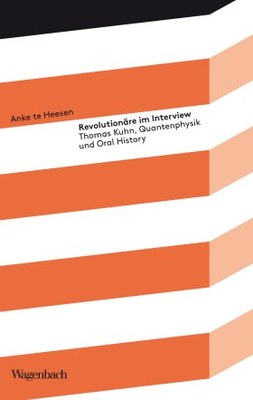
Professor Anke te Heesen is Chair of the History of Science with a focus on the history of education and the organization of knowledge in the 19th and 20th centuries at Humboldt-Universität zu Berlin. She has held this position since 2011 and is also the spokesperson (since 2024) of the DFG Center for Advanced Studies 'Applied Humanities – Politics and Genealogy,' alongside Professor Viktoria Tkaczyk. Previously, she served as Professor for Empirical Cultural Studies at the University of Tübingen (2008-2011) and founding director of the Museum of the University of Tübingen (2006-2008). Her academic career includes research positions at the Max Planck Institute for the History of Science in Berlin (1999-2006), the German Hygiene Museum Dresden (1998-1999), and the Research Center for the European Enlightenment (1996-1997). Professor te Heesen's research spans multiple interconnected fields including the history of humanities, natural history in the early modern period, museum and exhibition history, organization and notation methods of sciences, and the relationship between science and art. She has a particular interest in how knowledge is formed, organized, and presented through various material and institutional practices. Her work often examines the intersection of academic knowledge production with material culture, focusing on objects, collections, and exhibition practices as sites of knowledge formation. Her recent publications reveal a strong focus on the history of interviews as research methodology, the development of exhibition catalogs as scholarly monographs, and the material history of knowledge practices. The analysis of her 15 most recent articles shows consistent engagement with themes of materiality, the organization of knowledge, and the historical development of scholarly practices, particularly in the humanities. Her work frequently bridges historical analysis with contemporary scholarly concerns about knowledge production and dissemination. Spokesperson of the DFG Centre for Advanced Studies 'Applied Humanities: Genealogy and Politics' (since 2024) Senior Fellow, Collegium Helveticum, Zurich (WS 2023/24) Visiting Scholar, Max Planck Institute for History of Science (since 2021) Dibner Research Fellowship, Huntington Library (2020) Senior Research Fellowship, Lichtenberg Kolleg (2020) Professor te Heesen has held significant leadership roles including Ombudsperson of Humboldt University of Berlin (since April 2024) and Head of the Commission for Studies and Teaching at the Institute of History (since April 2024). She serves on multiple advisory boards including the Scientific Advisory Board of the project 'Serious Donations' at the Museum of Natural History in Berlin (since 2020), the DFG Review Board for History (2020-2024), and the Robert K. Merton Center for Science Studies at Humboldt University (since 2019). She is also a member of the editorial boards of several scholarly journals including Reports on the History of Science and History of Science and Humanities. Her work extends to museum practice and curation, with significant contributions to understanding how universities can leverage their collections to create meaningful educational experiences that connect historical context with contemporary research. She has initiated important publication series including 'Sonderdruck' (since 2016) and 'Minima Literatur- und Wissensgeschichte kleiner Formen' (since 2020).
Prof. Dr. Daniel Eggers serves as Professor of History of Philosophy at the University of Regensburg's Faculty of Philosophy, Arts, History and Social Sciences since 2021, holding the Chair of History of Philosophy. Previously, he worked as a research associate at RWTH Aachen University and the University of Cologne, where he completed his habilitation in 2020. His educational background includes: PhD from Westfälische Wilhelms-Universität Münster (2007) Master of Philosophy from University of Cambridge (2005) Magister Artium from Westfälische Wilhelms-Universität Münster (2004) Studies in Philosophy, Germanistics, Communication Science, and Educational Sciences (1994-2004) Eggers specializes in 17th-18th century moral and political philosophy, with additional expertise in metaethics, moral psychology, and media ethics. His research critically examines expressivism, sentimentalism, and the role of reason in moral judgment, while addressing contemporary challenges in scientific communication and democratic discourse. His work bridges historical philosophical analysis with modern ethical dilemmas, particularly in digital environments and public reason. His publications demonstrate consistent focus on Hobbesian theory, moral motivation, and the intersection of ethics with political theory. Key trends include rigorous analysis of natural law theory, examination of emotional versus rational components in moral judgment, and critical evaluation of media ethics frameworks. Award highlights: Zeitschriftenpreis der Deutschen Gesellschaft für Publizistik- und Kommunikationswissenschaft (DGPuK) for 'Medienethik: Vier populäre Irrtümer' (2021) Eggers actively contributes to academic governance as board member of Bayerisches Promotionskolleg Politische Theorie and co-editor of the 'Ideen&Argumente' book series at de Gruyter. He serves as peer reviewer for major funding bodies including DFG, Alexander von Humboldt Foundation, and numerous international philosophy journals. His teaching portfolio spans historical philosophy courses and specialized seminars on ethical theories, reflecting his dual commitment to academic research and pedagogy. He participates in the European Hobbes Society and contributes to interdisciplinary forums including the Middle Ages Forum and Classical Center at the University of Regensburg.
Prof. Dr. Gert Pickel is a Professor of Sociology of Religion and Church at the Institute for Practical Theology, Faculty of Theology, Leipzig University. His roles include deputy spokesperson for the Competence Center for Right-Wing Extremism and Democracy Research, member of the Center for the Study of Religion, and advisory board member for the Academy of World Religions in Hamburg and the Hannah Arendt Institute at Dresden University of Technology. He heads the "Racism in Institutions" project network and co-directs the Leipzig branch of the Research Institute for Social Cohesion. Research focuses on sociology of religion , democracy , and political culture Current projects: German-Swiss study on religious/political collective identities, modern populism in Europe (East Germany), racism in institutions Research Interests span comparative sociology of religion (secularization, pluralization), political sociology (social capital, populism, radicalism), and integration of migrants in Germany. He explores how religion interacts with politics, addressing issues like euthanasia, abortion, and gender identities through empirical, theory-driven methodologies. Teaching covers religion in Germany/Europe, secularization processes, religion-politics dynamics, group-based prejudices, and intercultural comparisons. Courses are interdisciplinary (social sciences, humanities) with field trips to Central/Eastern Europe. Scientific Awards : No awards explicitly mentioned in the text. Grants and Projects : DFG-funded "Multiple Bible Uses in Late Modern Society" (2021-2024) BMBF-funded "Social Polarization and Radicalization" (2020-2024) EU-funded Jean-Monnet Centre (2020-2024) "InRa-Study" (2021-2024) on institutional racism Labs and Teams : Member of Research Academy Leipzig; co-leader of the Leipzig branch of the Research Institute for Social Cohesion; contributor to the Leibniz WissenschaftsCampus Eastern Europe–Global Area.