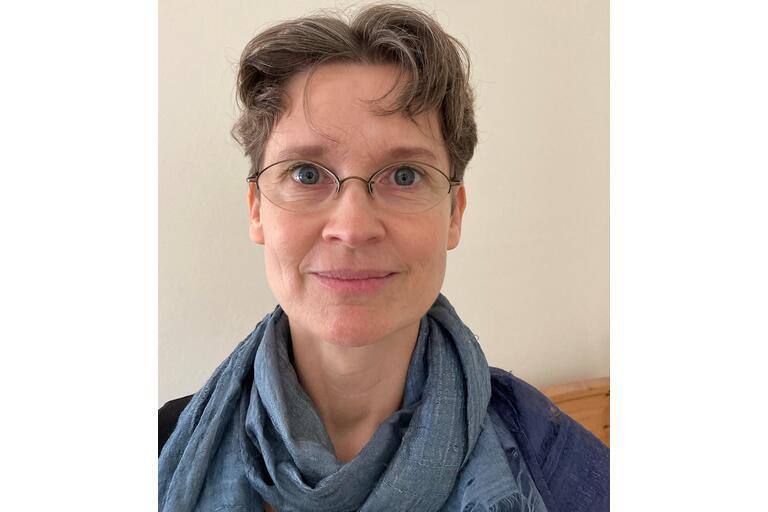
Dragana Špica is an Assistant Professor at the Department of Asian Studies , Juraj Dobrila University in Pula . She specializes in Japanese language education and intercultural communication, teaching undergraduate and graduate courses including Japanese language through media, conversational practice, and intercultural communication. Her research focuses on Phonetic challenges in Japanese language acquisition Cross-linguistic comparisons between Japanese and Croatian Lexicography and bilingual dictionary development Online language teaching methodologies Adjective-verb interactions in Japanese Recent publications examine vowel length perception, nasal sound articulation, and educational technology applications. She supervises student projects related to Japanese language and culture. Contact: dragana.spica@unipu.hr
David P. Corina is a Professor of Linguistics and Psychology at the University of California, Davis, and Director of the Cognitive Neurolinguistics Laboratory at the Center for Mind and Brain. His research bridges cognitive neuroscience and linguistics, specializing in signed and spoken language processing across deaf and hearing populations. His educational background includes: Ph.D. in Psychology and Cognitive Science, UC San Diego (1991) M.A. in Linguistics, Gallaudet University (1983) B.S. in Educational Psychology, New York University (1982, magna cum laude) Corina investigates neural mechanisms of language comprehension and production, focusing on American Sign Language (ASL) and spoken language. His work examines developmental trajectories in deaf children, neurological impairments, and the interplay between language and gesture processing. Using EEG/ERP, fMRI, and behavioral methods, his lab explores brain plasticity and sensory adaptation in language systems, with particular emphasis on visual-spatial processing in signers. Recent publications (2019-2024) reveal three dominant research threads: (1) structural and functional brain differences in multilingual speakers, (2) electrophysiological responses to language in cochlear implant users, and (3) age-related changes in sign language processing. His work consistently demonstrates how language modality shapes neural organization while highlighting cross-linguistic commonalities. Scientific recognition includes: Fulbright Global Scholar, United States Fulbright Commission (2019-2020) Corina has held significant academic leadership roles including Chair of UC Davis' Undergraduate Cognitive Science Program (2018-2023) and Program Committee Chair for the Society for Neurobiology of Language (2016-2018). He serves as an ad hoc reviewer for NIH study sections, scholarly journals, and international funding agencies, contributing to peer review in neuroscience and linguistics. He directs the Cognitive Neurolinguistics Laboratory, which integrates interdisciplinary approaches to study language-brain relationships through collaborative projects with deaf communities, neurologists, and developmental psychologists.
Patrick Brady is an Assistant Professor in the Department of Criminal Justice at the University of Colorado Colorado Springs, part of the College of Public Service. He holds a Ph.D. in Criminal Justice and Criminology from Sam Houston State University (2017). His research focuses on improving criminal justice agency practices through evidence-based approaches, particularly in domestic violence investigations, vicarious trauma mitigation among professionals, and stalking victim decision-making. Brady has field experience in violence prevention programming and training criminal justice personnel on intimate partner homicide prevention. Brady’s work addresses critical gaps in how agencies corroborate non-physical evidence in domestic violence cases and supports professionals exposed to traumatic material. His research areas include intimate partner stalking/strangulation dynamics, cyberstalking, and reducing burnout in victim-facing roles. He also examines victim engagement with legal systems and the societal impact of stalking. Brady’s publications span 2012-2025, analyzing topics like forensic interviewer burnout, stalking victim service utilization, and racial disparities in domestic violence reporting. His 2020 work on prosecutorial decision-making in stalking cases and 2019 study on forensic interviewers' family relationships highlight his focus on systemic and individual challenges in criminal justice work. Though no awards are listed, his extensive curriculum vitae indicates active scholarly contribution to criminology and victimology. Brady advises no listed students and his profile does not mention grants. He maintains an office at ACAD 321 and can be reached via pbrady@uccs.edu. Beyond academia, he is a musician passionate about cooking and dog-petting.
Susanne Gahl is a Professor of Linguistics and Cognitive Science at the University of California, Berkeley, affiliated with the Language and Cognition faculty. She is based in 1220 Dwinelle Hall and holds a PhD from UC Berkeley. Her academic work bridges linguistics and cognitive science with a focus on language processing. Research Interests: Her primary research areas include psycholinguistics, language production and comprehension, aphasia, and usage-based models of language. She investigates how phonetic and phonological factors influence speech perception and lexical access, particularly in bilingual and clinical contexts. The recent publications reflect a sustained focus on phonetic cues in code-switching, lexical competition, and models of aphasic comprehension. These works span both theoretical and clinical domains, highlighting a trajectory centered on empirical, data-driven approaches to understanding language as a cognitive system. Scientific Awards: No awards listed in the provided text. Advising and Grants: While specific students and grant funding are not mentioned, her dissertation and multiple publications suggest active mentorship and research leadership. She has collaborated with scholars such as Lise Menn and Keith Johnson, indicating integration within a broader research network. Labs and Teams: No specific lab or research team is mentioned in the text, though her affiliation with the Language and Cognition faculty suggests participation in interdisciplinary research initiatives at UC Berkeley.
Leticia Pablos Robles is an Associate Professor at Leiden University's Humanities Centre for Linguistics (LUCL), specializing in Experimental Linguistics with a focus on sentence comprehension , prediction in the brain , and processing of long-distance dependencies . Her work integrates syntax, semantics, and prosody to explore how linguistic structures are processed across languages like Basque, Spanish, Mandarin, Dutch, French, and English. PhD in Linguistics (University of Maryland, 2006) BA in English Philology (University of Deusto, 1999) Her research employs event-related potentials (ERPs) , eye-tracking , and self-paced reading to analyze language comprehension. She investigates: Syntactic processing (e.g., clitic left dislocation, wh-dependencies) Syntax-semantics interface (e.g., Negative Polarity Items) Syntax-prosody interface (e.g., Wh-in-situ questions) Cognitive control in bilingualism and code-switching Recent publications highlight trends in cross-linguistic interference , bilingual reading , and ERP-based syntactic validation . She also contributes to replication studies and statistical methodology in linguistics. Scientific Awards : Teaching Excellence Award, University of Maryland (2002) Basque Government Post-doctoral Grant (2006-2008) Basque Government Pre-doctoral Grant (2002-2006) She supervises PhD candidates Zhenlin Chen and Ou Ourilige , and collaborates with projects like BRAINGLOT (Bilingualism and Cognitive Neuroscience). Her work bridges theoretical linguistics and experimental validation , emphasizing the competence-performance dichotomy.
Morgan Sonderegger is an Associate Professor in Linguistics at McGill University and holds a Canada Research Chair (Tier 2) in Speech Variability. He co-leads the Montreal Computational and Quantitative Linguistics Lab (MCQLL), focusing on interdisciplinary research at the intersection of phonetics, computational modeling, and language variation. His research spans phonology, phonetics, computational linguistics, language variation and change, and quantitative methods. Sonderegger develops advanced statistical models for linguistic data analysis, particularly Bayesian regression techniques and computational approaches to speech variability. His work integrates large-scale corpus analysis with experimental methodologies to investigate sound change mechanisms, speech production, and perceptual patterns across languages. Recent publications reveal strong trends in quantitative phonetic analysis, computational modeling of speech variability, and cross-linguistic studies of phonological patterns. His research increasingly incorporates machine learning techniques and large-scale corpus approaches to address fundamental questions in phonetics and phonology. Canada Research Chair (Tier 2) in Speech Variability Sonderegger contributes significantly to linguistic methodology through software development and educational resources. He has created essential tools like the Montreal Corpus Tools (including PolyglotDB and Montreal Forced Aligner) that facilitate speech corpus analysis. His educational contributions include the textbook Regression Modeling for Linguistic Data and advanced course materials on Bayesian regression modeling. He leads the Montreal Computational and Quantitative Linguistics Lab (MCQLL), which develops computational frameworks for analyzing speech corpora and modeling phonetic variation. The lab's work bridges theoretical linguistics with practical applications in speech technology and language processing.
Dr. Sarah Lupo is an Associate Professor in the Middle, Secondary, and Mathematics Department at James Madison University’s College of Education. With over two decades of experience in K-12 education, she specializes in literacy instruction, content-area literacy, and culturally sustaining pedagogy. Her work bridges theoretical research with practical classroom applications to improve literacy outcomes for diverse learners, including English Language Learners and students from nontraditional backgrounds. B.A. in Philosophy, James Madison University M.A. and Ph.D. in Literacy Education, University of Virginia Dr. Lupo’s research examines how text complexity, prior knowledge activation, and differentiated instruction impact comprehension across content areas. Her publications emphasize culturally responsive approaches, interdisciplinary learning, and the Science of Reading, particularly in secondary education. She advocates for leveraging students’ existing knowledge and integrating technology to enhance reading accountability. Dr. Lupo has received prestigious accolades such as the Reading Hall of Fame Emerging Scholars Fellowship, AERA Division C New Faculty Fellow, and Jeanne Chall Fellowship. She co-authored the influential book Teaching Disciplinary Literacy in Grades K-6 (Routledge, 2021) and contributes regularly to journals like Reading Research Quarterly and Review of Educational Research . Media Contact: Chad Saylor ( saylorcx@jmu.edu )
Sharon Christ is an Associate Professor in the Department of Human Development and Family Science at Purdue University, with joint appointments in the Department of Statistics, College of Science, and courtesy appointments in the Department of Speech, Language, and Hearing Sciences. She serves as Co-Director of The Methodology Center at Purdue (MCAP) and is actively involved in research focusing on statistics, statistical modeling, adolescent development, and aging. Her work spans multiple research areas including Health and Well-Being, Interpersonal Relations, and Military Families. Dr. Christ received her PhD in Sociology from the University of North Carolina in 2008, an MS in Statistics from the same institution in 2004, an MA in Sociology in 2002, and a BA in Sociology & Political Science from the University of Minnesota in 1994. Her research primarily focuses on applications in the social, behavioral, and health sciences, with expertise in structural equation modeling (SEM) with latent variables, multilevel (mixed effects) models, longitudinal modeling, and analysis of complex sample data. She investigates measurement of social constructs, missing data, and selection problems, often using large nationally representative datasets as well as data from observation and experimental designs. A significant portion of her recent work examines child maltreatment experiences in adolescence and their impacts on well-being outcomes including academic achievement, aggressive behaviors, and mental health. Analysis of Dr. Christ's recent publications reveals a strong focus on developmental language disorders, military family research, and statistical methodology. Her work increasingly integrates retrieval practice techniques for language learning in children with developmental disorders, examines long-term trajectories of mental health outcomes in military families, and investigates the relationship between physical activity, stress, and health outcomes in diverse populations. There's a clear interdisciplinary trend across her publications, bridging statistics, psychology, speech-language pathology, and military family research. Dr. Christ has received numerous awards and honors including: University Faculty Scholar, Purdue University (2022-present) Christine M. Ladisch Faculty Leadership Award, Purdue University (2022) Faculty Leadership Academy for Interdisciplinary Research (FLAIR) Fellow, Purdue University (2020) Honorable Mention for Disruption Paper Competition, National Foundation to End Child Abuse and Neglect (2019) College of Science Team Award for Statistics Living Learning Community, Purdue University (2015) Center for Aging and the Life Course Outstanding Professor Award for Exceptional Teaching and Mentoring of Emerging Scholars in Aging, Purdue University (2014) Dr. Christ actively mentors graduate students and is accepting applications for the December 1, 2024 deadline. She has secured significant research funding, including as Co-Principal Investigator for the 'Interdisciplinary Summer Institute on the Analysis of Complex, Large-Scale Longitudinal Data' from the National Institute on Drug Abuse ($365,129, 2024-2027) and as Co-Investigator on multiple substantial grants from agencies including the U.S. Army Medical Research & Development Command, National Institute on Deafness and other Communication Disorders, and Eunice Kennedy Shriver National Institute of Child Health and Human Development. Dr. Christ is affiliated with several research centers at Purdue including the Center for Families, The Military Family Research Institute, The Methodology Center at Purdue (MCAP), and the Center on Aging and the Life Course. These affiliations support her interdisciplinary research on family dynamics, military families, statistical methodology, and aging processes.
Ivan Yuen is an Honorary Senior Research Fellow in the Department of Linguistics at Macquarie University, affiliated with the Centre for Language Sciences (CLaS). His research focuses on child language acquisition, speech acoustics, and prosody, particularly in Mandarin and other tonal languages. He has contributed to studies on cochlear implants' impact on language processing and the development of contrastive focus in children. Key research areas include speech production in children with hearing impairments, syntactic and prosodic processing in Mandarin, and the role of acoustic cues in language comprehension. Yuen has collaborated on projects funded by MQSIS, including research on articulography for speech analysis and phonetics laboratory facilities. His recent work examines how variability in vowel and tone systems affects language development, challenges faced by Mandarin-speaking cochlear implant users, and the ability of young children to distinguish prosodic patterns in compound nouns.
Michael Wagner is a Professor and Department Chair in the Department of Linguistics at McGill University. He holds a PhD from the Massachusetts Institute of Technology. His research focuses on prosody-syntax-semantics interfaces, phonology, and experimental methods in language processing. He leads the Prosody Lab and has developed tools like the Montreal Forced Aligner for speech analysis. Research Interests : Prosody's role in syntax and semantics, phonological variation, experimental approaches to language processing, and computational methods in linguistic analysis. His work combines formal theoretical frameworks with empirical methods from psycholinguistics and phonetics. Education : PhD in Linguistics, MIT Labs/Tools : Prosody Lab, Montreal Forced Aligner (speech alignment software) Key Contributions : Pioneering work on prosodic parsing mechanisms, intonation semantics, and cross-linguistic variation in focus marking Publications from 2020-2023 highlight advancements in understanding prosody's role in sentence processing, experimental methods for quantifying focus marking, and computational tools for linguistic research.
Costanza Papagno is Full Professor at the University of Trento's Department of Psychology and Cognitive Science, with additional affiliations at the Center for Mind/Brain Sciences (CIMeC) and Centre for Medical Sciences (CISMED). Her clinical leadership includes serving as Head of the Center for Neurocognitive Rehabilitation (CeRiN) since 2017. With dual degrees in Medicine and Neurology from Milano University and a PhD in Psychobiology, she has held research positions at Cambridge's MRC Applied Psychology Unit and visiting professorships internationally. Her research explores neuropsychological rehabilitation, subcortical recovery mechanisms, Parkinson's cognitive deficits, and neuroplasticity in brain tumors. Key investigations include auditory-verbal memory in sentence comprehension, social cognition in neurodegeneration, and neural correlates of abstract language. She maintains active collaborations in awake surgery protocols and develops clinical assessment tools. Publication analysis reveals concentrated expertise in Parkinson's neurocognition, aphasia rehabilitation, brain asymmetries, and teleneuropsychology platforms. Recent works emphasize digital health interventions, network neuroscience approaches to neurodegeneration, and refinement of intraoperative cognitive mapping techniques. Honors include multiple international grants (ESF, NATO, Erasmus), editorship of the Journal of Neuropsychology, and presidency of the Italian Neuropsychology Society. She coordinates multinational initiatives like the Signature project for social cognition assessment standards in neurocognitive disorders. Clinical innovations include pioneering awake surgery protocols at Milan's Policlinico Hospital and establishing the CeRiN neurorehabilitation center. She regularly contributes to national treatment guidelines and serves on ethics committees for neurosurgical research.
Evan Kidd is a Professor of Linguistics at The Australian National University. Trained as a psycholinguist at La Trobe University, he has established himself as a leading researcher in child language acquisition and processing. His educational background includes training as a psycholinguist at La Trobe University, which provided the foundation for his extensive research career focused on language development. Professor Kidd's research primarily focuses on children's language acquisition and language processing, with special emphasis on morphosyntax in both monolingual and bilingual contexts. He also investigates socio-cognitive processes underlying early language development, including symbolic play, joint attention, and gesture. A distinctive feature of his work is its explicit cross-linguistic and cross-cultural approach, examining how language development varies across different linguistic and cultural environments. His research has significant implications for understanding the universal and language-specific aspects of language acquisition. Professor Kidd's publications reveal a strong focus on individual differences in language acquisition, the relationship between play and language development, and cross-linguistic studies of language processing. His work spans multiple languages including Tagalog, Mandarin, and Australian English, demonstrating his commitment to understanding language acquisition in diverse linguistic contexts. Recent research has increasingly examined methodological diversity in the field and how to increase language coverage in acquisition research. ABC show Old People's Home for 4 Year Olds wins International Emmy, The Guardian, 24 Nov 2020 Language acquisition in crosslinguistic context: How can we increase language coverage?, ILARA Round-table, 6 May 2021 Professor Kidd has advised students including Francois-Xavier Faucounau, Annie Kwai, Alpheaus Graham, Zobule, and Anna Naupa. His work often involves interdisciplinary collaborations across psychology, cognitive science, and anthropology. While specific grant information isn't provided in the available text, his extensive publication record suggests significant research funding support for his investigations into language acquisition and processing. His research group appears to be part of a larger organization focused on cultural diversity, working alongside researchers including Nicholas (Nick) Evans, Kim Sterelny, Simon Haberle, Chris Ballard, Lindell Bromham, Bethwyn Evans, Catherine Frieman, and Carmel O'Shannessy, with research fellows Ben Shaw, Shimona Kealy, Stuart Bedford, Joao Teixeira, Ray Tobler, and Sam Passmore.
Professor Sam Hellmuth is a leading academic in phonology at the University of York's Department of Language and Linguistic Science within the Faculty of Arts and Humanities. She serves as Associate Dean for Teaching, Learning and Students while maintaining an active research program focused on Arabic prosody and second language phonology. Her educational background includes: BA (Hons) in Arabic and French, University of Leeds (1985-1989) MA in Linguistics (Arabic), SOAS University of London (2000-2001) PhD in Linguistics and Phonetics, SOAS University of London (2001-2006) Postdoctoral Researcher, University of Potsdam (2006-2007) Professor Hellmuth's research centers on suprasegmental phenomena in Arabic dialects, particularly intonation patterns across regional varieties. Her work bridges theoretical phonology with empirical corpus-based approaches, examining prosodic variation in both native Arabic speech and L2 English acquisition. She specializes in the syntax-phonology interface and has pioneered methodologies for documenting intonational variation through large-scale comparative projects. Her publication record reveals consistent focus on Arabic intonational typology, with recent work expanding to Northern England dialects and emergent bilinguals. The research demonstrates sophisticated integration of auditory transcription with statistical F0 modeling within the Autosegmental-Metrical framework. Professional recognition includes: Editorial Board, Al-'Arabiyya (Journal of the American Association of Teachers of Arabic) Editorial Board, Arabic Linguistics (John Benjamins) Economic and Social Research Council Peer Review College membership Professor Hellmuth actively supervises 25+ graduate students, primarily on Arabic phonology topics, and leads major funded projects including the ESRC-supported 'Generations of London English' (2023-2026). Her collaborative network spans institutions in Tunisia, Saudi Arabia, Lebanon, Pakistan, and across the UK. She directs the Phonetics and Phonology and Language Variation and Change research groups, with recent work focusing on corpus development for multidialectal Arabic teaching resources.
Professor Markus Damian is a faculty member at the University of Bristol, holding the position of Professor of Psychology of Language within the School of Psychological Science. His research focuses on language production, bilingualism, and cognitive control mechanisms. Damian has expertise in experimental methods such as mouse tracking and ERP studies, and his work often explores phonological and semantic processes in language processing. He has collaborated with scholars like Jeffrey Bowers and Colin Davis, contributing to advancements in understanding lexical competition, bilingual lexicons, and the neural underpinnings of speech planning. Education: M.A. and Ph.D. from Rice University. Research interests include the interplay between orthography and phonology in language production, cognitive control in bilingual speakers, and developmental aspects of speech perception in children with hearing impairments. His publications span over two decades, demonstrating sustained contributions to psycholinguistics and cognitive psychology. Key methodological innovations include the use of mouse-tracking paradigms to study real-time cognitive processes and the development of adaptive tests for assessing vocabulary size. Damian’s work bridges theoretical linguistics with experimental psychology, emphasizing both behavioral and neurophysiological evidence.
Trajce Cvetkovski is an Associate Professor at the Peter Faber Business School within the Faculty of Law and Business. His research spans interdisciplinary areas including work health and safety law, media and copyright policy, popular music studies, and the sociological analysis of reality television. His work critically examines the interplay between cultural industries, legal frameworks, and technological change. Key research focuses include: Legal harmonization challenges in workplace safety legislation Charismatic authority dynamics in music industry governance Media piracy narratives and regulatory responses Socio-cultural implications of reality television talent shows Recent publications (2024) explore how reality television trivializes work health and safety norms, analyzing formats like The Block 2020 to reveal cultural perceptions of labor. Earlier work (2015-2013) critically examines music industry economics, digital piracy, and global copyright governance. His 2004 foundational studies investigate technological drivers shaping the political economy of music production and consumption. No scientific awards or grants are explicitly mentioned in the provided materials. He has not listed formal advisees, though his extensive publishing activity suggests engagement with academic communities through collaborative research.