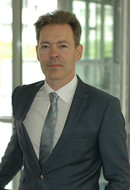
David Kirsh is a Professor in the Department of Cognitive Science at the University of California, San Diego. He holds a D.Phil from Oxford University and completed post-doctoral work at MIT's AI Lab. His research focuses on distributed cognition, embodied cognition, and human-computer interaction, with specific interests in how environments shape cognitive processes and how physical objects become tools for thought. Key research areas include: Theory of Interaction: Examines how people adapt environments to simplify cognitive tasks Environment Design: Develops principles for designing collaborative spaces and smart rooms Information Architecture: Designs large-scale web systems and information spaces Dr. Kirsh directs the Interactive Cognition Lab and co-directs the Arthur C. Clarke Center for Human Imagination. His work bridges cognitive science with practical applications in workplace design, e-learning, and human-computer interaction.
Prof. Dr. Martin Paul Nawrot is a faculty member at the Institute of Zoology , University of Cologne . His research focuses on neural information processing , reinforcement learning , and synaptic plasticity in biological and artificial systems. He also develops large-scale brain simulations to study attractor dynamics for sensory-motor integration, motor control, and decision-making in primates and insects. Current research areas include neuromorphic computing , spiking neural networks , and computational neuroscience Key projects involve modeling insect behavior , neural coding , and cross-species AI applications His recent publications (2023-2025) explore Drosophila larva locomotion , synaptic plasticity mechanisms , and neuromorphic hardware for real-time simulations. These works span neural circuits , behavioral modeling , and computational tools like GeNN and NEST. Despite his academic prominence, no scientific awards are mentioned in the available texts.
Lucia Seminara serves as an Associate Professor in the Department of Naval, Electrical, Electronic, and Telecommunications Engineering (DITEN) at the University of Genoa's Polytechnic School. She teaches Electronic Devices, Sensors, and Sensing Systems for Master's programs in Electronic Engineering and Engineering for Natural Risk Management, while also contributing to Philosophy of Medicine for Philosophical Methodologies. As a member of the Joint Teacher-Student Commission, she bridges academic governance with pedagogical innovation in engineering education. Her research pioneers tactile sensing systems using piezoelectric polymers (PVDF) and electronic skin for robotics and prosthetics. She investigates indentation mechanics on soft electronic skin, grasping speed sensitivity, and hierarchical sensorimotor control frameworks for human-in-the-loop robotic hands. Key innovations include machine learning-based contact force estimation and electrotactile feedback systems that restore natural touch perception in prosthetic devices, addressing critical gaps in sensory substitution technology. Analysis of her 2021-2025 publications reveals escalating integration of machine learning with tactile sensing, particularly in symmetry detection for efficient haptic exploration and transdisciplinary human-in-the-loop applications. Recent work emphasizes real-world implementations like post-stroke rehabilitation systems and high-bandwidth human-machine interfaces, demonstrating a strategic shift from foundational sensor development toward clinically viable solutions with measurable user impact. Dr. Seminara's research lineage includes significant contributions to the Roboskin project (2013), which established large-area tactile sensor arrays for robotics. Her current work extends this foundation through investigations into viscoelastic properties, stress transmission modeling, and AI-driven tactile perception, positioning her at the forefront of intelligent electronic skin development with active collaborations across engineering, neuroscience, and clinical rehabilitation domains.
Prof. Bianca van Kemenade leads the Systems Neuroscience of Action and Perception (SNAP) Lab at Justus Liebig University Giessen's School of Medicine. Her research focuses on action-based predictions, self-generated vs externally generated stimuli distinction, and neural mechanisms in schizophrenia spectrum disorders. Investigates how actions shape sensory perception through predictive coding Examines cerebellar and cortical contributions to sensorimotor processing Develops interventions for schizophrenia using neuroimaging techniques Recent work analyzes BOLD responses during visual feedback processing (2022-2025), explores speech-gesture matching networks (2024), and compares discrete vs continuous action feedback (2021). The lab employs fMRI, TMS, and behavioral methods. Current team members include postdoc Gizem Yildiz , PhD student Juan Carlo Cabato , and research assistants Sirine Nouira and Viktoria Zizer .
Charles L. Isbell Jr. is a Professor in the College of Computing at Georgia Institute of Technology. His work spans foundational research in artificial intelligence, machine learning, and robotics, with a focus on human-robot interaction, reinforcement learning, and educational technology. He leads efforts in scalable online education programs and contributes to policy discussions on AI's societal impact. Research Interests: Isbell's research emphasizes practical and theoretical advancements in AI systems, including Bayesian methods, multi-agent systems, and the ethical implications of AI. He explores how machines can learn from human interaction and adapt to complex environments. His recent work addresses challenges in robotics collaboration, scalable educational platforms, and the development of robust reinforcement learning algorithms. Publications Trends: His articles reflect a commitment to advancing AI through interdisciplinary approaches, with contributions to robotics collaboration (e.g., Nash equilibrium frameworks), scalable education systems, and foundational work in reinforcement learning and imitation learning. Recent collaborations include studies on machine learning systems engineering and long-term AI policy. Awards: No awards explicitly listed in the provided text. Advising & Grants: While specific grants are not detailed here, his extensive publication record indicates sustained research funding and mentorship of students in AI and robotics. His work on online education at scale highlights contributions to pedagogical innovation.
Dr. Anton Sumser is a researcher at the Faculty of Biology, Ludwig Maximilian University of Munich, where he contributes to Prof. Laura Busse's research group and the Vision Circuits collaboration (Busse & Katzner). His work focuses on neural circuit mechanisms underlying sensory processing in mouse models, with emphasis on thalamic function in vision and touch. Sumser's research investigates how active versus passive sensory inputs are differentially processed in the thalamus, revealing specialized neural pathways for touch perception during movement. His studies integrate in vivo electrophysiology, viral tracing, and behavioral paradigms to dissect visuomotor coordination, demonstrating how thalamic hub-and-spoke networks enable visual perception during action. Additional work explores panoramic visual statistics shaping retinal organization and develops advanced rabies viral vectors for neural circuit mapping. His publication record (2016-2025) shows consistent contributions to sensory neuroscience, with recent work highlighting thalamic roles in multisensory integration. Key trends include methodological innovation in circuit tracing and the characterization of neural coding principles across visual and somatosensory systems. Sumser is embedded in the Vision Circuits group at LMU Munich, which examines the neural basis of visual perception in behavioral contexts. No information is available regarding students advised or research grants secured.
Matthew A. Smith is a Professor in the Department of Biomedical Engineering and the Carnegie Mellon Neuroscience Institute, where he serves as Co-Director of the Center for the Neural Basis of Cognition. His research bridges computational and experimental neuroscience to understand visual perception, cognition, and motor control. Dr. Smith's research focuses on neural engineering, visual perception, cognition, eye movements, and neural circuits . His laboratory investigates how groups of neurons interact to construct visual perception and translate it into cognitive processes and motor outputs. The lab employs a multi-scale approach combining single-neuron electrophysiology with global signals like EEG and near-infrared imaging, examining both normal and disease states of the brain. Analysis of his recent publications reveals strong trends in brain stimulation optimization (e.g., MiSO/OMiSO frameworks), neural population dynamics during cognitive tasks, visual cortex plasticity , and non-invasive neurotechnology development. His work spans fundamental neuroscience questions about working memory and perception while developing practical tools for brain monitoring and intervention. NIH K99/R00 Pathway to Independence Award Research to Prevent Blindness Career Development Award Dr. Smith has secured substantial funding from NIH, NSF, Research to Prevent Blindness, Schaffer Foundation for Glaucoma Research, and Hillman Foundation to support his research program. His laboratory actively develops novel methodologies for neural recording and stimulation while investigating fundamental mechanisms of visual processing and cognition. The lab maintains strong collaborative ties within Carnegie Mellon's neuroscience ecosystem through the Center for the Neural Basis of Cognition.
Abidemi Bolu Ajiboye, PhD, is the Robert & Brenda Aiken Professor of Biomedical Engineering at Case Western Reserve University's Case School of Engineering. He holds key administrative roles including Faculty Director of Postdoctoral Affairs, Associate Chair, and Executive Vice Chair of the Case School of Engineering. His research focuses on developing brain-computer interface (BCI) technologies to restore motor function in individuals with spinal cord injuries and stroke. Notable projects include the ReHAB initiative, aiming to reconnect paralyzed limbs to the brain through bidirectional neuroprostheses. Education: PhD Biomedical Engineering (Northwestern University, 2008), MS Biomedical Engineering (Northwestern, 2003), BS Biomedical & Electrical Engineering (Duke University, 2000) Research interests span neural control mechanisms, FES-based systems, and clinical translation of BCI technologies. He has pioneered closed-loop systems for natural movement restoration and received VA Career Development Awards. His work integrates neuroscience with engineering to address complex rehabilitation challenges. Publications emphasize BCI system design, neural signal processing, and clinical applications. Recent efforts focus on tactile feedback restoration and addressing biocompatibility challenges in neural implants. He advises on postdoctoral training programs and contributes to interdisciplinary neural engineering initiatives through the Cleveland Neural Engineering Workshop.
Professor Holger G Krapp is a Professor of Systems Neuroscience in the Department of Bioengineering at Imperial College London's Faculty of Engineering. He holds affiliations with the Centre for Neurotechnology, Neuromuscular Rehabilitation Technology Network, and Robotics Forum. His research focuses on sensorimotor control mechanisms in insects, particularly blowflies, integrating neurobiology with engineering principles. Key areas include visual processing, flight dynamics, and biohybrid robotics. Education: Earned a Diploma in Biology (Neurobiology) from the University of Tübingen (1992) and a Dr. rer. nat. (PhD) from the Max-Planck Institute for Biological Cybernetics (1995). Postdoctoral research included work at Caltech and Bielefeld University before joining Imperial College as a Senior Lecturer in 2005. Research interests emphasize how insects process visual and sensory information to control movement, with applications in robotics and neurotechnology. Recent work explores optic flow processing, closed-loop control systems, and biohybrid interfaces for real-time behavioral analysis. His publications highlight innovative methodologies like high-speed X-ray imaging and neural recording platforms to study flight motor mechanics and neurophysiological responses. Publications span 25+ years, demonstrating sustained contribution to understanding multisensory integration, neuronal adaptation, and energy-efficient neural coding. Active in interdisciplinary collaboration, his work bridges neuroscience, engineering, and robotics to advance biomimetic technologies and biological system analysis.
Thomas Eggert is an Associate Professor at the Department of Neurology, Ludwig Maximilian University of Munich. His research focuses on sensorimotor control, particularly the stochastic nature of motor variability and adaptation. Primary research area: Behavioral & Cognitive Neuroscience Secondary focus: Theoretical Neuroscience & Technical Applications Key topics: Motor control, eye/hand movements, sensorimotor feedback loops, efference copies, trial-to-trial variability His publications analyze motor control strategies in response to random/systematic errors, emphasizing the role of internal memory states and active variability control. Articles include computational models of saccade variability and studies on joint angle dynamics.
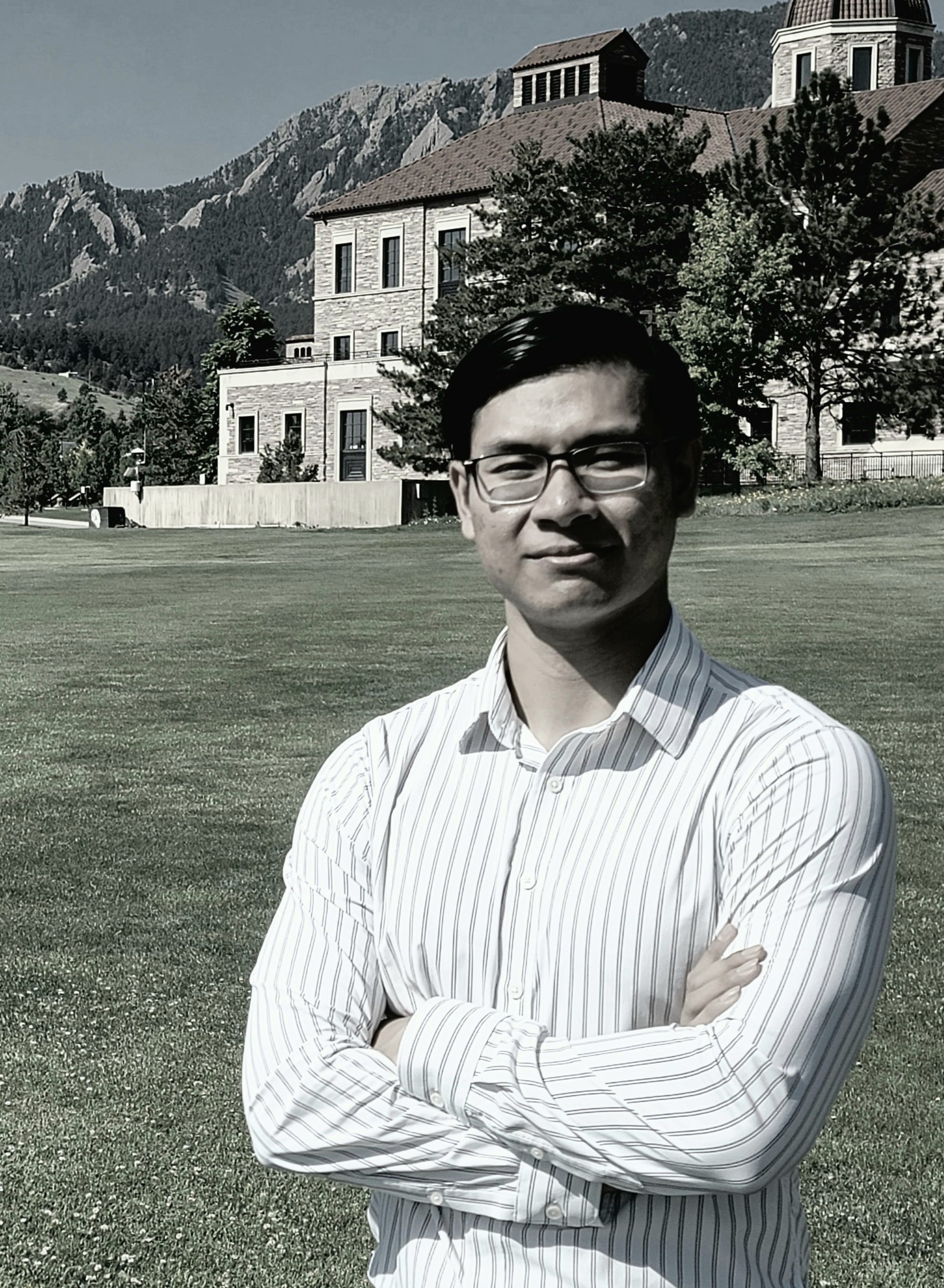
Dr. Khoi Dang Ly is a Postdoctoral Research Associate at Cornell University, specializing in robotics with a focus on embedded control systems and soft robotics. He holds a Ph.D. in Mechanical Engineering (2021) from the University of Colorado Boulder and a B.Sc. in Mechanical Engineering (2017) from Texas Tech University. His research targets the integration of high-speed electro-hydraulic actuators, self-sensing mechanisms, and model predictive control to advance the autonomy of soft robotic systems. Ph.D. in Mechanical Engineering (University of Colorado Boulder, 2021) B.Sc. in Mechanical Engineering (Texas Tech University, 2017) Dr. Ly's work bridges theoretical innovation and practical application, with projects on soft robotic shape displays, electro-hydraulic rolling wheels, and magnetic sensing for actuator control. His research extends to tactile interfaces, bio-inspired locomotion, and energy-efficient designs. He has secured over $800,000 in grants from ARPA-E and DOE for robotics applications in subterranean excavation and renewable energy harvesting. His 15 most recent publications highlight expertise in soft robotics, nonlinear control, and embedded sensing technologies. Key areas include high-speed actuation, magnetic displacement sensing, and model predictive control for hybrid dynamic systems. While no formal scientific awards are explicitly listed, his grants and patent filings underscore significant contributions to the field. Advised 5 students on projects ranging from wave tanks to HASEL actuator characterization Developed embedded high-voltage power systems and control algorithms Co-invented 3 U.S. patents, including a magnetic sensing method for soft actuators Dr. Ly's work aligns with future goals of applying system design innovations to human-centric challenges, such as improving sensorimotor function for the elderly and enhancing human-robot interaction through tangible interfaces.
Craig Childs is a Senior Lecturer in Biomedical Engineering at the University of Strathclyde , United Kingdom. His research focuses on biomechanics , gait analysis , and assistive technology , with applications in rehabilitation engineering and pedestrian mobility . Research Trends Chronic ankle instability rehabilitation Wearable robotics and gait feedback systems Functional joint modelling for motion analysis Pedestrian safety and shared space accessibility Key Projects Development of the Strathclyde cluster gait model Human-in-the-loop control for ankle-foot robots Portable balance platforms for elderly postural stability PAMELA laboratory for pedestrian environment testing
Prof. Christian Cipriani is the Director of the BioRobotics Institute at Scuola Superiore Sant'Anna (SSSA) and Head of the Artificial Hands Area. He holds a Ph.D. in Biorobotics Science and Engineering (2008) and a Laurea degree in Electronic Engineering (2004). His academic career includes roles as Assistant (2011), Associate (2014), and Full Professor (2016) at SSSA. He leads research on mechatronic prosthetics, control systems, and bidirectional interfaces, sponsored by the ERC, EU, and Italian ministries. Key projects include the ERC-funded MYKI (2016-2021) and the DeTOP Project (H2020-ICT). Research Interests: His work focuses on advanced robotic hands, control architectures, non-invasive feedback, and clinical experimentation. He co-founded Prensilia S.r.l., a spin-off commercializing robotic hands. Awards: ERC Starting Grant, National Scientific Habilitation as Professor (2017), Premio Capitani dell'Anno (2015), and Fulbright Scholarship (2012). Grants & Projects: Coordinated over 40 national/international projects, including MY-HAND (FIRB 2010), WAY (EU-FP7), and ARLEM (2018-2022). Labs & Teams: Leads the Artificial Hands Area within the BioRobotics Institute, fostering innovation in prosthetics and neurorehabilitation.
Oliver Behrend is a Professor at the Department of Biology II within the Faculty of Biology at Ludwig-Maximilians-Universität München, where he serves as Managing Director of the Munich Center for Neurosciences - Brain & Mind . His research focuses on comparative neurobiology and auditory processing mechanisms across vertebrates. Behrend's work examines: 1) Amphibian lateral line systems for surface wave localization, 2) Mammalian sound localization through interaural time difference processing, and 3) Auditory feedback mechanisms in echolocating bats. His studies span neuroethology, auditory neuroscience, and sensory-motor integration. Publications reveal multidisciplinary approaches to sensory neuroscience with keywords: Neuroethology Computational neuroscience Auditory pathways Sensory integration Neural coding Comparative neuroanatomy Contact: o.behrend@lmu.de
Venkatesh N. Murthy is a neuroscience faculty member specializing in olfactory processing and neural circuit dynamics. His research focuses on deciphering how neural systems encode, process, and respond to sensory stimuli, particularly odors. Key areas include odor mixture perception, neural algorithms for compressed sensing, and the role of feedback loops in olfactory bulb-cortex communication. Murthy employs rodent models and computational approaches to study adaptive behavior, learning mechanisms, and sensory navigation in dynamic environments. Research Focus: Murthy's work bridges experimental neurobiology and theoretical modeling, with emphasis on: Neural representation of odorants and mixtures Cortical feedback mechanisms in sensory processing Biomimetic applications for electronic nose design Dopamine signaling in associative learning His recent publications demonstrate consistent focus on olfactory coding, neural plasticity, and adaptive algorithms, with emerging themes in social behavior circuitry and AI-driven neural signal analysis.