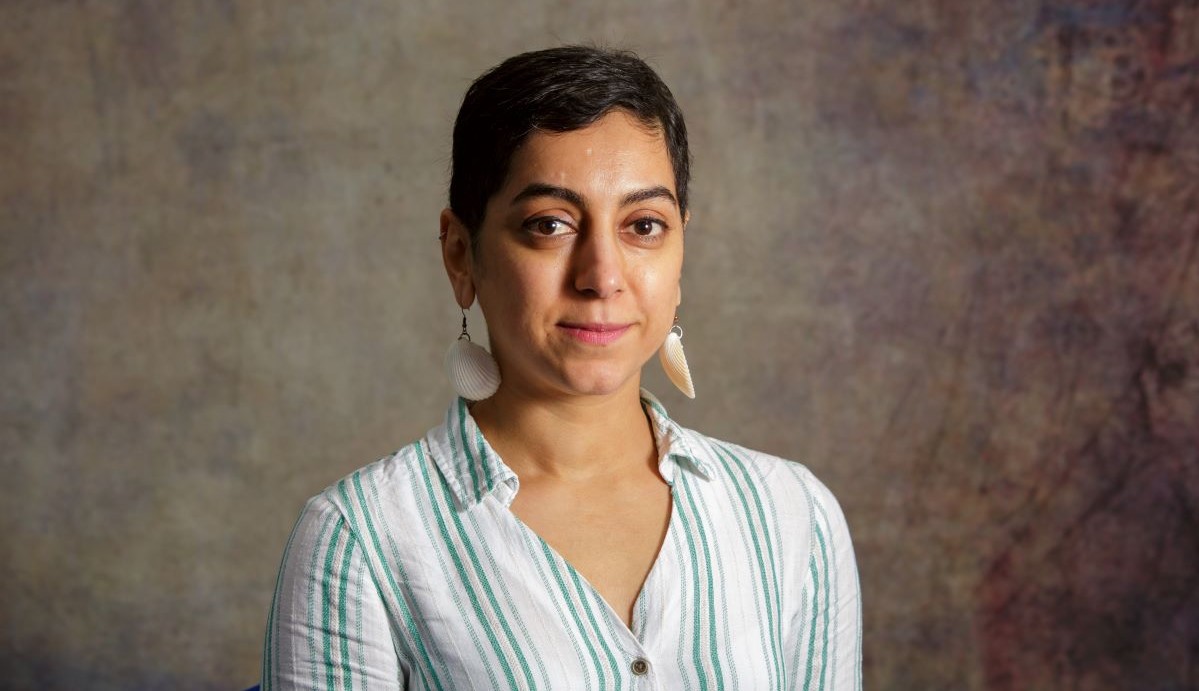
Parastoo Abtahi is an Assistant Professor in the Computer Science Department at Princeton University. She leads the Situated Interactions Lab (Ψ Lab) as part of the Princeton HCI Group, focusing on AR/VR and spatial computing. Prior to Princeton, she worked at Meta Reality Labs Research. PhD in Computer Science from Stanford University BSc in Electrical and Computer Engineering from University of Toronto (Engineering Science program) Her research explores wearable interactive technologies that augment human intelligence in physical contexts through: Input on-the-go: Low-effort, privacy-preserving multimodal interfaces Intelligent output: Timely, minimal multisensory systems Situated AI: Personalizable, predictable, safe physical-digital interaction Recent publications analyze: Drone-based haptic illusions for AR/VR Microgestures for mobile AR input Interactivity in explainable AI systems Temporal dynamics in VR haptics Awards include: 2025 Google Research Scholar Award CHI 2019 & 2018 Honorable Mentions She teaches courses like: COS 436: Human-Computer Interaction COS IW: AR Meets AI
Anna Levina is an Assistant Professor for Computational Neuroscience at the University of Tübingen , affiliated with the Department of Computer Science under the Faculty of Science. Her research focuses on the self-organization of neuronal activity, critical dynamics in neural networks, and the excitation/inhibition balance in cortical circuits. Current positions: Assistant Professor (since 2018), Group Leader (2017-2018), Equality Officer (Computer Science) Previous roles: IST Fellow (2015-2017), Associated Researcher (2011-2015), Postdoc/PI (2011-2015), Postdoc (2008-2011) Her research integrates mathematical modeling , statistical physics , and computational neuroscience to study criticality phenomena, neural avalanches, and adaptive network dynamics. Key interests include: Self-organized criticality in neural systems Excitation/Inhibition balance mechanisms Network topology and dynamics Timescale analysis in neural processing Stochastic modeling of neural activity Recent publications reveal trends in understanding critical dynamics across biological and artificial networks, with applications to memory systems, sensorimotor integration, and disease modeling. She has received recognition as an IST Fellow .
Prashant Mehta is a Professor of Mechanical Science and Engineering at the University of Illinois at Urbana-Champaign , affiliated with the Coordinated Science Laboratory . His research focuses on controlled interacting particle systems and machine learning applications , particularly in human activity recognition using motion sensors. Education: Ph.D. in Mathematics, Cornell University (2004) M.S. in Electrical & Computer Engineering, University of Massachusetts Amherst (1996) B.E. in Electrical & Electronics Engineering, Birla Institute of Technology & Sciences (1993) Mehta's work has pioneered the feedback particle filter (FPF) algorithm for nonlinear estimation, applied in robotic systems and gesture recognition. His research spans control of combustion instabilities in jet engines, mean-field games , and dynamical systems in aerospace engineering. His publications emphasize nonlinear control theory and stochastic filtering , with recent trends in sensor data pattern recognition and cyber-physical systems . He has received multiple scientific awards , including the MURI award for the Cyberoctopus project and Excellence in Undergraduate Advising Awards . Scientific Honors: MURI Award (2019) for Cyberoctopus Excellence in Undergraduate Advising (2010, 2008) Outstanding Teaching Assistant Award (1994) Senior Member, IEEE Control Systems Society Member, ASME Energy Systems Subcommittee Member, SIAM Dynamical Systems Group Mehta has supervised students like Jin Kim (IEEE CDC Best Student Paper, 2019) and co-founded the startup Rithmio , acquired by Bosch Sensortec . His laboratory develops gesture-detection filters for applications in soft robotics and human-machine interfaces .
Dr. Manuel Anglada-Tort is a Lecturer in Psychology at Goldsmiths, University of London, and a visiting researcher at the Max Planck Institute for Empirical Aesthetics. His research focuses on the psychology of cultural systems, including music, creativity, and empirical aesthetics. He combines computational methods with psychological experiments to explore cultural evolution, music perception, and the interplay of cognition and social interaction. Research Interests: Cultural Evolution Music Perception & Cognition Empirical Aesthetics Creativity Big Data Analyses Key Projects: Large-scale iterated singing experiments on music evolution Investigating weather's influence on music success Developing the REPP platform for online sensorimotor synchronization studies Teaching: MSc in Music, Mind, and Brain MSc Psychology of the Arts, Neuroaesthetics, and Creativity Affiliations: Music, Mind and Brain Group at Goldsmiths Computational Auditory Perception Group at Max Planck Institute
Prof. Stephen Mayhew is a Professor at Aston University's School of Life & Health Sciences, affiliated with the College of Health and Life Sciences. He leads the Cognition & Neuroscience Research Group (CNRG) and contributes to the Aston Research Centre for Health in Ageing. His research focuses on multimodal neuroimaging (EEG/fMRI/MRI/MEG) to study brain activity in health and cognition, particularly negative BOLD responses and their role in neural inhibition and behavior. Recent work includes investigating task-demand effects on BOLD responses, brain state dynamics during rest, and neurovascular coupling methods. Education & Affiliations: Affiliated with Aston University's School of Life & Health Sciences Member of CNRG and Health in Ageing Centre Research Interests: His work explores collaborative/antagonistic brain networks, lifespan changes in brain function, and the functional significance of negative BOLD responses. Techniques include fMRI, EEG, and advanced neuroimaging analysis methods like fractal dimension and laminar 7T MRI. Key Contributions: Published over 30 peer-reviewed articles on neuroimaging and brain networks Systematic reviews on neurovascular coupling and transcranial Doppler methods Labs & Teams: Active in CNRG and collaborates across disciplines in health sciences and bioengineering.
Zsofia Zavecz is a Research Associate at the University of Cambridge Department of Psychology. Her work focuses on the neurophysiological mechanisms underlying sleep and memory consolidation, with particular emphasis on electrophysiological correlates of lucid dreaming and sleep-dependent learning. Research highlights include: Investigation of EEG functional connectivity during statistical learning Study of transcranial stimulation effects on probabilistic learning Analysis of sleep restriction impacts on hormonal regulation Exploration of cognitive reserve mechanisms in sleep disorders Her neuroscientific investigations span procedural memory systems, neural oscillations, and cross-population studies in both healthy individuals and pediatric sleep-disordered breathing patients.
Adrienne Wood is an Assistant Professor in the Department of Psychology at the University of Virginia. Her research lab, Emotion and Behavior Lab, investigates social connections through multimodal approaches including mobile sensing, social network analysis, and behavioral economics. She holds a Ph.D. from the University of Wisconsin-Madison and a B.A. from Colorado College. Wood's research examines how people form and maintain social ties across cultural divides, addressing loneliness through analysis of nonverbal behavior, emotion contagion, and network dynamics. Her work emphasizes: Behavioral mechanisms of connection (laughter, synchrony) Social network formation in diverse communities Cross-cultural relationship building She employs innovative methodologies like acoustic analysis and agent-based modeling. Her recent publications (2023-2025) demonstrate strong focus on: Emotional communication in evolving relationships Cultural influences on social competence Crisis impacts on behavior Nonverbal synchronization mechanisms Longitudinal analysis of social interactions No scientific awards are mentioned in the source material. Wood leads the Emotion and Behavior Lab, studying verbal/nonverbal behaviors underlying social bonds. Her team explores: Real-world interaction patterns Diverse community integration Computational social science approaches
Anne-Sophie Noel is a Lecturer in Greek language and literature at École Normale Supérieure de Lyon since 2018, with a focus on Greek theatre , cognitive approaches to tragedy , and material culture . She serves as a Junior member of the Institut Universitaire de France (2023–2028) and holds leadership roles in the InSpectA and KINSPECTA research projects. Research Themes : Materiality in Greek drama (tragic objects, prosthetics, textiles) Cognitive science intersections (audience empathy, kinesthetic resonance) Postcolonial and ecocritical readings of classical texts Academic Leadership : Co-head of Master in Ancient Worlds (2023–2024) Coordinator of sub-axis B3: 'Reception of past cultures' (2021–2025) Member of HiSoMA Laboratory Council and Scientific Council Her scientific awards include: Institut Universitaire de France (IUF) Junior membership (2023–2028) Eighth section of the CNU: Elected member (substitute) (2024–2028) Notable research collaborations include: Theatre practice and interpersonal synchronization (2024, Frontiers in Human Neuroscience) Co-edited special issues on ancient object life (2024, Cahiers du Théâtre Antique) Contributions to cognitive studies in Greek tragedy (OUP, Routledge)
Jonathan Cannon is an Assistant Professor in the Department of Psychology, Neuroscience & Behaviour at McMaster University's Faculty of Science. His research focuses on timing and rhythm in perception and action, with particular interest in timing-related neural dynamics in the basal ganglia, cerebellum, and supplementary motor area. His work combines mathematical modeling with experimental approaches to understand the neural basis of rhythm perception and production. Dr. Cannon's research interests span timing and rhythm perception , neural dynamics , dynamical systems theory , Bayesian cognition , neural oscillations , and autism research . His approach centers on formulating and simulating neurophysiological and cognitive models, drawing on dynamical systems theory and Bayesian cognitive frameworks. His work incorporates psychophysics, EEG experiments, and collaborations with experimentalists to investigate how the brain processes rhythmic information. Analysis of his recent publications reveals a strong focus on the intersection of rhythm perception, motor control, and autism spectrum disorder. His work demonstrates how beat perception co-opts motor neurophysiology, with particular attention to predictive processes in rhythmic cognition. His research shows reduced precision of motor and perceptual rhythmic timing in autistic adults, while also finding intact sequence learning abilities in certain contexts. Dr. Cannon teaches advanced courses including Machine Learning Methods for Brain Modelling and Neural Data Analysis (PSYCH 734), Computational Models in Neuroscience (NEUROSCI 3MN3), and Neuroscience Seminars. His teaching reflects his interdisciplinary approach that bridges mathematics, neuroscience, and cognitive science. Beyond his academic work, Dr. Cannon is an active musician who performs on violin and guitar, particularly in klezmer and folk music contexts. He has also demonstrated entrepreneurial spirit through founding Flying Leap Games and developing the storytelling game 'Wing It,' which successfully crowdfunded and reached numerous retailers.
Fatemeh Mollaei is a Lecturer in Clinical Language Sciences at the University of Reading, affiliated with the School of Psychology and Clinical Language Sciences. She is a core member of the Centre for Integrative Neuroscience and Neurodynamics (CINN), focusing on neurophysiological mechanisms of speech disorders. Her work integrates behavioral, electrophysiological, and neuroimaging techniques to study Parkinson’s disease (PD) and develops neuro-rehabilitation methods using non-invasive brain stimulation (e.g., TMS, tDCS). Her research explores how sensory and motor systems interact during speech production in PD, employing tools like EEG, fMRI, and MEG. She investigates microstructural white matter changes and auditory processing deficits linked to speech impairments, aiming to translate findings into clinical interventions. Her studies also address broader topics like sensorimotor adaptation and stuttering, emphasizing translational neuroscience. Publications highlight trends in neuroimaging of speech disorders, auditory feedback mechanisms, and neuroplasticity in PD. While no formal awards are listed, her contributions to understanding speech motor control and rehabilitation practices are significant. Advising and grant details are not explicitly provided, but her involvement in interdisciplinary CINN projects suggests active collaborative research. Labs/Teams: Active contributor to the Centre for Integrative Neuroscience and Neurodynamics (CINN) at the University of Reading, collaborating on translational neuroscience projects.
Prof. Dr.-Ing. Stefan Kopp is a faculty member at Bielefeld University's Faculty of Engineering and serves as Research Group Leader of the Cognitive Systems and Social Interaction Group . He also holds administrative roles as Vice Dean and Deputy CITEC Coordinator . His work focuses on Artificial Intelligence , Cognitive Systems , and Socio-Technical World research areas. Research Group Leader: Cognitive Systems and Social Interaction Group Vice Dean: Faculty of Engineering Deputy Coordinator: Center for Cognitive Interaction Technology (CITEC) Project Manager: TRR 318 "Constructing Explainability" subprojects His research explores human-agent interaction , multimodal conversational agents , and social AI through projects like 39-Inf-11 Human-Machine Interaction and 39-M-Inf-VKI Virtual Humans and Conversational Agents . Publications address topics including adaptive explanation generation , gesture synthesis , and social cognition in dynamic environments. Current research topics span cooperative AI , explainable decision-making , and sensorimotor grounding in artificial systems.
Dani S. Bassett is the J. Peter Skirkanich Professor at the University of Pennsylvania with primary appointment in the Department of Bioengineering (School of Engineering and Applied Science) and secondary appointments in Physics & Astronomy, Electrical & Systems Engineering, Neurology, and Psychiatry. They serve as an external professor at the Santa Fe Institute and lead a research group focused on complex systems and network science. B.S. in Physics, Penn State University (2004) Ph.D. in Physics, University of Cambridge as Churchill Scholar and NIH Health Sciences Scholar (2009) Postdoctoral position at UC Santa Barbara and Junior Research Fellow at Sage Center for the Study of the Mind Their research integrates complex systems science, statistical mechanics, and applied mathematics to study network dynamics in physical and biological systems. Key areas include brain connectivity mechanisms, cognitive processes, neurological disease modeling, granular matter physics, and collective human curiosity. Bassett employs advanced methodologies including algebraic topology, network control theory, and multilayer network analysis to investigate how network architecture influences system function across diverse domains. Recent publications reveal a strong trend toward interdisciplinary network science applications, particularly in modeling human curiosity through Wikipedia navigation patterns and analyzing brain network reconfiguration during cognitive development. Their work bridges physics, neuroscience, and behavioral science with emphasis on topological network properties and dynamical processes. American Psychological Association's Rising Star (2012) MacArthur Fellow Genius Grant (2014) Lagrange Prize in Complex Systems Science (2017) Erdos-Renyi Prize in Network Science (2018) American Physical Society Fellow (2021) Web of Science Highly Cited Researcher (3 consecutive years) Bassett's research is supported by major agencies including NSF, NIH, DoD, ONR, and private foundations (MacArthur, Sloan, Paul Allen). Their lab actively recruits students from physics, engineering, neuroscience, and computer science backgrounds, emphasizing diversity in academic perspectives. Current projects include the 'Curious Minds' initiative exploring collective knowledge building and network-based models of neurological disorders. Bassett co-authored the MIT Press book 'Curious Minds: The Power of Connection' with philosopher Perry Zurn.
Akito Miura is an Associate Professor at the Faculty of Human Sciences of Waseda University , with a career spanning over 15 years in embodied cognitive science and movement research. His work bridges dance science , neuroscience , and biomechanics , focusing on sensorimotor coordination in performing arts and sports. PhD in Academic Studies from the University of Tokyo Research Experience at Waseda University, University of Tokyo, and EuroMov Institute (France) Editorial board member for Journal of Dance Medicine & Science and Advances in Cognitive Psychology Research interests include embodied cognition , rhythmic coordination , and interpersonal motor dynamics , with applications to dance, golf, and violin ensembles. His recent articles examine foot pressure in ballet, auditory-motor synchronization, and groove perception in music. Key awards include the Incentive Paper Award (2024) , Progress in Motor Control Scholarship (2011) , and multiple grants from the Japan Society for the Promotion of Science. He has also contributed to media coverage on rhythm perception in sports and performing arts. Current projects explore machine learning in motor learning, social interaction dynamics, and ACL rehabilitation metrics Professional memberships in the International Association for Dance Medicine & Science and Japan Cognitive Science Society
Jose M. Carmena is the Chancellor's Professor of Electrical Engineering and Neuroscience at the University of California-Berkeley and Co-Director of the Center for Neural Engineering and Prostheses (CNEP). His research focuses on brain-machine interfaces (BMIs), neuroprosthetics, and sensorimotor learning mechanisms. Ph.D., Robotics, University of Edinburgh (2002) M.S., Artificial Intelligence, University of Edinburgh (1998) M.S., Electrical Engineering, University of Valencia (1997) B.S., Electrical Engineering, Polytechnic University of Valencia (1995) Dr. Carmena's work bridges neural engineering and systems neuroscience, investigating corticostriatal plasticity, wireless neural recording systems (e.g., neural dust), and closed-loop BMI adaptation. His publications reveal expertise in Neuroprosthetic Algorithms , Wireless Neural Interfaces , and Sensorimotor Learning with applications in chronic neuroprosthetic systems. McKnight Technological Innovations in Neuroscience Award (2017) IEEE Fellow (2017) NSF CAREER Award (2010) Sloan Research Fellow (2009) Hellman Fellow (2007) His advisees include Paul Botros, Archit Gupta, and Vivek Athalye. Dr. Carmena has published extensively in journals like Nature , Neuron , and Nature Neuroscience , developing technologies such as ultrasonic neural dust for cortical recording and adaptive control algorithms for prosthetics.
Jenna Ann McHenry is an Assistant Professor of Psychology and Neuroscience and Neurobiology at Duke University, holding a primary appointment in the School of Medicine's Department of Neurobiology. As a Faculty Network Member of the Duke Institute for Brain Sciences, she leads the McHenry Lab focused on neural circuit mechanisms underlying social and motivated behaviors. Her educational background includes: Ph.D., Florida State University (2013) B.S., Florida State University (2007) Dr. McHenry's research defines fixed and flexible features of molecularly defined neural circuits controlling social and nonsocial motivated behaviors, with emphasis on hypothalamic subnuclei and connections to midbrain dopaminergic reward systems. Her lab employs optogenetics, in vivo deep-brain calcium imaging, viral/genetic targeting, and advanced behavioral analysis to investigate circuit processing in disorders including Autism Spectrum Disorders, Reproductive Mood Disorders, Eating Disorders, and Major Depression. Specializing in chronic deep-brain microscopy, her team tracks neural networks during awake behavioral states over time. Her publication record demonstrates consistent innovation in neural circuit analysis, with recurring themes of hormonal modulation of social reward circuits, state-dependent sensorimotor processing, and neural mechanisms of social homeostasis. Key contributions include identifying prepronociceptin neurons in arousal responses and elucidating how adolescent sleep shapes adult social preferences. Major recognitions include: NARSAD Young Investigator Award (2017) K99 Pathway to Independence Award (NIMH, 2017) Notable Nole Alumni Award (Florida State University, 2018) NRSA Postdoctoral Fellowship (NIMH, 2013) Dr. McHenry actively mentors graduate students and postdocs, with current lab openings advertised. Her research is supported by substantial grants including the Neurobiology Training Program (2024-2029), Establishing Neural Circuits for Social Homeostasis (2022-2027), and Illuminating Socially-Modulated Homeostatic Control Circuits (2022-2025). She teaches Behavioral Neuroendocrinology and research practicums across psychology and neuroscience programs. The McHenry Lab operates at the forefront of systems neuroscience, utilizing GSRB II facilities for deep-brain imaging and circuit manipulation. As part of the Duke Institute for Brain Sciences, the lab collaborates extensively on translational research bridging basic neural mechanisms with clinical applications in mental health disorders.