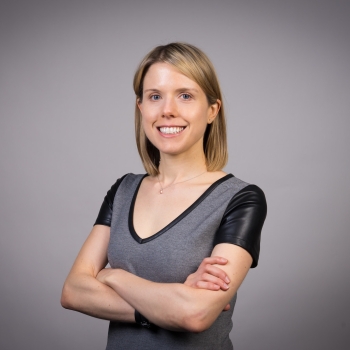
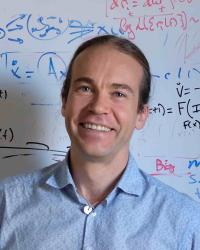
Byron Yu is a Professor in Electrical & Computer Engineering and Biomedical Engineering at Carnegie Mellon University, with affiliations to the Neuroscience Institute and Robotics Institute. He is a core faculty member of the Center for the Neural Basis of Cognition. Research focuses on computational neuroscience , neural dynamics , and brain-machine interfaces . Key contributions include dimensionality reduction techniques and neural population activity analysis. Recent publications explore topics such as neural dynamics during motor imagery, BCI optimization, and attentional processing. His work has appeared in Nature Neuroscience , Neuron , and eLife , often as cover articles. Awardees include the Gerard G. Elia Career Development Professorship and AIMBE Fellowship . His lab has mentored numerous PhD and postdoctoral researchers, many now in academic and industry leadership roles.
Ajmal Mian is a Professor of Computer Science at the University of Western Australia (UWA), affiliated with the School of Physics, Maths and Computing. He holds an Australian Research Council Future Fellowship (2022) and leads research in Artificial Intelligence, Computer Vision, and Machine Learning. His work focuses on 3D computer vision, adversarial AI defense, and explainable AI. His research interests include 3D point cloud analysis, face recognition, human action recognition, and remote sensing. He has published over 300 papers and secured major grants from ARC, NHMRC, and DARPA, totaling millions in funding. He has supervised 29 PhD students and mentored 12 postdoctoral researchers. Key projects include 3D diffusion models for scene generation, robust 3D vision systems, and defense against AI deception attacks. He serves as a fellow of IAPR, an ACM Distinguished Speaker, and has editorial roles at IEEE Transactions on Neural Networks and Pattern Recognition. Research Awards: HBF Mid-Career Scientist of the Year, West Australian Early Career Scientist of the Year, IAPR Best Scientific Paper Award. Grants: ARC Discovery Projects, National Intelligence & Security Discovery grants, DARPA grants for AI security. His teaching spans computer vision, machine learning, and programming courses. Collaborations include defense, medical, and agricultural applications.
Belkis Ezgi Arikan is a researcher at Justus Liebig University Giessen , affiliated with the Department of Psychology and Sports Science . Her work focuses on sensorimotor integration, tactile suppression, and neural mechanisms underlying action-outcome monitoring. She collaborates with Prof. Dr. Fiehler and Dr. Voudouris on project A4 (Predictive somatosensory processing during voluntary movements). Department: Psychology and Sports Science Collaborators: Dr. Dimitris Voudouris, Prof. Dr. Katja Fiehler Her research investigates: How the brain processes self-generated vs. externally generated sensory feedback Neural correlates of tactile suppression networks Role of cerebellum and angular gyrus in temporal recalibration Modulation of BOLD responses during action monitoring Recent publications reveal trends in predictive coding , sensorimotor recalibration , and neural suppression mechanisms across tactile, visual, and multisensory domains. Her work employs neuroimaging techniques like fMRI and behavioral paradigms to study self-motion perception and feedback processing. She contributes to understanding how the brain distinguishes self-initiated from external sensory events, with implications for motor learning and perceptual timing mechanisms.
Dr. Gregor Schuhknecht is a Researcher and incoming Max-Planck Research Group Leader at the Max Planck Institute for Brain Research in Frankfurt, Germany. Starting December 2025, he will lead the Brain Algorithms and Circuits Group, focusing on computational neuroscience and neuronal circuitry in larval zebrafish. His work bridges experimental and computational approaches to understand brain algorithms enabling flexible behaviors. Education PhD in Neuroscience (2014–2019), Institute for Neuroinformatics, University of Zurich and ETH Zurich MSc in Biology (Neuroscience) (2012–2019), ETH Zurich BSc in Biosciences (2009–2012), Heidelberg University His research investigates how synaptic circuitry implements computational algorithms for sensorimotor processing, evidence accumulation, and behavior. Experimental approaches include functional imaging, optogenetics, connectomics, and computational modeling. The group will explore neuronal circuits across scales, from synapse to behavior, with a focus on biophysical properties and dynamic environmental adaptation. Recent publications highlight correlative light/electron microscopy, developmental activity-free circuit formation, and neocortical synapse analysis. Scientific Awards Meselson Prize (2024) Aspirational Neuroscience Award (2023) Best Publication Award (2021) Swiss National Science Foundation Fellowships (2021, 2019, 2018) Gregor Schuhknecht's lab will welcome graduate and postdoctoral researchers starting December 2025, focusing on experimental and computational systems neuroscience. He previously collaborated with Harvard University's Department of Molecular and Cellular Biology and the Department of Moritz Helmstaedter for connectomic analyses.
Marcia O’Malley is the Thomas Michael Panos Family Professor in Mechanical Engineering, Computer Science, Electrical and Computer Engineering, and Bioengineering at Rice University’s George R. Brown School of Engineering. She chairs the Department of Mechanical Engineering and directs the Mechatronics and Haptic Interfaces (MAHI) Lab. Her research focuses on haptics and robotic rehabilitation, particularly wearable robotic systems for training and rehabilitation in virtual environments. She holds adjunct roles at Baylor College of Medicine and the University of Texas Medical School. Educated at Purdue University (B.S., 1996) and Vanderbilt University (M.S./Ph.D., 1999/2001), Dr. O’Malley has been recognized with prestigious awards, including the ONR Young Investigator Award, NSF CAREER Award, and multiple fellowships. She has twice won Rice’s George R. Brown Award for Superior Teaching. Her work bridges engineering and medicine, addressing human-robot interaction challenges in surgical training, workforce safety, and neurorehabilitation. The MAHI Lab develops devices like the hBracelet and Rice Haptic Rocker to enhance human-robot collaboration. She co-founded Houston Medical Robotics, Inc., applying her innovations to real-world medical applications. Research Interests: Haptics, wearable robotics, neural interfaces, surgical training metrics, and rehabilitation robotics. Labs/Teams: MAHI Lab (Biosciences Research Collaborative), collaborations with medical institutions. Grants/Awards: Extensive funding from NSF, ONR, and industry partnerships; leadership in editorial roles for IEEE Transactions on Haptics.
Joyce Y. Chai is a Professor in the Department of Electrical Engineering and Computer Science at the University of Michigan. She is an Associate Director of the Michigan Institute for Data & AI in Society (MIDAS) and affiliated with the Michigan Robotics Institute. Her research focuses on enabling situated communication with embodied AI agents through grounded language processing. Education: Ph.D. in Computer Science from Duke University Her research interests lie at the intersection of natural language processing, embodied AI, and human-robot communication. She investigates how sensorimotor experiences and social interactions shape language learning, aiming to develop pragmatically-rich, cognitively-motivated language technologies for real-world applications. Scientific Awards: EECS Outstanding Achievement Award (2024) University of Michigan Outstanding Paper Award ACL (2023) Honorable Mention Amazon Alexa Prize Simbot Challenge (2023) - SEAGULL Team Winner ACL Fellow (2022) Outstanding Paper Award, EMNLP (2021) William J. Beal Outstanding Faculty Award, Michigan State University (2018) Withrow Distinguished Senior Scholar Award, College of Engineering, MSU (2017) Best Long Paper Award, ACL (2010) NSF Career Award (2004) Joyce Y. Chai has been an influential figure in AI and NLP research, securing significant grants such as the NSF Career Award. She leads the Situated Language and Embodied Dialogue (SLED) research group and has served on the executive board of NAACL. Her teaching includes graduate courses on Natural Language Processing (EECS 595) and Advanced Artificial Intelligence (EECS 692).
Jeannette Bohg is an Assistant Professor of Computer Science at Stanford University, directing the Interactive Perception and Robot Learning Lab. Previously, she was a group leader at the Autonomous Motion Department (AMD) of the MPI for Intelligent Systems (2012-2017). She holds a PhD from KTH Royal Institute of Technology (Stockholm) and degrees from Chalmers University and TU Dresden. Her research focuses on perception, learning, and real-time multi-modal methods for autonomous robotic manipulation and grasping, aiming to bridge principles of human sensorimotor coordination with robotic implementation. Education: PhD in Robotics (KTH), MSc in Art & Technology (Chalmers), Diploma in Computer Science (TU Dresden) Research interests include developing goal-directed, real-time robotic systems capable of meaningful feedback for execution and learning. Key areas are dexterous manipulation, imitation learning, and cross-embodiment policy transfer. Notable contributions include the TidyBot platform and work on force-aware surgical robotics. Awards include the 2019 IEEE ICRA Best Paper Award, 2019 IEEE RA Early Career Award, and 2020 RSS Early Career Award. Her lab explores intersections of robotics, ML, and computer vision. Advising: Actively mentoring students/postdocs in manipulation, perception, and learning. Grants and collaborations span NSF, Stanford AI Lab, and industry partnerships. Future work emphasizes robust real-world deployment and human-robot collaboration. Labs/Teams: Leads the Interactive Perception and Robot Learning Lab, contributing to Stanford’s AI ecosystem. Previously managed the MPI AMD group, fostering interdisciplinary research in autonomous systems.
Tara McAllister is an Associate Professor and Director of the Doctoral Program in Communicative Sciences and Disorders at New York University’s Steinhardt School. She leads the Biofeedback Intervention Technology for Speech (BITS) Lab , focusing on speech learning mechanisms and biofeedback treatments for speech disorders. Her work emphasizes acoustic and ultrasound biofeedback efficacy in resolving residual speech sound disorders, particularly in children. McAllister directs development of the staRt iOS app, expanding access to biofeedback training. She holds degrees from Harvard, MIT, and Boston University, with clinical expertise in speech-language pathology. Education: A.B./A.M., Linguistics, Harvard University (2003) M.S., Communication Disorders, Boston University (2007) Ph.D., Linguistics, MIT (2009) Research Interests: Speech motor control, perception-production links, bilingual phonological development, and technology-driven interventions. Her NIH-funded studies investigate biofeedback applications for speech disorders and crowdsourcing methodologies for perceptual analysis. Grants & Labs: NIH/NIDCD-funded BITS Lab research staRt app development since 2014 Teaching: Courses include Critical Evaluation of Research and Speech Science Instrumentation , emphasizing evidence-based practices in communication sciences.
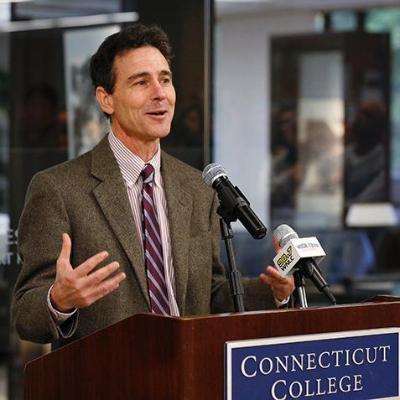
Jeff Moher is an Associate Professor of Psychology and Co-Chair of the Department of Psychology at Connecticut College, where he has been teaching since 2017. He also serves as the Data, Information, and Society Pathway Co-Coordinator, demonstrating his leadership within the institution. His educational background includes a Ph.D. and M.A. from Johns Hopkins University and a B.S. from the University of Michigan. This strong academic foundation has prepared him for his research and teaching career in cognitive psychology. Moher's research focuses on cognitive psychology and cognitive neuroscience, particularly visual attention and cognition in action. His work investigates why distractions occur, when they are likely to arise, and what mechanisms humans can harness to avoid them. He has found that humans employ various cognitive mechanisms to minimize distractions based on explicit knowledge, task goals, object properties, and recent experience, though he has also discovered surprising limitations in attentional selection. His research is particularly relevant given that over 3,000 people are killed annually in the United States from distracted driving. His recent publications show a consistent trajectory examining attentional mechanisms, distraction, and visual processing across different contexts. His work frequently employs sophisticated methodologies to measure both cognitive and motor responses to distractions, revealing how seemingly minor distractions can accumulate to induce serious performance costs. Moher's research is currently funded by grants from the National Science Foundation and the National Institutes of Health, indicating the significance and quality of his work. He likely mentors numerous students through the department's research groups, contributing to their development as researchers. He directs the CAMELab (Center for Attention, Movement, and Embodied Learning), which utilizes multiple methodologies including eye-tracking, electroencephalography, three-dimensional reach-tracking, and psychophysics to approach questions about attention and distraction. Current projects in his lab explore why salient distractors cause people to give up quickly during visual search, the brain mechanisms involved in learning to ignore distractions, how internal distractions impact physical interactions with the world, and how hand movement paths reveal information about attentional processes.
Steve Chase is a Professor at Carnegie Mellon University , affiliated with the Biomedical Engineering , Electrical and Computer Engineering , Neuroscience Institute , and Robotics Institute departments. His research spans Computational Neuroscience , Neural Engineering , and Systems Neuroscience , with a focus on neural circuits, motor control, and brain-computer interfaces (BCI). Research Areas: Sensation & Perception, Methods Development, Diseases & Disorders, Physiological & Anatomical Methods. Lab Highlights: Development of the RotaWheel, memory trace studies in the motor cortex, and investigations into BCI stabilization and learning dynamics. Scientific Contributions: His lab has published extensively in journals like Neuron , Nature Computational Science , eLife , and PNAS , with notable works on neural activity patterns, dimensionality reduction in calcium imaging, and sensory constraints on motor cortex modulation. Students and postdocs in his lab have received awards, including the CNBC best paper award.
Eric Shea-Brown is a Professor in the Department of Applied Mathematics at the University of Washington, part of the College of Arts & Sciences. He holds adjunct roles in the Department of Physiology and Biophysics and is an affiliate investigator at the Allen Institute for Brain Science. His research focuses on the nonlinear dynamics of neural networks, decision-making processes in neural circuits, and the interplay between neural encoding and sensory information. He collaborates extensively with experimentalists and theorists across institutions, leveraging tools from dynamical systems, stochastic processes, and information theory. Education: Bachelor's in Engineering Physics, UC Berkeley Ph.D. in Applied and Computational Mathematics, Princeton University Eric's work is supported by the Burroughs-Wellcome Fund, NSF, NIH, and the Simons Foundation. His lab emphasizes equity and inclusion and is part of the UW Computational Neuroscience Center. He has held postdoctoral positions at NYU’s Courant Institute and has affiliations with the Center for Sensorimotor Neural Engineering and the UW Institute for Neuroengineering. Research highlights include studies on neural decision-making dynamics, spike coordination mechanisms, graph-theoretic approaches to neural connectomics, and chaos in spiking circuits. His group collaborates with UW neuroscience departments and the Allen Institute to analyze emerging neural datasets.
Professor Guy Wallis is a Professor and Director of Research at the School of Human Movement and Nutrition Sciences, Faculty of Health, Medicine and Behavioural Sciences at the University of Queensland. He is also an Affiliate of the Centre for Sensorimotor Performance. His work bridges visual neuroscience, computational modeling, and applied human factors research, with significant contributions to understanding visual recognition and visuomotor behavior. Education: Bachelor (Honours) of Engineering in Electrical and Electronic Engineering from Imperial College London PhD in Visual Neuroscience from University of Oxford, UK Prof. Wallis's research program combines computational modeling with behavioral studies, many conducted in computer-controlled virtual environments. His work spans visual neuroscience, object recognition, visuomotor control, and simulator-based training. He has made significant theoretical contributions to understanding how visual recognition is achieved in biological systems and how everyday visuomotor tasks are regulated, challenging existing paradigms and offering new insights. His recent publications reveal a strong focus on virtual reality applications, visual-motor integration challenges, and cross-species cognitive studies. There's a clear trend toward investigating how virtual environments can be optimized for training and assessment, with particular attention to visual perception limitations and how humans adapt to these environments across diverse contexts from surgical training to aviation. Scientific Awards and Recognitions: Elected Fellow of the Queensland Academy of Arts and Sciences (2022) ARC Medical Research Advisory Group (2022-2024) ARC College of Experts (2019-2021) CSIRO CSS Human Research Ethics Committee member (2020-2022) UQ Health and Behavioural Sciences Faculty, HDR Supervision Award (2018) ARC Future Fellowship (2011-2014) ARC QEII Fellowship (2003-2007) UQ Postdoctoral Fellowship (2001-2003) Prof. Wallis has successfully secured funding from major organizations including the Australian Research Council, the Human Frontier Science Program, and the Wellcome Trust. His industry partnerships span diverse sectors such as construction training, mining, healthcare, and aerospace. His research has led to the development of novel training programs for health professionals, impacted the design of man-machine interfaces for mining equipment, and informed the design parameters for pilot training systems. As Director of Research, he oversees the research direction of the School of Human Movement and Nutrition Sciences, fostering interdisciplinary collaborations and supporting early-career researchers through his leadership in the Centre for Sensorimotor Performance.
Johannes Larsch is a tenure-track Assistant Professor at the Center for Integrative Genomics within the Faculty of Biology and Medicine at Université de Lausanne (UNIL). His research focuses on understanding the neuronal mechanisms underlying social interactions, using larval zebrafish as a model organism. He employs advanced techniques like virtual reality and optical imaging to study how social signals are processed in the brain. Education: Bachelor of Biology, University of Konstanz, Germany PhD in Neurobiology, Rockefeller University, USA (lab of Cori Bargmann) Postdoc at Max Planck Institute of Neurobiology, Germany (with Herwig Baier) Research interests center on neuronal circuits driving group behavior, social recognition, and the interplay between genetics and environment in shaping behavior. His lab investigates how individual brains coordinate collective social behaviors through studies of neuronal activity and circuit dynamics. Current lab openings include fully funded PhD and PostDoc positions focused on social neuroscience and neurogenomics. Contact: johannes.larsch@unil.ch .
Parastoo Abtahi is an Assistant Professor in the Computer Science Department at Princeton University. She leads the Situated Interactions Lab (Ψ Lab) as part of the Princeton HCI Group, focusing on AR/VR and spatial computing. Prior to Princeton, she worked at Meta Reality Labs Research. PhD in Computer Science from Stanford University BSc in Electrical and Computer Engineering from University of Toronto (Engineering Science program) Her research explores wearable interactive technologies that augment human intelligence in physical contexts through: Input on-the-go: Low-effort, privacy-preserving multimodal interfaces Intelligent output: Timely, minimal multisensory systems Situated AI: Personalizable, predictable, safe physical-digital interaction Recent publications analyze: Drone-based haptic illusions for AR/VR Microgestures for mobile AR input Interactivity in explainable AI systems Temporal dynamics in VR haptics Awards include: 2025 Google Research Scholar Award CHI 2019 & 2018 Honorable Mentions She teaches courses like: COS 436: Human-Computer Interaction COS IW: AR Meets AI
Noah J. Cowan is a Professor of Mechanical Engineering at Johns Hopkins University's Whiting School of Engineering, with secondary appointments in Computer Science, Electrical & Computer Engineering, and Neuroscience. He is the founder and director of the Locomotion in Mechanical and Biological Systems (LIMBS) Laboratory, part of the Laboratory for Computational Sensing and Robotics. His research focuses on neuromechanics, robotics, and control theory, bridging neuroscience, biomechanics, and engineering. Cowan's work investigates how organisms achieve precise locomotion and applies these insights to advance robotics, neuroprosthetics, and rehabilitation technologies. Education: B.S. Electrical Engineering (Ohio State, 1995), M.S. and Ph.D. Electrical Engineering & Computer Science (University of Michigan, 1997/2001). Postdoctoral fellowship at UC Berkeley (2001–2003) before joining Johns Hopkins. Research Interests: Neuromechanics of motion, bio-inspired robotics, multisensory integration in animals (e.g., electric fish, Drosophila), and sensorimotor control in clinical contexts like cerebellar ataxia. His lab studies how neural circuits interact with biomechanics to produce movement, with applications to robotic design and neurological disorder treatments. Awards & Recognition: Presidential Early Career Award for Scientists and Engineers (2010), IEEE Fellow, NSF CAREER Award (2009), and multiple teaching and research excellence awards at Johns Hopkins. His work has been published in top journals like Nature , Proceedings of the National Academy of Sciences , and IEEE Transactions on Robotics . Outreach & Mentorship: Longtime mentor for high school and undergraduate students in STEM, leading programs like the Baltimore Ingenuity Project and WISE. Served as team leader for the STEM Achievement in Baltimore Elementary Schools (SABES) initiative. Key Projects: Development of the LIMBS Lab’s VR systems for animal studies, bioelectric navigation technologies for medical devices, and collaborations with clinicians on upper limb movement disorders. His team’s research on electric fish and fruit flies has revealed principles of adaptive control applicable to robotics and AI.