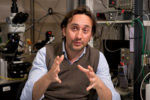
Professor Charlotte Stagg is based at the Nuffield Department of Clinical Neurosciences (NDCN) within the University of Oxford . She serves as Associate Director of the Oxford Centre for Integrative Neuroimaging and holds a Beale Fellow in Medicine position at St Hilda's College. Her research focuses on the physiological mechanisms of motor learning and stroke recovery, utilizing multimodal neuroimaging and brain stimulation techniques. Research Interests : GABA signaling, neuroplasticity, transcranial ultrasound, stroke neurorehabilitation Techniques : 7T MRI, MEG, non-invasive brain stimulation, neurochemistry Selected Scientific Awards : Wellcome Trust Senior Research Fellow Beale Fellow in Medicine, St Hilda's College Collaborations : Leads the Physiological Neuroimaging Group (PiNG), part of the Neuroplastics Collaborative Network with groups led by Heidi Johansen-Berg and Jacinta O'Shea. Current advisees include DPhil student Birtan Demirel and visiting researchers from HEC Montréal and The University of Manchester.
Shinsuke Shimojo is the Gertrude Baltimore Professor of Experimental Psychology at the California Institute of Technology (Caltech). He holds a B.A. (1978), M.A. (1980) from the University of Tokyo, and a Ph.D. (1985) from MIT. At Caltech, he has served as Associate Professor (1997–98), Professor (1999–2010), and Baltimore Professor (2010–present). His research focuses on perceptual decision-making, implicit cognition, and the neural mechanisms underlying sensory perception and social interaction. His work employs advanced methods like fMRI, EEG, and transcranial stimulation to study topics such as crossmodal integration, visual illusions, and the social brain. Shimojo leads the Shimojo Psychophysics Laboratory, collaborating with institutions like NTT Communication Science Laboratories, Harvard MGH, and MetaModal Inc. His lab investigates phenomena like sensory substitution, team flow dynamics, and human magnetoreception. Notable achievements include pioneering studies on the 'gaze cascade effect' and developing the ePlegona game system for studying team flow. Awards include the Red Dot Design Concept Award (2024) and grants from JST CREST and MEXT gCOE programs. His research bridges cognitive and neuroscience disciplines, emphasizing interdisciplinary approaches to understanding human perception and decision-making. Current projects explore implicit brain functions, social communication, and the neural correlates of emotional decisions. Shimojo also contributes to science communication through his column in Asahi Shimbun and public outreach via YouTube demonstrations of visual illusions.
Dani S. Bassett is the J. Peter Skirkanich Professor at the University of Pennsylvania with primary appointment in the Department of Bioengineering (School of Engineering and Applied Science) and secondary appointments in Physics & Astronomy, Electrical & Systems Engineering, Neurology, and Psychiatry. They serve as an external professor at the Santa Fe Institute and lead a research group focused on complex systems and network science. B.S. in Physics, Penn State University (2004) Ph.D. in Physics, University of Cambridge as Churchill Scholar and NIH Health Sciences Scholar (2009) Postdoctoral position at UC Santa Barbara and Junior Research Fellow at Sage Center for the Study of the Mind Their research integrates complex systems science, statistical mechanics, and applied mathematics to study network dynamics in physical and biological systems. Key areas include brain connectivity mechanisms, cognitive processes, neurological disease modeling, granular matter physics, and collective human curiosity. Bassett employs advanced methodologies including algebraic topology, network control theory, and multilayer network analysis to investigate how network architecture influences system function across diverse domains. Recent publications reveal a strong trend toward interdisciplinary network science applications, particularly in modeling human curiosity through Wikipedia navigation patterns and analyzing brain network reconfiguration during cognitive development. Their work bridges physics, neuroscience, and behavioral science with emphasis on topological network properties and dynamical processes. American Psychological Association's Rising Star (2012) MacArthur Fellow Genius Grant (2014) Lagrange Prize in Complex Systems Science (2017) Erdos-Renyi Prize in Network Science (2018) American Physical Society Fellow (2021) Web of Science Highly Cited Researcher (3 consecutive years) Bassett's research is supported by major agencies including NSF, NIH, DoD, ONR, and private foundations (MacArthur, Sloan, Paul Allen). Their lab actively recruits students from physics, engineering, neuroscience, and computer science backgrounds, emphasizing diversity in academic perspectives. Current projects include the 'Curious Minds' initiative exploring collective knowledge building and network-based models of neurological disorders. Bassett co-authored the MIT Press book 'Curious Minds: The Power of Connection' with philosopher Perry Zurn.
Prof. Constantin A. Rothkopf is a W3 Professor at the Department of Psychology, Technische Universität Darmstadt, and a secondary member of the Department of Computer Science. He serves as Founding Director of the Centre for Cognitive Science and founding member of the Hessisches Zentrum für Künstliche Intelligenz (hessian.ai). He is also part of the European Laboratory for Learning and Intelligent Systems (ELLIS) and the DAAD Konrad Zuse Schools of Excellence in Artificial Intelligence (ELIZA). His research focuses on the interplay between perception and action, using computational models and experimental studies in humans. Current work includes eye-tracking studies in naturalistic environments, inverse optimal control models, and developing algorithms for virtual agents. Education: Ph.D. in Neuroscience and Informatics from the University of Rochester, followed by postdoctoral research at Frankfurt Institute for Advanced Studies (FIAS). He has held visiting professorships at Central European University (2017) and Columbia University (2023). Awards include an ERC Consolidator Grant (2022) and SCENE Project Funding (2025). Research Interests: Active vision, decision-making under uncertainty, sensorimotor control, and computational modeling. Key themes include how humans use sensory input to form beliefs, make decisions, and act in dynamic environments. Grants/Awards: ERC Consolidator Grant (2022), SCENE Funding (2025) Labs/Teams: Centre for Cognitive Science, hessian.ai, ELLIS Unit Darmstadt
Roman Kuc is a Professor of Electrical Engineering at Yale University, affiliated with the School of Engineering & Applied Science. He directs the Intelligent Sensors Laboratory, focusing on biomimetic sensors for robotics and bioengineering. His research explores brain-based devices (BBDs), sonar sensing, and neuromorphic processing inspired by biological systems. He holds a BSEE from Illinois Institute of Technology and a PhD from Columbia University. Dr. Kuc’s work bridges signal processing, robotics, and bioengineering, with applications in autonomous systems and clinical diagnostics. He has published over 200 papers and authored textbooks like Electrical Engineering in Context and The Digital Information Age . Notable honors include an honorary doctorate from the Glushkov Institute of Cybernetics and the Yale Sheffield Distinguished Teaching Award. His research themes include cognitive mapping via sonar echoes, neural network-based classification of environmental features, and biomimetic approaches to echolocation. Recent work emphasizes sensorimotor integration and robust performance in uncertain environments. Scientific awards highlight his contributions to robotics, signal processing, and education. His lab develops systems that emulate biological sensory mechanisms, aiming to advance robotics, medical applications, and assistive technologies.
Brian Horsak is a Professor and Head of the Center for Digital Health and Social Innovation at Fachhochschule Steyr. He holds an endowed professorship in Applied Biomechanics and Rehabilitation Research, focusing on integrating advanced technologies like VR/AR, machine learning, and wearable devices into clinical gait analysis and motor rehabilitation. His roles include leading the Institute of Health Sciences and contributing to the Department of Health Sciences and Media and Digital Technologies. Education: Dr. rer. nat. (2012, University of Vienna), Habilitation in Kinesiology (2020, University of Vienna), Master's in Sports Science (2002–2008, University of Vienna). Research interests revolve around improving patient care through biomechanical innovations, including musculoskeletal simulations, gait pattern analysis, and rehabilitation technologies. He leads projects like ReMoCap-Lab (motion capture for motor rehabilitation) and chairs the Applied Biomechanics in Rehabilitation Research initiative. Key achievements include the Lower Austria Innovation Prize (2021), multiple best paper awards, and grants for projects like TRUST AI and VReeze. His work bridges clinical practice with digital health solutions, emphasizing explainable AI (XAI) in gait classification and VR-based balance training. Notable contributions include developing the GaitRec dataset and studies on smartphone-based motion capture reliability. He collaborates internationally, publishing widely in Gait & Posture , Scientific Reports , and IEEE journals. Current projects focus on AI-driven gait analysis, musculoskeletal modeling, and XR applications in healthcare.
Heidi Johansen-Berg is Pro-Vice Chancellor (Strategic Initiatives) at the University of Oxford and Associate Head (Research and Innovation) in the Medical Sciences Division. She holds a Professorship in Cognitive Neuroscience and a Wellcome Principal Research Fellowship at the Nuffield Department of Clinical Neurosciences, where she leads the Plasticity Group at the Oxford Centre for Functional MRI of the Brain (FMRIB). Her research centers on neuroplasticity mechanisms in the sensorimotor system, with emphasis on white matter plasticity, activity-dependent myelination, and implications for stroke rehabilitation and age-related brain decline. She integrates multimodal neuroimaging with behavioral studies to investigate how the brain adapts to learning, experience, and damage, translating findings into therapeutic interventions for neurological conditions. Recent publications reveal strong thematic trends in sleep-motor interactions post-stroke, exercise-induced neuroprotection in aging and adolescence, and experience-dependent white matter remodeling. Her work demonstrates how physical activity modulates brain structure-function relationships across the lifespan, with direct applications for neurorehabilitation protocols. Scientific recognition includes: Fellow of the Royal Society (FRS) Fellow of the Academy of Medical Sciences (FMedSci) Wellcome Principal Research Fellowship Professor Johansen-Berg directs the WIN Plasticity Group and co-leads the WIN Neuroplastics Network and Oxford University Centre for Integrative Neuroimaging (OxCIN). Her research program drives translational initiatives in stroke recovery and brain health maintenance, with ongoing projects examining digital sleep therapies, myelin dynamics, and exercise neuroscience through large-scale clinical trials and advanced imaging methodologies.
Dr. Tim Oates is a Professor in the Department of Computer Science and Electrical Engineering at the University of Maryland, Baltimore County . His research spans machine learning, artificial intelligence, and brain-machine interfaces, with a focus on weakly supervised methods, human-in-the-loop reinforcement learning, and grounded policy development for robotics. Ph.D., Computer Science, University of Massachusetts, Amherst, 2000 M.S., Computer Science, University of Massachusetts, Amherst, 1997 B.S., Computer Science and Electrical Engineering, 1989 Current research threads include: Developing non-invasive brain injury severity assessment via medical time series Modeling human brain development through computational frameworks Designing algorithms for autonomous robotic learning Recent publications highlight AI security mechanisms (backdoor detection via tensor decomposition, matrix factorization) Medical applications (3D artery reconstruction, skin lesion diagnosis, EEG denoising) Neuro-symbolic integration (holographic representations, language-guided reinforcement learning) Mathematical reasoning (schema-based problem solving, subitizing algorithms) Contact: oates@cs.umbc.edu | Office: 336 Information Technology and Engineering (ITE) Building
Chris Monico is an Associate Professor in the Department of Mathematics & Statistics at Texas Tech University . He has been a faculty member there since 2003, following post-doctoral research at the University of Notre Dame. Education B.S. in Mathematics – Monmouth University M.S. in Mathematics – University of Notre Dame Ph.D. in Mathematics – University of Notre Dame Research Focus Monico’s scholarship centers on the intersection of cryptology , computational algebra , and number theory . A significant recent thrust has been the application of machine-learning techniques to mathematical finance , evidenced by work on random-forest models for option pricing and high-frequency trading risk metrics. Parallel lines of inquiry include post-quantum cryptographic schemes built on tropical algebra and semigroup actions, as well as classical problems in Ramsey theory and combinatorial semigroups . Publication Trends Between 2015 and 2025 Monico has published prolifically, with a clear shift around 2020 toward mathematical finance and machine-learning applications , alongside continued output in algebraic cryptanalysis and combinatorics . His 2024–2025 articles emphasize data-driven models in trading, whereas 2020–2021 works concentrate on cryptanalyses of tropical and group-based key-exchange systems. Earlier contributions focus on computational number theory and semigroup-based cryptography. Contact Information Email: c.monico@ttu.edu Phone: 806-834-4144 Office: Department of Mathematics & Statistics, Texas Tech University, 1108 Memorial Circle, Lubbock, TX 79409-1042 Advising & Grants No specific doctoral or master’s students, funded grants, or named awards are detailed in the provided text. Laboratory or Research Group The text does not mention any dedicated laboratory or research group.
Lyndia Wu is an Assistant Professor in the Department of Mechanical Engineering at the University of British Columbia's Faculty of Applied Science, where she holds the prestigious Canada Research Chair in Wearable Brain Injury Sensing. She leads the SimPL (Sensing in Biomechanical Processes Lab) and maintains an active research program focused on biomechanics and medical device development. Her educational background includes: B.A.Sc. from the University of Toronto M.S. from Stanford University Ph.D. from Stanford University Postdoctoral Fellowship from Stanford University Dr. Wu's research program centers on developing novel sensing and data analytics technologies to study human biomechanics in health and disease states. Her primary research areas encompass brain injury or concussion biomechanics using advanced sensing, modeling, and machine learning approaches, as well as the development of innovative sensors and algorithms for studying sleep disorders like obstructive sleep apnea. She specializes in wearable sensors for brain health monitoring, traumatic brain injury mechanisms, and AI applications in healthcare settings. Analysis of her recent publications reveals a strong focus on sports-related head impacts (particularly in soccer), EEG monitoring following impacts, and sleep monitoring after concussions. Her work demonstrates interdisciplinary collaboration across biomechanical engineering, neuroscience, and clinical medicine, with publications spanning biomechanics, neurotrauma, biomedical instrumentation, and signal processing domains. Dr. Wu has received significant recognition for her work, including: Scholar Award from the Michael Smith Foundation for Health Research (2019) Junior Faculty Teaching Award from UBC Mechanical Engineering (2022) She actively supervises graduate students in Mechanical Engineering programs (MASc and PhD) and collaborates extensively across disciplines. Dr. Wu is affiliated with multiple research centers including the Institute for Computing, Information and Cognitive Systems (ICICS), Origins of Balance Deficits and Falls, and SmarT Innovations for Technology Connected Health (STITCH), reflecting her interdisciplinary approach to solving complex biomedical challenges. As director of the SimPL lab, she leads a research team developing cutting-edge sensing solutions for biomechanical processes with particular emphasis on brain injury prevention, monitoring, and recovery assessment through innovative engineering approaches.
Friedl De Groote is a Senior Lecturer at KU Leuven's Faculty of Human Movement and Rehabilitation Sciences, Department of Human Movement Sciences, specializing in the biomechanics of human movement. She leads the Biomechanics of Human Movement Research Group and is a member of the iSi Health - KU Leuven Institute for Physics-based Modeling for In Silico Health. Her research focuses on understanding neuromusculoskeletal control of human movement, particularly through computational modeling approaches. She investigates gait disorders in children with cerebral palsy and Duchenne muscular dystrophy, examining how muscle impairments, contractures, and neural control mechanisms contribute to altered movement patterns. Her work combines experimental biomechanics with predictive computer simulations to uncover the underlying mechanisms of movement disorders and develop new rehabilitation approaches. She also studies fundamental aspects of human locomotion, balance control, and energy expenditure during walking. Her recent publications demonstrate a strong emphasis on predictive simulations to understand the relationship between neuromusculoskeletal impairments and movement pathology. Her research spans multiple domains including cerebral palsy, Duchenne muscular dystrophy, gait analysis, balance control, and musculoskeletal modeling. She frequently collaborates with clinical researchers to bridge the gap between computational models and clinical applications. Dr. De Groote is actively involved in various academic councils including the Faculty Council FaBeR, POC Rehabilitation Sciences and Physiotherapy, POC Physical Education and Movement Sciences, and multiple departmental councils within Human Movement Sciences. Her ORCID identifier is 0000-0002-4255-8673 . She currently leads or co-leads numerous research projects funded through KU Leuven and external grants, with a focus on understanding walking control mechanisms, energy expenditure during locomotion, and developing computational models to inform rehabilitation strategies for children with movement disorders. Her research portfolio demonstrates a commitment to translating biomechanical insights into clinically relevant applications.
Lee M. Miller is a Professor and Vice Chair of Academic Affairs in the Department of Neurobiology, Physiology and Behavior at the University of California, Davis, affiliated with the Center for Mind and Brain. His research focuses on neuroengineering, computational neuroscience, and neural mechanisms underlying attention, speech processing, and multisensory integration. Research interests include the development of neural prosthetics, decoding of neuromuscular signals for prosthetic control, and understanding how auditory and visual systems interact during speech perception and attentional processes. His work bridges clinical applications (e.g., cochlear implants) with fundamental neuroscience, leveraging tools like electrophysiological recordings, EEG/MEG, and advanced signal processing techniques. Recent publications highlight innovations in electromyographic speech neuroprosthetics, the topology of neuromuscular signals, and the neural basis of speech-in-noise processing. Miller’s studies emphasize translational potential, such as improving speech synthesis from brain signals and designing haptic feedback systems for motor coordination. His contributions have advanced understanding of neural mechanisms in sensory integration, auditory attention, and the impact of cognitive factors on perception. Miller maintains a lab dedicated to these interdisciplinary efforts, with a focus on both basic science and clinical applications.
Dr. Kevin J. Deluzio is an Associate Professor in the Department of Mechanical and Materials Engineering at Queen's University and serves as Dean of Smith Engineering. He holds a cross-appointment in the Centre for Health Innovation and is affiliated with the Canadian Orthopaedic Research Society and multiple biomechanics societies. His research focuses on musculoskeletal health, biomechanics of human locomotion, and knee osteoarthritis treatment evaluation. Dr. Deluzio earned his BSc (1988), MSc (1990), and PhD (1997) from Queen's University, followed by postdoctoral training at Harvard University. He previously held a faculty position at Dalhousie University, establishing the Dynamics of Human Motion Laboratory. Education: Bachelor of Science (Honours) in Mathematics and Engineering, Queen's University (1988) Master's of Science in Mechanical Engineering, Queen's University (1990) Doctor of Philosophy in Mechanical Engineering, Queen's University (1997) Post-doctorate in Orthopaedic Biomechanics, Harvard University (1999) Research Interests: Dr. Deluzio investigates biomechanical factors of musculoskeletal diseases (e.g., knee osteoarthritis), non-invasive therapies, and surgical treatments like total knee replacement. His work involves markerless motion capture systems and collaborations between engineering and medicine through the Human Mobility Research Centre at Kingston General Hospital. Grants & Awards: While no specific awards are listed, his research has been supported through academic appointments and institutional affiliations. Labs & Teams: Directs the Dynamics of Human Motion Laboratory and collaborates at the Human Mobility Research Centre, integrating engineering and medical expertise to advance musculoskeletal health solutions.
Mathew Yarossi is an Assistant Professor at Northeastern University with a joint appointment in the College of Engineering (Electrical and Computer Engineering) and Bouvé College of Health Sciences (Physical Therapy, Movement, and Rehabilitation Sciences). He holds a PhD from Rutgers University (2017) and joined Northeastern in 2022. Research Focus: His work bridges movement neuroscience, clinical research, and engineering, with emphasis on AI-driven solutions for rehabilitation. Key areas include physiological signal processing, neuromuscular control, and human-robot interaction. His NSF-funded project on dyadic object handover with robots highlights his interdisciplinary approach. Publications: Recent work explores VR-based interventions, EMG-driven prosthetics, and computational modeling of transcranial stimulation. His 2025 patent on virtual reality experiment design underscores his translational impact. Awards: Holds a patent for VR experiment systems (2025). Advising & Grants: Mentors students in PEAK Experiences programs and collaborates with the U.S. Army on AI applications in combat systems. His lab is part of the Institute for Experiential AI.
Marco Tripodi is a researcher at the University of Cambridge's MRC Laboratory of Molecular Biology (LMB), focusing on neural circuits for goal-oriented actions. His work explores how sensory inputs translate into coordinated movements. Research Focus : Neural circuit organization, motor control, sensory-motor integration, and brain mapping. Methodologies : Mouse genetics, optogenetics, viral circuit tracing, in vivo electrophysiology, and behavioral analysis. Recent studies highlight his lab's contributions to understanding collicular circuits, sensorimotor alignment, and advanced tools like self-inactivating rabies for neural circuit mapping. Publications span high-impact journals including Nature, Current Biology, and Cell. His group includes researchers exploring these areas collaboratively. Awards and broader affiliations are not explicitly mentioned in the provided text.