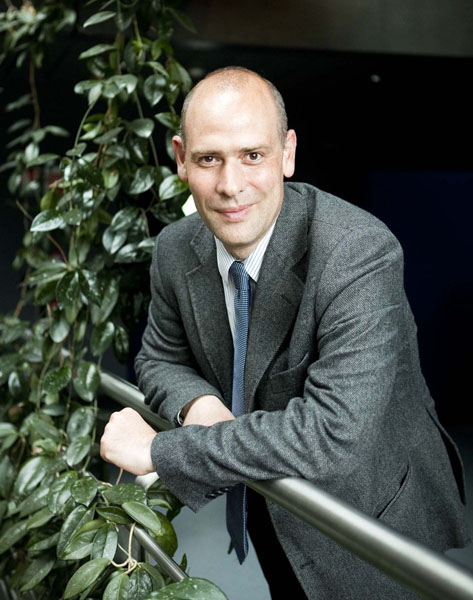
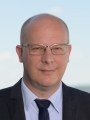
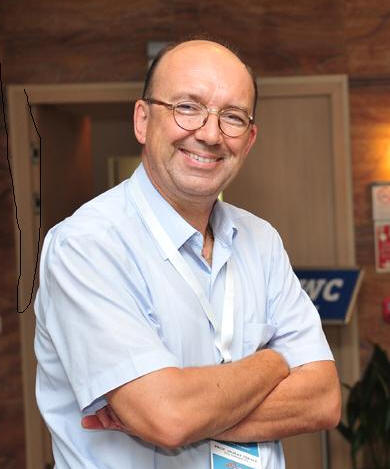
Paolo Samorì is a full-time Professor at the Université de Strasbourg , where he serves as Director of the Nanochemistry Laboratory and Emeritus Director of the Institut de Science et d'Ingénierie Supramoléculaires (ISIS) . He is affiliated with multiple prestigious academies, including the German National Academy of Science and Engineering (ACATECH) , Royal Society of Chemistry (FRSC) , and European Academy of Sciences (EURASC) . Education: Laurea (MSc) in Industrial Chemistry (University of Bologna, 1995), PhD in Chemistry (Humboldt University Berlin, 2000, summa cum laude). His research focuses on Nanochemistry , 2D materials , and supramolecular systems at interfaces , with applications in organic electronics , optoelectronics , and sensing . He pioneered methods for scanning probe microscopies and photoresponsive nanodevices , including graphene-based systems and diarylethene molecular switches. His scientific awards include the ERC Advanced Grant (2019) , Blaise Pascal Medal (2018) , and Catalán-Sabatier Prize (2017) , among 20+ honors. He has trained over 130 students and researchers , including 34 professors now active globally.
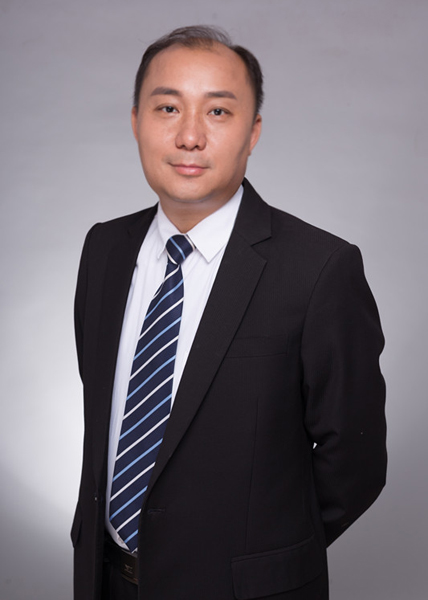
Hongbo Jiang is a Distinguished Professor and Vice Dean of the College of Computer Science and Electronic Engineering at Hunan University, China. He holds concurrent roles as Director of the Trusted Systems and Networking Key Laboratory of Hunan Province and Director of the Hunan International Technical Cooperation Base for High-Performance Computing and Distributed Systems. His academic journey includes tenures as a Professor at Huazhong University of Science and Technology and a Hong Kong Scholar Research Fellow at The Chinese University of Hong Kong. Education: PhD in Computer Science (Case Western Reserve University, 2008), B.S./M.S. in Mathematics (Huazhong University of Science and Technology, 2002). Research Interests: Distributed systems, mobile computing, smart sensing, wireless networks, IoT, and edge computing. Ongoing projects include mobile/wireless applications, data science in IoT, and edge computing platforms. His work emphasizes practical implementations such as DriverSonar for driving safety and SmileAuth for biometric authentication. Key Achievements: Elected Member of Academia Europaea (2022), Fellow of AAIA, IET, and BCS. Notable awards include the Wu Wenjun Science and Technology Award (2020) and multiple best paper recognitions. Over 100+ publications in top venues like ACM MobiCom, IEEE/ACM Transactions. Professional Contributions: Editorial roles across 8+ journals including IEEE Transactions on Mobile Computing and ACM Transactions on Sensor Networks. Conference leadership includes co-founding ACM TURC and EAI ICECI. Active in technical committees for INFOCOM, MOBIHOC, and ICDCS. Labs/Teams: Leads research groups focused on networking, IoT, and edge computing. Current openings for PhD/MSc students and PostDoc researchers with strong mathematical and systems backgrounds.
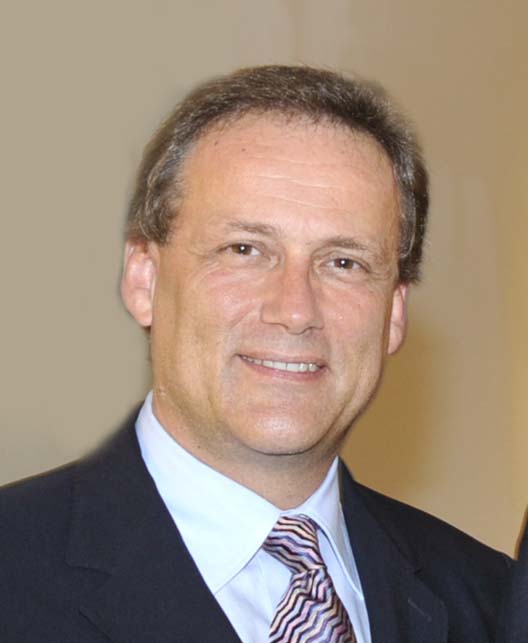
Roland Ludwig is an Associate Professor at the Institute of Food Technology, Department of Food Science and Technology, University of Natural Resources and Life Sciences, Vienna (BOKU). He is also the current Senate Chairman at BOKU, demonstrating strong institutional leadership. His research is centered on enzyme technology, biocatalysis, biosensors, and electrochemistry, with a particular focus on oxidoreductases such as cellobiose dehydrogenase (CDH) and lytic polysaccharide monooxygenases (LPMOs), which are crucial in biomass degradation and bioenergy applications. His research interests span food biotechnology, enzyme technology, biocatalysis, biosensors, process engineering, electrochemistry, and nanobiotechnology. He investigates the molecular mechanisms of electron transfer in redox enzymes, their application in biosensors and biofuel cells, and their role in the depolymerization of lignocellulosic biomass. His work integrates biochemical, electrochemical, and structural approaches to understand and engineer enzyme function. The recent publication trends highlight a strong focus on LPMOs and CDHs, with studies on their kinetics, substrate specificity, domain dynamics, electron transfer mechanisms, and engineering for improved stability and activity. These works frequently appear in high-impact journals such as ACS Catalysis and Bioelectrochemistry, reflecting the significance and innovation of his research in biocatalysis and bioelectrochemistry. International DropSens Award for Applied Electroanalytical Chemistry Medal of Honour, Faculty of Food Technology and Biotechnology, University of Zagreb RIZ Genius Award for Innovative Sensor Technology Austrian APART Fellowship INiTS Award 2007 (Life Science) Förderpreis der Österreichischen Gesellschaft für Biotechnologie Roland Ludwig actively supervises students and leads multiple externally funded research projects from FWF and EU, including grants focused on electron transfer in oxidoreductases and the kinetic analysis of oxidative biomass-degrading enzymes. He collaborates with international research groups and is a frequent speaker at major scientific conferences. His research contributes to sustainable bioprocesses, green chemistry, and the development of novel bio-based technologies. He is involved in research teams and collaborative projects such as the FWF-funded Doktoratskolleg "Biomolecular Technology of Proteins" and participates in interdisciplinary initiatives bridging food technology, biotechnology, and materials science. His lab focuses on enzyme characterization, protein engineering, and the development of bioelectrochemical devices.
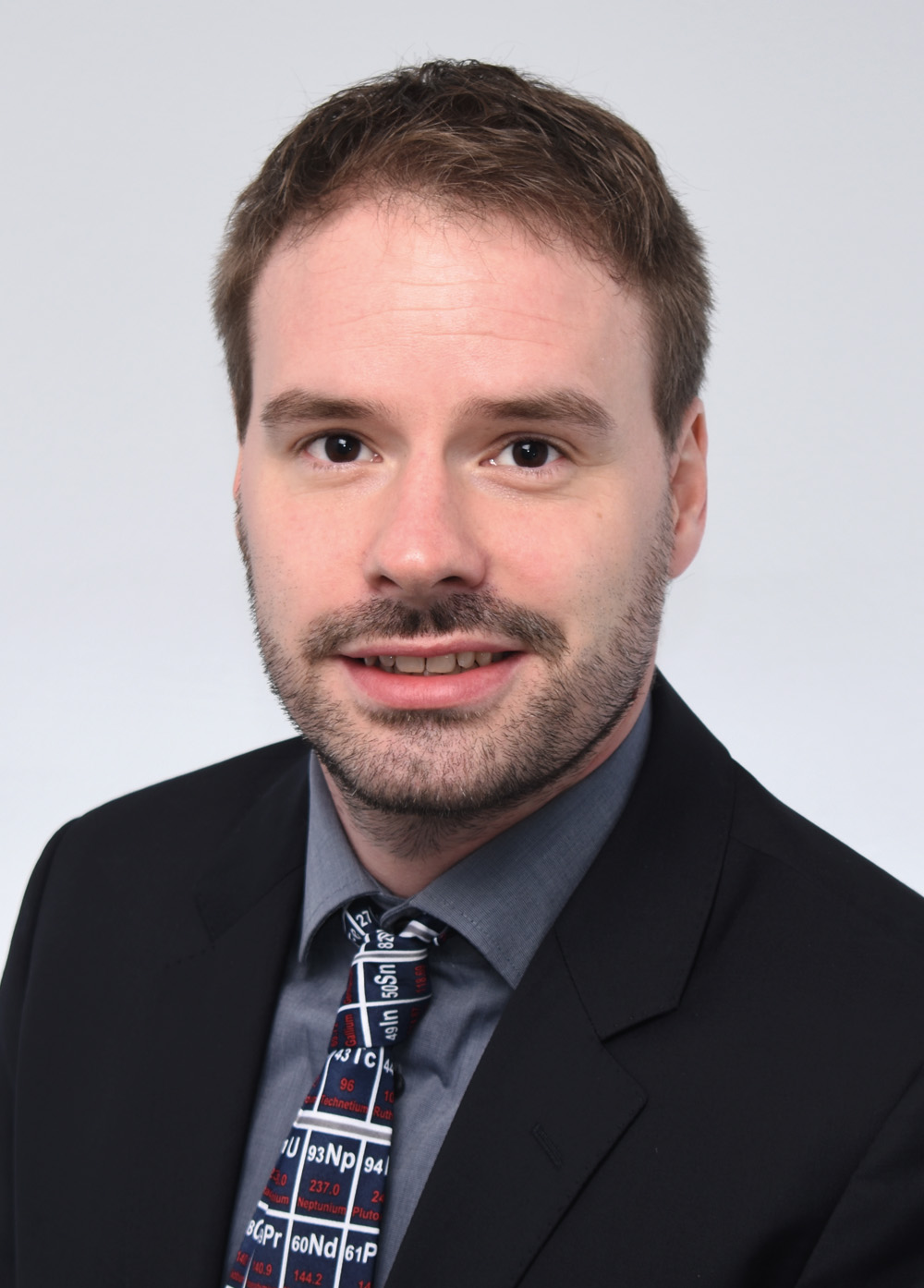
Hannes Hick is a Professor at Graz University of Technology , affiliated with the Institute of Machine Elements and Development Methodology . His research focuses on mechanical development, tribology, and systems engineering for automotive and industrial applications. He actively contributes to engineering education and methodology standardization. Research Interests Hydrogen internal combustion engines System modeling and digital twins Tribology in electric drivetrains Sustainable engineering practices MBSE (Model-Based Systems Engineering) Friction and wear analysis Article Trends His recent work emphasizes hydrogen propulsion systems, model-based approaches for interdisciplinary engineering challenges, tribological optimization for sustainable mobility, and integrating AI with mechanical design workflows. Labs and Teams He leads research at the Institute of Machine Elements, focusing on mechanical validation and development methodologies for advanced powertrain systems.
Prof. Maurizio Musso is a Professor of Experimental Physics at the University of Salzburg , leading the Musso Group within the Faculty of Natural and Life Sciences . His research focuses on condensed matter physics, materials science, and Raman spectroscopy applications. The group specializes in the characterization of novel materials, including biofoams, nanomaterials, and sustainable biomaterials, leveraging advanced spectroscopic techniques such as Raman scattering and FTIR. Prof. Musso is also actively involved in teaching, contributing to courses in the Joint-Degree Bachelor’s Program in Engineering (PLUS-TUM), the Master’s program in Chemistry and Physics of Materials, and the Bachelor’s degree in Physics. Research activities emphasize multi-technique analysis of materials like tannin-furanic foams and nanostructured silicon, with applications in energy storage, environmental sensing, and industrial manufacturing. The Musso Group collaborates on projects related to sustainable materials development, plasmonic device fabrication, and electrochemical systems. Their work bridges fundamental research with practical applications, such as wastewater filtration and renewable energy solutions. Prof. Musso’s team includes researchers like Dr. Sonja Gamsjäger (visiting scientist), Gebhard Sabathi (MSc/Ing.), and Dr. Paolo Sereni (Senior Lecturer). They utilize state-of-the-art facilities for material synthesis, characterization, and nanofabrication. Current studies explore machine learning-driven data validation in Raman spectroscopy and the structural dynamics of polymers under varying conditions. Notable projects include the IN-CIMa initiative for smart material characterization and the PLUS Research programs on eco-sustainable materials. Prof. Musso’s contributions to Raman spectroscopy and material science have positioned him as a leader in experimental physics and sustainable technology innovation.
Timo Fleischer is an Associate Professor in the Chemistry Didactics Working Group at the University of Salzburg, affiliated with both the Faculty of Natural and Life Sciences and the School of Education. He leads key educational innovation projects including EXBOX-Digital, ChemGerLab-VR, and RECC Salzburg, and plays a significant role in digital science education development. Education: Bachelor of Science in Geography and Chemistry, University of Kiel (2011) Master of Education in Geography and Chemistry, University of Kiel (2013) PhD in Science Education, TUM School of Education (2017) Habilitation in Chemistry Didactics, University of Salzburg (2024) His research focuses on the effectiveness of digital media in teacher education and chemistry classrooms, the development of digital teaching and learning materials, and the integration of experimentation and modeling in science education. He is particularly interested in how digital tools support the learning of chemical language and representations. His work bridges educational theory and practical classroom innovation. His recent publications demonstrate a strong emphasis on digital scaffolding, augmented and virtual reality in chemistry labs, eye-tracking during experiments, and the use of fiction as an anchor in science teaching. These works reflect a trend toward immersive, technology-enhanced, and student-centered learning environments in science education. Scientific Awards: Ehrenurkunde Polytechnik-Preis 2022 – Projekt EXBOX-Digital Kulturfondspreis 2020 für das Projekt MINT:labs Science City Itzling Comenius-EduMedia-Siegel für EXBOX-Digital (2020) Qualitätslabel „Regional Educational Competence Centre“ (RECC) (2018–2021) Junior-Fellowship, Kolleg Didaktik:digital (2016–2017) Timo Fleischer has supervised various research projects and collaborated with numerous colleagues and students, though specific advisees are not listed. He has secured recognition and funding for initiatives such as EXBOX-Digital and MINT:labs, indicating successful grant acquisition. He is actively involved in teacher training, curriculum development, and science communication. He leads several innovative labs and teams, including ChemGerLab-VR (a virtual reality chemistry lab), EdTechAll, and the development of MINT:labs Science City Itzling. These initiatives focus on creating digital, hands-on, and inclusive science learning environments for both students and teachers.
Prof. Wilfried Kubinger serves as the Head of the Department of Electronic Engineering at the University of Applied Sciences Technikum Wien, Austria. He holds a PhD in Technical Sciences from the Technical University of Vienna (1999) and has extensive experience in research and industry. His academic roles include leading the 'Automation & Sensor Technology' competence field and managing the 'Automation & Robotics' research area. **Research Focus:** His work centers on embedded systems, machine vision, autonomous robotics, and real-time control systems. Notable projects include obstacle detection for autonomous vehicles, stereo vision algorithms, and agricultural robotics applications. He actively contributes to IEEE and OVE engineering associations. **Professional Journey:** Prior to academia, he worked at Siemens Austria (2000–2003) as a software developer and project manager, and at AIT Austrian Institute of Technology (2003–2010) managing research projects in autonomous systems. He participated in DARPA Grand Challenge/Urban Challenge as a principal scientist for vision-based obstacle detection. **Publications:** His research spans embedded vision systems, FPGA implementations, and autonomous vehicle technologies. Recent work emphasizes agricultural robotics and Industry 4.0 applications. He also leads R&D project acquisition and implementation for Technikum Wien.
Ahmet M. Tekalp is a Professor of Electrical and Computer Engineering at Koc University , Istanbul, Turkey, since 2001. Previously, he held a full-time professorship at the University of Rochester (1986-2005) and part-time roles such as Chair of the Electronics and Informatics Group at TUBITAK, Turkey. His work bridges academic and industrial research, with affiliations to institutions like Eastman Kodak Company and Rensselaer Polytechnic Institute. Education: BS (1980), Electrical Engineering & Mathematics (High Honors), Bogaziçi University MS (1982) & PhD (1984), Electrical, Computer, and Systems Engineering, Rensselaer Polytechnic Institute (RPI) Research Interests: Digital image and video processing Video compression and streaming Motion-compensated video filtering for high-resolution Video segmentation and object tracking Content-based video analysis and summarization Multi-camera surveillance video processing Digital content protection Scientific Awards: Member, Turkish Academy of Sciences (TUBA) Fellow, IEEE Fulbright Senior Scholarship (1999) TUBITAK Science Award (2004), Turkey's highest science award Grants and Contracts: FP6 Network of Excellence, SIMILAR (2003-2007), Euro 6 Million FP6 Network of Excellence, 3DTV (2004-2008), Euro 6 Million FP7 STREP projects (DIOMEDES, SARACEN) with Euro 3 Million budgets NSF grants spanning wireless sensor networks, visual databases, and MRI motion artifact suppression Industry partnerships with Eastman Kodak, Xerox, Siemens Corporate Research Professional Activities: Editor-in-Chief, Signal Processing: Image Communication (Elsevier) Member, ERC-Advanced Panel on Informatics Editorial roles in IEEE journals and other publications Active in ISO/IEC and ANSI standards committees
Robert Peticzka serves as Assistant Professor in the Department of Geography and Regional Research at the University of Vienna, where he also directs geography studies. His research integrates physical geography, soil science, and geoecology with specialized focus on loess regions of Lower Austria. His primary research domains include: Loess-paleosol stratigraphy and quaternary landscape evolution Soil hydrology and microdialysis techniques in dry soils Geoarchaeological investigations of anthropogenic landforms Peatland carbon cycling and root exudate dynamics Environmental monitoring in urban and agricultural settings Recent publications reveal methodological innovation in soil solution analysis and paleoenvironmental reconstruction, with strong emphasis on interdisciplinary approaches combining geological, archaeological, and hydrological perspectives. His work frequently examines human-environment interactions in Central European landscapes. Professor Peticzka supervises bachelor and master students through dedicated preparatory seminars while teaching core courses in soil geography, geoecology, and field methods. He maintains active affiliation with the Physiogeographical Laboratory (http://www.univie.ac.at/physiogeographisches_labor/), conducting field research in the Vienna Basin and Lower Austrian loess regions.
Franziska Koch is a Senior Scientist / University Assistant in the Department of Water-Atmosphere-Environment (WAU) at the University of Natural Resources and Life Sciences, Vienna (BOKU), specializing in Alpine Hydrology and Remote Sensing. Her research focuses on hydrological modeling, snow dynamics, and climate change impacts in high-alpine regions, with extensive fieldwork at Mt. Zugspitze and other Austrian catchments. Her research interests include: Alpine Hydrology and Snow-Hydrological Modeling Remote Sensing and GNSS-based Snow Monitoring Climate Change Impacts on Water Cycles Glacier Melt Contributions to Runoff Gravimetric Monitoring of Cryospheric Processes Operational Reservoir Inflow Prediction Her recent publications and conference presentations emphasize the integration of superconducting gravimeters, satellite photogrammetry, and conceptual hydrological models to study snow and water dynamics in complex alpine terrain. These works reflect a strong trend toward multi-sensor, integrative approaches for monitoring hydrological storages and improving predictive capabilities under climate change. Scientific awards include: French Government Scholarship for Young Researchers (2021) SnowHydro 2020 Poster Award DACA-13 Poster Award (2013) ESA Integ Space Award (2013) LMUexcellent Mentoring Programme Scholarship (2010) Franziska Koch has actively supervised academic theses and contributed to knowledge transfer through public lectures and media engagement. She has participated in numerous national and international research initiatives, demonstrating strong collaboration with institutions such as LMU Munich, WSL/SLF Davos, and various European research networks. Her work supports climate adaptation strategies in alpine water resource management. She is involved in advanced monitoring projects such as G-MONARCH, which utilizes a superconducting gravimeter at Mt. Zugspitze for integrated observation of cryospheric and hydrological processes at catchment scale.
Johannes Hübl is a Full Professor at the University of Natural Resources and Life Sciences, Vienna (BOKU), leading the Institute for Alpine Natural Hazards within the Department of Landscape, Water and Infrastructure. His research focuses on alpine mass movement dynamics—particularly debris flows, rockfalls, and floods—with emphasis on risk management, mitigation engineering, and climate change adaptation. He maintains an active project portfolio including EU-funded initiatives and Austrian federal collaborations. His primary research interests include the physical processes of debris flows (surge dynamics, run-up behavior, sediment transport), rockfall hazard assessment, flood protection engineering, and climate change impacts on alpine hazards. Recent work pioneers advanced monitoring techniques like pulse-Doppler radar and LiDAR for real-time measurement of flow velocity and height, directly informing protective dam design and early warning systems. He also develops GIS-integrated simulation models for granular flows and risk assessment. Hübl's publications trend toward high-resolution field studies of debris flow dynamics, with significant focus on spatial impact distribution, statistical discharge modeling, and wildfire-hazard linkages. This reflects growing priorities in climate-resilient infrastructure and quantifiable risk assessment methodologies across European alpine regions. Scientific awards: No awards, fellowships, or medals are documented in the provided materials. Advising and grants: Professor Hübl has supervised numerous university theses as indicated by his profile. His grant leadership spans over 30 projects since 1994, including: EU projects: Nature-Based Solutions for Climate-Resilient Infrastructure (2024-2028), THARMIT (2000-2003) Austrian federal funding: 20+ projects with BMLFUW/BMF (e.g., rockfall detection, sediment management) International commissions: Bhutan flood mitigation (2000), Melamchi River reviews (2023) Industry collaborations: Check dam failure analysis, Cougar Creek optimization Labs and teams: He directs field monitoring operations including the Illgraben (Switzerland) and Gadria Creek (Italy) test sites. His institute employs physical modeling (hydraulic experiments, laser scanning) and develops real-time warning systems for alpine catchments, working closely with Austrian watershed management agencies and European consortia on event documentation and structural countermeasures.
Stefan Rass is a Professor at the Institute of Networks and Security within the Faculty of Engineering & Natural Sciences at Johannes Kepler University Linz (JKU), where he leads the LIT Secure and Correct Systems Lab. As Principal Investigator for FFG-funded projects including reSilienz (digital supply chain resilience, 2023–2025) and ITPUK (AI signature verification, 2022–2024), he bridges theoretical game theory with practical cybersecurity solutions for critical infrastructures and robotics systems. His research spans game-theoretic security models (patrolling games, defense-in-depth strategies), quantum cryptography (QKD network architectures), and cyber deception frameworks like Honeyquest for measuring honeypot effectiveness. Recent work addresses robotics security benchmarking (RobotPerf), cryptographic instruction chaining for control flow protection, and risk assessment methodologies for interdependent infrastructures. His mathematical decision-making approach integrates bounded rationality and stochastic modeling to solve real-world security challenges. Professor Rass actively shapes the field through program committee roles (ARES 2023), peer reviews, and invited talks on security transparency. His current projects focus on cost-benefit-aware monitoring for cyber-physical systems and quantum key distribution standardization, reflecting Austria’s strategic priorities in digital resilience. The LIT Secure and Correct Systems Lab under his direction develops foundational theories while deploying tools for industrial applications, particularly in critical infrastructure protection and secure robotics workflows.
Jory Lietard is an Assistant Professor in the Department of Inorganic Chemistry at the Faculty of Chemistry. His research focuses on nucleic acid chemistry, RNA/DNA microarray synthesis, and light-directed chemical synthesis. He leads three major research projects: FANArrays (2022–2025), RNA arrays: die nächste Generation, and Large libraries of base-modified RNA for Nanopore sequencing (2021–2024). His work contributes to UN Sustainable Development Goals related to sustainable innovation in biosensors and biotechnology. Education: PhD (Privatdozent title) Key Projects: FANArrays: High-throughput platform for nucleic acid synthesis (2022–2025) RNA arrays: Next-generation RNA microarray development Base-modified RNA libraries for nanopore sequencing (2021–2024) Research interests include nucleic acid photolithography, biosensor design, and enzymatic synthesis of oligonucleotides. Recent advancements include color-corrected optical systems for high-resolution nucleic acid printing and accelerated RNA microarray synthesis. Collaborations span material science, optics, and synthetic biology. Media contributions include expert commentary on RNA chip innovations and DNA-based art (e.g., 16 million color palette creation). He actively engages in scientific presentations, including posters at international conferences on photolithography and enzymatic synthesis.
Prof. Alexander Onysko is a full-time Professor and Head of the Institute of English and American Studies at the University of Klagenfurt's Faculty of Cultural and Educational Sciences. His academic roles include membership in the Curricular Commission for English and American Studies and the Faculty Conference. His research focuses on cognitive linguistics, sociolinguistics, and world Englishes, with particular interest in language contact, multilingualism, and conceptual metaphors. Recent research projects explore interdisciplinary topics like media literacy, swarm intelligence in robotics, and sustainable business ecosystems. Notable publications in 2025 address online political avoidance, robotic exploration algorithms, and healthcare workforce retention during pandemics. He actively contributes to academic administration and has supervised multiple institutional innovation projects. His work bridges linguistic theory with practical applications in education and technology-driven solutions.
Ao.Univ.Prof. Dipl.-Ing. Dr.techn. Thomas Grechenig is an Associate Professor at the Department of Business Informatics (E194-03), Technische Universität Wien (TU Wien). His work focuses on computer engineering, information systems, and human-centered technology, with a strong emphasis on serious games for healthcare and rehabilitation, mobile systems security, and software engineering methodologies. He leads projects like 'Blurred Boundaries,' an app-based intervention for employee recovery, and collaborates on gamified solutions such as MoodBooster and Rehafox. His research integrates technology with societal challenges, including privacy compliance via blockchain and user-centric design for health systems. Grechenig's educational contributions include teaching 'Advanced Software Engineering' (183.243) and supervising projects like 'Software Engineering Project' (194.149). His publications span conferences like IEEE HealthCom, SeGAH, and journals like Applied Sciences , reflecting expertise in gamified health applications, mobile security, and legacy system migration. Despite prolific output, no formal student names or awards are explicitly listed in the provided texts. He actively engages in industry collaborations, such as analyzing software migration in automotive and aviation sectors, and explores ethical issues in refugee management systems. Grechenig is affiliated with the Institute of Information Systems and Computer Media (INSO) and contributes to platforms like TISS and orcid.org.