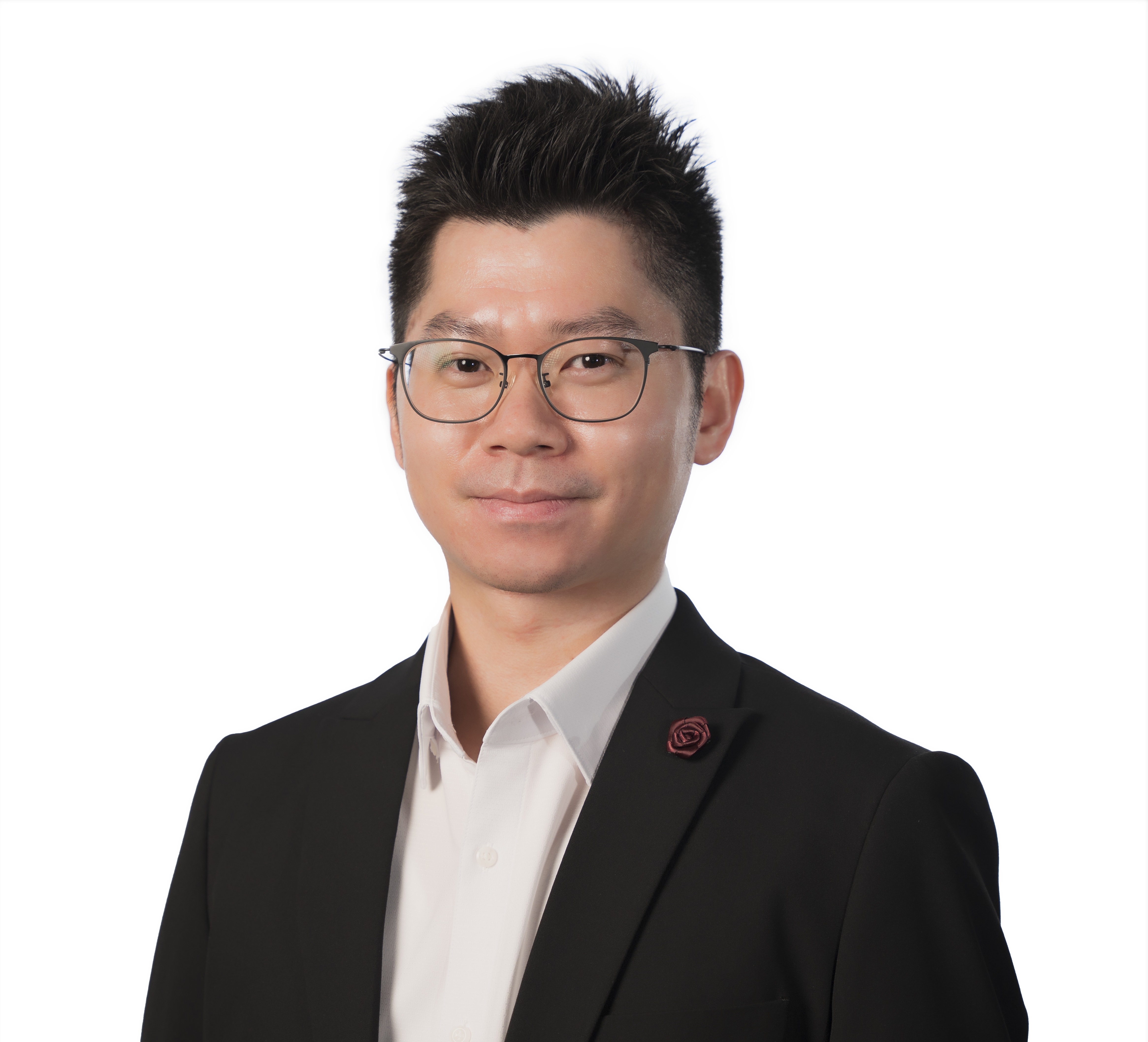
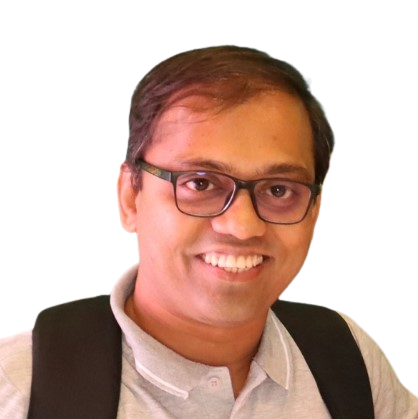
Panagiotis Angeloudis is a Professor of Transport Systems & Logistics at Imperial College London's Department of Civil and Environmental Engineering, Faculty of Engineering. He leads the Transport Systems & Logistics (TSL) Laboratory, focusing on autonomous systems, multi-agent modeling, and network optimization for transportation and logistics. His research spans freight distribution, passenger transport, and the integration of AI and robotics in mobility systems. He holds a PhD (2009) and MEng (2005) in Civil & Environmental Engineering from Imperial College London. His professional roles include Programme Director of the MSc in Transport and Data Science, Director of Teaching for the Transport Section, and transport champion for the Institute for Security Science and Technology. He also serves as an Associate Editor for the Journal of Maritime Policy and Management and on the UK Government's Future of Mobility review team. Research interests include autonomous vehicles, logistics optimization, and resilience engineering. His work addresses challenges in urban mobility, energy networks, and infrastructure resilience through advanced modeling and AI-driven solutions. Recent projects focus on deployment strategies for autonomous systems, maritime policy, and critical infrastructure resilience in geopolitical disruptions. His funded projects involve EPSRC, InnovateUK, and industry partners. Key areas of application include smart cities, emergency logistics, and sustainable transport systems. TSL Lab's innovations include digital twin simulations, trajectory prediction algorithms, and decision-support frameworks for autonomous systems.
Kam-Fung (Henry) Cheung is a Lecturer at the School of Information Systems and Technology Management (ISTM), University of New South Wales (UNSW) Business School, where he focuses on cybersecurity, transport and logistics, and operations research. His academic journey spans institutions across Australia and Hong Kong, with expertise bridging theoretical frameworks and practical applications in critical infrastructure security and supply chain management. Ph.D., Transport and Logistics Studies, The University of Sydney, 2021 M.Phil., Systems Engineering and Engineering Management, The Chinese University of Hong Kong, 2016 B.Eng., Information Engineering (minor in Computer Science), The Chinese University of Hong Kong, 2014 B.Sc., Mathematics, The Chinese University of Hong Kong, 2013 Dr. Cheung's research centers on cybersecurity management, cyber supply chain risk management, and network vulnerability analysis, with particular emphasis on transportation systems. His work applies game-theoretic frameworks and network analysis techniques to address complex security challenges in logistics and critical infrastructure. His interdisciplinary approach combines operations research, optimization, and systems engineering principles to develop practical security frameworks for real-world applications. His recent publications demonstrate a clear trajectory toward integrating cybersecurity with transportation and logistics systems. Notably, his work on attacker-defender models and network vulnerability analysis has established him as a key researcher in cyber supply chain risk management. His research bridges theoretical models with practical applications, particularly in supply chain security and transportation network resilience, with a growing focus on the implications of cyber threats for critical infrastructure. Finalist in the Rising Star Award, Australian Logistics Council (ALC), 2024 Multiple Feedback for Teaching (FFT) Student Survey Awards from the University of Sydney Business School (2020-2022) Institute of Transport and Logistics Studies Research Prize, The University of Sydney, 2021 Frank Coaldrake Scholarship and Business School Research Scholarship from The University of Sydney Dr. Cheung has contributed to research collaborations securing over $280k in funding from prominent Australian organizations including the Digital Grid Futures Institute, the George Institute for Global Health, and Woodside Energy. His media engagement is extensive, with commentary featured in major outlets including The Sydney Morning Herald, The Guardian, ABC, and UNSW publications, where he provides expert analysis on cybersecurity threats, scams, and digital safety. His industry experience as a Senior Consultant (Cybersecurity) at Ernst & Young (EY) informs his practical approach to both research and teaching, which includes courses on networking, security, and data analytics.
Adam Wolisz is a full Professor of Electrical Engineering and Computer Science at Technische Universität Berlin (TU Berlin), where he founded and led the Telecommunication Networks Group (TKN) from 1993 until 2018. He also served as Executive Director of the Institute for Telecommunication Systems (2001-2018), inaugural Dean of the Faculty of Electrical Engineering and Computer Science (2001-2003), and is currently an Einstein Center Digital Future (ECDF) Fellow. Since 2005 he has held an adjunct appointment at the University of California, Berkeley, and is presently a visiting researcher at the Berkeley Wireless Research Center. Education Dipl.-Ing. in Control Engineering, Silesian Technical University, Gliwice (1972) Dr.-Ing. in Computer Engineering, Silesian Technical University, Gliwice (1976) Habilitation in Computer Engineering, Silesian Technical University, Gliwice (1983) Research Interests Professor Wolisz has spent five decades advancing the architectures, protocols, and performance evaluation of communication networks. His current work centres on mobile multimedia communication , wireless sensor networks , and cognitive/cooperative wireless systems . Methodologically, he combines rigorous analytical modelling with large-scale simulation and real-world experimentation, frequently within the open testbeds run by TKN. A cross-cutting theme is Quality of Service (QoS) —from early work on real-time operating systems and industrial field-buses to recent studies on QoE-driven adaptive video streaming and ultra-reliable low-latency vehicular communications. His group is internationally recognised for contributions to reinforcement-learning-based MAC scheduling , spectrum sharing between LTE-U and WiFi , and energy-efficient protocol design . Publication Impact & Trends Across more than 200 refereed publications, two clear trajectories emerge: (1) a continuous evolution from wired network modelling (WDM optical networks, ATM, early Internet QoS) toward fully wireless and mobile settings, and (2) an increasing reliance on machine-learning techniques to tackle uncertainty and dynamics in dense, heterogeneous wireless environments. Recent papers exploit deep reinforcement learning for scheduling, federated learning for context-aware services, and transfer learning for realistic mobile-app testing. Scientific Awards & Recognition Best Paper Awards: IEEE WoWMoM 2020, IEEE INFOCOM CNERT 2019, ACM MSWiM 2017, IEEE EW 2017, IFIP WD 2017, IEEE EW 2009 Best Demo Award: ACM/IEEE IPSN 2014 (EVARILOS benchmarking platform) Senior Member, IEEE & IEEE ComSoc; Member, ITG (VDE); Steering Board, GI/ITG KuVS Doctoral Advising, Projects & Funding Since establishing TKN in 1993, Professor Wolisz has supervised over 60 completed PhD dissertations . Current and recent funding includes the DFG Collaborative Research Centre 1053 “MAKI”, DFG priority programme “SmartSynch”, EU projects (e.g., Fed4FIRE+, H2020 5G-Infrastructure), and industrial collaborations with Deutsche Telekom, Nokia, and Rohde & Schwarz. The group operates large-scale indoor and outdoor testbeds (FIT/IoT-LAB Berlin, TKN campus testbed, EVARILOS benchmarking framework) that are open to external researchers. Laboratories & Teams At TU Berlin, Professor Wolisz heads the Telecommunication Networks Group (TKN) , comprising more than 25 researchers (post-docs, PhD candidates, MSc students, technical staff). TKN maintains four major labs: the Wireless Communication Lab (software-defined radios, mmWave, IEEE 802.11ax/ay), the Sensor Networking Lab (IoT, 6TiSCH, energy harvesting), the Networking Testbed (optical backhaul, network softwarisation), and the QoE & Multimedia Lab (adaptive streaming, immersive media). Multiple spin-off companies have emerged from TKN research, most recently “Wolisz Technologies” (founded 2020) commercialising AI-driven Wi-Fi optimisation.
Professor Igor Potapov serves as a Professor of Computer Science at the University of Liverpool, leading the Algorithms, Complexity Theory and Optimisation research group and acting as Council Member for Networks Sciences & Technologies. He holds key administrative roles including Director of MSc Studies in CS with Year in Industry and module coordination for Efficient Sequential Algorithms (COMP309), MSc Industrial Project (COMP599), and MSc Placement Experience (COMP598). His research centers on theoretical computer science with emphasis on reachability problems in infinite state systems , distributed computing and pattern formation , combinatorial optimisation , and decidability questions for mathematical structures. Current interdisciplinary work includes Algorithmic Crystal Structure Prediction for Material Design (Royal Society APEX Award 2024-2026) and foundational studies in automata-matrix theory connections. His methodological approach integrates abstract algebra, topology, and computation theory to analyze computational boundaries. Recent publications (2024-2025) demonstrate strong convergence between theoretical frameworks and practical applications, particularly in robotics scheduling (addressing collision avoidance and safety verification) and mathematical decidability (matrix semigroups, linear recurrence systems). These works bridge computational geometry with distributed algorithm design, revealing novel complexity boundaries in reachability analysis. His scientific recognition includes: Royal Society Apex Award (2024-2026) for Algorithmic Crystal Structure Prediction Royal Society Leverhulme Trust Senior Research Fellowship (2020-2021) for "Cornerstones of Reachability" As an active grant recipient, he manages multiple projects including Algorithmic Intelligence for Life, Society and Science (Royal Society 2024-2026) and UoL-SumDU Collaboration for Digitalisation of Ukraine (Research England 2023-2024). He supervises thesis work on crystal structure prediction and distributed shape formation while serving on examination committees for Oxford, Leicester, and Gran Sasso institutions. He co-leads the Science for Ukraine initiative's UK branch, developing academic mentoring programs and research twinning partnerships between UK and Ukrainian universities. His editorial work spans Fundamenta Informaticae (2020-present) and Lecture Notes in Computer Science (2009-2013), alongside conference organization for the Reachability Problems series.
Sarang Kulkarni is a Senior Research Fellow at Curtin University's School of Elec Eng, Comp and Math Sci (EECMS), within the Faculty of Science and Engineering. He holds a PhD and works at Curtin's Perth campus in the Centre for Optimisation and Decision Science. His research focuses on real-life large-scale optimisation problems, including scheduling, mathematical programming, and mixed-integer programming. Education: PhD, MEng (Industrial Engineering and Management), BEng (Production) Research Interests: Logistics and Supply Chain Management, Operations Research, Optimisation techniques, and heuristic development Specialty: Decompositions and heuristics for complex optimisation challenges in transportation, logistics, and supply chain management His publications span vehicle scheduling, blast design optimisation, and hybrid neural network approaches. Notable works include benchmark datasets for multi-depot vehicle scheduling (2019) and autonomous drill-based blast optimisation (2024). He collaborates with industry partners in India and across Curtin's global campuses (Australia, Dubai, Malaysia). Labs/Teams: Active member of the Centre for Optimisation and Decision Science, contributing to both academic and industrial applications of optimisation technologies.
Associate Professor Graziana Cavone is with the Department of Civil, Computer and Aeronautical Technologies Engineering at Roma Tre University, Rome, Italy. Her research integrates automatic control, optimisation and AI to guarantee safe, secure and efficient operations of cyber-physical systems ranging from industrial robots and drones to water networks and intermodal freight terminals. Education & affiliation: Department of Civil, Computer and Aeronautical Technologies Engineering, Roma Tre University Scientific disciplinary sector ING-INF/04 – Automatic Control Research interests revolve around four pillars: (i) model-predictive and data-driven control of complex dynamic systems, (ii) safe and ergonomic human-robot/human-drone interaction in logistics 4.0 environments, (iii) cyber-security and resilience of industrial control and water-supply networks, and (iv) stochastic optimisation and Petri-net modelling for railway traffic and intermodal freight terminals. Recent 2024-2025 publications exhibit a clear trend toward AI-enabled anomaly detection, digital-twin security frameworks, and socio-technical studies on robot acceptance, while earlier work concentrated on COVID-19 mitigation control and collaborative-robot motion planning. Scientific awards & editorial activity: Guest-editor for IEEE CASE 2018 special section, publicity chair for IEEE CASE 2023; specific prizes not listed in supplied text. Advising & grants: No explicit student lists or funded-project details are provided in the source. Labs & teams: No dedicated laboratory designation is mentioned; research is conducted within the departmental laboratories of Roma Tre University.
Kawsar Ali serves as Departmental Lecturer in Medical Power Electronics at the University of Oxford's Department of Engineering Science since 2023, conducting research within the Power Electronics Group across diverse power-scale applications from microwatt energy harvesting to megawatt biomedical systems. Education: B.Tech in Electrical Engineering, National Institute of Technology, Durgapur, India (2011) Ph.D. in Electrical Engineering, National University of Singapore (2018) Research Focus: Dr. Ali pioneers power electronics solutions spanning transportation, grid infrastructure, datacenters, and biomedical domains. His work leverages gallium nitride (GaN) and silicon carbide (SiC) devices for high-power-density converters, develops resonant power conversion techniques for high-frequency applications, and advances pulsed-power systems for transcranial magnetic stimulation (TMS) alongside ultra-low-power energy harvesting for IoT networks. Key Projects: Magnetic Actuators and Neural Engineering for TMS Optimisation (MAGNETO) Advanced Self-Powered sensor units in Intense Radiation Environments (ASPIRE) Professional Trajectory: Following industry experience as Operations Officer at Indian Oil Corporation Limited between his degrees, Dr. Ali joined Oxford's Power Electronics Group as Postdoctoral Researcher in 2018 before transitioning to his current faculty role, maintaining active collaboration with senior academics including Professors Dan Rogers and Tim Denison.
Rand Hussein Raheem is a Lecturer in Computer Science at Middlesex University, London, United Kingdom. She holds a Ph.D. in Interference Management and System Optimisation for Small Cells Technology in Future 4G/5G Networks (2016) and has been employed at Middlesex University since September 2013. Education: Diploma in Electrical and Computer Engineering (2009, First Class Honours), BSc in Computer Communication Engineering (2010, First Class Honours), MSc in Telecommunication Engineering (2011, Merit). Research Interests focus on wireless sensor networks, femtocell technology, interference management, machine learning applications in network scheduling, and mobility management in LTE/5G systems. Her work explores bio-inspired algorithms for dependability in safety-critical networks and optimization techniques for next-generation telecommunications. Recent Publications highlight advancements in wireless sensor network scheduling using bio-inspired models (2025-2024), interference mitigation in femtocell systems, and ransomware payment analysis in cryptocurrency ecosystems. Her research spans both theoretical and applied domains, with applications in vehicular networks and railway environments. Teaching Responsibilities include modules on Network Management, Project Management, Compliance, and Computer Systems Architecture.
Dr. Sebastian Binnewies is a Senior Lecturer at Griffith University's School of Information and Communication Technology (ICT) and serves as Director of the Griffith App Factory. With over $3M in external grant funding, his research focuses on Natural Language Processing, AI Fairness, and Knowledge Representation & Reasoning, with applications in healthcare, climate resilience, and education. Senior Lecturer (2021–present) Lecturer (2018–2021) Associate Lecturer (2016–2018) PhD (2011–2015) & Honours Bachelor's in Information Technology (2009–2011) from Griffith University His research addresses Natural Language Processing for bias mitigation, AI Fairness in decision systems, and Knowledge Representation for healthcare applications. Key projects include: Individualised heat-health early warning systems (Wellcome Trust $2.36M) SurgeImpact decision support system ($2.09M QRRRF) Vascular Access Passport apps ($16.8K–$99.3K grants) Social media analytics for public health and education Recent publications explore: Time-series forecasting with dynamic window optimisation Personalised abusive language detection via LLMs IT service well-being in educational ecosystems Heatwave policy influence through the Ethos Project Scientific contributions include: 2025: Nature Climate Change publication 2024: IEEE Transactions on Learning Technologies 2023: Experimental research on heat-induced hyperthermia in aging populations 2021: Student Experience of Teaching accolades As a supervisor, he guides doctoral research in: UN SDGs integration in remote work Deep learning for cryptocurrency prediction Commonsense reasoning in question answering Feature-enhanced neural networks for topic modeling Laboratory leadership includes: Directing Griffith App Factory (student enterprise for real-world IT projects) Membership in Institute for Integrated and Intelligent Systems (2016–2024)
Dr Niek Buurma is a Senior Lecturer in Physical Organic Chemistry at the School of Chemistry, Cardiff University . With a career spanning over two decades, his research delves into the intricate chemistry of aqueous solutions, focusing on DNA-binding molecules and organic reaction mechanisms. His work bridges fundamental science with practical applications in molecular diagnostics, forensic detection, and pharmaceutical development. Educational Background: MSc (1997, cum laude) – University of Groningen, Netherlands PhD (2003, cum laude) – University of Groningen, Netherlands Postdoctoral Research Fellow (2002–2006) – University of Sheffield, UK Research Interests: Dr Buurma’s research is organized into two main pillars. The first involves the design and synthesis of conjugated DNA-binding molecules with tailored optoelectronic properties for applications in biosensors, forensic detection, and self-assembled nanobioelectronic systems. The second pillar focuses on organic reactivity in aqueous media , including kinetic studies of racemisation, surfactant-assisted catalysis, nanoparticle-mediated reactions, AI-driven reaction optimization, and pharmaceutical degradation kinetics. His group develops advanced data-analysis software, notably for isothermal titration calorimetry (ITC), and pioneers low-cost AI reaction-optimisation platforms using Raspberry Pi computers. Scientific Awards & Recognition: Unilever Research Prize (1998) Featured on BBC News for racemisation research Invited Maître de Conférences, Université de Toulouse III – Paul Sabatier (2016) Professional Memberships & Service: Director, Dutch Network for Academics in the UK (DNA-UK) ACB Member, CONNECTS-UK Fellow, Higher Education Academy Secretary, RSC Physical Organic Chemistry Group Member, EPSRC Directed Assembly Network Core Team Teaching & Supervision: Dr Buurma teaches advanced modules in organic chemistry, medicinal chemistry, and biophysical techniques. He currently supervises six PhD students and is available for postgraduate supervision in physical organic chemistry and biophysical chemistry.
Fahimeh Jafari serves as a Senior Lecturer in the Department of Engineering & Computing within the School of Architecture Computing and Engineering at the University of East London (UEL). She currently holds significant leadership roles including Postgraduate Research Lead for Computer Science and Digital Technology, Programme Leader for MSc Computer Science, and Year Tutor for MSc Computer Science. Dr. Jafari joined UEL in 2016 after working as a Lecturer at Liverpool Hope University, where she earned her Postgraduate Certificate in Higher Education (PGCHE) and Fellowship of the Higher Education Academy (FHEA). Her research expertise spans multiple domains within computer science and engineering, with primary focus on Big Data Analytics, Artificial Intelligence and Machine Learning, Interconnection Networks, Performance Evaluation, Distributed Systems, Analytical Modelling, and Optimisation Theory. Dr. Jafari has developed significant expertise in Network-on-Chip architectures, data communication systems, and smart home technologies using Internet-of-Things frameworks. Her teaching portfolio includes advanced courses such as Big Data Analytics (CN7031), Machine Learning on Big Data (CN7030), Big Data Infrastructure & Manipulation (CN6022), and Data Communications and Networks (CN5002). Analysis of Dr. Jafari's publication record reveals a strong trajectory of research focused on network performance optimization, particularly in Network-on-Chip architectures. Her work demonstrates increasing diversification into Big Data Analytics and Machine Learning applications, while maintaining foundational expertise in network design and optimization. Recent publications show expansion into transportation safety analytics and smart home systems, indicating interdisciplinary research directions that bridge traditional computer architecture with real-world applications. Fellowship of the Higher Education Academy (FHEA) Dr. Jafari actively supervises BSc, MSc, and PhD students in Data Communication, Big Data, and Machine Learning. She has secured significant research funding including a Knowledge Transfer Partnership (KTP) with TechBuyer funded by Innovate UK (2019-2020) and a UEL Funded Research Internship on reducing classification error in datasets with similar patterns (2018). Her research collaborations extend to major technology companies including Intel, Ericsson, and DPFE, demonstrating strong industry engagement and knowledge transfer capabilities. She has served on technical program committees for international conferences such as ICIME, NoCArc, MES, and NOC, and has been an active reviewer for journals including JPDC and Recent Patents on Computer Science.
Professor Li Xiaoli is the Head of the Information Systems Technology and Design (ISTD) Pillar at Singapore University of Technology and Design (SUTD), effective 15 August 2025. An internationally recognised AI researcher with over 30 years in academia and industry, he was previously Department Head of Machine Intellection at A*STAR I²R and Technical Director of the S$35.8 million national AIMfg centre. He holds adjunct professorial appointments at NUS and NTU and has advised Singapore government agencies including MTI, MOE, MOH and SNDGO. Education: PhD, Institute of Computing Technology, Chinese Academy of Sciences, 2001 Research Interests: Prof Li’s work straddles machine learning, data mining, graph learning and time-series analytics, with high-impact applications in smart manufacturing , semiconductors and the digital economy . He pioneered sensor feature learning with deep neural networks and co-coined the term positive-unlabelled (PU) learning ; his 2015 IJCAI paper alone exceeds 1,600 citations. Additional contributions span social & biological network mining, NLP & text analytics, and AI sustainability. Recent Publication Landscape (2022-2025): His latest 15 papers reveal a dual focus on time-series intelligence (domain adaptation, self-supervised representation, sensor alignment, remaining useful-life prediction) and efficient AI deployment (green AI, hardware-aware deep learning, game-theoretic NAS). Interdisciplinary threads link biomedical informatics (sleep stage, gene networks) and advanced NLP (preference optimisation, video grounding), underscoring a strategy of algorithmic innovation coupled with real-world validation . Honours & Awards: IEEE Fellow (2024) Fellow, Asia-Pacific Artificial Intelligence Association (2023) Clarivate Highly Cited Researcher Listed among World’s Top 2% Scientists (Stanford University) Three IEEE/Conference Best Paper Awards for sensor-data and network-mining research Grants, Labs & Industry Collaboration: Prof Li has secured and led more than 10 major collaborative grants with industry partners such as DBS, Singtel and KPMG, including the S$35.8 million AIMfg programme. He directs joint research labs, translating AI advances into aerospace, telecom, insurance and aviation solutions. His group maintains cutting-edge GPU clusters and sensor test-beds for manufacturing analytics, and he currently supervises a large multi-disciplinary team of research staff and graduate students at SUTD.
Dr Bhupesh Mishra is a Lecturer at the University of Hull's Faculty of Science and Engineering, affiliated with the Data Science AI and Modelling Centre (DAIM). He holds a PhD in Modelling and Optimisation of relief items distribution in disaster scenarios from the University of the West of Scotland. His research focuses on Data Science, Machine Learning, Explainable AI, and IoT applications in smart cities and healthcare. Recent work includes studies on climate change awareness in Kathmandu Valley, graduate salary prediction using machine learning, and predictive models for UK electricity pricing. Research Interests: Data Science and Machine Learning Explainable AI Citizen Science & Smart Cities Scheduling & Optimization Edge Computing Natural Language Processing Key Projects: Principal Investigator: Predictive Manufacturing Optimization using Neural Networks (PROMINN) funded by Innovate UK Co-Investigator: Responsible AI project in Burkina Faso funded by the British Academy His articles explore topics ranging from humanitarian logistics optimization to AI-driven healthcare decision tools. Mishra supervises PhD students in AI and data science domains and actively engages in interdisciplinary collaborations across academia and industry.
Giorgos Petrou is a Research Fellow in Building Physics and Urban Modelling at the UCL Institute for Environmental Design and Engineering, and a Doctoral Researcher (MPhil/PhD) at the UCL Energy Institute. His work focuses on integrating building simulation, environmental data, and health equity to address climate change impacts on indoor environments. He contributes to the NIHR-funded Health Protection Research Unit (HPRU) on Environmental Change and Health, examining indoor air quality and ventilation in residential settings. Giorgos holds a BSc in Physics from the University of Warwick, an MRes in Energy Demand Studies from UCL, and is nearing completion of a PhD on Bayesian calibration of archetype-based indoor temperature models. His research spans thermal simulation, data-driven statistical methods, and causal inference in built environment studies. He has presented at conferences including the AIVC Conference and Building Simulation and Optimisation Conference. His research interests emphasize the intersection of climate adaptation, housing policy, and health equity, with a focus on vulnerable populations such as care home residents. He explores trade-offs in natural ventilation strategies, model validation methodologies, and participatory approaches to policy design.
Dr Sherif Abbas is a Research Fellow at the Applied Artificial Intelligence Institute (A2I2) within Deakin University, Australia. Since 2021 he has held this role after being awarded the competitive Alfred Deakin Postdoctoral Research Fellowship at the Institute for Frontier Materials. His work is positioned at the intersection of material science, physics, chemistry and artificial intelligence, leveraging cutting-edge AI methodologies to solve complex challenges in energy storage, sensing and computational materials discovery. Education PhD in Physics, University of Sydney (2017) Research Interests Abbas’s research focuses on the accelerated discovery and rational design of advanced functional materials through the synergistic use of density-functional theory (DFT) and state-of-the-art machine-learning techniques. Specific thrusts include: Rechargeable battery chemistries (Li-ion, solid-state, Al-rich cathodes) Solar-energy-harvesting and photovoltaic materials Supercapacitor and superionic conductor design Gas-sensing surfaces and CO₂-capture frameworks Superconducting, ferroelectric and multiferroic compounds 2D van der Waals heterostructures and their optoelectronic applications His methodological toolkit spans Bayesian optimisation, generative models, graph neural networks and physics-informed machine-learning potentials that enable multiscale simulation from the atomic level to device performance. Publication Trends Across 103 outputs (2019–2025), Abbas demonstrates a clear trajectory toward physics-informed AI for materials. There is a marked concentration on energy-storage interfaces (solid-state electrolytes, dendrite suppression) and on low-dimensional systems where quantum confinement and van der Waals interactions govern functionality. Recent work increasingly couples rigorous first-principles data with scalable ML surrogates, underscoring a shift from static property prediction to dynamic, device-relevant simulations. Scientific Awards & Fellowships Alfred Deakin Postdoctoral Research Fellowship (Deakin University, 2021–present) Doctoral Supervision & Funding Abbas currently co-supervises two doctoral candidates: Thuy Linh La: "Enhancing Scalability of Machine Learning Models for Material Simulation" Hajer Abdulhafid Mohamed Derbi: "Applied Artificial Intelligence in Dental Field" Both projects are embedded within Deakin’s Applied Artificial Intelligence Initiative and benefit from internal fellowship funds and external ARC linkage grants coordinated by A2I2. Laboratory & Entrepreneurial Activities He is an integral member of the cross-disciplinary teams at A2I2, collaborating closely with the Institute for Frontier Materials and external partners across Australia. In parallel, he founded mathpractice.xyz (2023–present), an educational technology venture aimed at democratising advanced mathematics and AI training resources for students and early-career researchers.