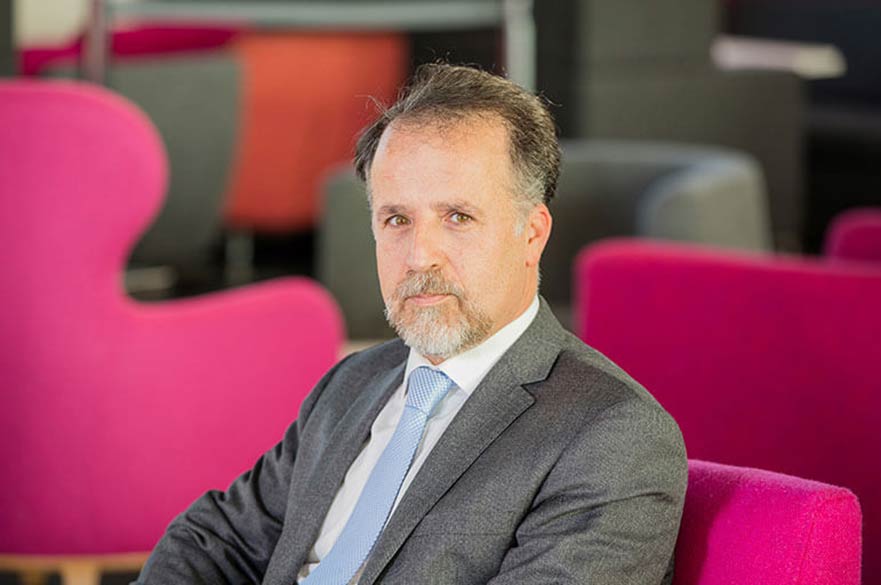
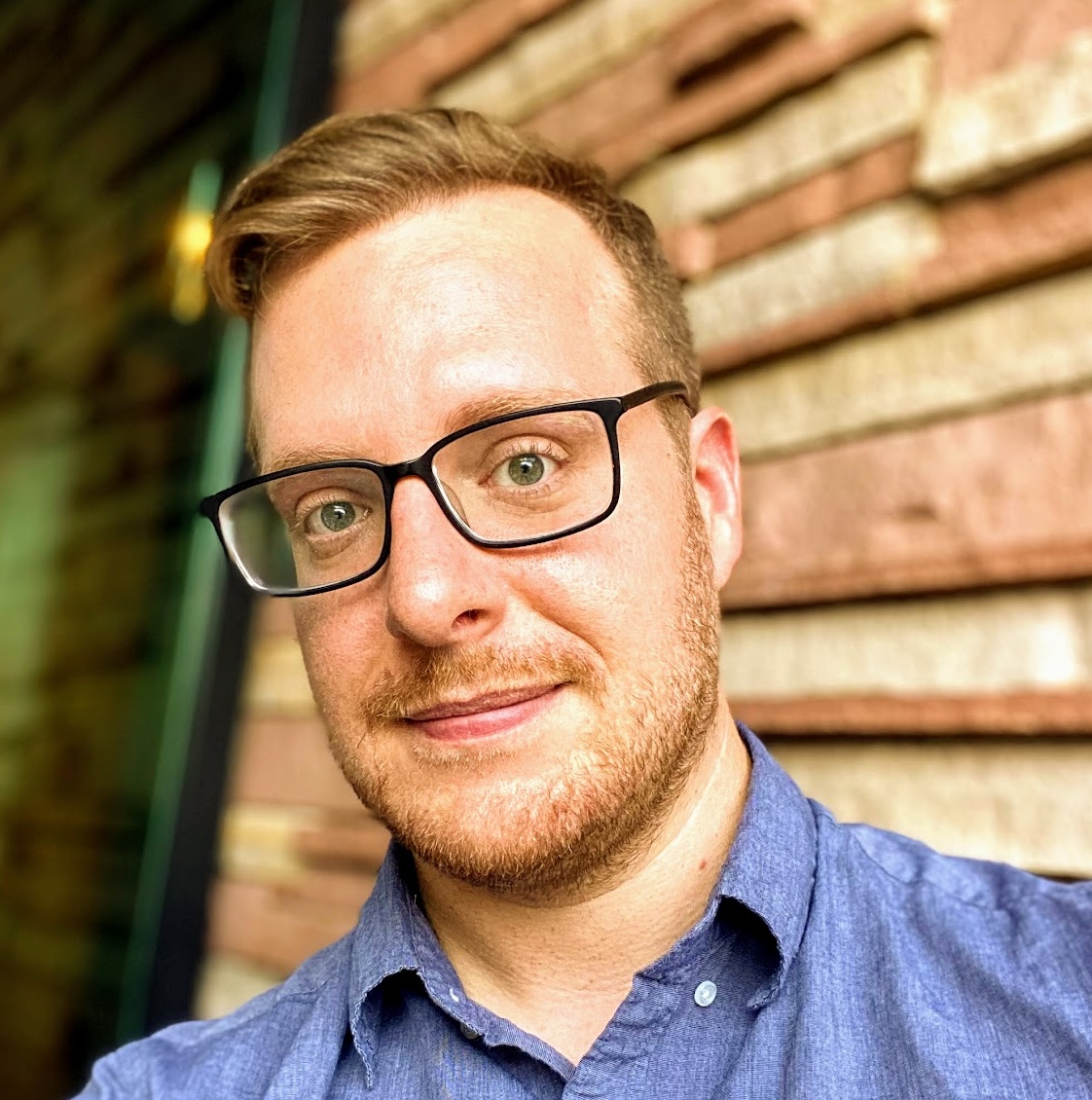
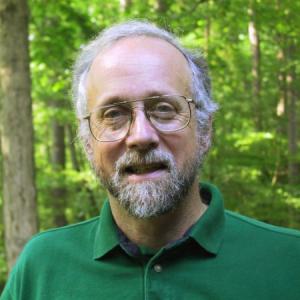
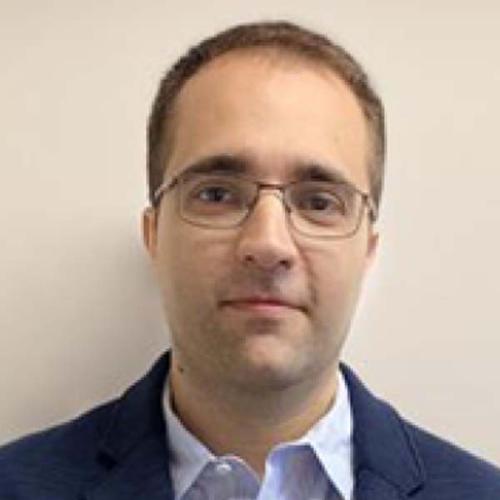
Professor Arokia Nathan is affiliated with the Department of Engineering at the University of Cambridge , where he holds the Chair in Photonic Systems and Displays. His work bridges semiconductor device engineering, flexible electronics, and intelligent systems. Specializes in Thin-Film Transistors (TFTs) for displays and sensors Key contributions to digital microfluidics and neuromorphic computing Focus on ultra-low-power and high-frequency CMOS circuits Advances in oxide semiconductor materials and hybrid electronics Recent publications highlight trends in neuromorphic perception , flexible battery technologies , and RF/wireless communication systems . His research also emphasizes bioinspired robotics , wearable electronics , and intelligent IoT devices .
Lung-Pan Cheng is an Associate Professor in the Department of Computer Science and Information Engineering at National Taiwan University. His research focuses on creating innovative interfaces that bridge physical and virtual realities, with particular emphasis on virtual reality systems, haptic feedback mechanisms, and perceptual illusions. Dr. Cheng's work explores how to create more immersive and believable virtual experiences through: Novel haptic feedback systems that simulate physical interactions in virtual environments Real walking techniques that overcome physical space limitations in VR Perceptual illusions that enhance the sense of presence in virtual worlds Human actuation approaches that leverage people as part of the VR infrastructure Optical illusions applied to digital media and gaming experiences Advanced fabrication techniques for interactive physical objects His recent publications (2022-2024) demonstrate a continued trajectory of innovation in VR interaction techniques, with work focusing on directional force feedback, infinite vertical navigation, and the integration of optical illusions into virtual experiences. Dr. Cheng's research consistently combines hardware innovation with perceptual psychology to create compelling user experiences that push the boundaries of virtual environments. Dr. Cheng has received notable recognition for his work: Best Paper Award at CHI 2022 for 'AirRacket: Perceptual Design of Ungrounded, Directional Force Feedback to Improve Virtual Racket Sports Experiences' SIC People's Choice Award at UIST 2022 for 'Garnish into Thin Air' His research has been featured in media outlets including MIT News and New Scientist, indicating broader impact beyond academic circles. Dr. Cheng maintains active collaborations with researchers worldwide, as evidenced by his international co-authorship patterns across multiple disciplines including computer science, psychology, and engineering.
Alexander Mertens serves as Associate Professor and Department Head of the Institute of Industrial Engineering within RWTH Aachen University's Faculty of Mechanical Engineering, concurrently leading the Ergonomics and Human-Machine Systems group. His dual doctorates (Dr.-Ing. and Dr. rer. medic.) underpin his interdisciplinary approach bridging engineering and medical sciences. His research centers on human-centered technology integration , with core interests in Ergonomics , Human-Machine Systems , and Virtual Reality applications . He investigates physiological workload monitoring, human-robot collaboration, and inclusive workplace design—particularly through AR/VR systems and sensor-based interventions for manufacturing and healthcare contexts. His work emphasizes translating biomechanical and psychosocial insights into practical solutions for worker safety and performance. Analysis of his 2024-2025 publications reveals three dominant trends: human-robot collaboration in manufacturing (evident in VR-based robot assistance studies), physiological workload assessment (using pupillometry and multimodal signals), and workplace health innovation (addressing interruptions, musculoskeletal disorders, and aging populations). These threads consistently prioritize human factors in digital transformation across automotive, healthcare, and industrial domains. Prof. Mertens directs the Ergonomics and Human-Machine Systems laboratory, driving initiatives like AixistenzRobotik (Aachen Competence Center for Interactive Robotics in Health/Care) and workHEALTH (holistic prevention of work-related musculoskeletal disorders). His team develops adaptive interfaces for inclusive factories and evaluates digital escape signage through age-differentiated studies, maintaining strong industry partnerships for real-world implementation.
Ahmad Lotfi is a Professor of Computational Intelligence and Head of Department of Computer Science at Nottingham Trent University , with a Visiting Professor role at Tokyo Metropolitan University . He leads the Computational Intelligence and Applications (CIA) research group and has supervised over 30 PhD students to completion. PhD in Learning Fuzzy Systems (University of Queensland, 1995) MTech in Control Systems (Indian Institute of Technology, India) BSc in Control Systems (Isfahan University of Technology, Iran) His research spans computational intelligence , ambient intelligence , robotics , and machine learning , with applications in dementia monitoring , smart environments , and healthcare technology . Recent work focuses on using thermal sensor arrays for privacy-preserving human activity analysis. He has secured funding from Innovate UK , EPSRC , The Royal Society , and Horizon 2020 , with projects like iCarer (assistive living), SmartBerry (agricultural AI), and BigSpark (financial data augmentation). His 15 most recent articles demonstrate expertise in Wi-Fi-based activity recognition , EEG fall detection , and thermal sensor fusion . Senior Member IEEE Member of British Computer Society (MBCS) Editorial roles in Soft Computing and Journal of Ambient Intelligence and Smart Environments He has served as Program Chair for conferences like PETRA and ICCRT , and as Keynote Speaker at PETRA 2023 . His 28+ years of academic leadership include organizing UKCI and UKRAS conferences.
Bradley Hayes is an Associate Professor of Computer Science and Director of the Collaborative AI and Robotics (CAIRO) Laboratory at the University of Colorado Boulder. His work focuses on enabling autonomous agents and robots to collaborate safely and effectively with humans through techniques in human-robot interaction, explainable AI, and learning from demonstration. PhD in Computer Science, Yale University (2015) Postdoctoral Associate, MIT Interactive Robotics Group Research interests span collaborative robotics, dependable AI systems, and imitation learning for human-robot teaming, with applications in manufacturing, healthcare, and autonomous vehicles. His lab develops methods for task planning, motion prediction, and trust calibration in human-machine partnerships. Recent publications emphasize explainable sequential decision-making, neuromorphic learning architectures, and augmented reality interfaces for robotic training. Awards include Sustainability Recognition (2025) for motion planning efficiency Best Student Paper Runner-up (AAMAS 2022) Best Technical Paper Runner-up (HRI 2019) As lab director, he has mentored 12 PhD/Master students to completion, including Matthew Luebbers, Aaquib Tabrez, and Christine Chang. Funding sources include NSF grants and industry partnerships like Circadence, where he serves as Chief Technology Officer.
Dr. Marit Bentvelzen is an Assistant Professor at the Faculty of Science , Utrecht University , specializing in Human-Centered Computing . She holds a PhD in this field (2024) with her thesis titled Reflection by Interaction: How Technology can Support Users in Reflecting on Personal Data . Research Interests focus on designing technologies that support self-reflection , personal data interpretation , and human-computer interaction . Her work spans data visualization , virtual reality , and fitness tracking systems , emphasizing user-centered design and technology-mediated reflection . Publications highlight her contributions to reflective metrics in fitness trackers, VR-based reflection tools , and data physicalization . She explores how qualitative data representation (e.g., weather metaphors for stress) and smart toys can enhance intergenerational connectedness and self-compassion . Teaching includes courses on Human-Centered Computing at Utrecht University, bridging technology design and user experience principles.
Antonios Deligiannakis is a Professor at the School of Electronic and Computer Engineering of the Technical University of Crete, specializing in database systems and distributed data processing. His academic career includes a postdoctoral position at the National and Kapodistrian University of Athens (2006-2007) and a visiting researcher role at AT&T Labs-Research (2003). His educational background includes: PhD in Computer Science, University of Maryland, USA (2005) Master's Degree in Computer Science, University of Maryland, USA (2001) Diploma in Electrical and Computer Engineering, National Technical University of Athens (1999) Professor Deligiannakis's research spans Databases , Stream Processing , and Sensor Networks , with pioneering work in Approximate Query Evaluation for massive datasets and Complex Event Processing in distributed environments. His contributions enable efficient analytics in resource-constrained settings through techniques like synopses-based engines and windowed outlier detection. His 15 most recent publications (2020-2025) reveal a dominant focus on distributed streaming analytics, with recurring themes of cross-platform integration, federated learning, and extreme-scale interactive systems. Key innovations include the INFORE framework for interactive analytics, DAG* for IoT workflow optimization, and communication-efficient federated learning techniques—demonstrating consistent translation of theoretical advances into production-ready platforms. Scientific Awards: No specific awards were listed in the provided material. Information about advisees and research grants was not provided in available documentation, though his leadership in the Distributed Information Systems and Applications laboratory suggests active mentorship and project direction. He directs research in the Distributed Information Systems and Applications laboratory, developing systems for real-time analytics across domains including maritime surveillance, financial technology, and IoT platforms, with emphasis on scalability and fault tolerance in geo-distributed environments.
Luis Miguel Bergasa is a Full Professor at the Department of Electronics, University of Alcalá (UAH), with a career spanning over 25 years. He leads the RobeSafe Lab (since 2010) and serves as Director of Digital Transformation at UAH (since 2022). His academic roles include heading the Department of Electronics (2004–2010) and coordinating multiple educational programs. He teaches Perception Systems (Master in Industrial Engineering) Intelligent Control Systems (Computer Science) Computer Vision (Computer Science) His research focuses on Perception Systems for Intelligent Vehicles , emphasizing driver behavior analysis, scene understanding, and sensor fusion via deep learning. He has authored over 300 papers and holds 9 patents. Notable recognitions include being ranked #81 in Computer Science (Spain) by Research.com (2025) and receiving 30+ awards in Robotics/Automotive fields. Recent publications highlight advancements in Transformer-based driver action recognition (2025) Infrastructure-vehicle cooperative frameworks (2025) 3D semantic segmentation for autonomous perception (2024) Simulation-to-reality gap bridging (2024) Scientific Leadership Senior Editor, IEEE Transactions on ITS (2025) International Program Committee roles in 15+ conferences (2024–2025) Co-founder of Vision Safety Technologies Ltd (2009–2016) He supervises 9 active PhD students and has advised 14 former PhD candidates. His group collaborates with institutions in Germany, USA, China, and Spain, including KIT, UC Berkeley, and Northwestern Polytechnic University.
Antonio Miguel Piecho de Almeida Santos is a Coordinator Researcher (Investigador Coordenador) at the Portuguese Institute for the Ocean and the Atmosphere (IPMA) and a member of the Oceanography and Climate Changes Group (OC2) at the Center of Marine Sciences (CCMAR) of the University of Algarve. With over 35 years of research experience, he serves as the Portuguese National Focal Point for the IOC-UNESCO Argo Programme, IPMA's representative in EuroGOOS, EuroGOOS Argo Task Team co-chair, and President of the Portuguese Oceanography Society. His research focuses on physical-biological interactions in the ocean through an end-to-end approach to understanding climate change impacts. His expertise spans fisheries oceanography, fish ecology, and applications of satellite remote sensing to marine fisheries. His recent work emphasizes innovative ocean observing systems, particularly through fishing vessel networks and autonomous technologies. His publication record includes more than 100 papers with 2996 citations and an h-index of 28 (Scopus). Recent research trends show a strong emphasis on DNA-based monitoring approaches, autonomous observation systems, and collaborative global ocean observing networks that bridge the gap between fisheries operations and scientific data collection. Certificate of Outstanding Contribution in Reviewing (2018) Most Cited Progress in Oceanography Articles (2007-2011) (2012) Second most cited Deep-Sea Research I paper in the last 5 years (2005-2009) (2010) Continental Shelf Research Most Cited Paper 2003-2007 Award (2008) Public praise from IPMA (2024) Dr. Santos has supervised numerous PhD and Master's students and currently mentors several doctoral candidates. He has been involved in over 40 national and international research projects (10 as coordinator or PI), including major European Commission initiatives such as Next Generation of Fishing and Aquaculture Services (2021-2024) and Euro-Argo Research Infrastructure Sustainability and Enhancement (2019-2022). His leadership extends to coordinating the Agenda do Mar (Sea Agenda) for the Portuguese Government and serving on scientific councils for state laboratories. He leads the Oceanography and Climate Changes research group at CCMAR, which focuses on developing integrated approaches to monitor and understand marine ecosystem dynamics under changing environmental conditions, with particular emphasis on the Iberian upwelling system and small pelagic fish populations.
Dr. Kevin M. Crosby is a Professor of Physics, Astronomy, and Computer Science at Carthage College, where he also holds the Hedberg Distinguished Professor of Entrepreneurial Studies title. He serves as Director of the Wisconsin Space Grant Consortium and leads the Carthage Space Sciences program. Dr. Crosby has chaired both the Physics and Astronomy Department and the Computer Science Department, and previously served as Division Chair for Natural Sciences for 10 years and Dean of the Division of Natural and Social Sciences for one year. Dr. Crosby earned his position at Carthage College in 1998, coming from the University of Northern Colorado where he was a visiting assistant professor of physics. His academic journey has positioned him as a leader in space science education and research. Dr. Crosby's research focuses on space science and microgravity fluid dynamics, with particular expertise in propellant gauging technologies for spacecraft. His work bridges theoretical physics with practical space applications, emphasizing undergraduate research opportunities. He has developed innovative approaches to measuring liquid propellant in microgravity environments, which has significant implications for long-duration space missions and in-orbit refueling capabilities. His research program actively involves undergraduate students in meaningful space science projects. Analysis of Dr. Crosby's publication record reveals a strong focus on propellant management in microgravity environments, with particular emphasis on modal propellant gauging techniques. His research spans experimental work on parabolic flights, suborbital payloads, and CubeSat missions, demonstrating a commitment to hands-on space research with undergraduate students. Recent work shows increasing integration of AI and advanced sensor technologies into space applications. Hedberg Distinguished Professor of Entrepreneurial Studies Director of the NASA Wisconsin Space Grant Consortium Dr. Crosby actively mentors undergraduate students in space science research, with notable projects including suborbital payload experiments, parabolic flight experiments, and CubeSat development. His Carthage Space Sciences program has secured significant NASA funding through the Space Grant Consortium. Students like Celestine Ananda '20 have participated in high-profile research that has been featured in media outlets including Wisconsin Public Radio and the Milwaukee Independent. Dr. Crosby leads the Modal Propellant Gauging research team that collaborates with NASA Kennedy and Johnson Space Centers. His Carthage Space Sciences program functions as an active research hub where students participate in real NASA-related projects, including the Blue Origin New Shepard flights that have successfully demonstrated propellant gauging technologies in microgravity.
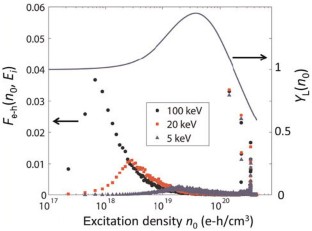
Dr. Gregory Bizarri is a Reader (equivalent to Associate Professor) in Material Science at Cranfield University, UK, where he serves as Head of the Surface Engineering and Precision Centre (SEPC), one of six centers within the Manufacturing theme of the School of Aerospace, Transport and Manufacturing and Materials (SATM). Prior to joining Cranfield in 2017, he was a Staff Scientist at the Lawrence Berkeley National Laboratory (USA) from 2009-2017, where he conducted research on scintillator materials and radiation detection technologies. Dr. Bizarri's research sits at the confluence of multiple disciplines: material science, detector physics, and instrumentation. His work promotes a multidisciplinary approach combining synthesis, characterization, instrumentation design, and modeling to investigate energy transport and conversion processes in materials for applications ranging from medical imaging to energy sectors. His expertise spans scintillator physics, radiation detection, optical materials, and sensor technology, with emphasis on developing novel detector materials through crystal growth and material engineering. His recent publications demonstrate a strong trajectory toward improving radiation detection systems, particularly for time-of-flight positron emission tomography (ToF-PET). His work on heterostructured scintillators, 3D-printed plastic scintillators, photonic crystal integration, and nanocomposite development represents cutting-edge approaches to enhance detection efficiency, resolution, and speed. This research bridges fundamental materials science with practical applications in medical imaging and radiation detection. As Head of the Surface Engineering and Precision Centre, Dr. Bizarri leads a research team dedicated to developing materials for sustainable and fair societal applications. His leadership involves managing large national and international collaborations focused on the design, development, and engineering of detector materials. The center's work integrates advanced materials development with precision engineering techniques to address challenges in aerospace, healthcare, and energy sectors.
Dr. Yasmine Abdin serves as an Assistant Professor in the Department of Materials Engineering within the Faculty of Applied Science at the University of British Columbia (UBC). Her research focuses on advancing polymer matrix composite materials through innovative digital simulation and probabilistic design methodologies. Her academic credentials include: B.Sc. from KU Leuven M.Sc. from KU Leuven Ph.D. from KU Leuven Dr. Abdin's research program centers on overcoming limitations in composite material durability through probabilistic design frameworks and multi-scale modeling. She integrates finite element analysis, machine learning, and Industry 4.0 technologies to predict structural reliability under stochastic service conditions, with emphasis on damage tolerance, manufacturing-process-structure relationships, and optimization of carbon fiber production from sustainable precursors like lignin and asphaltenes. Her recent publications (2023-2025) demonstrate strong focus on sustainable composite manufacturing, including carbon fiber production from renewable resources, 4D printing of shape memory polymers, flax fiber-reinforced composites, cellulose nanofibril modification, and fatigue behavior analysis. Key thematic trends include the convergence of digital twin technologies with composite manufacturing, sustainable precursor development, and the application of machine learning to enhance modeling efficiency in structural reliability prediction. Information regarding doctoral students, research grants, laboratory facilities, or scientific awards was not provided in available sources.
Regents' Professor Ronald C. Arkin is a leading figure in robotics and AI at the School of Interactive Computing at the Georgia Institute of Technology . He directs the Mobile Robot Laboratory and serves as Associate Dean for Research in the College of Computing. His work bridges autonomy , ethical decision-making , and human-robot interaction . Ph.D. in Computer Science, University of Massachusetts, Amherst (1987) Former STINT Visiting Professor at KTH Stockholm (1997-1998) Sabbatical Chair at Sony Intelligence Dynamics Laboratory (2005) Member of Robotics and Artificial Intelligence Group at LAAS/CNRS (2005-2006) Arkin's research focuses on robot ethics , autonomous agents , and multi-robot coordination . He explores the integration of moral emotions and ethical frameworks in robotic systems, particularly for applications in patient-caregiver mediation and subterranean exploration . His work also addresses deception mechanisms and formal performance guarantees for autonomous missions. Recent publications highlight advancements in heterogeneous robot teams for DARPA challenges, multi-modal control interfaces , and bio-inspired deception . His research spans artificial circadian systems , robotic nudges , and legal mediation in human-robot interactions. Regents' Professor, Georgia Institute of Technology Arkin has advised numerous projects on robot ethics and autonomous systems , contributing to grants like the 2018 EAGER award for Misdirection in Robot Teams . He leads the Mobile Robot Laboratory , developing frameworks for robotic autonomy and ethical governance in diverse environments.
Jorge Camba is an Associate Professor at the School of Engineering Technology and holds a courtesy appointment in the Department of Computer Graphics Technology at Purdue University . He also serves as a Senior Research Scientist (by courtesy) in the Department of Industrial Engineering at the University of Naples Federico II , Italy. PhD in Systems and Engineering Management (Universidad Politécnica de Valencia, Spain) MSc in Digital Media (East Tennessee State University) MSc in Computer Science (Universidad de Vigo, Spain) His research explores intelligent CAD systems , digital manufacturing , and mixed reality environments , focusing on model quality assurance , design intent communication , and collaborative design tools . Recent work investigates spatial cognition in CAD education , geometric variability analysis , and annotation-driven knowledge management . Key trends in his publications include parametric modeling strategies , 3D annotation systems , and XR applications in design evaluation. Awards include the Purdue Faculty Scholar (2021) and I3B Fellow (2021). He has presented at conferences on topics like Industry 4.0 , space habitat design , and digital product quality .
John Copp is an Adjunct Assistant Professor in the Department of Computing and Software at McMaster University , specializing in wastewater treatment modeling and process control. His work bridges environmental engineering with computational methods, focusing on simulation benchmarks, digital twin applications, and real-time monitoring systems. Adjunct Assistant Professor, Computing and Software, McMaster University Research Interests include: Wastewater treatment process modeling Respirometry-based control strategies Digital twin development for water resource recovery Automation and fault detection systems Biological nutrient removal optimization His scholarly output spans over 25 years with notable trends in: Development of benchmark simulation models (BSM1, BSM2) Integration of anaerobic digestion with activated sludge processes Multi-biomass modeling for enhanced nutrient removal Machine learning applications in water quality monitoring