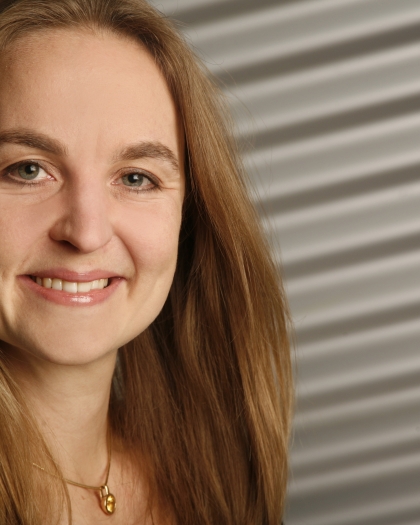
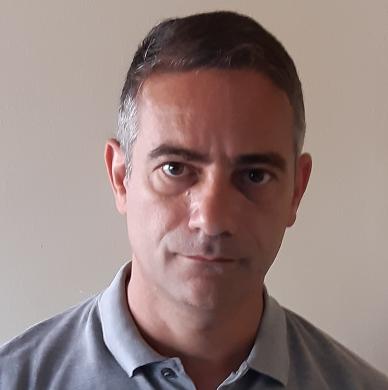
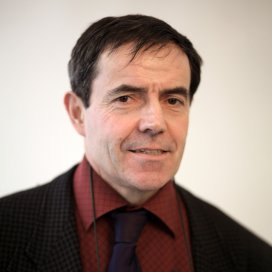
Eugene Simon Polzik is a Professor of Physics at the Niels Bohr Institute, University of Copenhagen , and the founder of the Quantum Optics Center (QUANTOP) . He currently leads the Copenhagen Center for Biomedical Quantum Sensing and has held significant roles including Head of the Quantum Optics and Atomic Physics Division (2012-2021). PhD and MSc from Leningrad University Research Interests: polzik specializes in quantum physics, focusing on quantum communication , quantum sensing , and quantum information technologies . His groundbreaking work includes: Quantum teleportation between material objects Quantum memory for light Optical radio wave detection using nanomechanical oscillators Measurements beyond Heisenberg uncertainty limits Recent Publications span quantum sensing, optomechanics, and biomedical applications. Key articles include hybrid quantum networks, squeezed light generation, and advanced magnetometry techniques. Awards: Herbert Walther Award (2020) ERC Advanced Grants (2011, 2018) Villum Investigator (2019) Knight of Dannebrog (2018) Scientific American Research Leadership (2007) Grants: polzik has secured major funding including 150 MDKK Novo Nordisk Center for Biomedical Quantum Sensing (2024-2030) and 125 MDKK for QUANTOP.
Bodil Holst is a Professor at the University of Bergen's Department of Physics and Technology , specializing in surface science and scientific instrumentation development . Her research spans 2D materials , helium atom scattering , and archaeometry applications. She leads projects like Nanometer-Resolution Matter-Wave Lithography (FET-Open), 2D Material Properties (NFR FRIPRO), and Wind Turbine Erosion Prevention (Equinor). Her Nanophysics Group has produced groundbreaking work on graphene's temperature-dependent rigidity and icephobic surfaces . First neutral helium microscope images (2008) Recorded bending rigidity of 2D materials (2018-2021) Developed solid-state conversion techniques for sapphire (2017-2021) Her teaching innovations in classical mechanics explore retrieval practice and digital learning structure , documented in Physics Education and Physical Review Physics Education Research .
Professor Maurizio Caon is a faculty member at HES-SO (University of Applied Sciences and Arts Western Switzerland). His primary research areas include Human-Computer Interaction, Digital Transformation, and User Experience Design, with a focus on aging populations and health technology. He leads the HumanTech Institute and contributes to projects like NESTORE COACH and PEGASO, which develop virtual coaching systems for elderly well-being and adolescent health behavior change. His research explores tangible interfaces for e-coaching, gestural interaction design for professional cyclists, and data privacy mechanisms using pictograms. While his publications span topics from AI implementation in HRM to posthumanist perspectives on enhancement, his core work centers on applying digital technologies to improve health outcomes across age groups. He collaborates with institutions like Politecnico di Milano and contributes to European Union-funded initiatives. Professor Caon's recent work examines conversational agents for life-course health interventions, virtual reality exergame design, and wearables' impact on body awareness. His projects integrate behavioral change theories with IoT architectures and human-centered design principles. Despite active research engagement, no scientific awards are explicitly mentioned in the provided texts.
David Huitink is an Associate Professor and Twenty-First Century Professor in the Department of Mechanical Engineering at the University of Arkansas College of Engineering. His research spans the intersection of materials and thermal sciences, with a focus on leveraging fundamental thermophysical material behaviors for engineered applications. He directs the EMPIRE Laboratory (Engineered Multi-Physical Interactions & Reliability Evaluation), which focuses on reliability engineering for next-generation electronic packaging solutions. Dr. Huitink received his educational foundation at Texas A&M University, earning a Bachelor of Science (2006), Master of Science (2007), and Doctor of Philosophy (2011), all in Mechanical Engineering. As an NSF Graduate Research Fellow during his doctoral studies, he specialized in complex nano-scale interactions at material interfaces under chemical and mechanical influence. His research interests encompass materials science, thermal sciences, and reliability engineering, with particular focus on thermophysical material behaviors, energy sciences, and thermally active functional materials. The Huitink lab works closely with Electrical Engineering collaborators to develop next-generation high-density power electronics for electrified transportation and power conversion systems. Recent efforts include additive manufacturing for hot-spot thermal management, transient temperature abatement, and interconnect fabrication technology development for enhanced electronic packaging lifetimes through thermal cycling events. Analyzing his recent publication record reveals a clear trend toward advanced thermal management solutions for power electronics, with increasing focus on phase change materials, nanowire-enhanced interconnects, and reliability modeling under combined stress conditions. His work bridges fundamental materials science with practical engineering applications in high-power systems, particularly for electric vehicle technologies and aerospace applications. NSF Graduate Research Fellow (2007-2011) Texas A&M Graduate Diversity Fellow (2008-2011) Texas A&M Graduate Merit Fellow (2006-2007) National Merit Scholar (2002-2006) BSA Eagle Scout (2001) Dr. Huitink brings significant industry experience to his academic role, having spent over five years at Intel Corporation as Quality & Reliability Engineering Program Manager for Intel's Custom Foundry Division. There he pioneered advanced reliability prediction methods for silicon-based flip chip microelectronic packages and developed testing protocols and FEA methods for Design for Reliability guidance. He currently serves as Associate Editor of Microelectronics Reliability Journal and has patent applications filed in Low Z-height Electronic System design and thermal optimization of space-limited electronic systems. The EMPIRE Laboratory maintains strong connections with Arkansas's multi-disciplinary power electronics program, which includes 14 faculty members across 4 departments, approximately 100 graduate students, and nearly $10 million in annual research expenditures. The lab collaborates with several centers of excellence including GRAPES, POETS, and SEEDS, utilizing state-of-the-art facilities such as NANO, HiDEC, and NCREPT.
Alan Mantooth is a Distinguished Professor holding the Twenty-First Century Research Leadership Chair in Engineering within the Department of Electrical Engineering at the University of Arkansas, Fayetteville. He serves as Director of the National Center for Reliable Electric Power Transmission (NCREPT), Executive Director for GRAPES (NSF I/UCRC) and SEEDS (DoE Center), and Deputy Director of the NSF Engineering Research Center for Power Optimization of Electro-Thermal Systems (POETS). His educational background includes: B.S. in Electrical Engineering, University of Arkansas M.S. in Electrical Engineering, University of Arkansas Ph.D. in Electrical Engineering, Georgia Institute of Technology Dr. Mantooth's research centers on analog/mixed-signal IC design, power electronics CAD, and semiconductor device modeling with emphasis on harsh-environment applications. His pioneering work in silicon carbide (SiC) and gallium nitride (GaN) power systems has enabled high-temperature operation for electric vehicles and renewable energy infrastructure, significantly advancing reliability in extreme conditions. His 2025 publications reveal strong trends toward AI-driven power electronics (e.g., SolarFormer++ for PV profiling), wide-bandgap device modeling (β-Ga2O3, SiC), and innovative packaging solutions. Key themes include reliability engineering for extreme environments, multi-physics optimization, and explainable AI for safety-critical power systems. Major scientific recognition includes: IEEE Fellow (2009) for power electronic device modeling Three R&D 100 Awards (2009, 2014, 2016) for SiC power modules IEEE Power Electronics Society Technical Achievement Award (2019) Multiple university teaching/research awards including SEC Faculty Achievement Award (2015) As an exceptional mentor (UA Outstanding Mentor 2006-2008), he co-founded Lynguent and Ozark Integrated Circuits. His centers NCREPT, GRAPES, and SEEDS have secured major funding from NSF, DoE, and industry partners, supporting over 350 refereed publications and numerous patents. Current research focuses on AI-enhanced power electronics, recyclable packaging, and next-generation wide-bandgap device characterization. He leads the NCREPT test facility and multi-institutional teams developing grid-connected power electronic systems, secure energy delivery architectures, and thermal management solutions for high-power-density applications, with direct impact on electric transportation and renewable energy integration.
Professor Yuanfang Guan is affiliated with the University of Michigan in the Department of Computational Medicine and Bioinformatics. Their research focuses on bioinformatics and computational biology applications in medical research. Key research areas include: Computational oncology with emphasis on tumor subclonal reconstruction AI applications in clinical pharmacology and drug response prediction Machine learning for neurogenetic disorders like SCA3 Development of digital health measures for neurological diseases Single-cell sequencing data analysis and quality control Epigenomic data imputation and genomic feature analysis Recent publications highlight collaborative projects on LSD1 inhibitors for sickle cell disease, long COVID prediction models, and optimization of genomic deep learning. Their work involves algorithm development for cancer evolution analysis, disease biomarker identification, and AI-driven biomedical applications.
Professor Gordon Cheng is a faculty member at the Technical University of Munich (TUM), affiliated with the School of Computation, Information and Technology (CIT). He serves as the Director of the Chair of Cognitive Systems at the Institute for Cognitive Systems (ICS), where he focuses on advancing cognitive systems, robotics, and their intersections. His research addresses fundamental challenges in creating intelligent systems capable of understanding and interacting with complex environments. Research Interests: His work spans Neuroengineering , Robotics , and Cognitive Systems , emphasizing the integration of biological principles into artificial systems. Key projects include robot skin development , EEG-based prosthetic control , and human-robot co-adaptation . Selected Publications: Recent articles highlight advancements in real-time tactile sensing , neuroprosthetics , and BCI-driven rehabilitation , reflecting his interdisciplinary approach bridging robotics and neuroscience. Supervision: He supervises PhD students from the Graduate School of Neuroscience (GSN), including Jasmin Kajopoulos and Nikolas Berberich. Contact: Email: gordon@tum.de | Website
Carlo Alberto Avizzano serves as Associate Professor in Robotics and Automation at the University of Pisa's School of Engineering, Department of Information Engineering. He coordinates the Department of Excellence in Robotics & Artificial Intelligence (MUR) and leads the Intelligent Automation System Research Group. Research spans robotics, human-robot interaction, computer vision, and control systems Specializes in creating intelligent automation systems with cognitive capabilities Integrates AI, machine learning, and mechatronics for robust autonomous systems His research focuses on developing robots that learn from human examples, adapt to changing environments, and interact through advanced perception systems. Current work emphasizes wearable robotics, UAVs, and industrial automation solutions with applications in medical rehabilitation, firefighting, and manufacturing. He employs distributed computing architectures integrating sensors, real-time control, and knowledge transfer algorithms. Publications reveal strong emphasis on practical implementations: 15 recent works cover exoskeleton design (2024), UAV firefighting systems (2024), industrial bin-picking datasets (2024), and haptic interfaces (2012-2023). Key trends show progression from virtual reality systems (2006-2008) toward modern AI-integrated robotics with industrial and medical applications. Teaching responsibilities include PhD courses in Sensors for Construction, Python Programming for HealthScience, and Digital Perception; plus undergraduate Mechatronics and Computer Vision labs. He serves on PhD boards for Emerging Digital Technologies and Health Science Technology. Extensive patent portfolio including haptic interfaces (2012), sailing simulators (2006), and UAV systems (2024) Research directly translated to commercial products and spin-off companies
Ali Muhtaroglu is an Associate Professor at Oslo Metropolitan University, Faculty of Technology, Art and Design, Department of Mechanical, Electronics and Chemistry. His work focuses on energy-efficient electronics and bio-inspired technologies through the ADEPT research group. Research Interests: Dr. Muhtaroglu specializes in bio-inspired spiking neural networks energy harvesting systems low-power circuit design autonomous IoT devices wearable health monitors quantum dot cellular automata His publications emphasize hardware-software co-design for sustainable microelectronics. Selected Articles (2022-2024): Recent work includes bio-inspired reinforcement learning architectures (2024), AI accelerator design (2022), and self-powered health monitoring systems (2023). Earlier publications (2019-2021) cover cochlear implant interfaces and piezoelectric energy harvesting.
Jean-Marie Tarascon, a Professor at Collège de France 's Chemistry of Materials and Energy chair, specializes in Electrochemistry , Solid State Chemistry , and Energy Storage . He founded the RS2E (French Electrochemical Energy Storage Network) and ALISTORE-ERI (European Network), focusing on next-generation batteries like Na-ion , Zn-MnO2 , and All-Solid-State systems. His work bridges Supramolecular Chemistry with Battery Self-Repair and Intelligent Battery Design via sensor integration. Over his career, Tarascon has delivered annual lectures tracing his research trajectory, including 2025's Na-ion Electrolyte Innovations , 2024's All-Solid-State Pragmatism , and 2021's Diagnostic/Repair Techniques . These lectures emphasize eco-efficient synthesis , 3D electrode materials , and battery traceability . As head of the CSE Lab (Solid-State Chemistry and Energy) at Collège de France, he collaborates with CNRS and Sorbonne Université to advance smart battery systems. His research trends highlight a shift from Li-ion fundamentals (2010-2017) to self-repair mechanisms (2018-2021) and eco-responsible alternatives (2024-2025).
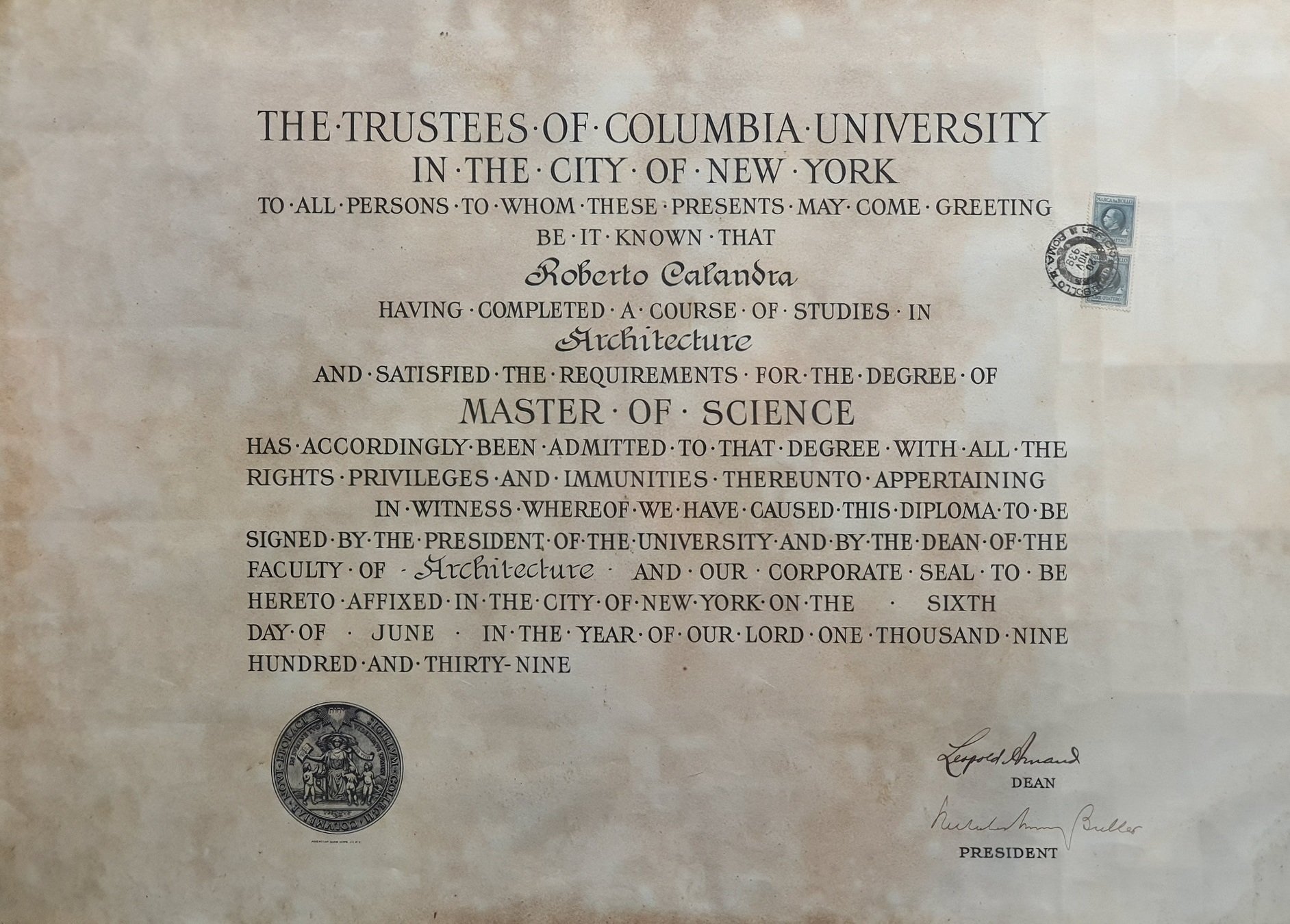
Roberto Calandra is a Full (W3) Professor at Technische Universität Dresden, where he leads the Learning, Adaptive Systems and Robotics (LASR) Lab. Previously, he served as a Research Scientist at Meta AI (formerly Facebook AI Research) and a Postdoctoral Scholar at UC Berkeley’s BAIR Lab under Sergey Levine. His academic journey includes a PhD in Robotics from TU Darmstadt, an M.Sc. in Machine Learning from Aalto University, and a B.Sc. in Computer Science from Università di Palermo. His research bridges Robotics and Machine Learning, focusing on tactile sensing, Bayesian Optimization, and model-based reinforcement learning. He pioneered the DIGIT tactile sensor , now the most widely used tactile sensor in robotics, and advocates for a computational field of Touch Processing to advance haptic understanding. His work emphasizes data-efficient learning, real-world dexterous manipulation, and multimodal perception. Recent publications highlight breakthroughs in tactile sensor design, in-hand object manipulation, and multimodal integration. He organizes workshops on robotics and machine learning (e.g., at NeurIPS, ICRA) and promotes open-source tools like PyTouch and TACTO .
Luis Castedo Ribas is a Professor at the Faculty of Informatics , University of A Coruña (UDC) , Spain, since 2001. Previously held research positions at the University of Southern California (USC) and École supérieure d'électricité (SUPELEC). PhD in Telecommunications Engineering (1993), Technical University of Madrid Department of Computer Engineering Research Group: Electronic and Communications Technology Group Research Interests: Specializing in Signal Processing and Information Theory for Wireless Communications Engineering , with focus on MIMO Communication Systems , 5G Radio Interfaces , Joint Source-Channel Coding , and High-Speed Wireless Communications . His work bridges theoretical advancements with practical prototyping of digital communication systems. Recent Article Trends: Publications span Massive MIMO , Beamforming , AI/ML for Wireless , and Quantum-Inspired Coding , reflecting his leadership in evolving telecom standards (5G→6G). Collaborative work with institutions like IEEE and European consortia. Scientific Awards: Best Student Paper (2007, 2013, 2017) General Co-Chair, IEEE Sensor Array Workshop (2014) General Co-Chair, European Signal Processing Conference (2019) Grants & Collaborations: Principal Investigator in over 50 projects funded by Spanish Ministry of Science, EU programs, and companies like Atos Origin. Key roles in national and international research consortia.
Dr. James N. Gilmore is an Associate Professor of Media and Technology Studies and Graduate Coordinator in the Department of Communication at Clemson University's College of Behavioral, Social and Health Sciences. He joined Clemson in 2018 after completing his PhD at Indiana University and has established himself as a leading scholar in media technology studies, with expertise in wearable technologies, datafication, and media infrastructure. Dr. Gilmore's educational background includes: Ph.D. in Communication and Culture from Indiana University (2018) M.A. in Film and Television from University of California, Los Angeles (2013) B.A. in Film and Media Studies from University of South Carolina (2011) His research focuses on the cultural politics of media and communication technologies, particularly how computational technologies convert human behavior to data (datafication). Dr. Gilmore examines how everyday devices like smartwatches, fitness trackers, and body cameras reinforce systems of normalcy, surveillance, and solutionism across health, labor, accessibility, law enforcement, and other domains. His work bridges theoretical frameworks from media studies, cultural studies, and science and technology studies to analyze the social implications of emerging technologies. Dr. Gilmore's publications demonstrate consistent engagement with emerging technologies across multiple domains. His recent work spans wearable technologies, virtual reality, AI platforms like ChatGPT, streaming services, and smart home devices, revealing patterns in how technologies mediate everyday life while raising critical questions about privacy, surveillance, accessibility, and corporate power. His scholarship consistently connects technological developments to broader social, political, and cultural contexts. Dr. Gilmore has received numerous honors and awards for his research and teaching: Top Paper Award, Popular Communication Division, Southern States Communication Association (2024) Outstanding Teaching of the Year (Junior Tenure-Track), College of Behavioral, Social, and Health Sciences (2022-2023) Outstanding research publication award for 'Securing the kids' (2022) Research Faculty Spotlight (Spring 2021) Ray Camp Award for Most Outstanding Research Paper (2018) As Graduate Coordinator, Dr. Gilmore actively mentors students, with numerous co-authored publications featuring graduate and undergraduate researchers. His students have contributed to research on AI adoption, virtual reality, wearable technologies, and platform politics. Dr. Gilmore has secured internal research funding at Clemson University, including recognition through the university's research reporting system. His book projects, including the forthcoming DeGruyter Handbook of Wearable Technologies and Society, represent significant scholarly contributions that bring together international researchers. Dr. Gilmore leads research initiatives focused on wearable technologies and media infrastructure, with his recent book 'Bringers of Order' establishing him as a leading voice in wearable technology studies. He is currently editing a comprehensive handbook that will expand this research area significantly.
Liu Jing is an Associate Professor at the School of New Materials and New Energy, Shenzhen University of Technology, recognized as a Shenzhen Overseas High-Level 'Peacock Plan' Talent (Category C). His research focuses on thermal management solutions for next-generation electronics and energy storage systems. His academic credentials include: PhD in Engineering Thermophysics from Iowa State University (2013-2017), supervised by Professor Xinwei Wang Bachelor's degree in Thermal Energy and Power Engineering from Southeast University (2008-2012) Dr. Liu's research program centers on Raman spectroscopy-based chip thermal management , thermal management material design for high-power semiconductor devices , and lithium-ion battery thermal management technology . His work bridges fundamental heat transfer phenomena with practical applications in third-generation semiconductor HEMTs and energy storage systems, emphasizing nanoscale thermal characterization and material engineering. Analysis of his 15 most recent publications reveals dominant themes in graphene thermal transport, Raman-based thermometry, and sustainable carbon materials. Key journals include Nanomaterials, ACS Applied Materials & Interfaces, and Carbon, with consistent focus on defect engineering, temperature-dependent properties, and advanced characterization techniques for nanomaterials. Major recognitions include: Shenzhen Overseas High-Level 'Peacock Plan' Talent (Category C), 2019 Iowa State University Research Excellence Award (top 10%), 2016 As Principal Investigator, Dr. Liu leads multiple funded projects including a Guangdong Provincial Basic Research Fund project (100,000 RMB) and a Shenzhen University High-Level Talent project (2.7 million RMB). His portfolio spans semiconductor thermal management, battery safety, and sustainable materials, with total secured funding exceeding 3 million RMB through national, provincial, and municipal grants.
Brenda Parker serves as Associate Professor in the Department of Biochemical Engineering within University College London's Faculty of Engineering Sciences. She co-founded the Bio-Integrated Design Lab (Bio-ID) with Professor Marcos Cruz from the Bartlett School of Architecture, establishing an internationally recognized research platform exhibited at Centre Pompidou, London Design Festival, and Venice Biennale. Her academic journey began with an MEng in Biochemical Engineering from UCL, including specialization in microbial ecology at Caltech, followed by PhD research on non-natural amino acid synthesis via BBSRC CASE studentship with Dowpharma. Her research focuses on sustainable bioprocess design and bio-integrated architecture, addressing industrial biotechnology scalability through algal biotechnology, bioremediation systems, and circular biomaterials. The Bio-ID Lab's work spans microbiome-inspired green infrastructure, robotic fabrication of biohybrid materials, and sustainable sound absorption solutions – exemplified by the INDUS algal bioremediation project winning the Water Futures Design Challenge and Beazley Designs of the Year shortlist. Current teaching includes leadership of UCL's second-year Design and Professional Skills course and directorship of the radical interdisciplinary MSc in Bio-Integrated Design. Key Awards: Churchill Travelling Fellowship (2014) Public Engagement Award from Society for General Microbiology (2011) Royal Academy of Engineering Leadership Award Professor Parker actively mentors through her MSc program while leading research collaborations with Shell (Algal Biotechnology Consortium), Cambridge Water, and EU-funded projects including Energetic Algae and Innovation in Crops. Her Bio-ID Lab maintains strong industry partnerships through Phytofutures Ltd commercialization efforts. The lab's multidisciplinary approach integrates biochemical engineering with architectural design, creating novel platforms for urban ecosystem health and sustainable material innovation through living systems.