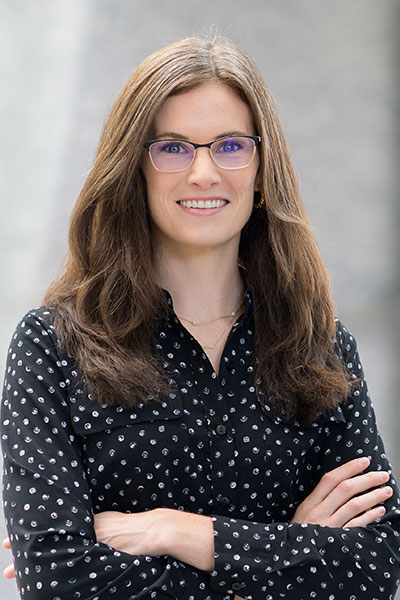
Chet Udell is an Assistant Professor in the Department of Biological and Ecological Engineering at Oregon State University. His work focuses on developing open-source, low-cost environmental sensing systems for ecological and agricultural applications. He leads the OPEnS Lab, which emphasizes collaborative, community-driven instrumentation design. Research Interests include wireless sensor networks, swarm sensing, and integrating music composition principles with engineering. Notable projects include the WeatherChimes IoT station, SitkaNet landslide monitoring systems, and the Pied Piper insect detection device. Udell’s innovations often bridge hardware design with real-world environmental challenges. Publications emphasize open-source solutions for ecological monitoring, including sensor networks, robotics, and data sonification. His work frequently addresses cost barriers in environmental science, enabling broader access to advanced tools. Awards: Best Performance Award, GA Tech New Musical Instrument Competition (2017) Labs/Teams: OPEnS Lab (Openly Published Environmental Sensing) Media: Featured in articles on pest monitoring, spiderharp musical instruments, and landslide detection systems.
Chase Murray is an Associate Professor in the Department of Industrial and Systems Engineering at the University at Buffalo (SUNY). He directs the SOAR Drone Facility and Optimator Lab , focusing on operations research applications for autonomous systems. His work includes drone logistics, routing optimization, and AI integration in delivery networks. Education: PhD, Industrial & Systems Engineering, University at Buffalo, 2010 ME, Industrial Engineering, Texas A&M University, 2000 BS, Industrial Engineering, Texas A&M University, 1998 Research Interests: Dr. Murray’s research emphasizes leveraging autonomous vehicles for logistics and surveillance. Key areas include: - Routing algorithms for drone-truck systems - Weather and traffic impact modeling - Integer programming for problem classification - FAA-certified drone pilot with hands-on SOAR facility testing . Publications: Over 30 peer-reviewed articles focus on drone coordination, vehicle routing, and optimization frameworks. Recent work includes graph-based ILP classification and weather-aware delivery systems. Labs & Software: SOAR : Drone test facility with 3D digital twin simulations Optimator Lab : Develops tools like VeRoViz (routing visualization) and tex2solver (LaTeX-to-code translator) Open-source projects: Ground Control Station software, ROS-enabled web interfaces Grants & Advising: Advised PhD students Ritwik Raj (traffic congestion modeling) and Lan Peng (weather-impact scheduling). Active in collaborative projects on AI-driven logistics systems.
Kristian Nybom is a Senior Lecturer in the Faculty of Natural Sciences and Engineering at Åbo Akademi University, Finland, affiliated with the Department of Information Technology. He is actively contributing to research in computer science, with a strong focus on edge computing, IoT systems, and software engineering practices. Research Interests: His research spans several key areas in modern computing, particularly Edge Computing and Edge Analytics , where he has conducted multiple systematic mapping studies to synthesize research trends and challenges. He is also deeply involved in API documentation generation , exploring tools and methodologies to improve developer experience and software maintainability. Additional interests include IoT applications in maritime environments , distributed sensor systems , and data engineering . The analysis of his recent publications reveals a consistent methodological focus on systematic mapping studies , which are used to survey and classify research in emerging domains. These works often sit at the intersection of software engineering and distributed systems, emphasizing practical tools and real-world applications, particularly in edge and maritime IoT contexts. Projects: He is currently active in multiple research initiatives, including the EU-funded AIDOart project and national projects like ADMO: 5G-Advanced for Digitalization of Maritime Operations and Cyber security training cooperation network . Earlier projects include N4S: Need for Speed and Enabling Next Generation Networks for broadcast Services . Collaboration and Funding: His work is supported by prominent funding bodies such as the European Commission and Business Finland. He frequently collaborates with researchers like Ivan Porres, Joakim Björkqvist, and Dragos Truscan. While no formal advisees are listed, his role as a senior lecturer suggests involvement in student supervision and curriculum development. Laboratories and Research Groups: Though not explicitly named, his affiliation with the Turku Center for Computer Science (TUCS) and participation in large-scale projects indicate integration within active research teams focused on software systems, edge computing, and digitalization.
Jeremy Bellah is an Assistant Professor of Management Information Systems at the University of Oklahoma’s Price College of Business. He has held academic roles since 2009, specializing in teaching courses such as Operations Management, Quality Management, Project Management, Web Application Development, and Database Management. He holds a Ph.D. in Operations Management from Texas Tech University (2009) and a Project Management Professional (PMP) certification from PMI (2013). Dr. Bellah actively contributes to professional communities, including serving on the board of directors for the PMI chapter in Amarillo, Texas (2017–2018). His research focuses on RFID technology applications, environmental sustainability, project management software development, and offshore information systems challenges. Research Interests: RFID integration in supply chain and sustainability Project management software design and evaluation Offshore software development challenges Technology-driven cost management solutions His recent publications emphasize RFID technology’s role in environmental sustainability, project management tool development, and cross-disciplinary community engagement initiatives. His work bridges academic theory with practical software development and project management practices. Professional Contributions: Board member, PMI Amarillo Chapter (2017–2018)
Mariusz Miszewski Mariusz Miszewski is affiliated with the Faculty of Electronics, Telecommunications and Informatics at Gdańsk University of Technology. He holds a position within the Department of Radiocommunication Systems and Networks . His work focuses on edge computing, telecommunications infrastructure, IoT systems, and big data applications. Research Interests: Design and implementation of edge computing architectures (e.g., SYMEC project) Development of IoT-enabled devices and gateways (e.g., KODEŚ concentrator) Secure communication systems for border surveillance (STRADAR project) Scalable multimedia archiving leveraging cloud computing Projects: SPIRIT OF IoT : Universal radio interfaces for smart IoT devices (2019-12-12) Power Data Concentrator : IoT/AMI/SCADA integration (Project ID: POIR.01.01.01-00-0651/19-00) VCS-MLAT : Aircraft location in distributed systems (2017-07-13) STRADAR : Real-time data transmission for border security (2014-12-23) Labs/Teams: Involved in projects managed by departments of Radiocommunication Systems and Teleinformation Networks, collaborating on defense and civilian telecommunications initiatives.
Dr. Lin Yue is a Lecturer and Course Director of the Master of Business Analytics program at Macquarie Business School, Macquarie University. She holds a PhD in Information Systems from UNSW, a Master's in Computer Science from Trinity College Dublin, and a Bachelor's in Computer Science (First Class Honours). Her research focuses on digital enablement, business analytics applications, strategic information systems, and people analytics. She is an accredited Fellow of the Higher Education Academy (FHEA) and editor of ABDC A* journals. Education Background: PhD in Information Systems, UNSW Master of Computer Science, Trinity College Dublin Bachelor of Computer Science (Honours), First Class Research Interests: Intelligent networks and digital innovation Digital divide mitigation in rural areas Applications of business analytics in strategic decision-making People analytics and organizational modelling Educational technology and online learning effectiveness Her recent publications explore cryptocurrency adoption mechanisms, digital twin applications in manufacturing, and social robots' role in rural development. Collaborations span global institutions with a focus on boundary resource theories and corporate social responsibility. Teaching Responsibilities: BUSA1000: Introduction to Data, Analytics and People BUSA8090: Data and Visualisation for Business Professional Contributions: Academic Director roles at top universities Leadership in accreditation projects and course development Financial trading background in commodities and forex markets Research Impact: Her work contributes to UN Sustainable Development Goals on poverty reduction and economic growth through digital inclusion strategies. The 2024 paper on rural China's digital divide has been downloaded 107 times and cited 6 times.
Dr Ahmad Taha is a Lecturer in Autonomous Systems and Connectivity at the James Watt School of Engineering, University of Glasgow. He holds roles as an academic advisor to the Commonwealth Scholarship Commission and sits on the Glasgow Retrofit Advisory Board, focusing on energy efficiency in Scottish housing. His research centers on cyber-physical systems for energy management and digital healthcare, with a focus on smart energy systems, IoT-enabled healthcare, and AI-driven solutions. Education: Not explicitly stated in the text, but expertise spans UK, Egypt, and China institutions. Affiliations: Royal Academy of Engineering (Global Talent scheme), UK Young Academy, International Science Council (ISC) Global Roster of Experts. Research interests include smart energy systems, energy-conscious networks, and healthcare technologies. His work integrates AI and IoT for applications like contactless health monitoring, radar-based activity detection, and sustainable urban systems. Recent projects explore virtual power plants, 6G-enabled healthcare, and blockchain-based vehicular security. Notable achievements include contributions to £19M+ research grants and publications in Energy Reports , IEEE Sensors Journal , and Frontiers in Communications and Networks . Awards include FHEA and Royal Academy recognition. Grants and advising span energy policy, autonomous systems, and smart housing. Collaborations include NHS hospital energy studies and precision agriculture 6G use-cases. Labs/Teams: Involved in Glasgow’s Cyber-Physical Systems and Digital Twins initiatives, along with multi-institutional projects on net-zero carbon and 6G applications.
Stylianos Dritsas is an Associate Professor and Associate Head of the Architecture and Sustainable Design Pillar at Singapore University of Technology and Design (SUTD). His research focuses on Design Computation and Digital Fabrication, particularly in developing sustainable bio-composite materials and robotic additive manufacturing systems. He previously taught at Harvard Graduate School of Design, EPFL (Lausanne), and the Architectural Association in London, and is a registered architect in Greece and the UK. Education and professional background includes expertise in computational design, architectural engineering, and sustainable manufacturing. His work integrates advanced materials, robotics, and digital tools to address environmental challenges in construction and manufacturing. Research interests span biodegradable composites, large-scale 3D printing, and the application of AI in medical and architectural design. Key contributions include innovations in ear impression-taking via 3D scanning, BIM-enabled regulatory design tools, and the development of fungus-like adhesive materials for sustainable manufacturing. His work emphasizes circular economy principles and bioinspired solutions for urban and industrial applications. Labs/Teams: Active in the Digital Fabrication (DFAB) group at SUTD, focusing on interdisciplinary projects in architecture, robotics, and materials science.
Professor Lei Su at the School of Engineering and Materials Science, Queen Mary University of London , specializes in photonics with applications spanning healthcare, energy, and security . His work integrates optical devices, optoelectronic materials , and artificial intelligence to advance sensing, imaging, and communication technologies. His research explores multimode fiber optics , perovskite materials , and deep learning-driven photonic systems , focusing on challenges like shape sensing , soliton dynamics , and stability enhancement in optoelectronic devices. Key trends include biomimetic photonics , scalable manufacturing , and AI-enabled signal processing . Professor Su has secured substantial funding from EPSRC , BBSRC , and Innovate UK for projects such as Clock-Chips and Wearable ultrasound sensors . His collaborations emphasize interdisciplinary innovation , bridging materials science , nanotechnology , and biomedical engineering .
Dr. Md Arafatur Rahman is a Senior Lecturer in Cyber Security at the School of Engineering, Computing & Mathematical Sciences, Faculty of Science and Engineering, University of Wolverhampton, UK. He previously served as an Associate Professor at Universiti Malaysia Pahang and holds a PhD from the University of Naples Federico II, Italy. He is a Senior Member of IEEE and a Fellow of the Higher Education Academy, with international recognition including the Royal Academy of Engineering Global Talent endorsement. PhD in Electronic and Telecommunications Engineering, University of Naples Federico II, Italy Former Associate Professor, Universiti Malaysia Pahang Postdoctoral Research Fellow, University of Naples Federico II Visiting Researcher, Sapienza University of Rome Dr. Rahman’s research focuses on cutting-edge domains in cyber-physical systems and connectivity. His primary interests include Internet-of-Things (IoT) , Wireless Communication Networks , Cognitive Radio , 5G , Vehicular Communication , Cloud-Fog-Edge Computing , Machine Learning , and Cyber Security . His work bridges theoretical innovation with real-world applications in smart cities, energy-efficient infrastructure, and disaster response systems. The recent publications reflect a strong trend toward intelligent, secure, and scalable systems. Key themes include IoT-enabled smart infrastructure , fog-edge computing for real-time analytics , machine learning in network optimization , and secure data handling in cyber-physical systems . His work frequently appears in top-tier journals like IEEE Transactions and Elsevier journals, emphasizing both technical innovation and societal impact. World Top 2% Scientists List (Stanford University, 2019–2021) Best Paper Award, ICNS’15 (Italy) Best Innovation Award & Gold Medal, MTE 2020 Gold & Silver Medals, iENA’17 Germany Diamond & Gold Medal, BiS’17 UK Best Supervisor Award, UMP Higher Education Academy (HEA) Fellowship IBM Center of Excellence Fellow Royal Academy of Engineering Global Talent (Exceptional Talent, 2022) Dr. Rahman has supervised over 30 students at B.Sc., M.Sc., and PhD levels and led numerous international research grants from UK, EU, Italy, and Malaysia. He has collaborated with industry partners such as FUSI Technology Indonesia, developing commercializable innovations. He serves as an editor and guest editor for journals including IEEE Access and Frontiers in the Internet of Things, and has held leadership roles in major conferences like IEEE Globecom and IEEE DASC. He is actively involved in research labs focusing on IoT, wireless security, and smart infrastructure, contributing to both academic and industrial advancements.
Dr. Sierra Young is an Assistant Professor in the Department of Civil and Environmental Engineering and the Utah Water Research Laboratory at Utah State University, where she leads the DAISy (Digital Agro-environment and Intelligent Systems) Lab. Her research integrates robotics, computer vision, and environmental sensing to advance monitoring in agriculture and hydrology. PhD, Civil and Environmental Engineering, University of Illinois at Urbana-Champaign, 2018 MS, Civil and Environmental Engineering, University of Illinois at Urbana-Champaign, 2015 BS, Civil and Environmental Engineering, Cornell University, 2014 Dr. Young's research focuses on field robotics, automation, and optical sensing systems for environmental and agricultural applications. She specializes in unmanned aerial systems (UAS), developing robotic payloads for tasks such as aerial pollination, soil moisture measurement, and water quality sampling. Her work also emphasizes hyperspectral imaging and machine learning for non-destructive evaluation of crops like industrial hemp and loblolly pine, enabling high-throughput phenotyping and disease detection. Her recent publications demonstrate a strong trend in intelligent robotics for agriculture, computer vision for environmental monitoring, and sensor fusion for hydrological applications. Key themes include autonomous decision-making in UAS, hyperspectral analysis for plant health, and real-time data processing for operational field deployment. NSF CAREER Award, 2024 Outstanding Reviewer, Journal of Sustainable Water in the Built Environment, 2024 Educational Aids Blue Ribbon Award, ASABE, 2024 ASABE Outstanding Reviewer, 2023 Dr. Young mentors graduate students in civil, environmental, and electrical engineering, guiding research in robotics, sensing, and data science. She has secured funding from agencies including the U.S. Geological Survey and the National Robotics Initiative to support projects on camera-based hydrologic monitoring and autonomous water sampling. Her teaching includes courses in computer programming and computer vision for engineers. The DAISy Lab fosters interdisciplinary collaboration, particularly with NC State University, focusing on scalable robotic solutions for agricultural and environmental challenges. The DAISy Lab is actively developing mobile sensor systems for applications in precision agriculture, hydrology, and aquaculture. Current projects include autonomous water quality monitoring using aerial and surface vehicles, hyperspectral imaging for crop breeding, and low-cost camera networks for operational hydrology.
Dominiek Reynaerts is a full Professor at KU Leuven's Faculty of Engineering Science, Department of Mechanical Engineering. He leads research within the Manufacturing Processes and Systems (MaPS) unit and holds key affiliations with Leuven.AM – KU Leuven Institute for Additive Manufacturing, LGI – KU Leuven Gravity Institute, and LIMNI - KU Leuven Institute for Micro- and Nanoscale Integration. His research focuses on Precision engineering , Microsystems , Advanced actuators , and Design methodology , with significant emphasis on micromanufacturing technologies. Key research areas include: Electrochemical and laser-based hybrid micromanufacturing Additive manufacturing for microsystems Micromachining of advanced materials (cermets, bulk metallic glasses) RF-based process monitoring in micro-EDM Integrated sensing on mechanical components Recent publications reveal strong trends in multiphysical process-chain optimization, with significant contributions to electrochemical jet machining, microfluidic platform fabrication, and AI-driven process control. His work bridges fundamental material science with industrial applications in aerospace and medical device manufacturing. As an active research leader, Prof. Reynaerts serves as Promotor or Co-promotor for 10 major projects including: Unravelling hybrid removal mechanisms for bulk metallic glass (2025-2029) AdvanceEJM: Advanced electrochemical jet machining equipment (2025) Digital Intelligence for Sustainable Manufacturing (SusManPro) with UBC (2025) Electrochemical deposition for integrated sensing (2024-2028) TALENT: Advanced thin-film depositions (2024-2030) He supervises PhD candidates including M.H. Arshad and teaches courses spanning Precision Engineering, Mechanical Drive Systems, and Production Machines. His laboratory network includes the Fabrication Laboratory and Manufacturing Division within MaPS, with strong industry partnerships enabling technology transfer of micromanufacturing innovations.
Kristina Bespalova is a Researcher at Aalto University's Department of Electrical Engineering and Automation. Her work focuses on piezoelectric microelectromechanical systems (MEMS) and aluminum nitride (AlN) thin film technologies, bridging materials science and electrical engineering to advance MEMS fabrication and performance. Master's Degree in Engineering and Technology, LUT University (2018) Doctoral Thesis: Development of piezoelectric MEMS for multiaxial motion and sensing (Aalto University, 2024) Her research explores the application of AlN in MEMS, particularly on vertical surfaces, enabling innovations in inertial sensing, actuator design, and thin film deposition techniques like atomic layer deposition (ALD) and chemical vapor deposition (CVD). She emphasizes enhancing thin film quality for microtechnology applications. Her publications highlight trends in MEMS fabrication, AlN material science, and sidewall processing. Notable works include studies on high-quality AlN deposition methods and their impact on sensor development and microtechnology advancements. Scientific Award: JVST A Best ALD Paper Award (2021) Bespalova collaborates internationally and contributes to the Electronics Integration and Reliability group at Aalto University, advancing MEMS and thin film research through interdisciplinary partnerships.
Fariba Moghaddam is an Ordinary Professor at HES-SO Valais-Wallis - Haute Ecole d'Ingénierie, leading the Power & Control orientation under the Institut Systèmes industriels. She specializes in renewable energy systems, control engineering, and educational technology, with a focus on solar energy optimization, remote laboratories, and sustainable development initiatives in the Global South. Her work spans academic leadership, research, and pedagogical innovation. Education: PhD in Control Engineering from École Polytechnique Fédérale de Lausanne (EPFL), 1996. Additional academic background in electrical and mechanical engineering. Research Interests: Solar tracking systems, photovoltaic-thermal (PVT) integration, machine learning applications in energy systems, remote experimentation platforms, and collaborative educational infrastructure. Recent projects include the Solar Energy Optimization via Remote Platforms and DEAR MENA (Digital Education & Research for MENA). Grants & Projects: Solar Energy Optimization (2022-2026): Swiss National Science Foundation-funded project developing cost-effective sun tracking solutions. DEAR MENA (2019-2024): Cluster fostering digital education partnerships between Swiss and MENA institutions. Sustainable Laboratories (2020-2021): Platform for redistributing lab equipment to emerging economies. MOOLs (2018-2021): Massive Open Online Laboratories for global engineering education. Labs & Infrastructure: Spearheaded the Remote Real-Time Research Platform for control engineering, enabling global access to lab equipment via secure web interfaces. Collaborates on IoT-integrated systems for remote experimentation and industrial automation. Awards: None explicitly listed, but recognized for contributions to sustainable energy and educational equity through numerous funded projects.
Nabil Ouerhani is a Professor in Computer Science at Haute Ecole Arc // HES-SO, leading the 'Interaction Technologies' research group focused on Human-Machine Interaction (HMI), Human-Robot Interaction (HRI), and Industry 4.0 applications. His work integrates IoT, cyber-physical systems, and multi-agent systems to develop innovative industrial solutions. Education: BSc HES-SO in Computer Science - Haute Ecole Arc - Ingénierie Key Research Areas: Collaborative robotics and AI-driven automation Thermal error prediction in machine tools IoT-enabled energy efficiency solutions Virtual/Augmented Reality for industrial safety Recent Projects: BonsAPPs (EU H2020): AI-as-a-Service platform for Deep Edge applications Decolleteur 4.0 (Innosuisse): AI-based Swiss-Type lathe programming system TherMoMac : Hybrid thermal error prediction for machine tools Grants & Funding: BonsAPPs: CHF 5,750,000 (EU H2020) Decolleteur 4.0: CHF 1,217,809 (Innosuisse) ECOMAC25: CHF 439,062 (Innosuisse) Research Collaborations: Industry partners: Tornos SA, NVISO SA, ST Microelectronics Academic partners: University of Bologna, ETH Zurich, SUPSI