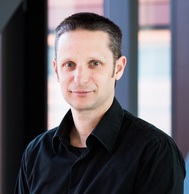
Martin Kerschensteiner is a Professor at the Institute of Clinical Neuroimmunology within the Biomedical Center at Ludwig Maximilian University of Munich, where he serves as Director. His work bridges clinical neuroimmunology and mechanistic neuroscience in neurodegenerative diseases. Research focuses on immune-mediated damage in multiple sclerosis (MS), including axon degeneration, synapse loss, and microglia activation. Key collaborations span the University Hospital and LMU Biomedical Center, emphasizing translational approaches to MS treatment. Research Interests: Dr. Kerschensteiner investigates how infiltrating immune cells damage neurons and oligodendrocytes in MS, driving irreversible functional deficits. His team explores calcium signaling, mitochondrial dynamics, and myelin degeneration mechanisms to develop neuroprotective therapies. Publications highlight his contributions to understanding axonal transport deficits, myelinosome formation, and reversible axon damage in MS models. These works integrate advanced imaging and molecular analysis to uncover disease progression pathways. Students: He has mentored researchers such as Yves Carpentier Solorio, Carla Ares Carral, and Dr. Aleksandra Mezydlo, covering diverse aspects of MS pathology and neuroinflammation.
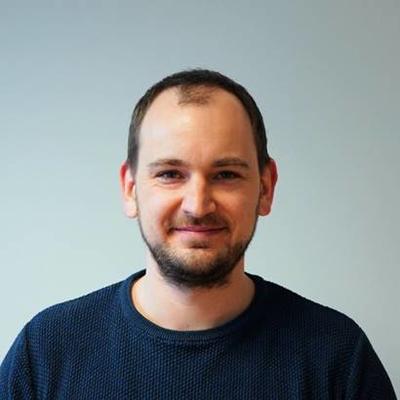
Thomas Huser is a Professor in the Department of Physics at the University of Bielefeld's Faculty of Physics, with an adjunct professorship in the Department of Internal Medicine at the University of California, Davis. His research group develops advanced optical microscopy techniques for biological applications, focusing on ultra-sensitive imaging of cellular and molecular systems. Physics MA, University of Basel (1992) Physics MS, University of Basel (1994) Physics Ph.D., University of Basel (1998) Postdoc in Materials Science, Lawrence Livermore National Laboratory (1998-2000) Huser's research spans multiple cutting-edge areas in biophotonics, including super-resolution optical microscopy, coherent anti-Stokes Raman spectroscopy (CARS), and nanosensor development. His work bridges physics, biology, and medicine, with applications in HIV research, liver cell imaging, and cancer studies. The group develops novel imaging techniques to study cellular structures at the nanoscale, including virological synapses, tunneling nanotubes, and endothelial fenestrations. His recent publications demonstrate a strong trend toward integrating advanced computational methods with optical microscopy, including deep learning for image reconstruction, novel optical designs using fiber components, and hyperspectral imaging techniques. The research spans fundamental physics of light-matter interactions to direct medical applications in liver disease, HIV transmission, and nanoparticle toxicity. Summa cum laude doctorate from University of Basel Norbert J. Kreidl Award from American Ceramic Society Excellence in Publication Award from LLNL Above and Beyond Teaching Award from Center for Biophotonics Guest Editor for Journal of Biophotonics Editorial roles at Applied Spectroscopy, Scientific Reports, and BME Frontiers Huser leads multiple major research projects funded by the European Union and German Research Foundation, including imaging aging endothelium at the nanoscale, microphysiological sample imaging for polypharmacy evaluation, and sino-German mobility programs for high-speed microscopy. His lab, the Biomolecular Photonics Group, develops innovative imaging technologies while maintaining strong clinical connections through collaborations with medical researchers. The Biomolecular Photonics Group operates state-of-the-art microscopy facilities including super-resolution systems, CARS microscopy, and custom-built imaging platforms. The group maintains international collaborations across Europe and the United States, with particular strengths in translating fundamental optical physics into biomedical applications.
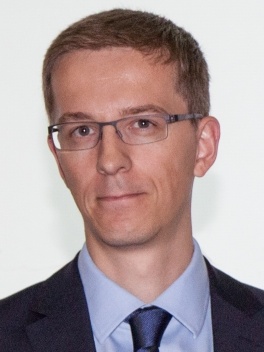
Dr. Felix Kosmalla is a Post-Doctoral Researcher at the Ubiquitous Media Technology Lab (UMTL) of the German Research Center for Artificial Intelligence (DFKI) on the Saarland Informatics Campus. His research focuses on Human-Computer Interaction (HCI), Sports Technologies, Virtual Reality, and Interactive Systems. Specializes in real-time feedback systems for sports training Develops passive haptic feedback and ambient interfaces Expert in mixed reality for climbing and running assistance He has supervised multiple Master's and Bachelor's theses while teaching courses in HCI, Arduino prototyping, and innovative retail technologies. His publications since 2014 demonstrate consistent contributions to HCI in sports contexts, including EMS-based training systems and VR locomotion frameworks. As an active researcher, he participates in reviewing for top conferences like CHI, MobileHCI, and IEEE VR. His work appears in 42 publications, with recent projects exploring actuated plants for ambient feedback and rock climbing treadmills for VR locomotion.
Randolf Ebelt serves as Professor and Chair of High Frequency Engineering within the Department of Electrical Engineering, Electronics and Information Technology (EEI) at FAU's Faculty of Engineering. His research focuses on radar systems and wireless localization technologies with applications in automotive and indoor environments. His primary research interests include automotive radar signal processing, deep learning applications for radar enhancement, and wireless sensor networks for precise localization. He has pioneered work in ghost detection identification, MIMO radar arrays, and 24 GHz transceiver design for real-time 3D positioning systems. Analysis of his publication trends shows increasing integration of artificial intelligence with traditional radar engineering since 2019, particularly using deep learning for automotive radar enhancement and ghost detection. His work consistently addresses practical implementation challenges including phase noise effects, antenna array optimization, and multipath mitigation in complex environments. No scientific awards were documented in the provided materials. Information regarding student advising or research grants was not specified in the source content. Professor Ebelt leads the Chair of High Frequency Engineering (LHFT) research group at FAU, which maintains active collaborations with industry partners on radar technology development and participates in international research initiatives focused on automotive and wireless positioning systems.
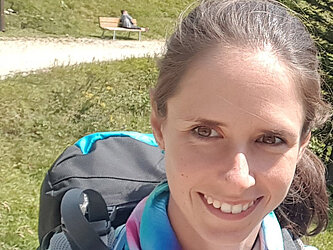
Professor Martina Klose serves as Professor for Aerosols in the Earth System and Head of the Mineral Dust Working Group at the Institute of Meteorology and Climate Research - Tropospheric Research (IMKTRO) at Karlsruhe Institute of Technology (KIT). With extensive expertise in atmospheric dust processes, she leads cutting-edge research on mineral dust emission, transport, and impacts within the Earth system. Her research interests focus on mineral dust emission mechanisms , aerosol-climate interactions , and Earth system modeling . Professor Klose investigates the physical and chemical properties of dust particles across various global sources including the Sahara, Mojave Desert, and Iceland. Her work combines field measurements , laboratory analyses , and advanced modeling techniques to understand dust's role in atmospheric processes and climate systems. She specializes in particle size distribution, mineralogical composition, and iron speciation in dust-emitting sediments. Analysis of her recent publications reveals a strong emphasis on process-based dust emission schemes for climate models, with particular attention to source heterogeneity and scale-aware parameterizations. Her work spans field campaigns across multiple continents, instrument development for dust measurement, and integration of satellite observations with ground-based data. Professor Klose contributes significantly to improving the representation of dust processes in global Earth system models like MONARCH and CESM2. Professor Klose actively collaborates with international research teams across Europe and North America. She has contributed to major field campaigns including J-WADI and FRAGMENT in the Sahara, and has led efforts to characterize dust sources in diverse environments from volcanic Iceland to the arid landscapes of Morocco and California. Her research has important implications for understanding dust's impacts on climate, air quality, and biogeochemical cycles.
Dr. Gholamali Hoshyaripour leads the "ART" working group at the Institute of Meteorology and Climate Research (IMK-TRO) within the Karlsruhe Institute of Technology (KIT). His research focuses on atmospheric aerosols, volcanic ash dispersion, Saharan dust modeling, and their impacts on climate systems through radiation-cloud interactions. He collaborates with institutions like the University of Hamburg and Max Planck Institute for Meteorology. Earth System Sciences PhD (University of Hamburg, 2013) MSc Environmental Engineering (University of Tehran, 2009) BSc Civil & Environmental Engineering (University of Najafabad, Iran, 2005) His research explores aerosol lifecycle processes, including ash iron solubility modulation in volcanic plumes, dust optical properties, and climate feedback mechanisms. Recent work emphasizes machine learning applications for atmospheric modeling (e.g., MieAI neural network) and satellite-based plume height estimation. Analysis of 15 recent publications reveals interdisciplinary trends combining atmospheric modeling (ICON-ART, COSMO-ART), volcanic impact studies, dust-cloud-radiation interactions, and remote sensing techniques. Key keywords include atmospheric chemistry, climate modeling, aerosol dynamics, and satellite data applications.
Vitor Fortes Rey is a Researcher at the German Research Center for Artificial Intelligence (DFKI) in Kaiserslautern, Germany, specializing in embedded intelligence systems. He operates within the Embedded Intelligence department, focusing on human activity recognition through multimodal sensor fusion and machine learning techniques for pervasive computing applications. His research expertise spans Human Activity Recognition , Wearable Computing , and Deep Learning , with emphasis on lightweight models for resource-constrained environments. Current work addresses data scarcity through synthetic data generation and few-shot learning approaches, particularly targeting healthcare applications like nurse education systems and real-world activity monitoring. Recent publications demonstrate a clear trajectory toward practical deployment of activity recognition systems, with increasing focus on cross-domain adaptation, multimodal feature integration, and vision-based evaluation frameworks. His work bridges theoretical machine learning advances with tangible healthcare and behavioral computing solutions. Rey actively contributes to the VidGenSense project developing synthetic sensor data generation methods to transition human activity recognition from laboratory settings to longitudinal real-world implementation. While no formal advisees are documented, his collaborative work with institutions like IEEE indicates active participation in the pervasive computing research community. He maintains direct involvement in the Embedded Intelligence research unit at DFKI, where his team develops next-generation sensor interpretation systems with applications spanning healthcare, behavior computing, and ubiquitous intelligence environments.
Dr. Insa Otte is a Research Fellow at the University of Würzburg , affiliated with the Institute of Geography and Geology under the Faculty of Philosophy . Her work focuses on datacubes , climate change , and spatio-temporal analysis in alpine and tropical ecosystems. PhD: 2017, University of Marburg — "Global Climate Change vs. Local Land-Use Change and its Impact on Atmospheric Water Input at Mt. Kilimanjaro" Diploma: 2012, University of Marburg — "Nutrient Input in South Ecuadorian Rainforests" Her research spans East and Southern Africa , analyzing precipitation isotopes , extreme weather , and ecosystem responses through GIS and remote sensing . She contributes to agricultural decision support systems and invasive species modeling like Lantana camara in savannahs. Current projects integrate Earth observation datacubes for climate adaptation in West Africa. Her work combines satellite data (Landsat, Sentinel) with ground observations to study vegetation dynamics and land degradation in tropical mountains and savannahs.
Dr. Maninder Singh Dhillon is a Postdoctoral Researcher at the Department of Remote Sensing, Institute of Geography and Geology, University of Wuerzburg (Germany). Since March 2024, he leads the 'Biodiversity' work package in the EO4CAM project, continuing his academic career at the same institution where he completed his PhD (2019-2023) with the thesis 'Potential of Remote Sensing in Modeling Long-Term Crop Yields'. His previous roles include scientific employee (2023-2024), PhD student (2019-2023), and research assistant (2018-2019) at the University of Wuerzburg's Remote Sensing Department. Education: M.Sc. in Earth Observation and Geoanalysis (EAGLE) from University of Wuerzburg (2016-2019), with thesis on crop growth models using synthetic remote sensing data Professional Experience: Internship at German Aerospace Center (DLR) in Neustrelitz (2018) and research assistant role at Punjab Remote Sensing Center (2015-2016) Dr. Dhillon's research focuses on agricultural remote sensing applications, particularly: Crop yield modeling through multi-sensor data fusion (MODIS, Landsat, Sentinel-2) Biodiversity analysis in agricultural ecosystems Land-use diversity impacts on crop biomass Climate variability and soil quality interactions Sustainable agriculture through precision farming technologies Carbon emissions assessment in groundwater irrigation systems His publication record (2018-present) shows expertise in: STARFM data fusion algorithms for NDVI time-series Machine learning integration with crop models Environmental monitoring of agroecosystems Water-energy-agriculture nexus analysis Phenological pattern detection in small-scale farming Multiscale biodiversity assessment frameworks
Dr. rer. nat. Sascha Flögel is a researcher at GEOMAR Helmholtz Centre for Ocean Research Kiel , affiliated with the Ocean Circulation and Climate Dynamics research division and the Paleo-Oceanography department. His work integrates numerical climate and biogeochemical modeling to study global and regional climate systems across geological, present, and future timescales, focusing on biogeochemical cycles of C, P, O2, and the terrestrial hydrological cycle in relation to marine nutrient inventories and water column ventilation. Key Research Themes: Understanding orbital and biogeochemical drivers of Oceanic Anoxic Events (OAEs) in greenhouse climates. Coupling biogeochemical box models with General Circulation Models (GCMs) to simulate Cretaceous ocean oxygen concentrations. Investigating cold-water coral (e.g., Lophelia pertusa ) growth in relation to hydrographic regimes via autonomous observatories. Notable Projects: Flögel contributes to ARCHES (2018–2021), developing autonomous robotic networks for ocean and planetary exploration, and ARIM-FUEL (2018–2021), creating submarine fuel cell systems for long-term benthic monitoring. His research bridges robotics, climate modeling, and marine ecology, with applications to future societal challenges like climate change and resource management. Publication Trends: Flögel's recent work spans paleoceanographic reconstructions, cold-water coral hydrodynamics, and orbital-climate interactions. His studies frequently employ GCMs, biogeochemical box models, and multiproxy sediment analysis, emphasizing Cretaceous greenhouse climates and modern deep-sea ecosystems.
Adrian Pöppelwerth is a doctoral researcher at the Technical University of Braunschweig, affiliated with the Faculty of Electrical Engineering, Information Technology, Physics and specifically the Institute of Geophysics and Extraterrestrial Physics. He is a member of the Space Physics & Space Sensors Group, maintaining an office in room A 501 and contactable via telephone (+49 531 391 - 5211) and email. His research focuses on space plasma physics phenomena, particularly plasma jets in the magnetosheath , Kelvin-Helmholtz instability , and surface waves on the magnetopause . His doctoral work centers on the development of waves at plasma-physical interfaces and calibration of THEMIS/ARTEMIS magnetometer data. Previously, he completed a master's thesis on multi-satellite investigations of plasma jets in Earth's magnetosheath. Pöppelwerth has demonstrated significant research productivity with three publications in 2024 across leading space physics journals including Annales Geophysicae, Frontiers in Astronomy and Space Sciences, and EPL. His work shows strong emphasis on space weather phenomena, magnetospheric dynamics, and spacecraft-based measurements of plasma behavior. His research has practical applications in space sensor technology and understanding Earth's space environment. The collaborative nature of his publications, working with researchers from multiple institutions, demonstrates his integration into the international space physics community.
Christian Vering is a Researcher and Team Leader for Refrigeration Cycles at the Chair of Building and Room Climate Technology within RWTH Aachen University's Faculty of Mechanical Engineering. He specializes in evaluating the performance and environmental impacts of heat pump systems, from refrigerant selection to system controllers, utilizing advanced optimization methods coupled with dynamic simulation models and hardware-in-the-loop validation techniques. Dr. Vering earned his doctorate in April 2023 with a dissertation titled "Optimal Design of Heat Pump Systems for Existing Buildings." He studied Mechanical Engineering with a focus on renewable energy technology at RWTH Aachen from 2010 to 2016, including a six-month internship at Porsche AG investigating thermal management strategies for sports vehicles. During his studies, he worked for seven semesters at the Chair of Technical Thermodynamics. His research demonstrates a clear trajectory toward integrating artificial intelligence with traditional control systems, particularly using deep reinforcement learning to optimize heat pump performance while simultaneously reducing noise and increasing efficiency. Recent work emphasizes environmental impact assessment of refrigerants and the critical role of heat pumps in decarbonizing residential heating systems, with significant focus on natural refrigerants like propane. His publications reveal a methodological approach combining theoretical modeling, experimental validation, and practical implementation. Dr. Vering established and operationalized the Refrigerant Laboratory at RWTH Aachen, featuring a compressor test bench and an air-water heat pump using propane refrigerant. Since July 2023, he serves as Principal Investigator in the German Research Foundation's Priority Program 2403, investigating interactions between heat pumps and storage systems. His scientific contributions have been recognized with notable awards: Borchers Plakette, RWTH Aachen University (2024) Young Scientist Award of the German Climate and Refrigeration Technology Association (2022) As Principal Investigator in Priority Program 2403, Dr. Vering leads significant research initiatives investigating heat pump interactions with storage systems. His work involves extensive collaboration with multiple research groups and industry partners. While not explicitly listed as primary advisor, his leadership role in the Refrigeration Cycles team suggests substantial involvement in mentoring junior researchers and students. Dr. Vering is actively involved with the Urban Energy Lab 4.0 initiative, which takes an integrated approach to sustainable urban energy systems. His Refrigerant Laboratory serves as a key experimental facility for validating theoretical models and developing next-generation heat pump technologies, particularly focusing on flammable natural refrigerants and their safe implementation in building energy systems.
Prof. Dr.-Ing. Markus G. Jahreis is a Professor of Timber Construction at the Eberswalde University of Applied Sciences for Sustainable Development, where he leads research and teaching in wood engineering and timber construction. His research interests focus on: Timber construction and engineering Structural health monitoring of timber structures Wood moisture content and protection Piezoresistive materials for construction monitoring Timber bridge construction and inspection Prof. Jahreis has published recent work on timber bridge inspection protocols and piezoresistive monitoring systems for timber construction. His research demonstrates how innovative monitoring techniques can improve the durability assessment of timber structures and potentially reduce inspection frequency requirements for protected timber bridges. His scientific contributions include: Research on the need for annual main inspection of protected timber bridges Development of piezoresistive bond lines for timber construction monitoring Studies on wood moisture content monitoring in bridge structures
Peter Neumeister is a Professor at Hochschule für nachhaltige Entwicklung Eberswalde (HNEE), specializing in the fundamentals of engineering sciences. His work focuses on advanced materials characterization and modeling, particularly in piezoelectric, ferroelectric, and magnetic shape memory systems. Teaching areas: Physics, Mechatronics Email: Peter.Neumeister@hnee.de Research trends from his publications span: Magnetic Shape Memory Alloys : Modeling, characterization, and self-sensing actuator development Piezoelectric Materials : Composite integration, poling optimization, and ultrasonic transducer design Electrocaloric Effect : Cooling applications and thermal measurement methodologies Computational Methods : Finite element simulations, hysteresis modeling, and fracture mechanics analysis
Alexander Beetz serves as Professor of Applied Geodesy and Engineering Geodesy at Stuttgart University of Applied Sciences since 2023, following industry roles as Software Development Lead (2016-2023) and Development Engineer (2013-2016) at MTS Schrode AG. His academic foundation includes a Dr.-Ing. in Geodesy and Geoinformatics from the University of Stuttgart (2012) and prior service as academic staff at the Institute of Engineering Geodesy (2006-2013). Education: Dipl.-Ing. in Geodesy and Geoinformatics, University of Stuttgart (1997) Dr.-Ing. in Geodesy and Geoinformatics, University of Stuttgart (2012) Referendariat for higher surveying technical administrative service, completed as Vermessungsassessor (2003) Professor Beetz's research centers on Engineering Geodesy applications in construction automation, with emphasis on machine guidance systems, indoor positioning, and BIM integration. His work develops precision control solutions for construction machinery through sensor integration and real-time positioning, addressing critical challenges in measurement accuracy and control quality separation. Key innovations include hardware-in-the-loop simulators for dozer lateral control and signal-matching techniques for mobile positioning. His publication trajectory (2010-2017) reveals consistent focus on geodetic engineering for construction automation, evolving from machine simulator calibration to BIM implementation in excavation modeling. Core themes include real-time sensor integration, precision guidance algorithms, and quality control frameworks for construction machinery, demonstrating practical translation of geodetic principles into industrial applications. Professional leadership includes membership in FG13 BIM at the Association of German Surveying Engineers (VDV) and chairmanship of Cluster 5 (Machine Assistance Interface) within MIC4.0's System Control Working Group, driving standards for machine control interfaces in construction technology.