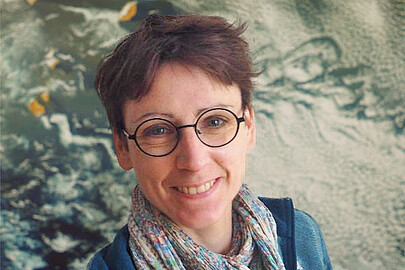
Magdalena Szymczyk is a Lecturer in the Department of Biocybernetics and Biomedical Engineering at AGH University of Science and Technology, Faculty of Electrical Engineering, Automatics, Computer Science and Biomedical Engineering. Her work bridges embedded systems, biomedical signal processing, and geophysical data analysis. Research focuses on energy-efficient sensor networks, neural networks for GPR data classification, and mathematical transforms in signal analysis Expertise in parallel computing, real-time systems, and biomedical engineering applications Her publications (2015–2025) demonstrate a trajectory from parallel neural networks and S-transform/GPR methodologies to recent work on MicroPython in embedded systems. Key themes include energy optimization in distributed architectures and AI-driven signal processing across biomedical and geophysical domains. She has authored works on deterministic chaos in simulations, GPU image processing, and cybersecurity in microcontroller systems. Her current research emphasizes embedded systems security, medical signal diagnostics, and computational methods for geological analysis. She utilizes tools like OpenCL for GPU acceleration and MATLAB for parallel computing implementations.
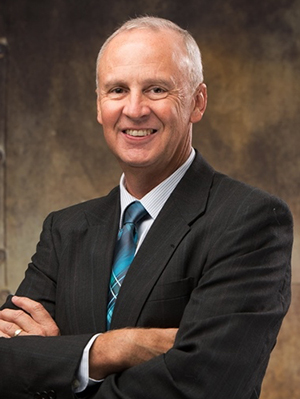
Gianluca Setti is a Full Professor at the Department of Electronics and Telecommunications (DET) at Polytechnic University of Turin, where he has been serving since 2017. He previously held positions at the University of Ferrara from 1997 to 2017. His institutional roles include being the Contact Person for the Research Quality Evaluation process, Member of the Interdepartmental Center SmartData@PoliTO - Big Data and Data Science Laboratory, and Member of the University Quality Assurance Committee. He serves as Editor-in-Chief of the Proceedings of the IEEE, the first non-US editor to hold this position. Dr. Setti's research spans multiple interdisciplinary fields including machine learning, artificial intelligence, big data analytics, Internet of Things, biomedical signal processing, power electronics, and electromagnetic compatibility. His work bridges theoretical foundations with practical applications, particularly focusing on compressed sensing, neural networks, and circuit design for specialized applications. His research has significant implications for healthcare, sustainable infrastructure, and next-generation electronics. His publication record reveals a consistent trajectory from foundational work in chaotic systems and neural networks to contemporary applications in AI, IoT, and edge computing. The most recent publications demonstrate his focus on anomaly detection at the edge, neural oracles for biosignal processing, and power electronics innovations. His work shows strong integration between theoretical signal processing and practical circuit implementation. 1998 Caianiello prize (best Italian Ph.D. thesis on Neural Networks) IEEE Fellow (2006) IEEE Circuits and Systems Society Distinguished Lecturer (2004, 2015) 2004 IEEE CAS Society Darlington Award 2013 IEEE CAS Society Meritorious Service Award 2013 IEEE CAS Society Guillemin-Cauer Award 2019 IEEE Transactions on Biomedical Circuits and Systems best paper award Multiple best paper awards at major conferences including ECCTD2005, EMCZurich2005, ISCAS2011, PRIME2019, and EMCCOMPO2019 Dr. Setti has supervised numerous PhD students across various research domains including electromagnetic compatibility, signal and power integrity, communication networks, mechatronics and robotics. His research is supported by significant funding including national PRIN projects, EU-funded JTI-ECSEL initiatives, and commercial contracts. He leads the VLSILAB Group at DET, focusing on circuit architectures, embedded systems, and AI applications. His current projects include DECORI (anomaly detection), StorAIge (embedded storage for AI), PROGRESSUS (energy infrastructure), CONNECT (smart grid), and CONVERGENCE (wearable healthcare applications).
Dr. Gaël Kermarrec is a researcher at the Boundary Layer Meteorology Group , part of the Institute of Meteorology and Climatology within the Faculty of Mathematics and Physics at Leibniz University Hannover . His work focuses on atmospheric turbulence, GNSS applications, and remote sensing for environmental monitoring. Boundary layer meteorology Turbulence theory GNSS signal processing Terrestrial laser scanning Climate change impacts Geodetic time series analysis His research integrates advanced mathematical models like LR B-splines and Matérn covariance with large eddy simulations to study: Atmospheric turbulence effects on optical/GNSS signals Hydrospheric mass loading Deformation analysis of terrain/port infrastructure Climatic sea-level changes Machine learning for remote sensing The 15 most recent articles (2025-2023) demonstrate his focus on: GNSS-based turbulence detection AI-enhanced climate mapping Advanced surface approximation techniques Multi-sensor data fusion Stochastic modeling of geodetic observations Environmental impacts on optical measurements He has developed tools like the Klimascanner QGIS plugin for urban climate resilience and contributes to: Understanding atmospheric scale lengths Improving TLS/GNSS deformation monitoring Analyzing hydrospheric changes Wavefront modeling Ionospheric corrections
Bruno Alonso is a CNRS Research Director at the Institute of Chemistry of Montpellier (ICGM), a joint research unit of CNRS, University of Montpellier, and the National School of Chemistry of Montpellier (ENSCM). His work focuses on advanced materials chemistry with emphasis on nanostructured hybrid systems and NMR characterization of organic-inorganic interfaces. Education Engineer, National School of Chemistry of Paris (1993) Doctorate in Materials Science, University of Paris VI (1998) CNRS Research Fellow (2001) Accreditation to Supervise Research, University of Orléans (2006) Bachelor of Fine Arts, University of Paris 1-CNED (2017) Research Interests Dr. Alonso's research centers on hybrid organic-inorganic materials with expertise in sol-gel chemistry , nanoscale self-assembly , and advanced NMR spectroscopy . His group develops: Biomimetic nanocomposites using polysaccharides (chitin/cellulose) and oxides Zeolite systems with controlled heteroelement distribution and acidity Multinuclear NMR methods for probing molecular interactions at interfaces Applications span sustainable materials, energy storage, and catalytic systems with strong emphasis on green synthesis approaches. Publication Trends Analysis of recent publications (2021-2025) reveals dominant themes in zeolite chemistry (40% of output) and biomimetic nanomaterials (30%), with growing integration of computational methods (15%). His work increasingly employs machine learning for NMR prediction and solvent-free synthesis techniques , reflecting industry shifts toward sustainable materials. Collaborative publications span 12 countries with consistent focus on energy applications (hydrogen storage, thermal management) and advanced characterization. Research Infrastructure Based at Montpellier's Balard Research Chemistry Center, Dr. Alonso utilizes ICGM's state-of-the-art facilities including high-field NMR spectrometers and materials synthesis laboratories. His group maintains active collaborations with European institutions for X-ray diffraction, computational modeling, and gas-sensing applications.
Dr. Ghazal Bargshady is a Lecturer at the University of Canberra , with expertise in Affective Computing , Artificial Intelligence , and Healthcare Technology . Her roles include teaching units such as Computer Vision, Data Analytics, and Soft Computing, as well as supervising PhD and Master by Research students in AI-driven projects for healthcare and road safety. Education: She earned her PhD in Artificial Intelligence and Computer Vision from the University of Southern Queensland in 2020. Research Interests: Dr. Bargshady specializes in Computer Vision Deep Learning Biosignal Processing Facial Expression Analysis Human Factors in AI Wearable Sensors Multimodal Data Fusion Brain–Computer Interfaces Her work addresses real-world challenges in pain assessment, depression recognition, and driver safety using cutting-edge AI models. Article Trends: Her recent publications focus on Transformer architectures , fNIRS signal analysis , multimodal pain detection , and depression severity estimation via facial video data. These studies highlight her contributions to AI in healthcare , transportation safety , and biomedical signal processing . Teaching Activities: Dr. Bargshady has lectured units including Programming for Data Science , Computer Vision , and Soft Computing , emphasizing practical AI applications.
John Breslin is a Personal Professor in Electronic Engineering at the College of Science and Engineering, University of Galway, serving as Director of the TechInnovate and AgInnovate programmes. Associated with two Taighde Éireann – Research Ireland Centres, he is a Principal Investigator at Insight Centre for Data Analytics (specializing in data analytics) and a Funded Investigator at VistaMilk (Agri-Technology), while also leading the EDIH Data2Sustain project. With an h-index of 50, over 12,000 citations, and 300+ peer-reviewed publications including seminal books on the Social Semantic Web, he ranks among Ireland's most influential researchers in digital technologies. Breslin's research fundamentally bridges Semantic Web technologies, AI-driven data analytics, and practical innovation. His co-creation of the SIOC framework—implemented across 65,000+ websites by entities like Yahoo and Boeing—demonstrates real-world impact in social data interoperability. Current work leverages blockchain and federated learning for sustainable Agri-Technology through VistaMilk, while his TechInnovate programmes translate academic research into commercial ventures across healthcare, smart manufacturing, and energy systems. Analysis of his 15 most recent publications reveals dominant themes in AI-enhanced security (35% of works), blockchain applications for sustainability (27%), and multimodal AI for healthcare (20%). His team pioneers privacy-preserving techniques for IoT and medical devices, neurosymbolic visual reasoning frameworks, and federated learning architectures addressing data heterogeneity—directly supporting his roles in national research infrastructures like Insight and VistaMilk. John has received several prestigious awards: IIA Net Visionary Award (twice) ITAG Outstanding Contribution to the ICT Sector Award Galway Chamber President’s Award Best Irish-Published Book Award (2020 for Old Ireland in Colour) Multiple Best Paper Awards He leads major research initiatives funded by Taighde Éireann – Research Ireland: Insight Centre for Data Analytics (as Principal Investigator) VistaMilk SFI Research Centre (as Funded Investigator) EDIH Data2Sustain (as Principal Investigator) His entrepreneurial programs TechInnovate and AgInnovate have mentored 200+ startups, securing €50M+ in follow-on funding. Breslin co-founded PorterShed (Galway City Innovation District) and serves on Scale Ireland's Steering Group, creating Ireland's most active regional innovation ecosystem outside Dublin. He maintains active industry partnerships with Vodafone, Boeing, and agricultural cooperatives through VistaMilk's testbed facilities.
Seung Eock Kim is a Professor in the Department of Civil and Environmental Engineering at Sejong University, Korea, where he has served since 1997. Previously, he held executive leadership as Senior Vice President (2015-2018) and brings industry experience from Daewoo Engineering. His academic credentials include a Ph.D. from Purdue University (1996), M.S. from KAIST (1990), and B.S. from Yonsei University (1983). Kim leads research in structural systems optimization with emphases on: Nonlinear inelastic analysis of steel/composite structures AI-driven structural design methodologies LRFD (Load and Resistance Factor Design) frameworks Advanced computational mechanics for infrastructure His recent publications (2024-2025) demonstrate strong focus on machine learning applications for structural health monitoring, nano-scale material characterization of steels, and sensor-based corrosion detection. This represents a strategic expansion into intelligent infrastructure systems beyond traditional mechanics. Awards and honors: National Research Laboratory designation (Ministry of Science, 2000) Elected Full Member of Korean Academy of Science and Technology (2011) He directs the Steel Structure Laboratory , where he developed the specialized nonlinear analysis software 3D-PAAP. His research has generated 132 SCIE-indexed publications with 1,599+ citations, including the influential CRC Press book LRFD Steel Design Using Advanced Analysis (1997).
Helder Carvalho is an Associate Professor at the University of Minho's School of Engineering, Campus de Azurém, where he also serves as Director of the Department of Textile Engineering and Director of the Master's program in Textile and Accessories Product Design and Innovation. His academic career spans over three decades, with a focus on textile engineering and its intersection with electronics and automation systems. His educational background includes: PhD in Textile Engineering (2004) from University of Minho, School of Engineering MSc in Textile Engineering (1998) from University of Minho, School of Engineering BSc in Electrotechnical and Computer Engineering (1992) from University of Porto, Faculty of Engineering Professor Carvalho's research primarily focuses on smart textiles, textile sensors, and instrumentation systems for industrial sewing machines. His work bridges the gap between traditional textile manufacturing and modern electronics, creating innovative solutions for interactive textiles and wearable technology. He has particular expertise in developing flexible sensors that can be integrated into fabrics for applications ranging from sports performance monitoring to healthcare. His recent publications demonstrate a strong trend toward sports applications of smart textiles, with numerous papers on fencing apparel, karate body protectors, and general athletic performance monitoring. The research spans material science, sensor development, and user experience design, showing a comprehensive approach to creating functional and attractive smart textile products. Professor Carvalho has received recognition through research funding from major institutions: BE@T Bioeconomy Textile and Clothing (current) Greenauto - Green Innovation for the Automotive Industry (current) Factor ST+ (2021-2023) FAMEST (2017-2020) TSSIPRO (2016-2019) He has directed multiple academic programs including the Master's in Textile and Accessories Product Design and Innovation, and coordinated educational initiatives like the CET 'Fashion Commerce' program. His work at the Textile Science and Technology Centre demonstrates a commitment to translating research into practical applications across sports, healthcare, and industrial manufacturing sectors.
Goran Oreški is an Associate Professor and Head of the Laboratory at the Faculty of Informatics in Pula (University Jurja Dobrile, Croatia), where he has been employed since 2019. He teaches courses on databases, object-oriented programming, data warehousing, and artificial intelligence at both undergraduate and graduate levels. Education: Ph.D. in Informatics (2016), Faculty of Organization and Informatics Industry Experience: 9 years as software architect and programmer in banking sector Research Focus: Artificial Intelligence systems, classical machine learning algorithms, and deep learning architectures. His work bridges theoretical advancements with practical applications in autonomous vehicles, traffic monitoring, and financial risk assessment. Recent Publication Trends: 2023-2025 works emphasize generative AI for synthetic credit data, traffic object segmentation with monocular cameras, and context-aware detection models (YOLO*C). Earlier works focus on genetic algorithms and ensemble learning for imbalanced datasets. Awards: Google RFP Award for autonomous vehicle research Highly Cited Paper (Web of Science, top 1%) Best Paper at CECIIS conference Leadership: Director of FIPU Laboratory since 2022, leading projects like ai.Shuttle (autonomous mini-bus) and CenAI (industry collaboration with Cenosco).
David Bastviken is a Professor at the Environmental Change Theme (TEMAM), Linköping University , specializing in environmental science and biogeochemical cycles. His research focuses on greenhouse gas emissions, particularly methane and carbon dioxide, from freshwater systems and human activities, with implications for climate policy and pollution management. Research Pillars : Aquatic greenhouse gas dynamics, chlorine cycling in soils, drinking water disinfection by-products, landscape-scale carbon budgets Methodologies : Drone-based sensing, hyperspectral imaging, sensor networks, cross-disciplinary ecosystem experiments Notable findings include the discovery of underestimated methane emissions from lakes and rivers, the role of trees in methane uptake , and natural chlorine production in boreal forests. His work has been funded by ERC , Formas , VINNOVA , and The Swedish Research Council . Recent publications highlight climate sensitivity of methane emissions, day-night emission patterns , and global methane budget modeling. He leads international collaborations across Amazonas , Arctic , and Boreal regions.
Christian Smith is an Associate Professor and Lecturer at the Department of Robotics, Perception and Learning at Kungliga Tekniska Högskolan (KTH Royal Institute of Technology). His research focuses on robotics and applications in human-centered environments like home environments, small workshops, and healthcare facilities, including the development of new robotic systems for research. Teaching Roles: Course Coordinator/Teacher/Examiner for courses such as Introduction to Robotics (DD2410), Research Project in Robotics (DD2411), and Java Programming for Python Programmers (DD1380) Research Themes: Human-Robot Interaction, Behavior Trees, Exoskeletons, Intent Recognition, and Multimodal Perception Awards: No specific scientific awards mentioned in the provided text His KTH profile highlights work on adaptive robotics systems and formalized control strategies. The research portfolio spans from theoretical studies on behavior tree programming to applied work in assistive technologies and teleoperation systems.
John Valasek is a Professor in the Department of Aerospace Engineering at Texas A&M University, holding the Drs. L. Diane '88 and John E. Hurtado '91 Professorship. He directs the Vehicle Systems & Control Laboratory (VSCL) and serves as Site Director for the NSF Center for Autonomous Air Mobility and Sensing (CAAMS) and the FAA Center for General Aviation Research (PEGASAS). His research focuses on autonomous control systems, UAV navigation, and cybersecurity for aerospace vehicles. Valasek earned his Ph.D., M.S., and B.S. in Aerospace Engineering from the University of Kansas (1995) and California State Polytechnic University (1986). Education: Ph.D., Aerospace Engineering, University of Kansas - 1995 M.S., Aerospace Engineering, University of Kansas - 1990 B.S., Aerospace Engineering, California State Polytechnic University - 1986 Research Interests: Autonomous systems, nonlinear control, vision-based navigation, UAV control, bio-nano materials control, and aerospace systems engineering. Key Contributions: Over 100 invited lectures/seminars, leadership in NSF-funded research centers, and development of advanced control algorithms for aerospace systems. Notable publications include work on reinforcement learning for autonomous systems and real-time system identification for UAS. Awards: John Leland Atwood Award (2015) McElmurry Outstanding Teaching Award (2001, 2004, 2014) Engineering Hall of Fame inductee (2019) Advising & Grants: Advised over 60 graduate students, including recent NSF GRFP winner Evelyn Madewell. PI on multi-million-dollar grants, including the NSF CAAMS project and Air Force-funded research on autonomous systems. Labs & Teams: Directs the Vehicle Systems & Control Laboratory (VSCL), focusing on low-cost attritable aircraft technology and autonomy. Collaborates with industry partners like Stratolaunch and VectorNav through CAAMS initiatives.
Roman Krems is a Professor and Distinguished University Scholar at the University of British Columbia (UBC) in the Department of Chemistry, with affiliations to the Stewart Blusson Quantum Matter Institute. His research focuses on the intersection of quantum physics, machine learning, and chemistry, particularly in quantum materials and quantum technologies such as quantum computing and sensing. Key Roles: Professor at UBC (2013–present), Distinguished University Scholar (2017–present) Education: Ph.D. from Göteborg University (2002), Postdoctoral Fellow at Harvard-MIT Center for Ultracold Atoms (2003–05) Research Interests include: Quantum machine learning (QML) for solving complex physics problems Quantum scattering theory in electromagnetic fields Applications of quantum computing to chemistry Developing machine learning algorithms for quantum dynamics Recent publications highlight advancements in extrapolating quantum observables, Gaussian process models for collision dynamics, and quantum walks in disordered systems. His work bridges theoretical physics, computational methods, and experimental applications in cold molecule research. Scientific Awards include the UBC Killam Teaching Prize (2017), election as Fellow of the American Physical Society (2015), and the Keith Laidler Award (2013). He has held editorial board positions for journals such as Machine Learning: Science & Technology and New Journal of Physics . Research Group members include graduate students and postdocs working on quantum technologies, machine learning, and molecular scattering. He also contributes to outreach through invited talks and seminars at institutions like MIT and Lawrence Berkeley National Laboratory.
Prof. Dr. sc. techn. ETH Oliver Staadt is Full Professor of Computer Science and Chair of Visual Computing at the University of Rostock , Germany. Since 2023 he also serves as Director of the Institute for Visual and Analytic Computing within the Faculty of Computer Science and Electrical Engineering . Previously he was Dean (2016–2018) and Vice Dean (2010–2016) of the same faculty. Education Ph.D. in Computer Science, ETH Zürich (2001) M.Sc. in Computer Science, TU Darmstadt (1994) Research Interests Prof. Staadt’s research spans virtual and augmented reality , computer graphics , visualization , telepresence , immersive analytics , and human–computer interaction . A particular focus lies on real-time rendering and display technologies for large high-resolution display systems, depth-image enhancement for RGB-D sensors, and interaction techniques that leverage spatial cognition and eye-tracking. His work is frequently applied to collaborative settings and microgravity environments, including experiments aboard parabolic flights and the International Space Station. Recent Publication Trends Between 2019 and 2021 his output centers on foveated rendering , AR viewpoint guidance , collaborative analytics on wall-sized displays , and embodied interaction metaphors . Earlier work addressed bandwidth-efficient telepresence, depth-image filtering, and physically-based animation. The corpus reveals a steady evolution from fundamental graphics algorithms toward applied immersive systems. Scientific Awards & Honors Fellow of the Eurographics Association Associate Editor, IEEE Transactions on Visualization and Computer Graphics (past) Associate Editor, Computers & Graphics (past) Associate Editor, Computer Animation and Virtual Worlds (past) Associate Editor, Frontiers in Virtual Reality (current) Chair, Expert Group on Virtual & Augmented Reality, German Informatics Society (2013–2020) Advising & Funding He has successfully supervised more than ten PhD graduates whose dissertations range from collision detection and physically-based animation to 3D interaction in microgravity and predictive user modeling. Current PhD researchers include Bipul Mohanto, Mana Takhsha, and Sven Kluge. His projects are supported by national and EU programs such as EVOCATION, SMOOTH, ARGuide, 3DPick, DIVA, and Telepresence. Labs & Teams Prof. Staadt leads the Visual Computing Group at Rostock, operating state-of-the-art facilities including large tiled display walls, VR/AR laboratories, and motion-capture systems. The institute hosts interdisciplinary collaborations with partners in visualization, computer vision, psychology, and aerospace engineering.
Norwegian University of Science and TechnologyNorway
Pierluigi Salvo Rossi is a Professor at the Department of Electronic Systems , Norwegian University of Science and Technology ( NTNU ), with additional roles as Deputy Head of Department (since 2021) and Deputy Manager at the Center for Green Shift in the Built Environment (since 2022). He also serves as a part-time Research Scientist at SINTEF Energy's Gas Technology department. Education: Ph.D. in Computer Engineering, University of Naples “Federico II”, Italy (2005) Dr.Eng. (cum laude) in Telecommunications Engineering, University of Naples “Federico II”, Italy (2002) Research Interests span Wireless Communications , Digital Twins , Machine Learning , and Statistical Signal Processing , focusing on applications like Industrial IoT , Fault Detection , and Energy Systems . His recent Publications highlight trends in Federated Learning , Graph Signal Processing , and Multi-Sensor Anomaly Detection across domains from Natural Gas Pipelines to Subsea Leakages . Scientific Awards include: Exemplary Senior Editor, IEEE Communications Letters (2018) Department Ambassador, NTNU (2016) IEEE Senior Member (since 2011) Professional Roles encompass editorial leadership (e.g., IEEE Sensors Journal) and conference organization (e.g., General Chair for IEEE Sensor Array and Multichannel Signal Processing Workshop, 2022). He leads major funded research projects like PREFERENCE (RCN, 2023-2027) and AUTOSHIP (RCN, 2020-2028).