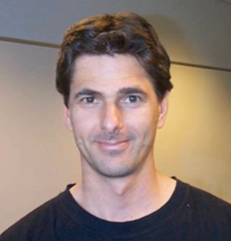
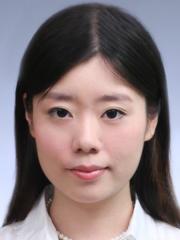
Dr. Alison McCarthy is an Associate Professor in Irrigation and Cropping Systems at the Centre for Agricultural Engineering , University of Southern Queensland . With a background in mechatronic engineering, she specializes in developing automated irrigation systems and machine vision technologies for cotton and dairy pasture management. Education: BEng (2006) and PhD (2010) from University of Southern Queensland Research Interests: Irrigation control systems Machine vision for soil and plant sensing Automation in agriculture Recent Publications highlight her work in nitrogen management, autonomous irrigation frameworks, and pest detection systems. These contributions align with her expertise in AI-driven agricultural solutions and sensor integration. Scientific Awards: 2024 Australian Future Cotton Leader 2021 WatSave Young Professionals Award 2018 Cotton Seed Distributors Researcher of the Year 2015 Queensland Young Tall Poppy Science Award 2014 Science and Innovation Award for Young Professionals Research Affiliations: Centre for Agricultural Engineering (CAE) Association of Australian Cotton Scientists (Full Member)
Dr. Andy Nguyen is a Senior Lecturer in Structural Engineering at the University of Southern Queensland, within the School of Engineering. He is an active researcher and educator, specializing in the Structural Health Monitoring (SHM) of critical civil infrastructure such as bridges, buildings, and transport tunnels. Bachelor of Engineering (BEng), NUCE, 1999 Master of Engineering (MEng), NUCE, 2003 Doctor of Philosophy (PhD), Queensland University of Technology (QUT), 2014 Dr. Nguyen's research is at the forefront of integrating advanced technologies into civil engineering. His primary focus is on developing and deploying sophisticated SHM systems that utilize sensors, data analytics, and machine learning to provide real-time insights into the structural integrity of ageing infrastructure. His work aims to enable proactive maintenance, extend the lifespan of structures, and enhance public safety. He has successfully implemented monitoring systems on major bridges and high-rise buildings in Queensland and New South Wales, with systems capable of even detecting distant earthquake events. His research interests span Structural Health Monitoring, Machine Learning for Engineering, Damage Detection, Finite Element Model Updating, Sustainable Building Materials like bamboo, and the application of AI for automated condition assessment of transport infrastructure. The analysis of his recent publications reveals a strong and consistent research trajectory centered on the application of data-driven and AI methods to solve practical problems in civil infrastructure. His work frequently combines signal processing techniques (like Stockwell Transform) with deep learning models for tasks such as crack detection in concrete and pavement. He also conducts significant research on model updating for complex structures like cable-stayed and arch bridges, using vibration data and optimization algorithms. The integration of machine learning for overload classification and the development of cost-effective, automated monitoring systems are key trends in his recent output. Advanced Queensland Fellow (2024-2027) Dr. Nguyen is actively involved in research supervision and collaboration. He is currently supervising several postgraduate students on projects related to AI-powered condition assessment, bamboo as a sustainable building material, and railway track design. He receives research funding from the Queensland Government through his Advanced Queensland Fellowship. His research has direct practical applications, as evidenced by his public engagement, such as writing for The Conversation on safeguarding ageing bridges, and his work with the Australian Network of Structural Health Monitoring. Dr. Nguyen's work embodies the development of a next-generation 'Living' Laboratory for engineering education, where research, teaching, and real-world infrastructure monitoring are integrated. His current projects involve creating smart, automated fault detection systems and advancing 'digital twin'-based monitoring platforms for infrastructure.
Dr. Zhen Peng is a Research Fellow at Curtin University's School of Civil and Mechanical Engineering, part of the Faculty of Science and Engineering. He holds an ARC Early Career Industry Fellowship (2025–2028), focusing on developing cost-effective bridge monitoring systems using computer vision and edge computing in collaboration with Main Roads WA. His work bridges structural engineering, IoT/edge computing, and machine learning to enhance infrastructure safety. Dr. Peng earned his PhD from Curtin University (Chancellor's Commendation, 2022). His research emphasizes structural dynamics, nonlinear damage detection, and mobile crowdsensing frameworks for infrastructure monitoring. He has published extensively in top journals like Engineering Structures and Structural Control and Health Monitoring , receiving notable awards such as the 2023 Best Paper Award and a Gold Medal in the China Postdoctoral Innovation Competition. His current projects include deploying IoT-driven systems for real-time bridge condition assessment and training students via available 2025 PhD scholarships. Dr. Peng teaches courses in civil engineering and structural analysis, contributing to both academia and industry through innovation in smart infrastructure technologies.
Ibrahim RADWAN is an Associate Professor in Machine Learning/AI and Robotics at the University of Canberra. His research focuses on advancing AI techniques in areas such as human pose estimation, affective computing, and healthcare technology. He leads projects addressing challenges in robotics, autonomous systems, and human behavior analysis. RADWAN’s work bridges theory and application, contributing to fields like sports science, medical diagnostics, and security through innovative machine learning approaches. Research Projects: Assistive Technologies for Young People Safety on Two-Wheelers AI-Based Methods for Driver Sentiment and Mood Prediction Robotics Applications in Organic Waste Management Research Interests: RADWAN’s expertise spans human pose reconstruction , nonverbal behavior analysis , and EEG-based healthcare diagnostics . He pioneers methods for real-world applications such as: 6G Extended Reality systems using wearable sensors Multimodal deception detection via motion analysis Affective computing for mood and emotion inference Publications: His recent work emphasizes trends in spatiotemporal data analysis, few-shot learning, and synthetic data applications in healthcare and robotics. Key contributions include novel architectures like CrossFormer for 3D pose estimation and Resanet for dense prediction tasks. Advising & Grants: RADWAN supervises PhD students and has secured grants for projects integrating AI with robotics and medical technology. His team collaborates on interdisciplinary challenges, including railway safety and surgical instrument tracking. Labs/Teams: Part of the AI and Robotics research group at the University of Canberra, contributing to cutting-edge solutions in autonomous systems and human-centered AI.
Dr. Jiaojiao Jiang is a Senior Lecturer in the School of Computer Science and Engineering at the University of New South Wales (UNSW). She holds a Ph.D. from Deakin University (Melbourne, Australia) and has published over 45 articles with 1,100+ citations. Her research focuses on AI-driven cybersecurity solutions, particularly misinformation detection and modeling information propagation dynamics. She is affiliated with UNSW's Sydney campus and can be contacted at jiaojiao.jiang@unsw.edu.au . Education: Ph.D., Deakin University, 2010s Research Interests: Artificial Intelligence applications in cybersecurity Misinformation detection and network analysis Machine learning for network security Data privacy in IoT systems Publications span topics like fake news detection via graph neural networks, multiplex network robustness, and cyber threat intelligence frameworks. Her work bridges theoretical network science with practical cybersecurity challenges.
Professor Raja Jurdak is a leading academic in distributed systems and applied data sciences at Queensland University of Technology (QUT), where he directs the Trusted Networks Lab. He holds dual roles as Professor of Distributed Systems and Chair in Applied Data Sciences, alongside leadership in the Centre for Data Science. His research focuses on dynamic network modeling, blockchain-based trust frameworks, and IoT applications, with particular emphasis on cybersecurity, energy efficiency, and mobility-driven diffusion processes. Jurdak formerly led CSIRO's Distributed Sensing Systems Group and maintains a visiting scientist role there. Education: PhD in Information and Computer Science, University of California, Irvine MS in Computer Networks and Distributed Computing, University of California, Irvine BE in Computer and Communications Engineering, American University of Beirut Research Interests: Network science, blockchain technology, IoT security, sustainable energy systems, and data-driven decision-making. His work bridges theoretical advancements with practical applications in smart grids, health surveillance, and urban mobility. Awards: Finalist for the 2019 Eureka Prize, multiple CSIRO accolades, and IEEE Senior Member status. His research has received industry recognition for interdisciplinary innovation, including the DiNeMo project's real-time disease surveillance system. Advisory & Grants: Leads high-impact projects funded by government and industry partnerships. Supervises PhD candidates in areas like decentralized data processing and privacy-preserving AI. Holds editorial roles at journals such as Ad Hoc Networks and PLoS ONE . Labs & Teams: Directs the Trusted Networks Lab at QUT, fostering collaborations with institutions like Oxford University and MIT. His work emphasizes cross-disciplinary teams to address global challenges in cybersecurity and sustainable systems.
Patrick Kluth is a Professor at the Research School of Physics, Australian National University, leading a research group focused on swift heavy ion-modified materials and nanopore technology. His work bridges materials science, physics, and biomedical applications. Education : Dipl. Phys. from Düsseldorf, Germany; PhD in Physics from RWTH Aachen, Germany (2002, summa cum laude). Research Interests center on: Ion track technology for solid-state nanopore fabrication Advanced materials characterization (SAXS, X-ray absorption spectroscopy) Defect engineering in semiconductors and superconductors Nano-fabrication and semiconductor processing methods Bio-sensor development and ion separation technologies Recent Research Trends show a focus on: Developing affordable microcontroller-assisted nanopore fabrication platforms Enhancing flux pinning in superconductors via ion irradiation Engineering nanomaterials for space applications (carbon-fibre composites) Exploring radiation effects on perovskite solar cells and graphene-enhanced composites Combining machine learning with nanopore sensing for biomarker detection Scientific Awards : Feodor-Lynen Fellowship Borcherts-Medal for PhD excellence Three ARC Fellowships (Postdoctoral, Research, Future) Leadership Roles : Head of Department (2018-2020), Associate Director HDR (2020-2023). His projects include collaborations on Alzheimer's detection sensors and carbon-fibre additive manufacturing for space applications.
Professor Brett Harris is a faculty member at Curtin University, affiliated with the School of Earth and Planetary Sciences (EPS) within the Faculty of Science and Engineering. He holds a prominent role in the Office of the Provost. His research focuses on subsurface resource technologies, including mineral exploration, CO2 sequestration, and geothermal energy. He has led major initiatives like the DET CRC and MinEx CRC projects, advancing in-hole electromagnetic sensing and distributed acoustic sensing techniques. His expertise spans hydrogeology, geophysics, and environmental geoscience, with notable contributions to aquifer characterization, fault zone dynamics, and CO2 storage monitoring. He coordinates undergraduate courses in electromagnetism, potential fields, and environmental geophysics, while supervising multiple PhD students. Key collaborations include work with government agencies on fractured aquifer detection and geothermal systems. Recent research emphasizes innovative sensor technologies for subsurface imaging, CO2 leakage monitoring, and groundwater sustainability. His work bridges geophysics with applied engineering solutions for resource exploration and environmental stewardship.
Dr. Yanjun Zhang is an Honorary Research Fellow at the School of Electrical Engineering and Computer Science, The University of Queensland. His research focuses on privacy-preserving technologies, federated learning, cybersecurity in IoT systems, and machine learning security. He holds a PhD in Privacy-Preserving Sharing for Genome-Wide Analysis from The University of Queensland (2021). Education: PhD in Information Technology, School of Information Technology and Electrical Engineering, The University of Queensland (2021) Research Interests: Designing secure collaborative machine learning frameworks Defending against adversarial attacks in cyber-physical systems Privacy preservation in distributed genomic and medical data analysis Compliance and ethics in virtual personal assistant applications Key Contributions: Developed privacy-preserving federated learning frameworks (AgrAmplifier, PrivColl) Conducted foundational studies on evasion attacks in IoT systems Created datasets for analyzing malicious browser extensions and Alexa skills Labs/Teams: Active contributor to UQ Cyber initiatives, including the 2021-2022 Seed Funding project on federated deep learning for medical imaging.
Dr. Xinqun Zhu is an Associate Professor at the University of Technology Sydney (UTS) in the School of Civil and Environmental Engineering . He has held academic positions at Western Sydney University (2016-2017), University of Western Australia (2005-2009), and University of Manchester (2001-2005). His research spans structural health monitoring, steel-concrete composite structures, physics-informed machine learning, and advanced sensor systems.
Professor Jinho Choi is a Chair and Professor in Radio Frequency at the School of Electrical and Mechanical Engineering, University of Adelaide, Australia. He holds a B.E. (magna cum laude) from Sogang University, and M.S.E. and Ph.D. degrees from KAIST. His research focuses on advancing wireless communication and sensing technologies, particularly in IoT, 5G/6G, non-terrestrial networks, and cognitive satellite systems. He authored three books and has been recognized with the 1999 EURASIP Best Paper Award, IEEE Fellowship, and inclusion in Stanford's Top 2% Scientists list since 2020. He currently serves as a Senior Editor of IEEE Wireless Communications Letters and editorial roles in multiple journals. Education: B.E. (Electronics Engineering) - Sogang University, Seoul (1989) M.S.E. (Electrical Engineering) - KAIST (1991) Ph.D. (Electrical Engineering) - KAIST (1994) Research Interests: Professor Choi's work addresses connectivity challenges in non-terrestrial networks, leveraging statistical signal processing and machine learning. Current projects include UAV-assisted LEO satellite technologies, cognitive satellite radios, and semantic communication protocols. His research aims to enhance global connectivity and efficiency in terrestrial and satellite networks. Publications: His recent work spans semantic communication, satellite quantum key distribution, federated learning optimization, and coverage diversity in mega constellations. These studies reflect trends in 6G-ready technologies, AI-driven communication systems, and hybrid satellite-terrestrial networks. Awards: 1999 Best Paper Award for Signal Processing (EURASIP) IEEE Fellow (Leadership in technical excellence) World’s Top 2% Scientists (Stanford University, 2020–present) Grants & Supervision: As a senior academic, he oversees grants in wireless innovation and has advised numerous students on advanced communication systems. His lab focuses on next-generation networks, integrating theoretical insights with practical implementations. Labs/Teams: Active in interdisciplinary teams at the University of Adelaide, collaborating on projects funded by industry and government to bridge gaps between academic research and real-world applications.
Dr. Michael Chang is a Senior Lecturer and Program Director of Spatial Information Sciences at Macquarie University's School of Natural Sciences. He specializes in remote sensing and GIS applications for environmental monitoring, including vegetation dynamics, land use change, and disaster mitigation. His affiliations include the Data Horizons, Smart Green Cities, and Lifespan Health and Wellbeing Research Centres. Research Interests: Earth observation data integration 3D modeling and change detection Biodiversity conservation and wetland monitoring Spatial analysis of multilingualism and transport planning Awards: 2017 BHERT Award for Outstanding Collaboration 2019 Faculty Teaching Excellence Award 2017 Research Excellence Recognition Projects: Leads multi-sensor fusion initiatives for vegetation monitoring and collaborates on disaster resilience frameworks. Active in interdisciplinary work spanning ecology, geophysics, and urban planning. Labs/Teams: Core member of Macquarie's Planetary Research Centre and collaborates internationally on port city resilience projects in Africa.
Dr. Milan Simic is a Senior Lecturer in the School of Engineering at RMIT University, serving as Program Manager for the Master of Engineering (Management) degree. He holds editorial roles for the Knowledge Engineering Systems and Intelligent Decision Technologies journals and is Associate Director of the Australia–India Research Centre for Automation Software Engineering. With a PhD in Electronic Engineering from the University of Niš and a Graduate Diploma in Education from RMIT, Dr. Simic has extensive industry and academic experience in Australia and internationally. His research focuses on mechatronics, autonomous systems, biomedical engineering, robotics, intelligent transportation systems, and green energy. Notable projects include AI-driven railway system strategies, gait analysis for biomedical applications, and smart traffic control systems. He actively supervises PhD and master’s students in areas like autonomous vehicles and energy recovery systems. Dr. Simic’s work bridges engineering innovation with societal impact, emphasizing sustainable transportation solutions and smart city technologies. His contributions span journal editing, international collaborations, and curriculum development in engineering management.
Associate Professor Zihuai Lin leads the IoT in Healthcare and Radar Imaging group at the University of Sydney's School of Electrical and Computer Engineering. He holds a PhD from Chalmers University of Technology and has prior experience at Ericsson Research and Aalborg University. His research focuses on IoT, 5G/6G systems, healthcare AI, TeraHertz communications, radar imaging, and wireless signal processing. Education: PhD in Electrical Engineering, Chalmers University of Technology, Sweden (2006) Postdoctoral work at Ericsson Research, Sweden Associate Professor, Aalborg University, Denmark (pre-Sydney role) Research Interests: IoT wireless sensing and healthcare applications 6G/THz communications and radar imaging Artificial Intelligence in signal analysis and network optimization MIMO/OFDMA systems and resource allocation Current Projects: 6G/THz communications and holographic MIMO Edge AI for healthcare IoT (eGate system) Ultra-low latency techniques for short-packet 5G Millimeter-wave power transfer and safety protocols Awards: 2021 IoT Awards Health Category Finalist (eGate system) Nominated for 2022 iTnews Best Health Project Advising & Labs: Supervising 8 PhD students in AI-driven healthcare, federated learning, and quantum imaging Led 10+ completed PhD projects in 5G/6G and wireless systems Affiliated with the Center of IoT and Telecommunication (CIoTT) and Sydney Nano Institute
Dr. Sina Jamali is a Senior Lecturer at Griffith University's School of Environment and Science within the Chemistry and Forensic Science department. He is affiliated with the Queensland Quantum and Advanced Technologies Research Institute (QUATRI) and the Queensland Micro and Nanotechnology Centre. His research focuses on electrochemical sensors, nanomaterials, corrosion protection, and sustainable energy materials. He holds a PhD from the University of Wollongong and previously served as a DECRA Fellow at UNSW. Dr. Jamali's work addresses challenges in biosensing technologies, nanotechnology applications, and material degradation mechanisms. His funded research includes the Australian Research Council's DECRA grant (DE210101137) exploring stochastic electrochemical biosensors. He collaborates on projects related to 3D printable energy materials, antimicrobial coatings, and wearable health sensors. Research Themes: Electrochemical biosensors, material degradation, nanotechnology, sustainable materials, and biomedical applications. Key Projects: Developing green 3D-printable materials for energy devices, porous metal-organic frameworks biosensors, and graphene-based wearable health monitoring systems. Dr. Jamali has supervised multiple doctoral and master’s students in areas like bioengineered wearable sensors, antimicrobial materials, and energy device manufacturing. His publications span journals like Small Science , Angewandte Chemie , and Advanced Materials , with a focus on both fundamental and applied electrochemistry. He actively contributes to Griffith's teaching and supervision, emphasizing practical applications of chemistry and forensics. His work aligns with the Sustainable Development Goals for clean energy and sustainable cities.