Dana Reichmann is an Associate Professor at the Hebrew University of Jerusalem in the Department of Biological Chemistry . Her research focuses on protein plasticity under stress conditions , redox biology , and structural mass spectrometry to study protein dynamics and interactions. Previously, she held postdoctoral positions at the University of Michigan and the Weizmann Institute of Science . Education: PhD in Biological Chemistry (2007), Weizmann Institute MSc in Molecular Genetics (2002), Weizmann Institute BSc in Biochemistry (1997), Tel Aviv University Her research spans redox-regulated chaperones , protein homeostasis , and redox-dependent cellular heterogeneity , with applications in aging , stress responses , and oxidative signaling . Recent work highlights the role of Cdc48 in redox homeostasis and Spy chaperone in membrane protein folding. She employs cutting-edge techniques like hydrogen-deuterium exchange mass spectrometry and redox-sensitive GFP fusions to map protein interactions and redox states. Her publications (46 total) emphasize redox biology , molecular chaperones , and structural proteomics , with collaborations across biochemistry , microbiology , and cancer therapy . Contact: danare@mail.huji.ac.il .
Craig Coburn serves as Full Professor in the Department of Geography and Environment at the University of Lethbridge, where he has advanced from Assistant Professor (2002) to Associate Professor (2009) and Full Professor (2019). With over 20 years of remote sensing expertise, his work centers on fundamental physics of optical remote sensing, particularly surface bidirectional reflectance properties and low-cost instrument development for agricultural and environmental applications. His academic foundation includes: B.Sc. (Honours) in Geography from University of Saskatchewan (1994) M.Sc. in Geography from University of Alberta (1996) Ph.D. in Geography/Remote Sensing from Simon Fraser University (2002) Dr. Coburn's research spans remote sensing physics , instrumentation , and image processing , with pioneering work in bidirectional reflectance distribution function (BRDF) characterization. He has designed world-leading goniometers for surface reflectance measurement and developed affordable camera systems for UAVs, aircraft, and high-altitude balloons. His focus on low-cost remote sensing solutions enables global calibration of satellite instruments while advancing agricultural monitoring and ecological studies, particularly in riparian zones. Current efforts explore novel image processing techniques for complex spatial-spectral data structures. Recent publications (2022-2025) reveal expanding applications in forest disturbance mapping, satellite calibration validation, air quality monitoring, and post-fire ecosystem recovery. Key trends include multi-sensor time-series analysis for environmental change detection, vicarious calibration using Railroad Valley test sites, and global particulate matter characterization – demonstrating his transition from foundational physics to operational environmental solutions. No scientific awards were explicitly documented in the source materials. Dr. Coburn has secured significant research funding including: Riparian Cottonwood Forests Study (Alberta Ingenuity Centre, $250,000/3yrs) examining environmental dynamics with Derek Peddle and Stewart Rood Cattle Wintering Sites Monitoring (Prairie Farm Rehabilitation Administration, $45,000/3yrs) as Principal Investigator Rocky Mountain Watershed Analysis (Alberta Ingenuity Centre, $318,000/3yrs) with Derek Peddle and Matthew Letts Previous work included Mountain Pine Beetle detection (2005) and National Land Information System ground truthing (2006). His laboratory specializes in BRDF instrumentation, maintaining advanced goniometer systems for surface reflectance measurement and developing UAV-deployable sensors for agricultural and ecological applications. As Past President of the Western Canadian Association of Geographers and Associate Editor of the Journal of Applied Remote Sensing, he actively shapes the remote sensing community while leading the NSERC CREATE AMETHYST training program.
Jingqiong Zhang is a Research Associate in Data Analytics for Manufacturing at the School of Electrical and Electronic Engineering, University of Sheffield. Her work spans interdisciplinary applications of data analytics in materials science, robotics, and industrial systems. University: University of Sheffield School: School of Electrical and Electronic Engineering Email: Jingqiong.zhang@sheffield.ac.uk Research Interests: Her research focuses on: Advanced data analytics for materials characterization Machine learning in manufacturing systems Signal and image processing for industrial diagnostics Human-robot collaboration safety frameworks Cheminformatics and hyperspectral imaging Optimization of energy and process systems Publication Trends: Recent articles highlight integration of AI/ML with manufacturing (e.g., digital twins for human-robot collaboration), hyperspectral imaging innovations for materials science, and novel sensor applications in energy and chemical processes. Conference papers emphasize practical implementations of her research. Labs & Collaborations: Based in the Amy Johnson Building, she collaborates with researchers like L. Mihaylova, Y. Yan, and C. Rodenburg across multidisciplinary projects in manufacturing analytics and materials science.
Maurice D. Mulvenna is a Researcher at the School of Computing and Mathematics, Ulster University , focusing on Artificial Intelligence, Digital Health, and Human-Computer Interaction . His work explores the application of AI in mental wellbeing, assistive technologies for dementia care, and usability testing methodologies. Research Themes : AI for Wellbeing, Ambient Assisted Living, Machine Learning in Healthcare, IoT for Elderly Care, Sentiment Analysis Recent Articles : 2025 study on AI's impact on mental health; 2024 work on employee wellbeing platforms; 2023 papers on chatbots and IoT lighting solutions for dementia His collaborations span Raymond R. Bond, Siobhan O'Neill, and Chris D. Nugent , with publications in journals like Behavior & Information Technology and conferences such as ICT4AWE and ECCE . While no explicit awards are listed, his contributions include co-editing conference proceedings and advancing ethical-by-design frameworks. Labs/Teams : Involved in projects like SenseCare (2016) for emotional wellbeing visualization and UX-Handle (2017) for usability analytics. His work bridges technical innovation with user-centered approaches in healthcare and digital platforms.
Andrea Vinci is a Researcher at the Italian National Research Council (CNR) under the Institute for High-Performance Computing and Networking (ICAR-CNR) . His work bridges Machine Learning , Internet of Things (IoT) , and Smart City technologies, focusing on scalable solutions for urban data analysis, energy optimization, and cognitive building systems. Research Interests include: Developing multi-density clustering algorithms for urban hotspot detection Designing platform-agnostic IoT applications across edge-cloud architectures Applying quantum computing to energy management and cloud resource allocation Creating deep reinforcement learning models for human-driven smart environments Leveraging LSTM networks and federated learning for occupancy prediction Exploring blockchain-empowered swarm robotics for distributed control Key Scientific Contributions : Best Paper Award at ACM Computing Frontiers 2023 for spatio-temporal crime prediction Pioneering the COGITO platform for cognitive building automation Advancing 32 Gb/s passive optical networks for high-loss environments
Christian Schwarz is an Assistant Professor at KU Leuven, affiliated with the Department of Civil Engineering and the Department of Earth and Environmental Sciences. His work focuses on coastal and estuarine geomorphology, leveraging interdisciplinary approaches that integrate modeling, field observations, experimental data, and remote sensing to study eco-morphodynamic systems. Research Interests: Coastal and estuarine systems, sediment transport dynamics, and bio-geomorphic interactions are central to his research. His projects explore how biological and physical processes shape coastal landscapes and influence carbon sequestration, climate adaptation, and nature-based solutions. Publications: His recent work includes studies on hybrid restoration techniques, mangrove-saltmarsh ecotones, and sediment transport mechanisms, reflecting a strong emphasis on coastal resilience and sustainable engineering practices. Teaching: He contributes to courses such as Ecology and Biogeochemistry of Aquatic Systems , River Geomorphology , and Measuring Techniques for Water Resources Engineering , integrating practical and theoretical aspects of coastal and fluvial systems.
Dr. Valeriya Gritsenko is an Associate Professor at West Virginia University School of Medicine with multiple appointments across the Department of Physical Therapy, Department of Neuroscience, and Rockefeller Neuroscience Institute. She leads the Neuroengineering and Rehabilitation Laboratory (NERL) where she conducts interdisciplinary research at the intersection of neuroscience, engineering, and rehabilitation medicine. Dr. Gritsenko holds a PhD from the University of Alberta, Canada, completed a postdoctoral fellowship at the University of Montreal, and received specialized training including an intensive course in transcranial magnetic simulation at Harvard Medical School and a fellowship in Computational Neuroscience at Woods Hole. Her research focuses on understanding human sensorimotor control through experimental and computational approaches, employing techniques such as motion capture, electromyography, transcranial magnetic stimulation, and biomechanical modeling. Her work spans several key research domains including neuromechanics of movement, sensorimotor integration, and quantitative assessment of motor deficits. She has made significant contributions to understanding how proprioception combines with internal predictive signals for movement execution and has developed innovative methods for assessing movement impairments using low-cost motion capture systems. Her research has important applications in stroke rehabilitation, surgical training, and space medicine. Analysis of Dr. Gritsenko's publication record shows a clear progression toward developing computational tools for movement analysis, with increasing emphasis on AI applications and real-time assessment methods. Her recent work demonstrates strong integration between basic neuroscience principles and clinical applications, particularly in creating more sensitive measures of motor function that go beyond traditional joint angle measurements. Dr. Gritsenko is actively involved in major research initiatives including NASA's BioAISense project developing AI for autonomous sensorimotor assessment and an AFOSR project on sensation-to-action transformation frameworks. Her laboratory in the Erma Byrd Biomedical Research Facility serves as a hub for interdisciplinary research that combines engineering approaches with clinical neuroscience to improve rehabilitation outcomes.
Mats Meeusen is a postdoctoral researcher at Vrije Universiteit Brussel , specializing in Corrosion Science and Materials Engineering . He is affiliated with the Sustainable Materials Engineering department under the Materials and Chemistry research group. His research focuses on corrosion inhibition , electrochemical impedance spectroscopy , and finite element modeling of organic coatings. He has extensively studied lithium-based inhibitors , active protective coatings , and spatiotemporal water uptake in materials. Meeusen has contributed to 15 peer-reviewed publications with a focus on predictive modeling, electrochemical evaluation, and hybrid interfacial bonding. His work bridges experimental validation and computational analysis to understand corrosion mechanisms.
Hassan Ghasemzadeh is an Associate Professor and Program Director in the College of Health Solutions at Arizona State University (ASU), where he is also on the graduate faculty for biomedical informatics, computer science, computer engineering, and biomedical engineering. Prior to joining ASU, he served as an assistant/associate professor of computer science at Washington State University (2014-2021) and as a postdoctoral research manager at UCLA (2011-2013). Education: PostDoc, Computer Science, University of California Los Angeles PhD, Computer Engineering, University of Texas at Dallas MS, Computer Engineering, University of Tehran BS, Computer Engineering, Sharif University of Technology Dr. Ghasemzadeh's research focuses on digital health, machine learning, and algorithm design, with applications spanning wearable technologies, chronic disease management, and behavioral health. His work bridges computer science with healthcare, developing novel algorithms and systems that use wearable sensors to monitor and improve health outcomes. His research has particular emphasis on diabetes management, Parkinson's disease detection, and stress monitoring through advanced sensor analysis and machine learning techniques. His recent publications demonstrate a strong focus on leveraging large language models, counterfactual reasoning, and advanced deep learning techniques to address challenges in digital health. The research spans multiple domains including glucose prediction, Parkinson's disease assessment, cannabis use monitoring, and activity recognition, showing a consistent thread of applying cutting-edge AI to solve real-world health problems with wearable sensor data. Scientific Awards: 2025 Best Poster Award, ASU College of Health Solutions Faculty Research Day 2024 Research Award, ASU College of Health Solutions 2024 Best Poster Award, ASU College of Health Solutions Faculty Research Day 2018 Early Career Development Award, National Science Foundation (NSF CAREER) 2018 Early Career Award, WSU School of EECS Dr. Ghasemzadeh actively mentors numerous graduate students in the Embedded Machine Intelligence Lab (EMIL), with current PhD students including Eric Junyoung Kim, Ebrahim Farahmad, Saman Khamesian, Shovito Barua Soumma, Pegah Khorasani, and others. His research has been funded by prestigious organizations including the National Science Foundation, with projects often focusing on developing innovative wearable health monitoring systems that have led to commercial applications such as WANDA and Sense4Baby. Dr. Ghasemzadeh leads the Embedded Machine Intelligence Lab (EMIL), which focuses on developing machine learning algorithms for embedded and wearable systems. The lab creates solutions that address real-world health challenges through interdisciplinary research that combines computer science, electrical engineering, and clinical medicine. Current projects include glucose prediction systems, Parkinson's disease detection tools, and personalized hydration monitoring applications.
Yufeng Ge serves as the Eberhard Professor of Agriculture in the Department of Biological Systems Engineering at the University of Nebraska-Lincoln. His research program integrates cutting-edge technologies to address critical challenges in agricultural sustainability and productivity. Dr. Ge's work centers on precision agriculture with emphasis on UAV-based remote sensing and machine learning for real-time field applications. Key focus areas include plant phenotyping for crop breeding programs, soil spectroscopy for rapid soil property assessment, and irrigation management systems enhanced by AI. His research leverages edge computing to deploy lightweight models directly on agricultural devices, enabling on-farm data processing for weed detection, biomass evaluation, and drought response monitoring. Analysis of his 2023-2025 publications reveals a strong trend toward scalable agricultural monitoring systems combining satellite imagery, UAV data, and proximal sensors. Notable advancements include generative AI for irrigation decisions, zero-shot segmentation for phenotyping, and global soil spectral grids. His work consistently addresses practical implementation challenges in field conditions while advancing theoretical frameworks for crop-water-soil interactions.
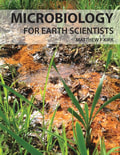
Dr. Matthew F. Kirk is an Associate Professor in the Department of Geology at Kansas State University's College of Arts and Sciences, where he joined in December 2012. His research integrates hydrogeology, geomicrobiology, and environmental geochemistry to address critical water resource challenges, particularly focused on groundwater systems in Kansas and the Great Plains region. As a K-State University Outstanding Scholar and Fellow of the Geological Society of America, Dr. Kirk has established himself as a leading researcher in groundwater quality and microbial processes. Dr. Kirk earned his Ph.D. from the University of New Mexico before joining Kansas State University. His educational background has prepared him for interdisciplinary research that bridges geological, chemical, and biological processes in natural environments. His academic journey has positioned him to tackle complex environmental challenges through integrated scientific approaches. Dr. Kirk's research primarily focuses on hydrogeology and geomicrobiology with emphasis on groundwater systems. His work examines water quality in the Great Bend Prairie aquifer, groundwater-surface water interactions across Kansas, the fate of carbon dioxide in soils at Konza Prairie, and geochemical controls on anaerobic microorganisms. He has recently published the open-access textbook "Microbiology for Earth Scientists" to help students understand the critical role of microorganisms in Earth systems. His research group actively investigates how land use changes affect water quality and availability, with particular attention to nitrate contamination from agricultural practices. Analysis of Dr. Kirk's recent publications reveals a strong focus on the intersection of hydrology, biogeochemistry, and ecosystem change. His work increasingly addresses how vegetation changes (particularly woody encroachment in grasslands) affect water movement and quality, while maintaining his core interest in microbial processes in groundwater systems. There's a clear trend toward more integrated, systems-based approaches that consider multiple environmental factors simultaneously, reflecting the complex nature of water resource challenges in changing landscapes. Dr. Kirk has received notable recognition for his scholarly contributions: K-State University Outstanding Scholar Fellow of the Geological Society of America Dr. Kirk actively mentors students through multiple avenues. He leads the Kansas Groundwater Geopaths program, an NSF-funded initiative (award #2230413) that provides undergraduate research experiences focused on groundwater quality monitoring in Kansas rural domestic water wells. This program serves K-State students as well as those from Barton and Dodge City Community Colleges, offering $3,000 scholarships and career-oriented training. He also supervises graduate students pursuing MS degrees in Geology and has developed an open-access textbook to support education in his field. His teaching portfolio includes Earth in Action, Introduction to Geochemistry, Geomicrobiology, Geochemical Modeling, and Water Resources Geochemistry. Dr. Kirk's research group operates as an interdisciplinary team focused on hydrogeology and geomicrobiology. Through the Kansas Groundwater Geopaths program, his team collaborates with the Kansas Department of Health and Environment, Kansas Water Institute, local Groundwater Management Districts, Kansas Geological Survey, and Kansas Water Office to address critical water quality issues affecting approximately 130,000 people who rely on the Great Bend Prairie aquifer for drinking water. His work has demonstrated that groundwater quality has decreased significantly over the past 40 years primarily due to nitrate accumulation from fertilizer use, highlighting urgent environmental concerns for Kansas communities.
Donatella Puglisi is an Associate Professor (Docent) at Linköping University's Department of Physics, Chemistry and Biology within the Faculty of Science and Engineering. She leads the Sensor and Actuator Systems (SAS) research group and serves as International Steering Committee Member of EUROSENSORS and Co-founder of NORNDiP, the Nordic Network for Diversity in Physics. Her work bridges academia with industry, government, and civil society to address global challenges through sensor technology innovation. Dr. Puglisi's research focuses on smart sensor technologies, particularly electronic noses enhanced with machine learning for odor detection. Her work spans volatile organic compounds and air pollutants monitoring with applications in early cancer diagnostics, medical devices, forensic sciences, indoor air quality, environmental monitoring, food quality control, and cultural heritage preservation. She has developed innovative sensor-based devices and pioneered methods for precise molecular identification across diverse scientific domains. Her recent publications reveal a strong trend toward interdisciplinary applications of sensor technology, with particular emphasis on healthcare diagnostics (cancer detection through breath analysis), forensic applications (cadaver detection as alternative to dogs), food safety (meat inspection), and environmental monitoring (methane, indoor air quality). The integration of machine learning with sensor development appears as a consistent theme across her work, enabling more precise and adaptable detection systems. ÅForsk Entreprenör scholarship 2019 for entrepreneurial activities Dr. Puglisi has successfully led multiple significant research projects including HEADLINE – Health Diagnostics Electronic Nose (funded by NSF Convergence Accelerator), Preventive solutions for sensitive Materials of Cultural Heritage (H2020), and several ovarian cancer diagnostic projects funded by VINNOVA. She actively collaborates internationally, recently securing the first Swedish-U.S. collaboration under the NSF Convergence Accelerator program. Her educational approach emphasizes challenge-, project-, problem-, and Agile-based learning, with courses spanning leadership principles, sustainable development, and applied physics. She directs the Sensor and Actuator Systems (SAS) research group at Linköping University, which conducts multidisciplinary research spanning materials for sensors, systems integration, cell-free synthetic biology lab-on-a-chip detection, and soft robots. Her work has practical applications in medical diagnostics, forensic investigations, food safety, and environmental monitoring, with several projects transitioning toward commercialization.
Aaron Carlisle is an Associate Professor affiliated with the University of Delaware's School of Marine Science & Policy, focusing on the spatial, trophic, and physiological ecology of marine fishes, particularly elasmobranchs (sharks, skates, rays). Education: Ph.D., Biological Sciences, Stanford University (2012) M.S., Marine Science, Moss Landing Marine Laboratories/San Jose State University (2006) B.A., Ecology and Evolutionary Biology, Princeton University (1999) His research integrates chemical tracers (stable isotope analysis), biologging (electronic tagging), and modeling approaches to address fundamental ecological questions with applied conservation value. Recent work explores stable isotope methodologies, pollutant accumulation in sharks, and biologging innovations. Research trends: The 15 most recent publications highlight advancements in marine predator tracking, environmental stressor impacts, and analytical techniques for migration and foraging studies. Key subfields include stable isotope applications, oceanographic monitoring via animal tags, and conservation-focused modeling. Professional affiliations: IUCN Species Survival Commission, Shark Specialist Group American Fisheries Society American Elasmobranch Society International Bio-logging Society Coastal and Estuarine Research Federation Western Society of Naturalists Carlisle leads the TRASER Lab, which investigates how ecological, physiological, and environmental factors influence marine organism distributions, behavior, and ecosystem roles in a human- and climate-impacted ocean.
Naja Holten Møller, an Associate Professor in the Promotion Programme at the Department of Computer Science, University of Copenhagen, specializes in Human-Centred Computing . Her research focuses on Computer-Supported Cooperative Work (CSCW) , exploring ethics in data-driven technologies, algorithmic decision-making, and the digitalization of public sectors. She investigates how adaptive technologies transform work processes and emphasizes balancing human values with automation through long-term collaborations with public organizations. Research Areas: Ethics in Data Work Algorithmic Accountability Public Sector Digitalization Future Workplace Optimization Scientific Awards: Member of ACM's Future of Computing (2017) Collaborations: Public Sector Organizations Refugee Law Institutions Healthcare Systems Her recent publications highlight trends in asylum data governance , AI labor pipelines , and participatory design in public systems, reflecting her focus on technological ethics and stakeholder inclusion.
Kathleen A. Schiro is an Assistant Professor at the University of Virginia's College of Arts & Sciences, specializing in tropical atmospheric dynamics, convection, and climate modeling. Her research integrates satellite observations, field campaign data, and cloud-resolving models to analyze environmental controls on deep convection and precipitation extremes. Institution: University of Virginia (College of Arts & Sciences) Contact: kschiro@virginia.edu Research Interests: Focused on (1) atmospheric convection, (2) tropical dynamics, (3) regional hydroclimatology, and (4) cloud-circulation feedbacks. She examines how convective systems interact with large-scale circulation changes under anthropogenic warming. Scientific Contributions: Key work includes analyzing tropical mesoscale convective system (MCS) precipitation intensity using multi-sensor datasets, investigating environmental moisture controls on convective organization, and developing metrics for climate model diagnostics. Recent publications address cloud feedback mechanisms, ITCZ narrowing, and process-level understanding of deep convection.