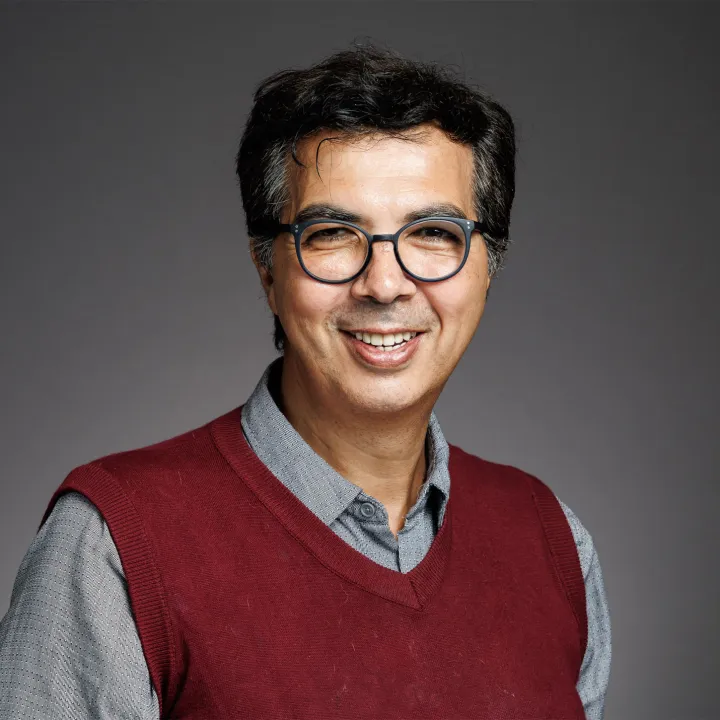
Ridha Khedri is a Professor in the Department of Computing and Software at McMaster University . His research spans formal methods in software engineering, cybersecurity, information security ontology, network segmentation, and covert channels analysis. Full Professor since 2000 Contact: khedri@mcmaster.ca Research Interests : Prof. Khedri develops algebraic frameworks for software security, with recent work on network segmentation , ontology engineering , and covert channel detection . His interdisciplinary efforts include hybrid machine learning-ontology models for environmental predictions (e.g., river ice breakup) and digital twin healthcare systems . Article Trends : His 15 most recent works (2016-2025) focus on network security , knowledge representation , and formal verification . Notable trends include automated security testing , ontology modularization , and multi-context reasoning systems . Teaching : He has taught courses like Software Design (CAS 703), Discrete Mathematics (SFWRENG 2DM3), and Algebraic Methods in Software Engineering (CAS 738) since 2017.
Ken B. Johnson, MD, MS is a Professor in the Department of Anesthesiology at the University of Utah School of Medicine, where he has served on faculty since completing residency in 1999. His clinical expertise spans regional anesthesia, acute pain management, processed electroencephalogram monitoring, and neuromuscular blockade monitoring. His research program focuses on: Genetics and epigenetics of pain pathways Clinical pharmacology of anesthetic agents Medical device development for monitoring and simulation Simulation-based experiential learning for all medical trainees Analysis of his 15 most recent publications reveals dominant themes in pharmacokinetic-pharmacodynamic modeling (40% of works), opioid-related pain management (30%), and innovative monitoring techniques (20%). His work consistently bridges basic science with clinical applications, particularly in trauma scenarios and perioperative optimization. Professional recognition includes: Editorial board membership for Anesthesia and Analgesia Leadership in American Society of Anesthesiologists Simulation Education Role as standardized oral board examiner for American Board of Anesthesiology Dr. Johnson's educational leadership extends to curriculum development for medical students through faculty, with emphasis on simulation-based training for airway management and crisis response. His collaborative research spans multiple departments including Orthopedics and Pharmacology, with recent focus on genetic determinants of pain response in joint replacement patients.
Dr. Adrian Fazekas is a Lecturer at the Institute of Highway Engineering, RWTH Aachen University, and collaborates with the Federal Highway Research Institute (BASt). He holds a Dr.-Ing. in Computer Science from RWTH Aachen (2005–2011), specializing in Media Engineering. His professional trajectory includes roles as a Research Assistant at RWTH Aachen and industry experience as a Software Developer at Continental AG. Research interests focus on traffic data acquisition , microscopic traffic flow simulation , and intelligent transportation systems . Key projects include: DROVA: Drone-based traffic analysis for infrastructure optimization ESIMAS: Real-time tunnel safety management Digital Twin Road: Physical-informational mapping of future highways AUTUKAR: Automated tunnel monitoring systems His publications emphasize real-time traffic detection , safety analytics , and data-driven modeling , with recent work exploring thermal-camera nudging systems and weigh-in-motion accuracy. He actively contributes to the Research Association for Roads, Earth and Tunneling (SETAC). No awards or student advising roles are documented.
Qipei Mei is an Assistant Professor in the Department of Civil and Environmental Engineering at the University of Alberta's Faculty of Engineering. With an MSc in Computer Science and a PhD in Structural Engineering, he bridges civil engineering with artificial intelligence to enhance infrastructure productivity and sustainability. His research spans AI-driven design automation, robotics for construction safety, and IoT-based condition assessment. PhD, Structural Engineering - University of Alberta (2020) MSc, Computer Science - Georgia Institute of Technology (2018) MSc, Structural Engineering - University of Alberta (2014) B.E., Civil Engineering - Huazhong University of Science and Technology (2011) Mei's work focuses on three key areas: leveraging data-driven methods for design automation, applying sensing/robotics to construction operations, and using digital twins for infrastructure assessment. His team explores generative AI for housing design, robotic construction in remote communities, and smart monitoring systems. Recent publications highlight advancements in: lateral capacity prediction for monopile foundations, transformer-based architectural layout analysis, large language models for building code compliance, vision-language models for safety hazard detection, and sensor networks for bridge monitoring. These works demonstrate interdisciplinary integration of AI, structural engineering, and IoT. Mei actively collaborates with diverse researchers and welcomes graduate students to his Smart Infrastructure Technologies (SITE) Research Group, part of the Infrastructure and Human Tech Lab (IHT-Lab). He teaches advanced topics in structural and civil engineering while pursuing industry-funded projects through NSERC, CFI, and Alberta Innovates.
Tae J. Kwon is an Associate Professor in the Department of Civil and Environmental Engineering at the University of Alberta . His research spans Winter Transportation Engineering , Intelligent Transportation Systems (ITS) , Traffic Optimization , and Geospatial Information Science . Developed LoRWIS , a web-based decision support system for road weather sensor optimization Recipient of multiple awards including ITS Canada Excellence in Research and Development Award (2024) , KOFST Scientist of the Year (2024) , and Early Career Research Award (University of Alberta, 3 times) Active in professional committees like the TRB Surface Transportation Weather Research Group (2016–present) Research Highlights : Winter Road Maintenance : Advanced geostatistical and deep learning techniques for road condition monitoring Location Optimization : Pioneered models for RWIS sensor placement using hybrid geostatistical methods Intelligent Transportation Systems : Focused on big data applications for traffic safety and connected vehicles Climate Resilience : Integrated ecological vulnerability into fire hazard modeling Scientific Awards : ITS Canada Excellence in Research (2024) KOFST Scientist of the Year (2024) Donald Stanley Best Paper Award (2023) AKCSE Early Achievement Award (2021) University of Alberta Early Career Research Award (2020) Great Supervisor Award (2019) Teaching & Leadership : Teaches courses like CIV E 419 (Transportation Engineering: Highway Planning and Design) and CIV E 612 (Transportation Planning: Methodology and Techniques) Leads the Geospatial Transportation System & Sensing Solutions Lab (GeoTrans) , mentoring PhD students Juan Cuellar and Jiehao Bi Collaborates with agencies including Alberta Transportation , NSERC , and Iowa DOT
Professor Da-Wen Sun is a globally recognized authority in food and biosystems engineering at the UCD School of Biosystems & Food Engineering , University College Dublin. His research focuses on enhancing food preservation through innovative technologies like ultrasound-assisted freezing to minimize nutrient loss and structural damage in frozen foods. Key contributions: Developed ultrasound freezing methods to reduce ice crystal damage Editor of seminal texts including Handbook of Frozen Food Processing Founded the journal Food and Bioprocess Technology His work bridges computational modeling (e.g., CFD simulations , machine learning ) with industrial applications, particularly in freezing, drying, and vacuum cooling. Recent studies explore terahertz imaging for pest detection, deep eutectic solvents for moisture control, and cold plasma for allergen reduction. Scientific awards include: Frozen Food Foundation Freezing Research Award (2013) - First non-US recipient CIGR Honorary President title (2016) for leadership in agricultural engineering He leads the UCD Food Refrigeration & Computerised Food Technology group , collaborating internationally on technologies like nanosensors and green cryoprotectants to advance sustainable food systems.
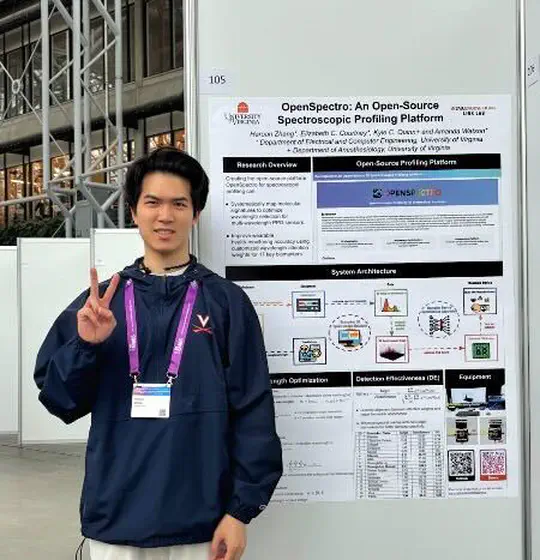
Amanda Watson is an Assistant Professor in Electrical and Computer Engineering at the University of Virginia, with joint appointments in Computer Science. She leads the Watson Research Lab within the UVA Link Lab, a multidisciplinary center for Cyber-Physical Systems (CPS) and Internet of Medical Things (IoMT) research. Her work bridges wearable technology with healthcare and athletic performance applications, focusing on noninvasive monitoring, physiological signal analysis, and safety-critical medical devices. She is also the cofounder and CEO of Luminosity Wearables, commercializing a noninvasive continuous glucose monitor. Education: PhD in Computer Science (2020) - College of William & Mary MSc in Computer Science (2016) - College of William & Mary Bachelors in Computer Science and Mathematics (2014) - Drury University Her research spans multiple domains including: Wearable spectroscopy for nutrition and skin health Machine learning for drug overdose and fall risk detection Biomechanical monitoring in sports medicine Wearable support for visual and neurological impairments IoMT device integration and analytics Recent publications (2024-2025) show strong emphasis on calibration-free physiological monitoring systems, with technical contributions in spectral analysis , multi-wavelength sensing , and rapid prototyping for healthcare wearables. Applications range from maternal health to gerontological social isolation detection. Lab and Team: The Watson Research Lab at UVA develops wearable solutions for clinical and athletic contexts, with ongoing collaborations in the PRECISE Center at University of Pennsylvania and LENS lab at William & Mary alumni network. She works with multidisciplinary teams including engineers, clinicians, and data scientists.
Andrea Garzelli is a Full Professor at the University of Siena's Department of Information Engineering and Mathematical Sciences. His research focuses on remote sensing image processing, particularly in optical and SAR sensor technologies, image fusion, and spatial resolution enhancement. He holds teaching roles in 'Fundamentals of Signal Processing and Telecommunications' and 'Statistical Signal Processing.' He earned his Ph.D. in Computer Science and Telecommunication Engineering from the University of Florence. Notably, he was recognized as a World's Top 2% Scientist by Stanford University for 2019–2023 and his career-long contributions. He served as President of the University of Siena's Quality Assurance Committee (2016–2021) and currently coordinates the graduate program in Computer and Information Engineering. Research interests include satellite data analysis (e.g., Sentinel-2, PRISMA), hypersharpening techniques, and environmental monitoring. His work bridges theoretical advancements (e.g., pansharpening algorithms) and practical applications like urban land classification and vegetation index enhancement. Recent articles emphasize reproducibility, meta-analysis, and synthetic data generation through GANs. Awards: World's Top 2% Scientists (2019–2023 & career). Grants/Advising: Supervises remote sensing theses; no specific grants mentioned. Labs/Teams: Leading research in the department's remote sensing and signal processing groups.
Matt J. Rutherford is an Associate Professor in the Department of Computer Science at the University of Denver, with a joint appointment in the Department of Electrical and Computer Engineering. He is Deputy Director of the Unmanned Systems Research Institute and a faculty fellow of Project X-ITE. His research focuses on autonomous systems, embedded systems, and software engineering, with extensive contributions to UAV navigation, control systems, and robotics. Rutherford holds a Ph.D. in Computer Science from the University of Colorado Boulder (2006), an MS (2001), and a BS in Civil Engineering from Princeton University (1996). His work emphasizes practical applications of software engineering principles in distributed and embedded systems. Notable projects include radar-based collision avoidance for UAVs, self-leveling landing platforms, and studies on electric vehicle charging impacts on power grids. Rutherford's research bridges theoretical computer science with real-world engineering challenges, particularly in unmanned systems and robotic autonomy. Key publications explore UAV flight control using neural networks, ground/ceiling effects in rotorcraft, and GPU-based real-time pose estimation. His contributions to model-driven systems and distributed testbed automation highlight long-term engagement with software reliability and scalable experimentation frameworks. Rutherford collaborates widely, including with institutions like the University of South Carolina and Politecnico di Torino. His interdisciplinary approach integrates robotics, aerospace engineering, and software engineering to advance autonomous system capabilities.
Tarek Fahmy serves as Associate Professor of Biomedical Engineering at Yale University's School of Engineering with additional appointments in Immunobiology. His research focuses on biomaterials-driven immunotherapy and immunodiagnostics, directing the Fahmy Laboratory in Yale's Malone Engineering Center. The lab develops nano- and micro-scale systems for artificial antigen presentation, vaccine delivery, and non-invasive immune monitoring, with applications in cancer immunotherapy and autoimmune disease treatment. Ph.D., The Johns Hopkins University Dr. Fahmy pioneers biomimetic material design to modulate immune responses through four core approaches: artificial antigen-presenting cell platforms using biodegradable polymers for T cell stimulation; modular nanoparticle vaccines enabling rapid pathogen response; label-free electronic sensors for real-time immune monitoring; and MRI-based cellular tracking of immune cells. His work integrates polymer chemistry, nanotechnology, and immunology to create adaptable systems for targeted drug delivery—particularly in lupus treatment—and cancer immunotherapy, emphasizing FDA-approved biocompatible materials for clinical translation. Analysis of his publication record reveals consistent innovation in nanomaterial applications for immune modulation. Key trends include development of pH-responsive dendrimers for dual drug delivery/imaging, carbon nanotube-based platforms for enhanced lymphocyte activation, and nanowire sensors enabling label-free T cell response detection. His research demonstrates increasing focus on translational applications , with recent work targeting autoimmune T cells in lupus and developing modular vaccine systems against emerging pathogens. Early Career Award from the Coulter Foundation (2006) for "Multimodal Nanoparticles for Targeting Autoimmune T Cells in Systemic Lupus Erythematosus" Ranked among top five translational junior faculty by Bioentrepreneur (Nature Biotechnology) in 2013 Dr. Fahmy leads a multidisciplinary team supported by National Institutes of Health (NIH), National Science Foundation (NSF), Yale Institute of Nanoscale and Quantum Engineering, and Wallace Coulter Foundation grants. His lab maintains active collaborations with Yale School of Medicine clinicians including Dr. Joseph Craft (Rheumatology Chief) and imaging specialists, focusing on translating nanoparticle technologies from bench to bedside. Current projects emphasize clinical applications for autoimmune disease diagnosis and targeted therapy. The Fahmy Laboratory occupies 1,700 sq. ft. in Yale's Malone Engineering Center, featuring polymer formulation facilities, biosafety level 2+ tissue culture suites, cell analysis equipment, and animal study infrastructure. The lab shares Yale School of Medicine resources including 4T/8T/11T MRI scanners and Yale Bioimage Suite® for advanced imaging analysis, enabling integrated research from materials synthesis to in vivo validation.
Dr. Lin Wei is a Professor and Graduate Coordinator in the Department of Agricultural and Biosystems Engineering at South Dakota State University (SDSU). He holds a B.S. in Agricultural Engineering from China Agricultural University, M.S. in Mechanical Engineering (Guangxi University), and M.S./Ph.D. in Biological Engineering (Mississippi State University). His research focuses on biomass conversion, bioenergy production, smart agriculture, and food safety. He leads projects on biochar-based fertilizers, cold plasma food safety technologies, and AI-driven precision farming. Dr. Wei has authored over 80 peer-reviewed papers and secured $7M+ in grants. He chairs multiple professional committees (ASABE Renewable Energy, USDA-S1075, ISO-WG6) and serves as editor for journals like Agricultural Engineering and Transactions of the ASABE. Recent grants include biochar soil health studies ($583K USDA) and nanobubble dairy waste management ($22K SD WRI). His team develops smart sensors for crop monitoring and biopolymer nanocomposites for food packaging. Notable awards include 2024 Outstanding Researcher (College of Agriculture) and 2022 Excellence in Editing (ASABE). Ongoing work integrates thermochemical processes with AI to enhance biofuel production efficiency and environmental sustainability.
Zhanna Sarsenbayeva is a Lecturer in the School of Computer Science at the University of Sydney. Previously, she held a Doreen Thomas Postdoctoral Research Fellowship at the University of Melbourne. Her research focuses on Human-Computer Interaction (HCI), Ubiquitous Computing, Accessibility, and Affective Computing. She earned a PhD in Engineering from the University of Melbourne, an MSc in Computer Science and Engineering from the University of Oulu, and a BSc in Computer Science from University College London. Research Interests: Dr. Sarsenbayeva explores how technology can enhance accessibility, improve emotion recognition in mobile contexts, and address situational impairments. Her work spans wearable sensors, mobile health applications, and ethical AI methodologies. Awards & Honors: 2022–2023: Australia-Germany Joint Research Cooperation Scheme 2021: CIS ECR Grant 2020: Doreen Thomas Postdoctoral Fellowship 2019: Gaetano Borriello Outstanding Student Award Advising & Grants: She currently supervises five PhD students researching topics like mixed reality collaboration and emotion recognition. Her grants include projects on accessibility standards and fairness in AI. International Collaborations: Engages with researchers at Aalborg University (Denmark), University of Oulu (Finland), and LMU Munich (Germany) on interdisciplinary projects.
Dr. Bharanidharan Shanmugam is an Associate Professor in Information Technology at Charles Darwin University's Faculty of Science and Technology. He specializes in cybersecurity, IoT security, and cyber risk management in microgrids. His research focuses on addressing real-world challenges in IoT, smart grids, and medical devices to enhance community impact. **Research Interests:** - IoT Security - Cyber Risk Assessment in Microgrids - Network and Information Security - Applied Cybersecurity Solutions - Blockchain and Privacy-Preserving Technologies **Key Projects (2019–2025):** - Cyber Territory Skills Hub (2023–2025) - Renewable Energy Microgrid Hub (2021–2024) - Blockchain-Based Digital Identity (2019–2020) **Publications:** Focuses on IoT security frameworks, intrusion detection systems, and AI-driven cybersecurity solutions. Recent works include studies on smart grid load forecasting, medical IoT threat detection, and water leakage detection using machine learning. **Grants & Supervision:** Principal Investigator on multiple ARC-funded projects. Supervises PhD students in DevSecOps and IoT security. Active in organizing workshops on digital awareness for indigenous communities.
Ian Sellers is Professor in Electrical Engineering at University at Buffalo's School of Engineering and Applied Sciences. He specializes in next-generation solar cells and materials for space photovoltaics, with appointments including Marie Curie Fellow (2004-2006) and Visiting Academic Fellow at Oxford (2009-2012). His research examines: Novel photovoltaic materials and architectures Ultra-low power electronic systems MEMS-based sensors and energy harvesters Beyond-CMOS computing technologies Recent publications demonstrate advances in ultra-low power sensor design (MEMS accelerometers), energy-efficient computing (MESO technology), and miniaturized imaging systems. The work shows consistent focus on optimizing power efficiency through innovations in circuit design, materials integration, and system architecture. Before joining UB, Sellers held positions as Presidential Professor at University of Oklahoma and Senior Research Scientist at Sharp Labs of Europe. His international collaborations include extended research stays in France and the UK.
Jamshid Mohammadi is the Interim Provost and Professor of Civil and Architectural Engineering at Illinois Institute of Technology (IIT), within the Armour College of Engineering. He holds a Ph.D. in Civil Engineering (Structural Engineering) from the University of Illinois at Urbana-Champaign. His research focuses on structural integrity, seismic damage analysis, bridge performance, and risk assessment in transportation systems. Research Projects: He leads studies on bridge fatigue, seismic vulnerability, structural health monitoring, and disaster resilience. Notable projects include investigating horizontally curved bridges, seismic damage to skewed bridges, and probabilistic models for fatigue failure in metals. His work often involves collaborations with institutions like NASA and the Illinois Department of Transportation. Publications & Books: Mohammadi has authored over 150 peer-reviewed articles and two influential books: Systems Engineering, with Economics, Probability and Statistics and NDT Methods Applied to Fatigue Reliability Assessment of Structures . His work bridges theoretical models with practical engineering solutions. Expertise: His expertise spans system reliability, highway bridge analysis, and probabilistic methodologies for infrastructure assessment. He advises on temporary structure design, post-disaster risk mitigation, and lifecycle cost optimization. Grants & Recognition: His projects are funded by federal and state agencies. While no specific awards are listed, his extensive publications and leadership roles highlight his impact in civil engineering education and practice.