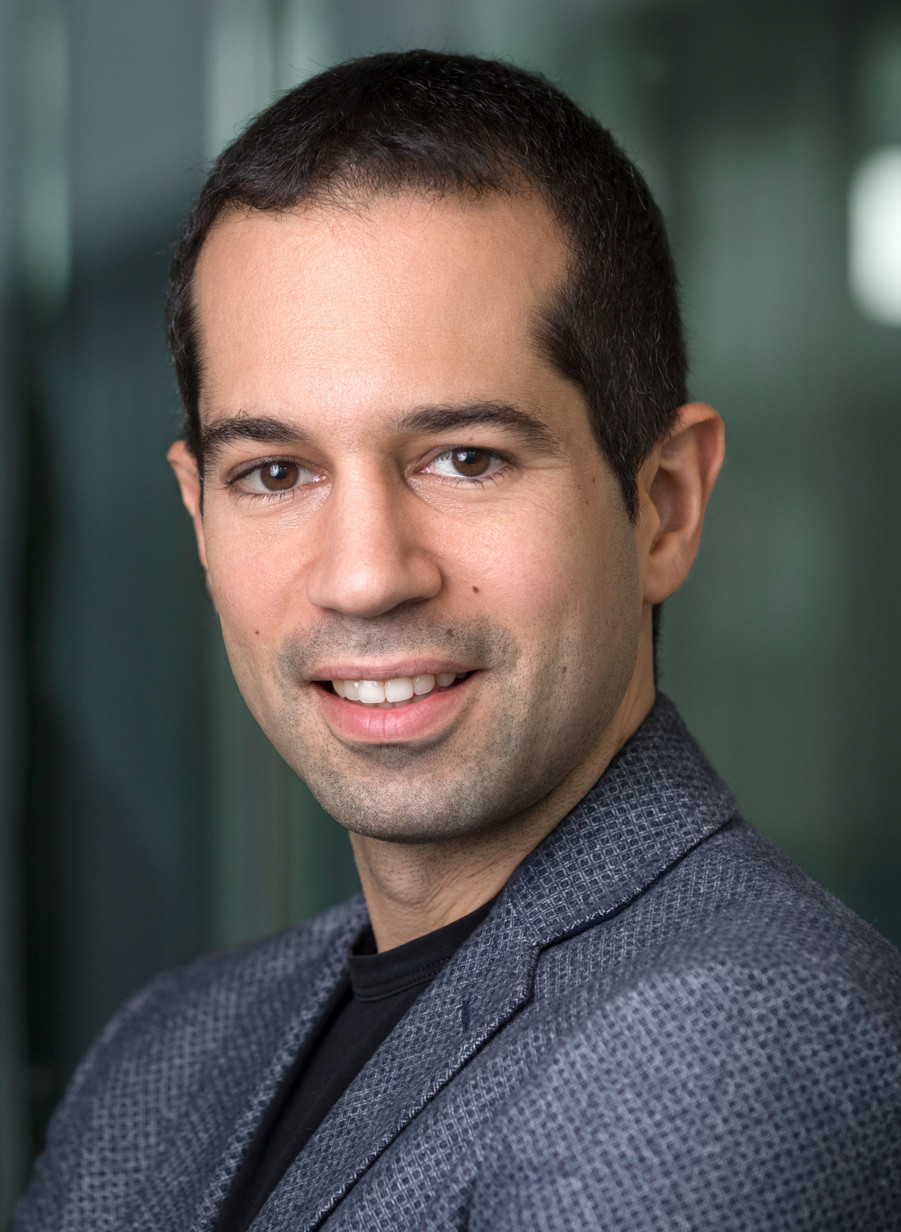
Davide Scaramuzza is a Professor and Director of the Robotics and Perception Group at the University of Zurich. He holds a Ph.D. from ETH Zurich and has conducted postdoctoral research at the University of Pennsylvania and Stanford. His research focuses on autonomous drone navigation using visual and event-based sensors, leading to breakthroughs like AI drones outperforming human pilots in racing (Nature 2023). He pioneered algorithms for Mars helicopter navigation and developed the PX4 autopilot system. Key awards include the Kiyo-Tomiyasu IEEE Technical Field Award (2024), ERC Consolidator Grant (2019), and multiple best paper awards. His entrepreneurial ventures include co-founding Zurich-Eye (later Meta Zurich) and SUIND for agricultural drones. He co-authored the textbook Introduction to Autonomous Mobile Robots , widely used in academia. Research spans event camera algorithms, visual-inertial SLAM, and reinforcement learning for agile flight. His lab's work is featured in IEEE Spectrum, The Guardian, and Forbes. He advises UN initiatives on AI for disaster response and nuclear safety. Current projects include Graph-Generating State Space Models (CVPR 2024) and event-based vision for automotive systems (Nature 2024).
Dr. Daniel Oropeza is an Assistant Professor in the Materials Department at the University of California, Santa Barbara (UCSB), within the College of Engineering. His research focuses on advancing materials and manufacturing technologies for aerospace systems and extreme environments, emphasizing process-microstructure-property relationships. He leads the Materials and Manufacturing for Aerospace and Extremes (MMAX) Lab, which develops novel techniques for powder synthesis, additive manufacturing, and ceramic processing. Education: Ph.D. in Mechanical Engineering (MIT, 2021) M.S. in Aeronautics and Astronautics (Stanford, 2014) B.S. in Aerospace Engineering (UT Austin, 2012) Research Interests: His work spans powder synthesis (e.g., ultrasonic atomization of refractory alloys), additive manufacturing (porous materials, reactive binder jetting), and functional ceramics for applications in hypersonics, space propulsion, and robotics. The MMAX Lab integrates material science, mechanical engineering, and advanced manufacturing testbeds to enable responsive manufacturing solutions. Awards & Grants: LLNL Early Career UC Faculty Initiative Award (2024) Global Young Investigator Award (ACerS, 2025) ONR Grant for Ultrasonic Atomization Research (2024) CNSI Challenge Grant for UC M 2 ADE Consortium (2024) Advising & Labs: He mentors a team of graduate and undergraduate students in the MMAX Lab, focusing on projects like NASA-funded research on refractory metal alloys for space propulsion. The lab collaborates with national labs (e.g., LLNL) and industry partners to bridge fundamental research and applied technologies. Labs/Teams: MMAX Lab develops custom equipment for powder bed fusion, nanoparticle jetting, and reactive binder jetting systems. Current projects include ultra-high temperature ceramics (UHTCs) for extreme environments and multi-material manufacturing for defense and energy applications.
Professor Brant Gibson is a Deputy Dean of Research and Innovation and holds the rank of Professor in the School of Science at RMIT University. His research focuses on quantum technologies, particularly diamond-based systems including nitrogen-vacancy (NV) centers, fluorescent nanoprobes, and hybrid materials for sensing applications. He leads projects in quantum magnetometry, photonics, and biomedical imaging, with an emphasis on translating lab-based innovations into practical devices for fields like medical diagnostics and environmental monitoring. Brant’s work spans condensed matter physics, nanotechnology, and optical engineering, with notable contributions to diamond-doped optical fibers, quantum sensor development, and the application of nanodiamonds in biophotonics. His research integrates experimental physics with computational modeling to optimize material properties and sensor performance. He is actively involved in student supervision, offering guidance for Masters and PhD candidates in quantum engineering, materials science, and interdisciplinary applications. Current projects include quantum tensor gradiometry for navigation, bioimaging with near-infrared emitters, and silk-diamond composites for wound monitoring. Brant’s academic contributions are further reflected in over 150 peer-reviewed publications and collaborations across academia and industry. His work bridges fundamental research with real-world applications, emphasizing Australia’s role in global quantum technology advancements.
John Byabazaire is a Research Fellow at the School of Computer Science, University College Dublin (UCD). He holds a PhD in Computer Science from UCD (2024), following a BSc (Gulu University, 2013) and MSc (Waterford Institute of Technology, 2018). His research focuses on IoT systems for data collection, remote sensing, AI-driven end-to-end system management, and fog analytics. He has held academic roles including Assistant Lecturer at Gulu University (2018–2019) and teaching roles at UCD since 2019, including Occasional Lecturer and Senior Teaching Assistant. His research spans smart agriculture, data quality in IoT, and education technology. Notable contributions include frameworks for yield mapping in precision agriculture, trust-based data validation in IoT, and machine learning approaches for livestock health monitoring. He has secured grants like the National ICT Initiatives Support Program (Uganda Government, 2019–2020). Teaching includes courses on cloud computing, web development, and distributed systems. His articles emphasize IoT data quality, agricultural analytics, and educational technology innovation. He actively promotes technology adoption in African education and agriculture sectors through collaborative projects.
Matthijs L. Noordzij is a Full Professor in the department of Psychology, Health & Technology. His research focuses on wearable technology, mental health interventions, and compassionate design principles. He has contributed to over 90 publications, emphasizing the intersection of psychophysiology and healthcare innovation. Recent work explores stress management through wearable devices and ethical considerations in digital mental health tools. Research interests: Wearables, stress measurement, compassionate technology, sensor-based healthcare. Key activities include organizing conferences and delivering invited talks on topics like 'Compassionate Technology or Stress Trigger?'. Notable contributions: Developed the Compassionate Technology Scale and published on accelerometer-based stress research. Media engagements include expert commentary on smartwatch applications and data privacy in wearable tech.
Mohammad Rostami is a Research Assistant Professor at the University of Southern California (USC) in the Department of Computer Science and Electrical and Computer Engineering, with a joint appointment at the USC Information Sciences Institute (ISI). He holds a PhD in Electrical and Systems Engineering from the University of Pennsylvania and additional degrees in Robotics, Philosophy, Electrical Engineering, and Pure Mathematics from prestigious institutions including the University of Waterloo and Sharif University of Technology. His research focuses on machine learning in data-scarce environments, particularly transfer learning, domain adaptation, low-shot learning, and improving learning efficiency through continual and collective learning. He incorporates symbolic logic and neuro-symbolic approaches to address challenges in catastrophic forgetting and knowledge retention. Applications span medical imaging, computer vision, and explainable AI. Rostami has received several accolades including the UPenn Best PhD Dissertation Award, IJCAI Distinguished Student Paper Award, and University of Waterloo Outstanding Achievement Award. His work bridges theoretical advancements with practical implementations, emphasizing real-world applications in healthcare and autonomous systems. He teaches graduate courses in applied natural language processing and knowledge graph construction. Rostami advises students at all academic levels and collaborates with remote researchers, emphasizing motivated, long-term project commitments.
Jennifer Chen is an Associate Professor in the Department of Chemistry at York University's Faculty of Science. She leads a research group focused on designing nanomaterials for optical sensing, biomedical diagnostics, and solar energy conversion , with an emphasis on plasmonic nanostructures and hybrid materials. Research spans analytical, inorganic, and physical chemistry Eligible supervisor for Physics and Astronomy graduate students Key funding: CFI, NSERC, Ontario Research Fund Her work bridges fundamental studies of materials interfaces with applications in healthcare and sustainability. Recent publications explore charge transfer mechanisms and DNA-nanoparticle interactions for biosensing. 2022: J. Mater. Chem. A on Mn-doped quantum dots 2020: Analyst and ACS Appl. Nano Mater. on DNA-based sensing 2018: JPCC on interfacial charge dynamics 2013: JACS on plasmonic microRNA detection Major awards include the Canadian Society for Chemistry Fred Beamish Award (2019), Nano Ontario Early-Career Award (2018), and Top 40 Under 40 Analytical Scientist (2018). Her group has trained 15+ graduate students, including PhD graduates Brian and Anthony.
Prof. Dr. Ahmet ÖZMEN is a Professor at Sakarya University's Faculty of Computer and Information Sciences, Department of Software Engineering. He has held various administrative positions including Head of the Software Engineering Department (2019-2028) and Director of the Computer Research and Application Center (2019-2022). With extensive experience in academia since 1991, he has made significant contributions to computer vision, traffic monitoring systems, and sensor technologies. Sakarya University: Professor (2019-present), Associate Professor (2011-2019) Dumlupınar University: Assistant Professor (2001-2011), Research Assistant (2000-2001, 1993-1998) Istanbul Technical University: Research Assistant (1991-1993) Prof. ÖZMEN's research spans computer vision applications for traffic monitoring, indoor air quality systems, parallel computing, and sensor technologies. His work bridges theoretical computer science with practical engineering applications, particularly in developing vision-based systems for nighttime vehicle detection, traffic flow monitoring, and environmental sensing. His interdisciplinary approach combines machine learning, image processing, and embedded systems to solve real-world problems in transportation and environmental monitoring. His publication record shows a clear evolution from parallel and distributed systems in his early career to computer vision and sensor applications in recent years. The majority of his recent work focuses on traffic monitoring systems using computer vision techniques, particularly for nighttime conditions, and indoor air quality monitoring systems using sensor networks. His research demonstrates strong industry and societal relevance, with applications in smart transportation, environmental protection, and educational technology. TÜBİTAK Publication Awards (2006, 2008, 2009, 2010) Physical implementation award from TÜBİDER (2008) Microsoft Certified Professional Certificate (2005) YÖK overseas study scholarships (1993, 1998) Elginkan graduate scholarships (1990, 1991) Prof. ÖZMEN has supervised numerous graduate students across multiple institutions, with a focus on practical engineering problems. His research has been supported by various projects including TÜBİTAK projects, institutional research grants, and industry collaborations. He has led significant research initiatives in traffic monitoring systems, indoor air quality monitoring, and educational technology platforms. His administrative leadership has included directing research centers and shaping curriculum development in software engineering. His work has involved establishing research teams focused on computer vision applications, sensor network development, and educational technology. These teams have produced numerous publications, developed practical systems, and trained the next generation of computer engineers. Current research directions include advanced traffic monitoring systems using deep learning and multi-camera setups for urban planning applications.
Professor Steven V. Ley leads the Yusuf Hamied Department of Chemistry at the University of Cambridge, focusing on transformative research in flow chemistry, organic synthesis, and green chemistry. His work emphasizes sustainable methodologies and the integration of advanced technologies like microcontrollers and automation to revolutionize chemical processes. In 2018, he received the prestigious Arthur C. Cope Award—the first UK-based recipient—recognizing groundbreaking contributions to organic chemistry. Research interests include developing continuous flow systems for hazardous reaction management, immobilized reagents, and machine-assisted synthesis. Collaborations span academia and industry, notably through spin-off company New Path Molecular , which applies cutting-edge synthesis techniques to pharmaceuticals and agrochemicals. Key publications highlight innovations in flow chemistry applications, sustainable process design, and automation. His work bridges chemistry with engineering, aiming to address global challenges in resource efficiency and environmental impact. Awards: Arthur C. Cope Award (2018) Lab/Teams: Active research group at the University of Cambridge; collaborates with New Path Molecular on commercial applications.
Soteris Demetriou is a Senior Lecturer of Computer Systems Security at Imperial College London's Department of Computing, within the Faculty of Engineering. He leads the Applications, Platforms, and Systems Security (APSS) Research Lab and directs the Academic Centre of Excellence in Cyber Security Research (ACE-CSR). His research focuses on securing mobile, IoT, and cyber-physical systems through techniques like explainable AI, reverse engineering, and trusted computing. Notable contributions include tools for privacy preservation in machine learning models, detection of LiDAR spoofing attacks, and securing Android's middleware. Education: PhD and MSc in Computer Science (University of Illinois at Urbana-Champaign), Diploma in Electrical and Computer Engineering (University of Patras). Research Interests: Mobile/IoT security, AI security, trusted computing, and vulnerability analysis. Key areas include privacy in generative models, adversarial attacks on autonomous systems, and large-scale distributed systems. Publications: Over 50 peer-reviewed papers in top venues like NDSS, CCS, and SOSP. Recent work addresses privacy in speech generation, LiDAR security for autonomous vehicles, and hyperscale serverless architectures at Meta. Awards: Distinguished Paper Award at NDSS 2018, Best Paper at SafeThings 2024, and multiple travel grants. Served on technical committees for PETS, CCS, and AutoSec. Grants & Collaborations: SPRITE+ grant for Bio-IoT security, collaboration with Meta on distributed systems, and leadership in ACE-CSR. Labs: APSS Lab focuses on systems and AI security, with interdisciplinary projects in healthcare and autonomous systems.
Dr. Chenhao Chu is a Professor at ETH Zürich, holding the Professur für Elektronik (Professorship for Electronics). He specializes in RF/mm-Wave circuits, AI-driven design methods, and advanced power amplification technologies. His research focuses on energy-efficient, wideband systems, antenna-in-package solutions, and GaN-based applications for 6G and beyond. Education: Ph.D. in Electronic Engineering, University College Dublin (2022) M.Sc. in Electronic Information Engineering, City University of Hong Kong (2017) Research Interests: His work bridges AI and hardware design, emphasizing reconfigurable circuits , high-linearity power amplifiers , and mm-Wave phased arrays . Key areas include: AI-assisted rapid design synthesis III-V/Si co-design for mm-Wave Efficient antenna integration Dynamic load modulation techniques Awards: Award-winning researcher with distinctions including the First Place Best Student Paper Award (2022 Royal Irish Academy Colloquium) and multiple HEPA-SDC Competition Awards (2021-2022). Recognized for innovations in PA efficiency and design automation. Advising & Grants: Leading projects on 6G PA architectures and AI-driven RF design. Active in IEEE with contributions to conferences like IMS and ARFTG. No explicitly stated grants mentioned but widely cited in industry-academia collaborations. Labs & Teams: Associated with ETH Zürich's Electronics Laboratory, focusing on next-generation wireless systems. Collaborates internationally on 5G/6G infrastructure and mm-Wave innovations.
Matthew Price is the George W. Albee Green & Gold Professor of Psychological Science and Director of the Clinical Psychology Training Program at the University of Vermont's College of Arts and Sciences. He holds a B.A. from SUNY Binghamton (2004), an M.A. (2006), and Ph.D. (2011) from Georgia State University. His research focuses on expanding clinical care access for trauma survivors and anxiety disorder patients via technology-driven interventions. Key areas include mobile health applications, wearable sensors, and acute trauma care in Emergency Departments. His interdisciplinary approach involves collaborations with computer science, bioinformatics, and medicine. Current projects explore digital biomarkers (e.g., heart rate variability), technology adoption barriers, and culturally adapted therapies. He leads the Center for Research on Emotion, Stress, and Technology, emphasizing translational frameworks bridging basic research and clinical practice. Recent work includes randomized controlled trials evaluating mobile apps like 'Bounce Back Now' for disaster-related PTSD, and sleep-monitoring studies using wearable devices. Over 150 peer-reviewed articles highlight his focus on trauma mechanisms, symptom networks in veterans, and tech-enabled mental health innovations. His lab actively addresses global mental health disparities through mHealth solutions.
Dr. Michael Stevens is a Senior Lecturer at University of New South Wales (UNSW) Canberra , where he focuses on advanced manufacturing and biomedical device control systems . His work bridges digital manufacturing for SMEs with smart artificial heart technologies , emphasizing industry collaboration and translational research. Specializes in physiological control systems for rotary blood pumps Develops unobtrusive fall detection systems for dementia patients Leads international projects on total artificial heart development Education : B.Eng (Medical - First Class Honours), Queensland University of Technology (2010) PhD in Physiological Control for Biventricular Assist Devices, University of Queensland (2014) Research Trends show consistent focus on: Machine learning for biomedical diagnostics (2018–2025) mmWave radar and thermal sensors in patient monitoring (2021–2024) Computational fluid dynamics in artificial heart modeling (2016–2024) Physiological control algorithms for rotary blood pumps (2011–2025) Scientific Awards : UNSW Scientia Education Award (2021) for contextual teaching Heart Foundation Runner-up for "Smart Artificial Hearts" pitch (2021) ARC PGC Supervisor Award (2017) for mentoring Grants & Supervision : Holds over $6 million in competitive funding including MRFF and ARC grants. Currently supervises 4 PhD students while maintaining industry partnerships with VitalCare and BiVACOR. Labs & Facilities : Works across UNSW Engineering labs and Graduate School of Biomedical Engineering platforms, including mock circulation loops and high-performance computing clusters for CFD simulations.
Lingxi Li is a Professor at the Elmore Family School of Electrical and Computer Engineering at Purdue University's Indianapolis campus. His research focuses on modeling complex systems, connected and automated vehicles, intelligent transportation systems, and parallel intelligence. He holds a Ph.D. from the University of Illinois at Urbana-Champaign (2008), and master's and bachelor's degrees from the Chinese Academy of Sciences (2003) and Tsinghua University (2000). Research Interests: Dr. Li's work bridges control systems, transportation engineering, and AI, with emphasis on human-machine interaction, autonomous vehicle systems, and scenario-based traffic modeling. His projects include developing frameworks for Industry 5.0 collaboration, enhancing traffic flow prediction through parallel learning, and advancing safety in micro-mobility systems like e-scooters. Recent Publications: Over 15+ articles (2023-2025) explore topics such as game-theoretic vehicle interaction modeling, vision-language systems for autonomous driving, and acoustic SLAM technologies. These studies reflect a focus on real-world validation and system integration in smart transportation. Labs & Initiatives: Leads research in autonomous mining systems and scenario engineering for intelligent vehicles, leveraging parallel intelligence concepts. Collaborates on projects like ParallelWorkforce (Industry 5.0 frameworks) and SceNDD++ (naturalistic driving datasets).
Professor Yue Rong is a Full Professor at Curtin University's Department of Electrical and Computer Engineering, within the School of Electrical Engineering, Computing and Mathematical Sciences. He holds editorial roles at IEEE Transactions on Signal Processing and IEEE Wireless Communications Letters. His research focuses on signal processing for communications, underwater acoustic systems, wireless networks, and healthcare IoT. Rong has authored over 140 journal and conference papers and received multiple awards, including the 2010 Young Researcher of the Year Award. Education: B.E. (Electrical Engineering), Shanghai Jiao Tong University (1999) M.Sc. (Electrical Engineering), University of Duisburg-Essen (2002) Ph.D. (Electrical Engineering), Darmstadt University of Technology (2005) Research Interests: Rong's work spans cooperative MIMO communications, underwater acoustic systems, OFDM modulation, radar-based healthcare monitoring, and secure wireless protocols. His innovations include adaptive modulation schemes for underwater environments and radar-based vital signs detection. Recent trends in his publications emphasize AI-driven signal processing for healthcare IoT and underwater optical communication systems. Awards: Best Paper Awards (WCSP 2011, APCOMM 2010) Chinese Government Award (2004) DAAD/ABB Fellowship (2001-2002) Grants & Labs: His research is supported by grants focusing on UAV-enabled data collection and underwater network optimization. He leads projects in the Distributed Data Fusion and Emerging Technologies (DDFE) lab, advancing radar-cardiography and wearable health monitoring systems.