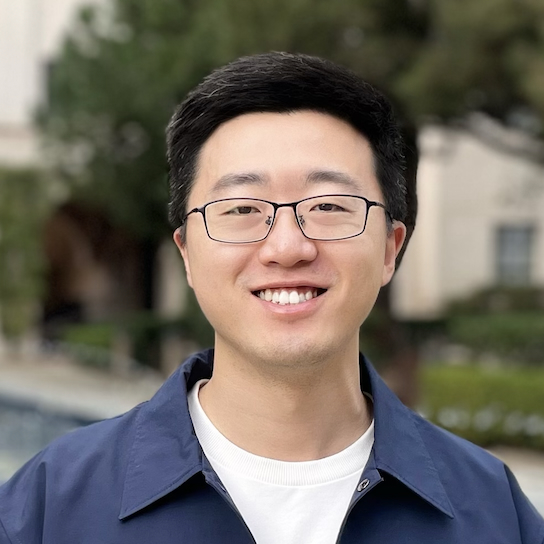
Prof. Zheshen Zhang is a Professor in the Department of Electrical and Computer Engineering at the University of Michigan College of Engineering . He leads the Quantum Engineering Lab , focusing on harnessing quantum mechanical resources like entanglement to advance sensing, communication, and computing systems. Academic Rank: Professor Institution: University of Michigan School: College of Engineering Department: Electrical and Computer Engineering Research Interests: His work spans quantum engineering, emphasizing: Quantum computing architectures using continuous-variable cluster states Quantum communication via entanglement-assisted protocols Quantum sensing for precision metrology and dark matter detection Hybrid photonic circuits with Scandium Aluminum Nitride and Silicon Nitride Application of machine learning to quantum information processing Publications Trends: Recent articles highlight: Advances in integrated photonics for scalable quantum devices Development of entanglement-enhanced sensors for covert and precision applications Exploration of exceptional points in optical cavities for metrology Quantum network prototypes enabling open-access quantum computing Machine learning integration with quantum data acquisition
Richard Allen is a Professor and the Class of 1954 Endowed Chair at the University of California, Berkeley, serving as Director of the Berkeley Seismological Laboratory. His work focuses on seismology, earthquake early warning systems, and seismic hazard mitigation. Research interests include earthquake rupture mechanisms, regional seismic structure and dynamics, mantle upwelling processes, fault interaction analysis, stress modeling in seismology, and machine learning applications in seismic data analysis. He pioneered smartphone-based seismic networks like MyShake and advanced technologies such as distributed acoustic sensing (DAS) for offshore monitoring. His recent publications highlight trends in earthquake early warning algorithms (EPIC, bEPIC), real-time ground-motion modeling, ShakeAlert system performance, and integration of multimodal data (e.g., social media, LLMs, DAS) for hazard mitigation. Collaborative efforts include global smartphone networks and cloud computing for seismic datasets. Allen leads the Berkeley Seismological Laboratory, driving innovations in seismic monitoring, structural health assessment, and public alerting systems to enhance disaster resilience.
Chris Fuller, Ph.D., is the Samuel Langley Distinguished Professor of Engineering at the College of Engineering , Virginia Tech. He leads the Vibrations and Acoustics Laboratory (VAL) , focusing on active/passive noise control systems, metamaterials, and their application to aerospace, medical devices, and industrial machinery. Education: Ph.D. (1979) and B.E. (1974) from the University of Adelaide, Australia. Research Interests: Structural acoustics, adaptive materials, machine learning in noise prediction, and biomedical acoustics (e.g., neonatal incubators). Awards: ASME Rayleigh Award (2017), NASA Team Achievement Award (1996), and Fellow of the Acoustical Society of America. Recent Publications: Highlight advancements in drone noise reduction using neural networks, metamaterials for HVAC systems, and poro-elastic materials for low-frequency noise control.
Paul M Thibado is a Professor in the Department of Physics within the College of Arts & Sciences at the University of Arkansas. With over 100 refereed publications and 51 patents worldwide, his work focuses on cutting-edge research in graphene physics and energy harvesting technology. He has secured over $12 million in external research funding from sources including NSF, DoD, and the Walton Foundation, with current support from the WoodNext Foundation. Education: Ph.D. in Physics, 1994, University of Pennsylvania, Philadelphia, PA B.S. in Physics, 1990, San Diego State University, San Diego, CA B.S. in Mathematics, 1990, San Diego State University, San Diego, CA Professor Thibado's primary research focuses on the physical properties of novel two-dimensional systems, particularly pristine freestanding graphene and chemically-functionalized graphene. His work investigates electronic, mechanical, electromechanical, spin-dependent tunneling, and transport properties. A significant portion of his recent research centers on developing multimodal energy harvesting technology using graphene, with power sources including kinetic, solar, thermal, ambient radiation, acoustic, and nonlinear thermal energy. His groundbreaking discovery that thermal fluctuations in graphene can be harnessed to generate usable electrical power represents a paradigm shift in nanoscale energy generation. Analysis of his recent publications (2023-2025) reveals a clear progression from fundamental studies of graphene properties to the development of functional energy harvesting devices. Key research themes include spectrum analysis of thermally driven curvature inversion in graphene ripples, transient thermal energy harvesting at single temperatures using nonlinearity, and creating arrays of graphene solar cells on silicon wafers. His work demonstrates how Brownian motion in two-dimensional materials can be converted into electrical energy through innovative device architectures. Scientific Awards: Senior Member of the National Academy of Inventors NSF CAREER Awardee ONR award recipient NSF MRSEC funding NSF FRG funding NSF MRI funding NSF REU funding NSF-EM funding NRC Post-doctoral Fellow, Naval Research Laboratory (1994-96) Master Researcher Award, Fulbright College (2014) Professor Thibado has successfully mentored numerous students and postdocs, including Dr. Vince LaBella who was elected APS Fellow for clicker development work. His research has been supported by over $12 million in external funding from diverse sources. His laboratory combines advanced scanning tunneling microscopy techniques with electrical measurements to study and harness the unique properties of two-dimensional materials. Future work appears directed toward scaling up graphene energy harvesting technology for practical applications and commercialization, with several patents recently granted for energy harvesting devices and sensors.
Albert H. Titus is a Professor in the Department of Biomedical Engineering and an Adjunct Professor in the Department of Electrical Engineering at the University at Buffalo, State University of New York. He serves as Associate Vice President for Regulatory Support in the Office of the Vice President for Research and Economic Development. His research focuses on analog VLSI design for neuromorphic visual processing, biosensors, wearable devices, optoelectronic systems, and neural networks. Education: PhD in Electrical and Computer Engineering, Georgia Institute of Technology (1997) MS in Electrical Engineering, University at Buffalo (1991) BS in Electrical Engineering, University at Buffalo (1989) Research Interests: His work spans wearable and implantable sensors, bioinstrumentation, neural network-based visual processing, analog VLSI implementations, optoelectronics, and electronic packaging. He pioneered CMOS-based neuromorphic systems and developed patented technologies for glare sensing and RF power calorimetry. Publication Trends: His recent articles emphasize CMOS-integrated sensors, machine learning for bioimpedance analysis, implantable medical devices, and xerogel-based optical biosensors. These works bridge biomedical engineering and microelectronics. Scientific Recognition: He is a Fellow of the National Academy of Inventors and has received the SUNY Chancellor’s Award for Excellence in Service (2017), NSF CAREER award, and Western New York Inventor of the Year (2010). His inventions include a patented low-power glare sensor (U.S. Patent 7,586,079) featured in Popular Science’s 2011 Top Ten Inventions. Academic Leadership: As a faculty member, he has supervised nearly 20 PhD and over 40 MS students, while teaching courses in circuits, IC design, sensors, and signal processing across electrical and biomedical engineering disciplines.
Andrea Fumagalli is a Professor in the Department of Electrical Engineering at the Erik Jonsson School of Engineering and Computer Science , The University of Texas at Dallas. He earned his Ph.D. (1992) and Laurea (1987) in Electrical Engineering from Politecnico di Torino, Italy. Research Interests: All-Optical Network Architectures, Photonic Slot Routing, Wavelength Routing and Protection, Sensor Networks, Cooperative Wireless Networks, Network Optimization, Next Generation Internet (NGI), and Multi-hop Optical Networks. Education: Ph.D., Electrical Engineering, Politecnico di Torino (1992) Laurea, Electrical Engineering, Politecnico di Torino (1987) Key Research Trends: His recent publications focus on 5G networking, optical network automation, elastic optical networks, network reliability, and cross-layer optimization. He explores FPGA acceleration in 5G Low-PHY functions, live migration of containerized network components, and spectral fragmentation mitigation in EONs. Scientific Awards: Best Teaching Award, Electrical Engineering, UTD (2002) Best Thesis Award for Ph.D. Advisee Isabella Cerutti (2002) IEEE ComSoc Distinguished Lecturer Tour (2000) Best Paper Award (1999): 'An Optimal Design Algorithm for Photonic Slot Routing Networks Migrating to Optical Packet Switching' Advising and Grants: He advised Ph.D. student Isabella Cerutti. In 2001, he secured a $300,000 grant from FUNDACAO CPqD for optical network reliability research. He leads the Optical Networking Advanced Research (OpNeAR) Lab at UTD, collaborating on international projects like the Italian government-funded grid computing initiative (2002) and the OMEGA Test-bed for differentiated reliability. Laboratories and Teams: He directs the OpNeAR Lab , which develops tools for optical network emulation and reliability testing. His projects involve partnerships with institutions in Brazil (Unicamp), Sweden (KTH), Italy (Politecnico di Torino, Scuola Superiore Sant'Anna), and CNR/CNIT.
Dr. Karim Sabra is a Professor at the George W. Woodruff School of Mechanical Engineering , Georgia Institute of Technology, specializing in Acoustics and Dynamics . He holds a Ph.D. from the University of Michigan (2003) and joined Georgia Tech in 2007 as an Assistant Professor. His research integrates theoretical and experimental approaches to study wave propagation in diverse fields including structural health monitoring, biomechanics, and ocean acoustics. Key areas of focus include passive imaging techniques using ambient noise and diffuse wave fields, with applications in non-invasive monitoring of mechanical systems and seismoacoustic environments. Education: Ph.D., University of Michigan, 2003 M.S., University of Michigan, 2000 M.Sc., École Nationale Supérieure de Techniques Avancées (France), 2000 Research Interests: Dr. Sabra’s work spans acoustics, structural health monitoring, biomechanical systems evaluation, underwater acoustics, and geophysics . Recent projects include developing passive elastography techniques for soft tissues using physiological vibrations and exploring ambient noise-based tomography for ocean environments. His interdisciplinary approach bridges multi-scale engineering challenges with multi-wave tools (acoustical, electrical, optical). Publications: His work focuses on advanced acoustic technologies, including underwater communication systems, passive acoustic identification tags, and ray-based tomography methods. Themes include seamount effects on sound propagation, machine learning for acoustic modeling, and environmental sensing using shipping noise. Awards: R. Bruce Lindsay Award (2011) Fellow of the Acoustical Society of America (2007) Institute of Acoustics A.B. Wood Medal (2009) Advising & Grants: Dr. Sabra mentors graduate students in acoustics and wave phenomena, emphasizing interdisciplinary collaboration. His research is supported by grants focused on underwater acoustics, environmental sensing, and biomedical applications. Labs/Teams: His research group develops novel sensors and algorithms for oceanographic and biomedical applications, collaborating with industry and academic partners.
Prof. Kwang W. Oh is a tenured Professor at the Department of Electrical Engineering and Department of Biomedical Engineering within the School of Engineering and Applied Sciences at University at Buffalo (SUNY at Buffalo) . He serves as the Director of Graduate Studies in Electrical Engineering and Director of SMALL (Sensors and MicroActuators Learning Lab) . His academic journey includes PhD and MS in Electrical and Computer Engineering from University of Cincinnati (2001, 1997) and BS in Physics from Chonbuk National University (1995). Prof. Oh's research expertise lies at the intersection of microfluidics , BioMEMS , and lab-on-a-chip technologies. His lab has pioneered vacuum-driven microfluidic devices , PDMS-based systems , droplet manipulation , and chemical-free fabrication techniques . His work enables point-of-care diagnostics , single cell analysis , and wearable medical sensors , with significant contributions to sample-to-answer nanosystems and world-to-chip interfacing . The scientific awards section highlights his excellence in teaching and research: SUNY Chancellor's Award for Excellence in Teaching (2020) Meyerson Award for Undergraduate Teaching (2019) Qualcomm Faculty Award (2019) Senior Teacher of the Year (2017) Royal Society of Chemistry's Emerging Investigators (2013) Samsung Electronics' CEO Honor (2003) His lab has produced numerous PhD and MS students including Dr. Anyang Wang (2020), Dr. Nikhila Nyayapathi (2020), Mr. Liam Christie (2021), and Dr. Domin Koh (2019). As a conference chair , he has organized symposia at NanoTech (2012-2026) and served as editorial board member for Sensors , Micromachines , and Biomedical Engineering Letters .
Brandon Schmandt is a Professor in the Department of Earth, Environmental and Planetary Sciences at Rice University, where he leads research using seismology to investigate Earth systems. His work integrates interdisciplinary approaches, data science, and numerical modeling to study tectonic processes, magmatic systems, and environmental interactions. His educational background includes a PhD in Geological Sciences from the University of Oregon (2011) and a BA in Environmental Studies from Warren Wilson College (2006). Dr. Schmandt's research focuses on seismology, tectonics, volcanology, and surface processes , with emphasis on seismic imaging of subsurface structures. His group employs innovative time-series analysis and field projects to resolve geologic history and contemporary Earth dynamics, particularly examining fault zones, magmatic reservoirs, and deep convective processes. Key methodologies include dense seismic arrays and machine learning applications. Analysis of his recent publications (2023-2025) reveals dominant trends in seismic event discrimination (earthquakes vs. explosions), magmatic system imaging (Yellowstone, Cascades), and global mantle structure studies. There is strong emphasis on induced seismicity, machine learning applications, and high-resolution imaging of Earth's discontinuities using dense arrays. His distinguished honors include: Aki Award of the AGU Seismology Section GSA Donath Medal AGU Macelwane Medal Body Dr. Schmandt directs an active research group conducting field projects across diverse settings including the Raton Basin, Yellowstone, Antarctica, and the Caribbean. While specific student advisees and grant details aren't provided in available materials, his group's work involves collaborative data collection, advanced computational modeling, and development of novel seismic analysis techniques applicable to both natural and anthropogenic seismic sources. The research program maintains focus on magmatic systems beneath volcanic regions, induced seismicity mechanisms, and global mantle structure using dense node arrays and interdisciplinary approaches to address fundamental questions in Earth dynamics.
Harpreet S. Dhillon is the W. Martin Johnson Professor of Engineering and Associate Dean for Research and Innovation at Virginia Tech's College of Engineering. He holds appointments in the Bradley Department of Electrical and Computer Engineering. His research focuses on wireless communications, stochastic geometry, machine learning, and next-generation network systems. Education: Ph.D., University of Texas at Austin (2013); M.S., Virginia Tech (2010); B.Tech., Indian Institute of Technology Guwahati (2008). Research Interests: Communication Theory, Stochastic Geometry, Machine Learning for Communication Systems, Heterogeneous Networks, IoT, and Energy Harvesting. He leads projects on vision-aided localization, LEO satellite systems, and RIS-aided networks. Key Awards: IEEE Fellow (2023), AAIA Fellow (2022), IEEE Heinrich Hertz Award (2016), and numerous early-career recognitions. His work has resulted in over 150 journal/conference publications. Advising: Supervises Ph.D. students in cutting-edge research areas like 6G localization and RIS optimization. His advisees have won awards such as the VT ECE Blackwell Award for Best Dissertation. Labs/Teams: Head of the research group focusing on communication theory and localization. Collaborates on projects funded by agencies like NSF and industry partners.
Nan Marie Jokerst is the J. A. Jones Distinguished Professor of Electrical and Computer Engineering at Duke University's Pratt School of Engineering and Executive Director of the Duke Shared Materials Instrumentation Facility. She previously served as Chair of the Duke Academic Council (2014-2015) and Associate Dean for six years. B.S. in Physics, Creighton University (1982) M.S.E.E., University of Southern California (1984) Ph.D. in Electrical Engineering, University of Southern California (1989) Her research spans chip-scale photonic sensing systems , III-V thin-film lasers on silicon , metamaterials , and heterogeneous integration . She develops optical systems for medical diagnostics, environmental monitoring, and security applications through the Jokerst Laboratory, which combines optical system design, optoelectronic device development, and semiconductor fabrication expertise. Her recent publications show strong focus on terahertz strain mapping using metamaterials, multi-pixel tissue characterization for cancer margin detection, and microfluidic sensing platforms with embedded photodetectors. Key trends include advancing non-destructive structural monitoring and miniaturized biomedical diagnostics through novel photonic integration techniques. IEEE Fellow (2003) Optica Fellow (2001) NSF Presidential Young Investigator Award IEEE Third Millennium Medal IEEE/HP Harriet B. Rigas Medal USC Viterbi School Alumni Award She has advised numerous graduate students in photonic device research and secured major grants including the NSF National Nanotechnology Coordinated Infrastructure ($6M, 2015-2021) and NNCI: North Carolina Research Triangle Nanotechnology Network ($20M, 2020-2026). Her leadership extends to co-founding Triangle Women in STEM and serving on the National Academies Board on Global Science and Technology. The Duke Shared Materials Instrumentation Facility under her direction provides critical cleanroom and characterization resources for interdisciplinary research.
Brandon Schmandt is a Professor in the Department of Earth and Planetary Sciences at the University of New Mexico. His research focuses on geophysics, seismology, tectonics, structural geology, and volcanology. He holds a Ph.D. from the University of Oregon (2011). His research group specializes in seismic imaging methods to study subsurface structures related to tectonic and magmatic processes. They analyze seismic data from both fieldwork and public archives, with applications to earthquake mechanics, magma storage, and explosion discrimination. Recent work emphasizes continental magmatic systems, induced seismicity in the Raton Basin, and Yellowstone's magmatic architecture. Collaborative projects include seismic array deployments and machine learning applications for signal analysis. No scientific awards are explicitly listed in the provided texts. His advising includes undergraduate and graduate students such as Wilgus, Stairs, and Maguire. No specific grants or labs are mentioned beyond his departmental affiliation.
Zachary E. Ross is a Professor of Geophysics at the California Institute of Technology (Caltech) and holds the William H. Hurt Scholar distinction since 2021. His research integrates machine learning, computational mathematics, and seismology to analyze earthquakes and fault zones using large seismic datasets. Education B.S., University of California, Davis (2009) M.S., California Polytechnic State University, San Luis Obispo (2011) Ph.D., University of Southern California (2016) His research focuses on high-resolution imaging of fault zones, understanding earthquake sequences in space and time, and applying artificial intelligence to seismic data analysis. He develops scalable algorithms for waveform inversion, ground-motion synthesis, and real-time seismic monitoring. Recent publications highlight his work on neural operators for wave propagation, AI-driven seismicity analysis, and induced earthquake dynamics. He teaches advanced courses including Ge 264 – Machine Learning in Geophysics and Ge 271 – Dynamics of Seismicity . Scientific Awards William H. Hurt Scholar (2021–present)
Omprakash Gnawali is an Associate Professor in the Department of Computer Science at the University of Houston, with expertise in Internet of Things, wireless sensor networks, and artificial intelligence. His research focuses on advanced networking protocols, mobility analysis, and safety monitoring systems. Postdoctoral work at Stanford University PhD in Computer Science from University of Southern California Masters and Bachelors from Massachusetts Institute of Technology His research interests include Ultra-Wideband (UWB) localization, network protocol design, edge computing for monitoring systems, and mobile sensor networks. He leads the Networked Systems Laboratory , where he develops frameworks like the Collection Tree Protocol and CodeDrip for efficient data dissemination. Recent publications highlight trends in UWB-based safety monitoring, routing optimization in dual-radio networks, and deception detection in cybersecurity. He has secured NSF Student Travel Grants for ACM SenSys conferences in 2016 and 2017. Scientific Awards NSF Student Travel Grant (2017) NSF Student Travel Grant (2016) He actively mentors students in research projects and teaches courses such as Research Methods in Computer Science and Computer Networks . His service roles include Technical Program Committee memberships and chairing the TinyOS Network Protocol Working Group.
Jiaxuan Li is an Assistant Professor of Geophysics in the Department of Earth and Atmospheric Sciences at the University of Houston's College of Natural Sciences and Mathematics. His research focuses on developing fiber-optic sensing technologies for seismic monitoring across diverse geological environments including volcanic, crustal, and glacial settings. Dr. Li's educational background includes a Ph.D. in Geophysics from the University of Houston (2015-2020) and a B.S. in Geophysics from Peking University (2011-2015). He previously held a postdoctoral position at Caltech Seismolab under Prof. Zhongwen Zhan. His research program centers on distributed acoustic sensing (DAS) applications, with major contributions in volcanic eruption forecasting through minute-scale magma migration imaging, earthquake rupture dynamics via high-frequency fault asperity analysis, and subsurface characterization for carbon sequestration and geothermal energy. Recent work demonstrates DAS capabilities as dense geodetic arrays for real-time volcanic monitoring systems deployed in Iceland through collaborations with the Icelandic Met Office and Reykjavik University. Analysis of Dr. Li's publication record reveals a strong emphasis on operationalizing fiber-optic networks for geophysical monitoring, with significant advancements in eruption early warning systems, earthquake source characterization, and subsurface imaging techniques. His work bridges fundamental seismological research with practical hazard mitigation applications. Dr. Li actively mentors graduate students and recently welcomed postdoc Dr. Tianfan Yan to his research team. His lab operates real-time DAS streaming systems for volcanic eruption monitoring in Iceland, developed through international collaborations involving the University of Houston, Caltech, Ljósleiðarann, and Reykjavik University. Current research directions include expanding DAS applications for carbon sequestration verification and deep geothermal reservoir characterization.