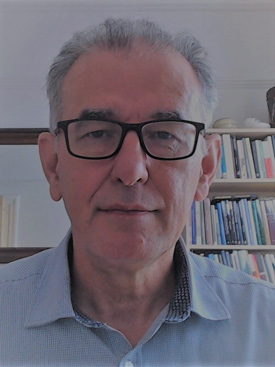
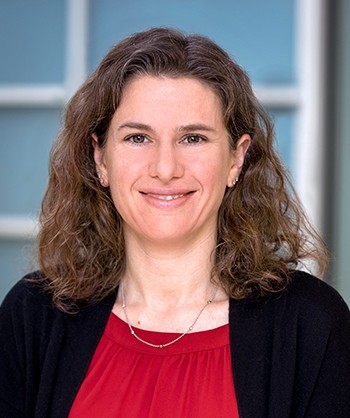
Tor Hernes is a Professor at the Department of Organization, Copenhagen Business School, and directs the Centre for Organization and Time (COT). His research focuses on organizational continuity, temporal dynamics in organizing processes, and narrative theory. He holds adjunct professorships at the University of South-Eastern Norway and has been a visiting professor at Université Paris-Dauphine. His research explores how organizations navigate time through event-based perspectives, distant future goal setting, and temporal trajectories in resilience. Key themes include the interplay between organizational processes and natural environments, particularly in sustainability contexts. Hernes has authored influential works such as Organization and Time (2022) and A Process Theory of Organization (2014). His recent articles analyze temporary organizing structures, environmental framing, and resilience frameworks. He actively supervises master’s theses and PhD students in organizational studies. Hernes also contributes through academic leadership roles, including editing research agendas on organizational continuity. His work bridges theoretical insights with practical challenges like climate change adaptation and strategic innovation.
Dr. Maxime Cordeil is a Senior Lecturer in Human Centred Computing at the School of Electrical Engineering and Computer Science, The University of Queensland. His research focuses on Virtual and Augmented Reality technologies for data interaction, interactive visualization systems, and AR interfaces for industry applications. He has authored over 60 publications in top-tier venues such as ACM CHI and IEEE VR, and was nominated as Australia's Field Leader in Computer Graphics in 2021 and 2022. Research Interests: Data visualization, immersive analytics, medical imaging, collaborative systems, and human-computer interaction. Current Projects: Includes embedded visualizations for sports performance, interactive machine learning in 3D environments, and mixed-reality applications in forensic science. PhD Supervision: Actively guiding students in topics like immersive gesture exploration, AR for digital health, and collaborative VR systems. His work bridges theory and practice, with tools like IATK (Immersive Analytics Toolkit) and the MADE-Axes hardware system. He collaborates with industry partners like Raytracer and CSIRO, focusing on applications in space exploration, underwater training, and remote operations. Awards: Multiple best paper recognitions at ISS and CHI, plus industry-driven research grants. Labs: Leads the Immersive Analytics research group at UQ, specializing in embodied interaction and spatial computing.
Claus Rerup is a Professor of Management at the Frankfurt School of Finance & Management, where he also served as Vice President for Academic Affairs/Dean of Faculty from 2021 to 2023. His research focuses on organizational learning, ambiguity, workplace politics, and sensemaking in complex environments. He has held tenured positions at institutions like Ivey Business School (Associate Professor) and visiting roles at universities including Bocconi University and Aarhus University. Rerup earned his Ph.D. and M.Sc. from Aarhus University, with postdoctoral work at Wharton School and visiting scholar positions at Stanford and University of Illinois. His research has been published in top journals such as Administrative Science Quarterly , Academy of Management Journal , and Organization Science . He has received multiple awards, including the Outstanding Reviewer Award (four times) from Organization Science and the 2019 Teaching Excellence Award at Frankfurt School. Rerup has served on editorial boards of leading journals and edited volumes like the Cambridge Handbook of Routine Dynamics . Teaching includes MBA, Master in Management, and executive education programs (e.g., leadership, power dynamics, disinformation). He advises companies such as Ontario Teachers’ Pension Fund and Ernst & Young. His work bridges theory and practice, addressing how organizations navigate ambiguity, learn from rare events, and regulate conflicting goals within routines. Notable contributions include pioneering studies on 'attentional triangulation' in crisis learning, routine dynamics, and identity transitions. He has also collaborated with interdisciplinary teams on topics like mediated sensemaking and noise as signals in rare event analysis.
Alf Steinar Sætre is a Professor of Innovation and Strategy at the Norwegian University of Science and Technology (NTNU), Department of Industrial Economics and Technology Management. He leads the Norwegian Research School in Innovation's Program (NORSi-PIMS), collaborating with institutions like Harvard Business School and INSEAD. His research focuses on innovation management, ambiguity in innovation processes, organizational adaptation, and sustainable business models. Education: MSc in Economics and Business Administration from the Norwegian School of Economics, Bergen PhD in Organizational Communication from the University of Texas at Austin (Fulbright Scholar) Research Interests: Management of ambiguity in innovation Innovation project termination Organizational learning and adaptation Sustainability integration in business models His work bridges theory and practice, emphasizing strategic problem formulation and psychological ownership in innovation. Teaching & Awards: Recipient of Indøk's Lecturer of the Year (2018) Teaches Innovation Management (TIØ4180) and Engaged Scholarship (ØK8101) Outreach: Leads the PIMS Executive Forum, connecting executives with innovation scholars. Authored books like Communication in Organizations and contributed to global research networks.
Professor Alex Richter is a Professor of Information Systems at the School of Information Management, Victoria University of Wellington, where he also serves as Director of the Executive MBA program and PhD Director. He leads the Digital Work Lab and edits the Digital Work Diaries. With over 150 refereed publications cited more than 11,500 times, Professor Richter is a leading researcher in the field of Information Systems, recently ranked 285th globally among 18,561 researchers in the Information Systems sub-field on the Top 2% Scientists List. Professor Richter's research focuses on how digital technologies transform work to enhance innovation, productivity, and employee satisfaction. His primary areas of interest include Human-AI Collaboration , Digital Work and Innovation , Value-driven design , and The Future of Work . He explores practical applications of human-AI collaboration with global industry partners, identifying use cases, benefits, risks, and enablers of adoption. His conceptual work emphasizes value-driven, context-aware, and adaptive approaches to create meaningful sociotechnical systems. His recent publications demonstrate a strong trend toward understanding the evolving relationship between humans and AI in workplace settings. Professor Richter's work examines trust in generative AI across organizational departments, the transformation of innovation practices through human-AI collaboration, and the implementation challenges of emerging technologies like augmented reality. His research consistently bridges theoretical frameworks with practical applications, focusing on how organizations can effectively integrate AI while maintaining human-centered values. Top 2% Scientists List (2024), ranking 285th globally among 18,561 researchers in Information Systems 'Innovation in Teaching Award' from the Association for Information Systems (2024) Research Fellow (2022) Multiple best paper awards throughout his career Professor Richter actively supervises numerous PhD students working on human-AI collaboration topics, including Carlos Forero, Chloe Latto, Ghazaleh Moqadam, Hedi Bigham Sohanaki, Jingyu Zheng, Mina Sanabadi, Shafiqul Alam, and Yao Zhang. He has successfully led research projects funded by the European Union, national governments, and organizations across Germany, Switzerland, Denmark, Australia, and the USA. His engaged scholarship approach connects academic research with practical industry applications. As Director of the Digital Work Lab, Professor Richter leads a team exploring the future of work in the digital age. The lab investigates how digital technologies transform work practices, with particular focus on hybrid work environments, visibility in digital workplaces, and human-AI collaboration. Through the Digital Work Diaries initiative, the lab documents and analyzes real-world digital work transformations, providing practical insights for organizations navigating digital change.
Dimitra Dritsa is a Postdoctoral Researcher in the Department of Industrial Design at Eindhoven University of Technology (TU/e), specializing in human-computer interaction applied to urban health, physiological data analysis, and remote patient monitoring systems. Her work bridges design research with healthcare innovation, particularly in cancer surgery prehabilitation and wellbeing technologies. Her academic foundation includes a Master's degree from Delft University of Technology and a PhD from the University of Technology Sydney, where her dissertation focused on Spatiotemporal dynamics of urban health: Physiological data driven strategies for enhancing urban health and wellbeing . Dr. Dritsa's research centers on leveraging physiological data and AI to improve urban health outcomes and clinical interventions. She investigates user-centered design for telemonitoring systems, uncertainty-aware data visualization in design processes, and experience sampling methods for office wellbeing. Her work emphasizes contextual data integration and ethical AI applications in healthcare settings. Recent publications (2023-2025) reveal a clear trajectory toward human-AI collaboration in health contexts, with significant contributions to remote patient monitoring frameworks and data-driven design methodologies. Key themes include physiological response tracking in urban environments, AI-guided wellbeing interventions, and multidimensional data exploration tools for design researchers. She actively contributes to the STRAP project ( Self Tracking for Prevention and diagnosis of heart disease , 2020-2025) as a core project member, focusing on big data solutions and AI-driven healthcare innovations. Her supervisory role includes guidance for two students as indicated in institutional records, and she teaches the course Making sense of sensors since 2016.
Lucas Introna is a Distinguished Professor of Organisation, Technology, and Ethics at Lancaster University's Management School. He holds a BCom, BA (Hons), MBA, and PhD. His research focuses on the ethical and social implications of technology, particularly information systems, informed by phenomenology and process philosophy. He has served as Associate Dean for Research (2010-2016) and Head of the Organisation, Work and Technology Department (2007-2010). **Research Interests:** Sociomateriality and performativity Ethical implications of IT (privacy, surveillance) Political studies of technology design Plagiarism and cultural values Virtuality and embodiment **Recent Work Trends:** His publications explore algorithmic governance, digital ethics, and the interplay between technology and social structures. Notable themes include blockchain trust dynamics, refugee precarity, and the ethical dimensions of facial recognition systems. **Awards:** IFIP Outstanding Service Award **Grants & Roles:** Co-founder of the Centre for the Study of Technology and Organisation Member of multiple ethics committees and editorial boards Visited professor at University of Amsterdam **Labs/Groups:** Affiliated with the Centre for Technological Futures and the Society Management and Society group.
Dr. Dave Murray-Rust is an Associate Professor in Human-Algorithm Interaction Design at TU Delft's Faculty of Industrial Design Engineering. He explores the intersection of humans, data, and AI through design research, focusing on ethical AI systems and sociotechnical interactions. His work bridges computer science, design theory, and digital sociology, addressing challenges like algorithmic fairness and human-AI collaboration. He leads initiatives such as the AI Futures Lab and Data-Centric Design Lab, advancing methods for leveraging behavioral data in design processes. His research emphasizes experiential AI frameworks, metaphors for designers, and the legibility of AI systems. He has been honored with awards including Best alt.HRI 2024 and a CHI 2023 Best Paper Award for contributions to fairness perceptions in algorithmic decision-making. Murray-Rust teaches courses like the Speculative Design Studio and collaborates on projects like DCODE (Designing the Future of AI) and the BrightSky Project. His work extends to public engagement through installations like GeoPact and explorations of blockchain's societal impact. He holds an Honorary Fellowship at the University of Edinburgh.
Dr. Mohsin Malik is an Associate Professor of Project Management at Swinburne University of Technology (since 2023) in Melbourne, Australia. Previously, he held roles as Senior Lecturer (2018–2022) at Swinburne and Lecturer (2016–2018) at the University of Melbourne. He earned his PhD in Technology Management from the University of Western Australia (2012). His research focuses on organizational dynamics for innovative outcomes in digital contexts, sustainability in supply chains, and project management practices aligned with UN Sustainable Development Goals (SDG-9, SDG-12, SDG-3). Key areas include digital transformation, lean management, agile project management, and supply chain resilience. Dr. Malik’s work has been published in top-tier journals like the International Journal of Project Management, Information & Management, and IEEE Transactions on Engineering Management. He currently serves as Senior Associate Editor of the International Journal of Physical Distribution & Logistics Management and has secured grants totaling over AUD 1M, including a 2025–2028 project on digital transformation in Indian/Australian organizations funded by DFAT. His research explores topics such as socio-cognitive dynamics in digital transformation, lean socio-technical systems, and agency theory in international development projects. Recent projects include analyzing digital platform interactions for Australian artists and evaluating virtual healthcare barriers during the pandemic. He actively supervises doctoral and master’s students focusing on digital governance, social sustainability, and project monitoring frameworks. Dr. Malik is a globally recognized scholar, with over 23 years of academic and industry experience. He collaborates with organizations like the Victorian Music Development Office and the Australian Academy of Science, emphasizing real-world impact through research.
Rebecca Meisenbach is an Associate Professor in the Department of Communication at the University of Missouri's College of Arts and Science. Her research focuses on issues of marginalized identity and ethics in organizational life, particularly stigma as an intersectional communication process operating at individual and organizational levels. She developed the theory of Stigma Management Communication and has researched identity negotiations among diverse groups including higher education fund-raisers and female breadwinners. Her research interests include Identity Negotiation, Organizational Ethics, Stigma Management, and Strategic Communication, with focus areas in Health and Crisis Communication, Identity, Diversity, and Communication, and Organizational Communication. She founded the department's summer study abroad program and teaches courses in organizational communication, communication theory, and qualitative research methods. Meisenbach's publications demonstrate sustained focus on stigma communication in organizational contexts, with recent work examining racialized silence, healthcare stigma during COVID-19, and feminist identity in pageantry. Her research employs qualitative methodologies including phenomenology and ethnography to explore identity management in workplace settings. She serves on four editorial boards and is past Editor-in-Chief of Management Communication Quarterly. Her work appears in leading journals including Communication Monographs, Journal of Applied Communication Research, and Health Communication.
Katherine McNeill is a Professor in the Department of Teaching, Curriculum, and Society at Boston College's Lynch School of Education and Human Development. She holds the Bryk Faculty Fellowship and specializes in science education, particularly focusing on scientific argumentation, explanation practices, and equitable STEM instruction. Her work emphasizes designing curriculum materials and professional development to support teachers in fostering student-driven inquiry. McNeill earned a PhD and two MS degrees from the University of Michigan (2006), and dual BA degrees in Biology and English from Brown University (1998). She previously taught middle school science and has been at Boston College since 2006. Her research centers on improving science education through: Developing the Claim-Evidence-Reasoning (CER) framework Supporting multilingual learners' participation in argumentation Designing educative curriculum materials (e.g., OpenSciEd) Professional learning programs for educators and instructional leaders Key contributions include authoring influential books like Supporting Grade 5-8 Students in Constructing Explanations in Science and articles on curriculum customization, teacher beliefs, and leadership roles in science reform. Her work bridges research and practice to ensure all students engage in meaningful scientific sensemaking.
Dilshod Makhmadshoev is a Senior Lecturer at the Hunter Centre for Entrepreneurship, Strategy and Innovation within Strathclyde Business School at the University of Strathclyde, where he also earned his PhD in International Business. He holds a Master’s degree in Management from Queen's University Belfast. PhD in International Business, University of Strathclyde MSc in Management, Queen's University Belfast His research lies at the intersection of international business and entrepreneurship, with a strong focus on institutional theory, SME internationalization, global value chains, and entrepreneurship in transition and emerging economies. He explores how firms navigate institutional voids and uncertainty, particularly in Central Asia and similar contexts. His work is interdisciplinary, drawing from economics, development studies, and organizational behavior. The recent publications highlight a consistent trend in examining institutional challenges, sensemaking under uncertainty, and sustainability within global value chains. His work increasingly connects business strategies with broader sustainable development goals, particularly in environmentally vulnerable and institutionally weak regions. He actively contributes to the academic community through peer review and editorial roles, including for International Business Review and British Journal of Management . Dilshod leads and participates in funded research projects, such as examining environmental sustainability in Kyrgyzstan's garment industry within global value chains and fostering green partnerships in Tajikistan. He teaches key courses including International Business Analysis, Managing Across Cultures, and Global Business Environment at both undergraduate and postgraduate levels. He has supervised research students and contributes to academic governance through examination and review activities. His research is embedded in real-world development challenges, particularly in post-socialist and emerging economies, aiming to foster more equitable and sustainable global business systems.
Robert K. Kazanjian serves as the Asa Griggs Candler Professor of Organization and Management at Emory University's Goizueta Business School. He has held significant administrative roles including Vice Dean for Programs (2010-2017), Interim Dean (2014), Senior Associate Dean for Strategic Initiatives (2017-2022), Founding Academic Director of the Roberto C. Goizueta Center for Entrepreneurship and Innovation (2020-2022), and Senior Associate Dean for Executive Education (2002-2004). His educational background includes: PhD in Organization and Strategy, The Wharton School, University of Pennsylvania AM in Organization and Strategy, The Wharton School, University of Pennsylvania MBA in Organization and Strategy, The Wharton School, University of Pennsylvania BA in Economics (with honors), Hamilton College Kazanjian's research centers on technology-based new venture development, innovation management in complex organizations, and strategic implementation. His work examines how organizations foster creativity through team dynamics in multi-team settings, address dominant problems during growth stages, and design structures for strategic execution. He emphasizes the interplay between organizational learning, leadership, and governance in driving sustainable innovation. His publication record spans four decades with 13 major works in top journals including Management Science, Strategic Management Journal, and Academy of Management Review. These reveal an evolving focus from stage-based growth models for new ventures to contemporary analyses of creativity in complex systems, consistently addressing organizational design challenges in innovation contexts. His scientific recognition includes: 17 Teaching Excellence awards from full-time, part-time and Executive MBA students at Goizueta Business School Kazanjian maintains strong industry engagement through consulting and executive education for major corporations including General Electric, General Motors, Goldman Sachs, and Siemens North America. His advisory work focuses on strategy implementation, organizational change, and innovation management across diverse sectors from manufacturing to financial services. He has led executive programs throughout the US and Asia, translating academic research into practical frameworks for senior leaders. As Founding Academic Director of the Roberto C. Goizueta Center for Entrepreneurship and Innovation (2020-2022), he established research initiatives and educational programs bridging academic theory with entrepreneurial practice, fostering collaboration between students, faculty, and industry partners in technology venture development.
Professor Efpraxia D. Zamani is a Full Professor of Information Systems at Durham University Business School, previously serving as Senior Lecturer at the University of Sheffield's Information School. Her research examines the organizational and social dimensions of Information Systems, with particular emphasis on digital poverty, emerging technologies, and workplace implications. Her research focuses on three interconnected domains: Digital poverty and inequalities (examining access disparities and policy impacts), Making sense of emerging technologies (analyzing adoption and resistance patterns), and Information Systems in the workplace (investigating hybrid work dynamics and gendered experiences). Zamani employs critical and qualitative methodologies to uncover how technological transformations affect marginalized groups and organizational practices. Analysis of her 15 most recent publications (2023-2025) reveals consistent engagement with societal challenges through an Information Systems lens. Her work spans digital governance, healthcare technology, crowdwork platforms, and AI ethics, predominantly published in top-tier journals like Information Systems Journal and Journal of Information Technology . A distinctive pattern is her focus on vulnerable populations—including informal caregivers, women in developing economies, and older adults—within technology adoption contexts. Key recognitions include: AIS Sandra Slaughter Service Award (2024) AIS Distinguished Member - Cum Laude (2025) Best Paper Award at ICIS 2013 Runner Up for SIG GTM Best Paper Award (2021) She supervises PhD candidates including Myrto Dimitriou and Sohee Kim while leading significant research initiatives. Current projects feature the Marie Skłodowska-Curie Actions Doctoral Network AGORA (funded by UKRI EPSRC) for Metaverse research training. Completed work includes British Academy-funded studies on digital inclusion in Derbyshire and Research England projects addressing digital poverty in South Yorkshire. Her grant portfolio demonstrates strong alignment with societal impact through technology. Zamani actively contributes to academic communities as co-chair of the AIS Women's Network College and Vice President of the UK Academy for Information Systems, while maintaining editorial roles at Information Systems Journal and Information Technology & People .
Kjetil Nordby is a Professor at the Oslo School of Architecture and Design (AHO), specializing in interaction design for maritime environments. He leads the Ocean Industries Concept Lab (OICL) and manages the OpenBridge Design System, an open-source framework for standardized ship bridge interfaces. Research focus: Augmented/Virtual Reality in maritime operations Key projects: OpenRemote (remote operation center UI), OpenAR (AR integration) Collaborations with institutions like Royal Institution of Naval Architects His work addresses cross-vendor interface consistency, safety-critical UX, and open innovation in maritime design. Recent publications explore AR/VR applications for navigation, collaborative workstations, and energy-conscious maritime systems. Scientific contributions include: 15+ peer-reviewed articles in journals like Journal of Marine Science and Engineering and Applied Ergonomics Book chapters on sensemaking in safety-critical maritime environments