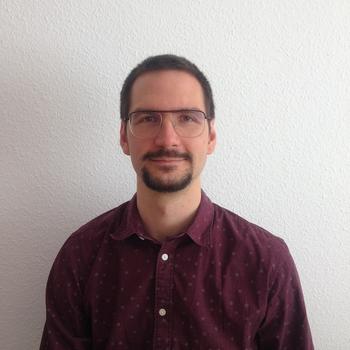
Stephen Wright is a Professor in the Department of Computer Sciences at the University of Wisconsin-Madison, serving as Department Chair from 2023-2025. He previously held roles at Argonne National Laboratory (1990-2001) and the University of Chicago (2000-2001). His research focuses on computational optimization, with applications in data science, machine learning, and engineering. He co-authored seminal books such as Numerical Optimization (with J. Nocedal) and Optimization for Data Analysis (with B. Recht). Wright leads the Wisconsin Institute for Discovery's research initiatives and has developed widely-used optimization software like PCx and SpaRSA . Key awards include the 2024 George B. Dantzig Prize, 2020 Khachiyan Prize, and SIAM Fellow status since 2011. He has served as editor-in-chief of the SIAM Journal on Optimization and Mathematical Programming, Series B . His teaching includes courses on nonlinear optimization (CS726) and introductory optimization (CS524). Wright’s work bridges theory and practice, emphasizing scalable algorithms and interdisciplinary applications.
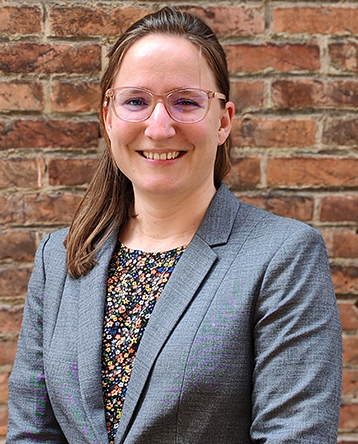
Ruth Misener is a Professor in the Department of Computing at Imperial College London, where she leads the Computational Optimization Group and holds the BASF/RAEng Research Chair in Data-Driven Optimization (2022–2027). She is affiliated with the Faculty of Engineering and contributes to interdisciplinary research institutes including the Data Science Institute, the Institute for Molecular Science and Engineering, and the Sargent Centre for Process Systems Engineering. Her research lies at the intersection of numerical optimization, operations research, and machine learning, with applications in chemical engineering, bioprocess optimization, energy systems, and industrial scheduling. She develops global optimization algorithms for mixed-integer nonlinear programs (MINLP), focusing on real-world challenges such as heat recovery network design, petrochemical process optimization, and robust bioreactor operation. A key innovation is her work on optimizing over machine learning surrogates, including tree ensembles and neural networks, enabling data-driven decision-making under uncertainty. Her recent publications demonstrate a strong trend toward integrating Bayesian optimization with active learning, explainable AI, and industrial applications, particularly in collaboration with BASF, Royal Mail, and Eli Lilly. She develops and maintains open-source optimization tools such as ROmodel, OMLT, and ENTMOOT, which are publicly available on GitHub. STEM for Britain acceptance Runner-Up Presentation Award at PSE@ResearchDayUK Best Quality Poster to Simon Olofsson 1st Poster Prize at UK/Ireland Annual Meeting of the Society for Industrial & Applied Mathematics (2018) 2nd Poster Prize at Centre for Process Systems Engineering Industrial Consortium Meeting (2017) 1st Poster Prize at 2nd PSE@ResearchDayUK (2017) 2nd Presentation Prize at Department of Computing Research Associate Symposium (2017) Runner-Up for May Hicks Award (via student Natasha Page) Ruth supervises a dynamic research team and has examined and mentored numerous PhD students, including Jean Kossaifi, Robert Walecki, Alexander Thebelt, and Toby Boyne. She leads major research grants, including the BASF/RAEng Research Chair and the IConIC Prosperity Partnership, and collaborates with industry partners to advance continuous manufacturing and data-driven process optimization. Her team actively disseminates work through open-access publications, video presentations, and social media.
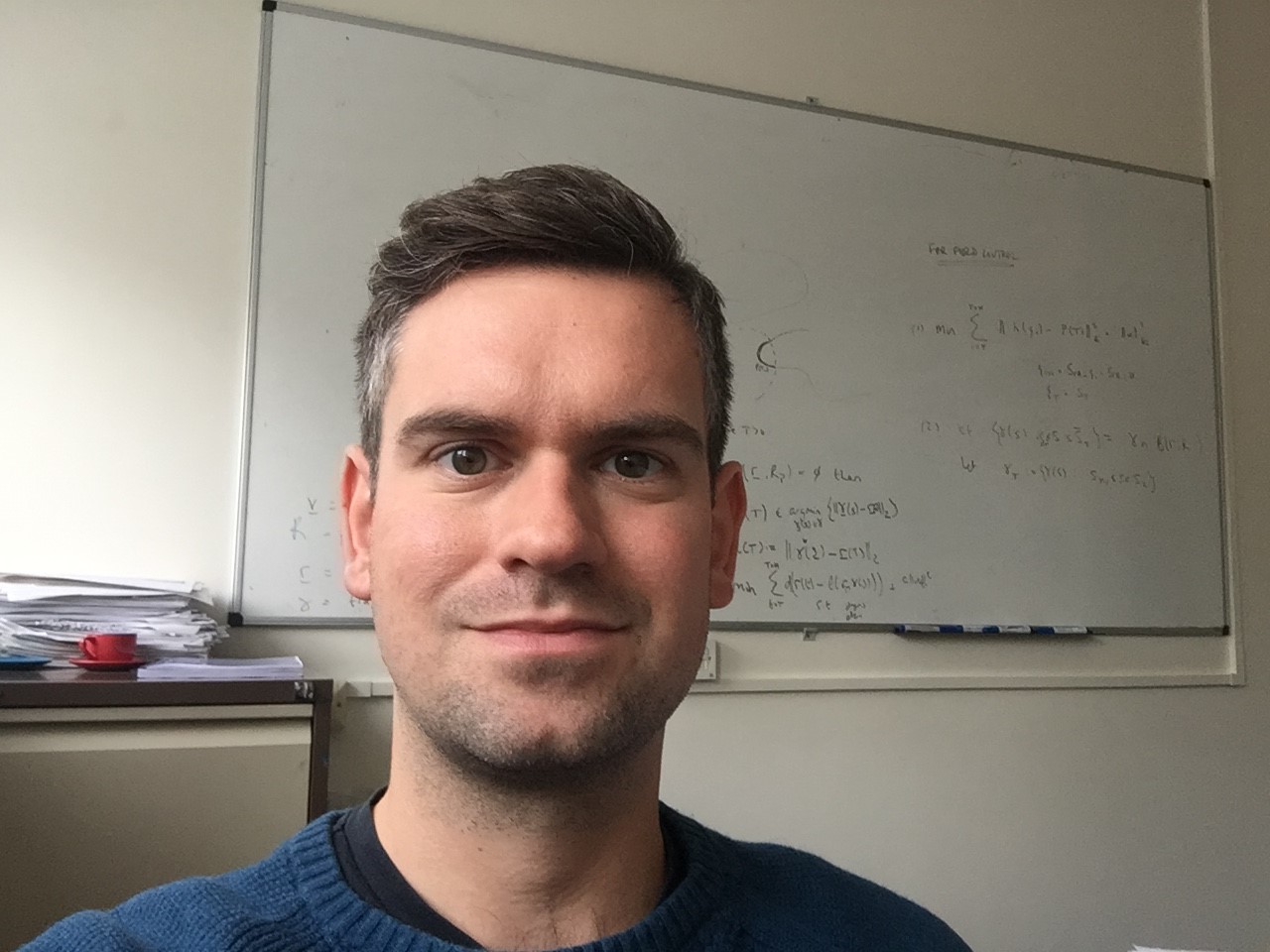
Tom Gannon is a Hedrick Assistant Adjunct Professor at the University of California, Los Angeles (UCLA), and will join UC Riverside as an Assistant Professor in July. He earned his PhD in 2022 from the University of Texas at Austin under Sam Raskin. His research focuses on geometric representation theory, with strong connections to algebraic geometry, the Langlands program, homotopy theory, and mathematical physics. Gannon also serves as Deputy Director of the UCLA Olga Radko Endowed Math Circle, promoting mathematics education. Education: PhD in Mathematics (2022), University of Texas at Austin. Research Interests: Geometric representation theory, Langlands program, algebraic geometry, mathematical physics, categorical methods in representation theory, and homotopy-theoretic approaches to algebraic structures. His work often bridges abstract algebra with geometric techniques, emphasizing categorification and applications to quantum field theories. Teaching & Outreach: In 2017, Gannon led a summer mini-course on algebraic number theory at UT Austin, focusing on separable field extensions, Galois theory, and modules over PIDs. He has authored expository articles in the Notices of the AMS and contributed regularly to the AMS Graduate Student Blog. His teaching materials include courses on representation theory of Lie algebras and algebraic number theory. Labs/Teams: Active collaborator with researchers such as Harold Williams and Ben Webster. Engaged in projects with Victor Ginzburg on central D-modules and quantized Coulomb branches.
Georg Loho is a Professor at Freie Universität Berlin (FU Berlin), acting head of the Discrete Geometry and Topological Combinatorics Group. Previously, he held an assistant professorship at the University of Twente (on leave since 2023). He specializes in discrete geometry, optimization, and algebraic combinatorics, with notable contributions to tropical geometry and machine learning. His research integrates geometric and combinatorial methods with applications in optimization and data science. Education: PhD in Mathematics (2017) from TU Berlin Diploma in Mathematics (2012) from Universität Würzburg Research Interests: Focuses on tropical geometry, discrete optimization, and their applications in machine learning. Explores geometric structures like oriented matroids, polytopes, and their connections to neural networks and algorithm design. Advocates for sustainability in research and education. Teaching: Leads courses on discrete geometry, mathematics & sustainability, and optimization. Active in educational innovation, including free open-source course materials and the MatchTheNet educational game on polytopes. Grants & Collaborations: Participated in the HIM Trimester Program (Bonn, 2021), substitute professorships (Kassel, 2020–2021), and multiple ERC-funded projects. Collaborates with institutions like the London School of Economics (LSE) and EPFL. Labs/Teams: Coordinates the Discrete Geometry and Topological Combinatorics research group at FU Berlin, fostering interdisciplinary projects in geometry, combinatorics, and optimization.
Frederike Dümbgen is an incoming Assistant Professor in the Department of Mechanical Engineering at Carnegie Mellon University's College of Engineering, starting in Spring 2026. She is currently a researcher with the Willow team at Inria Paris, focusing on optimization for robotics, and previously served as a postdoctoral fellow at the University of Toronto's Robotics Institute. Education: Ph.D. in Computer and Communication Sciences, École Polytechnique Fédérale de Lausanne (EPFL), Switzerland (2021) M.Sc. in Mechanical Engineering, EPFL (2016) B.Sc. in Mechanical Engineering, EPFL (2013) Her research centers on improving the efficiency and safety of robots operating in the physical world through principled optimization and machine learning methods. She emphasizes certifiable and globally optimal algorithms to build reliable foundations for next-generation robotics in domains such as autonomous vehicles, assistive technology, and manufacturing. Her work bridges robotics, control systems, and artificial intelligence, with a strong focus on mathematical rigor and scalability. The 15 most recent publications highlight a consistent trajectory in robotics-focused optimization, particularly in state estimation, SLAM, pose estimation, and data-driven methods. These works frequently employ semidefinite programming, convex relaxations, and Koopman-based linearization, demonstrating a deep integration of theoretical optimization with practical robotic applications. Keywords across these papers include robotics, optimization, machine learning, and estimation, with subfields like certifiable algorithms, global optimality, and sensor fusion recurring throughout. Dr. Dümbgen has not yet had scientific awards listed in the provided text. She has not yet advised any named students in the provided materials, and there is no mention of grants or funding sources. However, her research trajectory and publication record suggest active involvement in competitive research environments. Her experience includes internships at Disney Research and ABB, and her master’s thesis was completed at ETH Zürich’s Autonomous Systems Lab. She is currently affiliated with the Willow research team at Inria Paris, a group known for foundational work in computer vision, machine learning, and robotics. This team emphasizes mathematical rigor in algorithm design, aligning closely with her focus on certifiable and globally optimal methods.
Mario Sinani is a Researcher and Teaching Assistant in the Department of Aeronautics at Imperial College London's Faculty of Engineering. His research focuses on dynamical systems, control theory, and machine learning applied to nonlinear systems and fluid-solid interactions. He develops data-driven models for nonlinear control of flexible structures interacting with fluid flows under supervision of Dr. Andrew Wynn (Flow Control Group) and Prof. Rafael Palacios (Load Control and Aeroelastics Lab). Education includes a PhD in Data-Driven Modelling and Nonlinear Control from Imperial College London, and MSc/BSc in Mechanical Engineering with a focus on Control Theory and Robotics from National Technical University of Athens. Prior to Imperial, he worked at CERN on particle detector technologies and as an R&D engineer in Zurich developing dynamic light control systems. Teaching responsibilities include Control Systems for MSc students, Flight Dynamics and Control for MEng Aeronautical Engineering, and Applied Aerodynamics courses. His research integrates advanced mathematical analysis with cutting-edge machine learning techniques to address complex fluid-structure interaction challenges in aerospace systems.
Dr. Andrew Wynn is an Associate Professor in the Department of Aeronautics at Imperial College London, Faculty of Engineering. His research focuses on developing computational optimization methods to improve fluid mechanical systems, including active flow control, data-driven modelling, aeroservoelasticity, and semi-algebraic optimization techniques. He leads a research group addressing challenges in fluid-structure interactions, turbulence, and control systems. Wynn's affiliations include the Flow Control Research Group and the Aeroelastics Group. His work intersects interdisciplinary fields such as mechanical engineering, applied mathematics, and aerospace engineering. Key research topics include bluff body drag reduction, scaling laws for fluid flows, and estimator design for high-dimensional systems. Publications highlight contributions to fluid mechanics, optimization algorithms, and control theory. His group employs methods like semidefinite programming and dynamic mode decomposition to analyze and control complex flows. Ongoing projects involve wind farm optimization, global stability of viscoelastic fluids, and Bayesian optimization for experimental fluid dynamics. Education: Not explicitly stated in the provided text. Grants & Awards: Affiliated with Imperial College Research Fellowships (ICRF) and President's PhD Scholarships programs. Labs/Teams: Leads the Wynn Research Group, collaborating with the Flow Control and Aeroelastics Groups.
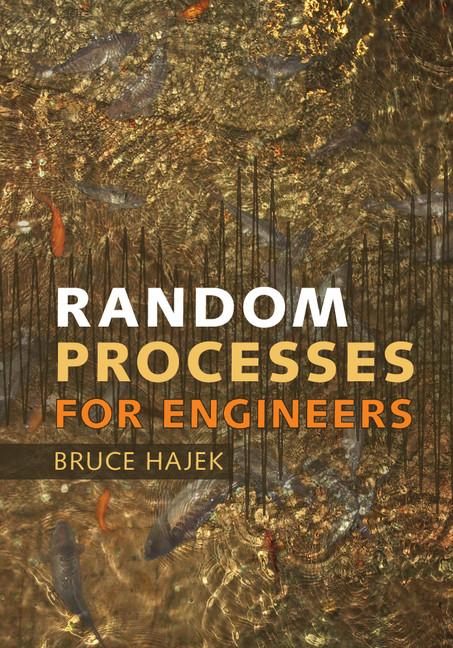
Bruce Hajek is the Leonard C. and Mary Lou Hoeft Endowed Chair in Engineering and Professor of Electrical and Computer Engineering at the University of Illinois at Urbana-Champaign (UIUC), affiliated with the Coordinated Science Laboratory. He holds a PhD in Electrical Engineering from the University of California, Berkeley (1979). His research spans communication networks, stochastic processes, game theory, wireless systems, and data science. He has authored influential works, including the textbook Random Processes for Engineers (2015). Hajek's roles include Department Head of ECE (2019–2024) and membership in prestigious organizations like the National Academy of Engineering (since 1999) and IEEE. He has received accolades such as the ACM SIGMETRICS Achievement Award (2015), Guggenheim Fellowship (1992), and IEEE Fellow distinction (1989). His research interests emphasize stochastic analysis, network dynamics, and algorithmic game theory. Notable contributions include foundational work in random graph matching, blockchain protocols, and statistical inference. Teaching excellence awards span decades at UIUC, and his service includes leadership roles in the IEEE Information Theory Society. Hajek's interdisciplinary expertise bridges theory and applications, impacting fields from wireless communications to machine learning. His work on semidefinite programming for community detection and auction mechanisms exemplifies his innovative problem-solving approach.
Akshay Gupte is a Professor in the School of Mathematics at the University of Edinburgh, specializing in Optimization and Operational Research. His research focuses on mathematical and algorithmic aspects of discrete and non-convex optimization, with applications in engineering, finance, and decision-making systems. He holds a PhD in Operational Research from Georgia Tech and teaches advanced courses such as Optimization Methods in Finance for MSc students. Education: BEng in Industrial Engineering from the University of Bombay MSc in Operational Research from the University of Arizona PhD in Operational Research from Georgia Tech Research Interests: Optimization problems involving discrete choices and non-convexity, with a focus on algorithm design and computational strategies. His work bridges applied mathematics, computer science, and engineering, addressing challenges in logistics, finance, and large-scale decision systems. Articles Trends: Recent publications emphasize algorithmic advancements in non-convex optimization (e.g., spatial branch-and-bound, semidefinite programming), multi-objective decision-making (e.g., biobjective programming), and stochastic frameworks for real-world problems like facility location and home service scheduling. Awards & Grants: No specific awards listed, but his research has been supported by collaborative grants in mixed-integer programming and optimization algorithms. He advises students through his teaching and research collaborations within the Optimization Group at the University of Edinburgh.
Laurent El Ghaoui is a Professor in the Department of Industrial Engineering and Operations Research at the University of California, Berkeley. He joined the faculty in 1999 after serving as Acting Associate Professor. Prior to Berkeley, he held academic positions at the École Nationale Supérieure de Techniques Avancées (Paris) and part-time roles at École Polytechnique and Université de Paris-I. His research focuses on robust optimization, decision-making under uncertainty, statistical estimation, and applications in air traffic management, bioinformatics, and finance. He is affiliated with the Berkeley Artificial Intelligence Research Lab (BAIR), Berkeley Center for New Media (BCNM), and CLIMB. El Ghaoui holds a Ph.D. in Aeronautics and Astronautics from Stanford University (1990) and a B.S. in Mathematics from École Polytechnique (1985). He has been recognized with prestigious awards, including the SIAM Optimization Prize (2008) and the CNRS Bronze Medal (1998). His work integrates optimization theory with real-world challenges, such as robust filtering, dynamic routing, and financial risk modeling. His research spans machine learning, control systems, and stochastic processes. Notable contributions include algorithms for sparse graphical models, distributionally robust optimization, and air traffic flow scheduling. He has collaborated on projects involving microarray data analysis and MEMS design. His academic career combines teaching and industry experience, including a leave at SAC Capital Management (2003–2006).
Hu Ding is a pre-tenure Professor in the School of Computer Science and Engineering at the University of Science and Technology of China (USTC), where he directs the Data Intelligence, Algorithms, and Geometry (DIAG) research group. He previously held positions as a tenure-track Assistant Professor at Michigan State University (2016-2018) and a Simons-Berkeley Research Fellow jointly at Tsinghua University and UC Berkeley (2015-2016). Education: • Ph.D. in Computer Science, State University of New York at Buffalo (2015) • B.S. in Mathematics, Sun Yat-Sen University (2009) Research Interests: Hu Ding's research focuses on developing efficient algorithms for geometric optimization problems with applications in machine learning, big data, and biomedical imaging. His work bridges theoretical computer science (especially computational geometry) with practical challenges in distributed systems, outlier detection, and high-dimensional data analysis. Key areas include constrained clustering, truth discovery in crowdsourced data, and geometric methods for biomedical image analysis. Publication Trends: His recent publications demonstrate a strong focus on scalable algorithms for high-dimensional geometric optimization, particularly in distributed environments with noisy data. A consistent theme is developing theoretically-grounded solutions with practical efficiency, evidenced by work on sublinear-time algorithms, coreset constructions, and approximation frameworks for problems like k-center clustering and SVM optimization with outliers. Awards and Honors: Young Investigator Award, Ministry of Science and Technology (2021) Simons-Berkeley Research Fellowship (2015-2016) CCF Committee Member for Theoretical CS and Big Data (2021) Grants and Projects: USTC Innovation Group Grant: 'Toward Electronic Design Automation: Theories and Algorithms from AI' (2021) MOST Young Investigator Grant: 'Optimal Transportation in Medical Imaging' (3M RMB, 2021) Research Group: Leads the DIAG group with focus on geometric algorithms for data intelligence. Current team includes 6 PhD students and 15 Master's students working on problems in clustering, distributed optimization, and biomedical applications. Former students hold positions at Alibaba, ByteDance, and academic institutions.
Amey Bhangale is an Assistant Professor in the Department of Computer Science and Engineering at the University of California, Riverside. Prior to this, he held positions as a post-doctoral fellow at the Weizmann Institute of Science under Irit Dinur and a research fellowship at the Simons Institute. His research focuses on Approximation Algorithms , Probabilistically Checkable Proofs , Hardness of Approximation , and Analysis of Boolean Functions . Research Trends His recent work explores inapproximability bounds for constraint satisfaction problems, parallel repetition theorems, and additive combinatorics in finite fields. Notable collaborations include Subhash Khot, Dor Minzer, and Yang P. Liu. Teaching CS219: Advanced Algorithms (2025) CS141: Intermediate Data Structures and Algorithms (2024) CS218: Design and Analysis of Algorithms (2023) CS215: Theory of Computations (2021-2023)
Tselil Schramm is an Assistant Professor in the Department of Statistics at Stanford University, with courtesy appointments in Computer Science and Mathematics. She is actively engaged in research and teaching in theoretical computer science and statistics. Department: Department of Statistics School: School of Humanities and Sciences University: Stanford University Office: CoDa E254 Email: tselil@stanford.edu She earned her PhD from UC Berkeley under Prasad Raghavendra and Satish Rao, followed by postdoctoral work at Harvard and MIT with Boaz Barak, Jon Kelner, Ankur Moitra, and Pablo Parrilo. Her research lies at the intersection of theoretical computer science and statistics, focusing on high-dimensional estimation, information-computation tradeoffs, sum-of-squares algorithms, and random graph theory. She develops algorithms for statistical problems and investigates the boundaries between what is statistically possible and what is computationally feasible. Her recent publications span topics including the overlap-gap property, discrepancy algorithms, robust message passing, semidefinite programming, spectral clustering, and random geometric graphs, appearing in top venues such as STOC, FOCS, COLT, NeurIPS, and The Annals of Statistics. She teaches a range of courses, including Introduction to Statistics (STATS 60), Theory of Statistics II (STATS 300B), and Machine Learning Theory (STATS 214 / CS 228M), reflecting her expertise in both foundational and advanced statistical theory. Runner-up for Best Paper at COLT 2021 Invited to STOC 2022 special issue of SICOMP Invited to SODA 2016 special issue of ACM Transactions on Algorithms Invited to CCC 2019 special issue of Theory of Computing Tselil Schramm advises and collaborates with numerous students and researchers, including Shuangping Li, Misha Ivkov, and Siqi Liu. She has been involved in multiple research grants and projects, particularly in the areas of high-dimensional inference and algorithmic robustness. Her work often bridges theoretical guarantees with practical algorithmic design. She is affiliated with Stanford’s theoretical computer science and statistics research groups, contributing to a vibrant academic environment. Her future work is expected to further explore the limits of efficient computation in statistical settings, with potential applications in machine learning, signal processing, and network analysis.
Frank Vallentin is a full professor of applied mathematics (computer science) at the Mathematical Institute of the University of Cologne, Germany. He has held academic positions at Technische Universiteit Delft, Centrum Wiskunde & Informatica (CWI), and the Hebrew University of Jerusalem. His research spans optimization, discrete geometry, harmonic analysis, and computational mathematics. Research Interests: His primary mathematical interests include semidefinite programming, combinatorial optimization, harmonic analysis, discrete geometry, combinatorics, geometry of numbers, special functions, computational complexity, and coding and information theory. These areas reflect a deep integration of theoretical mathematics with algorithmic and computational techniques. The 15 most recent publications reveal a strong focus on geometric optimization, lattice problems, energy minimization, and semidefinite programming bounds. Key themes include chromatic numbers of lattices, symplectic capacities, polarization phenomena, and algorithmic solutions to geometric problems. His work often involves recursive SDP hierarchies, extremal configurations, and computational verification of theoretical bounds. Scientific Awards and Grants: SIAG/Optimization Prize (2011, with Christine Bachoc) NWO VIDI Grant (2010–2015): Semidefinite programming and harmonic analysis DFG Project: Symplectic capacities of polytopes (2017–) EU Horizon 2020 MINOA Project: Optimization with limited quantum resources (2017–) DFG Project: Spectral bounds in extremal discrete geometry (2019–) Advising and Grants: Vallentin has advised numerous PhD and master’s students at TU Delft and the University of Cologne, covering topics in discrete geometry, optimization, coding theory, and quantum information. He has secured major research funding from NWO, DFG, and the EU, supporting interdisciplinary projects in algorithmic optimization and mathematical physics. He is actively involved in organizing workshops and summer schools. Labs and Teams: He leads a research group at the University of Cologne focusing on optimization and discrete geometry, with strong collaborations with CWI Amsterdam, TU Delft, and international institutes. His team works on theoretical and computational aspects of geometric optimization, often using symmetry reduction and harmonic analysis.
Pravesh Kothari serves as an Adjunct Professor in the Computer Science Department at Carnegie Mellon University, focusing on theoretical computer science and algorithmic foundations of average-case computational problems. His research centers on designing efficient algorithms and establishing rigorous evidence for algorithmic thresholds in problems spanning theoretical computer science, statistics, and allied fields. Key contributions include the development of the sum-of-squares method which bridges proof complexity and semidefinite programming relaxations for optimization challenges, detailed in his monograph Semialgebraic Proofs and Efficient Algorithm Design with Pitassi and Fleming. Recent publications reveal consistent focus on constraint satisfaction problems, small-set expansion, and sparse statistical estimation, demonstrating strong integration of theoretical computer science with statistical learning theory through semidefinite programming frameworks. Major recognitions include: NSF CAREER Award (2021-2026) for The Nature of Average-Case Computation Sloan Fellowship (2022) Current research is primarily supported by the NSF CAREER Award, enabling investigation into computational thresholds and efficient algorithm design for average-case problems through theoretical frameworks. His Fall 2021 CMU lecture notes document practical applications of these methodologies.