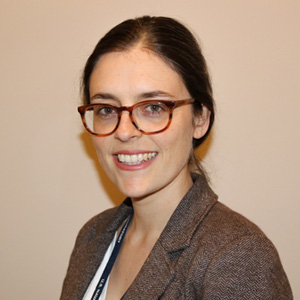
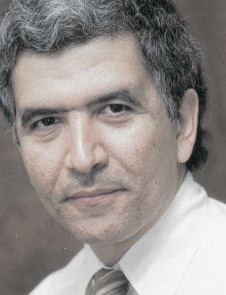
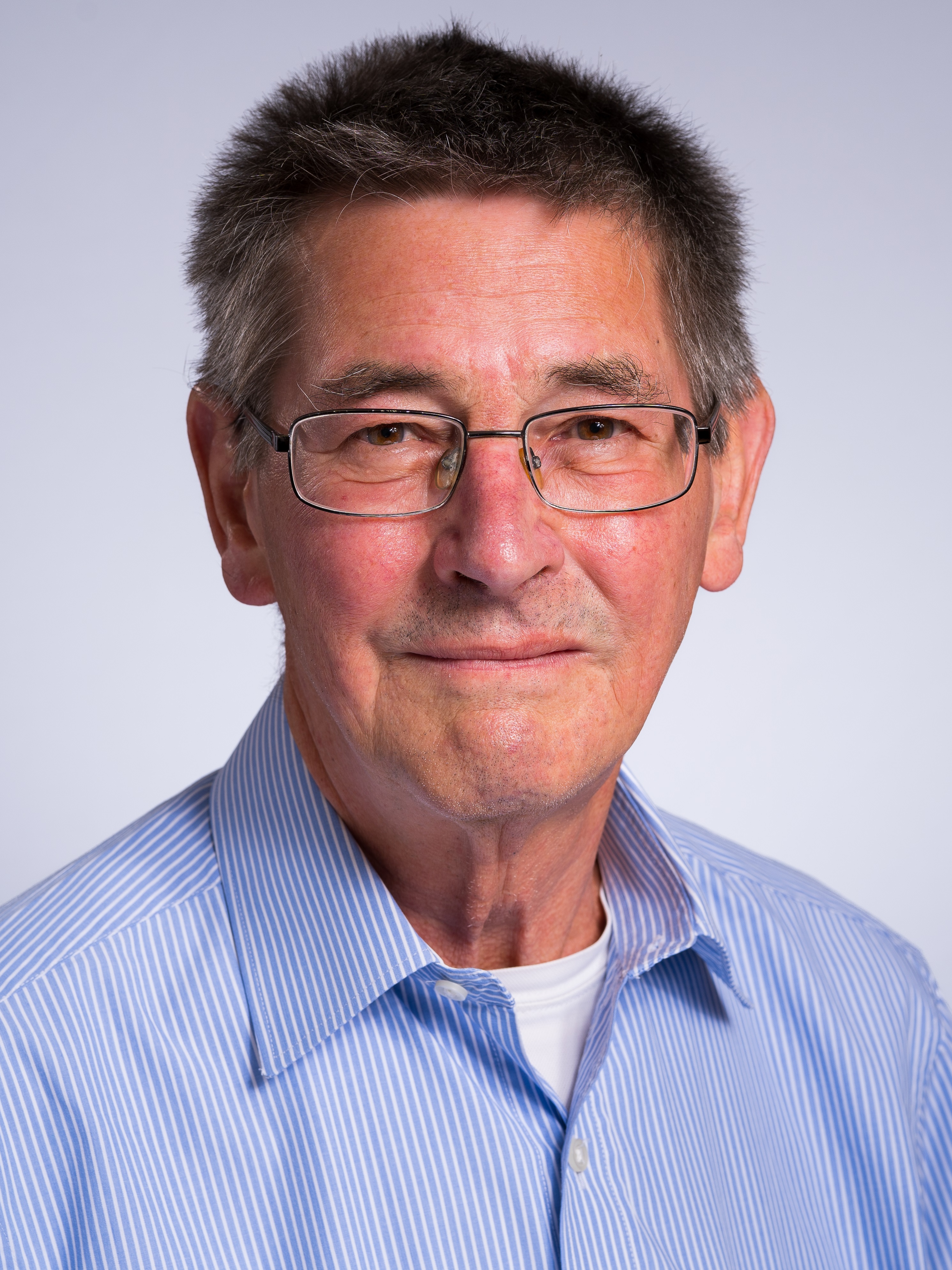
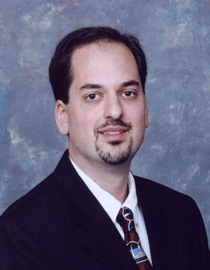
Louise Hirst is a Professor of Materials Physics at the University of Cambridge, jointly appointed with the Cavendish Laboratory. She is affiliated with the Department of Materials Science & Metallurgy, where she leads research in advanced photovoltaics for space applications. Education: BSc, MSc, PhD (Imperial College London) Her research focuses on III-V semiconductor photovoltaics, particularly ultra-thin ( Recent publications highlight her work on radiation resilience, light management via nanophotonic structures, and quantum confinement effects. Her research group, Space Photovoltaics, addresses challenges in high-efficiency solar cells for satellites, deep-space missions, and unmanned vehicles. Key research themes include: Ultra-thin III-V solar cells with intrinsic radiation tolerance Quantum well architectures for hot-carrier energy conversion Advanced light-trapping techniques using sub-wavelength structures Material characterization via photoluminescence and electron microscopy Her group's work spans device physics, nanoscale alloy engineering, and scalable fabrication methods for extreme environments.
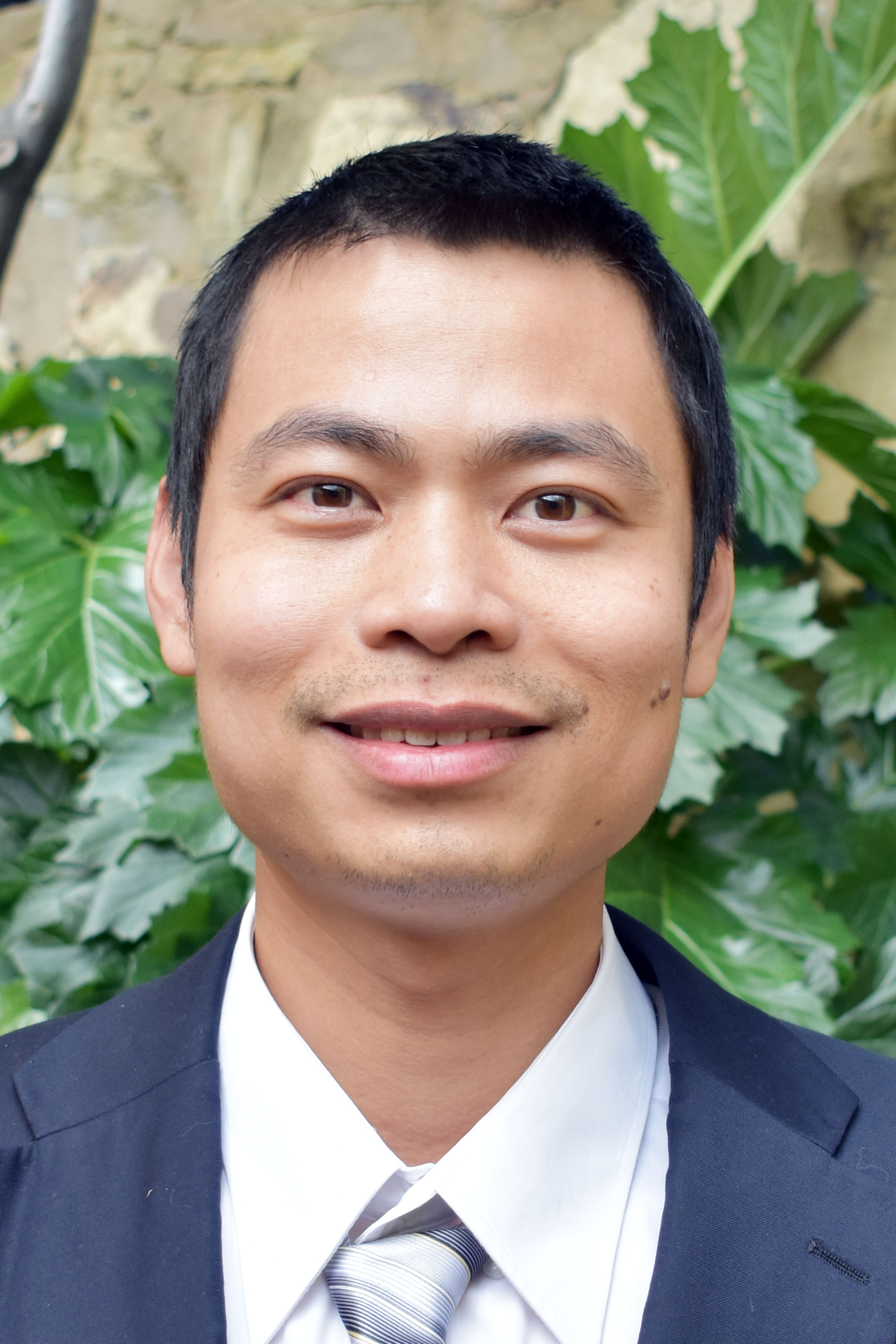
Dr. Duong is a Research Fellow at the Australian National University (ANU), affiliated with the ANU College of Systems & Society. He holds a BS in Electrical Engineering from Oregon, USA, and a PhD in Electrical Engineering from ANU (2017). Before his PhD, he worked as a Process/Equipment Engineer at Intel. His research focuses on perovskite solar cells, perovskite-silicon tandem configurations, solar-to-hydrogen systems, and semiconductor gas sensors. Education: Bachelor of Science in Electrical Engineering, Oregon, United States PhD in Electrical Engineering, Australian National University (2017) Research Interests: Dr. Duong’s work centers on advancing photovoltaic technologies and energy conversion systems. Key areas include: Perovskite solar cell efficiency and stability optimization High-performance perovskite-silicon tandem solar cells (>29% efficiency) Material defect passivation and interface engineering Ion migration control under radiation and environmental stresses Direct solar-to-hydrogen generation via water splitting NO₂ gas sensors using mixed-dimensional perovskites Grants and Awards: Two ACAP Postdoc Fellowships for perovskite-silicon tandem research Recognized for a 26.4% efficiency record in tandem cells (2017) Advising and Labs: Leads the ANU Perovskite Group, focusing on collaborative research in solar energy and material innovation. No formal advisees listed but actively mentors postdocs and PhD candidates in his lab.
Yongjie Hu is a Professor in the Department of Mechanical and Aerospace Engineering at the University of California, Los Angeles (UCLA). His research focuses on heat transfer and electron transport in nanostructures, with applications in thermal management, thermoelectric devices, and high-frequency electronics. Harvard University (PhD, 2012) Massachusetts Institute of Technology (Postdoctoral, 2014) Research areas include nanostructured materials , phonon transport , thermal conductivity optimization , and quantum device engineering . Recent work explores ultrahigh thermal conductivity materials like boron arsenide and advanced measurement techniques such as asymmetric-beam TDTR. His publications demonstrate expertise in thermal physics , nanowire technology , and energy conversion systems , with a strong emphasis on experimental validation and spectral analysis of phonon transport mechanisms. 2020 Vernroy Makoto Watanabe Excellence in Research Award 2019 ASME Bergles-Rohsenow Young Investigator Award 2019 Alfred P. Sloan Research Fellowship 2018 NSF CAREER Award 2017 Air Force Young Investigator Award Professor Hu leads the H-Lab research group at UCLA, which develops innovative thermal management solutions and investigates fundamental transport phenomena in nanoscale systems.
Professor Iain McCulloch, FRS, is a leading expert in polymer materials and organic electronics, affiliated with the University of Oxford (Worcester College) and previously with Imperial College London and KAUST. His research spans organic thin-film transistors, bioelectronics, photocatalysis, and photovoltaics. Research Interests: Organic Thin-Film Transistors: Focus on n-type materials, processing-structure-property relationships, and charge transport optimization. Organic Bioelectronics: Development of organic electrochemical transistors (OECTs) for healthcare applications like lactate/glucose detection. Photocatalysis: Design of organic semiconductors for solar fuel generation and CO 2 reduction. Organic Photovoltaics: Engineering high-efficiency non-fullerene acceptors and ternary blends for solar cells. Article Trends: His recent publications emphasize mixed ionic-electronic conductors for bioelectronic interfaces, stability improvements in organic transistors, and novel material designs for sustainable energy applications. Key keywords include Organic Electronics, Bioelectronics, Photocatalysis, and Polymer Chemistry . Scientific Awards: Fellow of the Royal Society (FRS) Nature Materials' Top 10 Most Influential Paper (2006)
Ludmilla Steier serves as Associate Professor of Inorganic Chemistry at the University of Oxford and Goodenough Tutorial Fellow at St Catherine's College. Her research centers on designing atomically defined photo- and electrocatalysts for solar-driven fuel production, with emphasis on interface engineering and stability optimization for CO 2 conversion and water splitting applications. Education: BSc/MSc in Chemistry, University of Siegen (Germany) PhD in Chemistry, École Polytechnique Fédérale de Lausanne (EPFL, Switzerland, 2016) Research Focus: Steier's group pioneers atomic-scale catalyst design using atomic layer deposition (ALD) to control interfaces in oxide perovskites and metal oxides. Current projects investigate dopant-activity relationships in photocatalysts, copper oxidation state effects in CO 2 reduction, and earth-abundant electrocatalysts for water electrolysis. Her work bridges fundamental semiconductor physics with practical solar fuel production, targeting green hydrogen and carbon-neutral hydrocarbons from waste streams. Publication Trends: Recent articles (2021-2025) demonstrate consistent focus on defect engineering in semiconductors, ALD-modified electrocatalysts for CO 2 reduction, and water oxidation kinetics. Key themes include interface control for stability enhancement, machine learning for material design, and roadmap analyses for sustainable photovoltaics, reflecting her dual commitment to fundamental mechanisms and scalable energy solutions. Awards: 2023 Materials Chemistry Early Career Prize (Royal Society of Chemistry) for defect chemistry contributions in semiconducting materials Grants & Leadership: Steier leads the Steier group with funding from UKRI (ERC Starting Grant), SCG Chemicals, Royal Society, John Fell Fund, and University of Oxford. Her ERC grant supports atomic-scale catalyst design, while industrial partnerships drive applied CO 2 conversion research. She mentors graduate students in materials synthesis and photoelectrochemical characterization. Laboratory: The Steier group operates within Oxford's Department of Chemistry, specializing in ALD reactor development, in situ spectroscopy, and photoelectrochemical testing for solar fuel catalysts, with strong links to the university's sustainable energy initiatives.
Daniel M. Fleetwood is the Olin H. Landreth Professor of Engineering and holds dual professorships in Electrical Engineering and Computer Science and Physics at Vanderbilt University's School of Engineering. He previously served as Associate Dean for Research (2001-2003) and Chair of the Electrical Engineering and Computer Science Department (2003-2020). His research focuses on ionizing radiation effects in microelectronics, semiconductor defects, and radiation-hardened materials. Fleetwood has authored over 600 publications, including 13 Outstanding Paper Award winners, with a Google Scholar h-index of 93. Education: B.S., M.S., and Ph.D. in Physics from Purdue University (1980–1984). Former Distinguished Member of Technical Staff at Sandia National Laboratories (1984–1999). Awards include the IEEE Nuclear and Plasma Sciences Society Merit Award (2009) and Purdue’s Distinguished Science Alumnus (2007). He is a Fellow of the IEEE, American Physical Society, AAAS, and National Academy of Inventors. Research emphasizes radiation effects in semiconductors, low-frequency noise mechanisms, and radiation-hardened electronics. His work spans SiGe HBTs, GaN HEMTs, and wide-band-gap materials for high-radiation environments. He currently serves as Senior Editor for IEEE Transactions on Nuclear Science (Radiation Effects) and chairs the IEEE NPSS Distinguished Lecturers Program.
Jeffrey S. Kauppila is a Research Assistant Professor of Electrical Engineering at Vanderbilt University's School of Engineering. He is affiliated with the Institute for Space and Defense Electronics (ISDE), focusing on radiation effects modeling and radiation-hardened design for microelectronics. His research spans radiation-enabled compact models, circuit design for defense systems, and radiation effects on nanoscale technologies. Dr. Kauppila holds a Ph.D., M.S., and B.E. in Electrical Engineering from Vanderbilt University. His expertise includes analog/mixed-signal design in bipolar, CMOS, SOI, and FinFET technologies. He has contributed over 60 technical publications and co-authored a chapter in Extreme Environment Electronics . His research interests emphasize radiation-hardened circuit design, compact modeling for radiation effects, layout-aware modeling, and reliability in advanced technologies. He has presented tutorials and short courses on radiation-hardening strategies and single-event modeling. Dr. Kauppila serves as a reviewer for IEEE Transactions on Nuclear Science and the Journal of Radiation Effects Research and Engineering. He is a licensed professional engineer in Tennessee.
Dr. N. Scott Barker is a Professor in the Department of Electrical and Computer Engineering at the University of Virginia School of Engineering and Applied Science. He earned his B.S.E.E. from the University of Virginia (1994) and M.S.E.E./Ph.D. from the University of Michigan (1999). His research focuses on millimeter-wave/terahertz electronics, RF MEMS, and wireless communication systems. He co-founded Dominion MicroProbes Inc. to commercialize THz probe technology. Research areas include silicon micromachined circuits, terahertz antennas, MEMS switches, and chip-to-chip interconnects. His lab pioneers heterogeneous integration techniques for GaAs/Si devices and reflectionless filter designs. Honors include IEEE Fellow (2018), Edlich-Henderson Innovator Award (2016), and IEEE MTT-S Outstanding Young Engineer Award (2012). He has chaired IEEE MTT committees and served as Editor-in-Chief of IEEE Microwave and Wireless Components Letters. Dr. Barker is Co-General Chair for IMS2024. Teaching awards include the Brown Department Teaching Excellence Award (2015). He directs research in advanced terahertz instrumentation applied to communications and sensing.
Professor Mustapha Yagoub is a distinguished faculty member in the School of Electrical Engineering and Computer Science at the University of Ottawa, where he has been serving since 2001. With over 300 publications to his name, he specializes in RF/microwave engineering, neural networks applications, and RFID systems. His research bridges theoretical advances with practical industrial applications in wireless communications and microwave circuit design. Education: Dipl.-Ing. in Electronics, École Nationale Polytechnique, Algiers, Algeria (1979) Magister in Telecommunications, École Nationale Polytechnique, Algiers, Algeria (1987) Ph.D., Institut National Polytechnique, Toulouse, France (1994) Professor Yagoub's research spans several interconnected domains within electrical engineering, with particular emphasis on microwave circuit design and wireless communication systems. His work integrates neural network techniques with traditional microwave engineering approaches, creating innovative solutions for complex RF problems. He has made significant contributions to RFID technology, particularly for specialized applications like underground mining environments. His expertise in applied electromagnetics has led to numerous advances in antenna design and microwave component modeling. Analysis of Professor Yagoub's recent publications reveals a strong focus on practical microwave circuit design, with particular attention to low-noise amplifiers, RF parameter extraction techniques, and efficient circuit implementations for wireless communications. His work demonstrates consistent integration of electromagnetic theory with circuit design principles, often applying novel computational approaches to solve challenging problems in microwave engineering. Many publications address specific industry needs in wireless communications, RFID systems, and energy-efficient circuit design. Professional Affiliations: Senior Member, IEEE Microwave Theory and Techniques Society Professional Engineer, Ontario, Canada Member, Ordre des ingénieurs du Québec, Canada Professor Yagoub has supervised numerous graduate students through their research in microwave engineering and wireless communications. His extensive publication record suggests substantial research funding throughout his career, supporting work in microwave circuit design, neural network applications in RF systems, and RFID technology development. His collaborations with researchers across multiple institutions and countries have contributed to the international recognition of his work in microwave engineering. While specific laboratory details aren't provided in the available information, Professor Yagoub's research focus suggests he leads or has led laboratory facilities for microwave circuit design, RF measurement, and wireless communication systems testing. His work on neural network applications in microwave engineering indicates a computational research component alongside experimental work.
Dr Selda Ozkan is a Research Fellow at the School of Chemistry, University of St Andrews. Her work focuses on advanced materials for energy conversion and biomedical applications, particularly involving titanium dioxide (TiO₂) nanotube arrays and perovskite oxides. She investigates nanotube spacing effects on cell behavior, catalyst design for fuel cells, and photocatalytic hydrogen generation. Her research bridges material engineering, electrochemistry, and nanotechnology to enhance energy storage systems and biomedical devices. Ozkan has contributed to optimizing nanomaterial architectures for applications in supercapacitors, dye-sensitized solar cells, and bone tissue engineering. Key research interests include studying how nanotube geometry influences electrochemical performance, developing novel catalysts for oxygen reduction reactions, and exploring biomaterial surface interactions with macrophages and osteoblasts. Her interdisciplinary approach integrates synthesis, characterization, and application testing to advance sustainable energy solutions and regenerative medicine. Publications highlight innovations in spaced TiO₂ nanotube arrays for high-performance supercapacitors, platinum nanoparticle exsolution from perovskite oxides for fuel cells, and biocompatibility studies of nanotopographies. These contributions underscore her expertise in functional nanomaterials for both energy and biomedical domains.
Christopher Hayter is an Associate Professor at the Jimmy and Rosalynn Carter School of Public Policy within the Ivan Allen College of Liberal Arts at Georgia Institute of Technology. His research focuses on academic entrepreneurship ecosystems, technology transfer policies, and innovation strategies in public and private sectors. He teaches courses like PUBP-3130 (Research Methods and Problem Solving) and PUBP-4010 (Policy Task Force I), emphasizing evidence-based policy analysis and practical problem-solving. Hayter’s work explores how universities and institutions can effectively translate research into commercial and societal impact. Key research areas include technology transfer mechanisms, entrepreneurial identity formation among scientists, and institutional frameworks supporting innovation. Notable contributions include studies on federal laboratory commercialization, Ukrainian ICT sector development, and stress factors among graduate students. His publications span over two decades, addressing topics like proof-of-concept centers, collaborative governance in vaccine development, and the social embeddedness of academic entrepreneurship. He has contributed to policy reports on angel investment strategies and semiconductor industry partnerships, reflecting his interdisciplinary approach to public policy. Hayter actively engages with professional organizations like AUTM, advocating for policy changes that enhance knowledge exchange. His research often bridges theoretical frameworks with actionable insights, aiming to strengthen innovation ecosystems globally.
Prof. David Dunstan is a Professor of Experimental Physics at Queen Mary University of London, affiliated with the School of Physical and Chemical Sciences and the Centre for Experimental and Applied Physics. He specializes in solid-state physics, combining optical spectroscopy and theoretical approaches to study semiconductor materials, high-pressure phenomena, and nanomechanical systems. His research focuses on strain effects in materials, including semiconductor quantum wells, carbon nanotubes, and graphene, with contributions to understanding plastic deformation mechanisms and critical thickness theory. Dunstan has collaborated with industries like Absolute Action Ltd on advanced optical applications, such as museum lighting for the Hope Diamond, and explored phenomena like the Alexandrite effect. His academic roles include leadership in experimental physics and contributions to interdisciplinary research, including projects funded by EPSRC. Dunstan's work bridges fundamental physics and applied materials science, with a strong emphasis on nanoscale mechanics and high-pressure experiments.
John Albrecht is a Professor in the Departments of Electrical and Computer Engineering (ECE) and Chemical Engineering and Materials Science (ChEMS) at Michigan State University (MSU), College of Engineering. He currently serves as the Executive Director of the University Research Organization (URO), leveraging his extensive academic and administrative experience. Previously, he held leadership roles at the Fraunhofer USA Center Midwest and the Defense Advanced Research Projects Agency (DARPA). His research focuses on semiconductor devices, additive manufacturing for RF components, and thermal management in electronics. Albrecht earned his PhD in 1999 from the University of Minnesota. His work spans advanced materials like diamond and GaN HEMTs, with emphasis on high-frequency circuits, 3D-printed electronics, and packaging technologies. He has contributed to innovations in aerosol jet printing for flexible and rigid-flex microwave antennas, as well as thermal management solutions for high-power devices. His publications highlight advancements in GaN transistor modeling, diamond-based electronics, and additive manufacturing techniques for integrated circuits. While no specific awards are listed, his extensive publication record and leadership roles reflect his significant contributions to the field. Albrecht’s administrative roles demonstrate his dual expertise in academic research and institutional leadership.
Kevin McCarthy is a Lecturer in the Department of Electrical & Electronic Engineering at University College Cork (UCC). He holds a B.E., M.Eng.Sc., and Ph.D., all from UCC. His primary research interests include RF ICs, semiconductor devices, and compact modeling for microelectronic applications. McCarthy has contributed to EU projects like JLP and ACE, focusing on advanced CMOS processes and device modeling for yield enhancement. He has served on technical committees for conferences like ESSDERC and organized the IEEE International Conference on Microelectronic Test Structures in 2002. His work spans device characterization, microwave techniques for dielectric analysis, and energy-efficient power electronics. McCarthy has authored numerous peer-reviewed publications and holds grants for projects like SwiftDriver and NUA. He teaches courses in RF design, power electronics, and telecommunications, emphasizing hands-on education.
Robert Balog is a Professor in the Department of Electrical & Computer Engineering at Texas A&M University. He serves as Director of the Renewable Energy and Advanced Power Electronics Laboratory (REAPER), Co-Director of the NSF I/UCRC on Next Generation Photovoltaics (NGPV), and Assistant Director for Grid-Edge Modernization at the Smart Grid Center. He holds affiliations with the National Academy of Inventors as a Fellow (2024). Education: Ph.D. (2006), M.S.E.E. (2002) from University of Illinois at Urbana-Champaign; B.S.E.E. (1996) from Rutgers University. He is a licensed Professional Engineer in Texas and Illinois, and an IEEE Senior Member since 2007. Research focuses on advanced power electronics systems, solar photovoltaics, energy storage, microgrids, and power quality. Key innovations include photovoltaic balance-of-systems optimization, non-planar PV integration, and arc fault detection technologies. Over 30 patents highlight his work in power conversion, smart grid security, and energy harvesting. Recent articles emphasize capacitor-less D-STATCOM systems, PV arc fault mitigation, and smart farming energy solutions. His work bridges academic research with industry applications through NSF collaborations and technology commercialization efforts. Awards include NAI Fellowship (2024), IEEE Distinguished Lecturer designation (2020-2021), and TAMEST Patent Innovation Award (2017). Active in standards development (UL 1741/1699B) and conference organization, including ECCE 2016 Technical Program Chair. Labs/Teams: REAPER Lab pioneers PV system optimization and grid-edge technologies. NGPV I/UCRC collaborates with industry partners on next-gen photovoltaic materials and configurations.