Marcin Janczarek is a researcher at the Poznań University of Technology, Faculty of Chemical Technology, Institute of Chemical Technology and Engineering. He holds a DSc in Chemical Sciences (2019) and a PhD in Chemical Technology (2005) from Gdańsk University of Technology. Research Interests: His work focuses on heterogeneous photocatalysis , semiconductor nanomaterials , and advanced oxidation processes for water and air purification. He investigates photocatalytic reactors and TiO2-based materials with applications in environmental engineering and construction industries. Recent Publications: His recent studies include TiO2-polymer composites for water treatment, visible-light photocatalysts for pollutant degradation, and antimicrobial cement applications. Collaborations span Hokkaido University, Gdańsk University of Technology, and Hubei University of Technology. Honors: Guest editor for MDPI Catalysts special issues (2017-2021) Editorial board member of IET Micro & Nano Letters Teaching: Conducts classes on process equipment and chemical engineering materials. Utilizes AutoCAD for engineering graphics.
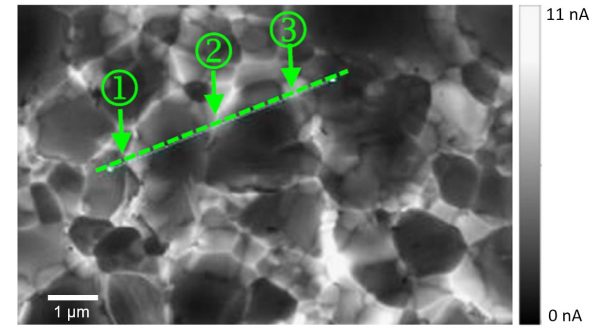
Heayoung Yoon serves as an Associate Professor in the Electrical & Computer Engineering department and Adjunct Associate Professor in Materials Science & Engineering at the University of Utah's College of Engineering. Her research focuses on advanced fabrication and nanoscale characterization of optoelectronic materials and devices, with particular expertise in engineering micro/nanostructures of semiconductor materials to enhance functionality and stability in optoelectronic devices including translucent solar cells and radiation-hard systems. Dr. Yoon earned her BS in Physics with a Computer Science minor from Chungnam National University in South Korea, an MS in Physics from Pohang University of Science and Technology, and a PhD in Electrical Engineering from The Pennsylvania State University. Her academic journey includes positions at Samsung, Penn State University, and NIST where she conducted research on molecular junction devices, pillar array solar cells, and near-field optoelectronic imaging techniques. Her research interests span multiple cutting-edge areas in energy technology and materials science. Dr. Yoon leads investigations into radial junction solar cells that decouple light absorption from carrier collection, thin-film solar cells with enhanced efficiency through microstructural optimization, translucent solar cells for diverse applications like skylights and self-powered facades, multi-probe microscopy techniques for nanoscale characterization, and molecular junction devices for advanced optoelectronics. Her work bridges fundamental research with practical applications to address global sustainability challenges. Analysis of Dr. Yoon's 15 most recent publications reveals a strong focus on solar cell technology and nanoscale characterization. Her research consistently explores patterned back contacts, micro/nanostructured solar cells, and perovskite materials, with particular attention to grain boundaries, surface potential variations, and carrier dynamics at the nanoscale. The publications demonstrate interdisciplinary approaches combining electron microscopy, optical spectroscopy, and device engineering to advance photovoltaic technologies. Outstanding Teaching Award (2024, ECE Department) Chair's Award (2022, ECE Department) CAREER Award (2021, National Science Foundation) Dr. Yoon actively mentors students through thesis research and undergraduate research projects, and leads the Yoon Research Group which develops in-situ, local measurement techniques using electron beams and focused light sources. Her lab focuses on elucidating structure-property relationships in micro/nanomaterials and devices, with applications in energy, optoelectronics, and chemical and biomedical fields. The group leverages cross-disciplinary collaborations to advance energy technologies, particularly in creating exploratory optoelectronic systems that address emerging global challenges in sustainability.
Dr. Tyler J. Grassman is an Associate Professor at The Ohio State University in the Departments of Materials Science and Engineering and Electrical and Computer Engineering. His research focuses on materials development and integration for electronic and photonic applications, particularly in photovoltaics and clean energy technologies. Joint appointment in Materials Science & Engineering and Electrical & Computer Engineering Research areas: epitaxy, heteroepitaxy, defect engineering, electron microscopy, computational materials science His recent work involves characterizing defects in III-V/Si heterostructures and optimizing metamorphic tunnel junctions for solar cells. Dr. Grassman received the NSF CAREER Award in 2021 for his research on dislocation-induced electronic states in III-V semiconductors. Scientific Awards: NSF CAREER Award (2021) He advises graduate students in Materials Science and Engineering and Electrical and Computer Engineering, including Marzieh Baan, Lauren Kaliszewski, and Tal Kasher. His laboratory at Fontana Laboratories (4012) uses advanced microscopy and computational modeling for materials discovery.
Dr. rer. nat. Xu Li is a researcher at the Institute of Semiconductor Technology within the TU Braunschweig (Technische Universität Braunschweig), Germany. Affiliated with the Faculty of Electrical Engineering, Information Technology, Physics , Xu Li contributes to interdisciplinary research spanning materials science, environmental science, and computer engineering. Fields of Interest : Materials Science, Environmental Science, Biotechnology, Sensor Technology, Computer Science, Civil Engineering, IoT Contact : xu.li@tu-braunschweig.de Xu Li's research focuses on: Materials Science : Developing magnetoelectric sensors with energy harvesting capabilities, exploring concrete shrinkage mechanisms using porous aggregates. Environmental Science : Investigating microplastic impacts on soil ecosystems and carbon dynamics in tea plantations. Biotechnology : Advancing PCR-based mutation detection for viral pathogens. Computer Science : Innovating face recognition algorithms and agricultural IoT systems.
Zhao Zhigang is an Associate Professor at the School of New Materials and New Energy, Shenzhen University of Technology, where he has been employed since May 2017. Previously, he served as a Lecturer at the School of Optoelectronic Engineering, Shenzhen University (2013-2017) and completed postdoctoral research at Shenzhen University (2010-2012) after earning his PhD from Huazhong University of Science and Technology. His academic journey began with undergraduate and master's studies at PLA Ordnance Engineering College (now Army Engineering University). His educational background includes: PhD in Optical Engineering, Huazhong University of Science and Technology (2005-2010) Master's in Optical Engineering, PLA Ordnance Engineering College (2002-2005) Bachelor's in Military Optoelectronic Engineering, PLA Ordnance Engineering College (1995-1999) Zhao's research focuses on hyperspectral imaging systems and machine learning applications for material classification. His work emphasizes embedded image data acquisition and processing using ARM and FPGA platforms, with significant contributions to micro-hyperspectral imaging technology. His research spans three primary areas: hyperspectral image processing on ARM/FPGA systems, machine learning applications in spectral analysis, and embedded AI implementations on FPGA/Zynq platforms. This interdisciplinary work bridges optical engineering, computer vision, and hardware design. Analysis of his recent publications reveals a strong emphasis on hyperspectral data compression techniques , machine learning applications for spectral analysis , and embedded system implementations . His work demonstrates a consistent focus on practical applications of hyperspectral imaging in fields ranging from food quality assessment to battery health monitoring, with increasing incorporation of deep learning techniques in recent years. His scientific recognition includes: Multiple teaching awards at Shenzhen University of Technology (2019-2024) Shenzhen City high-level professional talent designation (2016) Numerous national competition awards as student supervisor (2016-2023) Outstanding Paper Award at Shenzhen Optical Society (2010) Zhao has secured substantial research funding as Principal Investigator, including horizontal projects (2023-2024), Shenzhen Postdoctoral Research Funding (2019-2020), and Shenzhen Basic Research Projects. He has successfully guided students in academic competitions, resulting in five national first prizes. His research group maintains strong industry connections through multiple school-enterprise cooperation projects focused on practical applications of hyperspectral imaging technology. His laboratory work centers on FPGA-based embedded systems for hyperspectral imaging, with recent projects developing micro-hyperspectral spectrometers for UAV platforms, real-time video processing systems, and specialized hardware for spectral data acquisition and compression. These efforts demonstrate a clear trajectory from fundamental optical engineering toward practical applications of machine learning in spectral analysis.
Wang Luyang serves as Associate Professor at Shenzhen University of Technology's School of New Materials and New Energy since 2021, previously holding an Assistant Professor position from 2017-2021. His academic journey includes postdoctoral research at Hong Kong Polytechnic University (2015-2017) following a PhD in Organic Chemistry from Sungkyunkwan University. His educational background features: PhD in Organic Chemistry, Sungkyunkwan University (2015) Master's in Pharmacy, Changchun University of Chinese Medicine (2013) Bachelor's in Chemistry, Jilin University (2009) Research focuses on surface defect engineering , lithium battery cathode recycling , and photocatalytic carbon neutrality , with strong emphasis on nanomaterial design for sustainable energy solutions. His work bridges fundamental materials chemistry with practical environmental applications. Analysis of his 15 most recent publications reveals dominant themes in solar hydrogen production through defect-engineered semiconductors (TiO 2 , BiVO 4 , WO 3 ), cocatalyst-free photocatalysis, and dual-function systems for simultaneous energy generation and waste degradation. Major recognitions include: Shenzhen Peacock Plan Category B Talent (2018) Advanced Individual award for university establishment efforts He leads multiple funded projects including the National Natural Science Foundation Youth Program (250,000 yuan) and Shenzhen's 4.5 million yuan Overseas High-level Talent Start-up Project, focusing on photocatalytic hydrogen production and battery material recycling with significant industrial collaboration potential.
Professor İsmail Serdar Özoğuz is a distinguished academic at Istanbul Technical University , affiliated with the Department of Electronics and Communication Engineering . Holding the title of Professor since 2009, he has contributed extensively to analog circuit design, neural network applications, and wireless communication systems. Ph.D. in Electronics and Communications Engineering (1995) Department Head (2020-present) Vice Dean (2017-2020) Research Interests: His work spans Electronics , Analog Design , Circuits and Systems Theory , with recent focus on: Neural network-based filter optimization Memristor emulator circuits Spintronic devices for wireless and memory applications Intelligent optimization in RF designs Article Trends: Recent publications highlight AI integration in engineering challenges, power efficiency in wireless systems, and hardware-software co-optimization . His work bridges theoretical models (e.g., fractional-order neural networks) with practical implementations (e.g., GaN amplifiers). Scientific Awards: GEBIP Award (TUBA), 2002 Mustafa Parlar Foundation Research Incentive, 2003 TUBITAK Incentive Award, 2004 Grants & Projects: As Principal Investigator, he has led initiatives on: Spintronic devices for wireless/memory/analog uses Passive combiners in HF transmitters High-power GaN amplifier development Fractional-order neural network models
Haozhe Wang serves as Assistant Professor of Electrical and Computer Engineering within Duke University's Pratt School of Engineering. He joined Duke in July 2023 and leads the Wang Lab, focusing on advanced nanomaterials research with applications spanning quantum systems, robotics, and electronic devices. His research centers on two-dimensional quantum materials—particularly MXene—with emphasis on synthesis techniques, atomic-scale properties, and device integration. Current investigations explore nanofabrication methods for quantum systems, MXene-based robotics, and autonomous experimentation frameworks for accelerated materials discovery, leveraging collaborations with institutions like MIT and Caltech. Recent publication trends reveal concentrated advancement in MXene applications across three domains: atomic layer processing for semiconductor manufacturing, soft robotics actuation, and AI-driven materials experimentation, indicating strategic convergence of nanomaterials science with autonomous systems engineering. Key recognitions include: NSF CAREER Award (2025) Early Career Distinguished Presenter at Materials Research Society Fall Meetings (2023) Dr. Wang secured the NSF CAREER grant to develop autonomous materials experimentation systems, mentoring lab members including postdoctoral researchers in MXene synthesis and robotics applications. His team actively participates in national conferences while building industry-academic partnerships for nanofabrication technology transfer. The Wang Lab maintains active research thrusts in MXene atomic layer etching, quantum material characterization, and soft robotics development, operating through collaborations with NNCI network facilities and hosting annual graduate recruitment events since 2024.
Stefano Curtarolo is the Edmund T. Pratt Jr. School Distinguished Professor of Mechanical Engineering and Materials Science at Duke University’s Pratt School of Engineering. He also holds professorships in the Department of Physics and Electrical and Computer Engineering, and serves as Director of the Center for Extreme Materials (2025–present). Education: M.S. in Physics, University of Padua (1995, 1998) M.S. in Physics, Pennsylvania State University (1999) Sc.D. in Physics, Massachusetts Institute of Technology (2003) Research Interests: Curtarolo’s work bridges Materials Science , Physics , and Artificial Intelligence , focusing on Autonomous Materials Design , High-Entropy Disordered Systems , and Materials for Extreme Environments . His methodologies integrate Quantum Mechanics , Machine Learning , and High-Throughput Computing . Recent Research Trends: His 2024–2025 publications highlight advancements in High-Entropy Ceramics , including Soliquidy (a geometric descriptor for disorder), Dual-Phase Ceramic Synthesis , and Machine Learning Interatomic Potentials . These works emphasize disorder engineering , plasticity enhancement , and AI-driven material discovery for Aerospace and Deep Space Exploration applications. Scientific Awards: European Academy of Sciences (2024) Clarivate Highly Cited Researcher (2021) Friedrich Wilhelm Bessel Research Award (2016) DOD MURI Awards (2013, 2015) NSF CAREER (2008) ONR Young Investigator (2008) PECASE (2007) Grants & Leadership: Current projects include DETER (2024–2027, Missouri S&T) and Transition States Algorithms (2024–2027, ONR). He co-leads NRT-HDR (2020–2026, NSF). Labs & Teams: Curtarolo directs the Center for Extreme Materials and leads the AFLOW consortium , a global materials design ecosystem. His lab combines machine learning , quantum simulations , and experimental validation for multiscale materials discovery .
Pengcheng Xu is a Researcher at the Technical University of Munich's Chair of Circuit Design under Prof. Ralf Brederlow, specializing in analog and mixed-signal circuit design. His work spans energy harvesting systems, neuromorphic hardware, and wireless sensor technologies, with strong industry connections including prior roles at Huawei and Fraunhofer EMFT. Education: Bachelor of Physics, Shanghai Normal University (2013) Master of Integrated Circuit Engineering, Tongji University (2016) Ph.D. in Electrical Engineering, Université catholique de Louvain (2021) Exchange Student, University of Erlangen-Nuremberg (2015) Xu's research focuses on practical applications of circuit design including RF energy harvesting for battery-less IoT sensors, neuromorphic accelerators for edge computing, and precision analog systems for electrochemical/ mechanical stress sensing. His work bridges theoretical circuit innovation with real-world implementation in semiconductor processes from 28nm FDSOI to emerging memory technologies. His publications demonstrate consistent high-impact contributions to IEEE journals and conferences including JSSC, ISSCC, and ESSCIRC, with particular expertise in impedance-aware rectifier design and low-power circuit architectures. Xu holds a pending European/US patent for RF energy harvesting systems. Awards and Recognition: Shanghai Outstanding Graduate Award (2013, 2016) Chinese Government Award for Outstanding Self-Funded Students Abroad (2020) Chinese National Scholarship (2012, 2014, 2015) Meritorious Winner, Mathematical Contest in Modeling (2013) Xu actively contributes to the academic community as IEEE Young Professionals Germany Chair (2023-2024), IEEE Design Automation Conference TPC member (2022-2024), and reviewer for multiple IEEE journals. He supervises student theses in analog circuit design and neuromorphic hardware through TUM's Chair of Circuit Design, which maintains strong industry partnerships with semiconductor companies.
Vivian E Ferry is an Associate Professor in the Department of Chemical Engineering and Materials Science at the University of Minnesota's College of Science and Engineering. Her research focuses on advanced materials for energy applications, particularly in solar energy conversion and nanophotonic phenomena. She maintains an active research program with numerous ongoing projects and substantial publication output spanning over 15 years. Her research interests center on Solar Energy , Photovoltaics , Plasmonics , and Nanomaterials , with particular expertise in quantum dots, thin film technology, and metamaterials. Dr. Ferry's work bridges fundamental materials science with practical applications in renewable energy technologies, exploring light-matter interactions at the nanoscale to enhance solar energy harvesting and conversion efficiency. Analysis of her recent publications (2023-2025) reveals a strong focus on chiral optical phenomena, luminescent solar concentrators, metal-insulator transitions in oxide materials, and machine learning applications for spectroscopic analysis. Her work demonstrates a consistent trajectory toward increasingly sophisticated nanoscale optical engineering with practical applications in sustainable energy systems. Dr. Ferry has secured significant research funding from diverse sources including the National Science Foundation, Microsoft Corporation, and industry partners like First Solar. Her current projects include: OLED Cavity Tuning in Commercial Devices for Display Applications (2023-2025) Chiroptical properties of patterned nanocrystal solids (2021-2026) IRG-2: Mesoscale Network Materials (2020-2026) Modeling CdTe solar cells (2021-2022) She actively collaborates with researchers across disciplines, as evidenced by her participation in multi-investigator projects and numerous co-authored publications. Her research group produces both fundamental scientific insights and practical technological advancements in materials for renewable energy applications.
Dr. Soufiane Krik is a postdoctoral researcher at the Free University of Bolzano , affiliated with the Faculty of Engineering . His work focuses on sensing technologies , particularly developing flexible and sustainable electronic components via advanced printing methods. His research bridges materials science , nanotechnology , and green electronics . Education: Ph.D. in Physics, University of Ferrara (2021) M.Sc. in Physics and New Technologies, University of Casablanca (Physics Department) Dr. Krik's research spans chemiresistive gas sensors , Density Functional Theory (DFT) simulations , and biodegradable substrates for flexible electronics. Recent work explores Agave silk fibers , cellulose-based thermal sensors , and transient zinc sensors for biomedical applications. His publications (2018–2025) highlight expertise in metal oxide sensors , quantum dot functionalization , and environmentally friendly materials . He investigates oxygen vacancy dynamics , conjugated polymers , and biomaterial integration for next-generation sensors.
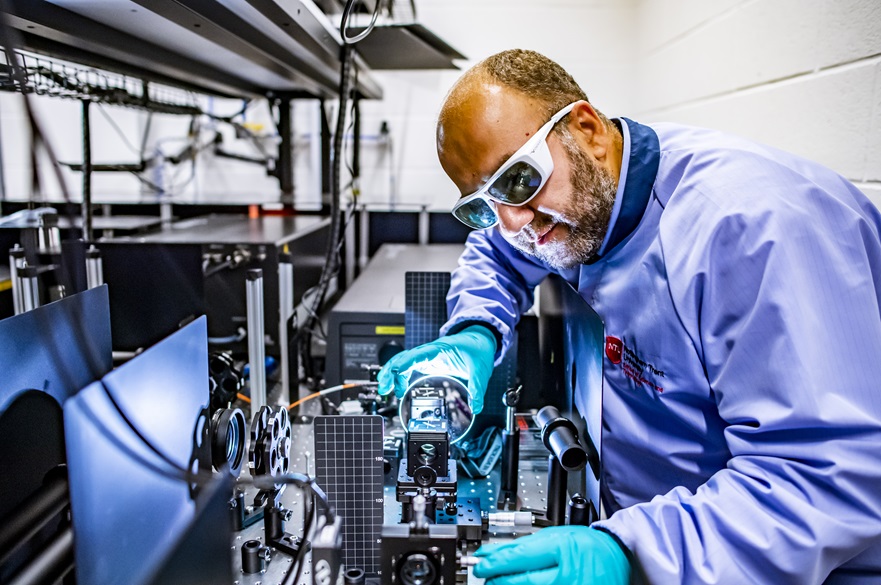
Mohsen Rahmani is a Distinguished Professor at Nottingham Trent University's School of Science & Technology, where he serves as the Leader of the Advanced Optics and Photonics (AOP) Laboratory. He holds prestigious fellowships including the Royal Society Wolfson Fellowship and UK Research and Innovation Future Leaders Fellowship, and has been recognized as an IEEE Nanotechnology Council Distinguished Lecturer (2024) and The Royal Society Yusuf Hamied Visiting Fellow (2024). His educational background includes a PhD from the National University of Singapore (2009-2013), MSc from National Technical University of Ukraine (2007-2009), and BEng from Iran Azad University (2000-2004). Prior to joining NTU, he held positions at Australian National University (2016-2020) and Imperial College London (2013-2015). Rahmani's research focuses on Nano-materials (design, modeling, and fabrication of metallic, dielectric, and semiconductor nanoparticles), Nonlinear nano-photonics (all-optical conversation of light frequencies for NIR imaging, night-vision, and species' health detection), and Optical nano-sensing (ultrasensitive nano-scale materials for gas/liquid detection of low concentration substances/biomarkers). His work bridges fundamental physics with practical applications in imaging, sensing, and communications. His 15 most recent publications (2022-2024) demonstrate a strong focus on metasurfaces, nonlinear optics, and infrared imaging technologies. Key themes include bound states in the continuum, frequency conversion, silicon photonics, and applications in biomedical diagnostics and wireless communications. His research shows a clear trajectory toward practical implementations of nanophotonic technologies for real-world problems. Outstanding Editor Award, Opto-Electronic Advances (2020) Eureka Prize for Outstanding Early Careers (2018) Australian Optical Society Geoff Opat Early Career Researcher Prize (2018) Australian National University Vice Chancellor's Award (2018) Young Scientist Medal and Prize from IUPAP (2017) Royal Society Wolfson Fellowship UKRI Future Leaders Fellowship (£1.2 million) Rahmani has secured significant research funding from The UK Research and Innovation, The Royal Society, and The Australian Research Council. At NTU, he built the Advanced Optics and Photonics Lab from scratch, attracting outstanding scientists and students to work on ambitious projects including nano-particle based disease detection systems and technologies to reduce light pollution. His editorial roles include Associate Editor of Opto-Electronic Advances (2018-present) and past Guest Editor for Nanomaterials (2020-2022). Through the AOP Lab (www.aoplab.com), Rahmani leads a dynamic research team focused on developing transformative nanophotonic technologies. His lab's work spans fundamental research on light-matter interactions at the nanoscale to applied projects with potential commercial impact, particularly in medical diagnostics and energy-efficient imaging technologies.
Lei Wang is the F. L. Castleman Associate Professor in Engineering Innovation at the University of Connecticut's School of Engineering, Department of Electrical and Computer Engineering. He holds a PhD from the University of Illinois at Urbana-Champaign (2001), an MS (1996) and BS (1992) from Tsinghua University, China. His research focuses on cyber-physical systems , embedded computing with renewable energy , and nanoscale integrated circuit design . Key areas include microbial fuel cells , memristor-based hardware security , and low-power signal processing architectures . Recent work trends involve Quantum-dot transistor applications for in-memory computing Adaptive LDPC decoder optimization Hardware security leveraging memristor properties Energy-efficient power management systems for underwater sensors Scientific recognition includes National Science Foundation CAREER Award (2010) F. L. Castleman Term Professorship in Engineering Innovation Professional roles encompass editorial and committee positions at IEEE and ACM journals. His work spans interdisciplinary domains in renewable energy integration , VLSI design , and bio-inspired computing systems .
Dr. Xuliang Li is a Postdoctoral Research Fellow at the School of Mechanical and Mining Engineering, The University of Queensland, within the Faculty of Engineering, Architecture and Information Technology. His work focuses on advanced materials processing, particularly in precision machining of brittle solids and nanoscale surface engineering. Research Themes: Brittle material machining, graphene oxide applications, machine learning integration in manufacturing, and multiscale modeling of deformation mechanisms Recent Publications: 14 studies (2019-2024) covering nanoscratch mechanics, laser 3D-printed ceramics, and innovative polishing techniques Funding: Currently developing ductile grinding techniques for dental prostheses applications (2025-2026) Expertise: Available for supervision in advanced manufacturing and materials science domains Key areas include computational modeling of grinding processes, hybrid nanoparticle suspensions, and ductile-to-brittle transition analysis. His collaborations span multiple disciplines in mechanical engineering and materials science.