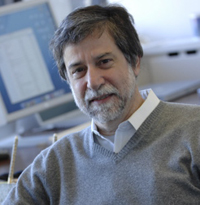
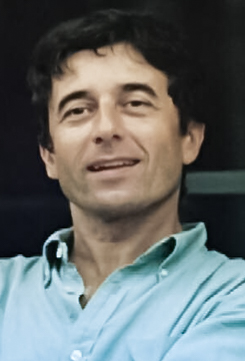
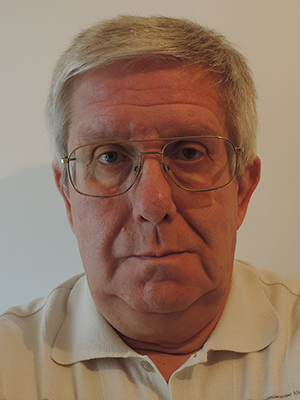
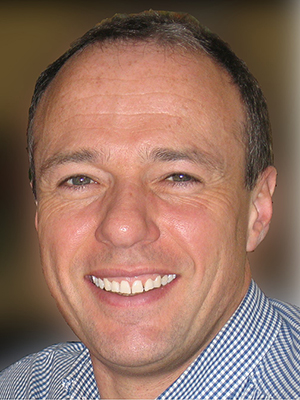
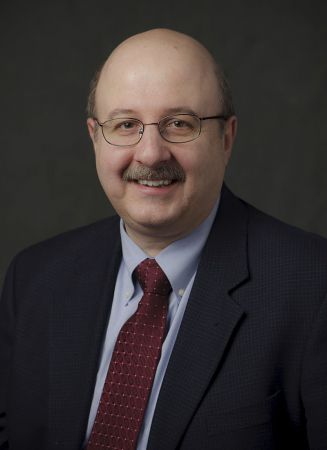
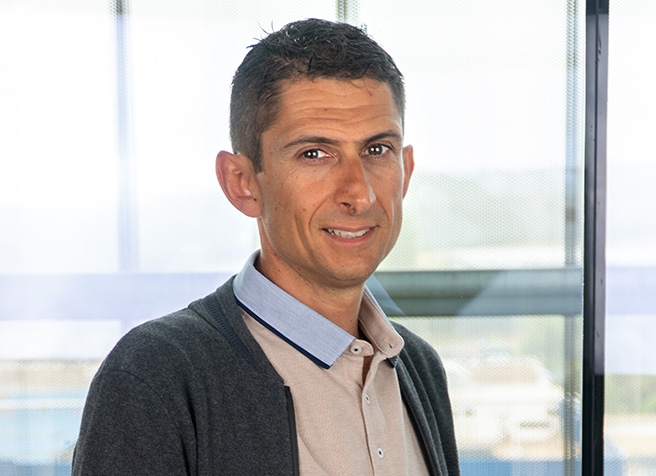
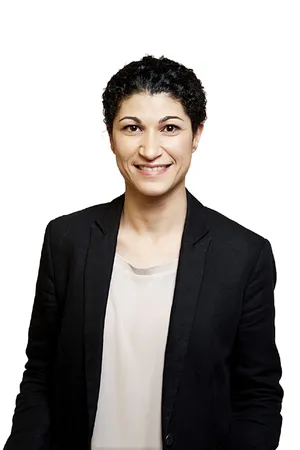
Charles Sodini is the Clarence J. LeBel Professor of Electrical Engineering at MIT, where he serves as co-director of the Medical Electronic Device Realization Center (MEDRC). His research focuses on microelectronics for medical applications. Research emphasizes: Developing integrated circuits and systems for medical diagnostics Creating wearable and implantable medical devices Advancing semiconductor technologies for healthcare applications
Dr Andy Irvine is a Research Professor at the University of Cambridge's Cavendish Laboratory, affiliated with Girton College. He specializes in semiconductor device design, fabrication, and nanoscale physics, with a focus on spintronics and quantum phenomena. His work includes single-photon detectors, e-beam lithography, and ferromagnetic semiconductor devices. He earned his doctorate from the University of Sussex in 1993, followed by post-doctoral positions at the University of Sheffield and the Microelectronics Research Centre. His research spans nanoscale device physics, Coulomb blockade effects, and advanced lithographic techniques. Key research interests include domain wall dynamics, spin Hall effects, and magnetoresistance in materials like GaMnAs. His publications highlight contributions to spintronics, quantum dots, and nanoelectronics. No scientific awards are explicitly listed, but his work has been featured in high-impact journals such as Nature Communications and Science. Dr Irvine is part of the TFM Group at Cavendish Laboratory, contributing to interdisciplinary research in materials science and condensed matter physics. His work bridges fundamental physics with applied device engineering, emphasizing nanotechnology and semiconductor innovation.
Nicklas Anttu is an Associate Professor (tenure track) at the Faculty of Science and Engineering, Department of Physics at Åbo Akademi University. His research focuses on nanowire-based technologies for sustainable energy and biosensing applications, contributing to UN Sustainable Development Goals. Key areas include nanowire solar cells, perovskite materials, and optical biosensors. He leads projects such as HPC-Phot (High-Performance Computing in Photonics, 2024–2026) and co-leads the Printed Intelligence Infrastructure (PII) project (2024–2028), funded by the Academy of Finland. His work integrates computational modeling, experimental characterization, and device fabrication to advance nanophotonics and semiconductor technologies. Research interests span nanowire optoelectronics, plasmonics, and light-matter interactions. Notable achievements include optimizing light absorption in nanowire arrays, developing biosensing platforms using aerotaxy nanowires, and advancing perovskite solar cell efficiency. His contributions bridge fundamental physics with applied nanotechnology, targeting scalable, sustainable solutions. Recent publications highlight advancements in nanowire junction analysis, waveguide-based biosensors, and perovskite material modeling. Anttu actively collaborates on international projects, including the Suzhou Foreign Academician Laboratory (2022–2025), and engages in academic activities such as doctoral thesis oppositions and conference presentations.
Dominique VIGNAUD is a researcher at the Institute of Electronics and Microelectronics of the North (IEMN) , affiliated with the University of Science and Technology of Lille (CNRS-Université des Sciences et Techniques de Lille). He joined the CNRS in 1983 and moved to the IEMN epitaxy group in 2000. His work focuses on advanced semiconductor materials and epitaxial growth techniques. PhD in Solid-State Physics (1983, Lille University) French 'Thèse d’État' (1989, Lille University) Postdoctoral research at MIT's Research Laboratory for Electronics (1990-1991) Research interests include: Molecular beam epitaxy (MBE) of semiconductor materials Graphene and hexagonal boron nitride (h-BN) growth Optical properties of nanostructured materials Characterization of heterostructures and quantum wells Ion beam implantation and defect studies He has contributed to studies on photoluminescence, electron lifetime measurements, band offset analysis, and thermal management in III-V semiconductors. Active in the EPIPHY research group, he collaborates on projects involving GaInP/GaInAlP heterostructures, InAs quantum dots, and metamorphic buffer layers.
Bilel HAFSI is an Associate Professor at the ICAM Institute (University of Lille) and a member of the NCM research group. His expertise spans organic electronics, nanotechnology, materials engineering, and computer modeling. He obtained his PhD from the Institute of Electronic, Microelectronics and Nanotechnology (IEMN) under Prof. Kamal Lmimouni and Prof. Adel Kalboussi, focusing on nanoparticle-based memory devices. He has held roles as a research and teaching assistant at École Centrale Lille, IMT Lille-Douai, and University of Lille. Previously, he worked at AIMAN-Films Group on phononic crystal sensors and as a robotics/IoT consultant at Techshop Les Ateliers Leroy Merlin. Research interests include developing novel soft-electronic devices through self-assembly processes, optimizing memory device performance (e.g., endurance, memory window), and exploring neuromorphic applications using organic materials. His work integrates electrical engineering and materials science, with a focus on nanoscale systems. Notable achievements include winning the 2018 regional award for best international PhD thesis in sciences and technologies. His scientific production includes publications in Organic Electronics and Journal of Electronic Materials, emphasizing polymeric memory devices, graphene-based simulations, and neuromorphic transistor behavior. He collaborates with multiple research groups (e.g., NCM, ACOUSTICS, ANODE) and contributes to projects in micro/nano-optoelectronics, THz photonics, and low-power sensors. Current affiliations include the ICAM Institute, where he teaches and conducts advanced materials research.
Jean-Claude DE JAEGER is a Professor of Electronics at the University of Lille, France, specializing in microwave power devices and wide bandgap semiconductors. He obtained his third-cycle Doctorat in 1977 and a doctorat in Physics in 1985, both from the University of Lille. Since 1999, he has led the Microwave Power Devices research group at the Institut d’Electronique et de Microélectronique et de Nanotechnologie (IEMN), collaborating with academic and industrial partners across Europe and North America on projects involving GaN-based HEMTs, thermal management, and high-frequency devices (3–94 GHz). Key research areas: GaN HEMTs, wide bandgap semiconductors, microwave power applications, physical modeling, thermal monitoring. Collaborations: Laboratoire d’Electrotechnique et d’Electronique de Puissance (L2EP), Thales Iemn GaN Electronics Research (TIGER), Labex GaNeX. His work includes developing tunneling resonant diodes, photodetectors, and sensors, as well as exploring tri-gate transistor geometries and high-thermal-conductivity substrates. He has authored or co-authored approximately 360 publications and communications, contributing to advancements in microwave power electronics and nanoscale device engineering.
Christophe GAQUIÈRE is a full professor at the University of Lille (Polytech Lille) and leads research at the Institut d’Electronique de Microélectronique et de Nanotechnology (IEMN). He earned his Ph.D. in Electronics from the University of Lille in 1995. His research focuses on the design, fabrication, and characterization of HEMT and HBT devices, particularly in GaAs, InP, metamorphic HEMTs, and GaN. His work emphasizes microwave characterization (1–500 GHz) to correlate performance with technological parameters. Current projects include GaN-based THz detectors/emitters, AlGaN/GaN nanowires, and MEMS. He led the microwave characterization segment of a Thales-TRT-IEMN lab (2003–2007) and now oversees ST Microelectronics-IEMN collaborations on silicon millimeter-wave technologies. He co-founded MC2-Technologies (2014) as Chief Technical Officer (CTO), specializing in microwave circuit design, radar systems, and THz sensor development for security and radar applications. His research spans multiple groups, including PUISSANCE (focusing on GaN thermal modeling and power performance), ANODE (THz electronics and nano-device characterization), and OPTO (THz photonics). Collaborations include projects on ultra-low-power biosensors and energy-efficient microelectronics. Over 150 publications and 300 presentations reflect his extensive contributions. Key projects include GaN HEMT thermal modeling, 40 GHz power performance on silicon substrates, and THz emitters/detectors. His work bridges academic research with industry through partnerships with Thales, ST Microelectronics, and others. Ongoing studies explore nanoribbon-channel GaN HEMTs and novel thermal management techniques for high-efficiency power converters.
Dr. Zahra Shahbazi serves as Adjunct Professor of Mechanical Engineering at Manhattan College, where she chairs the Council for Faculty Affairs (CFA). She teaches core engineering courses including Finite Element Analysis, Robotics, and Mechanical Design while maintaining active research collaborations with ASME and NSF. Her leadership extends to conference organization as former ASME IDETC-DEC chair and NSF grant reviewer. Her educational background includes: B.S. in Mechanical Engineering, University of Tehran M.S. in Biomechanical Engineering, Amirkabir University Ph.D. in Mechanical Engineering, University of Connecticut Graduate Certificate in College Instruction, University of Connecticut Shahbazi's research integrates computational mechanics with biological systems, focusing on protein molecular modeling, robotics kinematics, and machine learning applications. Her work bridges nano-bio mechanical systems with practical engineering solutions in additive manufacturing and nondestructive testing. Recent publications demonstrate strong interdisciplinary trends combining microscopy, AI-driven image analysis, and biomechanical simulation across materials science and biomedical domains. Her scientific recognition includes multiple NSF fellowships for nanotechnology institutes and summer workshops, plus University of Connecticut honors for graduate research excellence. Notable awards span Materiomics engineering, cancer nanotechnology, and negotiation skills development through ASME conferences. Shahbazi secures significant research funding including $639,778 NSF Campus Cyberinfrastructure grant (2023) and $579,896 NSF S-STEM scholarship initiative. She mentors students through engineering ambassador programs and develops K-12 STEM curricula via ASEE collaborations. Her laboratory work centers on micro-CT imaging, finite element simulation, and additive manufacturing for both biological structures and antique instrument restoration.
Miltiadis K. Hatalis is a Professor in the Department of Electrical and Computer Engineering at Lehigh University. He holds a B.S. in Physics from Aristotle University (Greece), an M.S. in Electrical Engineering from SUNY Buffalo, and a Ph.D. in Electrical Engineering from Carnegie Mellon University. His research focuses on electronic materials, devices, and circuits for flat panel displays, sensors, and integrated microsystems, particularly on flexible substrates like metal foils and plastics. He has secured over $13.5M in research funding and led/co-led over 40 projects, producing notable innovations such as flexible VGA AMOLED displays and sensor arrays for biometric applications. Education: B.S., Physics, Aristotle University of Thessaloniki (1982) M.S., Electrical Engineering, SUNY Buffalo (1984) Ph.D., Electrical Engineering, Carnegie Mellon University (1987) His research interests span microelectronics, nanofabrication, and flexible electronics, with a focus on TFT technologies and their applications in displays and sensors. He has authored/co-authored over 175 papers and two book chapters, with ~3,600 citations. His work includes advancements in low-temperature polysilicon and metal oxide TFTs on unconventional substrates. Prof. Hatalis has advised 20 PhD students and contributed to industry through consultancy in flat panel displays and semiconductor fields. He also served as an expert witness in 13 patent litigations. His laboratory, the Display Research Lab, drives innovations in tactile displays, MEMS, and nanoscale manufacturing.
Prof. Wilhelm Kleppmann is a Professor at the Faculty of Electronics & Computer Science at Hochschule Aalen, Germany. His primary research focuses on Design of Experiments (DoE), statistical process control, and reliability engineering. He has authored influential textbooks on optimization methodologies and contributed to Six Sigma integration in industrial processes. His work bridges theoretical statistical methods with practical applications in manufacturing and engineering systems. Key contributions include developing experimental design frameworks for machine learning integration, optimizing cooling circuits in automotive systems, and statistical evaluation of electromagnetic interference. He maintains active engagement with industry through software recommendations for DoE, emphasizing tools like Minitab and JMP. Kleppmann's educational efforts include curriculum development for engineering courses and promoting hands-on learning through simulation tools. His research spans decades with notable publications from 1980s semiconductor reliability studies to modern machine learning-driven process optimization. While no specific awards are listed, his extensive publication record and textbook revisions (e.g., 10th edition of 'Versuchsplanung') highlight sustained scholarly impact.
Emmanuel Hourdakis is an Assistant Professor at the School of Electrical and Computer Engineering of the National Technical University of Athens, affiliated with the Department of Electromagnetic Applications, Electro-Optics and Electronic Materials. He holds a Ph.D. in Physics from the University of Maryland (USA) and has collaborated with the National Institute of Standards and Technology (NIST). His research spans microelectronics, nanotechnology, and energy device development. Education: B.A. in Physics, University of Crete (2001) M.A. in Physics, University of Maryland (2004) Ph.D. in Physics, University of Maryland (2007) His work focuses on the design, fabrication, and characterization of microelectronic devices , sensors , and energy production/storage devices , with expertise in thin film deposition , electrochemical nanostructuring , and Si technology manufacturing techniques like photolithography and electron beam lithography. He also specializes in electrical, optical, and microscopy characterization methods.
Roberto Pacios is an accomplished researcher and project leader in electrochemical energy storage technologies. Currently serving as Electrochemical Storage Technology Coordinator at CIC EnergiGUNE, he previously held roles at IKERLAN (project leader in organic photovoltaics and microelectronics) and Imperial College London (post-doctoral researcher). He earned a PhD in Solid State Physics from Imperial College London (2003) and an Executive MBA from the University of the Basque Country, where he won awards for his business plan. Research Career: Specializes in organic semiconductors, photovoltaic device characterization, and hybrid energy storage systems. His work includes developing nano-structured organic light emitting diodes for commercial optical encoders, quantum dot-based medical labels, and advanced sensors for industrial machinery. Projects & Impact: Coordinated over 14 years at IKERLAN, leading EU-funded H2020 projects with budgets exceeding €500k. Demonstrated expertise in translating research into industrial applications, such as organic electronics for active displays and energy-efficient systems. Holds an h-index of 20 with 3,600+ citations. Awards: FESIDE AWARD for Best Executive MBA Student (2016-2017) Best Business Plan for a Tech Startup (Executive MBA 2016-2017) Advisory & Innovation: Supervised 3 PhD theses and pioneered technology transfer strategies. Currently focuses on hybrid energy storage solutions and power converter integration.
Anish Philip is a Research Fellow at the Department of Chemistry and Materials Science , Aalto University, specializing in inorganic materials chemistry and atomic/molecular layer deposition techniques. His work spans from 2004 to 2025 with a focus on thin films , metal-organic frameworks , and green energy applications . Education: Doctoral degree in Natural Sciences, University of Eastern Finland (2017) Master's degree in Natural Sciences, University of Eastern Finland (2014) Master's degree in Natural Sciences, Mahatma Gandhi University (2004) Research Interests center on developing conformal thin films for energy applications (Li-ion batteries, thermoelectrics), magnetic materials with optical switching properties, and industry-feasible deposition techniques . His work integrates materials science and chemical engineering , emphasizing sustainability through non-pyrophoric precursors and block copolymer templates . Recent Publications highlight atomic/molecular layer deposition for high-aspect-ratio solid electrolytes (2024), Ti-organic thin films with green energy applications (2025), and Fe-terephthalate hybrids with controlled magnetic properties (2024). Activities include peer-review roles for journals like Journal of Physical Chemistry C and Nanomaterials , and contributions to conferences on MOF-like thin films (2024).
Dr. Marina Antoniou is an Associate Professor in the School of Engineering at the University of Warwick, specializing in power semiconductor devices and wide bandgap materials. She holds a PhD, MEng, and BA from the University of Cambridge (Trinity College). Her research focuses on SiC-based power devices, aiming to enhance energy efficiency, reliability, and cost-effectiveness for applications in smart grids, automotive systems, and power electronics. She has secured significant grants, including a Royal Society Research Fellowship (£860k), and serves as Chair of the IEEE Electron Devices Society Power Devices & ICs Committee (2022–2023). Her editorial roles include Associate Editor for the IEEE Transactions on Electron Devices and Royal Society Philosophical Transactions A. Research Interests: SiC power devices, superjunction technology, high-frequency electronics, and radiation-hardened devices. Grants: Royal Society, EPSRC, and industry partnerships. Committees: IEEE IEDM, ISPSD, and IET PEMD Technical Network. Dr. Antoniou supervises four PhD students, with a focus on SiC device modeling and applications. She has authored five patents and over 50 peer-reviewed articles, contributing to advancements in power electronics reliability and performance.
M. Jamal Deen is a Distinguished University Professor and Senior Canada Research Chair in Information Technology at McMaster University, where he also serves as Director of the Micro- and Nano-Systems Laboratory . He holds associate memberships in the McMaster School of Biomedical Engineering , Engineering Physics , and Computing and Software departments. B.Sc. from University of Guyana (1978) M.S. and Ph.D. from Case Western Reserve University (1982, 1986) His research spans microelectronics, nanotechnology, biosensors, and low-noise circuit design for health and environmental applications. He has led projects on BioFET sensors , advanced photodetector systems , and microwave semiconductor device modeling , supported by NSERC, ORF, CFI, and industry partners like Gennum Corporation and National Semiconductor. Scientific honors include: First McMaster professor elected Fellow of the Electrochemical Society and American Physical Society First engineering professor at McMaster to become a Fellow of the American Physical Society Only McMaster professor to win the Ham Education Medal , Gotlieb Computer Award , Fessenden Silver Medal , and McNaughton Gold Medal from IEEE Canada Second Canadian elected to the Chinese Academy of Sciences Multiple Doctor Honoris Causa degrees from institutions in Mexico, Spain, and Canada Deen has advised over 50 graduate students and postdoctoral fellows, including Ph.D. candidates like Wai-Leung Ngan and Naser Faramarzpour and M.A.Sc. students such as Samar Mikhael Abdelsayed and Munir Eldesouki . His lab houses advanced facilities for high-frequency noise measurements (45 MHz to 110 GHz), semiconductor parameter analysis , and optical detector testing , with automated systems using HP, Tektronix, and National Instruments equipment.