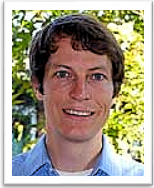
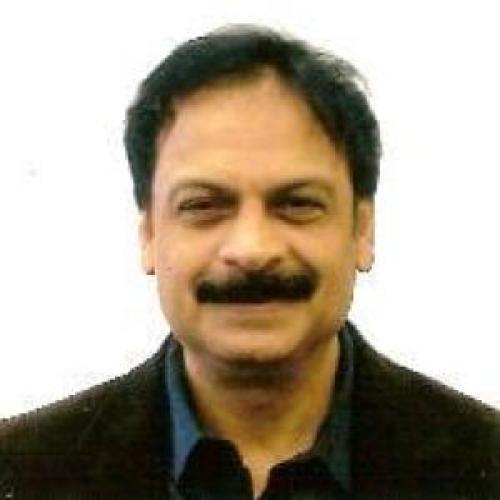
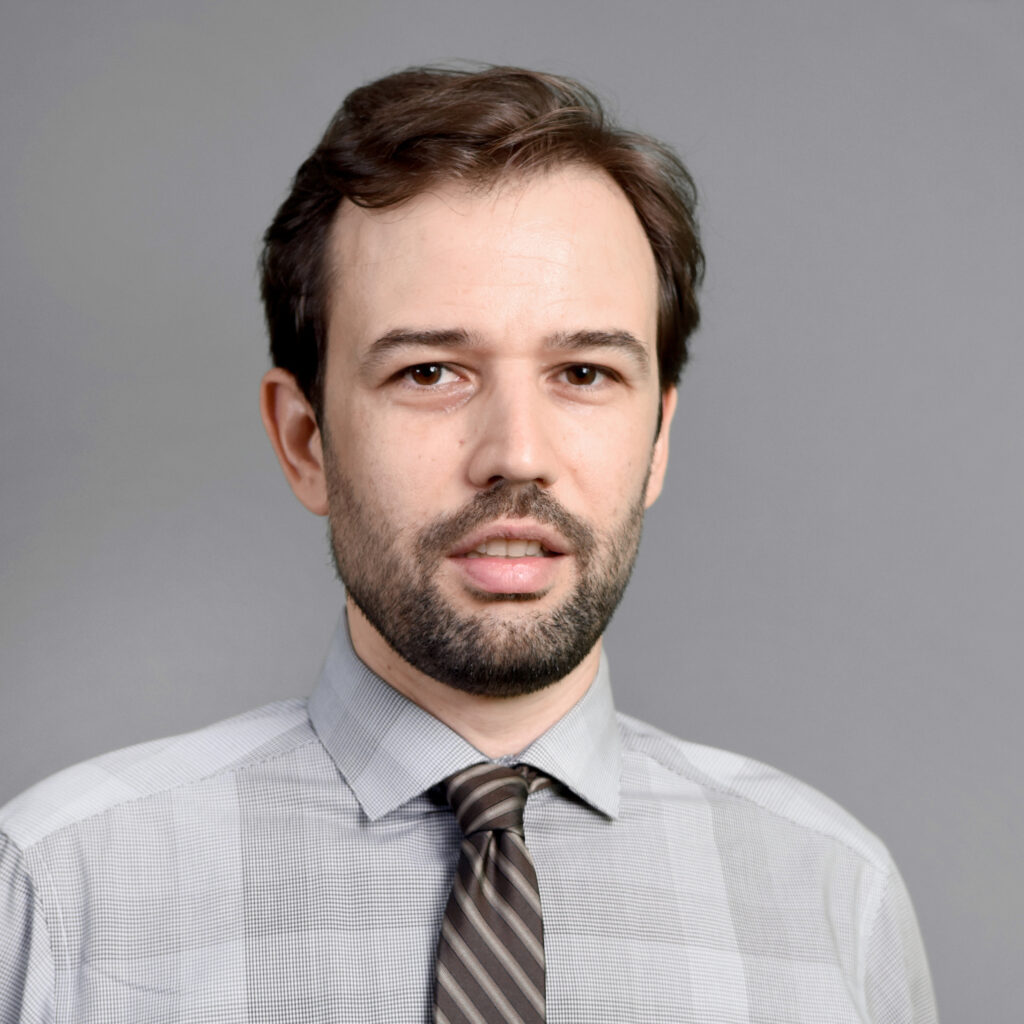
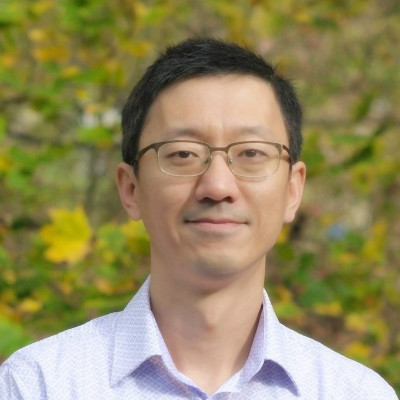
Dimosthenis Peftitsis is a Professor at the Department of Electric Power Engineering , Faculty of Information Technology and Electrical Engineering , Norwegian University of Science and Technology (NTNU). He obtained a Diploma in Electrical and Computer Engineering from Democritus University of Thrace (2008) and a PhD from KTH Royal Institute of Technology (2013). Current research interests: WBG (SiC/GaN) converters, adaptive gate drivers, DC-breaker designs, power supplies for particle accelerators, semiconductor reliability. Key projects: MoReSiC, CoNeCt, ASiCC, ORBES, CERN collaborations, ReliPE. His work spans power electronics for renewable energy, EV charging, and high-voltage systems. Publications focus on SiC MOSFETs, dynamic characterization, and converter reliability. He serves as Associate Editor for IEEE Transactions on Power Electronics and chairs IEEE societies. Scientific Awards : IEEE Senior Member, IEEE PELS Regional Distinguished Lecturer, NTNU Outstanding Academic Fellows Programme. Students : 9 PhD advisees, including Ole-Christian Spro (2020), Andreas Giannakis (2022), Gard Lyng Rødal (pending).
Dr. Andreas Neuber is a Professor and P. W. Horn Distinguished Professor at Texas Tech University's Whitacre College of Engineering, Department of Electrical & Computer Engineering. He co-directs the Center for Pulsed Power and Power Electronics (P3E). Dr Ing, Mechanical Engineering, Technische Universität Darmstadt (1996) Dipl Phys, Technische Universität Darmstadt, Germany (1990) Registered Professional Engineer in Texas (License #91312) His research focuses on High-Voltage Electric Breakdown , Gaseous Electronics , Materials Under Shock , High-Power Microwaves , and Pulsed Power Technology . Recent publications emphasize semiconductor-based pulsed power systems, vacuum flashover modeling, and advanced gas insulation analysis. Key trends in his 15 most recent articles (2025-2024) span semiconductor switching technologies, magnetic core behavior, vacuum breakdown physics, and electromagnetic compatibility. These works integrate computational modeling (LTspice, ANSYS) with experimental validation in high-voltage environments. Institute of Electrical and Electronics Engineers (2012) As Co-Director of the Center for Pulsed Power & Power Electronics (P3E), Dr. Neuber leads research initiatives in high-voltage engineering and pulsed power systems, with applications in electromagnetic defense, energy conversion, and plasma physics.
Dr. Hong Yu is an Associate Professor in the Engineering Technology department at Fitchburg State University's School of Business and Technology. Specializing in wireless communication protocols, neural networks, and embedded systems, their research spans earthquake nowcasting, IoT applications, and industrial sensor development. Current projects include 5G network optimization and FPGA-based measurement systems. PhD in Electrical & Electronics Engineering from The Catholic University of America Active in NSF-funded initiatives like the Microcontroller Training System project Professional affiliations include IEEE Senior Membership and leadership roles in multiple IEEE chapters Teaches courses in microprocessor systems, digital electronics, and mobile application development Research focuses on merging biological neural network principles with technological applications, while maintaining expertise in analog electronics and environmental monitoring. Recent publications emphasize wireless protocol design (2021), color sensing automation (2021), and cross-platform smart home development (2020), showing consistent innovation across 5G networking, semiconductor design, and seismic analysis. Professional contributions include serving as Vice Chairperson in IEEE ROBOT Chapter (Worcester County) and IEEE AESS Chapter (Baltimore), plus judging robotics competitions like FIRST LEGO League.
Joyce Poon is a Professor in the Electrical and Computer Engineering Department at the University of Toronto , with affiliations as Director of the Max Planck Institute for Microstructure Physics and Honorary Professor at the Technical University of Berlin. Her research focuses on integrated photonic devices for communications and neurotechnology , leveraging silicon photonics for applications in visible light systems and neural interfacing. Education: PhD and M.S. in Electrical Engineering from Caltech (2007, 2003); BASc in Engineering Science (Physics) from the University of Toronto (2002) Her work spans visible-light silicon photonics , optical phased arrays , and implantable neural probes , with recent advancements in 3D-printed scaffolds for neural tissue engineering and thermally tunable photonic devices. She has pioneered programmable photonic circuits and hybrid integration techniques for high-efficiency systems. Key trends in her publications include visible-light silicon nitride waveguides , MEMS-based optical switching , and neurophotonic probes for deep brain optogenetics. Collaborative efforts extend to AI-assisted photonic design and biomedical applications of photonic integrated circuits. Scientific Honors : IEEE Fellow (2022) Fellow of Optica (2018) Mit TR35 (2012) Canada Research Chair in Integrated Photonic Devices (Tier 2, 2012–present) Milton and Francis Clauser Doctoral Thesis Prize (Caltech, 2007) She contributes to professional communities through editorial roles (e.g., Optics Express) and leadership in conferences like OFC and IEEE Group IV Photonics. Her lab develops nanophotonic neural probes for brain imaging and stimulation, and she is affiliated with the Krembil Research Institute (University Health Network).
Dr. Thomas Gemming serves as Head of IKM-Division Structure Analytics at the Leibniz Institute for Solid State and Materials Research Dresden (IFW Dresden), a prominent German research institution specializing in materials science. With an extensive publication record of 359 journal papers, 4 monographs, and numerous conference proceedings, he has established himself as a leading authority in electron microscopy and materials characterization. His research spans several critical areas in materials science: Advanced transmission electron microscopy techniques In situ electron-beam driven synthesis of nanostructures Thin film technology for high-temperature applications 2D materials including graphene, transition metal dichalcogenides, and MXenes Surface acoustic wave device materials Biomaterials for medical applications Analysis of his recent publications (2023-2025) reveals a strong emphasis on electron microscopy as a tool for both characterization and synthesis, particularly for 2D materials. His work shows increasing focus on applications in flexible electronics, biomedical devices, and energy storage systems, with significant contributions to understanding material behavior under electron beam irradiation and high-temperature conditions. Dr. Gemming previously served as Executive Secretary of the Deutsche Gesellschaft für Elektronenmikroskopie (German Society for Electron Microscopy), demonstrating his leadership in the microscopy community. His collaborations, particularly with M.H. Rümmeli's group, have produced numerous high-impact publications in top-tier journals. The IKM-Division Structure Analytics under his leadership focuses on advanced structural characterization using state-of-the-art electron microscopy techniques, with applications spanning microelectronics, sensor technology, and biomedical materials. The group is particularly known for pioneering work on electron-beam-driven synthesis of nanostructures and development of methodologies for in situ material characterization.
William Navaraj is a Senior Lecturer in Engineering at Nottingham Trent University, specializing in flexible micro/nanoelectronic devices, electronic skin, and assistive robotics. He holds a PhD in Electrical and Electronic Engineering from the University of Glasgow and has over 8 years of interdisciplinary research experience. Education : PhD (University of Glasgow), MSc (CSIR-Central Electronics Engineering Research Institute), BSc (Academy of Scientific and Innovative Research) Research Interests His work focuses on: Flexible Electronics Electronic Skin Bio-mimetic Systems Wearable Healthcare Devices Graphene-based Sensors Nanowire Transistors Recent Publications Trends His 2018-2025 publications demonstrate expertise in tactile sensing, wearable dosimetry, and flexible robotics. Key topics include nanoribbon transistors, 3D-printed prosthetics, and self-powered e-skin systems. Scientific Contributions 50+ peer-reviewed publications 2 filed patents 2 book chapters on wearable bioelectronics Peer reviewer for 10+ journals/conferences Grants & Collaborations Recipient of ERDF, InnovateUK, and CSIR funding. Collaborates with institutions like Humotech (prosthetic systems), STMicroelectronics, and the University of Glasgow.
Rossella Brunetti is an Associate Professor at the Department of Physical, Computer and Mathematical Sciences (formerly Physics campus) at the University of Modena and Reggio Emilia . Her research focuses on theoretical physics of amorphous materials, particularly chalcogenides used in phase-change memory (PCM) devices. She specializes in charge transport modeling, hydrodynamic equations, and advanced numerical methods like the Numerov process. Research Interests: Theoretical physics of amorphous semiconductors, trap-limited conduction, time-dependent transport phenomena, and simulation of nanoscale devices. Her work bridges fundamental physics with technological applications in high-speed memory devices and semiconductor modeling. Notable Contributions: Development of the first self-consistent 5th-order numerical methods for non-uniform grids 3D random-network models for threshold switching Quantum transport frameworks for hot-carrier dynamics Her research has enabled accurate simulation of Ovonic devices and contributed to understanding voltage snapback phenomena.
Daniel Feezell is an Associate Professor in the Electrical and Computer Engineering Department at the University of New Mexico (UNM), where he directs the III-nitride Materials and Devices group at the Center for High Technology Materials (CHTM). His research focuses on advanced semiconductor materials and devices, particularly III-nitride based technologies for solid-state lighting, communications, and power applications. Education: Ph.D. in Electrical Engineering, University of California, Santa Barbara (2005) M.S. in Electrical Engineering, University of California, Santa Barbara (2001) B.S. in Electrical Engineering, University of California, Irvine (2000) Dr. Feezell's research program centers on the epitaxial growth, fabrication, and characterization of group III-nitride materials with emphasis on nonpolar and semipolar orientations. His work spans solid-state lighting, high-efficiency LEDs, III-nitride nanophotonics, superluminescent diodes, visible lasers, and power electronics. Prior to joining UNM, he worked with Nobel Laureate Prof. Shuji Nakamura at UCSB, where his team achieved the first demonstration of a nonpolar GaN-based VCSEL. Analysis of his recent publications reveals a strategic focus on overcoming fundamental limitations in green and red nitride LEDs, developing high-speed optoelectronic devices, and creating novel nanophotonic structures for improved light extraction. His work increasingly integrates computational modeling with experimental approaches to address efficiency droop, color stability, and high-speed modulation challenges in semiconductor devices. Scientific Awards: NSF CAREER Award (2015) for GaN-based VCSEL research DARPA Young Faculty Award with Director's Fellowship Extension (2013/2015) Japanese Journal of Applied Physics Paper Award UNM School of Engineering Junior Faculty Research Award (2016) Department of Energy Grant for smart lighting systems development Dr. Feezell has secured significant research funding from multiple federal agencies and serves as the Sources Thrust leader in the Lighting Enabled Systems and Applications Engineering Research Center. His research group actively mentors multiple graduate students and postdoctoral researchers, with strong industry connections and numerous patentable innovations emerging from their work. The III-nitride Materials and Devices laboratory at CHTM features state-of-the-art MOCVD crystal growth equipment, advanced nanofabrication facilities, and comprehensive optical and electrical characterization capabilities. The lab has made pioneering contributions to nonpolar semiconductor technology, including breakthroughs in high-speed LEDs and novel approaches to nanoscale selective-area epitaxy.
Jianliang "Jack" Yang is a Senior Lecturer at the School of Materials Science & Engineering and the Materials and Manufacturing Futures Institute (MMFI) at the University of New South Wales (UNSW). His research focuses on computational chemistry and materials science, particularly on structural-property relationships in organic and inorganic systems, electron-phonon interactions, and machine learning-driven discovery of catalytic and energy materials. He employs high-throughput simulations to predict materials before experimental validation. Education 2010: PhD in Materials Science & Engineering, UNSW 2010: Graduate Certificate in Research Management & Commercialization, UNSW 2007: BSc (Nanotechnology, First Class Honors), UNSW Research Interests : Dr. Yang's work spans computational modeling of materials, emphasizing crystal symmetries, lattice energy landscapes, and thermodynamic stability. He investigates perovskite oxides for solar cells, MoS2 nanosheets for hydrogen evolution, and flexible battery electrodes. His group pioneers machine learning integration with quantum mechanics to accelerate materials discovery. Publication Trends : His recent articles (2022–2025) highlight advancements in electrocatalysts for water splitting, perovskite stability in energy applications, and quantum dot synthesis for optoelectronics. Machine learning and high-throughput simulations are recurring themes across catalytic, thermoelectric, and dielectric materials. Scientific Awards : 2020: Postgraduate Council Research Supervisor Award (UNSW) Grants : 2021: UNSW Science Faculty Research Grant ($4,000) for solid catalysts in solarthermal ammonia synthesis 2020: UNSW MMFI Seed Funding ($20,000) for ternary oxide catalysts
Michael Rinderle is a researcher at the Technical University of Munich, affiliated with the TUM School of Computation, Information and Technology. He works under the Associate Professorship of Computational Photonics (headed by Prof. Jirauschek) and the Associate Professorship Simulation of Nanosystems for Energy Conversion (headed by Prof. Alessio Gagliardi). His research focuses on computational modeling of optoelectronic materials and devices, integrating machine learning with multiscale simulations. Research Interests: Michael specializes in applying machine learning techniques to materials discovery and simulation, particularly for organic semiconductors, perovskite solar cells, and electrocatalytic systems. His work bridges computational methods like kinetic Monte Carlo, density functional theory, and graph neural networks with practical applications in photovoltaics, IoT energy autonomy, and nanoscale device engineering. Teaching Roles: He contributes to courses including Computational Photonics Laboratory , Python for Engineering Data Analysis , and Simulation of Quantum Devices . His teaching emphasizes practical skills in programming, device simulation, and data visualization for engineering students. Projects: Involved in DFG e-Conversion clusters (I-III), TUM Innovation Network ARTEMIS, EU Lion-Hearted, and BMWi-funded initiatives, focusing on interfaces, energy conversion, and machine learning-driven materials optimization.
Ferenc Simon is a full professor and deputy director at the Institute of Physics, Faculty of Natural Sciences, Budapest University of Technology and Economics (BME). He also holds a venia docendi (Privat-dozent) position at the University of Vienna. He leads the MTA-BME Spintronics Research Group (PROSPIN) and was PI on the ERC Starting Grant “SYLO”. Education & Qualifications PhD (Hungarian Academy of Sciences) Doctor of the Hungarian Academy of Sciences Habilitation at TU Budapest Habilitation (venia docendi) at Universität Wien Research Interests Professor Simon’s work spans spintronics , carbon-based nanostructures (nanotubes, graphene, fullerene peapods), superconductivity , and low-dimensional quantum systems . He employs electron spin resonance, NMR, optical and microwave spectroscopy, and isotope engineering to explore spin relaxation, Tomonaga–Luttinger liquids, and high-frequency response of superconductors. Recent projects extend into biomedical applications such as magnetic nanoparticle hyperthermia. Scientific Output & Trends His publication record (hundreds of papers, book chapters, reviews) is dominated by Physical Review Letters and Scientific Reports articles that collectively advance the understanding of spin and electronic correlations in carbon nanostructures, superconducting anisotropy, and advanced instrumentation. The 2017–2018 burst of papers on microwave absorption in superconductors and non-calorimetric hyperthermia power measurements signifies an expansion toward applied physics and medical physics. Awards & Honors MTA Talentum Award (2006) Editorial Board Member, Scientific Reports (since 2017) Editor, Fizikai Szemle (since 2018) Referee for Nature, PRL, and >10 other journals Students, Grants & Labs Simon has supervised ~85 BSc, MSc and PhD students (listed explicitly on his homepage). Current PhD students include L. Szolnoki, B. Gyüre, B. Márkus, I. Gresits, and others. He leads the PROSPIN group (MTA-BME Spintronics Research Group) and participates in the EnsembleQC consortium under Hungary’s Quantum Technology National Excellence Program.
David Krapohl is a Senior Lecturer at Mid Sweden University's Department of Computer and Electrical Engineering, affiliated with the STC Research Centre in Sundsvall. His academic background includes a PhD in Engineering from Mid Sweden University and an engineering degree in Mechatronics from Aachen University of Applied Sciences (Germany), with a student exchange at Mälardalen University. Research Focus: David specializes in radiation detection systems, with emphasis on: Hybrid pixel detectors (Medipix/Timepix) X-ray and neutron detector technologies Readout electronics and Monte Carlo/FEM simulations He actively contributes to international collaborations like the CERN Medipix project and the BrightnESS neutron detector initiative. Publications & Trends: His 15 most recent articles (2011–2023) predominantly explore X-ray fluorescence imaging , detector simulation frameworks (Geant4), and radiation sensor optimization . Recurring themes include material analysis for industrial applications (e.g., pulping, environmental monitoring) and hardware design for spectroscopic systems. Teaching & Advising: David supervises Master-by-Research students and encourages inquiries about projects in detector physics and radiation systems. No awards or grants are documented. Contact: Reach him via email (david.krapohl@miun.se) or phone (+46 (0)10-1428755) at Room S404, Sundsvall campus.
Prabhakar Misra is Professor of Physics and Director of the Laser Spectroscopy Laboratory in the Department of Physics & Astronomy, College of Arts & Sciences, Howard University, Washington, DC. He concurrently serves as visiting scientist at NASA Goddard Space Flight Center (2010–present) and research affiliate at the START Center of Excellence, University of Maryland, College Park (2014–present). Education & Academic Foundation Ph.D. in Physics, The Ohio State University, 1986 M.S. in Physics, Carnegie Mellon University, 1981 M.Sc. in Physics, University of Calcutta, 1978 B.Sc. (Physics Honors), University of Calcutta, 1975 Research Interests Prof. Misra’s experimental program centers on laser spectroscopy of nanomaterials . Using advanced Raman spectroscopy, optogalvanic spectroscopy and molecular-dynamics simulations, his group probes the structural, vibrational and electronic properties of graphene, carbon nanotubes, metal oxides and other low-dimensional materials for applications in gas sensing, optoelectronics, energy storage and planetary exploration instrumentation . A second major thrust involves the development of stand-off Raman optical systems for robotic lunar rover/lander missions, enabling remote mineralogical and volatile analysis of the lunar regolith. Publication Trends Over the last three years his >40 peer-reviewed articles focus on two synergistic themes: (1) astrophysical spectroscopy and stellar magnetic activity using LAMOST, TESS and other large surveys to characterize exoplanet host stars and flare phenomena, and (2) instrumentation and spectroscopy for planetary exploration , including compact Raman telescopes, Monte Carlo modeling of lunar volatile cycles, and Mars regolith studies relevant to extant life. Scientific Honors & Awards Fellow, American Physical Society (2015) Fellow, American Society for Laser Medicine & Surgery Senior Member, Optical Society of America Fulbright Scholar & Visiting Professor, Tata Institute of Fundamental Research, Mumbai (2004–2005) NASA Administrator’s Fellowship (1999–2001) Alfred P. Sloan Foundation Certificate of Appreciation (2008) Excellence in Research Productivity Award, Howard University College of Arts & Sciences (2016) 2018 Robert H. Goddard Team Award for Excellence in Science (DREAM2 team) Nominee, Presidential Award for Excellence in Science, Mathematics and Engineering Mentoring (2016) Grants & Mentoring Leadership Principal Investigator, NSF REU Site in Physics at Howard University (PHY-1358727, PHY-1659224) – $597 310 total Principal Investigator, NASA Early Opportunities Program for Under-represented Minorities (NNX16AC90A) – $499 771 Co-Investigator, DREAM2 Dynamic Response of Environments at Asteroids, the Moon, and moons of Mars (NNX14AG20A) – $52 000 Co-Investigator, Remote Observations of the Lunar Sodium Corona (NNX17AJ48G) – $67 897 Prof. Misra has mentored 40 undergraduate students, 12 Ph.D. students and 6 post-doctoral associates in his laboratory and serves as faculty advisor to the Howard University chapter of the Society of Physics Students (SPS). Laboratory & Team The Laser Spectroscopy Laboratory at Howard University houses pulsed and CW laser systems, high-resolution Raman spectrometers, cryostats and custom-built stand-off Raman telescopes. Current graduate researchers include Hawazin Alghamdi (SiO₂ gas sensors), Olasunbo Farinre (temperature-dependent graphene Raman studies), and undergraduate team members Iman Ahmed, Paras Pokharel and Sandesh Rimal working on SEM/Raman characterization and multiphysics modeling of nanomaterials.
Georgios Trichopoulos is an Associate Professor at Arizona State University's School of Electrical, Computer and Energy Engineering, specializing in millimeter-wave (mmW) and terahertz (THz) technology for biomedical sensing, imaging systems, and wireless communications. He received his Ph.D. in Electrical and Computer Engineering from The Ohio State University in 2013 and joined ASU in 2015 after postdoctoral work at Ohio State's ElectroScience Lab. Education: Ph.D. in Electrical and Computer Engineering, The Ohio State University (2013) His research focuses on THz and mmW technology, including on-chip antenna design, non-contact device characterization, and imaging systems. A co-founder of TeraProbes Inc., he develops scalable beamforming architectures and programmable electromagnetic surfaces for 5G/6G communications and security applications. Recent publications highlight advancements in THz imaging systems, non-contact probe calibration, and hybrid electromagnetic modeling. Articles span biomedical diagnostics, wireless communication systems, and nanofabrication techniques. Scientific Awards: NSF CAREER Award (2019)
Xin Zhang is a Research Staff Member and Manager at IBM T. J. Watson Research Center and an Adjunct Professor in the Department of Electrical Engineering at Columbia University since 2021. His work bridges AI hardware, power electronics, and algorithm design, focusing on energy-efficient systems for machine learning and computing. Affiliation: IBM T. J. Watson Research Center (Research Staff Member/Manager) Affiliation: Columbia University (Adjunct Professor, School of Engineering) His research interests include analog circuits, power management circuits, DC-DC converters, machine learning hardware accelerators, computer system architecture, and AI/ML-assisted EDA tools. He has pioneered AI-driven approaches for circuit topology synthesis and thermal management in hardware. Recent publications highlight innovations in chip placement optimization, secure in-memory computing for AI, and high-efficiency converters for AI SoCs. His work integrates machine learning with power electronics to address challenges in energy efficiency, security, and real-time performance. He has received prestigious recognition as an IBM Master Inventor (2023) and is an IEEE Senior Member. His editorial roles include Guest Editor for IEEE Journal on Emerging and Selected Topics in Circuits and Systems and Associate Editor for IEEE Solid State Circuits Letters. Active in academic and industry leadership, he serves on Technical Program Committees for conferences like APEC, ISSCC, and DAC, and is on the Organizing Committee for the IBM IEEE CAS/EDS AI Compute Symposium since 2019.