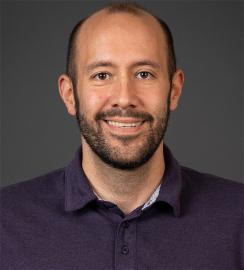
Mert Demirer is the Ford Foundation International Career Development Assistant Professor and an Assistant Professor of Applied Economics at the MIT Sloan School of Management. His research focuses on industrial organization, developing novel methods to analyze firm behavior, productivity, and market power, while pioneering machine learning applications for causal inference in econometrics. Demirer's academic background includes: PhD in Economics from the Massachusetts Institute of Technology Master’s degree in Economics from Koc University His primary research centers on industrial organization, where he develops advanced econometric techniques to measure firm dynamics and market structures. Concurrently, he leads cutting-edge work in machine learning for causal inference, creating frameworks that integrate AI tools into econometric analysis to identify causal relationships in complex economic systems. Demirer's publication record reveals a strong methodological focus at the intersection of econometrics and machine learning. Key contributions include double/debiased machine learning for treatment effects, policy optimization with continuous actions, and network analysis of financial systems. His work consistently bridges theoretical innovation with practical applications, particularly in measuring AI's economic impact and systemic financial risks. Professional recognition includes: Ford Foundation International Career Development Assistant Professorship
Anthony Waas is a Felix Pawlowski Collegiate Professor in Mechanical Engineering and a joint faculty member in Aerospace Engineering at the University of Michigan's College of Engineering. His research focuses on composite materials, structural mechanics, and failure analysis, with a strong emphasis on computational modeling and experimental validation. He leads studies on fatigue damage, impact mechanics, and advanced material systems like metamaterials and additive manufacturing. Research interests include: Composite materials under static and dynamic loading Structural failure analysis and predictive modeling Computational tools for progressive damage simulation Applications in aerospace and biomedical engineering Recent work explores advancements in fatigue life prediction, delamination modeling, and high-precision antenna structures. His experimental methods integrate digital image correlation and multiscale testing to validate computational models. Grants and collaborations involve AFRL/NGC programs on fail-safe composite structures and NASA initiatives on space deployable systems. His lab develops novel solutions for stress concentration mitigation and lightweight aerospace components.
Patrick Thiran is a Full Professor at the École Polytechnique Fédérale de Lausanne (EPFL) in Switzerland, affiliated with the School of Computer and Communication Sciences and the Department of Computer Science. His research focuses on network science, wireless networks, machine learning, and complex systems. Laboratoire de la dynamique de l'information et des réseaux Chair in Communication Systems Teaching: Modèles stochastiques pour les communications, Networks out of control His work explores the fundamental properties of wireless networks , source localization in large-scale networks , and network tomography . Recent publications demonstrate expertise in graph neural networks, epidemic modeling, and stochastic optimization. His 15 most recent publications show consistent contributions to network science, machine learning, and wireless communications, with a focus on graph algorithms , source localization , and network dynamics . Key subfields include metric dimension , community detection , and Bayesian optimization . He has advised numerous PhD students including Elahi Sepehr, Fua Raphaël Andrew, and Kuroda Daichi, reflecting his significant contributions to graduate education and research mentorship.
Professor Brian Lovell is a leading academic at the University of Queensland (UQ), holding the position of Professor in the School of Electrical Engineering and Computer Science. He is also an Honorary Professor at IIT Guwahati, India, and has served as President of the International Association for Pattern Recognition (2008–2010). His key roles include leading the Advanced Surveillance Group and contributing to IEEE, IEAust, and the Asia-Pacific AI Association as a Fellow. Education: B.E. (Electrical Engineering, UQ), B.Sc. (Computer Science, UQ), and Ph.D. (Signal Processing, UQ). Research focuses on AI, deep learning, biometrics, and medical imaging. Ongoing projects include StyleGAN, Stable Diffusion, masked face recognition, and neurofibroma detection. Recent work explores space physics phenomena like plasma dynamics and subauroral ion drifts, alongside advancements in domain generalization and medical image analysis. Awards include Fellowships from IEAust and Asia-Pacific AI Association. He actively recruits PhD students in AI and has collaborated with transport and national agencies on surveillance tech. The Advanced Surveillance Group develops solutions for operational and security challenges in transport sectors.
Hassan Khosravi is an Associate Professor in Data Science and Learning Analytics at The University of Queensland with primary appointment in the School of Electrical Engineering & Computer Science. He additionally holds affiliate Associate Professor positions in the Faculty of Humanities, Arts and Social Sciences, specifically with the School of Education and Humanities and Social Sciences. His academic work bridges computer science with educational innovation, focusing on how artificial intelligence can transform learning experiences and enhance student outcomes. Dr. Khosravi earned his PhD from Simon Fraser University and has built an extensive teaching career across three leading institutions: Simon Fraser University, University of British Columbia in Canada, and The University of Queensland in Australia. He has coordinated 30 different course offerings across 10 distinct courses for approximately 7,000 students, with class sizes ranging from 50 to 700. His teaching portfolio spans introductory programming, data structures and algorithms, artificial intelligence, database management systems, and graduate-level data science courses. His research program focuses on the intersection of data science, learning analytics, and educational technologies. Dr. Khosravi draws on theoretical insights from learning sciences and techniques from human-centered AI to develop technological solutions that enhance student learning. Key research areas include: Educational Technologies and Learning Analytics Human-AI Interaction in educational contexts Explainable AI for educational applications Crowdsourcing approaches to educational system development Statistical-relational learning applications in education Peer assessment and feedback systems enhanced by AI Analysis of Dr. Khosravi's recent publications (2024-2025) reveals a significant shift toward practical applications of generative AI in educational settings. His work demonstrates increasing focus on large language models for feedback systems, peer assessment enhancement, and student content creation. His research shows expanding interdisciplinary reach, connecting computer science with chemistry education, cognitive psychology, and research ethics. The publications indicate a clear progression from foundational machine learning work toward applied educational technologies that address real classroom challenges. Dr. Khosravi has been recognized with a Senior Fellowship from the Higher Education Academy, awarded in recognition of his contributions to effective teaching approaches and his coordination, supervision, management, and mentoring of others in educational contexts. As a research supervisor, Dr. Khosravi currently advises four PhD students as principal or associate advisor, with research topics spanning dataset building, cyber safety education for seniors, complex problem-solving with GenAI, and learning analytics applications in chemistry education. He has successfully completed supervision of seven PhD students whose work focused on synergizing learning sciences with analytics, insightful action recommendations in dashboards, AI for peer review improvement, and language learning behaviors. His supervision approach emphasizes interdisciplinary collaboration, often working with co-advisors from education, psychology, and domain-specific fields. Dr. Khosravi is actively engaged in major research funding initiatives, currently as a key participant in the ARC Training Centre for Information Resilience (2021-2026). Previously, he contributed to an ARC Discovery Grant focused on data analytics tools for self-regulated learning (2022-2025) led by Monash University. His work is organized around developing practical educational technologies, particularly through the RiPPLE platform and other systems that leverage learnersourcing and adaptive learning approaches to create scalable educational solutions.
Dr. Ciaran O'Hare is a Senior Lecturer in the Department of Physics at the University of Sydney, Faculty of Science, and holds an ARC DECRA Fellowship. His research focuses on dark matter, particularly its nature through Milky Way observations and particle physics experiments. He is involved in cutting-edge projects like XLZD, CYGS, and ORGAN, exploring axion miniclusters, neutrino fog effects, and FIPs (Feebly-Interacting Particles). His work bridges cosmology and particle physics, addressing astrophysical uncertainties and detector technologies. He is a key contributor to initiatives such as the COST Action COSMIC WISPers and has led grants including the 2022 'Unmasking Dark Matter' DECRA and a 2023 grant for liquid xenon dark matter research. Despite no listed advisees, his grants indicate active supervision in experimental astrophysics and particle physics. O'Hare collaborates with global teams like the DARWIN and CYGNUS projects, advancing directional detection methods and liquid xenon observatories. Scientific Awards: ARC DECRA Fellow (2022) His research narrative emphasizes overcoming detector limitations (e.g., neutrino fog) and leveraging novel technologies like DNA-based particle tracking. O'Hare's work has been highlighted in media including CERN Courier , Astronomy Magazine , and Scientific American , underscoring its impact on interdisciplinary physics. Grants: 2023: Simulation development and sensitivity studies for the ultimate liquid xenon dark matter search 2022: Unmasking dark matter: from the laboratory to the Milky Way Dr. O'Hare is affiliated with labs/teams such as the XLZD Rare Event Observatory, CYGS solar neutrino project, and the ORGAN collaboration, advancing experimental techniques for dark matter and neutrino physics.
Wenhua Zhao is an Adjunct Associate Professor at the University of Western Australia (UWA), affiliated with the School of Earth and Oceans and the UWA Oceans Institute. He holds a PhD in Ocean Engineering from Shanghai Jiao Tong University. His research focuses on offshore hydrodynamics, AI-driven renewable energy technologies, and wave-structure interactions, with applications to offshore wind, floating solar, aquaculture, and green hydrogen systems. He leads projects funded by the Australian Research Council (ARC), including a Future Fellowship (2023) and DECRA Fellowship (2019). Education: PhD in Ocean Engineering (2014), Shanghai Jiao Tong University. Research interests include fluid-structure interactions, renewable energy infrastructure, and AI integration in ocean engineering. He serves as Deputy Editor of Ocean Engineering, Associate Editor of ASME Journal of OMAE, and editorial board member of Applied Ocean Research. His work contributes to UN Sustainable Development Goals related to affordable and clean energy, industry innovation, and climate action. Grants include leadership roles in ARC hubs for offshore floating facilities and transformative energy infrastructure. Notable awards include the Mid-Career Research Award (2023) and selection as an Eight Innovation Partner for TetraSpar floating wind projects. Teaching: Coordinates courses on offshore energy design and advanced offshore systems at both undergraduate and postgraduate levels. Service: Graduate Research Coordinator, Board member of Postgraduate Studies Committee, and Research Committee member at UWA's Oceans Graduate School. Industry Relevance: Collaborates on projects like BW Ideol’s Floatgen and TetraSpar floating wind, advancing green hydrogen/ammonia technology. Labs/Teams: Active in the Shell EMI Chair in Offshore Foundations and the UWA Oceans Institute. His research bridges fundamental hydrodynamics with applied offshore engineering solutions.
Dr. Payel Das is a UKRI Future Leaders Fellow in the Astrophysics research group at the University of Surrey's School of Mathematics and Physics. She holds a PhD in Astrophysics from the Max Planck Institute for Extraterrestrial Physics. Previously, she explored energy-efficient housing design at UCL and worked as a Postdoctoral Researcher (PDRA) at the University of Oxford. Her research focuses on galactic archaeology, combining dynamical modeling, machine learning, and phylogenetic methods to study stellar populations and dark matter distributions in galaxies. Education: PhD in Astrophysics (Max Planck Institute), MSc/BA (not explicitly stated). Research Interests: Chemical and dynamical properties of stars, forensic studies of galaxy evolution, interdisciplinary methods for big data analysis, and past work in sustainable housing. She uses techniques like equilibrium dynamical models, PCA/XD clustering, and evolutionary biology-inspired phylogenetics. Publications: Over 30 peer-reviewed articles in top journals like Monthly Notices of the Royal Astronomical Society, spanning topics from Milky Way structure to dwarf galaxy dynamics. Key contributions include uncovering Sagittarius satellite interactions and developing machine learning tools for stellar parameter estimation. Awards: UKRI Future Leaders Fellowship (2021–present). Labs/Teams: Leads projects on the GLEAM survey and collaborates with international teams on GALAH and APOGEE surveys.
Prof. Christian Lubich is a Professor in the Mathematical Institute at the University of Tübingen, Germany. His research focuses on numerical analysis, geometric integration, quantum dynamics, and partial differential equations. He has authored influential books such as *Geometric Numerical Integration* (with E. Hairer and G. Wanner) and *From Quantum to Classical Molecular Dynamics*. His work emphasizes stability, accuracy, and computational efficiency in numerical methods for high-dimensional and oscillatory systems. Lubich's contributions span dynamical low-rank approximation, oscillatory Hamiltonian systems, and wave propagation in dispersive media. He has developed novel algorithms for tensor networks and matrix differential equations, addressing challenges in quantum many-body dynamics and stiff evolution problems. His research bridges numerical analysis with applications in physics, chemistry, and engineering. Key areas of exploration include: (1) structure-preserving integrators for long-time simulations, (2) error analysis of finite difference methods in semi-classical regimes, and (3) parallel algorithms for tensor-based computations. His work on pseudospectra and eigenvalue optimization has advanced stability analysis in linear dynamical systems. Lubich collaborates extensively on boundary element methods, finite element algorithms for evolving surfaces, and variational discretization techniques. His publications reflect a commitment to both theoretical rigor and practical computational solutions for complex physical systems.
Md Imbesat Hassan Rizvi is a Technical (Research) Associate at the Robert Bosch Centre for Cyber-Physical Systems (RBCCPS), Indian Institute of Science (IISc). His research focuses on Scientific Machine Learning, Natural Language Processing (NLP), Reinforcement Learning, Robotics, Human-Robot Interaction, and Multi-modal Machine Learning. He is actively involved in projects such as enabling natural interactions with social robots like 'Asha,' which includes speech communication, lip synchronization, and NLP-based instruction execution. His work combines robotics with NLP and reinforcement learning, leading to open-source contributions like the sonorus package and imperio repository. Rizvi's academic background includes an M.Tech. in Computational and Data Sciences from IISc (2015-2017) and a B.Tech. in Mechanical Engineering from IIT(ISM) Dhanbad (2008-2012). His research has spanned diverse areas including causal relation extraction from clinical notes (MIMICause corpus), diabetes-related tweet analysis, and molecular descriptor-based drug discovery. He has been recognized as a finalist in ICSR 2021 and a semi-finalist in the ANA Avatar XPRIZE competition. Notable contributions include publications on causal language modeling, medical informatics, and thermodynamics of nanofluids. His technical expertise extends to parallel computing optimizations and customer review analysis at HP Inc. Rizvi’s projects also include language identification systems and retrofitting word vectors to semantic lexicons, showcasing his versatility in both theoretical and applied research domains.
Richard Wilson is a Professor of Pattern Analysis in the Department of Computer Science at the University of York. He holds roles including Member of the Departmental Research Committee and Research Group Lead for Artificial Intelligence. With degrees from the University of Oxford (BA) and the University of York (DPhil), his research focuses on Machine Learning, Computer Vision, and Pattern Recognition with Graphs and Networks. He has contributed over 238 publications and led projects such as the UKRI AI Centre for Doctoral Training (SAINTS) and the Royal Society-funded Graphical Modeling of Brain project. Wilson has also been recognized with the IAPR Fellow Award (2010). His work spans theoretical advancements and applied research in network analysis, quantum algorithms, and interdisciplinary applications like drug discovery and healthcare informatics. His research interests integrate computational methods with complex systems analysis, emphasizing graph theory, entropy-based network modeling, and AI-driven solutions. Recent publications highlight innovations in semi-supervised learning, graph kernels, and quantum-inspired network dynamics. Wilson’s contributions to editorial roles, such as with the journal Pattern Recognition , and activities like PhD external examinations further underscore his academic leadership. Key Projects: UKRI AI Centre for Doctoral Training in Safe AI (SAINTS) – Principal Investigator (2024–2032) Graphical Modeling of Brain – Principal Investigator (2020–2023) His lab focuses on AI and computational methodologies, collaborating across disciplines to address challenges in healthcare, computer vision, and network science.
Xu Cheng is a Professor of Economics at the University of Pennsylvania, specializing in econometrics and its applications. She holds academic positions in the Department of Economics within the School of Arts and Sciences. Her research focuses on robust econometric methods addressing limited identification, model misspecification, and high-dimensional estimation. She has held visiting roles at Princeton University and Yale University. Ph.D. in Economics from Yale University (2010) M.S. in Applied Economics from University of Wisconsin-Madison (2005) B.A. in Economics from Peking University (2003) Her research interests span econometric theory, including volatility risk pricing, macro-finance decoupling, and structural VAR models. She has been honored as a Fellow of the Journal of Econometrics and International Association of Applied Econometrics, and received the Kravis Award for teaching (2022 and 2012). Xu serves as Co-editor of Econometric Theory and Associate Editor of several top journals. Her work has been recognized through grants like the Jacobs Levy Equity Management Center Grant (2021–2024). She advises Ph.D. students and has contributed to academic service through editorial roles and conference organization.
Alex Cloninger is an Associate Professor in the Department of Mathematics and the Halıcıoğlu Data Science Institute at UC San Diego. He holds a PhD in Applied Mathematics and Scientific Computation from the University of Maryland, College Park, and was an NSF Postdoc and Gibbs Assistant Professor at Yale University. His research focuses on geometric data analysis, applied harmonic analysis, manifold learning, and deep learning. He investigates methods to model data with local lower-dimensional structures, such as manifolds or subspaces, with applications in imaging, medicine, and artificial intelligence. His work integrates techniques from machine learning and statistical algorithms. Cloninger's articles predominantly focus on geometric data methods, optimal transport, and graph-based learning. Recurring themes include advanced algorithms for manifold learning, robustness in statistical estimation, and computational optimization. Collaborative projects emphasize scalability and theoretical guarantees in learning frameworks. He received the NSF Postdoctoral Research Fellowship and leads a collaborative NSF Research Training Group grant. His work supports interdisciplinary collaborations bridging mathematics, computer science, and engineering.
Dr. Rita Tojeiro is a Reader and Researcher at the University of St Andrews' School of Physics and Astronomy. Her roles include leading astrophysical research projects and contributing to education and inclusion initiatives. She is a core member of major international collaborations such as SDSS-III, SDSS-IV, VIPERS, GAMA, and DESI, focusing on large-scale galaxy surveys to probe cosmic structure and evolution. Her research spans three core areas: Astrophysics: Analysis of galaxy redshift surveys to understand cosmic expansion, dark energy, and the cosmic web's influence on galaxy evolution. Education: Investigating the impact of professional development programs for secondary physics teachers in Scotland, particularly leveraging astronomy research data. Inclusion: Addressing hidden curricula, STEM literacy, and fostering inclusive practices in higher education. Recent work emphasizes machine learning applications for galaxy formation modeling and DESI's early data releases. Her publications highlight advancements in galaxy-halo connections, redshift validation, and cosmological parameter inference through large spectroscopic datasets. Advising includes supervision of four PhD students focused on astrophysical modeling and observational techniques. Her research leverages multi-wavelength surveys and numerical simulations, contributing to foundational cosmological insights.
Hermann Fritz is a faculty member at the Georgia Institute of Technology, affiliated with the School of Earth & Atmospheric Sciences within the College of Sciences. He holds a courtesy appointment in Solid Earth Sciences and focuses on fluid dynamics of natural hazards, particularly tsunamis generated by volcanic eruptions, landslides, and earthquakes. His research integrates physical modeling, field surveys, and numerical simulations to study coastal hazards and disaster mitigation strategies. His work emphasizes understanding tsunami generation mechanisms through large-scale experiments in wave basins and analyzing post-disaster field data from global events such as the 2018 Anak Krakatau volcanic tsunami and the 2011 Tohoku earthquake. He has conducted extensive surveys in regions like Indonesia, Chile, and the Philippines, documenting tsunami impacts on coastal communities and infrastructure. Key research themes include submarine volcanic eruption dynamics, landslide-induced tsunamis, and the sedimentological record of historical events. His studies contribute to improving early warning systems and coastal resilience planning. Notable projects include the National Geodatabase of Ocean Current Power Resource and experimental facilities like the Priest Landing flume. Awards and grants are not explicitly mentioned in the provided materials, though his extensive fieldwork and collaborative surveys reflect a commitment to impactful disaster research. He has advised no listed students but collaborates internationally on tsunami science initiatives. The Laboratory for Experimental Fluid Dynamics at Georgia Tech supports his physical modeling efforts.