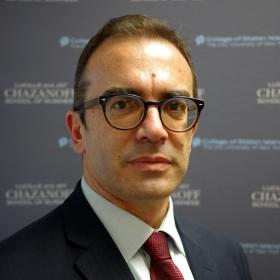
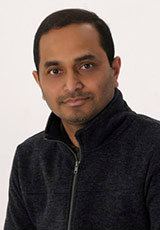
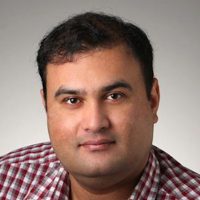
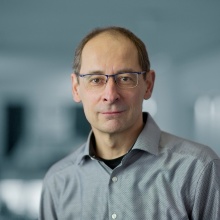
Dr. Martin Stokes is an Associate Head of School (Graduate Outcomes) at the School of Geography, Earth and Environmental Sciences, University of Plymouth. As an Earth scientist specializing in geomorphology, his work integrates fieldwork, computational modeling (remote sensing, topographic metrics), and laboratory techniques (cosmogenic and luminescence dating) to study landslides, floods, and landscape development. Expertise: Landslides, Floods, Geomorphology, Sediment Analysis, Remote Sensing, Luminescence Dating Focus Areas: Tectonic-climate interactions, Fluvial systems, Coastal uplift, Semi-arid environments, Mountain belts, Quaternary geology Recent publications highlight his work on marine terrace uplift in Iberia, fluvial system evolution in Eurasia, and erosion dynamics in semi-arid regions. His research combines geomorphic markers with dating techniques to reconstruct landscape history and assess climate impacts. Contact: M.Stokes@plymouth.ac.uk | A531, Portland Square, Plymouth, PL4 8AA
Paolo Cappellari is an Associate Professor at the College of Staten Island, CUNY. He holds a Ph.D. in Computer Science from Università Roma Tre, Rome, Italy (2007), and an M.Sc. from the same institution. His career spans industry and academia, with stints at Microsoft Research, IBM, the University of Alberta, and Dublin City University. Research Focus: His work centers on big data management, including schema transformation between models, keyword search over semantic datasets, and sensor network data processing. Notable contributions include optimizing data stream processing and leveraging social media for public health analytics. Publications: Dr. Cappellari has published over 30 peer-reviewed articles in top venues like VLDB Journal, ACM-SIGMOD, and The Computer Journal. His recent work explores synthetic time series validation, customer dataset classification, and privacy leak detection in social media. Teaching: He instructs courses in Information Management, IT Architectures, Database Systems, and Object-Oriented Programming. Office hours are by appointment in Building 3N Room 213A.
Tariq Hasan is Professor and Director of Graduate Studies in Mathematics and Statistics at the University of New Brunswick. His research develops statistical methods for complex data structures including longitudinal, zero-inflated, and spatiotemporal datasets. Applications span environmental science, public health, and ecology. Methodological innovations include: joint modeling of clustered multinomial outcomes, Tweedie GLMs for skewed longitudinal data, and zero-inflated models accounting for autocorrelation. Work addresses real-world challenges like amphibian roadkill mortality analysis, air pollution health impacts, and osteoporotic fracture risk prediction. Publications demonstrate consistent focus on handling data complexities: simultaneous modeling of correlated processes, preservation of experimental designs in paired analyses, and integration of random effects for cluster heterogeneity. Recent advances address state-space frameworks for binomial series with random cluster sizes.
Omair Shafiq is an Associate Professor at the School of Computer Science, Carleton University. His research focuses on advanced topics in natural language processing (NLP), machine learning, and their applications in knowledge graphs, blockchain, and network security. He leads projects that integrate large language models (LLMs) with structured data to enhance information retrieval and decision-making systems. His work spans areas like explainable AI, adversarial robustness, and real-time traffic prediction. Shafiq is affiliated with Herzberg Laboratories and contributes to interdisciplinary research, including smart contracts, encrypted traffic classification, and IoT security. Education details are not explicitly listed in the provided text. His research interests emphasize practical solutions for challenges in AI ethics, data privacy (e.g., GDPR compliance), and scalable analytics for big data applications. He has developed frameworks like ECSGen/iZen for NLP tasks and CARD-B for encrypted traffic classification. His recent publications (2022–2025) highlight innovations in ensemble learning, adversarial attacks defense, and blockchain-based solutions for secure transactions. Shafiq’s work often bridges theory and practice, addressing real-world problems such as cybersecurity in vehicular networks, stock market prediction using deep learning, and user behavior analysis on social platforms. His contributions include tools like RevDet for event detection in news feeds and HybLoc for indoor localization. Though no specific awards are mentioned, his prolific publication record reflects sustained academic impact.
George Ioannou is a Professor of Production Management and Business Processes at the Athens University of Economics and Business, where he leads the MBA International Postgraduate Program and the Center for Business Processes and ERP Systems at the Laboratory of Management Science. Previously, he served as Assistant Professor at Virginia Tech's Department of Production and Systems Engineering. His academic journey includes a B.Sc. in Mechanical Engineering from National Technical University of Athens, an M.Sc./DIC in Industrial Robotics/Production Automation from Imperial College London, and a Ph.D. in Mechanical Engineering from the University of Maryland. Current Academic Roles: Professor, Director of MBA Program, Head of ERP Systems Center Prior Academic Roles: Assistant Professor at Virginia Tech Education: B.Sc., M.Sc./DIC, Ph.D. His research focuses on integrating web-based technologies with operational research to optimize production systems, business processes, and supply chains. This spans applications in plant spatial planning, ERP systems, and cultural heritage digitization. He has secured research funding from global organizations including NSF, European Commission, and private sector leaders like Microsoft. Scientific awards include Microsoft's Excellence in Education Award and multiple teaching excellence recognitions for MBA programs. Ioannou serves on the Technical Chamber of Greece (TEE) and the editorial board of Production Planning & Control , with extensive consulting experience for public and private sector entities.
Maoying Qiao is a Lecturer at Australian Catholic University's Peter Faber Business School, specializing in machine learning and artificial intelligence. Her research spans graph neural networks, computer vision, and probabilistic modeling, with applications in network analysis and 3D vision. Key publications focus on improving graph convolutional networks through negative sampling, adapting stochastic block models for power-law networks, and developing conditional graphical lasso methods for multi-label image classification. Marine science applications include automated catch detection systems for fisheries.
Timothy K. Gates is a Professor of Civil and Environmental Engineering at Colorado State University (CSU), specializing in water resources systems analysis with a focus on irrigated agriculture. He holds affiliations with CSU's College of Engineering and has served as an independent consultant for organizations such as USAID, UNDP, and international engineering firms. His expertise spans hydraulic engineering, environmental fluid mechanics, and international water development. Education: Ph.D., 1988: Civil Engineering, University of California, Davis M.S., 1980: Agricultural Engineering, Colorado State University B.S., 1978: Agricultural Engineering, Louisiana Tech University Research Interests: His work addresses water quality management (salinity, selenium, uranium, nutrients), irrigation and drainage systems, multi-objective river basin planning, and stochastic simulation of water resources. He has conducted field studies in Egypt, India, Sri Lanka, Australia, and Pakistan, and delivered lectures in China and Vietnam. His research integrates advanced modeling techniques like CFD and deep learning with practical applications in agricultural water management. Grants & Projects: Over $11 million in research funding over 30 years, including projects on canal seepage reduction, salinity hazard analysis, and BMP impact modeling. He has directed short courses on hydraulic engineering and groundwater systems. Labs/Teams: Engaged in collaborative projects with CSU's Engineering Department, focusing on stream-aquifer systems and irrigation hydraulics. His work often involves partnerships with international organizations and local water districts.
Dr. Guanjin Wang serves as a Senior Lecturer in the School of Information Technology at Murdoch University, conducting cutting-edge research at the intersection of artificial intelligence, machine learning, and interdisciplinary applications. Her work bridges theoretical advancements with real-world implementations in health informatics and precision agriculture. Education: Joint Ph.D. in Artificial Intelligence, The Hong Kong Polytechnic University and University of Technology Sydney (2018) Her research program centers on developing novel methodologies for learning from complex and imperfect data environments while prioritizing model explainability. Key focus areas include transfer learning for low-resource settings, multimodal learning architectures, fuzzy system innovations, and co-designed AI solutions that integrate domain expertise. Current projects emphasize Aboriginal perinatal mental health prediction and agricultural applications like barley genotype-to-phenotype modeling. Analysis of her recent publications reveals a strong trend toward interdisciplinary collaboration, particularly in healthcare AI where explainability is critical for clinical adoption. Her work consistently addresses data heterogeneity challenges through federated learning, multi-view frameworks, and robust fuzzy systems, with significant contributions to imbalanced data classification and spatiotemporal modeling. Scientific Awards: Google Inclusion Research Award Google Academic Research Award Dr. Wang actively supervises honors and master's students while welcoming PhD inquiries in AI/ML domains. Her research program is supported by approximately 2.2 million AUD in competitive funding from diverse sources including: Google Research (multiple awards) Western Australia Department of Health FHRI Fund Australian Medical Research Future Fund (MRFF) Hong Kong Innovation and Technology Fund German DAAD Healthway Murdoch University Vice Chancellor's Grant She contributes to academic leadership as IEEE Western Australia Section Chapter Chair since 2021 and collaborates with Murdoch's Ngangk Yira Institute for Change on community-engaged research projects.
Carsten W. Scherer is a Professor and Head of the Institute of Mathematical Methods in Engineering, Numerical Analysis and Geometric Modeling at the University of Stuttgart, Faculty of Engineering. He holds the Chair of Mathematical Systems Theory and serves as Erasmus Coordinator for the Department of Mathematics. His research focuses on robust control, multiobjective control, linear matrix inequalities (LMIs), and semi-definite programming, with applications in mechatronics and flight control. He has authored numerous publications and contributed to advanced control theory methodologies. His research interests include exploring LMIs in control systems analysis, robust optimization techniques, and nonlinear control strategies. He has developed frameworks for model predictive control (MPC) and gain-scheduled control, leveraging integral quadratic constraints (IQCs) for system analysis and synthesis. Dr. Scherer’s work bridges theoretical advancements with practical applications, emphasizing convex optimization and its role in solving complex control problems. His contributions span both foundational theory and real-world implementations, particularly in aerospace and mechatronic systems. His publications reflect a sustained focus on robustness, optimization, and control system design, with recent work addressing data-driven methods, trajectory generation, and algorithmic synthesis. He leads research initiatives in mathematical systems theory and collaborates on interdisciplinary projects integrating control engineering with optimization and machine learning.
Gösta Grahne is a Professor in the Department of Computer Science at Concordia University, Montreal, Canada. He holds a Ph.D. from the University of Helsinki and completed a postdoctoral fellowship at the University of Toronto. His research focuses on database theory, data mining, and systems for managing incomplete information and uncertainty. He is affiliated with the Concordia Database Systems Research Group. Education: Ph.D., University of Helsinki (1989) Postdoctoral Fellow, University of Toronto (1990–1992) Research Interests Dr. Grahne's work spans database theory , data integration , and uncertainty management . He has contributed to foundational areas such as regular path queries, XML processing, and probabilistic databases. His recent projects explore provenance tracking and formal methods for data exchange. His publications span over three decades, with notable contributions to conferences like PODS and ICDT. He maintains an active research group and collaborates internationally on theoretical and applied database challenges.
Konstantinos Tyros is Associate Professor in Mathematics at the University of Athens, specializing in combinatorial analysis and Ramsey theory. His research connects density theorems in combinatorics with problems in Banach space geometry and probabilistic methods. Key contributions include density versions of combinatorial theorems (Carlson-Simpson, Hales-Jewett), structure theorems for stochastic processes on discrete cubes, and concentration inequalities for high-dimensional random arrays. His work on spreading models in Banach spaces reveals new structures in functional analysis. He has developed novel approaches to nonlinear spectral gaps and dual Ramsey theory for trees, while advancing the Moser-Tardos algorithmic framework. Honors include technical excellence awards from Greek academic institutions.
John Sobanjo is a Professor of Civil & Environmental Engineering at the Florida A&M University-Florida State University (FAMU-FSU) College of Engineering. He holds a Ph.D. from Texas A&M University (1991), an M.S. from the University of Michigan (1984), and a B.S. from the University of Lagos (1980). His research focuses on infrastructure engineering, transportation systems, and sustainable construction materials. Notably, he has pioneered work in bridge management systems, pavement evaluation, and GPS/GIS applications in civil engineering. Prof. Sobanjo’s professional experience includes roles as an Associate Professor (2001–present) and prior engineering positions with state transportation departments. He has advised numerous projects for the Florida Department of Transportation (FDOT) and contributed to national/international conferences. His work emphasizes integrating advanced technologies like machine learning and semi-Markov models for infrastructure resilience and safety. Research interests span competing risks analysis in infrastructure deterioration, optimization of level crossings, and sustainable transportation networks. His awards include Fellow status in the American Society of Civil Engineers (F.ASCE). Key contributions include developing decision support tools for bridge management and improving safety at highway-rail grade crossings through multi-objective frameworks. Prof. Sobanjo teaches courses in construction materials, planning, and project controls. His lab focuses on smart sensors (e.g., triboluminescence-based systems) for structural health monitoring. Collaborations include federal agencies like FHWA and global institutions.
Jonathan Ahadi Mahamba is a part-time Researcher at the Catholic University of Graben, actively contributing to environmental sciences with a focus on hydrological extremes and disaster risk management. His work spans climate resilience, water governance, and multifunctional urban agriculture in the Global South. Research Trends: His publications emphasize mixed-methods approaches to studying drought-flood coexistence, gully erosion dynamics, and water resource challenges in Madagascar and Democratic Republic of Congo. Themes include climate adaptation, sustainable urban-rural systems, and hydrological modeling. Affiliations: He collaborates with international researchers (De Longueville, Henry, Kapiri) and contributes to UN Sustainable Development Goals 6 (Clean Water) and 13 (Climate Action) through fieldwork-driven studies.
Sergio Arispe serves as an Associate Professor in the Department of Animal and Rangeland Sciences within Oregon State University's College of Agricultural Sciences. He is based at the Malheur County Extension Office in Ontario, Oregon, where he conducts research and extension activities focused on rangeland management and beef cattle production systems in eastern Oregon's sagebrush steppe ecosystem. Dr. Arispe's educational background includes a Ph.D. in Animal Biology from the University of California, Davis (2012), an M.S. in Agricultural Education from Texas A&M University (2003), and a B.S. in Animal Science from Texas A&M University-Kingsville (2001). His research program centers on the interplay between nutrition and reproduction in ruminants, with particular emphasis on grazing programs and their dynamic impacts on natural resources in the sagebrush steppe ecosystem of eastern Oregon. His work integrates advanced technologies including Structure-from-Motion (SfM) and LiDAR from Unmanned Aerial Vehicles for vegetation monitoring and biomass estimation. He has developed innovative approaches to fine fuels management using dormant season grazing to address invasive annual grasses and improve rangeland health. Analysis of his publication record reveals a strong focus on medusahead control, fine fuel management, invasive species ecology, and the application of remote sensing technologies in rangeland assessment. His work spans both fundamental ecological research and practical applications for land managers, with increasing emphasis on landscape-scale approaches to rangeland conservation. Search for Excellence, Oregon State University Extension Association (December 5, 2024) Communication Award: Publication, National Association of County Agricultural Agents (August 2024) International Tribunal Member for Thesis Defense, University of León (February 6, 2024) New Technology in Agricultural Extension Fellowship, eXtension Foundation (August 2020) Award for Excellence in Extension Education, College of Agricultural Sciences (February 26, 2020) Manning Becker Professional Development Award (multiple years) Dr. Arispe actively accepts graduate students for the Animal and Rangeland Sciences Department and has secured funding from multiple sources including Oregon Beef Council, USDA-NIFA, and the US Department of Interior for projects related to fine fuels management, rangeland restoration, and beef cattle production systems. His extension program focuses on equipping land managers and beef cattle producers with science-based information that promotes healthy land management on both private and public lands. He has developed numerous educational resources including the "Oregon's Outback: A Sustainable Rangeland-Based Beef Production Video Library," the "Nutrient Management and Planning Tool," and regular newsletters addressing livestock, fire, and rangeland management issues for Malheur County producers. His collaborative approach involves working with multiple stakeholders including ranchers, federal land managers, and international partners like the University of León in Spain.
Runze Li is the Eberly Family Chair Professor of Statistics and Chair of Graduate Studies at Penn State University, with joint appointments in Food Science and Technology and Nutrition. He obtained his PhD from the University of North Carolina at Chapel Hill in 2000. Research Focus: Li specializes in high-dimensional data analysis, developing methodologies for variable selection, feature screening, and nonparametric modeling. His work has applications in bioinformatics, environmental science (e.g., carbon exchange modeling), and finance. Notable contributions include the distance correlation learning method for feature screening and one-step sparse estimation in nonconcave penalized likelihood models. Honors: Recipient of the UN World Meteorological Organization Gerbier-Mumm Award (2012), ICSA Distinguished Achievement Award (2017), and NSF Career Award (2004). He is a fellow of IMS, ASA, and AAAS, and has been a Highly Cited Researcher since 2014. Teaching: Instructs graduate and undergraduate courses including Multivariate Analysis (Stat 565) and Statistical Foundations of Data Science (Stat 597). Professional Service: Served as Editor of Annals of Statistics (2013-2015) and associate editor for Journal of the American Statistical Association.