Brian Collins is a researcher affiliated with James Cook University , focusing on agricultural sustainability, climate change impacts on crops, and water resource management. His work spans diverse geographies including Australia and Iran, with a particular emphasis on wheat, maize, and cotton under drought and heat stress. Key research areas: Agricultural Water Management , Climate Resilience , Crop Simulation Modeling , Water Footprint Assessment Recent publications highlight his expertise in leveraging climate datasets (e.g., CRU TS, AgMERRA) for crop modeling, optimizing sowing dates, and analyzing compound hot-dry weather extremes. His collaborative efforts involve tools like the SUFI-2 algorithm and APSIM simulations for predictive agronomy. His work supports sustainable irrigation practices and climate adaptation strategies in arid regions, with applications in both rainfed and irrigated agriculture .
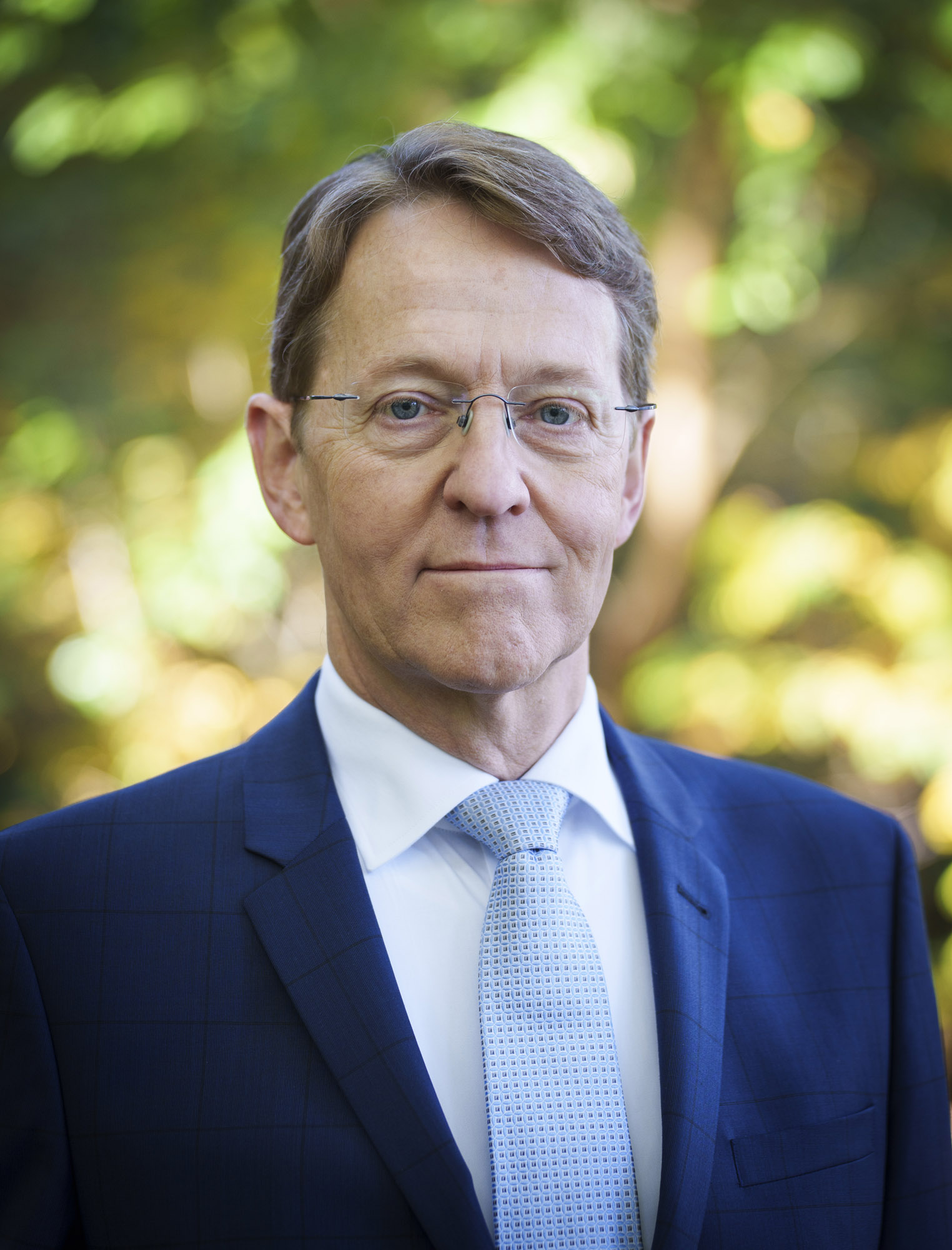
Gerard van der Steenhoven is a part-time Professor at the University of Twente's ITC Faculty and a Special Advisor to the Dutch Government's Ministry of the Interior. He has held leadership roles including Director General of the Royal Netherlands Meteorological Institute (KNMI, 2014–2023), Dean of the Faculty of Science and Technology at the University of Twente (2008–2014), and President of the Netherlands Physical Society (2007–2013). His career spans academic, governmental, and international science management, with a focus on climate science, meteorology, and astroparticle physics. Education: PhD in experimental physics from Vrije Universiteit Amsterdam (1987), followed by postdoctoral research at MIT (1987–1989). He joined Nikhef (National Institute for Subatomic Physics) in 1989, leading research in nuclear and high-energy physics, including the HERMES experiment at DESY and astroparticle projects like ANTARES. Research Interests: Climate risk reduction, earth observation systems, satellite instrumentation, nuclear physics, and the intersection of meteorology with policy. He spearheaded KNMI's infrastructure modernization, creating a National Early Warning Center and driving European initiatives like the EUMETSAT council (2018–2022). Current activities include climate initiatives such as the Delta Climate Centre and advising on disaster resilience. Awards: Member of Merit (NNV, 2014), Shell Travel Award (1988). Collaborations include HERMES and ANTARES consortia. Active in public science communication and policy advocacy through lectures and assessment committees.
Dr Glenn McDonald is an Associate Professor in the Agricultural Science department at the University of Adelaide. His research focuses on crop physiology, soil management, and stress tolerance in plants. He investigates how environmental factors like salinity, sodicity, and temperature affect crop yields, particularly in challenging agricultural environments such as alkaline soils and dryland regions. His work integrates agronomic practices, genetic screening, and advanced technologies like machine learning to enhance crop resilience and productivity. Key areas of interest include phosphorus use efficiency in cereals, soil microbiome dynamics, and the application of gypsum for soil amelioration. He has contributed to projects aimed at improving wheat and canola yields under suboptimal conditions through genotype selection, precision planting, and nutrient management strategies. His research demonstrates a strong emphasis on translating scientific findings into practical agricultural solutions. He collaborates on initiatives such as the GRDC Machine Learning Project analyzing soil and crop variability. His work addresses multifaceted challenges, including heat stress impacts on photosynthesis, root architecture adaptations, and the interplay between sowing timing and phosphorus responsiveness. Dr. McDonald’s publications reflect a commitment to advancing sustainable agricultural practices in arid and semi-arid regions.
Jeremy Claude Barnes is a postdoctoral researcher in the Department of Informatics at the University of Oslo, affiliated with the Language Technology Group. His work is centered on advancing natural language processing, particularly in sentiment analysis, cross-lingual transfer, and low-resource settings. Research Interests: Sentiment Analysis and Structured Sentiment Cross-lingual and Transfer Learning Negation and Speculation Detection Weak Supervision and Data Programming (e.g., skweak) Dialectal and Social Media NLP Norwegian Language Technology His recent publications show a strong focus on leveraging multi-task learning, graph-based parsing, and weak supervision to improve sentiment systems in both high- and low-resource languages. He has contributed significantly to Norwegian NLP through datasets and models. Scientific Contributions: Development of skweak , a weak supervision framework for NLP Creation of annotated datasets for Norwegian negation and dialects Advancements in structured sentiment analysis via dependency graphs Studies on emotion and sentiment transfer across languages Jeremy Barnes collaborates extensively with researchers at the University of Oslo, including Lilja Øvrelid, Erik Velldal, and Pierre Lison. He has not been mentioned as advising students or receiving awards in the available text. He is actively publishing and contributing to major NLP venues, indicating an ongoing and impactful research career.
Gustavo Yepes is a full professor at the Departamento de Física Teórica of the Universidad Autónoma de Madrid . He is affiliated with the Grupo de Astrofísica and the Theoretical Astroparticle Group , and is a member of the Centro de Investigacion Avanzada en Fisica Fundamental (CIAFF) and a research associate at the Center for Computational Simulation (CCS) . His research focuses on Cosmological Numerical Simulations , including projects like the Jubilee , Multidark , Music , and Clues initiatives. These collaborations aim to model galaxy and structure formation using supercomputers like MareNostrum . He has pioneered studies on constrained simulations of the Local Universe and the impact of baryonic physics on cluster dynamics. Teaching: Advanced courses in Computational Astrophysics, Large-Scale Structure, and Cosmology. Grants: Offers fellowships via the Spanish Ministry of Education (MECD) and European Marie Curie programs for PhD and postdoctoral researchers. Labs/Teams: Leads the Three Hundred Project and contributes to the Nikan2 Sunyaev-Zeldovich Large Program . His work bridges numerical methods, observational data, and theoretical models to understand cosmic phenomena like reionization and galaxy formation.
Maria Lia Napoli is a Fixed-term Assistant Professor in the Department of Structural, Geotechnical and Building Engineering (DISEG) at Politecnico di Torino, Italy. She is actively engaged in teaching and research in geotechnical engineering, with a focus on rock mechanics, slope stability, rockfall risk assessment, and the behavior of complex geological formations. Research Interests: Her research spans critical areas in geotechnical and environmental engineering, including rockfall source area characterization using the Susceptibility Index to Failure (SIF), coastal cliff stability, tunnelling in heterogeneous rock masses, and numerical modeling of geotechnical structures. She specializes in block-in-matrix formations, landslide risk analysis, and sustainability in geotechnical design. Recent Publications Trends: Her recent publications (2023–2025) demonstrate a strong focus on quantitative and numerical approaches to geohazard assessment. Key themes include the development and validation of the SIF and SAI indices for rockfall prediction, 3D slope stability analysis, failure mechanisms in coastal cliffs, and tunnelling in complex geotechnical environments. These works reflect interdisciplinary integration of field data, laboratory testing, and advanced simulation techniques. Promising Young Investigator Contest (ePIC) conferred by IACMAG 2020, Italy (2021) Riconoscimento per la pubblicazione 'A semi-quantitative approach to assess the propensity of rockfall source areas to instability based on the Susceptibility Index to Failure (SIF): the case study of Capo Calavà (Italy)' presented at VIII Convegno Nazionale dei Ricercatori di Ingegneria Geotecnica, Palermo, 5-7 July 2023, conferred by GNIG, Italy (2023) Teaching and Supervision: She has served as a teaching assistant and course collaborator in several undergraduate and graduate programs, including Civil Engineering, Environmental Engineering, and Building Engineering. She contributes to courses such as Geotechnics, Analysis and Design of Geotechnical Structures, Rock Mechanics, and Geotechnical Engineering for Sustainability. While no direct advisees are listed, her role in teaching and PhD-level instruction indicates active mentorship involvement. Research Projects: She leads research projects funded by commercial contracts, including a 2023–2026 study on understanding kinematic trends and a 2025 consulting project on slope support structures for a B&B in Camaiore. These reflect applied research with real-world geotechnical challenges.
Prof. Dr. Tova Milo is a prominent computer scientist and the Dean of the Faculty of Exact Sciences at Tel Aviv University. She holds the Chair of Information Management as a full professor and has served as Head of the Computer Science Department from 2011 to 2014. Her academic journey began with a doctorate in computer science from the Hebrew University of Jerusalem in 1992, followed by research positions at INRIA in Paris and the University of Toronto. Education: PhD in Computer Science (Hebrew University of Jerusalem, 1992) Milo’s research bridges database systems and theoretical approaches, focusing on large-scale data management. Key areas include semi-structured data , data-centric business processes , and crowdsourcing , with both theoretical and practical implications. Her work has shaped advancements in data integration, schema inference, and query optimization. She has received numerous accolades, including the ACM PODS Test-of-Time Award , the Weizmann Prize for Exact Sciences , and the VLDB Women in Database Research Award , reflecting her influence and advocacy for gender equality in STEM. Her leadership roles in major conferences (PODS, VLDB, ICDT) and editorial contributions (TODS, IEEE Data Engineering Bulletin) underscore her prominence in the field. Scientific Awards: ACM PODS Test-of-Time Award Weizmann Prize for Exact Sciences VLDB Women in Database Research Award IEEE TCDE Impact Award Fellow of the ACM Member of Academia Europaea Milo has secured significant grants from the Israel Science Foundation, US-Israel Binational Science Foundation, Israeli and French Ministries of Science, and the European Union, including an ERC Advanced Investigators Grant . She founded ExactShe , a mentoring program addressing gender disparities in exact sciences, further amplifying her commitment to inclusivity.
Mag.Dr. Andreas Eder is a Senior Scientist/Researcher at the Institute of Sustainable Economic Development, Department for Economics and Social Sciences, University of Natural Resources and Life Sciences Vienna (BOKU). Holding a Doctorate in Social and Economic Sciences from Vienna University of Economics and Business (2018) and a Master's/Bachelor's in Economics from University of Vienna, his work focuses on agricultural productivity, land fragmentation effects, and industrial robot impacts using econometric and efficiency analysis methods. PhD: Social and Economic Sciences, Vienna University of Economics and Business (2015-2018) MSc: Economics, University of Vienna (2011-2014) BSc: Economics, University of Vienna (2007-2011) Research interests center on agricultural economics, environmental efficiency measurement, and productivity analysis in sectors ranging from crop farming to manufacturing. His projects examine: Land fragmentation effects on Austrian crop farms Industrial robot impacts on employment and productivity Crop diversity-productivity relationships Environmental efficiency under heterogeneous conditions Eco-technical interdependencies Recent publications (2025-2022) analyze productivity trends via semiparametric estimation, land fragmentation impacts through technical efficiency models, and robotics-driven labor market changes using production frontier approaches. He applies methods like Data Envelopment Analysis (DEA) and Materials Balance Principle to address agricultural and industrial sustainability. Active in multiple conferences including European Association of Agricultural Economists (EAAE), International Association for Energy Economics (IAEE), and Austrian Economic Association (NOeG), Eder collaborates with institutions like Vienna University of Economics and Business, Institute for Industrial Research, and BOKU’s Institute of Sustainable Economic Development. Teaching involves courses classified under Statistics Austria in: Microeconomics, Econometrics, Production Management, Economic Policy, and Economic Theory. He participates in knowledge transfer through media contributions like the 2025 DerStandard.at article discussing Dutch agricultural exit programs as potential models for Austria.
Levent Ertuna is an Assistant Professor in the Department of Educational Sciences at the Faculty of Education, Sakarya University, Turkey. He is actively engaged in teaching, research, and academic service, with a strong focus on educational measurement, evaluation, and psychometrics. His work involves developing and validating assessment tools, analyzing educational data, and evaluating curriculum effectiveness. His primary research interests include Educational Measurement and Evaluation , Psychometrics , Scale Development , Multivariate Statistics , Assessment Design , and Teacher Education . He frequently employs advanced statistical techniques and the R programming language in his research. His work also extends to the evaluation of higher education reforms like the Bologna Process and the study of flexible learning environments. The most recent articles by Dr. Ertuna reflect a consistent focus on methodological rigor in educational research. His work spans the development and validation of achievement tests and scales, the investigation of statistical properties in testing (such as testlet effects and differential item functioning), and the evaluation of educational programs and professional development. A significant portion of his research is applied to real-world educational contexts in Turkey, addressing issues in K-12 education, higher education, and teacher training. Reviewer for journals including Online Journal of Technology Addiction and Cyberbullying , Sakarya University Journal of Education , and Abant İzzet Baysal Üniversitesi Eğitim Fakültesi Dergisi . Editor for Educational Measurement: Issues and Practice and SAGE Open . Editor for the book Participatory Educational Research . Dr. Ertuna has served as a researcher on successfully completed scientific research projects funded by higher education institutions, such as the 'Cultural Adaptation and Application Project of Fear of Recurrence Therapy (FRT)' and a study on 'Developing a Flexible Instructional Design Model for Transformed Learning Environments in Higher Education.' He has also been a member of the organizing committee for international academic events. He has taught undergraduate courses including Research Methods in Education, Measurement and Evaluation, and Teaching Practice.
Nancy E. McIntyre is a Professor in the Department of Biological Sciences at Texas Tech University and serves as Curator of Birds at the Natural Science Research Laboratory. Her research integrates landscape ecology, GIS, and remote sensing to study the impacts of land-cover change on ecological connectivity, with a focus on insects, birds, and wetland systems. Education: Postdoctoral Research Associate, Urban Ecology, Arizona State University (1998–2000) Ph.D., Ecology, Colorado State University (1998) M.S., Zoology, University of Georgia (1993) B.S. Magna cum laude, Zoology, University of Georgia (1991) Her research focuses on pattern-process relationships in human-altered landscapes, particularly examining how habitat fragmentation affects biodiversity, species distributions, and ecosystem function. She studies a wide range of taxa, with special emphasis on Odonata and birds. Her lab combines field studies, spatial modeling, and geospatial technologies to address both fundamental and applied ecological questions. The recent publications reflect a strong trend in using remote sensing, GIS, and modeling to assess landscape connectivity, land-cover change, and species responses across diverse systems—from dragonflies in isolated wetlands to desert tortoises and prairie-chickens in fragmented habitats. There is a consistent focus on conservation applications and predictive modeling under climate and land-use change scenarios. Scientific Awards and Recognitions: Multiple Sigma Xi, NASA-MSU, and HHMI awards Graduate fellowships including Colorado State University Dissertation Fellowship University-level awards for mentoring and research excellence Student awards in landscape ecology, entomology, and conservation Dr. McIntyre has successfully advised numerous M.S. and Ph.D. students, many of whom have received external funding and published in high-impact journals. Her lab is supported by grants from NSF, Department of Interior, USDA, and other agencies, reflecting sustained research productivity. She also leads interdisciplinary projects that bridge ecology, education, and museum science.
Sam Abbott is an Assistant Professor in Infectious Disease Epidemiology and Dynamics at the London School of Hygiene and Tropical Medicine (LSHTM), where he is based in the Epiforecasts group. He also holds concurrent appointments as a Research Fellow at LSHTM (January 2020-present) and as a Research Associate at SACEMA in South Africa (December 2021-present). Prior to his current academic position, he worked as a Data Scientist at Funding Circle (2017-2019) and completed his PhD at the University of Bristol. His educational background includes: PhD in Epidemiology from the University of Bristol (2015-2019) MSc in Advanced Mathematical Biology from the University of York (2014-2015) MMath in Mathematics from the University of Durham (2010-2014) Abbott's research focuses on developing, evaluating, and applying methods for improving our understanding of infectious disease dynamics in real-time. He is particularly interested in nowcasting right-truncated data, forecasting variant dynamics, reconstructing unobserved infections from various data sources, and estimating key epidemiological parameters such as the effective reproduction number, growth rate, and generation interval distribution. He is committed to open and collaborative science, with much of his recent work focused on the COVID-19 response, though his underlying focus is pathogen-agnostic sparse data settings. Analysis of his recent publications reveals a strong emphasis on methodological development for real-time infectious disease surveillance and forecasting. His work frequently addresses challenges in nowcasting, forecasting accuracy, model evaluation, and integration of diverse data sources for improved epidemic understanding, with significant contributions to understanding variant dynamics (Delta, Omicron), the impact of public health measures, and collaborative forecasting approaches. Abbott received the Directors Early Career Researcher Award in 2020 and has secured grant funding including 'Surge-capacity public health modelling support for COVID-19 Omicron wave and post-wave' from Stellenbosch University (May-October 2022). As an educator, Abbott teaches on the modern methods for infectious disease modelling short course, particularly leading the best practices session. He is active in the epinowcast community, developing open-source tools and methods for current surveillance of infectious diseases and preparing for future outbreaks. His technical expertise includes R, Julia, and Stan programming languages.
Claire David is an Associate Professor in the Department of Computer Science at the University of Paris-Est Marne-la-Vallée, where she has held a full-time academic position since September 2010 as a core member of the Algorithmics team within the Computer Science Laboratory of the Gaspard Monge Institute (UMR 8049). Her academic journey includes a PhD completed between 2004-2008 at LIAFA under the supervision of Anca Muscholl (LABRI) and Luc Segoufin (Inria Futur), followed by a postdoctoral position (2008-2010) in the database group at the University of Edinburgh with Leonid Libkin. Her foundational work centers on formalisms for describing word languages and infinite-alphabet "data" trees, with direct applications to schema specification in semi-structured XML databases. Dr. David's research program bridges theoretical computer science and practical database systems, specializing in logical and automata-theoretic approaches to data representation. Her expertise in Database Theory, Formal Languages, and Logic in Computer Science has been applied through active participation in the European FoX project during her Edinburgh postdoc, developing theoretical tools for semi-structured data management. She maintains significant academic service commitments including membership in CNU section 27 since November 2015 and program committee roles for premier conferences: ICDT (2020, 2018, 2014, 2012), PODS (2016, 2014, 2015 PhD Symposium), Datalog 2.0 (2019), and BDA (2013, 2011). Her institutional leadership includes heading UPEM's third-year computer science degree since 2012 and serving on the LIGM laboratory board and teaching components IGM (2015-present) and ESIPE (2015-2018). Based at Cité Descartes (Room 4B132), she operates within the interdisciplinary framework of the Gaspard Monge Institute, which fosters collaboration between computer science and mathematics research units. Her administrative portfolio demonstrates sustained commitment to curriculum development and laboratory governance within UPEM's computer science ecosystem.
Dr. Daria Grzywacz is an adjunct academic at the University of Gdańsk , affiliated with the Faculty of Chemistry and specifically the Department of Organic Chemistry . Her research focuses on the synthesis and biological evaluation of steroidal glycosides and antimicrobial peptides, with a particular emphasis on combating biofilm infections and fungal pathogens. Key research areas: Glycochemistry, Medicinal Chemistry, Biofilm Infections Primary institution: University of Gdańsk Laboratory: Laboratory of Glycochemistry Her scientific work spans the design of bioactive compounds , including diosgenyl and betulin derivatives, and the investigation of antimicrobial mechanisms against Candida and bacterial biofilms. She has contributed to understanding protease-mediated peptide inactivation and developed biodegradable peptide conjugates for targeted applications. The 15 most recent publications highlight her expertise in organic synthesis and pharmacological evaluation , with recurring keywords like antimicrobial peptides , steroidal derivatives , and biofilm degradation . Subfields include drug design, chemical modification techniques, and host-pathogen interaction studies. Dr. Grzywacz's work has involved collaborations on anti-infective coatings for medical devices and the application of TLC bioautography for rapid antimicrobial screening. She has not received any explicitly listed scientific awards in the provided data.
Xi Wu is a faculty member at Chengdu University of Information Technology , affiliated with the School of Computer Science . He holds a PhD from Sichuan University (2012, College of Electronic and Information Engineering). Current Research Focus: Medical imaging, computer vision, and deep learning applications in healthcare Key Themes: PET image reconstruction, radiotherapy dose prediction, GANs, diffusion models, and facial expression recognition His recent work explores transformer architectures , semi-supervised learning , and uncertainty-aware models for tasks like tumor segmentation and multi-organ analysis. Publications emphasize cross-domain adaptation and multi-modal medical imaging .
Sophia Keller serves as a Researcher at the University of Applied Sciences Wels, Austria, within the Research Center Wels Center of Excellence Automotive/Mobility, specializing in Materials engineering. She holds a BSc and Dipl.-Ing. (Diplom-Ingenieur) degree, reflecting her engineering background. Her research integrates Composite Materials, Computational Mechanics, and Artificial Intelligence to advance composite manufacturing processes. Key focus areas include draping simulation optimization, finite element analysis acceleration through AI surrogates, and automation of fabric preforming using reinforcement learning. She develops novel methodologies for geometric defect detection and validation via 3D laser scanning. Recent publications (2023-2025) demonstrate a clear trajectory toward AI-enhanced engineering simulations, with increasing emphasis on real-time automation and quality control in composite production. Her work bridges computational modeling with industrial manufacturing challenges. She received significant recognition through academic awards: FH Wels InnovationAward (2022) As an active Co-Investigator on major research grants, Keller contributes to projects addressing automotive composite manufacturing challenges. Her collaborative work on AdiosRivet (2023-2026) focuses on welded joints for TP-CFRPC vehicle structures, while Pre-2-K (2025-2026) develops semi-automated preform manufacturing for complex 3D components. She operates within the Research Center Wels ecosystem, collaborating with engineering teams on laser scanning validation, robot-supported fiber angle measurement, and AI-driven process automation for the automotive mobility sector.