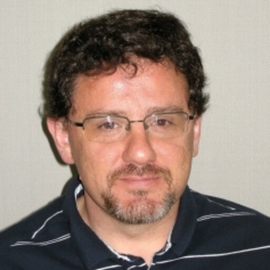
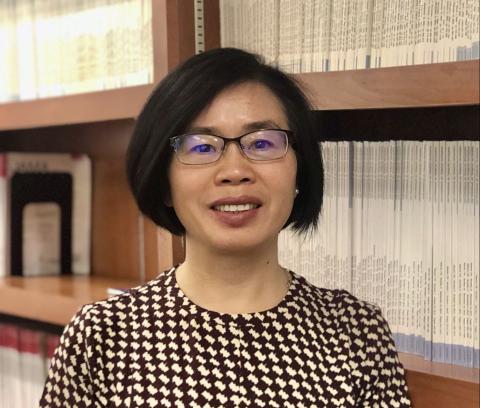
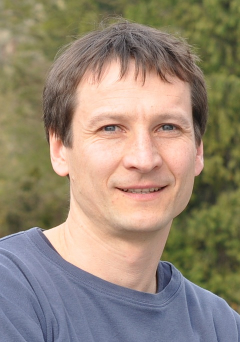
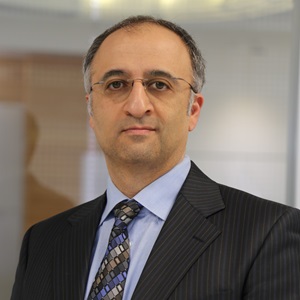
Pedro Galeano is an Associate Professor in the Department of Statistics at Universidad Carlos III de Madrid (UC3M) since 2009. He holds a PhD in Statistics (2004) under Prof. Daniel Peña, focusing on multiple time series. Previously, he served as Visiting Assistant Professor of Statistics and Econometrics at the University of Chicago’s Graduate School of Business and as a Postdoctoral Fellow at the Department of Statistics and Operations Research at Universidade de Santiago de Compostela. His research focuses on time series analysis, outlier detection, Bayesian inference in financial models, and functional data analysis with applications to missing data. He is an Associate Editor of the Journal of Time Series Analysis and advises the Heliyon journal. Key contributions include developing methodologies for detecting structural breaks, modeling systemic risk via copula approaches, and advancing robust statistical techniques for high-dimensional data. Active in academic leadership, Galeano co-organized the NICDA Workshop 2025 and has published extensively on topics like dynamic factor models, sequential parameter change detection, and functional data applications in energy markets. His work bridges theoretical statistics with practical applications in finance, economics, and environmental science.
Sara van de Geer is a Full Professor at the Seminar for Statistics within the Department of Mathematics at ETH Zürich since 2005. She previously held academic positions at the University of Leiden, Université Paul Sabatier (Toulouse), and others. She earned a Master's (1982) and Ph.D. (1987) in Mathematics from Leiden University. Her research focuses on high-dimensional statistics, empirical processes, and mathematical foundations of machine learning. Van de Geer has received prestigious recognitions including the Van Wijngaarden Award (2016), Knight in the Order of Orange-Nassau (2015), and membership in Leopoldina (2013). She served as President of the Bernoulli Society (2015–2017) and Chair of the Seminar for Statistics at ETH Zürich. Her contributions include landmark works on statistical learning theory and high-dimensional inference, with key publications in top journals like Annals of Statistics and SIAM/ASA Journal on Uncertainty Quantification. Her academic leadership includes organizing Saint Flour Lectures, Wald Lectures (2016), and delivering plenary lectures globally. Her research bridges theoretical statistics with applied methodologies, emphasizing rigorous mathematical frameworks for modern data analysis challenges.
Marco Pirra is a Researcher in the Department of Economics, Statistics and Finance at the University of Calabria, Italy. He holds a position in the academic rank of Researcher and is actively involved in teaching and research within the Finance and Insurance master's program. His contact information includes the email marco.pirra@unical.it and phone number 0984/492436. Marco Pirra's primary research areas encompass: Actuarial Science, with focus on insurance reserving, Solvency II, and technical provisions Risk Management in insurance, including cyber risk, agricultural risk, and long-term care insurance Stochastic modeling for mortality, disability, and financial markets Application of econometric and statistical methods to insurance and finance problems His research is characterized by the use of advanced quantitative techniques to address complex challenges in the insurance industry. Analysis of his recent publications (2020-2025) reveals a consistent focus on actuarial applications, particularly in the areas of claims reserving, Solvency II compliance, and emerging risks. He has made significant contributions to the understanding of cyber risk insurance and weather index-based insurance for agriculture. His work often involves collaboration with colleagues from the University of Calabria and other institutions. No scientific awards were mentioned in the provided text. Details about Marco Pirra's advisees and research grants were not provided in the available information. He is a member of the research group "Metodi quantitativi per l'economia, la finanza ed il management" (Quantitative Methods for Economics, Finance and Management) at the DESF department. This group conducts research using mathematical programming, econometric techniques, and statistical methods. Additionally, he is associated with the "Finance & Insurance Atelier" laboratory, which focuses on research in finance and insurance.
Dr. Mei-Ling Ting Lee is a Professor in the Department of Epidemiology and Biostatistics at the University of Maryland, College Park. She specializes in developing statistical models, notably the first hitting-time based threshold regression (TR) for analyzing time-to-event survival data, which has been extended to machine learning applications. As the Founding Editor and Editor-in-Chief of the Lifetime Data Analysis journal, she has significantly contributed to the field of time-to-event data methodologies. Her research encompasses genomic data analysis, statistical distribution theory, nonparametric methods, and applications in epidemiology. Dr. Lee has authored over 150 peer-reviewed articles and a seminal monograph, Analysis of Microarray Gene Expression Data (2004), widely used in genomic research. She has also co-edited influential books, including Lifetime Data Models in Reliability and Survival Analysis (1995) and Risk Assessment and Evaluation of Prediction (2013). Education: BS in Mathematics (National Taiwan University), MS (National Tsing Hua University), MA and PhD in Mathematics/Statistics (University of Pittsburgh). Her work focuses on integrating statistical theory with practical applications, including clinical trials, genomic studies, and public health research. She leads initiatives in statistical software development (e.g., R packages like clusrank ) and advocates for rigorous methodological standards in survival analysis.
Simon Spencer is a Professor of Statistics at the University of Warwick, affiliated with the Zeeman Institute for Systems Biology and Infectious Disease Epidemiology Research (SBIDER) and the Warwick Analytical Sciences Centre (WASC). His research focuses on Bayesian inference applied to epidemiology, stochastic epidemic models, and statistical methods for analytical science. He has held previous positions at the University of Nottingham and Massey University in New Zealand. His teaching includes advanced courses such as CH923: Statistics for Data Analysis , ST925: Graduate Topics in Statistics , and MA4M1/MA6M1: Epidemiology by Example . His research group currently includes PhD students Matthew Adeoye and Richard Haughey, and MSc students Olli Smith and Sangavi Pirabakaran. He collaborates extensively with global health institutions on projects addressing infectious disease modeling and public health policy. Spencer’s work bridges statistical methodology and real-world applications, with a focus on outbreak detection, model comparison, and the integration of geostatistical data with transmission models. His recent contributions include frameworks for lymphatic filariasis elimination projections and analyses of HIV transmission dynamics in Uganda. He actively contributes to interdisciplinary research in systems biology and analytical chemistry, leveraging advanced statistical techniques to address complex health challenges.
Hua He is a Professor in the Department of Biostatistics and Data Science at Tulane University's School of Public Health and Tropical Medicine, specializing in advanced statistical methodologies for public health research. Her work bridges theoretical biostatistics with practical applications in infectious disease diagnostics and causal inference frameworks. Her academic credentials include: PhD in Statistics, University of Rochester MA in Statistics, University of Rochester BS in Mathematics, Southwest Normal University, China Dr. He's research focuses on mixture population modeling, causal inference, longitudinal data analysis, and ROC analysis, with significant applications in tuberculosis diagnostics and molecular epidemiology. She develops novel statistical approaches for social media data analysis, drinking outcome modeling, and zero-modified datasets, emphasizing methodological rigor in public health contexts. Her textbook Applied Categorical and Count Data Analysis and edited volume Statistical Causal Inferences and Their Applications in Public Health Research establish her as a leading methodological authority. Recent publications (2023-2025) demonstrate a concentrated focus on CRISPR-based diagnostic technologies and next-generation sequencing for tuberculosis detection, with strong emphasis on point-of-care applications, diagnostic accuracy validation, and low-resource setting adaptations. These works integrate biostatistical innovation with molecular diagnostics to address critical gaps in infectious disease control. Her scientific recognition includes: Teaching Excellent Award (2020) Dr. He directs the Methodology/Biostatistics Unit at Tulane University Translational Science Institute (TUTSI) and serves as Principal Investigator for an NIH R01 grant Moving beyond description: statistical and causal inference for social media data , alongside multiple pilot studies and foundation-funded projects. She has contributed biostatistical expertise to dozens of NIH-funded investigations, particularly in tuberculosis and infectious disease research. As Co-director of TUTSI's Clinical Research Core and Statistical Deputy Editor for the American Journal of Public Health , she leads institutional research infrastructure while advancing methodological standards in public health science.
Prosper Dovonon is Full Professor of Economics at Concordia University, Montréal, Canada, where he holds the Tier 1 Concordia University Research Chair in Econometrics of Large Datasets . He is concurrently Adjunct Professor at the University of Adelaide, Australia, and has previously served as Associate and Assistant Professor at Concordia, Visiting Professor at HEC Montréal, and Assistant Vice-President at Barclays Wealth in London. Education Ph.D. in Economics, Université de Montréal (2007) M.Sc. in Statistics and Economics, ENSEA, Abidjan, Côte d’Ivoire (2000) M.Sc. in Mathematics, Université Nationale du Bénin, Abomey-Calavi, Benin (1996) Research Interests Professor Dovonon’s research lies at the intersection of theoretical econometrics and financial data applications . He focuses on developing robust inferential procedures for moment-condition models, bootstrap techniques for high-frequency data, identification issues in GMM, and volatility modeling with factor structures that accommodate skewness and leverage effects. His work on large-dimensional datasets emphasizes scalable methods for estimation and testing in big-data environments. Scientific Awards & Recognition Concordia University Research Chair, Tier 1, in Econometrics of Large Datasets (2022–present) Collaborations & Affiliations Beyond Concordia and the University of Adelaide, he is affiliated with the Centre Interuniversitaire de Recherche en Économie Quantitative (CIREQ) in Montréal and has collaborated with leading scholars across North America, Europe, and Australia. His research is frequently cited in top econometrics and statistics journals, attesting to its broad impact.
Daniel Baum is a Research Professor and Head of the Visual Data Analysis research group at the Zuse Institute Berlin (ZIB), which is affiliated with Freie Universität Berlin. His work spans across scientific visualization, computational biology, and image analysis, with a particular focus on developing methods for analyzing complex biological structures and neural circuits. He is actively involved in multiple interdisciplinary research projects including HFSP Chitons, Geometric Learning for Single-Cell RNA Velocity Modeling, and RobustCircuit. Dr. Baum's research interests center on visual and data-centric computing approaches to solve complex problems in biology and medicine. His work bridges the gap between computational methods and biological applications, with significant contributions to cryo-electron tomography analysis, neural circuit mapping, and geometric morphometrics. He develops innovative algorithms for 3D reconstruction, image segmentation, and visualization of biological structures, from molecular to organismal scales. His publication record demonstrates consistent contributions to visualization techniques applied to biological problems, with recent work focusing on neural circuit analysis in zebrafish and Drosophila, biomechanical studies of animal structures, and advanced methods for analyzing ancient artifacts. The research shows a clear trajectory toward increasingly sophisticated multimodal data integration and machine learning approaches. Dr. Baum leads a productive research group with several key collaborators who frequently appear as co-authors on his publications, indicating a strong mentoring relationship. His projects involve substantial funding from various sources supporting interdisciplinary collaborations across biology, computer science, and engineering. His laboratory at ZIB focuses on visual data analysis for complex biological systems, with particular strength in developing computational methods for neuroscience applications and biomaterial analysis. The group maintains strong collaborations with multiple institutions working on cutting-edge imaging technologies and biological model systems.
Prof. Dr. Haris Gačanin is a faculty member at RWTH Aachen University, affiliated with the Institute for Distributed Signal Processing under the College of Electrical Engineering. His research focuses on integrating machine learning with wireless communication systems, particularly in industrial IoT, edge computing, and network optimization. Current academic rank: Professor Contact: harisg@dsp.rwth-aachen.de Research Interests: Wireless systems, machine learning, signal processing, and network optimization. Key contributions include: Adaptive resource allocation in IIoT and vehicular networks AI-driven channel estimation and feedback mechanisms Security-oriented emitter identification via metric learning Federated/transfer learning for edge environments Hardware-efficient deep learning models for mmWave and THz communications Methodological Focus: Combines reinforcement learning, attention mechanisms, and robust neural architectures with practical implementations on FPGA and vehicular systems.
Ata Zadehgol is an Associate Professor (promoted to Full Professor in 2025) in the Department of Electrical and Computer Engineering at the University of Idaho, College of Engineering. He is the founding director of the Applied Computational Electromagnetics and Signal/Power Integrity (ACEM-SPI) Laboratory. His academic journey includes a Ph.D. from the University of Illinois at Urbana-Champaign (2011), an M.S. from UC Davis (2006), and a B.S. from the University of Washington (1996). He spent over a decade in the microelectronics industry before joining academia. Ph.D., Electrical and Computer Engineering, University of Illinois at Urbana-Champaign, 2011 M.S., Electrical and Computer Engineering, University of California, Davis, 2006 B.S., Electrical Engineering, University of Washington, Seattle, 1996 Dr. Zadehgol's research focuses on computational electromagnetics , signal and power integrity , and modeling of multi-scale and stochastic systems . His work spans from low-frequency to terahertz regimes, with recent expansion into quantum electrodynamics and photonics. He develops advanced computational algorithms for efficient and stable modeling of electromagnetic systems, including FDTD methods, reduced-order modeling, and machine learning applications. The research articles highlight a consistent focus on electromagnetic modeling , signal integrity , and computational efficiency . Key themes include FDTD sub-gridding, stochastic surface roughness in waveguides, stability of transfer functions, and macro-modeling for antennas and interconnects. The publications span IEEE Transactions, Applied Mathematics and Computation, and Electronics, reflecting interdisciplinary work bridging engineering, physics, and numerical methods. Best Poster-Paper Award, IEEE EDAPS, 2016 University of Idaho Presidential Mid-Career Award, 2020 Outstanding Faculty Award, College of Engineering, 2025 NSF Recognition for Novel Algorithm for Optical Interconnects, 2018 Dr. Zadehgol has secured significant research funding from the National Science Foundation (NSF) , NASA , Micron Technology , and Schweitzer Engineering Laboratories (SEL) . He advises graduate students in the ACEM-SPI Lab, though specific names are not listed. His lab supports research in computational electromagnetics, signal/power integrity, and quantum engineering applications. Future work includes advancing modeling techniques for quantum systems and high-frequency electronics. The Applied Computational Electromagnetics and Signal/Power Integrity (ACEM-SPI) Laboratory , which he founded and directs, serves as the central hub for his research group. The lab focuses on algorithm development for electromagnetic simulation, signal integrity analysis, and emerging applications in quantum science. It is supported by federal and industrial grants and collaborates with partners in academia and industry.
Dr Melvyn Weeks serves as a University Senior Lecturer, Director of Teaching, and Director of Undergraduate Studies at the Faculty of Economics, University of Cambridge. His academic leadership spans curriculum development and student supervision within one of the world's leading economics departments. Specializing in Microeconometrics , Causal Inference , and Machine Learning , Weeks' research bridges advanced statistical methodology with real-world economic applications. His work prominently features in energy economics (analyzing consumer behavior in prepayment energy systems), development economics (examining microcredit impacts and religious institution effects in India), and economic growth theory (addressing model uncertainty in convergence clubs). Publication trends reveal a consistent integration of machine learning techniques with traditional econometric frameworks, particularly in causal tree estimation for heterogeneous treatment effects and robust model averaging approaches. His recent work demonstrates growing emphasis on machine learning applications in economics , causal inference methodologies , and distributional analysis across diverse economic contexts. As a doctoral supervisor, Weeks mentors PhD candidates including Christian Tien (focusing on causal inference and machine learning applications) and Cheuk Fai Ng (specializing in cluster-robust inference for high-dimensional regression). His teaching portfolio spans foundational statistical inference through advanced topics including machine learning in economics, causal inference, and research computing. Based at Clare College with office in Room 60, Weeks maintains active research collaboration through the Faculty of Economics' Econometrics Research Group, contributing to Cambridge's reputation in quantitative economic analysis.
Wenlong Mou is an Assistant Professor at the University of Toronto's Department of Statistical Sciences, with additional affiliation at the Vector Institute for AI. His research develops optimal statistical methods and efficient algorithms for data-driven decision-making, focusing on reinforcement learning, stochastic approximation, and causal estimation. He teaches advanced courses in theoretical statistics (STA3000) and stochastic processes (STA447/2006). Education: Ph.D. in EECS, University of California, Berkeley (2023) B.Sc. in Computer Science and Economics, Peking University Research Focus: Mou's work bridges statistical theory with machine learning practice. Key areas include: Theoretical foundations of reinforcement learning (e.g., Bellman equations, continuous-time systems) Efficient algorithms for semi-parametric estimation and debiasing Non-asymptotic analysis of stochastic optimization and MCMC methods High-dimensional statistical inference and causal modeling Publication Trends: Recent articles (2023–2025) emphasize reinforcement learning theory (policy evaluation, adaptive interpolation), causal inference (debiased estimators, propensity scores), and statistical computing (diffusion processes, Langevin algorithms). Methodological rigor and non-asymptotic guarantees characterize his work. Awards: INFORMS APS Student Paper Competition Finalist (2022) Advising and Labs: Actively recruiting PhD students with backgrounds in mathematics or deep learning. Students access GPU clusters via the Vector Institute. Grants unspecified in sources.
Professor Miguel A. Carreira-Perpiñán is a faculty member in the Department of Computer Science & Engineering at the University of California, Merced's School of Engineering. His current research focuses on the intersection of optimization and machine learning, particularly algorithms for deep neural networks and nonlinear embeddings. He has advised multiple PhD students in areas spanning decision trees, clustering, and robotics applications. PhD in Computer Science (2001), University of Sheffield Licenciado en Informática (1995), Technical University of Madrid Research interests include: Machine learning algorithms and representations Optimization for deep learning and nested systems Dimensionality reduction and unsupervised learning Applications in computer vision, speech processing, and robotics His recent publications demonstrate trends in tree-based optimization (TAO algorithm), neural network compression techniques, and interpretable machine learning models. Papers from 2022-2015 highlight extensions of the method of auxiliary coordinates (MAC) to distributed systems, binary autoencoders, and nonlinear embeddings. Scientific awards and grants include: NSF Career Awards (2006-2011) Google Faculty Research Award (2013-2014) NSF Grant IIS #2007147 (2020-2023) for tree alternating optimization Notable Paper Award at AISTATS 2014 Current professional service includes area chair positions at NeurIPS 2025, ICML 2025, and AAAI 2025. He leads the Learning-Compression (LC) algorithm development for neural network optimization and collaborates with researchers at institutions including Meta AI, Google DeepMind, and the University of Iowa.
Silvia Polettini is an Associate Professor in Statistics at the Department of Social and Economic Sciences, University of Rome "La Sapienza". She has been with the university since 2011, achieving the rank of Associate Professor in 2020. Prior to this, she served as a Researcher at the University of Naples Federico II from 2005 to 2011, and worked at the National Institute of Statistics (ISTAT) from 2000 to 2005. Her academic journey began with a Statistical Officer position at the Italian Ministry of Health from 1998 to 2000. Her educational background includes: 1994: Bachelor's Degree with honors in Statistical and Demographic Sciences, University of Rome "La Sapienza" 1999: Ph.D. in Methodological Statistics, University of Rome "La Sapienza" Silvia Polettini's research spans several critical areas in modern statistics. Her work in Bayesian Statistical inference has produced innovative approaches for handling complex data structures. She has made significant contributions to Official Statistics , particularly in methodologies for data protection and disclosure risk assessment. Her expertise in Statistical Disclosure Risk Estimation and Microdata Protection has positioned her as a leading researcher in data privacy. The development of Bayesian Semi-parametric Modeling for Small Area Estimation represents another major strand of her work, with applications across social and economic domains. Her research on Measurement Error Models addresses fundamental challenges in data quality, while her work on Latent Variable Models and Survival Analysis extends into demographic and health applications. An analysis of her recent publications reveals a clear trajectory focusing on addressing underreporting issues in sensitive social phenomena, particularly violence against women, using sophisticated Bayesian methods. Her work bridges theoretical statistical innovation with practical applications in social policy. The integration of small area estimation techniques with measurement error models represents another significant theme, enabling more accurate regional and demographic analyses despite data limitations. Professor Polettini has been actively involved in numerous research projects, including several PRIN (Progetti di Rilevante Interesse Nazionale) initiatives and international collaborations. Her leadership in projects like "ESSnet on Statistical Disclosure Control" funded by Eurostat and "Data Linkage and Anonymisation" supported by the Isaac Newton Institute demonstrates her standing in the international statistical community. She has served as principal investigator for multiple research projects focused on disclosure risk estimation, small area modeling, and addressing underreporting in social data. Her teaching responsibilities include Statistics for Political Science and International Relations students, as well as Statistics for Economic Applications for International Economic and Financial Relations students. Office hours are held on Thursdays from 10am to 12pm, available both in person and online by appointment.
Gennady Samorodnitsky is a Professor in the School of Operations Research and Information Engineering (ORIE) at Cornell University. He holds a B.S. from the Moscow Steel and Alloys Institute (1978), M.S. from Technion – Israel Institute of Technology (1983), and a D.Sc. from Technion (1986). He joined Cornell in 1988 and has held visiting positions at the University of North Carolina at Chapel Hill and Boston University. His research focuses on stochastic processes, particularly heavy-tailed distributions, long-range dependence, and extreme value theory, with applications in finance, teletraffic, and climate modeling. Education: B.S., Moscow Steel and Alloys Institute, USSR, 1978 M.S., Technion – Israel Institute of Technology, 1983 D.Sc., Technion – Israel Institute of Technology, 1986 Samorodnitsky’s research interests span stochastic modeling, including heavy-tailed processes, self-similar processes, and extreme value analysis. He examines the behavior of financial and telecommunication systems under long memory and non-Gaussian conditions. Key areas include the statistical analysis of extremes in climate data and the theoretical foundations of stable and infinitely divisible processes. His work bridges probability theory with applications in risk management, network traffic analysis, and climate science. His publications explore topics such as high-level excursion sets in random fields, tail inference, and the interplay between ergodic theory and stochastic processes. He has contributed to books like Stochastic Processes and Long Range Dependence and authored numerous technical reports on topics like ruin probabilities and multivariate extremes. Samorodnitsky teaches advanced courses, including ORIE 7590: Martingales in Discrete and Continuous Time , and maintains an active role in academic conferences and collaborations. His research group investigates cutting-edge problems in high-dimensional extremes, privacy-aware learning, and topological data analysis.