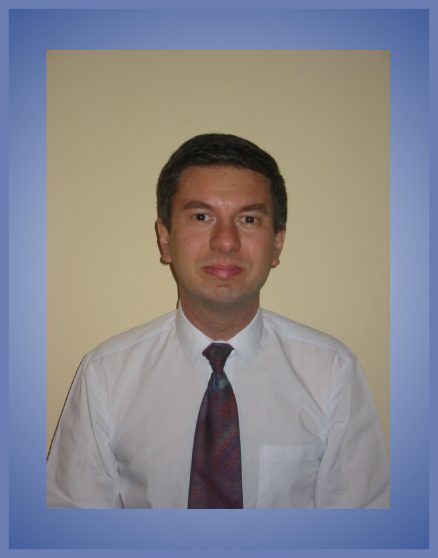
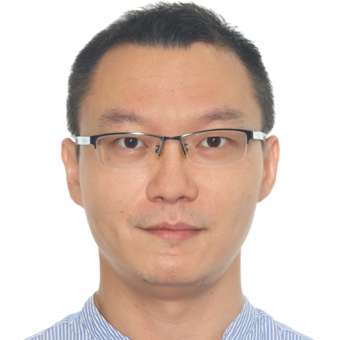
Cordian Riener is a Professor of Mathematics at UiT The Arctic University of Norway, serving as Pro-Dean for PhD education within the Faculty of Science and Technology. He leads the Algebra group and co-directs the Lie-Størmer Center for Fundamental Structures in Computational and Pure Mathematics. His academic roles include chairing the Norwegian Mathematics Council and membership on the Abel Prize board. Riener holds a Habilitation in Mathematics from Universität Konstanz (2018) and a PhD from Goethe University Frankfurt (2011), with prior roles including Acting Professor at Universität Konstanz and Aalto Science Institute Fellow in Helsinki. His research focuses on real algebraic geometry, optimization, computational complexity, and symmetry exploitation in algorithms. Notable contributions include work on semidefinite programming, polynomial optimization under symmetry, and cohomology of semi-algebraic sets. Recent publications address connectivity in symmetric sets, orbit space descriptions, and applications of symmetry in trigonometric polynomials. Riener actively organizes conferences like ISSAC and MEGA, and contributes to educational initiatives such as the Norwegian Mathematics Council.
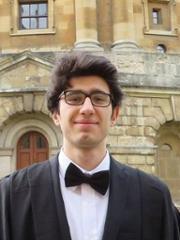
Toghrul Karimov is a postdoctoral researcher at the Max Planck Institute for Software Systems (MPI-SWS) in Saarbrücken, Germany, working on the ERC Synergy Grant “DynAMiCs” since April 1, 2025. He collaborates with Valérie Berthé on decision problems at the intersection of dynamical systems theory, logic, and number theory. His educational background includes: Bachelor’s and Master’s degrees from the University of Oxford (2019) Doctoral degree from Saarland University and MPI-SWS (2024) Dr. Karimov’s research focuses on the algorithmic analysis of linear dynamical systems, with emphasis on decidability, verification, and computational complexity. His work bridges theoretical computer science with mathematical logic and number theory, particularly investigating reachability problems, linear recurrence sequences, and the application of o-minimal structures to verification. He employs techniques from automata theory and model theory to solve long-standing problems in the field. His publication record demonstrates consistent contributions to top-tier venues including LICS, ICALP, and SODA, with a clear trajectory toward resolving fundamental questions in dynamical systems verification. Recent work shows increasing sophistication in handling parametric systems and probabilistic extensions, while maintaining strong connections to number-theoretic foundations. His scientific recognition includes: Distinguished Paper Award at LICS 2024 ACM SIGBED Best Paper Award at HSCC 2024 Currently supported by the ERC Synergy Grant “DynAMiCs”, Dr. Karimov maintains an active collaborative research program without current student supervision. His work involves frequent co-authorship with leading researchers across MPI-SWS and IRIF, reflecting the highly interdisciplinary nature of his investigations. He contributes to MPI-SWS’s theoretical computer science research cluster, focusing on the mathematical foundations of software systems verification through the lens of dynamical systems and logic.
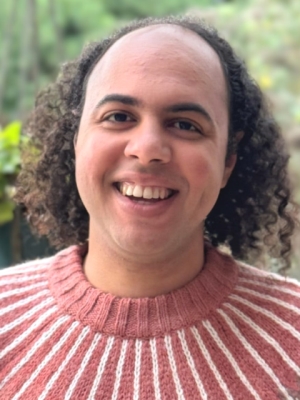
Dr. Evren Mert Turan is a Lecturer at ETH Zürich's Department of Energy and Process Systems Technology. His academic background includes a Bachelor's and Master's in Chemical Engineering from the University of Cape Town, followed by a PhD in Process Systems Engineering at the Norwegian University of Science and Technology. His research focuses on integrating machine learning and optimization techniques to address decision-making challenges under uncertainty in energy systems and process engineering. Evren's expertise spans model predictive control, real-time optimization, and data-driven approaches for complex systems. He has contributed to advancements in semi-infinite programming, feedback control policies, and steady-state detection algorithms. His work emphasizes practical applications in sustainable energy systems and industrial process optimization. Key research trends include the development of neural network-based control strategies, convex optimization methods for reduced computational complexity, and experimental validation of novel algorithms. His publications highlight interdisciplinary approaches blending machine learning with traditional engineering methodologies. Evren currently teaches the course 'Introduction to Modeling and Optimization of Sustainable Energy Systems' and actively engages in collaborative research at ETH Zürich. His contributions to scientific machine learning aim to enhance robustness and reliability in dynamic systems analysis.
Dr. Zeev Sobol is a Senior Lecturer in Mathematics at Swansea University's School of Mathematics and Computer Science. His research focuses on elliptic and parabolic partial differential equations, functional analysis, and stochastic processes. He has contributed to studies on semigroup theory, nonlinear analysis, and mathematical physics. Dr. Sobol teaches modules such as Fundamental Geometry (MA-004), Credibility, Liability and Ruin (MA-274), and Probability and Statistics for Finance (MA-M49). His work includes analysis of Einstein's Brownian motion model, stability of solutions to Forchheimer equations, and singular solutions to elliptic inequalities. His research spans over two decades, with notable contributions to operator theory and infinite-dimensional stochastic systems. Research Highlights: Key contributions include revisiting Einstein's Brownian motion model (2023), analyzing semigroups with singular coefficients (2017), and exploring degenerate quasi-linear parabolic equations (2011). Dr. Sobol collaborates on international projects and maintains an active presence in academic publishing, with works featured in journals like the Proceedings of the London Mathematical Society and Annals of Probability . His teaching reflects expertise in actuarial science and mathematical finance, integrating programming tools like R for statistical analysis.
Jean-Jacques Strodiot is a Professor in the Department of Mathematics at the University of Liège's Faculty of Science. With a research career spanning over 45 years from 1977 to 2022, he has established himself as a leading expert in optimization theory and numerical methods. His research focuses on equilibrium problems, variational inequalities, and numerical optimization techniques. Key areas include algorithms development, convergence analysis, Hilbert space methods, and regularization techniques. His work bridges theoretical mathematics with practical computational approaches, making significant contributions to both pure and applied mathematics. Analysis of his 76 research outputs reveals a consistent focus on developing and analyzing algorithms for equilibrium problems and variational inequalities. His recent work (2017-2022) emphasizes strongly convergent algorithms, adaptive regularization parameters, and innovative stepsize rules that improve numerical performance. The research shows strong interdisciplinary connections between optimization theory, functional analysis, and computational mathematics. As Principal Investigator on 11 research projects, Professor Strodiot has secured substantial research funding. His projects include 'Duality and characterization of optimality for equilibrium problems,' 'Approximate solutions and Lagrangian duality for semi-infinite mathematical programming problems,' and 'Extension of proximal methods to equilibrium problems.' Professor Strodiot has maintained strong international collaborations, particularly with Vietnamese institutions. His teaching missions to Vietnam National University in Ho Chi Minh City demonstrate his commitment to academic exchange. He has supervised 90 students throughout his career, contributing significantly to mathematical education and research training.
Tai Melcher is an Associate Professor in the Department of Mathematics at the University of Virginia. Her research focuses on the intersection of probability, geometry, and analysis, with particular emphasis on infinite-dimensional analysis, Gaussian measures, stochastic differential equations on Lie groups, and hypoellipticity theory. She co-organizes the UVa Probability seminar and is a founder and coordinator of Women in Probability. She also serves as faculty coordinator for the UVa Math Ambassadors. Her research interests include stochastic processes, geometric analysis, and functional inequalities. Key areas of exploration involve diffusions in infinite-dimensional spaces, sub-Riemannian geometry, and the interplay between probability and differential geometry. Notable contributions include studies on hypoelliptic operators, heat kernel measures, and functional inequalities in non-Euclidean settings. Her articles reflect a sustained engagement with stochastic processes on Lie groups, hypoellipticity, and geometric stochastic analysis. Recent work includes investigations into large deviations for sub-Riemannian random walks and functional inequalities in infinite-dimensional diffusions. Earlier contributions explored heat kernel properties on Heisenberg groups and Malliavin calculus techniques. Melcher’s academic leadership extends to her roles in fostering community within mathematics, particularly through Women in Probability and the Math Ambassadors program, which promote outreach and education. She is affiliated with the University of Virginia’s Department of Mathematics, where she continues to contribute to both research and academic service.
Charlotte Chan is an Assistant Professor at the University of Michigan in the Department of Mathematics within the College of Literature, Science, and the Arts. Her research focuses on representation theory, number theory, and algebraic geometry, particularly exploring connections between Deligne-Lusztig theory, supercuspidal representations, and the Langlands program. She has received significant funding including NSF grants DMS-2101837 and DMS-2401114, as well as a Sloan Research Fellowship. Her work involves geometric realizations of L-packets, cohomology of Deligne-Lusztig varieties, and interactions between automorphic forms and Galois representations. She has collaborated extensively with mathematicians such as M. Oi and R. Bezrukavnikov, and has contributed to quadratic forms, local-global principles, and Fourier analysis over finite fields. NSF grant DMS-2101837 NSF grant DMS-2401114 Sloan Research Fellowship She has organized special semesters at institutions like the Sydney Mathematical Research Institute and contributed to educational programs including the Arizona Winter School and Women+ and Mathematics.
Teresa Backhaus is a postdoctoral researcher at the Institute for Applied Microeconomics (IAME) within the Department of Economics at the University of Bonn. She is a member of the CRC TRR 224 EPoS (Project C1), a visiting research affiliate at IZA, and actively contributes to the open-source tax-transfer simulator GETTSIM. Since 2024, she represents research associates in the faculty council, advocating for academic staff interests in resource allocation and policy decisions. Her interdisciplinary research sits at the intersection of applied microeconometrics, labor economics, and behavioral economics. Her educational background includes a PhD in Economics from Freie Universität Berlin (2022), an M.Sc. in Economics from the same institution (2017), and a B.Sc. in Economics from the University of Bonn (2015). She also completed coursework in the Berlin Doctoral Program in Economics and Management Science (BDPEMS), now the Berlin School of Economics (BSE), and spent a semester abroad at the University of New Mexico. Teresa's research focuses on labor market dynamics, particularly retirement decisions, life-cycle employment, and the behavioral aspects of economic choices. She investigates how individuals form expectations about wages, how policy interventions affect training participation, and how cognitive limitations influence retirement planning. Her work on the German minimum wage evaluates its effectiveness in reducing poverty and inequality, while her experimental research explores strategy use in repeated games like the Prisoner’s Dilemma, identifying distinct behavioral types such as defectors and cooperators. Her recent publications, appearing in journals such as Labour Economics , Journal of European Social Policy , and Games and Economic Behavior , reflect a strong trend toward integrating structural modeling with behavioral insights. She frequently employs survey data (e.g., SOEP, NEPS) and experimental methods to study causal misperceptions, learning dynamics, and household decision-making. Her work bridges theoretical models with real-world policy implications, particularly in welfare and labor market reforms. Her scientific awards include the WZB World Merit Fellowship (2020) and the PROMOS Scholarship from DAAD (2011). She has also served in leadership roles, including as a student representative in BDPEMS (2016–2018) and currently as the elected representative of academic staff in the faculty council. Teresa collaborates with prominent economists such as Yves Breitmoser, Peter Haan, Steffen Huck, and Hans-Martin von Gaudecker. She has held research positions at WZB Berlin and DIW Berlin and has conducted research stays at University College London. Her involvement in GETTSIM highlights her commitment to open science and policy-relevant computational tools. She is actively engaged in departmental governance and supports institutional transparency and equity through her representation role. Her research lab or team affiliations include the Institute for Applied Microeconomics (IAME), CRC TRR 224, and the GETTSIM development team. She is embedded in a vibrant network of behavioral and labor economists in Germany and internationally, contributing to both theoretical and applied advancements in economics.
Fredrik Berntsson is an Associate Professor (Docent) in the Department of Mathematics at Linköping University, Sweden. He is affiliated with the Division of Applied Mathematics (TIMA) within the Faculty of Science and Engineering. His work bridges theoretical mathematics and practical applications in engineering and industrial processes. Research Interests: His primary research focuses on inverse and ill-posed problems, particularly in the context of partial differential equations such as the Helmholtz and heat equations. He investigates mathematical modeling and numerical analysis of physical systems, with applications in inverse heat conduction, image processing, biomechanics, and structural dynamics. His interest extends to the stability and accuracy of computational methods used in simulations. Publication Trends: From 2021 to 2025, his publications show a consistent focus on inverse problems, especially iterative methods like Dirichlet-Robin and Robin-Dirichlet procedures for solving Cauchy problems. He also explores industrial applications, such as thermal tracking in steel production and optimal actuator placement in pedestrian-bridge systems, demonstrating a blend of theoretical rigor and real-world relevance. Teaching: He teaches courses in scientific computing, linear algebra, and programming, contributing to both undergraduate and graduate education in mathematical sciences. Affiliations: Department of Mathematics (MAI), Linköping University Division of Applied Mathematics (TIMA) Faculty of Science and Engineering, Linköping University Scientific Awards: No awards listed in the provided text. Advising and Grants: No specific information on students or doctoral advisees is provided. No direct mention of grants or funded projects is available, though his research areas suggest involvement in computational and applied mathematics funding streams. Labs and Research Groups: Applied Mathematics (TIMA) division at MAI focuses on computational mathematics, optimization, and mathematical statistics, where Berntsson conducts his research. His work on steel production simulation involved collaboration with SSAB, indicating industrial research partnerships.
Sorin Micu is a Professor in the Department of Mathematics at the Faculty of Mathematics and Natural Sciences, University of Craiova, Romania. He is actively involved in research and teaching, with a strong focus on partial differential equations and their control. University: University of Craiova School: Faculty of Mathematics and Natural Sciences Department: Department of Mathematics Email: sd_micu@yahoo.com Office: Room 309, Central Building, AI Cuza 13, 200585 Craiova, Romania Research Interests: His primary research areas include the control of partial differential equations (PDEs), numerical analysis of PDEs, and mathematical modeling. He investigates controllability properties of various PDEs such as the heat, wave, Schrödinger, and Korteweg-de Vries equations, often using tools like Carleman estimates, duality methods, and finite element approximations. His work bridges theoretical analysis with numerical simulation, particularly in the context of semidiscretized and discrete systems. Publication Trends: The articles span from 1995 to 2017, showing sustained contributions in control theory for PDEs. The research evolves from classical equations (heat, wave) to more complex models (nonlocal, degenerate, nonlinear), with increasing focus on numerical approximation and discrete controllability. Keywords consistently revolve around controllability , stabilization , numerical methods , and nonlinear dynamics . Scientific Projects: Bilateral Contract Romania-France (2009–2010), Capacities Program, Module III Bilateral Project Romania-France (English version) Project PN-II-ID-PCE-2011-3-0257 Teaching and Advising: Professor Micu teaches courses such as Numerical Analysis, Algorithmics and Numerical Simulation in C++, Modeling and Simulation, and Finite Element Methods at both undergraduate and master’s levels. While formal advisees are not listed, his teaching and research supervision likely involve mentoring graduate students. He offers consultations every Thursday from 15:00 to 16:00 in Room 309. Laboratories and Teams: He is affiliated with research groups working on PDE control and numerical analysis at the University of Craiova. His collaboration with French institutions indicates participation in international research networks focused on applied mathematics and control theory.
Bo Wei is an Assistant Professor in the Faculty of Business Administration at Ozyegin University, specializing in Operations Management. He holds a PhD in Industrial and Systems Engineering from Texas A&M University, an MS in Control Theory, and a BS in Automation from the University of Science and Technology of China. Prior to joining Ozyegin, he served as a visiting assistant professor at Bilkent University and a research fellow at the National University of Singapore. His educational background: PhD in Industrial and Systems Engineering, Texas A&M University MS in Control Theory, University of Science and Technology of China BS in Automation, University of Science and Technology of China Dr. Wei's research centers on stochastic analysis and control theory (optimal control, robust control, adaptive control) with applications to service systems, alongside constrained convex optimization, online optimization, inventory control, supply chain management, and service systems. His work bridges theoretical developments in stochastic processes and optimization with practical operations management challenges, emphasizing mathematical rigor in solving real-world logistical problems. His publication record (2014-2025) reveals a consistent focus on stochastic clearing systems, shipment consolidation, and inventory control. He employs advanced techniques including diffusion processes, semi-infinite programming, and randomized algorithms to analyze service performance, delay penalties, and optimization under uncertainty. The research demonstrates strong interdisciplinary connections between probability theory, operations research, and supply chain applications. Dr. Wei has not been mentioned to have received any scientific awards in the provided text. Information about Dr. Wei's advising activities, research grants, laboratories, or collaborative teams is not provided in the text. He teaches core operations courses including Business Decision Modeling (BUS 201), Service Operations Management (OPER 314), and Operations Management (OPER 202).
Cordian Benedikt Riener is a Professor in Mathematics at UiT The Arctic University of Norway, Tromsø, and serves as Pro-Dean for PhD education at the Faculty of Science and Technology. He leads the Algebra group and is a co-director of the Lie-Størmer Center for Fundamental Structures in Computational and Pure Mathematics. His academic roles include chairing the Norwegian Mathematics Council and serving on the Abel Prize board. Habilitation in Mathematics (2018, University of Konstanz) Magister Artium in Philosophy (2013, Goethe University Frankfurt) PhD in Mathematics (2011, Goethe University Frankfurt) Master in Pure Mathematics (2005, Université de Bordeaux 1) Diplom in Mathematical Economics (2006, Universität Ulm) Riener’s research bridges mathematics and theoretical computer science, focusing on computational complexity, real algebraic geometry, and polynomial optimization. His work includes characterizing positive polynomials via sums of squares, studying moment problems, and developing semidefinite relaxation methods. He explores symmetry in algebraic structures, such as Specht ideals and Weyl group orbits, with applications in discrete geometry and spectral graph theory. His recent publications emphasize symmetric semi-algebraic sets, trigonometric polynomial optimization, and tropical geometry. The 15 most recent articles span 2023-2025, addressing topics like symmetric nonnegative forms, orbit space descriptions, and algorithmic symmetry reduction. Keywords include Real Algebraic Geometry, Optimization, and Computational Complexity, with subfields such as Sums of Squares, Spectral Bounds, and Tropical Geometry. Aalto Science Institute Fellow (2012-2016) Zukunftskolleg Associate Fellow (2011-2012) Riener contributes to academic service as chair of the Norwegian Mathematics Council and Abel Prize board member. He has organized conferences like ISSAC 2023 and Nordic Combinatorial Conference 2022. His projects include POEMA (Horizon 2020) and SymRAG, with leadership in the Lie-Størmer Center and MASCOT collaborations.
António Ismael Freitas Vaz serves as Associate Professor with Habilitation at the School of Engineering, University of Minho, and holds a Senior Researcher position at the ALGORITMI Research Centre. As a core member of the SEOR (Systems Engineering and Operations Research) R&D Group, he directs research in mathematical optimization methodologies with applications spanning energy systems, additive manufacturing, and biomedical engineering. His institutional profile includes verified metrics: h-index 17, 1,505 citations, and 41 publications including 34 in Q1/Q2 journals. His research program centers on developing advanced optimization frameworks including multi-objective, derivative-free, and semi-infinite programming techniques. Key application domains feature renewable energy integration (demand-response co-optimization, cost-effectiveness analysis), 5-axis 3D printing (curved layer path planning, build orientation optimization), and medical diagnostics (automated tumor detection in wireless capsule endoscopy). Methodological innovations focus on particle swarm optimization, DC programming, and gradient descent complexity for complex constrained problems. Analysis of his 15 most recent publications (2018-2022) reveals three dominant research thrusts: energy systems optimization (33% of output), additive manufacturing (33%), and medical imaging (13%), with foundational optimization theory comprising the remainder. This distribution demonstrates strategic application of core methodologies to high-impact engineering challenges, particularly in sustainable energy transition and advanced manufacturing. The consistent publication in top-tier venues like Renewable and Sustainable Energy Reviews and Applied Energy underscores disciplinary influence. Scientific Awards: No specific awards, fellowships, or medals were documented in the provided profile information. Regarding academic advising, the source material contains no listings of PhD or Master's students supervised. The funding section explicitly indicates zero recorded projects ("Fundings (0)"), suggesting either institutional management of grants outside individual reporting or incomplete profile documentation. His h-index and publication volume imply significant research leadership despite absent grant details. As an integral contributor to the SEOR R&D Group at ALGORITMI, Vaz participates in a cross-disciplinary research ecosystem focused on operational research applications. The group maintains industry partnerships in energy, manufacturing, and healthcare sectors, facilitating translation of optimization algorithms into practical solutions for industrial partners and public administration through the Centre's thematic lines.
Kazunaga Tanaka is a distinguished Professor at Waseda University's School of Fundamental Science and Engineering, Faculty of Science and Engineering. With over 25 years of service at Waseda and prior experience at Nagoya University, he has established himself as a leading authority in mathematical analysis, particularly in variational problems, Hamiltonian systems, and nonlinear elliptic equations. His research bridges theoretical mathematics with applications in quantum mechanics and dynamical systems, evidenced by his substantial citation record of 3,203 citations and h-index of 29 according to Scopus data. His educational foundation includes: Doctor of Science from Waseda University Master of Science from Waseda University Graduate studies at Waseda University Graduate School, Division of Science and Engineering Mathematics Undergraduate studies at Waseda University Faculty of Science and Engineering Mathematics Professor Tanaka's research focuses on the deep mathematical structures underlying nonlinear partial differential equations. His work particularly emphasizes variational methods for studying Hamiltonian systems, nonlinear elliptic problems, and equations with nonlocal interactions. He has made significant contributions to understanding the existence, multiplicity, and qualitative properties of solutions to nonlinear equations, including those arising in quantum mechanics such as Choquard and Schrödinger equations. His research often addresses challenging problems involving prescribed mass constraints, semi-classical limits, and concentration phenomena, developing innovative techniques when standard approaches fail. Analysis of Professor Tanaka's recent publications reveals a sustained trajectory of sophisticated mathematical investigation, evolving from classical variational problems toward increasingly complex analyses of fractional equations, logarithmic Schrödinger equations, and systems with mass constraints. A distinctive pattern in his work is the development of novel variational frameworks to address problems with nonlocal terms, where traditional methods encounter significant obstacles. His research demonstrates strong interdisciplinary connections between pure mathematical analysis and quantum physics applications, with particular emphasis on solution concentration phenomena, multiplicity results, and the behavior of solutions under prescribed constraints. As an active member of the Mathematical Society of Japan, Professor Tanaka has maintained a prolific research output throughout his career, with over 76 indexed publications. His work has been instrumental in advancing the understanding of nonlinear partial differential equations, particularly those with nonlocal interactions. Throughout his academic career, Professor Tanaka has engaged in extensive international collaboration, particularly with researchers such as Silvia Cingolani, Norihisa Ikoma, and Louis Jeanjean. His research has been supported by various grants that have enabled significant theoretical advances in nonlinear analysis. Though specific student names aren't documented in the provided information, his position as a full professor suggests substantial mentoring activity within Waseda University's mathematics programs.
Philip J. Morrison is a distinguished Professor of Physics at The University of Texas at Austin, holding the Texas Atomic Energy Research Foundation Professorship. He maintains dual research appointments as a Research Scientist at the Institute for Fusion Studies and Affiliated Faculty at the Oden Institute for Computational Engineering and Sciences. His career spans over four decades with continuous service at UT Austin since 1981, progressing from Assistant to full Professor. Dr. Morrison earned his B.A. (1972), M.S. (1974), and Ph.D. (1979) in Physics from the University of California San Diego. His academic journey includes postdoctoral work at Princeton University's Plasma Physics Lab and teaching positions at UCSD prior to joining UT Austin. A mathematical and theoretical physicist by training, Morrison's research centers on the intersection of plasma physics, nonlinear dynamics, and computational mathematics. His primary interests include: Computational statistical mechanics and Hamiltonian dynamics Nonlinear chaos theory in finite and infinite degree-of-freedom systems Metriplectic systems for thermodynamically consistent modeling Structure-preserving algorithms for plasma simulations Geophysical fluid dynamics applications His recent publications (2024-2025) demonstrate continued leadership in developing mathematically rigorous frameworks for plasma physics and computational methods. Dr. Morrison's exceptional contributions have been recognized with numerous prestigious awards: 2024 John Dawson Award for Excellence in Plasma Physics (APS) 2016 Alexander von Humboldt Research Award 2013 Agostinelli International Prize (Accademia Nazionale dei Lincei) 1992 Fellow of the American Physical Society Multiple teaching awards including the 2013 College of Natural Sciences Teaching Excellence Award As an educator and researcher, Morrison maintains active collaborations across disciplines through the Institute for Fusion Studies and Oden Institute. His work bridges theoretical physics with practical computational applications, particularly in fusion energy research. The Geophysical Fluid Dynamics Program has benefited from his expertise for over twenty-five years, demonstrating his commitment to interdisciplinary science. His laboratory resources are enhanced through UT Austin's advanced computational infrastructure and partnerships with national laboratories. The metriplectic frameworks he develops provide foundational tools for next-generation plasma simulation codes used in fusion research worldwide.