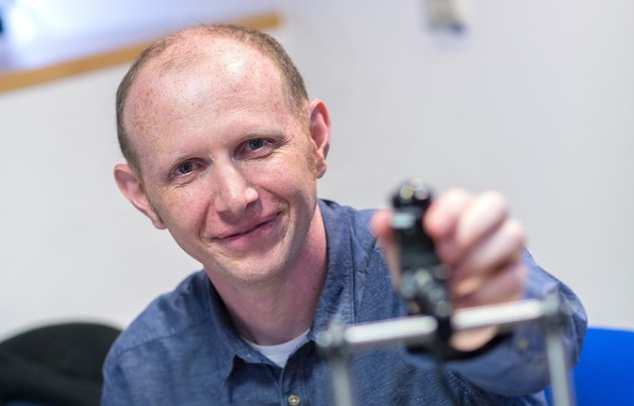
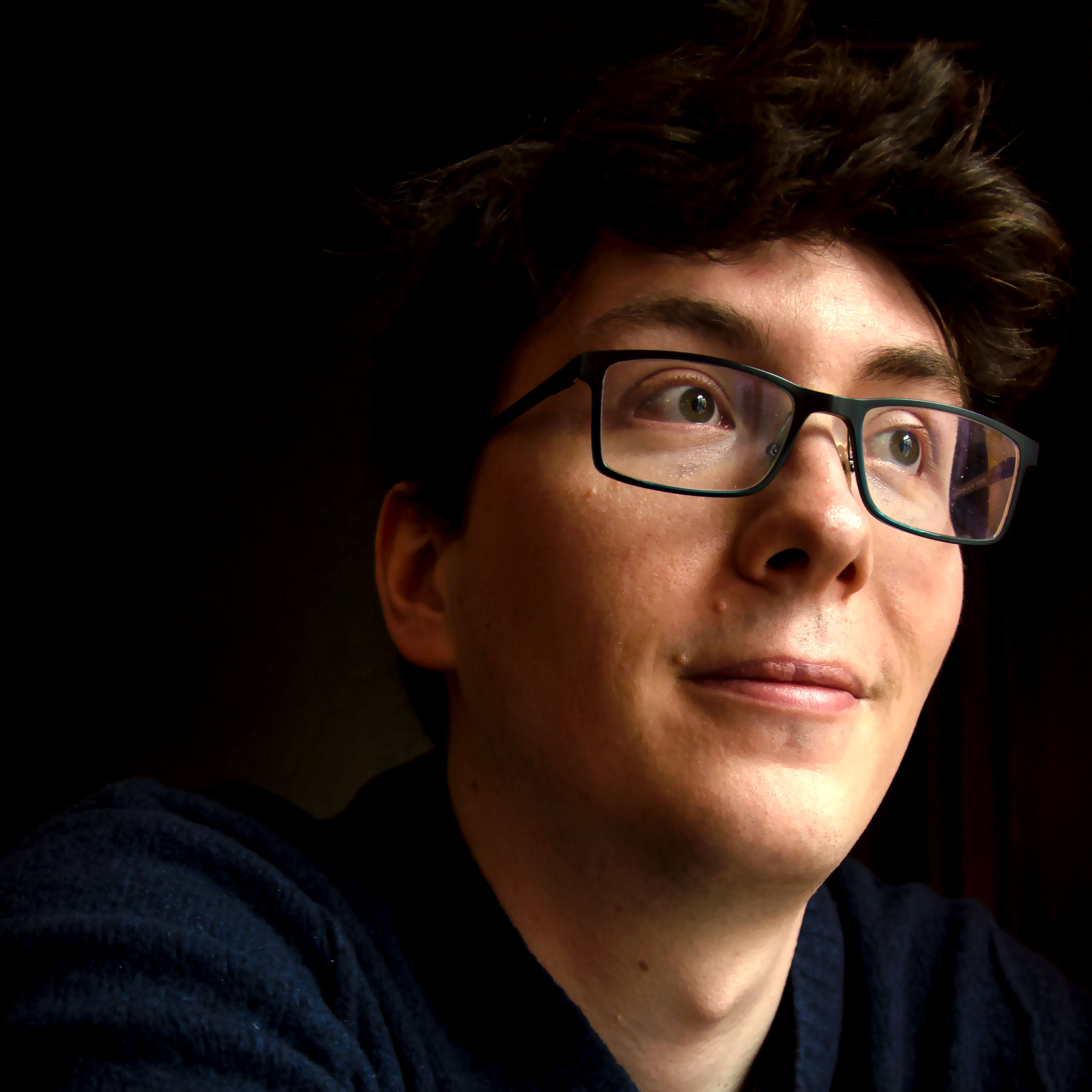
Ryan Heuser is an Assistant Professor in Digital Humanities at the University of Cambridge, specializing in computational approaches to literary and intellectual history, prosody, and artificial intelligence's impact on language. His work bridges data science, machine learning, and literary studies through digital methodologies. Doctoral training in Eighteenth-Century British Literature, Stanford University (2019) Founding member & Associate Research Director, Stanford Literary Lab Junior Research Fellow, King’s College Cambridge (2019-2022) Research interests span computational modeling of semantic revolutions, large-scale literary field analysis, and the intersection of digital methods with historical and intellectual studies. His book Explorations in the Digital History of Ideas (2023) co-edited with Peter de Bolla exemplifies this approach. Recent publications focus on historical semantics, metrical analysis, and digital mapping of emotions in literature, reflecting his interdisciplinary expertise in natural language processing, network theory, and literary data visualization. Currently leads teaching initiatives at Cambridge Digital Humanities and contributes to computational projects exploring textual rhythms and large language models.
Mark Y. Liberman is the Christopher H. Browne Distinguished Professor of Linguistics and Trustee Professor at the University of Pennsylvania. He holds a joint appointment in the Department of Linguistics and the Department of Computer and Information Science. His roles include Director of the Linguistic Data Consortium (LDC), Faculty Director of Ware College House, and former Director of the Institute for Research in Cognitive Science. Education: A.B. in Linguistics and Applied Mathematics from Harvard University (1965–1969), M.S. (1972) and Ph.D. (1975) in Linguistics from MIT. Research focuses on corpus-based phonetics, clinical linguistics applications, tonal phonology, formal models for linguistic annotation, and computational linguistics. He explores speech production, prosody, and interdisciplinary topics like language evolution and neurobiology of speech. Recent articles highlight advancements in speech biomarkers for neurodegenerative diseases, autism analysis, and computational linguistics. Awards include Fellowships from the AAAS and Linguistic Society of America. He advises graduate students and leads large-scale language resource initiatives like LDC, contributing to open-access linguistic datasets. Labs/Teams: Linguistic Data Consortium (LDC), Institute for Research in Cognitive Science (IRCS), and collaborations in computational linguistics and neuroscience.
Yarin Gal is an Associate Professor of Machine Learning at the University of Oxford's Department of Computer Science and a Tutorial Fellow at Christ Church College. He is also a Turing AI Fellow at the Alan Turing Institute and Director of Research at the UK Government’s AI Safety Institute. He leads the Oxford Applied and Theoretical Machine Learning (OATML) Research Group, focusing on Bayesian deep learning, AI safety, and uncertainty quantification. Education PhD in Uncertainty in Deep Learning (2016) Research Interests His research integrates Bayesian methods with deep learning to address challenges in AI safety , uncertainty quantification , and robustness . Key areas include: Bayesian neural networks and approximate inference Uncertainty estimation in deep learning AI safety and interpretability Applications in autonomous driving, medical imaging, and NLP Publications & Trends His recent work spans Bayesian optimization , adversarial robustness , and continual learning . Notable contributions include Targeted Dropout for model pruning, Uncertainty in Autonomous Driving , and theoretical studies on adversarial examples in Bayesian networks. Awards & Honors Turing AI Fellow Teaching & Supervision He has taught Advanced Machine Learning , Uncertainty in Deep Learning , and contributed to NASA's Frontier Development Lab. His current students include Kelsey Doerksen, Gunshi Gupta, and Shreshth Malik. Labs & Teams He leads the OATML Group , a multidisciplinary team advancing theoretical and applied machine learning, with a focus on safety and interpretability in AI systems.
Andrea Vedaldi is a Professor of Computer Vision and Machine Learning at the University of Oxford's Department of Engineering Science, affiliated with the Visual Geometry Group (VGG). He specializes in unsupervised methods for understanding images and videos, focusing on 3D geometry and semantics. His research bridges foundational AI and practical applications, with contributions to generative models, neural fields, and self-supervised learning. Education: PhD in Computer Science (2008), University of California, Los Angeles MSc in Computer Science (2005), UCLA BSc in Information Engineering (2003), University of Padua Research Interests: Unsupervised learning, 3D perception, generative AI, neural rendering, and scalable vision systems. His work emphasizes ethical, responsible AI aligned with ERC-funded projects like UNION (ERC Consolidator Grant). Key Contributions: Co-developer of VLFeat and MatConvNet libraries Leader in 3D reconstruction and diffusion models (e.g., CatFree3D) Recipient of the PAMI Thomas S. Huang Prize and multiple best paper awards Grants & Service: Principal Investigator on £2.3M ERC Consolidator Grant (UNION) Co-organizer of major conferences (ECCV 2020 Program Chair, CVPR 2023 Area Chair) Reviewer for top journals/conferences (PAMI, CVPR, NeurIPS) Labs & Teams: VGG Group at Oxford, collaborating on projects like Meta 3D Gen and Common Objects in 3D (CO3D).
Dr. Chang Xu is an Associate Professor in Machine Learning and Computer Vision at the University of Sydney's School of Computer Science. He holds a Bachelor of Engineering from Tianjin University and a PhD from Peking University. His research focuses on machine learning, data mining, and their applications in AI and computer vision, including multi-view learning, visual search, and face recognition. He is an ARC Future Fellow and a member of the Sydney Southeast Asia Centre and The Net Zero Institute. Education: B.E. in Engineering (Tianjin University), Ph.D. in Computer Science (Peking University). His research interests emphasize handling heterogeneous data, exploring data variety, and developing algorithms for robust AI systems. His work includes adversarial robustness, neural architecture search, and efficient deep learning models. Research trends in his articles include adversarial robustness in neural architectures, efficient vision transformers, multimodal 3D style transfer, and underwater image restoration. Key contributions span image restoration, video super-resolution, and lightweight network design. He has advised multiple PhD and master's students on topics like diffusion models, radar image synthesis, and graph similarity. Awards: ARC Future Fellow. Collaborations focus on cross-domain data integration and AI applications. His labs and teams explore generative models, robust learning, and scalable robotics policies. Recent work includes diffusion models for action segmentation and robust vision-language systems.
Deva Kannan Ramanan is a Professor at the Robotics Institute of Carnegie Mellon University , focusing on computer vision , machine learning , and human-centered robotics . His work bridges neurorobotics and visual perception , with applications in autonomous driving and 4D reconstruction . Research Topics Computer Vision 3-D Vision and Recognition Visual Servoing Neurorobotics Human-Centered Robotics Graphics & Creative Tools His recent publications in CVPR , ICRA , and ICCV emphasize 4D human reconstruction , neural rendering , and vision-language models for autonomous systems. He serves as General Chair of CVPR 2027 and Program Chair of CVPR 2018 , with IARPA funding for aerial-ground rendering (2023-2027). Current students include PhD candidates Sally Chen, Kangle Deng, and Zhiqiu Lin, while past advisees like Arun Vasudevan and Olga Russakovsky now hold positions at Amazon and Meta respectively.
Christian Theobalt is a Professor of Computer Science at Saarland University and Scientific Director of the Visual Computing and Artificial Intelligence Department at the Max Planck Institute for Informatics . He leads the Saarbruecken Center for Visual Computing as a strategic partnership between Google and MPI. PhD in Computer Science (2005) from MPI-INF/Saarland University Postdoctoral Researcher at MPI (2005-2007) Visiting Assistant Professor at Stanford (2007-2009) His research focuses on the intersection of Computer Graphics, Computer Vision, and Artificial Intelligence , with specializations in: 3D/4D Human Reconstruction Neural Rendering Performance Capture Geometric Deep Learning Volumetric Video Quantum Visual Computing Recent article trends show emphasis on: Quantum computing applications in visual reconstruction Neural rendering with radiance fields Human motion capture from egocentric views Gesture-language interaction modeling Multi-modal scene understanding Real-time free-viewpoint rendering Scientific Awards : Fellow of EUROGRAPHICS (2022) CVPR Best Student Paper Honorable Mention (2020) ERC Consolidator Grant (2017) Karl Heinz Beckurts Award (2017) Busy Beaver Teaching Award (2016) ERC Starting Grant (2013) Advising over 50 students and researchers including: Current researchers: Viktor Rudnev, Linjie Lyu, Mohit Mendiratta Postdocs: Kwang In Kim, Kiran Varanasi Alumni: Franziska Mueller (Google), Dushyant Mehta (Qualcomm), Ayush Tewari (MIT) Grants include ERC grants, Google Glass Research Award, and multiple industry partnerships. His lab maintains cutting-edge facilities with: Multi-camera capture systems Quantum annealing infrastructure HDR radiance field technology GPU clusters for AI research Time-of-flight imaging systems Event camera arrays
Prof. Konrad Schindler holds the position of Full Professor at the Department of Civil, Environmental and Geomatic Engineering at ETH Zürich. He is also the Head of the Institute of Geodesy and Photogrammetry (IGP), leading research and educational activities in geomatics and computer vision. His career spans roles as a Photogrammetric Engineer, scientific assistant, postdoc researcher, and academic faculty across institutions including Graz University of Technology, Monash University, and TU Darmstadt before joining ETH Zürich in 2010. Education: Undergraduate studies in Geodesy (1992–1995), Graz University of Technology, Austria MEng in Photogrammetry and Geoinformation (1995–1999), Vienna University of Technology, Austria PhD in Computer Science (2001–2003), Graz University of Technology, Austria Research focuses on Photogrammetry , Remote Sensing , Computer Vision , and Image Understanding with interdisciplinary applications in environmental monitoring, geospatial analysis, and disaster response. He develops computational methods for 3D reconstruction, fusion of multi-modal data, and AI-driven solutions for satellite imagery interpretation. His work bridges geomatic engineering and machine learning to address challenges in urban mapping, climate modeling, and biological systems analysis. Publications reflect expertise in geospatial AI, diffusion models, and benchmarking datasets for disaster resilience. Notable works include Marigold (image analysis adaptation) and BRIGHT (building damage assessment). His research emphasizes practicality and scalability, such as affordable depth estimation and global biomass datasets. He has received the 2013 Marr Prize Honourable Mention (IEEE) and the 2012 U.V. Helava Award (ISPRS), alongside several Best Presentation Awards. His contributions span technical leadership, editorial roles (ISPRS Journal), and service to Swiss remote sensing commissions. Advising and grants: While no specific advisee names or grant details are listed, his career trajectory includes mentoring postdocs and junior faculty. He teaches advanced courses in Photogrammetry , Image Interpretation , and Machine Vision , integrating cutting-edge AI techniques into curricula. His research group collaborates on global-scale projects like canopy height mapping and satellite-based climate variable assessments. Labs/Teams: As Institute Head, he oversees the IGP lab at ETH Zürich, with prior affiliations including the Digital Perception Lab (Monash University) and the Computer Vision Lab (ETH Zurich). His work often involves multi-institutional collaborations focused on geospatial AI and environmental science.
Russell Epstein is a Professor and Director of Graduate Studies in the Department of Psychology at the University of Pennsylvania. He is affiliated with the Center for Cognitive Neuroscience and Goddard Labs. His research focuses on neural mechanisms underlying visual scene perception, spatial navigation, and memory. Epstein holds a BA in Physics from the University of Chicago and a PhD in Applied Mathematics from Harvard University. Epstein’s research interests include high-level vision, spatial cognition, and the neural basis of environmental representations. His lab uses functional MRI and cognitive neuroscience techniques to study how scenes, objects, landmarks, and spaces are encoded in brain systems such as the parahippocampal place area and retrosplenial cortex. Recent work explores cognitive maps, grid-like neural representations, and the role of multisensory cues in navigation. His articles emphasize spatial navigation strategies, hierarchical cognitive maps, and the interplay between perception and memory. Notable contributions include investigations into hippocampal spatial metrics, olfactory navigation, and the neural underpinnings of environmental learning. Epstein teaches courses on cognitive neuroscience, including PSYC 149 and PSYC 600. He advises two graduate students in Psychology and has no listed scientific awards. His work is supported by grants (unspecified) and conducted within collaborative teams at the Center for Cognitive Neuroscience. Epstein’s research extends to labs focused on spatial cognition and neuroimaging, advancing understanding of how humans mentally map environments through visual and sensory integration.
Yuki M. Asano is a full Professor at the University of Technology Nuremberg , leading the Fundamental AI (FunAI) Lab . Previously, he led the QUVA Lab at the University of Amsterdam and earned his PhD at the Visual Geometry Group (VGG) of the University of Oxford under Andrea Vedaldi and Christian Rupprecht. University of Technology Nuremberg (2024–present) University of Amsterdam (prior to 2024) University of Oxford (PhD, 2020) His research spans Artificial Intelligence , Machine Learning , and Computer Vision , with a focus on Causal Representation Learning , Self-Supervised Learning , and Efficient Model Adaptation . He pioneered techniques like BISCUIT (causal variable identification) and VeRA (parameter-efficient fine-tuning). His work extends to Medical Imaging and Environmental Monitoring through applications in fetal ultrasound analysis and marine debris detection. Recent publications (2023–2025) highlight advancements in Self-Supervised Learning , Vision-Language Models , and 3D Understanding . Notable papers include TWIST & SCOUT (multimodal LLM grounding), SIGMA (masked video modeling), and GeneralAD (anomaly detection). His ICCV 2023 work on Self-Ordering Point Clouds and MoSiC (optimal-transport motion trajectories) underscores his interdisciplinary approach. He received the JUPITER compute grant (2025) and an Outstanding Paper Award at ICLR 2024 . His collaborations span institutions like MIT-IBM Watson AI Lab, Qualcomm AI Research, and University of Amsterdam.
David Bamman is an Associate Professor in the School of Information at UC Berkeley, specializing in applying Natural Language Processing (NLP) and machine learning to cultural and social science questions. He leads research in born-literary NLP, computational humanities, and cultural analytics, with affiliated roles in EECS, Linguistics, and Computational Precision Health. Bamman holds degrees from Carnegie Mellon (Ph.D., 2015), Boston University (M.A., 2006), and University of Wisconsin-Madison (B.A., 1998). His work is supported by NEH, NSF, and industry grants. Educations: Ph.D. in Computer Science (2015), Carnegie Mellon University M.A. in Applied Linguistics (2006), Boston University B.A. in Classics (1998), University of Wisconsin-Madison Research Interests: NLP for underserved domains (e.g., literature, social media), coreference resolution, cultural analytics, and computational methods for studying literature and culture. Projects include LitBank and BookNLP datasets. Grants & Awards: Hellman Fellow (2019), Amazon Research Award (2017), NSF CAREER Award, and NEH funding. Teaching: Courses include Natural Language Processing (Info 159/259), Computational Humanities (INFO 190), and Applied NLP (INFO 256). His research group explores topics like racial representation in high school literature, Hollywood diversity metrics, and the sociocultural implications of LLMs. Bamman advises multiple PhD students and collaborates on datasets like CMU Book Summaries and 11K Latin Books.
Mark Steedman is a Professor in the School of Informatics at the University of Edinburgh, where he conducts research in Artificial Intelligence, Computational Cognitive and Social Science, and Natural Language and Speech Processing. He is affiliated with the Institute for Language, Cognition and Computation (ILCC), the Centre for Speech Technology Research (CSTR), and the Human Communications Research Center (HCRC). He also holds an adjunct professorship in Computer and Information Science at the University of Pennsylvania. His research focuses on Combinatory Categorial Grammar (CCG) , computational linguistics , prosody and intonation , temporal semantics , gesture in communication , and computational music analysis . He has authored foundational books including Surface Structure and Interpretation , The Syntactic Process , and Taking Scope . The recent publications reflect a strong trend toward integrating formal grammatical frameworks like CCG with modern neural and distributional models, particularly in semantic parsing, entailment reasoning, and cognitive modeling. His work bridges symbolic and statistical approaches in NLP, often focusing on robust, wide-coverage parsing and semantic interpretation. Best Paper Award at AACL/IJCNLP 2023 for 'Smoothing Entailment Graphs with Language Models' Best Paper Award at ACL 2023 for 'Extrinsic Evaluation of Machine Translation Metrics' Influential Paper Award 2017 from IFAAMAS for 'Animated Conversation' Mark Steedman has supervised numerous PhD students and collaborated widely across institutions. He leads research in formal grammar applications to cognitive modeling, dialogue, and multimodal communication. His lab contributes to CCG software and semantic parsing tools, and he continues to be actively involved in advancing the integration of symbolic and neural AI.
Professor Andrew Davison holds the position of Professor of Robot Vision at Imperial College London's Department of Computing. He leads the Dyson Robotics Laboratory and the Robot Vision Research Group, focusing on advancing SLAM (Simultaneous Localization and Mapping) and Spatial AI. His groundbreaking work includes the MonoSLAM algorithm (2003), enabling real-time 3D vision for robotics and AR/VR. Current research emphasizes scalable, semantic-rich Spatial AI systems, as outlined in his FutureMapping papers (2018–2019). Education: BA in Physics (Oxford, 1994), D.Phil. (Oxford, 1998). Postdoctoral work at AIST, Japan (1998–2000), followed by a lectureship at Imperial (2002–present). Industrial collaborations include SLAMcore, a Spatial AI startup, and Dyson Robotics Lab. Over 18 PhD students supervised, many now leading roles at Meta, NVIDIA, SLAMcore, and academia. Notable contributions include DTAM, KinectFusion, and Event Camera SLAM. Recognized for software tools like SceneLib and contributions to robotics benchmarks (SLAMBench). Active on Twitter (@AjdDavison) for research updates.
Geoffrey E. Hinton is a distinguished Professor in the Department of Computer Science at the University of Toronto. He is renowned for his foundational contributions to machine learning, particularly in the development of deep learning and neural networks. His research focuses on understanding learning processes in both artificial and biological systems, with key contributions including Boltzmann machines, backpropagation, and deep belief networks. He teaches advanced machine learning courses such as CSC2535, emphasizing topics like graphical models, variational inference, and deep learning architectures. His work has been published extensively in top journals and conferences, with recent papers exploring forward-forward algorithms, analog diffusion models, and scalable neural network training methods. Hinton has advised numerous PhD and master's students and collaborates with institutions like Vector Institute. He is a central figure in the global AI community, regularly presenting at conferences (e.g., 2023 talks on CBS 60 Minutes, BBC, and PBS). His lab focuses on advancing machine learning theory and applications, addressing challenges in vision, language, and generative models.
Christian Rupprecht is an Associate Professor at the Department of Computer Science, University of Oxford, specializing in computer vision and machine learning. His research focuses on unsupervised learning, 3D reconstruction, and visual understanding. His work includes contributions to conferences such as GCPR'25, ICCV'25, and CVPR'25, with papers spanning topics like correspondence estimation, animal pose modeling, and synthetic data generation. He leads projects within the prestigious Visual Geometry Group (VGG). Notably, his paper VGGT received the Best Paper Award at CVPR'25. His research integrates deep learning and geometric modeling, emphasizing robustness and generalization in visual systems. Best Paper Award at CVPR'25