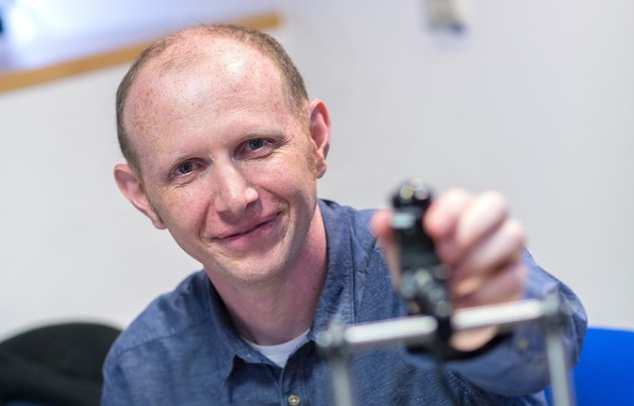
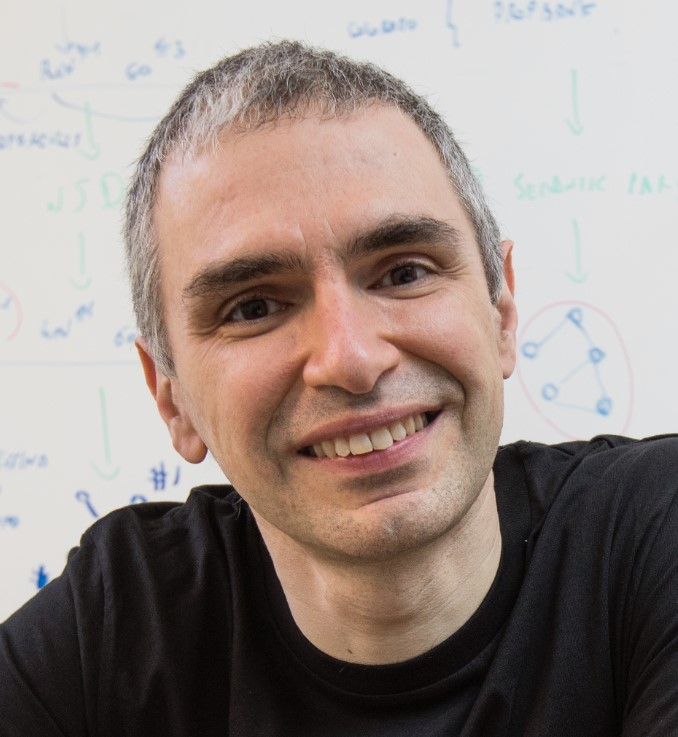
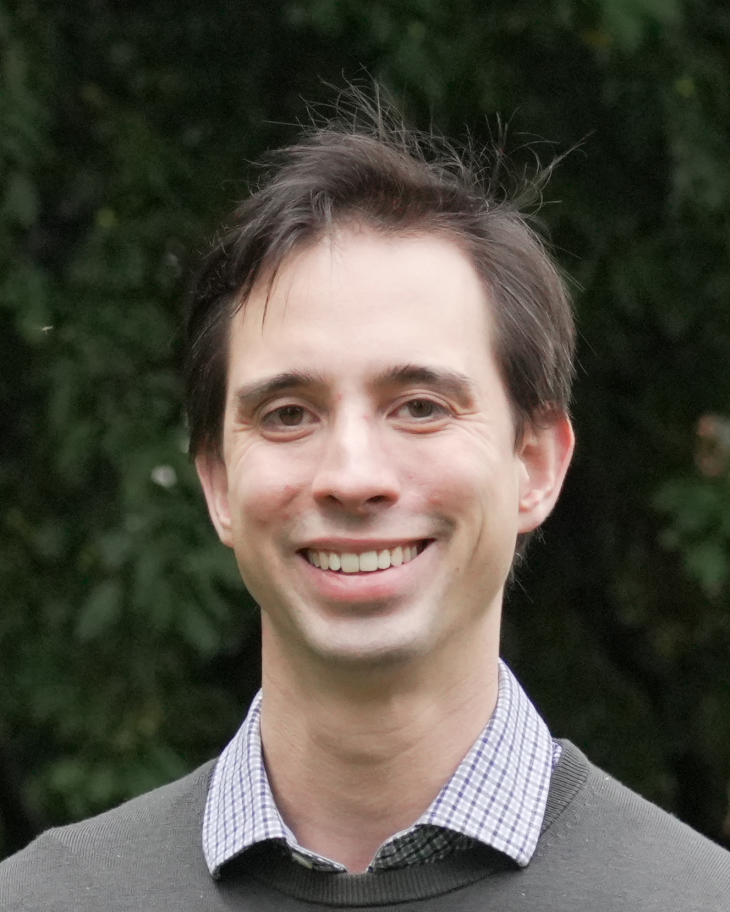
Professor Andrew Davison holds the position of Professor of Robot Vision at Imperial College London's Department of Computing. He leads the Dyson Robotics Laboratory and the Robot Vision Research Group, focusing on advancing SLAM (Simultaneous Localization and Mapping) and Spatial AI. His groundbreaking work includes the MonoSLAM algorithm (2003), enabling real-time 3D vision for robotics and AR/VR. Current research emphasizes scalable, semantic-rich Spatial AI systems, as outlined in his FutureMapping papers (2018–2019). Education: BA in Physics (Oxford, 1994), D.Phil. (Oxford, 1998). Postdoctoral work at AIST, Japan (1998–2000), followed by a lectureship at Imperial (2002–present). Industrial collaborations include SLAMcore, a Spatial AI startup, and Dyson Robotics Lab. Over 18 PhD students supervised, many now leading roles at Meta, NVIDIA, SLAMcore, and academia. Notable contributions include DTAM, KinectFusion, and Event Camera SLAM. Recognized for software tools like SceneLib and contributions to robotics benchmarks (SLAMBench). Active on Twitter (@AjdDavison) for research updates.
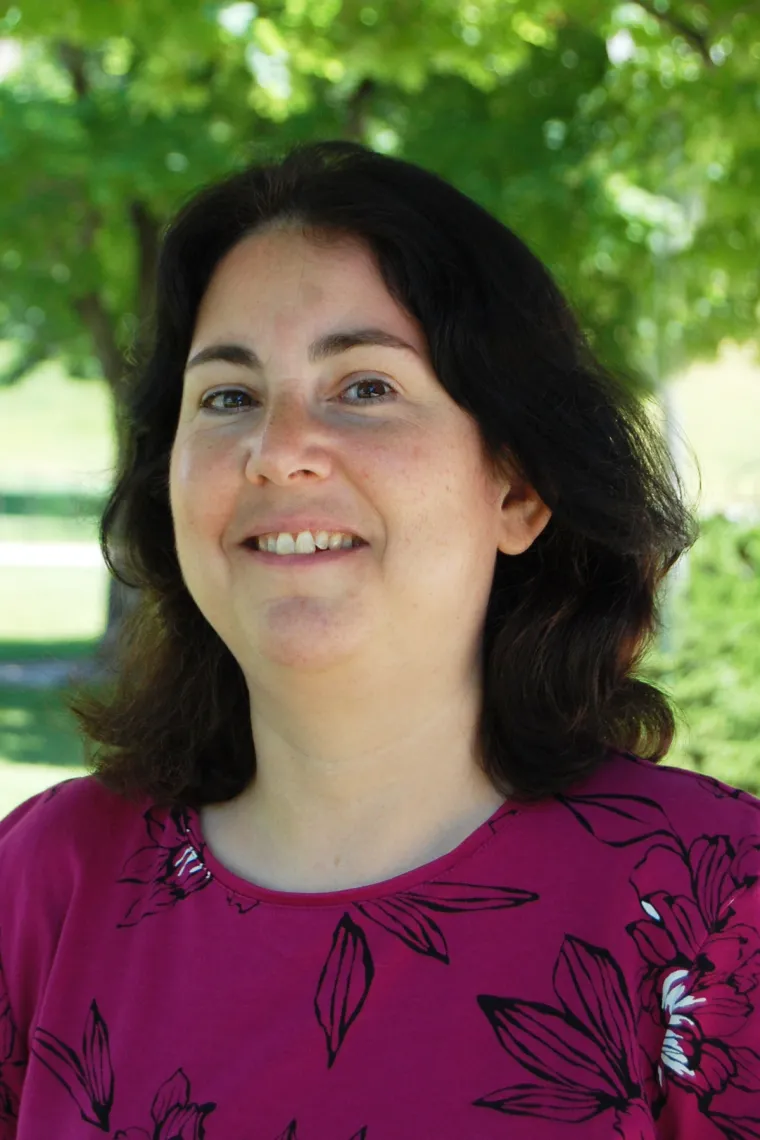
Catherine Lai is a Reader (~Associate Professor) in the Department of Linguistics and English Language at the University of Edinburgh, with strong affiliations to the Centre for Speech Technology Research (CSTR) and the Institute for Language, Cognition and Computation (ILCC) in the School of Informatics. She is based in the School of Philosophy, Psychology and Language Sciences and is actively involved in research, teaching, and academic service. Department: Department of Linguistics and English Language School: School of Philosophy, Psychology and Language Sciences Research Institutes: Centre for Speech Technology Research, Institute for Language, Cognition and Computation Email: C.Lai@ed.ac.uk Her research centers on the role of prosody—non-lexical aspects of speech—in spoken communication. She investigates how prosody contributes to discourse structure, information structure, and affect in dialogue, using interdisciplinary methods from linguistics and machine learning. Her work bridges theoretical linguistics and practical speech technology, aiming to improve spoken language understanding and synthesis systems. She is particularly interested in how prosody shapes listener expectations and how affect and topic are expressed and perceived in conversation. Her recent publications reflect a strong focus on self-supervised learning in speech models, emotion recognition, ASR error correction using large language models, cognitive state classification, and ethical considerations in language technology. She explores topics such as the uncanny valley in synthetic speech, gender expression through voice, and community-centered development of language technologies. Prize from Scopus Profile Catherine Lai has supervised several PhD students, including Leimin Tian and Yuanchao Li, and has been involved in significant research projects, such as a Toyota-funded initiative on spoken dialogue for robot companions. She has secured multiple grants and leads a research agenda that integrates theoretical inquiry with real-world applications in assistive technologies and social science. Her academic service includes organizing major conferences like Interspeech and UK and Ireland Speech. She is a key member of research teams at CSTR and ILCC, collaborating across disciplines to advance the understanding of spoken communication and the development of robust, ethical speech technologies.
Haibin Ling is the SUNY Empire Innovation Professor in the Department of Computer Science at Stony Brook University, part of the College of Engineering and Applied Sciences. His research focuses on computer vision, medical image analysis, augmented reality, and AI applications in science. He holds a Ph.D. from the University of Maryland (2006) and prior degrees from Peking University. Previously, he worked at Temple University (2008–2019) and held roles at Siemens Corporate Research, UCLA, and Microsoft Research Asia. Professor Ling's work spans biomedical imaging, AI for science, and human-computer interaction. He leads the CV Lab and collaborates with the AI Institute at Stony Brook. Awards include the NSF CAREER Award (2014), Best Student Paper (ACM UIST 2003), and IEEE Fellow (2020). He serves on editorial boards for IEEE Trans. PAMI, Pattern Recognition, and CVIU, and chairs major conferences like CVPR. His research group includes over 50 students and alumni, with active projects in tracking benchmarks (LaSOT), Leafsnap, and medical imaging tools. Notable publications address OCTA flow estimation, backdoor attacks on vision models, and topology-guided medical learning. Collaborations involve institutions like Temple University and Stony Brook's Department of Applied Mathematics and Statistics.
Roberto Navigli is a Full Professor in the Department of Computer, Control and Management Engineering at Sapienza University of Rome, where he leads the Sapienza NLP Group. He has held academic positions at Sapienza since 2007, progressing from Researcher to Associate Professor, and now Full Professor. Navigli is internationally recognized for his groundbreaking work in multilingual natural language processing and computational semantics. His research spans multiple areas within Natural Language Processing, with a particular focus on multilinguality , lexical semantics (Word Sense Disambiguation and induction), sentence-level semantics (Semantic Role Labeling and Semantic Parsing), and Large Language Models . As the leader of the Minerva LLM project, he pioneered the development of the first pretrained LLM in Italian. His creation of BabelNet, the largest multilingual encyclopedic computational dictionary covering 271 languages and about 14 million concepts, represents a landmark achievement in computational linguistics. Professor Navigli's recent publications demonstrate a strong focus on advancing multilingual capabilities of language models, addressing challenges in semantic understanding across languages, and developing robust evaluation frameworks. His work on Italian LLM optimization, lexical ambiguity in machine translation, and cross-lingual safety gaps reflects his commitment to building more accurate and reliable language technologies that work effectively across diverse linguistic contexts. AAAI Fellow (2025) EurAI Fellow (2024) ELLIS Fellow (2024) ACL Fellow (2023) Outstanding Paper Awards at ACL 2024, ACL 2023, and NAACL 2021 Best Resource Paper Award at ACL 2022 Prominent Paper Awards from the Artificial Intelligence Journal (2023, 2017) META Prize 2015 for BabelNet Professor Navigli has successfully secured substantial research funding, including two prestigious ERC Grants (MultiJEDI ERC Starting Grant 2010-2016 and MOUSSE ERC Consolidator Grant 2017-2023, totaling around 3 million euros), PI of PRIN 2017 and PRIN 2020 projects (overall 1.4 million euros), and a Google Focused Research Award (around 300k$). He has mentored over 30 PhD students, many of whom have gone on to successful careers in academia and industry. His leadership extends to major international conferences, serving as General Chair of ACL 2025 and Program Co-Chair of ACL-IJCNLP 2021. As the director of the Sapienza NLP Group and co-leader of the Transversal Project on Large Language/Multimodal Models in the FAIR (Future Artificial Intelligence Research) project, Professor Navigli oversees a vibrant research ecosystem focused on advancing the state-of-the-art in natural language understanding across languages. His spinoff company, Babelscape, translates academic research into practical applications for industry.
Prof. Dr. Gülşen Eryiğit is a Professor at Istanbul Technical University within the Faculty of Computer and Informatics , Department of Artificial Intelligence and Data Engineering . She founded and directs the ITU Natural Language Processing Group , Turkey's leading team in Turkish-language NLP, and serves as Senior Action Editor for ACL RR , Director of ITU TÖMER (Turkish Language Teaching Center), and Co-Chair of the EU UniDive Cost Action WG3. Education: PhD in Computer Engineering from ITU (2007), MSc and BSc from ITU and Marmara University Research: Focuses on Natural Language Processing for Turkish, including dependency parsing , coreference resolution , multiword expressions , and language education technology Her recent work involves multilingual transfer learning , LLM applications for Turkish text simplification, and gamification for morphology education. She has received prestigious awards like the Siemens Excellence Award and TÜBİTAK's Above Threshold Award . Her research has produced 65+ publications and 29+ projects funded by EU, TÜBİTAK, and industry partners. Scientific Awards: Siemens Excellence Award (2007) Above Threshold Award (TÜBİTAK, 2015) Certificate of Appreciation (EU 7th Framework, 2012) Thank You Plaque (ITU, 2017) The ITU NLP Group under her leadership has developed Turkey's first licensed NLP software exported internationally. She collaborates with European institutions through COST actions and participates in ACL, CoNLL, and LREC conferences. Her lab focuses on language technology for Turkish , including sign language processing and social media normalization.
Max Planck Institute for Intelligent SystemsGermany
Andreas Geiger is a Professor and Head of the Department of Computer Science at the University of Tübingen, Germany. He leads the Autonomous Vision Group (AVG) within CyberValley and is a core faculty member of the Tübingen AI Center. His roles also include PI in the ML in Science Excellence Cluster and the CRC Robust Vision, as well as ELLIS Fellow and coordinator of the ELLIS PhD program. He specializes in machine learning models for computer vision, robotics, and autonomous systems, with applications in self-driving cars, VR/AR, and scientific document analysis. Educational background: While not explicitly detailed, his positions imply a Ph.D. in Computer Science or related field. His work spans interdisciplinary collaborations with institutions like ETH Zürich, Microsoft, and the University of Bonn. Research focuses on 3D scene understanding, Gaussian splatting, generative models, and reliable autonomous systems. Notable contributions include the KITTI dataset and foundational work in neural radiance fields. Awards include the Sage 10-Year Impact Award (2024), ERC Starting Grant (2019), and IEEE PAMI Young Researcher Award (2018). Key projects include the Scholar Inbox paper recommender platform, ReSim (reliable world simulation), and advancements in 3D scene generation (e.g., UrbanCAD, PrITTI). His lab maintains a strong focus on open-source tools and datasets, such as the CARLA Route Generator. Grants and funding include support from Vector Stiftung (MINT innovation program) and EU initiatives like the ML in Science Cluster. His team collaborates internationally, with recent work presented at CVPR, SIGGRAPH, and NeurIPS.
Ruihong Huang is an Associate Professor in the Department of Computer Science and Engineering at Texas A&M University, part of the College of Engineering. She holds a Ph.D. from the University of Utah (2014) and completed a postdoctoral fellowship at Stanford University. Her research focuses on Natural Language Processing (NLP) with emphasis on information extraction, event recognition, media bias analysis, and ethical AI applications. She teaches courses like Information Storage and Retrieval (CSCE 470), Natural Language Processing (CSCE 638), and has advised numerous PhD, Master’s, and undergraduate students. Key research contributions include work on event coreference resolution, discourse analysis, and detecting media bias through event relation graphs. Huang has developed benchmark datasets like UAL-Bench and EMONA, and her work spans applications in disaster management, fake news detection, and moral reasoning in LLMs. She is a recipient of the NSF CAREER Award and serves on program committees for top conferences like ACL and EMNLP. Her academic service includes roles as Area Chair for ACL 2024 and Senior Area Chair for EMNLP 2024. She maintains an active lab group focusing on NLP fundamentals and real-world applications, with projects involving propaganda identification, polarity calibration for opinion summarization, and multimodal dialog act classification. Huang has published over 80 papers in top-tier venues such as NAACL, EMNLP, ACL, and NeurIPS.
Schloss Dagstuhl - Leibniz Center for InformaticsGermany
Teruko Mitamura is a prominent researcher at Carnegie Mellon University with over three decades of contributions to natural language processing, computational linguistics, and artificial intelligence. Her work spans from foundational research in event representation to advanced applications in multimodal systems and question answering. Her research interests focus on event detection and understanding, question answering systems, information retrieval, and multimodal processing. She has made significant contributions to event coreference resolution, timeline construction, and cross-document event analysis, developing methodologies that have become standard in the field. Her work often bridges theoretical advances with practical applications, particularly in complex information environments requiring deep semantic understanding. Natural Language Processing : Specializing in event extraction, coreference resolution, and narrative understanding with over 179 publications Question Answering Systems : Developing advanced techniques for complex question answering, particularly through NTCIR QA Lab and PoliInfo tasks Multimodal Processing : Integrating textual, visual, and temporal information for richer understanding in systems like ProMQA Evaluation Methodologies : Creating robust frameworks for assessing NLP systems through TAC KBP Event Tracks Her recent publication trends show a strong focus on leveraging large language models for event understanding, multimodal question answering, and timeline construction. She has expanded her research into specialized domains including patent analysis and novelty examination, demonstrating the breadth of her research impact across academic and practical applications. Active participant in major NLP conferences including ACL, EMNLP, NAACL, and AAAI with consistent publications Long-standing collaborator with researchers at CMU's Language Technologies Institute including Eduard H. Hovy and Eric Nyberg Contributor to shared tasks that have shaped research directions in event processing and question answering Organizer of multiple NTCIR QA Lab tasks focused on political information question answering Dr. Mitamura has mentored numerous researchers who have gone on to make their own contributions to the field, as evidenced by her extensive co-authorship network and the progression of her former students and collaborators into faculty and research positions. Her work continues to evolve with the field while maintaining her focus on deep semantic understanding of events and narratives.
Ellen Riloff serves as Department Head and Professor in the Department of Computer Science at the University of Arizona, where she leads research at the intersection of natural language processing (NLP) and artificial intelligence. Her work bridges theoretical advancements with real-world applications in social computing, planetary science, and crisis response systems. Education: Ph.D. in Computer Science, University of Massachusetts at Amherst (1994) Research Focus: Dr. Riloff specializes in affective computing and information extraction , developing techniques to recognize emotion, social cues, and embodied expressions in text. Her methodologies frequently employ bootstrapping, stacked learning, and semantic lexicon induction. Recent projects address crisis informatics (e.g., social cue recognition in emergencies) and interdisciplinary applications like the Mars Target Encyclopedia for planetary science data extraction. Publication Trends: Analysis of her 15 most recent publications (2021–2025) reveals three dominant trajectories: (1) affective event modeling in social contexts with applications to crisis response; (2) domain-specific NLP for planetary science and food systems; and (3) advanced language model techniques including retrieval-augmented generation and multi-view prompting. Her work increasingly integrates deep learning with traditional linguistic features. Grants and Leadership: Dr. Riloff has directed multiple NSF-funded projects, including RI: Small: Recognizing Implicit Personal States in Natural Language (2016) and RI: Small: Acquiring Domain Knowledge from Text through Cooperative Bootstrapping (2010). These initiatives pioneered bootstrapping frameworks for affective event recognition and information extraction. She also co-organized the Workshop on Pattern-based Approaches to NLP (2023), highlighting her leadership in advancing hybrid NLP methodologies. Collaborative Infrastructure: She co-developed the Mars Target Encyclopedia—a large-scale information extraction system that processes planetary science literature to create structured databases of Mars surface targets. This project demonstrates her commitment to building reusable scientific infrastructure through NLP.
Dylan Campbell is a Lecturer in Computing at the Australian National University (ANU), affiliated with the ANU College of Systems & Society. His research focuses on computer vision, optimization, and robotics, particularly in 3D vision and deep learning applications. He has held prior roles as a Research Fellow at the University of Oxford’s Visual Geometry Group and ANU’s Australian Centre for Robotic Vision. Campbell holds a PhD from ANU (2018) and a BE in Mechatronic Engineering from UNSW (2012). Research interests include geometric sensor alignment, neural radiance fields, and differentiable optimization layers. He actively supervises students (7 PhD/DPhil, 3 MEng, 9 honours) and teaches advanced courses in computer vision and robotics. Notable awards include the Marr Prize Honourable Mention (2017) and the IEEE Australia Council Postgraduate Student Paper Competition (2018). He has organized workshops at ECCV and CVPR, served as a reviewer for top conferences like CVPR/ICCV/ECCV, and contributed to datasets like SEED4D and RefRef. His work emphasizes efficient training of neural networks and leveraging symmetries in data for long-range connections.
Sidi Wu is a Researcher affiliated with ETH Zürich's Institute of Cartography and Geoinformatics. Their primary role is as Staff of the Professorship for Cartography, contributing to academic research and technical operations within the department. They are based at HIL G 23.2, Stefano-Franscini-Platz 5 in Zürich, Switzerland, and can be reached at sidiwu@ethz.ch. Research interests center on advancing AI-driven cartographic methods, historical map analysis, and environmental spatial dynamics. Specific focuses include generative AI applications in map-making, semantic segmentation of historical documents, and leveraging digitized maps for ecosystem studies. They also explore steganography in image translation and cross-domain adaptation techniques for geospatial data. Recent work emphasizes innovations in automated map storytelling systems, spatio-temporal context modeling using transformers, and weakly supervised learning approaches for map segmentation. Their studies frequently bridge cartography with environmental science disciplines like hydrology and urban morphology. No scientific awards or grants are explicitly listed in the provided information. While no advisees are documented here, their research collaborations likely involve student contributions. They are part of the core team at the Institute of Cartography and Geoinformatics, contributing to cutting-edge projects in geomatics and computational cartography.
Habib Ullah is an Associate Professor in Data Science at the Norwegian University of Life Sciences (NMBU), Norway, where he conducts research at the intersection of computer vision and machine learning. He is affiliated with the Institute of Data Science under the Faculty of Science and Technology. He has previously held academic positions at COMSATS University Islamabad, Pakistan, and the University of Ha'il, Saudi Arabia, and served as a postdoctoral researcher at The Arctic University of Norway. Educational Background: PhD in Information and Communication Technology (Computer Vision), University of Trento, Italy (2011–2015) MSc in Electronics and Computer Engineering, Hanyang University, South Korea (2007–2009) BSc in Computer Systems Engineering, NWFP University of Engineering and Technology, Pakistan (2002–2006) Habib Ullah's research is primarily focused on computer vision and machine learning, with applications in aquaculture, agriculture, and human behavior analysis. He investigates underwater fish feeding sounds using audio classification, develops zero-shot learning models for recognizing unseen classes, and applies deep learning to detect stress in salmon via skin dot patterns. He also explores AI-driven controlled environment agriculture, leveraging sensors and automation for optimal crop growth. His work emphasizes practical AI solutions for real-world challenges in environmental and biological domains. The recent publications highlight a strong trend in leveraging deep learning for zero-shot and semi-supervised learning, particularly in computer vision tasks such as sea ice classification, crowd anomaly detection, and agricultural monitoring. His research spans remote sensing, biomedical signal processing, and human activity recognition, demonstrating interdisciplinary versatility. The keywords reflect a focus on robust feature representation, knowledge transfer, and model generalization. Scientific Awards and Funding: Industrial PhD grant 'Advancing Controlled Environment Agriculture AI' from The Research Council of Norway (Project number 354125, 2 million NOK, 2024) Team member (Coordinator-Participant) in the Battery Cell Assembly Twin (BatCAT) project funded by Horizon Europe (7 mEuro, 2023–2027) Development of an AI-Based Image Analysis System for Monitoring Plant Status (Funding: 1.8 mNOK, starting 2025) Habib Ullah actively supervises PhD projects and contributes to academic service through editorial and organizational roles. He has served as an Associate Editor for IEEE Access, Guest Editor for MDPI Remote Sensing, and Editor of the Springer book Machine Learning Techniques and Sensor Applications for Human Emotion, Activity Recognition, and Support (ML-SHEARS) . He has also been a Track Chair and Program Committee Member for several international conferences, reflecting his leadership in the academic community. His research is supported by significant grants and collaborative projects, indicating strong institutional and international engagement. He is involved in multiple research teams and projects, including the BatCAT project on battery manufacturing and AI applications in controlled environment agriculture with RIFT LABS AS. His lab work integrates deep learning, sensor fusion, and data analytics for environmental and biological monitoring systems.
Swiss Federal Institute of Technology in LausanneSwitzerland
Matthieu Cord is a Professor at Sorbonne University and Scientific Director of valeo.ai, leading research in computer vision, deep learning, and computational cooking. He heads the MLIA team at ISIR Lab, focusing on multimodal models, transformers, and efficient architectures. Research areas include computer vision, large language models with vision, and AI-driven food analytics. Key projects: VISA-DEEP AI chair, Foundation VaViM models, and SmolVLA collaboration with Hugging Face. His recent work examines scalable multimodal models , trajectory prediction , and diffusion-based segmentation , with studies on in-context learning and biased shortcut learning in visual question answering. Articles highlight DeiT variants , fishr for OoD generalization , and STEEX for counterfactual explanations . Scientific awards include IUF Honorary Membership (2009), BMVC 2017 Best Paper, and ICIP 2018 Best Paper. As an advisor, he supervised PhD theses on topics like GAN editing , semantic segmentation , and multimodal retrieval . Current roles involve mentoring the 'Research Band' at MLIA and leading EU-funded initiatives like SCAPE. His work bridges theoretical AI exploration with practical applications in autonomous driving and food technology.
Maarten de Rijke is a Professor at the University of Amsterdam and affiliated with the Innovation Center for Artificial Intelligence (ICAI) . He is a leading expert in Information Retrieval , Recommender Systems , and Machine Learning , with over 500 publications and 10,000 citations. His work spans theoretical and applied domains, including conversational recommender systems , domain generalization , and neural ranking models . Research Pillars: Information retrieval, e-commerce search, learning to rank, and empathetic AI systems Awards: Best Paper (2x), Best Student Paper Community Roles: Organized workshops (MANILA25, SIGIR editions) His recent publications focus on robust recommendation systems , cross-domain contract extraction , and brain signal integration for query refinement. He leads the AIRLab (Amsterdam) and collaborates with institutions like Shandong University and the University of Chinese Academy of Sciences. Scientific Contributions : Over 500 publications in ACM Transactions, SIGIR proceedings, and journals Developed novel frameworks for learning-to-rank and user satisfaction modeling Pioneered research on conversational AI and adversarial attacks in retrieval He actively engages in community service, including organizing conferences and advocating for epilepsy research through initiatives like Emma’s collection box (over €24,448 raised). His work bridges theoretical rigor with real-world impact in search and recommendation technologies.
German National Library of Science and TechnologyGermany
Dr. Anett Hoppe is a research staff member at the Leibniz Information Centre for Science and Technology (TIB) in Hannover, Germany, where she works in the Visual Analytics research group. Her research focuses on the intersection of artificial intelligence, education technology, and information science, with particular emphasis on how people learn through search processes and educational video consumption. Dr. Hoppe completed her academic journey with: Ph.D. in Semantic Web technologies for online user profiles from the University of Burgundy, Dijon, France Her primary research interests span Search as Learning, software-based support for scientific reproducibility, and ethical considerations in computer-based decision making. She investigates how visual elements, reading sequences, and AI technologies impact knowledge acquisition during web search and educational video consumption. Her work bridges human-computer interaction, educational psychology, and information retrieval to create more effective learning experiences, with recent publications examining the role of large language models, vision-language models, and visual complexity in educational contexts. Analysis of her recent publications (2024-2025) reveals a strong interdisciplinary focus combining computer science, educational psychology, and information science. Her research examines video-based learning effectiveness, knowledge gain prediction, educational resource discovery, and the impact of visual elements on learning outcomes. She consistently explores how AI technologies can be leveraged to enhance educational experiences while maintaining attention to ethical considerations and scientific reproducibility. Dr. Hoppe maintains active collaborations with researchers across multiple institutions, with frequent co-authorship patterns indicating strong research partnerships, particularly with Ralph Ewerth and other members of the Visual Analytics group at TIB. Her work supports TIB's mission to advance knowledge infrastructure and scholarly communication through innovative technological solutions while directly addressing practical challenges in educational technology and information retrieval.