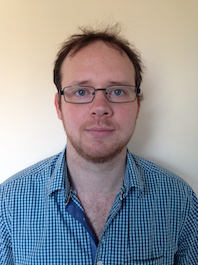
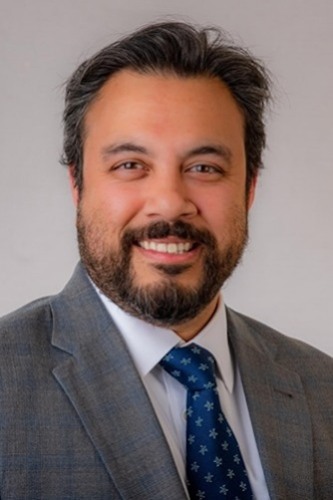
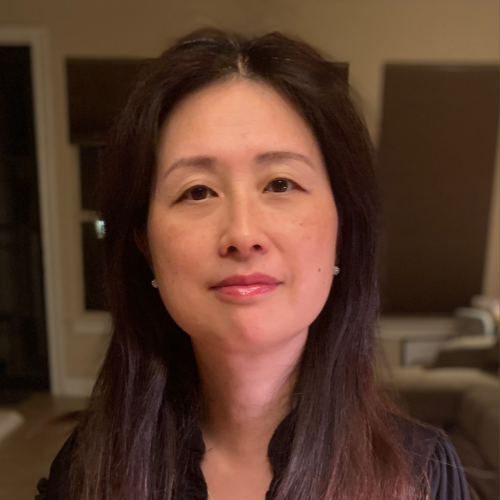
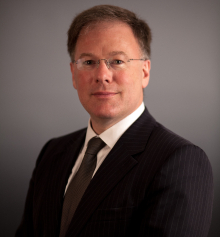
Giles Reger is a Senior Lecturer in the School of Computer Science at the University of Manchester , affiliated with the Formal Methods Group . His academic journey includes a BA in Computer Science from the University of Cambridge (2009), an MSc in Advanced Computer Science (University of Manchester, 2010) with the Highest Achiever of the Year Award , and a PhD (University of Manchester, 2014) on runtime verification. Research Interests: Theorem Proving (via Vampire system) and Runtime Verification (via MarQ and VyPR tools). Collaborations: Projects with University of Oxford, ARM, AWS, CERN, and SnT Luxembourg. Recent Work: Giles' publications span 2019-2016, focusing on Vampire's higher-order reasoning, symmetry avoidance in finite model finding, neural guidance in theorem proving, and runtime verification for Python web services (VyPR2). Trends include integrating machine learning with formal methods and advancing logic-based verification tools. Scientific Awards: Highest Achiever of the Year Award (MSc, University of Manchester, 2010) Vampire's multiple trophies at CASC and SMT-COMP competitions Advising: Supervises PhD students Michael Rawson, Ahmed Bhayat, and Joshua Dawes. Labs/Teams: Contributes to the Vampire team and the VyPR project.
Philipp Rohde serves as a Researcher at the Scientific Data Management research group within the Leibniz Information Centre for Science and Technology (TIB) while pursuing his Ph.D. in Computer Science at Leibniz Universität Hannover. His work bridges academic research and practical implementation in knowledge graph technologies, with emphasis on query processing systems and data validation frameworks. Academic Background: Bachelor of Science (B.Sc.) in Computer Science, Leibniz Universität Hannover Master of Science (M.Sc.) in Computer Science, Leibniz Universität Hannover Research Focus: Rohde specializes in semantic data management with particular expertise in SHACL constraint validation during SPARQL query execution. His methodological contributions address critical challenges in knowledge graph reliability, including constraint propagation in distributed environments, healthcare data integration, and access control mechanisms. Recent work demonstrates innovative approaches to validate data constraints without compromising query performance through techniques like traversal optimization and runtime certification. Research Trends: Analysis of his publication history reveals a concentrated trajectory in knowledge graph validation technologies, with 85% of recent work (2021-2023) focused on SHACL-related constraint processing. His research increasingly intersects healthcare applications, as evidenced by the Knowledge4COVID-19 project, while maintaining strong foundations in distributed systems and semantic web standards. The emergence of certified query processing as a recurring theme indicates growing emphasis on verifiable data integrity in decentralized environments. Project Leadership: Rohde actively contributes to major EU-funded initiatives including: QualiChain (EU Horizon Europe): Developing blockchain-enhanced qualifications frameworks PLATOON (EU Horizon 2020): Creating energy data interoperability solutions P4-LUCAT (ERAMed): Advancing precision medicine for liver cancer iASiS (EU Horizon 2020): Building biomedical text-mining infrastructure Research Environment: As core member of TIB's Scientific Data Management group, Rohde operates within a specialized unit focused on scalable knowledge graph technologies. The team maintains strong connections with Leibniz Universität Hannover's computer science department, facilitating technology transfer between library science applications and academic research. Current infrastructure supports large-scale semantic processing through dedicated knowledge graph validation testbeds and healthcare data integration pipelines.
Neil Sarkar, PhD, MLIS, FACMI, is a healthcare informatics leader serving as President and CEO of The Rhode Island Quality Institute and Associate Professor at Brown University. His dual appointment spans Medical Science and Health Services, Policy and Practice departments. Formal education: PhD in Biomedical Informatics from Columbia University (2004) Key affiliations: Brown Center for Biomedical Informatics, Brown Institute for Translational Science Research focuses on biomedical informatics with applications to: Integrating unlinked biological and clinical data Comparative genomic/phenomic studies Predictive modeling for pregnancy complications Natural language processing in clinical contexts Translational bioinformatics solutions Recent publications demonstrate expertise in: Machine learning for clinical outcomes Data mining in public health Phylogenetic approaches to disease analysis Health information exchange applications Scientific recognition includes: Elected Fellow of American College of Medical Informatics Board Member and Treasurer of AMIA Founding Editor-in-Chief of JAMIA Open Research grants from: National Science Foundation (NSF) National Institutes of Health (NIH) Centers for Disease Control (CDC) US Department of Veterans Affairs Ellison Medical Foundation
Rahim Rahmani is a full Professor at Stockholm University's Department of Computer and Systems Sciences, where he leads the laboratory for Distributed Immersive Participation . His work bridges Distributed Systems , Internet of Things (IoT) , and Healthcare Technology , with a focus on security, edge computing, and immersive systems for societal challenges. Research Interests : Distributed Intelligence, Edge Computing, Blockchain, Extended Reality (XR), Adversarial Machine Learning, and Cognitive Controllers for 5G/6G networks. Teaching : Program Director for the Master's Programme in Computer and Systems Sciences, teaching courses on IoT, Network Security, and Computer Architecture. Publication Trends : His recent work emphasizes secure data sharing in IoV using Blockchain, Federated Learning for healthcare diagnostics (e.g., sepsis and COVID-19 detection), and XR platforms for autism support. Key subfields include Context-Aware Systems , Decentralized Identity Management , and Edge-Cloud Collaboration .
Javed Mostafa is a Professor and Dean of the Faculty of Information at the University of Toronto since September 2023. He previously served as Professor and founding Director of UNC's Carolina Health Informatics Program (2011-2023), Deputy Director for Education & Training at UNC's Biomedical Informatics unit (2010-2023), and as Victor H. Yngve Endowed Professor and Associate Dean at Indiana University (2000s). Education : PhD in Information Science (1994) from The University of Texas at Austin, MA from The Ohio State University, BSc from Northwestern Oklahoma State University Companies : Co-founder of KeonaHealth (2010-present) and Cymantix (2018-present) His research focuses on multimedia information retrieval , personalization/user modeling , and cyberinfrastructure for research . Key contributions include: Development of neurophysiologically-informed information retrieval systems Creation of the Health Data Exchange platform for expert identification Advancements in SNOMED CT-based clinical cohort identification Editorial leadership as Editor-in-Chief of the Journal of the Association for Information Science and Technology Establishment of the Laboratory of Applied Informatics Research (LAIR) at U of T Mostafa's scientific awards include: Victor H. Yngve Endowed Professorship McColl Term Professorship His work spans interdisciplinary collaborations with grants like the Sponsored Research Agreement (2025-2026) for the Society 2025 project. He has authored over 105 peer-reviewed publications and contributed to policy development for health data systems in India, Malawi, and Bangladesh.
Adam L Meyers is a Visiting Clinical Associate Professor at New York University 's Rory Meyers College of Nursing , where he contributes to academic excellence and clinical education. Despite his title in a health-focused institution, his extensive publication record reveals a strong background in Computational Linguistics and Natural Language Processing through affiliations with NYU's Linguistic Annotation and Machine Translation initiatives.
Lars Harrie is a Professor at Lund University's Department of Physical Geography and Ecosystem Science, and a key member of the GIS Centre. His work focuses on GIScience, Cartography, and Spatial Data Infrastructure, with applications in urban planning, historical demography, and hydrology. Current academic position: Professor, Dept of Physical Geography and Ecosystem Science Secondary affiliation: GIS Centre, Lund University Collaboration network: 3D GeoInfo, eSSENCE e-Science Collaboration Research trends show expertise in: Deep learning for map labeling and 3D visualization Integration of BIM and GIS data Urban simulation modeling for noise and daylight Historical demographic spatial analysis Scientific contributions include: Editor of Sweden's primary GIS textbook Academic representative of Swedish geodata board Development of 3D city model specifications Creation of analytical readability measures for digital maps
Xhemal Zenuni is a Full Professor and current Dean at the Faculty of Contemporary Sciences and Technologies, South East European University (Tetovo, North Macedonia). His academic career spans multiple roles from IT Administration Assistant (2003-2004) to progressively senior positions including Young Assistant (2004-2006), Assistant (2006-2008), Assistant Professor (2013-2018), Associate Professor (2018-2023), and now Full Professor since 2023. Education: PhD in Computer Sciences (2006-2012, Technical University of Sofia), specialization in Computer Systems, Complexes and Networks Master of Sciences in Informatics (2004-2005, New Bulgarian University), specialization in Internet Software Technologies Bachelor of Sciences in Computer Sciences (2001-2003, SEEU) With expertise in Machine Learning , IoT , Cloud Computing , and Database Systems , his research focuses on applying AI/ML techniques across multiple domains. Recent work includes predictive modeling in education, hate speech detection for Albanian social media, smart agriculture systems, and microservices architecture migration. His publications demonstrate consistent engagement with modern computational challenges, particularly around low-resource language processing , smart city infrastructure , and educational technology . While serving as Dean and Vice-Dean, he has maintained active research output through collaborations with colleagues like Mentor Hamiti, Jaumin Ajdari, and Florije Ismaili.
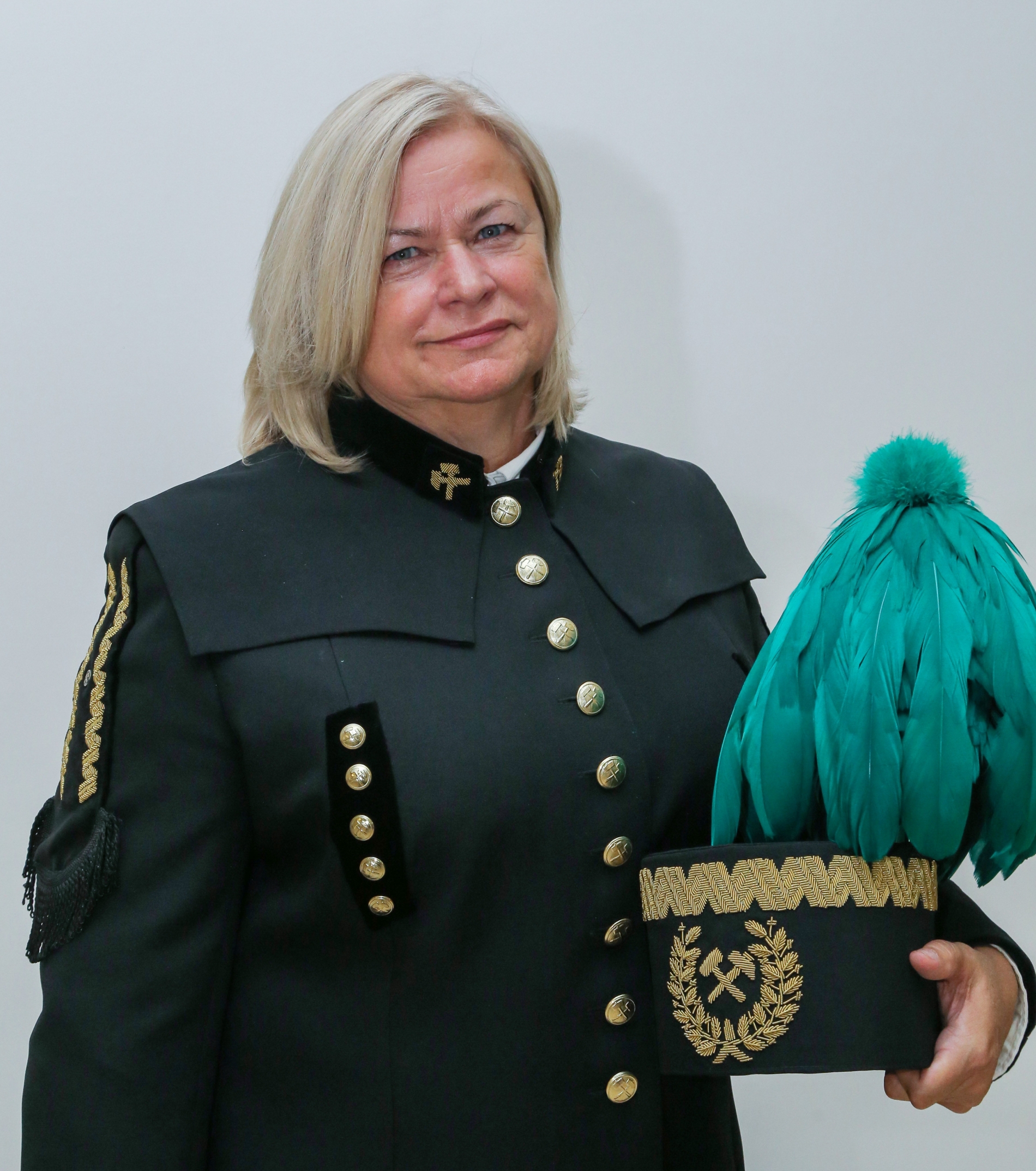
Joanna Bac-Bronowicz serves as an Associate Professor at Wrocław University of Science and Technology within the Faculty of Geoengineering, Mining and Geology. Her primary affiliation is with the Department of Geodesy and Geoinformatics, where she conducts research on geospatial modeling and cartographic applications. She maintains active office hours through both physical and virtual (Zoom) channels. Her research focuses on spatio-temporal data modeling , cartographic generalization , and topographic database integration . Key interests include GIS-based environmental analysis, urban green space assessment, and spatial data infrastructure development. She has pioneered methodologies for integrating national geospatial registers and developing multi-resolution topographic databases. Analysis of her 15 most recent publications reveals strong emphasis on Geometric simplification techniques for cartographic features Urban ecosystem service evaluation using 3D geoportals Integration of LiDAR and remote sensing in smart city frameworks Topographic influences on precipitation patterns Her work consistently bridges theoretical cartography with practical applications in environmental management. Professional recognition includes membership in key national bodies: National Council of Geodesy and Cartography of the Surveyor General of Poland Council of Spatial Information Infrastructure at Minister of Development and Technology Founding member and President (since 1999) of the Association of Polish Cartographers She manages significant research projects including 'Methodology and procedures for integration, visualization, generalization and standardization of reference databases' and has authored over 130 publications. Her work with the Lower Silesian Spatial System demonstrates applied expertise in regional geospatial infrastructure. Current laboratory activities center on the Geocentrum facility (building L-1, room 372) where she develops advanced visualization techniques for spatio-temporal datasets using GIS environments. Her team specializes in converting national geospatial registers into actionable environmental conflict analysis tools.
Pascal Gaillard is an Associate Professor at the University of Toulouse - Jean Jaurès, where he conducts research at the CLLE Lab (Cognition, Languages, Language, Ergonomics, UMR5263) in the "Language and Cognitive Processes" Team, while teaching in the Music Department at the National Higher Institute for Teaching and Education in Toulouse - Midi-Pyrénées (INSPE). His academic career spans over two decades, beginning as an Assistant Professor in Musicology at Université de Toulouse - Le Mirail from 1998 to 2000, before becoming an Associate Professor at the University of Toulouse since 2002. His educational background includes: PhD in Musicology and Auditory Perception (1996-2000) from Université de Toulouse - Le Mirail / Université de Paris - Jussieu Master (DEA) in Musicology - Ethnomusicology (1993-1994) from Université de Toulouse - Le Mirail Maîtrise in Musicology - Ethnomusicology (1989-1990) from Université de Toulouse - Le Mirail Licence in Musicology (1985-1989) from Université de Toulouse - Le Mirail Dr. Gaillard's research focuses on auditory perception and cognitive processes, particularly the categorization of sounds. His work spans multiple domains including musical timbre perception, speech perception in individuals with age-related hearing loss, environmental sound recognition, and auditory processing in deaf individuals with cochlear implants. He has pioneered studies on how humans organize their sound world through categorization, drawing on prototypical categorization theory developed by Rosch (1976). A key insight from his research is that auditory categorization is dynamic rather than fixed, varying according to listener needs, tasks, and action goals. His recent publications demonstrate a strong interdisciplinary approach, bridging music cognition, clinical audiology, and cognitive neuroscience. There's a clear trend toward applied research with clinical implications, particularly for deaf children with cochlear implants, as evidenced by multiple studies on humanoid robots for speech-language training. His work also shows increasing integration of computational approaches, including transfer learning for music preference prediction and ontology-based data management. Dr. Gaillard has secured numerous research grants from prestigious funding bodies including the French National Research Agency (ANR), Occitanie Regional Council, and ANSES. Current projects include "The hospital and its 'Beeps': evaluation of the hearing health of caregivers" (2025-2028), "SILENCE - Comparative acoustics: earth, planets and extreme environments" (2024-2026), and "Rehabilitation of age-related hearing loss: evolution of cognitive load in a 3D virtual environment - AgeHear" (2020-2024). He directs the "Cognition, Behavior and Use" facilities (CCU) which include specialized auditory booths for research. Since 2003, he has developed TCL-LabX, experimental software for conducting categorization studies. His research collaborations span international boundaries, working with labs in France, Canada, and the Netherlands, as well as industry partners in aeronautics and healthcare sectors.
Pascal Berthome is a University Professor at INSA Centre Val de Loire. He serves as Deputy Director of the Laboratory (SDS) and is a Member of the Board. His research focuses on cybersecurity, formal verification, and privacy-preserving technologies in diverse domains such as smart cards, IoT, and cloud computing. Primary Affiliation: INSA Centre Val de Loire Research Affiliation: LIFO (Laboratoire d'Informatique Fondamentale d'Orléans) Research Interests: His work spans secure control-flow integrity in embedded systems, biometric authentication, federated learning for agriculture, and privacy in semantic networks. He also contributes to formal verification of smart card software and intrusion detection systems. Publication Trends: Over the past decade, Pascal has focused on security in heterogeneous systems , privacy-preserving algorithms , and formal methods for cyber-physical systems . Recurring themes include smart card vulnerabilities, federated IoT security, and cloud computing.
Dr. Ying Ding serves as the Bill & Lewis Suit Professor at the School of Information, University of Texas at Austin, with a joint appointment in the Department of Population Health at Dell Medical School. She co-chairs the AI Health Lab, bridging information science and clinical medicine to advance AI applications in healthcare. Previously, she was a professor and director of graduate studies for the data science program at Indiana University's School of Informatics, Computing, and Engineering. Her research spans AI in healthcare, knowledge graphs, semantic web technologies, and the science of science. She has pioneered work in applying graph mining techniques to drug discovery and pandemic response, particularly through her development of the PubMed Knowledge Graph and analysis of COVID-19 research dynamics. Her work integrates computer vision, natural language processing, and knowledge representation to address healthcare challenges. Dr. Ding has published over 240 papers and secured funding from NIH, NSF, and European Union projects. She co-edits the Semantic Web Synthesis book series and serves as co-editor-in-chief for Data Intelligence published by MIT Press. Her research has been featured in Nature and The Atlantic, particularly her work on research novelty during the pandemic. Amazon Machine Learning Research Award (2020) World's Top 2% Scientists 2020 by Stanford University Top 20 most read JASIST paper (2017-2018) Top 25% cited PLOS Computational Biology articles (2017) As an educator, she teaches courses on AI in Health and Data Semantics, emphasizing hands-on learning with real-world healthcare data. She has organized major conferences including The Web Conference 2023 in Austin and multiple Generative AI for Healthcare workshops at NeurIPS. She is also the co-founder of Data2Discovery, a company advancing AI technologies in drug discovery and healthcare.
William Regli is a Professor at the University of Maryland's Clark School of Engineering, holding appointments in Computer Science, Electrical and Computer Engineering, and the Institute for Systems Research. He also directs the Applied Research Laboratory for Intelligence and Security (ARLIS), overseeing over 75 researchers focused on defense and intelligence challenges. Regli's career spans academia, government leadership (including DARPA's Defense Sciences Office), and industry, with over 250 publications and five foundational U.S. patents in 3D CAD search. His research integrates AI, robotics, and computational modeling to address interdisciplinary problems in engineering, materials science, and national security. Education: Ph.D. and B.S. in Mathematics from the University of Maryland and Saint Joseph's University, respectively. He is a Fellow of AAAS and IEEE, recognized for contributions to 3D search and intelligent manufacturing. Research interests include AI agents, cyber-infrastructure for engineering data sustainability, advanced materials design, and robotic interoperability using category theory. His recent work emphasizes applying AI to national security, including trustworthy AI evaluation and social science integration. Awards include the DARPA Meritorious Public Service Medal (2018), AAAS Fellowship (2020), and IEEE Fellowship (2017). His articles reflect a focus on multi-agent systems, robotic task planning, and formal methods in autonomous systems. He advises multiple PhD students and has spun off two tech startups. Regli's laboratories include ARLIS, where he develops solutions for defense missions, and collaborates with the Maryland Robotics Center. His work bridges academia and government, emphasizing real-world impact through innovative computing research.
Soumyabrata Dev is an Assistant Professor in the School of Computer Science at University College Dublin (UCD), where he leads the THEIA lab focusing on interdisciplinary research in computer vision, machine learning, and remote sensing. His work addresses challenges in climate science, environmental monitoring, solar forecasting, and healthcare. He holds a PhD from Nanyang Technological University (Singapore) and has held postdoctoral roles at Trinity College Dublin and ADAPT SFI Research Centre. His education includes a B.Tech. (summa cum laude) from National Institute of Technology Silchar, India, and a visiting doctoral experience at École Polytechnique Fédérale de Lausanne (EPFL), Switzerland. Prior to academia, he worked as a network engineer at Ericsson India (2010–2012). Research interests span image processing, environmental data analytics (e.g., air/water quality), solar energy forecasting, and AI-driven solutions for sustainable development. He collaborates globally with institutions in academia, industry, and government, aligning with UCD’s strategic goals for impactful innovation. He is an SFI Funded Investigator at ADAPT SFI and a UCD Climate Fellow (2024–2026). His scientific awards include the 2024 Stanford/Elsevier Top 2% Scientists List. He advises numerous PhD/MSc students on topics like coastal monitoring, air quality modeling, and AI for sustainability. THEIA Lab’s projects include solar irradiance forecasting, knowledge graph-based climate data platforms, and blockchain-enhanced healthcare systems. He teaches modules on Operating Systems, Wireless Sensor Networks, and Augmented/Virtual Reality. His work bridges theory and application, emphasizing real-world impact in climate action and renewable energy.
Manuel Jesús Gómez Moratilla is a Ph.D. candidate in Computer Science at the University of Murcia, Spain, and a member of the CyberDataLab research group. His work bridges data mining, educational technology, and game-based assessment, with a focus on natural language processing and learning analytics. Education: Ph.D. in Computer Science (2021–present), University of Murcia M.Sc. in Big Data (2021), University of Murcia B.Sc. in Computer Science (2020), University of Murcia Research Interests: Data Mining Educational Technology Game-Based Assessment Natural Language Processing Learning Analytics His recent projects include DEFENDER (cybersecurity in IoT/5G labs), CDL-TALENTUM (cybersecurity and data science training), REASSESS (interoperable game-based assessment), and SEMANTIC (cloud-based assessment services). Collaborations span MIT's Scheller Teacher Education Program and Fundación Séneca. Publications highlight trends in game-based assessment, MOOC review analysis, and learning analytics for educational games. His work emphasizes scalable solutions and data-driven insights for enhancing educational experiences.