Balder ten CateView profile
Associate Professor
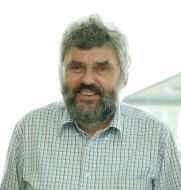
Balder ten Cate is an Associate Professor at the University of Amsterdam, where he leads the Theoretical Computer Science research unit within the Institute for Logic, Language and Computation (ILLC). His academic journey includes previous positions at INRIA, UC Santa Cruz, Stanford, LogicBlox, and Google. He maintains active collaborations across institutions including the University of Bergen (co-advising PhD students) and Tsinghua University. Primary Affiliation: Theoretical Computer Science (TCS) Secondary Affiliation: Mathematical & Computational Logic (MCL) Office: Room L6.38, LAB42, Science Park 900, Amsterdam Dr. ten Cate's research spans diverse applications of logic in computer science and AI, with particular emphasis on data management, knowledge representation, and machine learning. His work bridges theoretical foundations with practical applications, focusing on how logical frameworks can enhance data systems and AI capabilities. He has developed significant contributions in finite model theory, database theory, and computational learning theory, with recent work exploring connections between universal algebra and learning theory. His publication record shows a strong trajectory in theoretical computer science, with recent papers focusing on query algorithms, interpolation in logical fragments, and the learnability of database queries. The research demonstrates consistent contributions at top venues including PODS, ICDT, IJCAI, and ACM Transactions journals. His work on 'Extremal Fitting Problems for Conjunctive Queries' received the ACM PODS 2023 Best Paper Award, while 'SAT-Based PAC Learning of Description Logic Concepts' earned an IJCAI 2023 Distinguished Paper Award. 2024 ETAPS Best Paper Nomination 2023 ACM SIGMOD Research Highlights Award 2023 Alberto Mendelzon Test-of-Time Award ICDT 2012 Best Paper Award 2006 EACSL Ackermann Prize for best dissertation Dr. ten Cate actively supervises PhD and MSc students, with recent theses covering topics like modal formula characterization, conjunctive queries, and temporal logic. He serves on numerous program committees including PODS 2025 and ICALP 2024, and has organized workshops on learning and logic. His current MSCA European Re-Integration Fellowship 'LLAMA: Logic and Learning: an Algebra and Finite Model Theory Approach' (2021-2025) demonstrates ongoing research leadership. He also contributes to academic service through committee memberships including the ASL Committee on Education and the editorial board of the Journal of Logic, Language and Information.