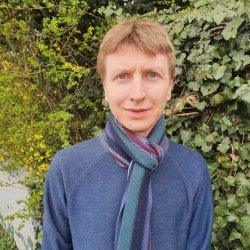
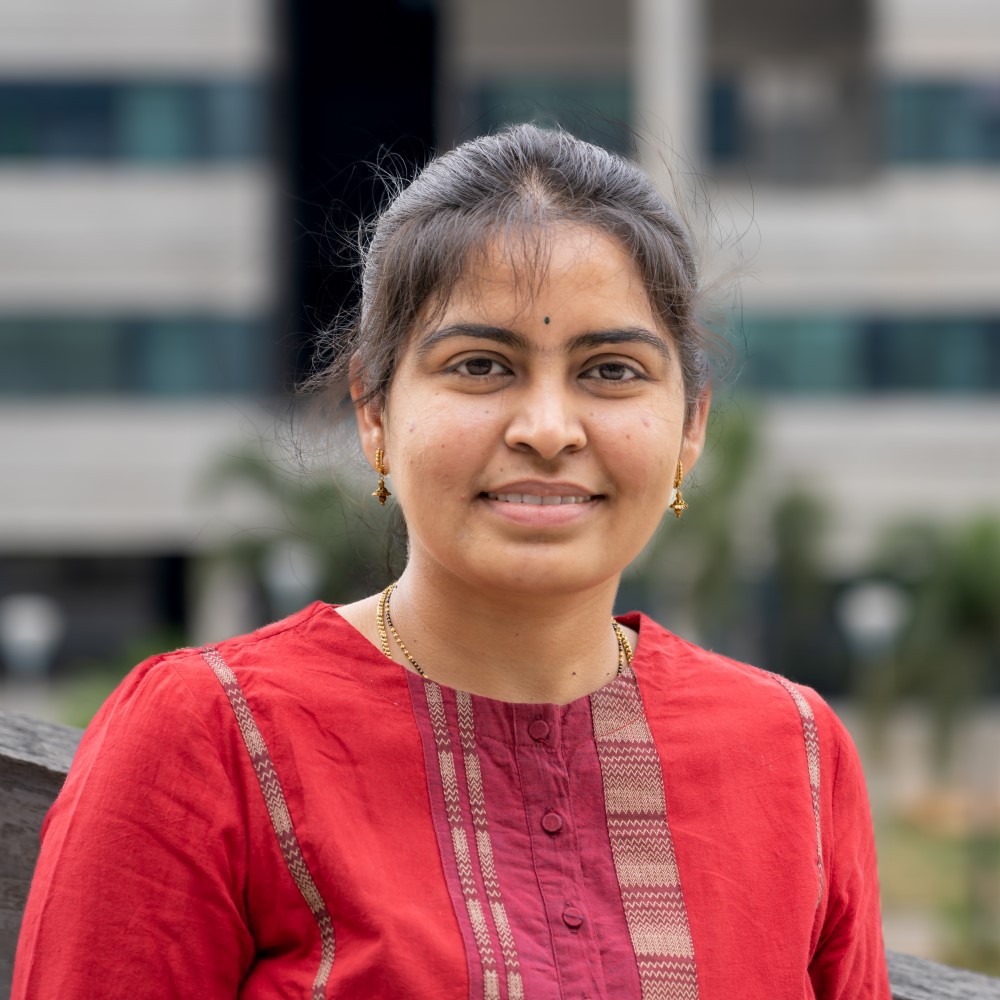
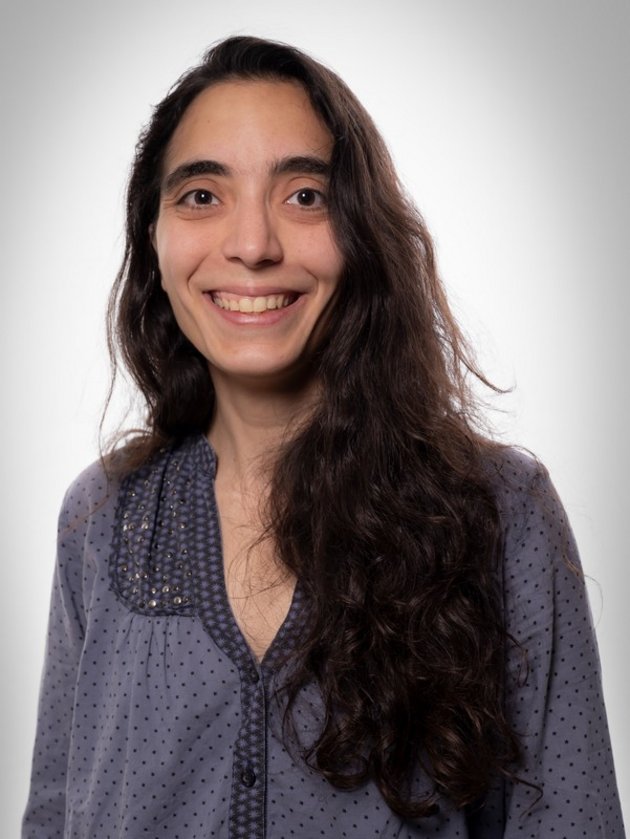
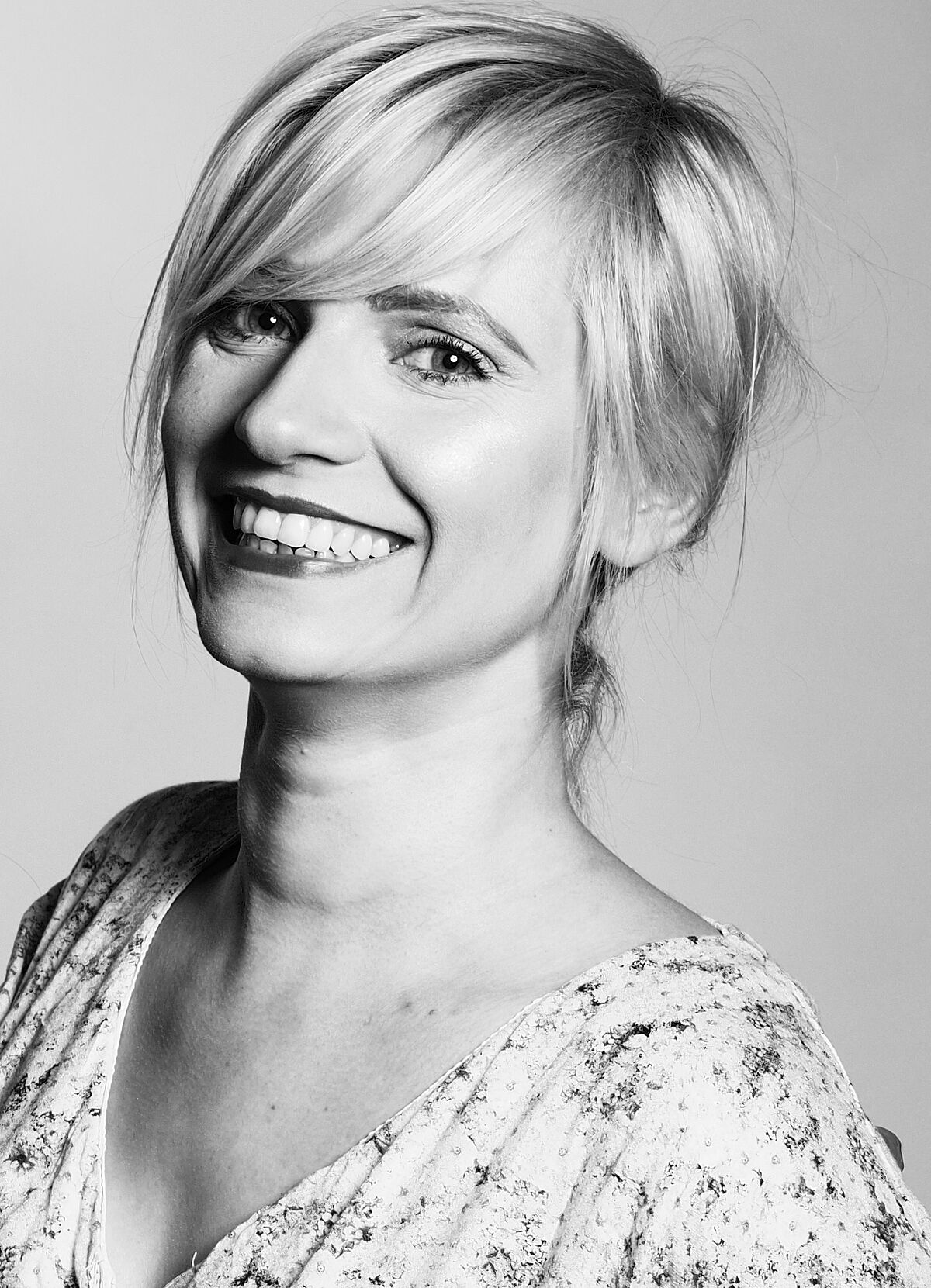
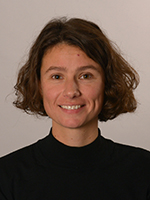
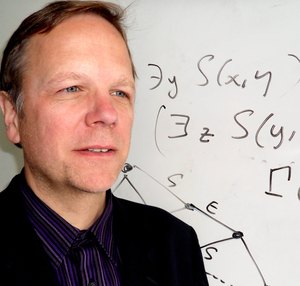
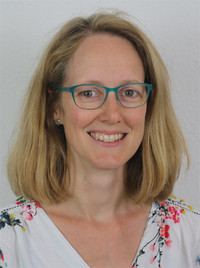
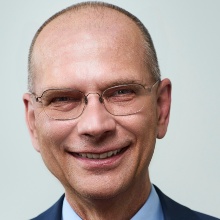
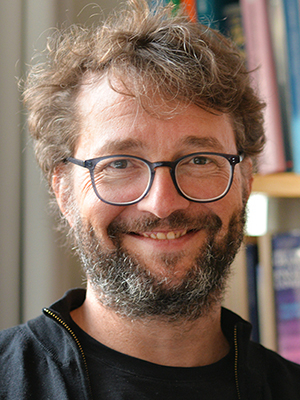
Dr. Eng. Joanna Strug is a lecturer at the Department of Automation and Computer Science within the Faculty of Electrical and Computer Engineering at Cracow University of Technology. Her research focuses on software testing methodologies, machine learning applications in test automation, and database technologies. Specialization in mutation testing and fault injection Expertise in UML/OC validation and business process testing Active researcher in relational and non-relational database modeling Recent research trends indicate a focus on database technology performance analysis, including: Comparative benchmarking of relational vs. NoSQL databases Cost optimization in mutation testing using machine learning Structural similarity applications for test classification Validation frameworks for service-oriented architectures Model-based testing of business processes Bytecode-level mutant classification Her work appears in prominent venues including: Information Systems Architecture and Technology Artificial Intelligence and Soft Computing Journal of Engineering International Conference on Software Engineering (ENASE)
Steven Kaye is a Research Fellow in the School of Literature and Languages at the University of Surrey, affiliated with the Surrey Morphology Group. His work focuses on understudied Caucasian languages, particularly within the Nakh-Daghestanian family. He holds a DPhil (2015) and MPhil (2009) in Linguistics from the University of Oxford, alongside a BA (Hons) in Classics and Modern Languages (2006). His research explores morphosyntactic typology, language documentation, and Indo-European comparative linguistics. Current projects include AHRC-funded 'External Agreement' investigating syntactic structures in Northern Caucasus languages and prior ANR-funded work on Northern Talyshi. He has conducted fieldwork in Zilo, Russia, and contributed to linguistic databases. Publications emphasize agreement systems in Andi and historical analyses of Caucasian linguistic works. His work bridges field-based research with theoretical linguistics, contributing to broader understanding of global language structures.
Jyothi Vedurada is an Assistant Professor in the Department of Computer Science and Engineering at the Indian Institute of Technology Hyderabad (IIT Hyderabad). Her research focuses on compilers, program analysis, high-performance computing (HPC), and software engineering. Prior to joining IIT Hyderabad, she was a postdoctoral researcher at Microsoft Research Lab in Bangalore and worked as a Software Engineer at Hewlett Packard in Chennai. Her research spans four major areas: Compiler Optimizations : Developing global compiler optimizations for CPU-GPU heterogeneous systems to enhance performance across varied hardware environments. ML for PL : Leveraging AI to overcome scalability and semantic challenges in program analysis, with applications in bug detection, API misuse recommendation, and algorithm description generation for Jupyter notebooks. Parallelization : Designing efficient GPU algorithms for tasks like Approximate Nearest Neighbour search and subgraph isomorphism optimization, alongside developing the Tensor Transposition Library for GPUs (TTLG). Concurrency Testing : Creating systematic testing frameworks for concurrent systems, including language-agnostic libraries and mock storage systems to validate weak isolation levels in databases. Scientific Awards & Recognition : Distinguished Artifact Award at ECOOP 2025 Google Research exploreCSR Award (2021) Tata Consultancy Services PhD Fellowship ACM SIGAI, SIGPLAN, and IEEE Travel Grants Advising & Collaborations : Supervising 11 PhD and MTech students, including Soumik Kumar Basu and Karthik V, with projects spanning compiler optimizations, HPC, and AI-driven software analysis. Collaborating with institutions like Microsoft Research and IIT Madras.
Christina Khnaisser is an Assistant Professor in the Department of Computer Science at the University of Sherbrooke, specializing in data modeling for healthcare systems. Her work bridges computer science, medicine, and data management to advance learning health systems. Her educational background includes: M.Sc. in Software Engineering from the University of Sherbrooke (2016) Ph.D. in Medical Informatics from Université Paris Cité (with cotutelle agreement at University of Sherbrooke) (2019) Visiting Professor at Libera Università di Bolzano, Italy (2021-2022) Dr. Khnaisser develops historical data models that provide unified, temporally annotated views of health data. Her research focuses on tracking data evolution and provenance to accelerate diagnosis, optimize treatments, ensure care continuity across institutions, and improve clinical decision-making. She integrates computer science, mathematics, philosophy, and medical knowledge to create semantically rich data frameworks for reusable health analytics. Her interdisciplinary approach combines temporal database theory with practical healthcare applications, emphasizing cost-effective clinical studies through robust data infrastructure. Current work targets ontological modeling and data warehouse solutions for learning health systems.
Lisa Ingermann serves as a Researcher in the Department of German Studies at the University of Rostock's Faculty of Arts and Humanities. Holding a Master of Arts in German, she maintains her office at Kröpeliner Str. 57, Room 350, and is contactable via lisa.ingermann@uni-rostock.de. Her role encompasses research support and academic contributions to German literary studies with emphasis on pedagogical applications. Her research program centers on Comics Studies, Children's and Young Adult Literature, and Literary Didactics. Ingermann investigates how visual narratives—particularly comics—enhance language comprehension and historical education. Her work analyzes representations of National Socialism, archetypal figures like the 'evil old woman,' and innovative teaching methods including concrete poetry and language-development games. This research directly informs her development of classroom materials for German language instruction. Analysis of her 2020-2024 publications reveals consistent focus on comics as pedagogical tools across historical and contemporary contexts. She frequently collaborates with colleagues like Andrea Struck and Tina Michaelis on adaptations of works ranging from The Diary of Anne Frank to Roald Dahl's literature. Her scholarship bridges literary theory with practical classroom applications, particularly in German as both first and second language education. In addition to her research, Ingermann actively reviews children's and young adult literature for the GEW's Youth Literature and Media Working Group (AJuM), contributing critical assessments through their online database at www.ajum.de. Her ongoing work demonstrates commitment to advancing literary education through multimodal approaches.
Wolfgang Faber is a researcher at Vienna University of Technology (TU Wien) specializing in Knowledge-Based Systems within the Faculty of Informatics. Holding the position of Privatdozent, he has completed his habilitation and is qualified to teach at the university level. His academic work centers on Answer Set Programming (ASP), Logic Programming, and Knowledge Representation, with significant contributions to theoretical foundations in these fields. Dr. Faber's research spans multiple areas of computational logic: Answer Set Programming and its theoretical underpinnings Epistemic logic programs and equivalence properties Knowledge representation and reasoning systems Nonmonotonic reasoning formalisms Integration of logic programming with external data sources His publication history reveals a sustained focus on theoretical aspects of ASP, with particular emphasis on program equivalence concepts (strong equivalence, uniform equivalence), computational complexity analysis, and applications to knowledge representation. Over two decades, his research has evolved from foundational work in disjunctive logic programming to specialized topics in epistemic reasoning within ASP frameworks. Dr. Faber has led and participated in numerous research projects including START (2014-2022) on Uniform Equivalence of Epistemic Logic Programs, SemDat (2012-2016), and multiple projects related to hybrid knowledge bases and Answer Set Programming from 2005-2015. His collaborative research extends across European institutions, evident through extensive co-authorship with researchers like Thomas Eiter and Stefan Woltran. While specific awards aren't documented in the available information, his sustained research output and leadership in multiple projects indicate significant recognition within his field. Dr. Faber has made substantial contributions to major systems in the field, most notably the DLV system for knowledge representation and reasoning, which has influenced both academic research and practical applications of Answer Set Programming.
Eline Visser is a Research Fellow at Uppsala University's Department of Linguistics, funded by the Wenner-Gren Foundations. She specializes in the endangered languages of eastern Indonesia, particularly Kalamang (Papuan) and Uruangnirin (Austronesian), and leads the Mapping Bomberai project (2024-2026) documenting understudied languages of the Bomberai peninsula. Her work bridges academic research with community-led language preservation initiatives. Her educational background includes: PhD in Linguistics from Lund University (2020), with a dissertation on Kalamang grammar Visser's research centers on language documentation and typology, with deep expertise in Austronesian and Papuan languages of eastern Indonesia. She investigates grammatical relations, narrative structures, prosody, and language contact phenomena through rigorous fieldwork. Her methodological contributions include integrating legacy materials with new field data and developing mobile dictionary apps for community use. She actively engages with ethical considerations in language documentation and promotes digital tools for endangered language preservation. Her publications from 2015-2025 reveal consistent focus on eastern Indonesian languages, particularly grammatical relations in Kalamang/Uruangnirin and methodological innovations in field linguistics. Key trends include the interplay between legacy data and new fieldwork, narrative analysis in Papuan languages, and applying computational approaches to language documentation. Her collaborative work spans syntax, phonology, and discourse analysis across diverse language families. Her scientific recognition includes: Wenner-Gren Fellowship for the Mapping Bomberai project Visser leads the Wenner-Gren-funded Mapping Bomberai project (2024-2026), supporting fieldwork on multiple Bomberai peninsula languages including Bedoanas, Erokwanas, Geser-Gorom, and Mbaham. She collaborates with researchers from Google on applying large language models to grammar reading and audio processing, and supports Wancho language documentation in India. Her community-oriented work includes developing mobile dictionary apps for Kalamang and Uruangnirin speakers. She is an active member of the 'Serial Verb Constructions across modalities' research group at the University of Amsterdam and previously contributed to the 'Where does grammar come from?' group. Her earlier work included the ExSynOp project at UiT The Arctic University of Norway on Scandinavian prosody, demonstrating her cross-linguistic research scope.
Georg Gottlob is a Professor of Informatics at the University of Oxford and an Adjunct Professor at Vienna University of Technology (TU Wien). He is a Fellow of St John's College, Oxford, and focuses on algorithms and complexity in areas like database theory, constraint satisfaction, and computational logic. His work bridges theoretical foundations and practical applications, including web data extraction and quantitative finance. Education: Engineer and Ph.D. in Computer Science from TU Vienna (1979, 1981) Previous Positions: Full Professor at TU Vienna (1988-2006), Director of Christian Doppler Laboratory for Expert Systems (1989-1996), McKay Professor at UC Berkeley (1999) Research Interests: Gottlob specializes in graph/hypergraph-based problem decomposition methods for tractable instances of NP-hard problems, with applications in database query optimization, constraint satisfaction, and combinatorial auctions. His work spans database theory, AI, and computational complexity. Article Trends: Recent publications emphasize knowledge graph construction from financial data (2022), complexity analysis in logical frameworks (2021), and foundational work in guarded existential rules (2014). Themes include AI-driven data extraction, computational complexity, and logic programming. Scientific Awards: Fellow of the Royal Society (2010) Ada Lovelace Medal (2017) Wittgenstein Award (1998) Honorary Doctorates (University of Calabria, Klagenfurt) Advising and Leadership: Supervised numerous students and directed industry-funded projects like the Christian Doppler Laboratory. Co-founded Lixto Corporation and established the Oxford-Man Institute of Quantitative Finance (2006). Served as Editor-in-Chief of Artificial Intelligence Communications and on editorial boards of major journals.
Dr. Akhtar Ali is an Assistant Professor at the Department of Computer and Information Sciences, Northumbria University. With over 20 years of experience in academia, he has specialized in database systems, data mining, and health informatics. He holds a PhD from the University of Manchester (2003) and has developed innovative programs like the MSc Data Science. Education: PhD in Computer Science (2003), University of Manchester MSc in Computer Science (1995), University of Peshawar Research Interests: Focuses on data science, big data management, healthcare optimization, and database migration. His recent projects include using data mining for population health prediction and redesigning healthcare service delivery models. Key Contributions: Led KTP projects on GIS for Gibraltar and healthcare process redesign. Developed MSc programs in Data Science and Information Science with Data Analytics. Supervised numerous students across BSc, MSc, and PhD levels. Awards: No specific awards listed, but recognized for contributions to database and health informatics research. Teaching & Administration: Over 20 years of teaching experience in database systems, data warehousing, and software design. Authored modules like 'Principles of Data Science' and 'Research Methods.'
Prof. Dr. Meinard Müller is a Professor at Friedrich-Alexander Universität Erlangen-Nürnberg (FAU), leading the Chair of Semantic Audio Signal Processing within the International Audio Laboratories Erlangen (a joint institute with Fraunhofer IIS). He specializes in Music Processing, Music Information Retrieval, Audio Signal Processing, and Motion Processing. His work bridges fundamental research and practical applications in music technology, including audio decomposition, source separation, and computational musicology. Research Interests: Focus on algorithmic methods for music analysis, audio feature extraction, and real-time audio processing. Teaching: Supervises a large group of doctoral and master’s students, offering courses on audio processing and music technology. Awards: Recognized as an IEEE Fellow (2020) and ACM Senior Member (2020). His research group develops open-source tools like the FMP Notebooks and libfmp, and maintains datasets such as the Wagner Ring Dataset and Dagstuhl ChoirSet. He actively contributes to conferences like ISMIR and ICASSP, with over 200 publications in top-tier journals and conferences.
Maria Rute Vilhena Costa is an Associate Professor with Habilitation at the Departamento de Linguística within the Universidade NOVA de Lisboa , affiliated with the Centro de Linguística da UNL (CLUNL) . She specializes in lexicography, terminology, and lexical innovation, with a focus on multilingual language resources and cultural heritage studies. She supervises PhD students and actively participates in international research networks. Education: PhD in Linguistics (Universidade NOVA de Lisboa, 2001). Research Interests: Her work centers on lexical markup frameworks, terminological methodology, ontology construction, and the documentation of Portuguese borrowings in Asian languages (CHAMUÇA project). She explores computational linguistics tools for lexical innovation and cross-linguistic studies. Key Contributions: Over 100 peer-reviewed publications (articles, conference papers, book chapters), including foundational work in linked data language resources and terminological integration. Active in editorial roles and international conferences. Labs/Teams: Leads the CLUNL research group and collaborates with global partners on projects like CHAMUÇA and ENEOLI.
Shane Culpepper is an Adjunct Professor in the School of Computing Technologies at RMIT University, where he also serves as Director of the Centre for Information Discovery and Data Analytics and a Vice-Chancellor's Principal Research Fellow. His research focuses on building efficient search systems, measuring answer quality, and human-driven data science transformation of heterogeneous data. Key areas include algorithms, machine learning, distributed computing, and statistical modeling. Teaching interests span space-efficient data structures, data compression, bioinformatics, natural language processing, and combinatorics. His research interests include information retrieval, artificial intelligence, and computational theory. Supervision projects include topics like query performance prediction, inferential risk measures, and efficient cascade ranking. Over 100 research outputs are listed, with recent work on query optimization, multimodal feature extraction, and trajectory data analytics. Collaborations and a personal website ( https://www.culpepper.io/ ) highlight active engagement in the academic community.
Alice Mitchell is Junior Professor for Anthropological Linguistics of Africa at the University of Cologne's Institute for African Studies within the Faculty of Arts and Humanities. Her research focuses on anthropological linguistics, interactional sociolinguistics, and language documentation, with particular emphasis on African languages and cultures. Her work examines linguistic practices related to kinship, social hierarchy, and cultural norms in Tanzanian Datooga communities. Recent publications investigate children's acquisition of avoidance registers, kinship categorization, and the sociolinguistic history of pastoral societies in eastern Africa. Research Methodology: Fieldwork-based language documentation Cross-cultural linguistic comparisons Quantitative and qualitative analysis of social interactions
Ullrich Martin is a Professor and Head of the Institute of Railway and Transport Engineering at the University of Stuttgart, Germany. His work spans railway systems, infrastructure modeling, and transport policy. Key areas include fault diagnosis, simulation-based optimization, and capacity evaluation. Contact: Pfaffenwaldring 7, 70569 Stuttgart, Germany Office Hours: By agreement Research Trends: Recent publications focus on GAN-based data augmentation for railway fault detection, high-speed maglev systems optimization, and early instability detection in ballast tracks. His team explores discrete element modeling, operational risk analysis, and machine learning applications for track condition monitoring. Infrastructure Innovation: He drives digitalization in railway planning through graph-based knowledge databases and automated compliance tools. Projects address dwell time forecasting, electromagnetic suspension design, and accessibility solutions like the Sinn²-App for visually impaired passengers. Operational Modeling: His work includes tabu search algorithms for dispatching, reinforcement learning for timetable calibration, and multi-scale simulation frameworks. He investigates interactions between track irregularities and vehicle dynamics, with a focus on safety and efficiency.
Dag Trygve Truslew Haug is a Professor at the Department of Classics at the University of Oslo, specializing in Greek and Latin linguistics with a focus on syntax and computational approaches. His research bridges classical philology with modern computational linguistics, particularly through treebank development and semantic analysis. His primary research interests include: Greek and Latin grammatical structures Lexical-Functional Grammar and formal semantics Computational linguistics and treebank development Historical linguistics and syntactic change Semantic annotation frameworks Morphological tagging systems His recent publications demonstrate a strong focus on computational linguistics applications for classical languages, semantic parsing methodologies, and the development of linguistic resources for Norwegian. The work shows consistent innovation in formal semantics, corpus linguistics, and interdisciplinary applications in computational biology. He leads the DAMOS project (Database of Mycenaean at Oslo) and participates in multiple research groups including Digital Humanities, Grammar and Meaning, Language Change, Linguistics and Poetics, Pragmatics: Theory & Experiments, and Super Linguistics.