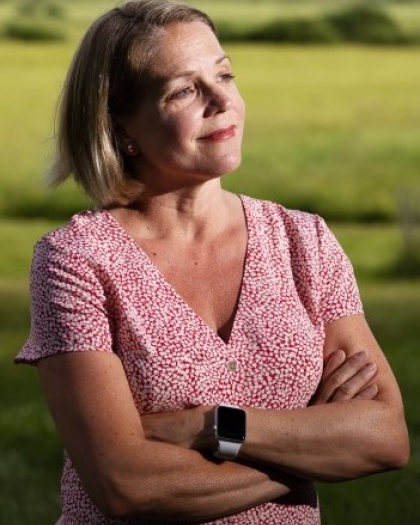
Anne Condamines is a Research Director at CNRS, affiliated with the CLLE (Cognition, Languages, Language, Ergonomics) laboratory at University Toulouse - Jean Jaurès. Her work bridges corpus linguistics, terminology, and cognitive ergonomics, focusing on specialized communication and controlled language applications. Key affiliations: CNRS, CLLE, EDF R&D, CERN collaborations Research themes: Terminology construction, linguistic variation in specialized contexts, cognitive aspects of term usage Research Highlights : 2024: Analyzed controlled language effectiveness in technical communication 2022: Explored knowledge-rich contexts and exobiology terminology 2021: Investigated terminological anomalies and conceptual relations Academic Contributions : Co-developed textual terminology frameworks Founded MAR-REL (Conceptual Relation Markers Database) Pioneered ergonomic linguistics for language engineering
Iolanda Galanes Santos is a Full Professor in the University of Vigo 's Department of Translation and Linguistics, affiliated with the Faculty of Philology and Translation. Her research focuses on Translation Studies , Terminology , and Discourse Analysis , particularly examining metaphorical terminology in economic crisis contexts, cultural promotion through international book fairs, and wine tourism communication. Education : University degree in Hispanic Philology (Galician-Portuguese section), Doctorate in Galician Philology from the University of Santiago de Compostela (1999) Research Highlights : She coordinated an interuniversity project with the University of São Paulo analyzing crisis imagery in press terminology, developed methodologies for cultural promotion at book fairs, and explored neologisms in economic crisis discourse. Her recent publications address metaphorical terminology, wine tourism multilingualism, and terminological databases during pandemics.
Adrien BOIRET is a contractual lecturer-researcher affiliated with INSA Centre Val de Loire and associated with the LIFO (Laboratoire d'Informatique Fondamentale d'Orléans). His work focuses on data privacy, semantic graph databases, and formal methods. Key Research Areas: Data Privacy, Graph Databases, Semantic Web, Differential Privacy, and Large Language Models (LLMs). His recent publications emphasize privacy-preserving data transformations , graph sanitization , and LLM-driven text anonymization . Collaborative efforts highlight interdisciplinary work in database systems and AI ethics. Contact: adrien.boiret@insa-cvl.fr
Petko Staynov is an Assistant Professor at the New Bulgarian University (NBU) , affiliated with the Department of Informatics . His career spans academic roles in Bulgaria and France, with expertise in informatics, linguistics, and educational technology. Education : M.Sc. in Applied Information and Communication Technologies in Education and Learning, Louis Pasteur University, Strasbourg, France (2004) B.A. in Philology (Bulgarian Language and Literature), Sofia University "St. Clement of Ohrid" (1982) Dr. Staynov's research focuses on the intersection of computer science , linguistics , and multimedia technologies . His work explores ethnopragmatics , language-cognition relationships , and computer-assisted translation , while developing online courses and national information systems . Publications highlight his contributions to semantic theory , archaeological computing , and pedagogical resource sharing . At NBU, he teaches courses in French for Administration , Professional Correspondence , and Informatics . His professional experience includes directing master's programs (since 1998) and teaching multimedia and internet technologies (since 1997). Earlier roles in France involved new technologies management , advertising analysis , and multilingual engineering projects.
Borja Herce is a Postdoctoral Researcher at the University of Zurich's Department of Comparative Linguistics, affiliated with the Distributional Linguistics Lab. His research focuses on morphology and diachrony, particularly paradigmatic relations in inflectional systems, morphomes, and inflection classes. He employs qualitative and quantitative methods across global languages to study complex morphological structures. University: University of Zurich Department: Department of Comparative Linguistics Herce's work spans phonological, morphological, and typological analysis. Key projects include comparative studies of Romance languages (Spanish, Catalan, Romanian) and Otomanguean languages (Central Pame), examining phenomena like stem alternations, morphomic templates, and positional splits in agreement paradigms. He has developed computational resources like VeLeSpa (Peninsular Spanish verbs) and VeLeRo (Romanian verbs), enabling detailed morphological predictability analysis. His publications highlight the interplay of naturalness gradients, semantic similarity, and token frequency in shaping morphological systems. Notable Research Contributions Identified diachronic origins of Central Pame's free variation patterns via historical corpus analysis Quantified morphomic productivity in Romance innovations (15% adherence to templates) Linked vowel chain shifts in Central Pame to phonetic fronting among young female speakers Proposed predictive models for morphological complexity metrics as phylogenetic signals Challenged traditional dichotomies between morphemes and morphomes through distributional semantics
Dr Alexander Krasovitsky is a Lecturer in Russian Language at the University of Surrey, with extensive contributions to Russian and South Slavic linguistics. His research bridges synchronic and diachronic morphosyntax, dialectal/historical phonology, and GIS for linguistic analysis, focusing on vowel reduction/neutralization patterns and case inflection loss. Current project: Declining Case: Inflectional Loss in Progress (Leverhulme Trust 2021–2024) Recent themes: Vowel reduction in Russian dialects (Alexander von Humboldt grants 2018–2021), South Slavic case loss, and EMU speech data management systems Scientific awards include multiple Alexander von Humboldt fellowships (2009–2021), AHRC funding (2004–2008), and Russian Foundation for Humanities support. He has supervised PhD students like Tatiana Korobeinikova and led key databases including the Russian Regional Corpus and Declining Case database. Notable presentations: 45th DGfS Annual Meeting (2023), 25th ICHL (2022), and SLE conferences (2010–2023) Collaborations with institutions: University of Surrey (Surrey Morphology Group), Ludwig Maximilian University Munich, Ruhr University Bochum, Russian Academy of Sciences, and University of Oxford
Professor Theodoridis Ioannis is a distinguished faculty member in the Department of Informatics at the University of Piraeus, where he serves as Director of the Data Science Laboratory within the School of Information and Communication Technologies. With a career spanning over two decades, he has established himself as a leading expert in data management and analysis. His research interests focus on Data Science, particularly in databases, big data management, data mining, and geoinformatics. Professor Theodoridis has made significant contributions to spatial database systems, time series analysis, and distributed data processing. His work bridges theoretical foundations with practical applications in areas such as smart cities, mobility analytics, and scientific data management. His publication record demonstrates consistent research productivity with over 100 peer-reviewed articles in top-tier venues, accumulating more than 10,000 citations. His research output shows a clear evolution from foundational database techniques toward contemporary challenges in big data analytics, machine learning integration, and privacy-preserving methods. Member of editorial board of ACM Computing Surveys (since 2016) Reviewer for numerous international journals and conferences Active participant in data management conference committees Professor Theodoridis has secured significant research funding through Horizon 2020 projects, serving as project coordinator and research team leader since 2001. His work demonstrates strong industry and academic collaboration, with applications spanning multiple domains. He has also co-authored three influential monographs in his field. He leads the Data Science Laboratory, which serves as a hub for interdisciplinary research at the intersection of database systems, machine learning, and domain-specific applications. The laboratory fosters collaboration between computer scientists, domain experts, and industry partners to address real-world data challenges.
Shawn Bowers is a Professor in the Department of Computer Science at Gonzaga University, with prior roles as an Associate Project Scientist at the UC Davis Genome Center and Postdoctoral Researcher at the San Diego Supercomputer Center. His educational background includes: BS in Computer Science from the University of Oregon MS and PhD from the OGI School of Science & Engineering at OHSU Dr. Bowers' research centers on conceptual modeling and data provenance in scientific workflows, with significant contributions to ontology-based frameworks for ecological data semantics through NSF-funded projects like Semtools and SONet. His work bridges computer science with environmental science to enhance data discovery and integration. His publication record reveals a sustained focus on workflow provenance systems, including the development of the Query Language for Provenance (QLP) and visualization tools for workflow dependencies. These contributions demonstrate interdisciplinary applications spanning ecological research, e-science, and data management infrastructure. Dr. Bowers maintains extensive research collaborations with UC Davis (30 shared outputs), the National Center for Ecological Analysis and Synthesis (9 outputs), and the San Diego Supercomputer Center (9 outputs), supported by NSF grants including Kepler/CORE and Processing PhyloData. He teaches undergraduate courses in software development and database management systems at Gonzaga University.
Rebekka Benfer, M.Eng., is a Research Fellow at the Chair of Energy Efficient and Sustainable Design and Building (Prof. Lang) at the Technical University of Munich . Her work focuses on energy and systems monitoring, data-driven optimization of building operations, and semantic digital twin development for building systems. She actively contributes to research at the intersection of building automation, Industry 4.0, and sustainable design. Education : Master of Engineering in Green Building Engineering (2021-2024) and Bachelor of Engineering in Energy and Building Services Engineering (2017-2021) from Cologne University of Applied Sciences. Professional Background : Previously worked as a Research Fellow at the Laboratory for Building Automation and Control Systems (2021-2024) and as a Working Student in Building Automation at ZWP Ingenieur-AG (2020-2021). Her recent publications emphasize semantic interoperability, knowledge graph integration, and automated testing of building automation systems. Current activities center on advancing data-driven building optimization and creating intelligent building representations through digital twins.
Anna Wessman is a Professor of Iron Age Archaeology at the Department of Cultural History, University Museum of Bergen. Her research spans Late Iron Age Finland and the Baltic region, burial archaeology, metal-detecting cultures, citizen science, and museum studies. She has led major projects like the Levänluhta water burial analysis and co-developed the semantic portal FindSampo , integrating public finds into open-access databases. PhD in Archaeology (University of Helsinki, 2010) with a focus on Iron Age burial rituals Acting University Lecturer in Museum Studies, University of Helsinki (2015-2017) Adjunct Professor in Iron Age Studies, University of Turku (2022 onwards) Her research combines ethnographic methods with isotopic analysis, examining topics like the Finnar in sagas, cremation practices, and the role of citizen scientists in archaeology. She collaborates across disciplines, including genetics (e.g., Levänluhta isotope studies) and digital humanities ( FindSampo platform). Recent articles highlight her work on metal-detected artifact networks (2025), Viking Age magic interpretations (2025), and cremation studies (2024). Her projects have been funded by the Kone Foundation, Academy of Finland, and Emil Aaltonen Foundation, focusing on community archaeology and digital heritage platforms. Wessman actively bridges academic and avocational communities, advocating for structured collaboration with metal-detectorists to enhance archaeological data. Her publications address ethical dilemmas in displaying human remains (2021) and methodological innovations like 'archaeological object interviews.' Key affiliations: University of Bergen (current), University of Helsinki (PhD), University of Turku (Adjunct Professor) Founding member of the European Public Finds Recording Network and Cultural Heritage Crime Network
James Cheney is a Personal Chair of Programming Languages and Systems at the University of Edinburgh, working in the Laboratory for Foundations of Computer Science within the School of Informatics. He leads the Principles of Provenance research group and has been a Turing Fellow from 2018 to 2023. His educational background includes a PhD in Computer Science from Cornell University (2004), an MS in Mathematics from Carnegie Mellon University (1998), and a BS in Computer Science and Mathematics from Carnegie Mellon University (1998). Cheney's research focuses on the intersection of databases and programming languages, with particular emphasis on data provenance. His work spans several key areas: Databases and data provenance Programming languages and compilers Generic programming Logic and automated theorem proving Compression and information theory XML and related technologies His recent publications demonstrate a strong focus on language-integrated query systems, type systems for programming languages, and formal approaches to data provenance. These works often bridge theoretical foundations with practical applications in database systems and programming language design. Cheney has received several notable awards and recognitions: Royal Society University Research Fellowship (2008-2016) Turing Fellow (2018-2023) ERC Consolidator Grant for the Skye project (2016-2021) Google Research Award for Language-integrated provenance As an advisor, Cheney has supervised numerous PhD students and postdoctoral researchers who have gone on to positions at institutions including New York University, LSE, University of Southampton, Meta, and others. His research has been supported by various grants from DARPA, EPSRC, AFOSR, EU FP7, and industry partners including Google, Microsoft Research, and Huawei. Cheney leads the Principles of Provenance group, which conducts fundamental research on data provenance and its applications in security, data curation, and scientific computing. The group has worked on projects including Skye (a programming language for scientific data curation), ADAPT (a DARPA-funded project on advanced persistent threat prevention), and language-integrated provenance systems.
Dr. Zhenman Fang is an Associate Professor in the School of Engineering Science (Computer Engineering Option) and Associate Member in the School of Computing Science at Simon Fraser University, Canada. He founded and directs the HiAccel Lab, focusing on accelerator-rich architectures. His PhD (2014) is from Fudan University, China, with 15 months spent at the University of Minnesota. Prior to SFU, he was a Staff Software Engineer at Xilinx (2017-2019) and a postdoc at UCLA (2014-2017). His research spans: Hardware acceleration for ML, big data, genomics, and HPC FPGA-based customizable computing and near-data processing Compiler/runtime systems for heterogeneous platforms Performance/reliability optimization of accelerator-rich systems His recent publications (2024-2025) focus on FPGA acceleration for machine learning (e.g., on-device training, quantization), computational chemistry, image/video compression, database systems, and reconfigurable computing, demonstrating cross-domain applications of specialized hardware. Awards & Honors: Best Paper Awards: FPL 2024, MEMSYS 2017, TCAD 2019 Best Paper Nominations: ICCAD 2025, FCCM 2025, HPCA 2017, ISPASS 2018 SFU Research Excellence Horizon Award (2025) NSERC Alliance, CFI JELF, and Xilinx University Awards He advises 20+ PhD/Master's students in HiAccel Lab, focusing on accelerator design. Major grants include NSERC Alliance (2020) and CFI JELF (2019). The lab operates a 10-node cluster with FPGA/GPU infrastructure.
Dr. Thomas R Dean is a Professor in the Department of Electrical and Computer Engineering at Queen's University in Kingston, Ontario, Canada, and holds an additional appointment as an Adjunct Associate Professor at the Royal Military College of Kingston. His academic career spans several decades with consistent publication output through 2020, demonstrating active engagement in research and scholarship. His work bridges theoretical computer science with practical security applications, particularly in network protocols and web applications. Dean's research interests focus on software transformation techniques, web application evolution, and network security. His expertise includes software transformation, web site evolution, security of network applications, air traffic control systems, and language formalization. His work demonstrates a consistent thread connecting software engineering principles with security applications, particularly in developing techniques for intrusion detection systems and secure protocol implementations. His publications reveal a strong emphasis on practical applications of theoretical concepts, with numerous collaborations across academic and industrial settings. Analysis of Dean's recent publication record (2014-2020) shows a clear concentration in three interconnected areas: network security protocols, software transformation techniques, and model-based engineering approaches. His work on intrusion detection systems using constraint satisfaction methods appears consistently across multiple publications, demonstrating this as a core research thread. The publications also reveal growing interest in automotive software systems, particularly AUTOSAR implementations and Simulink model analysis, reflecting adaptation to emerging industry needs. Scientific recognition includes: Best paper award at CASCON'04 for Practical Language-Independent Detection of Near-Miss Clones Dean maintains active research collaborations, particularly with colleagues at Queen's University including M.H. Alalfi, J.R. Cordy, and F.T. Imam, as evidenced by co-authorship across multiple publications. His work spans both theoretical contributions and practical tool development, including parser generators, constraint engines, and intrusion detection systems. His research has been supported by publications in reputable venues including CASCON, IEEE conferences, and journals like Software Practice and Experience. Dean leads The Compass Group research team, focusing on software security and transformation techniques. His lab work emphasizes practical applications of software engineering principles to real-world security challenges, particularly in network protocols and web applications. The research approach combines formal methods with practical implementation, resulting in tools and frameworks that address specific security vulnerabilities in modern software systems.
Georgette Dal is a Full Professor at the University of Lille, affiliated with the Faculty of Humanities and the Language Sciences Department (UMR 8163 - STL: Savoirs, Textes, Langages). Her research focuses on constructional morphology , morphological productivity , and usage-based linguistics , with a strong emphasis on corpus analysis and digital resources like the Démonette-2 database. She led the ANR DEMONEXT project (2017-2022) to develop morphological databases for speech therapy applications. Research Themes : Constructional morphology, productivity, corpus linguistics, lexematic morphology Projects : FRANLEX (1997-2003), MorTAL (2000-2003), DEMONEXT (2017-2022) Her work bridges theoretical morphology with applied linguistics , particularly in speech therapy and language education . She has collaborated extensively with computational linguists and psycholinguists, contributing to debates on the autonomy of morphology , category boundaries , and the role of analogy in lexical construction. Recent studies include the morphological analysis of French adjectives in -eux and the development of participatory research frameworks for clinical partnerships. Her advocacy for internet-based data has transformed French morphological research methodologies.
C. Koutras is a researcher at the Data-Intensive Systems group within the School of Electrical Engineering, Mathematics and Computer Science at Delft University of Technology. His work focuses on data integration, schema matching, and machine learning applications in modern data systems. Research Areas: Data Integration, Schema Matching, Machine Learning, Data Lakes, Graph Neural Networks, Biomedical Data Systems Collaborations: Active collaborations with researchers including R. Hai, A. Katsifodimos, and M. Jarke. Recent work includes developing tools like Amalur and Valentine , which address challenges in data lake integration and scalable schema matching. His research leverages large language models and graph-based techniques for biomedical and distributed data environments. Despite significant contributions to data integration and machine learning, no explicit scientific awards or part-time status are documented in the provided materials. His 2024 dissertation at TU Delft highlights expertise in modern data challenges.