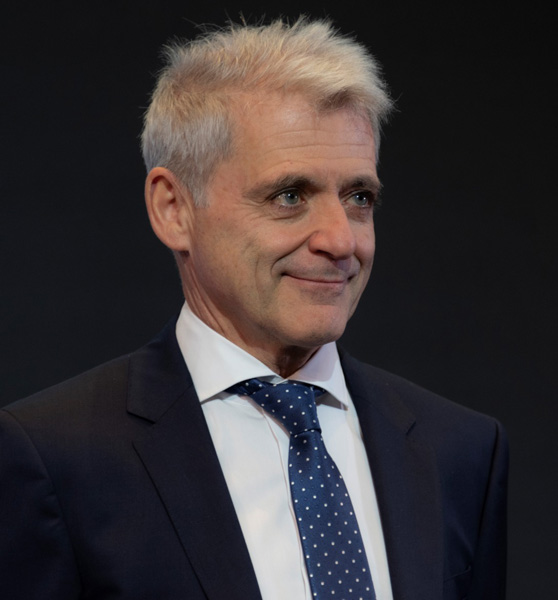
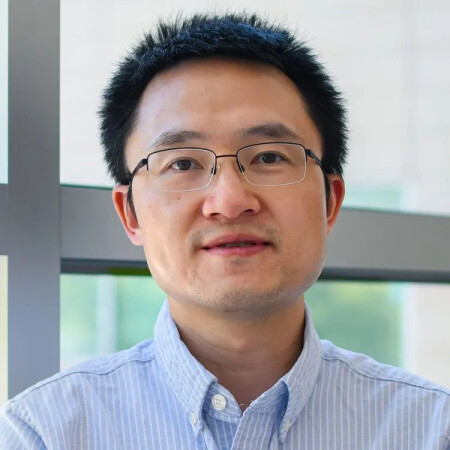
Jean Ponce is a Professor of Computer Science at Ecole Normale Superieure (ENS) in Paris and a Part-Time Global Distinguished Professor at New York University's Courant Institute of Mathematical Sciences and Center for Data Science (CDS). He previously served as Director of the ENS Computer Science Department (2011-2017) and held positions at Inria (2017-2022), University of Illinois at Urbana-Champaign (1998-2006), MIT, Stanford, and Inria (1982-1985). Academic Leadership: Scientific Director of PRAIRIE Interdisciplinary AI Research Institute in Paris Startup Involvement: Co-founder and CEO of Enhance Lab (2022) Editorial Roles: Senior Editor-in-Chief of International Journal of Computer Vision (2019-2022) Conference Leadership: Chair of IEEE CVPR (1997,2000), ECCV (2008), and upcoming ICCV (2023) Research Focus: Computer vision, machine learning, robotics, and AI with applications in exoplanet imaging, 3D reconstruction, and image quality assessment. His work bridges statistical learning and deep learning approaches. Awards: IEEE Fellow (2003) ELLIS Fellow (2019) ERC Advanced Grant (2011) IEEE CVPR Longuet-Higgins Prizes (2016,2020) ICML Test-of-Time Award (2019) Patents & Publications: Co-author of influential textbook Computer Vision: A Modern Approach (translated into Chinese, Japanese, Russian). Holds two US patents and one pending French patent. Google Scholar h-index of 78 with over 55,000 citations.
Professor Jamie Carlson is a Professor of Marketing and Deputy Head of School - Research at the Newcastle Business School, University of Newcastle. His expertise lies at the intersection of marketing, consumer behavior, and technology, with a focus on how organizations can better engage customers in increasingly digital environments. He has held significant leadership roles including Assistant Dean Research and Engagement (2018-2020) and Head of Marketing Discipline (2017-2018). Professor Carlson's educational background includes: PhD (Management) from the University of Newcastle Bachelor of Business (Honours) from the University of Newcastle Bachelor of Business from the University of Newcastle Professor Carlson's research program focuses on customer experience management, particularly at the customer-technology interface. His work spans three core areas: understanding customer engagement with physical and virtual channels, examining service design and consumer behavior in service industries, and investigating consumer adoption of e-health services. He emphasizes how consumers actively shape their consumption journeys, seeking both individualized and communal brand experiences across touchpoints, and how technology both creates value and presents challenges for consumer well-being. An analysis of Professor Carlson's recent publications reveals a strong emphasis on digital transformation in marketing, with particular focus on omnichannel retailing, metaverse applications, social media engagement, and the psychological aspects of consumer behavior in digital environments. His work demonstrates increasing interdisciplinary collaboration, connecting marketing with information systems, psychology, and healthcare domains to address complex consumer behavior questions in our technology-driven world. Professor Carlson has received numerous prestigious awards for his scholarly contributions: 2025 Jay Lindquist Best Conference Paper Award at the Academy of Marketing Science World Marketing Congress 2023 Best paper in Digital and Social Media Marketing Track at Academy of Marketing Multiple Top Cited/Downloaded Article recognitions from International Journal of Information Management (2022) 2022 Best paper award in the Australasian Marketing Journal Multiple best paper awards at Academy of Marketing conferences (2014-2017) 2010 Vice-Chancellor's Citation for Outstanding Contribution to Student Learning As a principal supervisor for PhD, DBA, and Honours students, Professor Carlson has mentored numerous successful researchers who have gone on to academic positions at institutions worldwide including Maastricht University (Netherlands), Dortmund University (Germany), Macquarie University, UTS, and the University of Adelaide. His students have received faculty medals, best paper awards, and the prestigious Arizona State University Center for Service Leadership Research Scholarship. His supervision focuses on customer engagement in digital media, service experience management, relationship quality, emotional appeals in advertising, and drivers of group travel behavior. Professor Carlson's research is conducted through multinational and interdisciplinary collaborations aligned with the Australian government's 'Growth Through Innovation' agenda and the UN Sustainable Development Goals. His work connects marketing with information systems, psychology, and healthcare to develop frameworks for understanding e-service quality, online flow experiences, customer engagement, and value creation in digital environments.
Chi-Chun Lee (Jeremy) is a Professor and Associate Chair in the Department of Electrical Engineering at National Tsing Hua University (NTHU), Taiwan. He also serves as Director of the NVIDIA-NTHU Joint Innovation Center and leads the Behavioral Informatics & Interaction Computation (BIIC) Lab. His academic journey includes a B.S. (magna cum laude) and Ph.D. in Electrical Engineering from the University of Southern California (USC), USA (2007 and 2012), followed by roles as a data scientist at id:a lab and technical consultant for companies like E.Sun Bank and Allianz Taiwan. Research focuses on speech processing, affective computing, health analytics, and behavior signal processing. He is an IEEE Senior Member and holds editorial roles in top journals such as IEEE Transactions on Affective Computing and Multimedia. Key contributions include leading teams to international competitions (e.g., 1st place in INTERSPEECH 2009 Emotion Challenge) and developing AI frameworks for clinical applications like respiratory sound classification and tumor image synthesis. Recipient of prestigious awards including the NTHU-Novatek Distinguished Talent Chair (2024), National Science and Technology Council Outstanding Research Award (2023), and multiple best paper awards. His work bridges academia and industry, with collaborations extending to NVIDIA and startups like AHEAD Medicine. Research has been featured in major media outlets including Scientific American and Discovery.
Dr. Katherine Mason Cramer is a Professor and Program Chair for Middle/Secondary English Education at Wichita State University's School of Education. Her work focuses on affirming LGBTQ+ identities, inclusive pedagogy, and leveraging Young Adult Literature (YAL) to address gender diversity and intersectional identities in educational settings. She leads initiatives to disrupt heteronormative school cultures and develop queer-inclusive curricula. Education background: Holds a Ph.D., with expertise in English education and teacher preparation. Professional roles include program leadership, curriculum development, and fostering collaboration between university and K-12 educators. Research emphasizes LGBTQ+ representation in literature, teacher training for inclusive practices, and leveraging YA narratives to address societal issues. Key themes include queer youth visibility, intersectional identities, and creating safe educational spaces. Publications consistently address LGBTQ+ topics across education and literature, with recent work exploring transgender identities in middle grades texts and queer narratives in sports contexts. Her 2023-2024 articles highlight professional development strategies and curriculum integration of inclusive materials. No awards listed in available materials. Active in service roles related to teacher education program coordination and K-12/university partnerships. Operates from Hubbard Hall on Wichita State's main campus, coordinating initiatives that bridge theory and practice in English education. Engages in continuous program improvement through reflective pedagogical frameworks and digital tool integration.
Dr. Carina de Klerk is a Senior Lecturer in the Department of Psychology at the University of Essex. Her research focuses on social cognition, action understanding, and imitation in infants and toddlers, with a particular emphasis on brain mechanisms underlying these abilities. She holds a PhD in Developmental Cognitive Neuroscience from Birkbeck College, University of London, and completed a master’s degree at Leiden University. Her work investigates facial mimicry development using EMG and fNIRS technologies, and explores how perceptual-motor couplings influence infants’ ability to predict others’ actions. She has secured grants including a Marie Curie fellowship and awards from the Cognitive Neuroscience Society. Her teaching roles include leading courses on psychology projects, numerical methods in cognitive neuroscience, and developmental theories. Dr. de Klerk’s research has addressed topics such as face processing in children at risk for autism, the role of sensorimotor experience in imitation, and inhibitory control in infants. She currently supervises PhD students researching empathy-aggression relationships and inhibitory control in early childhood. Recent grants include studies on infant body representations and the development of facial mimicry. Her lab, the Essex Babylab, focuses on multisensory experience and parent-infant relationships, with publications in journals like Cortex , Developmental Cognitive Neuroscience , and Proceedings of the Royal Society B .
Albert J. Sinusas, M.D., is a Professor of Medicine (Cardiovascular Medicine and Radiology & Biomedical Imaging) at Yale University School of Medicine and holds adjunct roles in Biomedical Engineering. He leads the Yale Translational Research Imaging Center (Y-TRIC) and directs Advanced Cardiovascular Imaging at Yale New Haven Hospital. His roles include Chairman of multiple committees (Yale Radioactive Drug Research Committee, Radiation Safety Committee) and Board Member of the Intersocietal Accreditation Commission (IAC) for Nuclear/PET imaging. Dr. Sinusas earned his MD from the University of Vermont and completed training in Internal Medicine at the University of Oklahoma and Cardiology/Nuclear Cardiology at the University of Virginia. His research focuses on cardiovascular imaging innovations, including molecular imaging of myocardial injury, angiogenesis, and peripheral artery disease. His translational work employs multidisciplinary modalities such as PET/CT, SPECT/CT, MRI, and echocardiography. He leads NIH-funded grants and trains researchers through a T32 grant. With over 250 peer-reviewed publications, he co-edited textbooks on cardiovascular molecular imaging and hybrid imaging in cardiovascular medicine. Key research interests include developing novel imaging tracers, AI-enhanced diagnostic tools, and non-invasive assessment of cardiovascular pathophysiology. Notable contributions include advancements in PET-derived myocardial blood flow quantification and SPECT imaging optimization using deep learning. Dr. Sinusas has received prestigious awards like the SNMMI Hermann Blumgart Award (2008) and is frequently recognized in 'Best Doctors in America.' He serves on editorial boards for Journal of Nuclear Medicine , Journal of Nuclear Cardiology , and JACC: Cardiovascular Imaging . His clinical expertise includes ECG, stress testing, and interpretation of SPECT/PET imaging studies. He oversees Y-TRIC’s mission to bridge preclinical and clinical imaging research, fostering collaboration across engineering, radiology, and cardiology.
Derek Hao is a materials scientist and environmental engineer holding the Vice Chancellor’s Postdoctoral Fellowship at RMIT University's School of Science. His research focuses on advanced materials for environmental sustainability and energy conversion, particularly in waste plastic valorization, photocatalytic systems, and nanotechnology. He has secured over AU$1.2m in research funding and commercialized two patents on bismuth catalysts, generating significant industry impact. His work spans collaborations across Australia, Germany, China, and beyond. Education: PhD in Engineering (University of Technology Sydney, 2022); Bachelor’s in Chemical Sciences (China University of Geosciences). Research Priorities: Sustainable waste plastic solutions, photocatalytic energy conversion, nanomaterials, and environmental toxicology. Awards: Humboldt Research Fellowship (2022), RMIT Vice Chancellor’s Fellowship (2023), inclusion in Stanford’s Top 2% Scientists (2022–2023). Teaching: Teaches Analytical Chemistry and supervises 5 PhD students in areas like electrocatalysts for hydrogen production and CO₂ reduction. Grants & Patents: AU$1.2m+ in funded projects; commercialized bismuth catalyst patents yielding AU$500k+ annually. His research bridges fundamental science and practical environmental solutions, with over 100 peer-reviewed papers (H-index 46), including ESI Highly Cited and Hot Papers. He serves on editorial boards for journals like Science for Energy and Environment and Nano Research Energy .
Dr. Martin Rich is an Associate Professor in Information Technology at Bayes Business School, part of City St George's, University of London. He holds a BSc from Birkbeck, an MBA and PhD from City University London, and completed the 'Leaders in Learning and Teaching' program (2018–2019). His research focuses on management education innovation, particularly addressing challenges posed by rapid technological and societal changes. He has pioneered approaches to integrate formal and informal learning, leveraging technology to enhance engagement and adaptability in management education. Key research interests include personalized education, millennials' learning needs, and leveraging AI and interactive technologies in post-pandemic teaching. He has supervised students like Richard Jones (PhD in Economics of SAP) and Ibrahim Dawoud (Knowledge Management). Rich has been a Course Director for the BSc Business Management program since 2012 and actively contributes to editorial boards of journals like the Electronic Journal of Business Research Methods . His awards include Senior Fellow of the Higher Education Academy (2016). Recent work explores generative AI in education and student use of interactive tech in lectures. Rich’s publications span over 25 years, emphasizing pedagogical innovation, simulation-based learning, and reflective practices in business education.
Andreea Oniga is an Assistant Professor in Digital Marketing at Edinburgh Business School, Heriot-Watt University, UK, a position she has held since January 2024. She is affiliated with the School of Social Sciences and actively contributes to teaching, research, and academic leadership. She currently serves as Programme Director for the MSc Digital Marketing and MSc Digital Marketing with Advanced Practice programs. Her educational background includes a PhD and an MLitt in Marketing from the University of St Andrews. She is a Fellow of the Higher Education Academy and holds a PGCert in Higher Education Teaching, underscoring her commitment to academic excellence. Her research centers on digital marketing , digital consumer behaviour , social media message strategies , online communities , and sustainable behaviour . She explores how digital platforms influence consumer decisions and how marketing can promote environmentally responsible actions. Her work bridges academic theory and industry practice, particularly in digital strategy and customer experience. The recent publications reflect a strong focus on digital research infrastructure, crowdfunding for social sciences, sustainable consumption, and marketing communications. Her work spans interdisciplinary themes including behavioral science, education, and digital innovation, often employing qualitative and user-centered research methods. Her scientific recognition includes: Fellow of the Higher Education Academy She has supervised academic projects and received funding through a Knowledge Transfer Partnership (KTP), demonstrating strong industry collaboration. She is currently accepting PhD students and continues to lead impactful research aligned with UN Sustainable Development Goals. Her teaching includes digital marketing, analytics, and customer experience courses. She is actively involved in research networks and has contributed to initiatives such as the TRIPLE project, focusing on open science and researcher needs across Europe.
Dr. Yu Xiang is an Assistant Professor of Computer Science at the University of Texas at Dallas (UT Dallas), leading the Intelligent Robotics and Vision Lab (IRVL) . He holds a Ph.D. in Electrical and Computer Engineering from the University of Michigan (2016) and prior roles include Senior Research Scientist at NVIDIA (2018–2021) and postdoctoral research at the University of Washington. Research Focus : His work centers on robotics and computer vision , particularly enabling robots to perceive 3D environments, plan actions, and interact autonomously in human-centric spaces. Key areas include unseen object segmentation, 6D pose estimation, manipulation trajectory optimization, and lifelong learning through robot-environment interaction. Key Contributions : Developed datasets like MultigripperGrasp and HO-Cap , and pioneered methods such as DeepIM for 6D pose estimation. His lab’s robot Ramp focuses on tasks like object manipulation and human-robot collaboration. Grants : NSF SMILE grant ($750K), DARPA Perceptually-enabled Task Guidance (co-PI), Sony Research Award (PI). Awards : NVIDIA Academic Grant (2024), Sony Research Award (2022), ECCV Best Paper (2018). Lab Activities : Engages in STEM outreach, including mentoring high school students in the 2024 Summer Bridge Camp. Current projects emphasize self-supervised learning and embodied AI for robotic systems.
Tania Cerquitelli is a Full Professor in the Department of Control and Computer Science (DAUIN) at Politecnico di Torino, where she leads research in data science, concept-drift management, and inclusive AI technologies. She is a member of SmartData@PoliTO, the GEDI Observatory for Gender Equality, and serves in leadership roles related to social affairs and community policies at the university level. She also acts as a scientific advisor for the partnership with Accenture. Her research interests span Data Science , Concept-Drift Management , Database Systems , Conversational Data Science , and Industry 4.0 . She applies AI and machine learning to industrial, societal, and ethical challenges, particularly in promoting inclusive communication and gender equality in research. The most recent publications highlight her work in explainable AI, concept drift detection, multimodal diagnostics, and AI for social good. Her research integrates machine learning, natural language processing, and computer vision to address real-world problems in manufacturing, healthcare, agriculture, and education. She is an Associate Editor for several prestigious journals including Expert Systems with Applications , Computer Networks , Future Generation Computer Systems , and Knowledge and Information Systems . She has served on the program committees of major conferences such as ECML PKDD, EDBT/ICDT, and ACM KDD, and has been a reviewer and selection committee member for ETH Zurich and EMPA. She actively supervises PhD students and teaches a wide range of courses including Data Science and Database Technologies, Business Intelligence for Big Data, and Gender and Diversity in Research. She is involved in multiple national and international research projects such as E-MIMIC, WEBFARE, and EnABLES, focusing on inclusive AI, smart data, and industrial applications. Her lab affiliations include the DBDM - Database and Data Mining Group (DAUIN) and the Interdepartmental Center SmartData@PoliTO - Big Data and Data Science Laboratory , where she contributes to advancing data science methodologies and their societal impact.
Anna Berg is an Assistant Professor in the Department of Sociology and Social Anthropology at Central European University (CEU), where she conducts research at the intersection of political sociology, cultural sociology, and media studies. Her work critically examines how digital communication practices shape political identities and mobilizations, with a focus on right-wing and populist movements in Germany. Her educational background includes a PhD in Sociology from the University of Chicago, an MA from École des Hautes Études en Sciences Sociales (EHESS) in Paris, and a BA in Political Sciences from Freie Universität Berlin. Anna's research interests include: Political and cultural sociology Media and communication in populist movements Digitalization and political identity Ethnographic studies of anti-refugee and anti-lockdown protests Youth political engagement and media practices Alternative media ecologies and disinformation Her recent publications explore themes such as informational activism, epistemic trust, political meaning-making, and the cultural dynamics of echo chambers and post-truth discourse. Using ethnographic and qualitative methods, her work moves beyond buzzwords to offer grounded sociological insights into contemporary political transformations. She is currently conducting fieldwork on media practices among high-school students, extending her inquiry into the next generation of political subjectivities. Anna has not been listed with any scientific awards or fellowships in the provided text. She advises emerging scholars through her ongoing research projects and supervises fieldwork, though specific students are not named. Her research is supported by ethnographic fieldwork and institutional affiliation with CEU, enabling long-term studies in Germany. Her work is conducted through independent research and collaboration within the Department of Sociology and Social Anthropology at CEU, contributing to broader academic discussions on democracy, representation, and digital culture.
Diego Patiño is an Assistant Professor in the Department of Computer Science and Engineering at the University of Texas at Arlington (UTA), a position he began in September 2024. He earned his Ph.D. in Computer Engineering from the National University of Colombia in 2020, following M.S. and B.S. degrees from the same institution. Prior to joining UTA, he served as a Postdoctoral Fellow at Drexel University and a Postdoctoral Researcher at the GRASP Laboratory, University of Pennsylvania. B.S. in Computer Engineering, National University of Colombia, 2010 M.S. in Computer Engineering, National University of Colombia, 2012 Ph.D. in Computer Engineering, National University of Colombia, 2020 Dr. Patiño's research centers on geometric computer vision and machine learning, with applications in robotics and 3D vision. His primary interests include 3D reconstruction, graph neural networks, symmetry detection, physics-informed machine learning, and reinforcement learning. He develops algorithms that integrate geometric priors and physical constraints into deep learning models to improve robustness and generalization in real-world robotic systems. His recent publications demonstrate a strong trend in leveraging implicit neural representations for 3D shape reconstruction, applying graph neural networks to swarm robotics, and enhancing computer vision tasks with self-supervised and physics-informed learning. Work spans high-impact venues such as IEEE RA-L, ICRA, ICPR, and MICCAI, showing a consistent focus on geometric reasoning, robotic perception, and medical imaging applications. His scientific contributions have been recognized with awards from the UTA Division of Student Affairs for exceptional dedication and positive impact (2024 and 2025). He is actively involved in securing research funding, with multiple grants under review from NSF, Air Force SBIR, and industry partners like Sony. Exceptional dedication and positive impact recognition, UTA Division of Student Affairs (December 9, 2024) Exceptional dedication and positive impact recognition, UTA Division of Student Affairs (April 30, 2025) Dr. Patiño advises and serves on committees for multiple graduate students in computer science and engineering, including doctoral and master’s candidates. He is also leading or co-leading several research grants under review, covering topics such as aerial swarm navigation, neuromorphic sensing, and industrial computer vision. He teaches graduate courses in computer vision and is involved in service roles including PhD admissions and faculty appointments committees. He is affiliated with research initiatives at UTA, including the UTARI Research Institute, where he has presented on geometric modeling and physics-informed learning. His lab focuses on developing next-generation computer vision algorithms for robotics, industrial inspection, and safety-critical systems.
Valentina Carbonara is a fixed-term researcher at the Department of Italian Language, Literature, and Arts in the World (LILAIM) at the University for Foreigners of Perugia, where she serves as teaching coordinator for Italian language and culture courses for foreigners. She previously held research and teaching positions at the University for Foreigners of Siena, University of Insubria, and University of Bergamo. Her research focuses on applied linguistics , particularly teaching Italian as a second language (L2/LS) , translanguaging , multilingual pedagogies , and early language learning . She investigates how multilingual approaches enhance language awareness, teacher practices, and student development in diverse educational settings. The most recent publications demonstrate a consistent focus on multilingual education, analyzing tools like language portraits and schoolscape to assess awareness and pedagogical impact. Her work bridges theory and practice, emphasizing teacher training, inclusive methodologies, and policy implications in superdiverse classrooms. She has authored a key monograph on translanguaging and contributed to international volumes on language teaching. Though no scientific awards are listed, her publications appear in respected journals such as Linguistics and Education and Journal of Multilingualism . Valentina Carbonara supervises teaching activities and offers courses in glottodidactics, intercultural communication, and language teaching methods. She collaborates with research centers like CLUSS and Centro Bilinguismo Conta and has been involved in longitudinal studies on multilingual education. Her lab-based work centers on classroom observation, teacher training protocols, and multilingual assessment tools.
Leona Wiegmann is an Associate Professor of Management Control at ESCP Business School in Paris. Her research examines how digitalization reshapes accounting practices, focusing on tensions between technology and human actors, evolving roles of management accountants, and external stakeholder engagement. She employs qualitative methods like field studies, vignettes, and netnography to explore forecasting, performance management, and accountability. Previously, she held faculty positions at WHU – Otto Beisheim School of Management (Germany) and Monash University (Australia). Open to supervising PhD students, her work appears in journals such as Contemporary Accounting Research and Accounting, Auditing & Accountability Journal . Education: PhD from WHU – Otto Beisheim School of Management Key Research Themes: Digitalization in Accounting, Organizational Dynamics, Qualitative Methodologies Her articles analyze topics ranging from proxy advisor accountability to information search during crises, reflecting her focus on real-world organizational challenges. While no scientific awards are listed, her contributions to accounting and organizational studies literature highlight her scholarly impact.