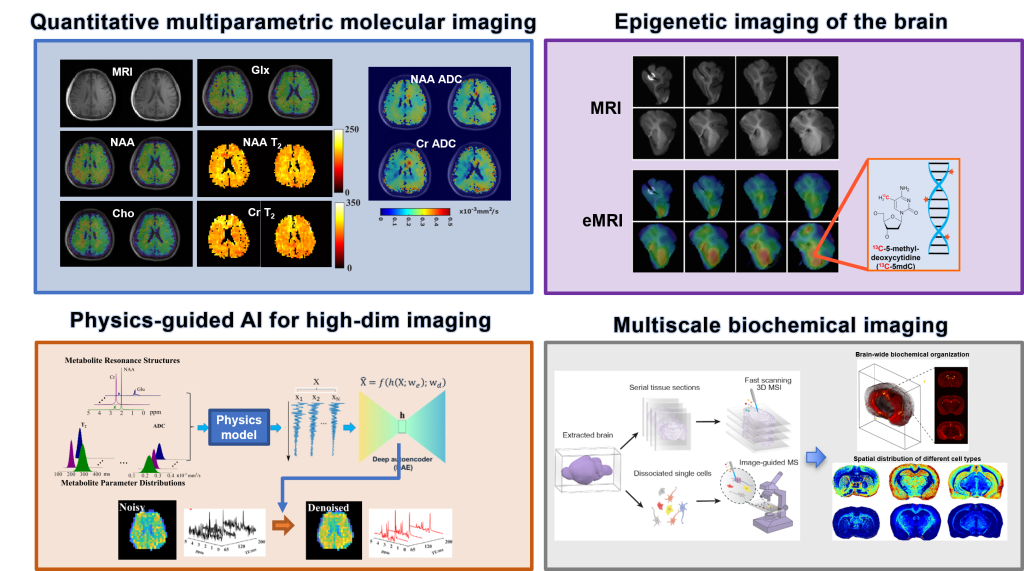
Fan Lam is an Associate Professor in the Department of Bioengineering at the University of Illinois Urbana-Champaign (UIUC), affiliated with the Grainger College of Engineering. He also directs the MS in Biomedical Image Computing (MS-BIC) program. His primary research focuses on developing advanced imaging techniques such as biomedical imaging, MRI, molecular imaging, and image reconstruction to study brain function and diseases. Lam holds a Ph.D. in Electrical and Computer Engineering from UIUC (2015), an M.S. in the same field from UIUC (2011), and a B.S. in Biomedical Engineering from Tsinghua University (2008). He is affiliated with multiple institutes, including the Carle-Illinois College of Medicine, the Carl R. Woese Institute for Genomic Biology, and the Beckman Institute for Advanced Science and Technology. Lam serves as a journal editor for Frontiers in Physics , Medical Physics , and IEEE Transactions on Medical Imaging . His work bridges engineering and neuroscience, with grants from NIH and other agencies supporting Alzheimer’s research and imaging innovations. Research highlights include epigenetic MRI, high-resolution volumetric MRI, and integrating AI with imaging methods. Lam’s team collaborates across disciplines to address challenges in medical imaging and brain mapping. His lab, the Quantitative Multiscale Imaging Group, develops tools for molecular and biochemical analysis of the brain.
Shulei Wang is an Assistant Professor in the Department of Statistics at the University of Illinois at Urbana-Champaign, with additional affiliations in Nutritional Sciences and the Personalized Nutrition Initiative at the Carl R. Woese Institute for Genomic Biology. His research focuses on advancing statistical and machine learning methodologies, particularly in self-supervised learning, and their applications to biomedical data including multi-omics and imaging datasets. He holds a Ph.D. in Statistics from the University of Wisconsin-Madison and a B.S. in Mathematics from Zhejiang University. Key research areas include developing robust statistical frameworks for compositional data analysis, phylogenetic association studies, and treatment effect estimation. He is affiliated with the NSF Science and Technology Center for Quantitative Cell Biology and leads a lab bridging theoretical statistics with practical biomedical applications. Recent work emphasizes scalable methods for microbial compositional data and innovative approaches to phylogenetic analysis. His contributions span top-tier journals like Biometrika , Journal of the Royal Statistical Society , and Bioinformatics .
Sezer Karaoglu is a Lecturer and part-time postdoctoral researcher at the Computer Vision Group, Informatics Institute, University of Amsterdam. He is also the CTO and Co-Founder of 3DUniversum, a technology spin-off of the University of Amsterdam that provides state-of-the-art 2D/3D computer vision solutions. Additionally, he has co-founded other startups including Scanm and 3DHealthScan. Dr. Karaoglu received his PhD from the Computer Vision Group, Informatics Institute, University of Amsterdam, with research funded by the COMMIT project. His educational background includes a double master's degree: an optics, image and vision master's degree from University Jean Monnet in France and a media technology master's degree from Gjovik University College in Norway. He completed his undergraduate studies with honors at Istanbul Technical University in Telecommunication Engineering. His research focuses on Artificial Intelligence and 3D Computer Vision, with specific interests in SLAM, re-localization, 3D reconstruction, 3D object detection and segmentation, synthetic media, generative AI, deep fake creation and detection, and VR/AR technologies. His work has significant applications in healthcare, particularly in using deepfake technology for therapy for victims of sexual violence-related PTSD and moral injury, as documented in a Frontiers in Psychiatry article. Analyzing his recent publications reveals a strong trend toward neural scene reconstruction, intrinsic image decomposition, and the application of diffusion models to computer vision problems. His research increasingly integrates 3D scene understanding with language models, as evidenced by his work on language-to-3D scene generation. The applications span from healthcare (deeptherapy.ai) to media authenticity (deepfake detection) and industrial applications. ICT.OPEN Poster Award (3rd Position), Oct'13 Pascal VOC'12 Classification challenge, 2nd Position, Sep'12 Pascal VOC'12 Detection challenge, 3rd Position, Sep'12 Best project award at Nokia and CIMET project competition Outstanding reviewer at CVPR'21 PROVADA Future Startup Battle winner Best Dutch AI startup by Valuer Dr. Karaoglu has supervised numerous PhD, Master's, and Bachelor's students, demonstrating his commitment to academic mentorship. His research has attracted significant media attention, with features on Dutch national TV programs including NPO, VPRO, RTL, and international outlets like BBC News. He has received research funding through the COMMIT project during his PhD studies and has successfully translated his research into commercial applications through his startups. His work on deepfake technology has been applied in innovative therapeutic contexts through DeepTherapy.ai, showing the real-world impact of his research. Dr. Karaoglu leads research efforts at the Computer Vision Group Amsterdam and through his company 3DUniversum, which has developed applications like weScan, DeepTherapy, and FairFake.ai. His team collaborates with various institutions including the Netherlands Film Academy for grief therapy applications using deepfake technology. The DeepTherapy project represents a particularly impactful application of his work, using deepfake technology to help victims of sexual violence confront perpetrators in therapeutic settings.
Maria Christina Mariani is a Professor and Department Chair in the Department of Mathematical Sciences at the University of Texas at El Paso (UTEP). Her interdisciplinary research bridges mathematics with applications in public health, geophysics, physics, and finance, with a focus on developing novel mathematical models for complex data analysis. Dr. Mariani earned her Ph.D. in Mathematics from the University of Buenos Aires in 1992, where she received an Outstanding dissertation award. She also holds an M.S. in Physics (1996) and an M.S. in Mathematics (1987), both from the University of Buenos Aires with highest honors. Her research interests span Applied Mathematics, Nonlinear partial differential equations, Stochastic differential equations, Machine Learning techniques, Mathematical Finance, Mathematical Physics, and Numerical Methods. She has developed mathematical models for medical data analysis (particularly breast cancer, heart disease, and prostate cancer), seismic and explosive data, and financial markets. Her work emphasizes the development of mathematical models to enhance understanding of medical data and extreme events in various phenomena. Dr. Mariani's recent research focuses on applying machine learning and stochastic models to complex data sets across multiple domains. Her work demonstrates consistent innovation in developing novel algorithms for medical diagnosis and prognosis, analyzing seismic data, and modeling financial markets using Levy processes, Ornstein-Uhlenbeck models, and wavelet techniques. She has mentored numerous students throughout her career, including PhD candidates, MS students, and post-doctoral researchers, demonstrating her commitment to academic development and knowledge transfer. Dr. Mariani has served as Department Chair and holds the Shigeko K. Chan Distinguished Professor title in Mathematical Sciences, reflecting her significant contributions to the field and institution.
Associate Professor Lisa McGrath specializes in academic writing and English for Research and Publication Purposes (ERPP) at Sheffield Hallam University. She holds a PhD from Stockholm University and leads initiatives such as the SIoE 'Writing (better) for international publication' course and doctoral writing workshops. Her research focuses on genre pedagogy, L2 writing task design, and metacognition in academic contexts. She collaborates with institutions like Chalmers University and serves on editorial boards for journals including Journal of English for Academic Purposes . McGrath is Deputy Director of the White Rose Doctoral Training Partnership and editor of the Sheffield Institute of Education blog. Education: PhD in Education from Stockholm University Her teaching spans MA Education, MA TESOL, and EdD programs, covering topics like research project design and English for Specific Purposes. Current research projects include multi-genre pedagogy and disciplinary grading criteria analysis with Prof. Raffaella Negretti and Dr. Helen Donaghue. McGrath also supervises doctoral students in areas such as disability studies, BAME belonging, and TESOL. Recent publications emphasize embedding writing development in early-career lecturers' practices and innovating L2 writing task design. She actively engages in professional networks like BALEAP and delivers international training on academic writing for publication.
Dr. Bill Baker is a Senior Lecturer in Drama, Visual Arts & Music Education at the University of Tasmania's School of Education, College of Arts, Law and Education (CALE). With a career spanning 35 years, he specializes in arts education, technology-enhanced learning (TELT), and the scholarship of teaching and learning (SoTL). His research focuses on youth resilience through arts participation, particularly in community youth orchestras, and the preparation of pre-service teachers in arts pedagogy. Dr. Baker holds a Doctor of Education (RMIT, 2002), a Master of Education (Arts Administration, RMIT, 1997), and a Bachelor of Music Education (University of Melbourne, 1988). He has received multiple awards, including Senior Fellow of the Higher Education Academy (2019) and Honorary Life Member of the Australian Society for Music Education (2021). His funded projects include the Tasmanian Community Fund Grant and Australia-ASEAN Council grants for youth orchestra research. His peer-reviewed publications (over 40) address arts education, online teaching methodologies, and the social impacts of music participation. Current research collaborations include partnerships with the Tasmanian Youth Orchestra and institutions like University of Southern Queensland and The University of Melbourne. Dr. Baker supervises HDR students in arts participation, leadership, and teacher education reforms. Scientific Awards: Vice Chancellor's Teaching Excellence Award Vice Chancellor’s Citation for Outstanding Contribution to Student Learning CALE Teaching Excellence Award Senior Fellow, Higher Education Academy (UK) Honorary Life Member, Australian Society for Music Education Supervision & Teaching: Dr. Baker has supervised numerous HDR students, including completed PhDs on contemporary music pedagogy and Masters theses on visual arts education. He coordinates units in the Master of Teaching and Bachelor of Education degrees, emphasizing technology integration and reflective practice.
Dr. Nadja Heym is an Associate Professor in Personality Psychology and Psychopathology at the School of Social Sciences, Nottingham Trent University. She specializes in dark personality traits (e.g., psychopathy, narcissism), reinforcement sensitivity theory, and virtual reality (VR) interventions for mental health. Her research spans neurobiological mechanisms, trauma recovery, and cyberpsychology. Roles: Module leader for advanced courses in personality, psychopathology, and cyberpsychology. Education: Ph.D. in Psychology from the University of Nottingham (2009). Research focuses on empathy deficits in dark traits, neuropsychophysiological mechanisms, and VR applications for anxiety disorders. She co-leads the Affect, Personality, and Embodied Brain (APE) research group and collaborates internationally on projects like VR exposure therapy, biophilic design, and child abuse interventions. Awards include the 2021 NTSU SLTA Outstanding Postgraduate Research Supervisor Award. Supervises 7 current PhD students and has secured grants from Road Safety Trust, Royal Society of New Zealand, and EU Erasmus+. Active in professional societies like BPS and ISSID.
Dr. Tao (Kevin) Huang is a researcher at James Cook University's College of Science and Engineering, with expertise spanning autonomous driving, wireless communication systems, and medical imaging applications. His work integrates machine learning, sensor fusion, and multimodal data analysis to address complex challenges in vehicular networks, environmental monitoring, and healthcare technology. Research Interests: Dr. Huang's research focuses on Autonomous driving perception systems IoT-enabled vehicular networks AI for medical diagnostics and environmental sensing Signal processing and privacy-preserving communication protocols Recent Publications: His 2025 work emphasizes advancements in V2X cooperative perception, radar-LiDAR-camera fusion, and diffusion models for medical imaging. Key trends include cross-modal robustness, real-time processing for autonomous systems, and AI applications in sustainability.
Russ Biagio Altman is the Kenneth Fong Professor at Stanford University , with appointments in Bioengineering, Genetics, Medicine, Biomedical Data Science, and by courtesy, Computer Science. He serves as Senior Fellow at the Stanford Institute for Human-Centered AI and directs the Helix Research Group. Education: AB (summa cum laude) in Biochemistry and Molecular Biology from Harvard College (1983), PhD in Medical Information Sciences (1989), and MD in Medicine (1990) from Stanford University His research focuses on computational technologies in molecular biology and medicine , particularly pharmacogenomics, 3D structural analysis of biological molecules, and functional genomics using NLP and machine learning. Recent work includes AI-driven pharmacogenomic databases like PharmGKB , structural motif identification in proteins, and social media-based public health surveillance. Scientific awards include the U.S. Presidential Early Career Award , NSF CAREER Award , and fellowships in AAAS, AIMBE, and the National Academy of Medicine. He has received multiple teaching and mentorship awards and co-founded Personalis (NASDAQ: PSNL). His lab trains graduate and postdoctoral researchers across Biomedical Data Science , Genetics , and Bioengineering programs. Current projects include AI-guided CRISPR experiments, EHR integration for drug response prediction, and opioid epidemic monitoring via social media analytics.
Dr Alexandru Cernat is a Senior Lecturer in Social Statistics at The University of Manchester, affiliated with the Cathie Marsh Institute. His research focuses on data collection methodologies, longitudinal data analysis, and measurement error reduction. He specializes in latent variable models, mixed mode surveys, and integrating digital trace data with traditional datasets. Key projects include improving crime data accuracy through statistical modeling and analyzing socioeconomic health disparities using biomarker data. He has received the UKHLS Methods Fellowship and holds leadership roles in statistical societies. Research Interests: Survey Methodology Latent Variable Modeling Data Quality Enhancement Mixed Mode Design Digital Trace Data Integration Awards: UKHLS Methods Fellowship (2019) Vice Chair, Royal Statistical Society Social Statistics Committee (2019) Grants & Collaborations: Leads projects on crime data accuracy, longitudinal measurement equivalence, and biosocial survey methods. Collaborates with institutions like the London School of Economics and University College London on health inequality studies. Labs/Teams: Core member of the Cathie Marsh Institute's survey methodology team and leads the Longitudinal Data Analysis research group.
Professor Sergei Fedotov is a Professor of Applied Mathematics in the Department of Mathematics at the University of Manchester. He holds a PhD from Ural Federal University (1986) and has held academic positions in London, Aachen, Wuppertal, and Berlin before joining Manchester in 1998. His research focuses on random walk theory, reaction-transport systems, and anomalous transport phenomena with applications to biophysics, nanotechnology, and cancer biology. His expertise includes non-Markovian models, fractional calculus, and interdisciplinary collaborations in areas such as intracellular transport, nanoparticle dynamics, and DNA repair. Fedotov has led major grants, including EPSRC-funded projects on nanoparticle transport in radiotherapy and FAPESP-UoM collaborations on correlated memory in biological systems. He has supervised PhD students including Anna Gavrilova, Daniel Han, and Helena Stage, and collaborates with institutions globally, such as Universitat Autònoma de Barcelona and The Christie Hospital. Key research themes include stochastic models of subdiffusion/superdiffusion, fractional partial differential equations, and the application of statistical mechanics to biological systems. His work contributes to sustainable development goals through advancements in medical physics and environmental modeling. Recent publications explore heterogeneous transport in C. elegans, stochastic water flow dynamics, and the modeling of radiation-induced DNA damage. Fedotov’s team develops novel frameworks to bridge theoretical mathematics with experimental biology, emphasizing the role of memory effects and non-equilibrium processes. Grants managed include the EPSRC £702k project on improving radiotherapy via nanoparticle transport modeling (2021–2025) and the FAPESP-UoM study on correlated memory in biological systems (2018–2022). His work integrates mathematical rigor with experimental validation, addressing challenges in cellular logistics and disease mechanisms.
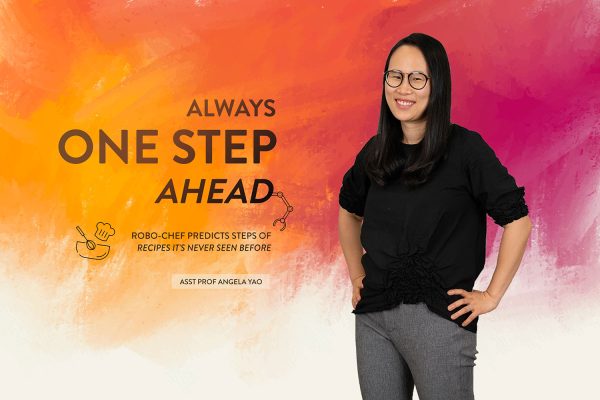
Angela Yao is a Dean's Chair Associate Professor and Assistant Dean of Research at the National University of Singapore's School of Computing, Department of Computer Science. She leads the Computer Vision and Machine Learning Group and specializes in visual perception of people, focusing on both high-level semantics of human actions and lower-level physical modeling. Her research interests span Computer Vision , Machine Learning , and Artificial Intelligence , with specific expertise in human action recognition, 3D human modeling, video understanding, and small data AI. Dr. Yao's work bridges theoretical advances with practical applications, particularly in activity anticipation and human-computer interaction. Dr. Yao's publication trends reveal a strong focus on zero-shot learning for activity anticipation, 3D human modeling, and techniques for working with limited training data. Her research has evolved from foundational work in 3D pose estimation to more recent innovations in diffusion models and cross-modal learning, demonstrating consistent contributions to advancing computer vision capabilities. NRF Fellowship for Artificial Intelligence (2019) German Pattern Recognition (DAGM) Award (2018) Dr. Yao has successfully mentored PhD students including Fadime Sener and secured significant research funding including the NRF Fellowship. Her research group focuses on developing AI systems capable of understanding and anticipating human activities with applications in robotics and human-computer interaction. She teaches CS4243 Computer Vision and Pattern Recognition and leads the Computer Vision and Machine Learning Group at NUS Computing.
Auguste Genovesio is a Research Director (DR INSERM) leading the Computational Bioimaging and Bioinformatics team at the Centre for Computational Biology within the École Normale Supérieure (ENS) in Paris. His work focuses on large-scale cellular morphology analysis, integrating machine learning, microscopy, and computational modeling to study cellular responses to perturbations. His team develops algorithms for analyzing high-dimensional biological data, with applications in drug discovery, functional genomics, and neuroscience. Education and Affiliations: Genovesio’s research is anchored at ENS and collaborates with institutions like Institut Curie, Collège de France, and ESPCI. His lab develops open-source tools such as PySpacell and ALFA , advancing spatial analysis and genomic data processing. Research Interests: His group combines deep learning, bioinformatics, and experimental biology to tackle challenges in cellular dynamics, morphological heterogeneity, and predictive modeling. Recent work includes applying diffusion models to reveal subtle phenotypes and optimizing microscopy image analysis pipelines. Key Projects: Cross-modal knowledge distillation for transcriptomics, latent diffusion models for small datasets, and super-resolution microscopy via StyleGAN regularization. Applications: Collaborations in drug screening, neurobiology (e.g., Drosophila memory studies), and cancer cell analysis. Publications: Over 50 peer-reviewed articles since 2007, including work in Nature Communications , Developmental Cell , and NeurIPS . Recent focus on generative AI for biological image analysis and self-supervised learning biases. Grants & Awards: While specific grants aren’t listed, his lab’s cutting-edge research suggests significant institutional and collaborative support. No explicit awards mentioned in texts. Labs/Teams: Director of the Computational Bioimaging group, part of the Functional Genomics section at ENS. Supervises PhD students and postdocs in AI-driven biology and computational microscopy.
Professor Mark Weal is a faculty member in the Department of Electronics and Computer Science at the University of Southampton. He holds roles as Co-Director of the Web Science Institute, Director of the Centre for Doctoral Training in Web Science Innovation, and Web Science Trust Fellow. His research focuses on digital health interventions, behavioral change technologies, and semantic web applications. Notably, he co-leads the LifeGuide project, a £45M initiative developing online health interventions for conditions like diabetes, cancer, and respiratory illnesses. Research interests include social media analytics for disaster management, semantic web infrastructures, and information systems design. He has supervised multiple PhD students in web science and digital health domains. Professor Weal has received significant grant funding from bodies like MRC, EPSRC, and the European Commission. Key achievements include over 45 million pounds in research funding and leadership in interdisciplinary projects. His work spans technical innovation and societal impact, addressing challenges in healthcare accessibility and digital infrastructure governance.
Prof. Alexander Minnaert is a Professor in Inclusion and Special Needs Education & Clinical Educational Sciences at the University of Groningen's Faculty of Behavioural and Social Sciences. He leads research on Specific Learning Disorders and educational problems. His work focuses on motivation, social-emotional learning, giftedness, and autism spectrum disorders, aiming to improve inclusive education systems. Minnaert holds a PhD from KU Leuven and has held roles including Director of Research at the Department of Education (2014–2016) and Scientific Advisor to the Academy of Finland (2022–2029). He teaches in Master’s programs like Special Needs Education and coordinates research initiatives such as the 'Learning and Giftedness' workshop at Windesheim Applied University. His research spans three clusters: specific learning disabilities, motivation/emotion/self-regulation, and student/teacher support in inclusive settings. Over 30 PhD students have been supervised, contributing to fields like deafblindness communication, twice-exceptionality, and educational policy. Notable awards include the 2013 Best Teacher Award and Ubbo Emmius Colleghie award (2012). He chairs the Dutch Youth Institute's Youth Intervention Committee and advises on national education reforms. His projects address challenges like autism inclusion, gifted education, and early school leaving.