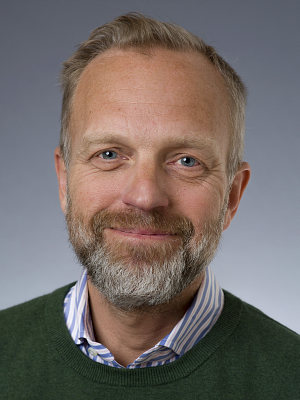
Ute Stephan is a Professor of Entrepreneurship at King's Business School, King's College London. Her work sits at the intersection of entrepreneurship, psychology, and organizational behavior, focusing on entrepreneurial well-being, social entrepreneurship, and cultural-institutional influences. Department: Strategy, International Management & Entrepreneurship Key affiliations: IfM Bonn, Founder Mental Health Pledge, GLOBE project Research Themes include: Entrepreneurial Well-Being & Mental Health Cultural & Institutional Impact on Entrepreneurship Social Entrepreneurship & Inclusivity Post-Pandemic Business Recovery Scientific Awards highlight her influence: 2025 JIBS Decade Award Fellow of the International Association of Applied Psychology King's Dean's Award for Outstanding Research (2022) Her editorial leadership spans top journals like Journal of Management and Entrepreneurship Theory & Practice . She leads a 25-country study on entrepreneurship during the pandemic and the WEWell project on women entrepreneurs' well-being.
Dr. Mor Geva is a prominent researcher in natural language processing and machine learning, focusing on transformer-based language models, interpretability, and knowledge representation. Their work addresses fundamental questions about model reasoning, uncertainty expression, and factual recall mechanisms. Key research themes: language model interpretability, multi-hop reasoning limitations, numerical encoding, cross-modal knowledge gaps Recent publications analyze gradient projection, attention head functionality, and fallback behaviors under uncertainty 2023-2025 studies reveal insights into factual association recall, knowledge editing ripple effects, and vision-language model interactions. Collaborations span top institutions in ACL, EMNLP, and ICLR venues. Current research explores parametric knowledge tracing, encoder-decoder dynamics, and attention hijacking phenomena. Tools like LM-Debugger enable interactive model inspection, while theoretical work examines base-10 numerical encoding and task vector creation.
Phil Husbands is a Research Professor of Artificial Intelligence in the Department of Informatics at the University of Sussex, School of Engineering and Informatics. He is a co-founder of the Centre for Computational Neuroscience and Robotics (CCNR) and a founding member of the Evolutionary and Adaptive Systems group (now the AI Group), reflecting his deep interdisciplinary engagement across engineering, neuroscience, and computer science. His research interests span artificial life, evolutionary robotics, biologically inspired neural networks, computational neuroscience, machine learning, and the history and philosophy of AI. He has pioneered work on GasNets (neural networks with diffusible modulators), insect-inspired navigation, and bio-inspired optimization algorithms. His work often bridges theory and application, integrating insights from biology into adaptive robotic systems. The recent publications highlight a strong trajectory in bio-inspired computation, including evolutionary swarm algorithms, neuromodulation models, cognitive architectures, and tactile robotics. His work increasingly explores foundational questions in agency, time perception, and autonomy, suggesting a move toward more comprehensive models of artificial cognition. Scientific Awards: No specific awards listed in the provided text. Phil Husbands has been involved in numerous research grants from major funders including the European Union, EPSRC, BBSRC, and Wellcome Trust. He has supervised multiple doctoral students and collaborated widely, notably with Andy Philippides and Michael O’Shea. He is actively engaged in postgraduate research supervision and public dissemination of science through books like Robots: What Everyone Needs to Know . He leads and contributes to interdisciplinary research teams such as the Evolutionary and Adaptive Systems group and the Centre for Computational Neuroscience and Robotics, fostering collaboration between computer scientists, neuroscientists, and roboticists.
Anke Schaffartzik is an Assistant Professor and Masters Programs Director in the Department of Environmental Sciences and Policy at the Central European University (CEU). Her research focuses on social metabolism, ecological economics, and material flows, particularly exploring how societal organization and trade patterns influence resource distribution and inequality. She holds a PhD in Social Ecology from Alpen-Adria University and academic degrees in Environmental Management and English Studies. Her work bridges interdisciplinary research in sustainability science, addressing topics like global material inequality, socio-ecological resilience, and the intersections of economic systems with environmental justice. She teaches courses on social metabolism, environmental sociology, and quantitative methods. Recent publications emphasize globalization’s material dimensions and the need for equitable resource management strategies. Key events include her involvement in discussions on planetary boundaries, energy transitions, and inequality, reflecting her commitment to linking theoretical insights with actionable policy frameworks.
Dr. Kevin Lu is a Reader at Brunel Business School, Brunel University London, specializing in digital transformation and business analytics. His research focuses on leveraging Generative Artificial Intelligence (GAI) technology for digital business strategy development. He has published over 30 research articles in leading journals, 3 book chapters, and more than 30 conference papers. His work has been supported by organizations such as SAMS, GCRF, Innovate UK, EPSRC, and the EU. Dr. Lu holds a BSc (Hons) in Mathematics, a PhD in Management, and a Postgraduate Certificate in Teaching and Learning in Higher Education. Before joining academia, he worked in industry as a computer software engineer, bringing practical experience to his research and teaching. His research interests span digital marketing and marketing analytics, understanding business development through data analysis, and Generative AI applications in marketing. Dr. Lu adopts a computer science perspective in his work, encompassing topics such as social networks, trust, web science, artificial intelligence, and fair and accountable interactions. His studies utilize methods including mathematical modeling, optimization, and econometrics. His recent publications demonstrate a strong focus on the intersection of AI and consumer behavior, particularly in e-commerce contexts, with increasing emphasis on Generative AI applications. Dr. Lu has successfully supervised ten PhD students to completion and currently supervises research on developing business strategies for digital products using Generative AI techniques. His research has attracted significant funding from prestigious organizations including SAMS, GCRF, Innovate UK, EPSRC, and the EU. Fellow of the Higher Education Academy (FHEA) Member of the SAS Academy Programme Chair for Business Analytics track at IEEE Conference on Business Informatics He teaches courses in Business Intelligence, Marketing Analytics, and Business Statistics, maintaining regular office hours and dedicated time for dissertation supervision. His work provides valuable insights for businesses seeking to leverage digital technologies for competitive advantage, particularly in understanding how AI applications can transform customer interactions and business processes.
Professor David Pearson is a cognitive psychologist at Anglia Ruskin University's School of Psychology, Sport and Sensory Science , where he holds a professorship in Cognition and Cognitive Neuroscience. He leads research within the ARU Centre for Mind and Behaviour and maintains visiting researcher positions at Trieste University (Italy) and University of Bergen (Norway). Education: PhD in Psychology, University of Aberdeen (1997) MA (Hons) in Psychology (1st), University of Edinburgh (1992) Research Focus: Pearson's work centers on three interconnected domains: (1) Mental imagery mechanisms in clinical disorders (particularly trauma-related intrusive memories), (2) Cognitive benefits of natural environments through Attention Restoration Theory, and (3) Visuo-spatial working memory processes including oculomotor control. His research bridges experimental psychology with clinical applications, examining how contextual representations modulate trauma intrusions and how natural scenes reduce cognitive load compared to urban environments. Recent work explores visual creativity, sequence-space synaesthesia, and perceptual specificity in long-term imagery. Publication Trends: His 15 most recent articles reveal increasing interdisciplinary integration between cognitive neuroscience and clinical applications. A clear trajectory emerges from basic visuo-spatial working memory mechanisms toward trauma-focused clinical interventions, with growing emphasis on environmental psychology applications. Key methodological threads include eye-tracking paradigms, analogue trauma models, and ecological validity in experimental design. Professional Recognition: Chartered Psychologist Associate Fellow of the British Psychological Society Member of the Experimental Psychology Society Associate Editor for Frontiers in Psychiatry (Mental Imagery in Clinical Disorders) Research Leadership: Pearson actively supervises PhD candidates in mental imagery, environmental psychology, and visuo-spatial cognition. He has secured over £300,000 in research funding from major bodies including ESRC, Wellcome Trust, and Nuffield Foundation. His current projects examine scene saliency in cognitive restoration and contextual modulation of trauma intrusions, while maintaining long-term collaborations with Oxford, Durham, and Scandinavian institutions. He contributes to professional governance through the BPS Research Board and Membership Standards Board.
J. Jeffrey Inman is the Albert Wesley Frey Professor of Marketing at the University of Pittsburgh's Katz School of Business, where he leads the school's core research mission including strengthening research support and expanding funding sources. A past Editor-in-Chief of the Journal of Consumer Research, he has served as President of both the Society for Consumer Psychology and the Association for Consumer Research. His research centers on consumer behavior with emphases on healthy eating determinants, in-store choice dynamics, and technology's influence on consumer decisions. With over 70 publications in premier journals including Journal of Consumer Research and Journal of Marketing, his work bridges theoretical rigor and practical marketing applications. Recent studies increasingly explore digital interfaces in retail environments and health-related consumption patterns. Analysis of his publication trends reveals a strategic evolution toward technology-mediated consumer interactions, particularly examining how smartphone usage, in-store tracking, and nutritional labeling shape decision-making. His work consistently integrates psychological principles with marketing strategy across contexts ranging from sustainability to crisis response. Scientific recognition includes: MSI/H. Paul Root Award for significant contribution to marketing practice Dr. Inman actively mentors through teaching courses like Marketing Management and Data-Based Marketing Insights while contributing to university centers for Supply Chain and Healthcare Management. His leadership extends to fostering collaborative research initiatives and advancing methodological approaches in consumer behavior studies.
Petter Andreas Ringen is a Professor at the Division of Mental Health and Addiction, Faculty of Medicine, University of Oslo. His research focuses on severe mental disorders, cannabis use, neurocognitive functioning, and cardiometabolic risks in psychiatric populations. Current position: Professor II, Division of Mental Health and Addiction, University of Oslo Email: p.a.ringen@medisin.uio.no Visiting address: Sognsvannsveien 21, Gaustad sykehus, Oslo Research interests span cannabis interactions with schizophrenia and bipolar disorders, violence in mental health contexts, cardiometabolic risk management, and neurocognitive assessments. Key projects include the 'Extreme Challenges' study on self-harm and the 'sTOP' initiative examining violence in severe mental disorders. 2025 publications address consciousness in psychosis and cardiometabolic health interventions. 2024 work explores violence phenomenology and hypothalamic structures in offenders. 2023 studies examine substance use mediation, clinical insight, and vocational rehabilitation. Earlier research (2005-2014) investigates cannabis effects on disorder onset, cognitive dysfunction, and medication adherence. No explicit scientific awards or student advisement details provided in the text. Contributes to major journals including Tidsskrift for Den norske legeforening, BMC Psychiatry, and Schizophrenia Research, with ongoing work in forensic psychiatry and public health implications.
Matthew Arnold is an Associate Professor in the School of Mathematical and Physical Sciences at the University of Technology Sydney (UTS), where he has been employed since 2007, progressing from Lecturer to Senior Lecturer and currently Associate Professor. His academic career includes postdoctoral research at the University of Canterbury and visiting positions at the Fraunhofer Institute Jena (2001) and University of Southampton (2008). Arnold holds a PhD and BSc(Hons) from the University of Otago, New Zealand. His leadership roles at UTS include serving as Physics Discipline Leader, BSc(Physics) Program Director, and currently as HDR director and RAO for the Faculty of Science. He is also active in professional organizations, having served as Chair of the NSW Australian Institute of Physics and as a senior member of both Optica and SPIE. Arnold's research focuses on the interaction of electromagnetic fields with complex systems, spanning from modeling and design to fabrication and characterization. His primary research areas include neuromorphic computing using percolating networks of nanoparticles, plasmonic resonators and materials, self-assembled metamaterials, and opto-thermal coatings for energy applications. His work bridges fundamental physics with practical applications in building technologies, solar energy, and next-generation computing architectures. His recent publications demonstrate a strong trend toward neuromorphic and brain-inspired computing systems, particularly exploring the computational capabilities of self-assembled nanoscale networks. These works investigate how the intrinsic physical properties of nanomaterials can be harnessed for energy-efficient information processing, with applications in random number generation, Boolean operations, and image classification. His research also maintains a strong focus on practical optical applications, including high-temperature polarizers and spectrally selective solar absorbers. AIP NSW Branch Service Award (2024) UTS MAPS: Individual Teaching Award (2023) STANSW Dedicated Service Award (2019) Arnold is deeply committed to mentoring the next generation of scientists, having successfully guided research students at all levels from internship to PhD. His teaching philosophy emphasizes engaging students in experiences that develop practical skills and deep insight, which has been recognized with teaching awards. He has secured significant research funding through ARC Linkage Infrastructure grants and numerous industry collaborations, particularly with building industry partners on glazing and facade performance. His current funded projects include advanced deposition systems for superconducting circuits and solar-thermal performance evaluations. Arnold leads research activities centered around experimental and computational investigations of nanoscale systems, with particular expertise in physical vapor deposition, optical characterization techniques, and computational modeling of complex electromagnetic systems. His work connects fundamental physics with real-world applications through strong industry partnerships and interdisciplinary collaborations across physics, materials science, and engineering disciplines.
Paul Harrison, PhD, is a Senior Lecturer at Deakin University's Business School where he serves as Director of the MBA Program and Co-Director of the Better Consumption Lab. His academic work spans consumer behavior, marketing, public policy, and behavioral science, with a focus on how marketing and advertising influence decision-making in health, essential services, and arts contexts. Deakin University, PhD in Consumer Behaviour (2005) University of Melbourne, Bachelor of Arts (1994) Dr. Harrison's research examines the psychology of emotional and rational behavior, particularly how it affects consumption patterns in areas like health, sustainability, and social justice. His work bridges academic theory with practical applications, addressing real-world challenges through the lens of consumer behavior. He frequently collaborates with organizations seeking to understand human decision-making in relation to consumption, with particular expertise in macro-marketing issues and behavioral change. His extensive publication record demonstrates consistent contributions across multiple domains. The articles reveal a strong pattern of interdisciplinary research connecting consumer behavior with healthcare outcomes, ethical marketing practices, and policy implications. Key trends include investigations into aged care decision-making, digital engagement with arts, obesity prevention, and the psychological mechanisms behind consumer vulnerability. Graduate of the Australian Institute of Company Directors Dr. Harrison maintains active engagement with industry through consulting roles with organizations including Nestle, the Therapeutic Goods Administration, the Australian Competition and Consumer Commission, and eBay. His board memberships reflect his commitment to applying academic insights to real-world problems, including serving on the Consumer Policy Research Centre, the auDA Advisory Committee, and previously chairing the Asylum Seeker Resource Centre. He is also the host of the podcast 'It's Not Real!' and has been a regular contributor to ABC Radio National programming. As Co-Director of the Better Consumption Lab, Dr. Harrison leads research initiatives focused on transforming consumption practices to be healthier, more sustainable, and socially just. The lab serves as a hub for collaboration between academia, industry, and government agencies seeking evidence-based insights into consumer behavior.
Dr. iur. RA Thomas Gattlen is a lecturer at the University of Applied Sciences Northwestern Switzerland (FHNW) and Kalaidos University of Applied Sciences, specializing in litigation and debt collection. A self-employed lawyer since 1995, he combines legal practice with academic work, including a part-time dissertation (2006-2010) on corporate restructuring law and banking collateral. Education: Doctorate in Law (Dr. iur.) Professional Experience: Business teacher (until 1989), credit officer (1990), law firm employee (1992), self-employed lawyer (since 1995) His research focuses on Swiss bankruptcy law (SchKG), with a particular emphasis on historical development, debt enforcement against municipalities, and intersections with banking law. His publications analyze SchKG's evolution from pre-1934 frameworks to modern FINMA-supervised bank insolvency mechanisms. As a blog author for Kalaidos University, he disseminates insights on debt collection, probate procedures, emergency deferral mechanisms, and social security contribution liabilities. His work bridges academic analysis and practical legal challenges. Thomas Gattlen maintains active legal practice through Gattlen Lawyers, while contributing to legal education through lectures and mentorship. Contact: gattlen@gattlenrechtsanwalt.ch
Daan Scheepers is Professor of Psychophysiology of Groups at Utrecht University's Faculty of Social and Behavioural Sciences, Department of Social, Health and Organisational Psychology. He holds this position part-time since 2018 while maintaining his associate professorship at Leiden University's Social, Economic, and Organisational Psychology department since 2013. Previously, he served as assistant professor at Leiden University (2007-2013) and conducted postdoctoral research on a VENI grant from the Dutch Research Council (NWO) from 2004-2007. His research program focuses on group processes, intergroup relations, and stress physiology. Using cardiovascular measurements, Scheepers distinguishes between negative stress (threat) and positive stress (challenge), examining how these physiological responses impact decision-making, performance, and health. His work investigates social factors underlying threat and challenge responses, including conflict, power dynamics, status hierarchies, moral evaluations, social change, and inclusion processes. This psychophysiological approach provides novel insights into the biological underpinnings of social behavior. Analysis of his recent publications (2022-2025) reveals three dominant research streams: (1) intergroup relations and prejudice reduction using psychophysiological measures, (2) power dynamics and leadership through cardiovascular reactivity studies, and (3) EU legitimacy research connecting social identity with political psychology. His work consistently bridges social psychology with physiological measurement techniques, often collaborating with Naomi Ellemers' research group at Utrecht University. His scientific recognition includes a prestigious VENI grant from the Dutch Research Council (NWO). He has demonstrated professional leadership through editorial service as associate editor of the Journal of Personality and Social Psychology (2020-2024) and as teaching director of the Kurt Lewin Institute (national graduate school in social psychology) from 2013-2015. Scheepers currently leads the 'Psychophysiology of groups' research chair within Naomi Ellemers' distinguished research group at Utrecht University. His laboratory work combines traditional social psychology paradigms with cardiovascular measurement techniques to explore the physiological foundations of group behavior and intergroup relations. His research program continues to expand the understanding of how social contexts translate into physiological responses that shape human behavior in group settings.
Jason Chein is a Professor at Temple University’s College of Liberal Arts, Department of Psychology and Neuroscience. He directs the Temple University Brain Research & Imaging Center (TUBRIC) and leads the Control & Adaptive Behavior Laboratory (CAB Lab). PhD in Cognitive Psychology (Cognitive Neuroscience specialization), University of Pittsburgh Postdoctoral research at Princeton University His research explores the development and deployment of self-regulatory control, focusing on how executive functioning influences learning, problem-solving, decision-making, and social navigation under distraction or emotional arousal. Key methodologies include behavioral experiments, longitudinal studies, and MRI-based neuroimaging. Publications emphasize working memory, adolescent decision-making, reward processing, and neuroimaging applications. His work often bridges cognitive neuroscience with developmental psychology, highlighting the interplay between brain maturation, social context, and executive function. Dr. Chein’s lab investigates adaptive behaviors using convergent methodologies. He contributes to graduate education through courses in cognitive neuroimaging, neuroscience core topics, and cognitive psychology.
Stephan Goetz is a Professor of Agricultural and Regional Economics at Pennsylvania State University and serves as Director of The Northeast Regional Center for Rural Development (NERCRD), leading economic and community development research and extension activities across 13 states. His work bridges state-level initiatives with national and regional policy frameworks, focusing on spatial economic dynamics at the University Park campus. Education: Ph.D. in Agricultural Economics, Michigan State University, 1990 Dr. Goetz's research centers on markets and human capital as catalysts for economic growth, poverty reduction, and regional development. His current interests include social network analysis, regional food systems (particularly food hubs and agritourism), self-employment dynamics, and targeted development strategies. He teaches graduate courses such as Rural and Regional Economic Development (AEREC 533) and Rural Development Planning (CEDev 430), emphasizing practical applications for community resilience. Analysis of his 2024-2025 publications reveals persistent focus on rural innovation ecosystems, food system efficiency, and spatial economic disparities. Key trends include digital technology's role in rural globalization (broadband, cloud computing), export behavior of non-metro firms, gender dynamics in agriculture, and optimization of food supply chains. His methodological approaches frequently integrate spatial econometrics and social network analysis to address structural challenges in regional economies. Scientific Awards: No scientific awards were mentioned in the source material As NERCRD Director, Goetz oversees federally funded research consortia though specific grants and student advisees aren't detailed in the source. His leadership connects academic research with USDA priorities and regional extension networks, facilitating knowledge transfer to policymakers and practitioners across the Northeast. Labs and Teams: Goetz directs NERCRD's multi-state consortium conducting projects including the Local Foods Resource Mapping Project and social network analysis training for extension educators. The Center organizes national conferences on rural development topics and maintains active collaborations with USDA-ERS, land-grant universities, and regional economic development agencies to advance evidence-based policy.
Eleanor O’Rourke is an Associate Professor at Northwestern University, holding a joint appointment in Computer Science and the Learning Sciences. She co-directs the Delta Lab, focusing on interdisciplinary research at the intersection of Human-Computer Interaction, AI, and educational systems. Education: Ph.D. in Computer Science & Engineering from the University of Washington (2016), MS from the University of Washington (2012), and BA in Computer Science and Spanish from Colby College. Research Interests: Design of technology-enabled learning experiences Educational games and playful learning Growth mindset interventions Real-time classroom data visualization Awards: Google Anita Borg Scholarship Microsoft Research Graduate Women’s Scholarship Best Paper Awards at ICER 2024 and CHI 2012 Grants & Advising: Funded by NSF (CAREER, CRII, Cyberlearning) and Google Advises Ph.D. students in CS, Learning Sciences, and joint programs Labs & Impact: Co-leads the Delta Lab, developing tools like Ply (web inspector) and Brain Points (growth mindset incentives). Interventions have reached 100,000+ students globally.