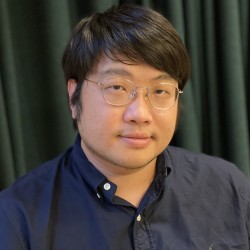
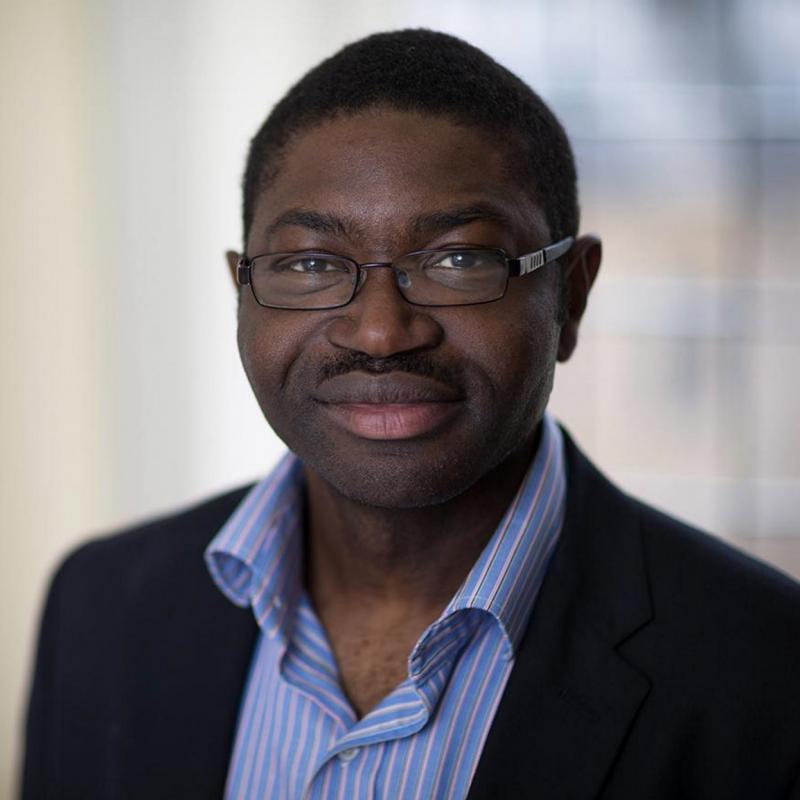
Andrew Regan is a Senior Lecturer in the School of Chemistry at the University of Manchester, specializing in organic synthesis and drug discovery. He holds a B.A. (1981), M.A. (1985), and Ph.D. (1985) from the University of Cambridge. His career includes postdoctoral research at Columbia University and a lectureship at the University of Kent before joining Manchester in 1991. Research interests focus on synthesizing biologically active compounds, such as phosphinic acids for anticancer agents, and developing novel synthetic methods. His work contributes to drug discovery, green chemistry, and efficient chemical processes. He currently supervises two PhD students researching phosphinic acid analogues and simplified erythromycin analogues. Key achievements include the synthesis of epibatidine and advancements in macrolide antibiotic design. His research aligns with sustainable development goals through eco-friendly synthesis methods.
Colin J Akerman is Professor of Neuroscience and Group Leader in the Department of Pharmacology at the University of Oxford, concurrently serving as Corange Fellow and Medical Tutor at Corpus Christi College. His research investigates fundamental mechanisms of synaptic circuit formation and plasticity, with direct implications for epilepsy, dementia, and schizophrenia through multidisciplinary approaches integrating electrophysiology, optical imaging, and computational modeling. His primary research interests encompass Synaptic Plasticity, Neural Circuit Formation, and Excitatory-Inhibitory Balance, with specific focus on neuronal progenitor influences on connectivity, chloride dynamics in inhibitory transmission, and learning mechanisms in disease contexts. The lab employs custom-built equipment and molecular tools to probe synaptic function across in vivo , in vitro , and in silico platforms, emphasizing how activity-dependent processes shape neural networks during development and disease. Recent publications (2023-2025) reveal strong thematic convergence on intracellular chloride regulation in sleep-wake cycles, cortical circuit assembly from embryonic progenitors, and innovative optical tools for neural monitoring. This work bridges molecular neuroscience with systems-level understanding of synaptic plasticity, particularly regarding ionic mechanisms in epilepsy and sleep homeostasis. No scientific awards or fellowships are explicitly documented in the source materials. Professor Akerman currently mentors four PhD students (Vourvoukelis, Selfe, Wang, Gemayel) and multiple postdoctoral researchers, having previously trained scientists now leading independent groups in Toronto, Edinburgh, Cape Town, Oxford, and London. His research is funded by the European Research Council, Innovative Medicines Initiative, and Wellcome Trust, supporting investigations into synaptic mechanisms underlying neurological disorders. The Akerman Group, established in 2008, operates as an integrative neuroscience hub within Oxford's Pharmacology Department. The 10-member team combines expertise in patch-clamp electrophysiology, optogenetics, multiphoton imaging, and computational modeling, with current projects spanning neuronal progenitor biology, inhibitory synaptic plasticity, and learning rule implementation in neural networks. The lab emphasizes technical innovation, regularly developing custom instrumentation and molecular tools for neural observation and manipulation.
Professor George Britovsek (FRSC) is a leading figure in catalysis and sustainable carbon management at Imperial College London . As Director of the MRes in Catalysis & Engineering and Head of Teaching in Inorganic Chemistry, he bridges academic leadership with cutting-edge research. His work focuses on transition metal complexes for converting ethylene , alkanes , biomass , and CO₂ into valuable chemicals and fuels through industrial collaborations. Education : M.Sc. (Technical University of Aachen, 1990), Ph.D. (Aachen, 1993) under Prof. W. Keim Postdoctoral Training : University of Tasmania (1994-1996), Imperial College London (1996-2000) His research interests span: Selective oxidation of alkanes using bio-inspired iron complexes Alkene conversions to functional polymers via novel catalysts CO₂ valorization into polymers and cyclic carbonates Biomass-derived feedstocks for chemical synthesis Recent catalysis trends highlight his work on: Designing Fe-N/C catalysts for epoxidation Developing PN3P pincer ligands for H₂ activation Creating degradable polyethylene via iron-catalyzed chain growth Modeling alternating α-olefin distributions in chromium systems Awards : Fellow of the Royal Society of Chemistry (FRSC) Students & Collaborators actively engage in: Photocatalytic polymer degradation Electrocatalytic CO₂ conversion Functionalized polymeric materials 3D-printed catalytic scaffolds His Britovsek Research Group operates at the Molecular Sciences Research Hub, White City Campus, advancing both homogeneous and heterogeneous catalysis through experimental and computational approaches.
Prof. Silvia Vignolini is a leading researcher in sustainable and bio-inspired materials. Since January 2023, she has served as Director at the Max Planck Institute of Colloids and Interfaces , where she leads the department of Sustainable and Bio-inspired Materials . Her academic career includes a Lecturer in Physics at University College London (2013-2017) and a Professor of Biomaterials and Sustainability at the University of Cambridge (2020-2022). Education: University of Florence (Physics, PhD) Postdoctoral Research: University of Florence , University of Cambridge Her research bridges chemistry , soft matter physics , optics , and biology , focusing on the self-assembly of natural materials into functional architectures. She pioneered work on cellulose-based photonic materials with applications in displays, pigments, and radiative cooling. The selected articles highlight her work on cellulose nanocrystals , structural coloration , and sustainable fabrication techniques . Key trends include mechanochromic hydroxypropyl cellulose systems, bio-inspired light management, and applications in microalgae growth and bacterial symbiosis. Scientific Awards : Philip Leverhululme Prize (2019) ACS Lectureship in Sustainable Chemistry (2018) Ipazia Prize for Women in Science (2012) PhD Thesis Award (University of Florence, 2009) At the Max Planck Institute, her interdisciplinary research group explores bio-inspired design principles for sustainable materials, combining experimental and computational approaches to create functional materials from natural resources.
Caterina Ducati is a Professor of Nanomaterials at the Department of Materials Science & Metallurgy, University of Cambridge. Her research focuses on nanomaterials, their structure-property relationships, and applications in energy technologies, particularly photovoltaics, photocatalysis, and optoelectronics. Research Interests: In situ electron microscopy of nanomaterials under external stimuli (electrical, thermal, photonic), growth mechanisms of nanostructures (carbon nanotubes, semiconductor nanowires), and degradation processes in energy devices. Methodologies: Advanced characterization via HAADF STEM, TEM, and development of tools for real-time nanoscale observation. Recent publications highlight her work on perovskite solar cells, battery materials (Li, Zn, Na-ion), and ferroelectric thin films. She actively investigates degradation mechanisms in energy devices and develops novel fabrication techniques for nanocomposites. Scientific Recognition: A&B Post-doctoral Fellowship winners (institutional award) She supervises research groups utilizing the Wolfson Electron Microscopy Suite and contributes to interdisciplinary collaborations in materials for sustainability and healthcare applications.
Sam Parkinson is a Research Fellow at Aston University's College of Engineering and Physical Sciences. He holds a PhD in Polymer Chemistry from the University of Leeds (2016–2020). His research focuses on advanced polymer materials, particularly in the areas of self-assembly, nanoparticle synthesis, and continuous flow processes. Key contributions include developing methods for 2D platelet formation via accelerated seed mechanisms and enhancing scalability of crystallization-driven self-assembly using flow reactors. Research interests span polymer synthesis, nanomaterials, and their applications in fields like biomaterials and agriculture. Recent work emphasizes tunable nanoparticle behavior and chemosensor design for biofluid analysis. Parkinson collaborates internationally and actively supervises PhD students in these areas. Publications highlight innovations in polymerization-induced self-assembly, flow chemistry, and material characterization. No scientific awards are explicitly listed, but his work has been cited in high-impact journals like Nature Synthesis and Macromolecules .
Giuliana Di Martino is an Associate Professor in Device Materials at the Department of Materials Science & Metallurgy, University of Cambridge. She leads the Di Martino Lab, which focuses on sustainable power solutions for non-volatile memory (NVM) and brain-like computing systems. Education : Bachelor and Master degrees from Università di Catania and Scuola Superiore di Eccellenza di Catania; PhD in Nanoplasmonics for Materials Innovation at Imperial College London (2014). Her research bridges plasmon-enhanced light-matter interactions and optically-accessible memristive devices , leveraging ultra-concentrated light in plasmonic nanocavities to study atomic-scale dynamics in memory nano-devices. Recent work includes self-assembly of nanomaterials , surface-enhanced Raman spectroscopy (SERS) , and low-power electronics for sustainable IT. Scientific Awards : Winton Advanced Research Fellowship (2018) Her grants include funding from EPSRC , Leverhulme Trust , Isaac Newton Trust , Royal Society , and ERC Starting Grant . The Di Martino Lab collaborates within the Device Materials Group (DMG), which includes three Principal Investigators.
Simon Webb is a Professor of Organic Chemistry at the University of Manchester, leading the Organic Chemistry Group within the School of Chemistry. His research focuses on molecular self-assembly to create biomimetic materials, with key themes including membrane recognition, synthetic ion channels, and magnetically responsive biomaterials. He earned his PhD from the University of Cambridge and has held academic positions since 2002. His work bridges organic chemistry, nanotechnology, and biomedicine, contributing to sustainable development through advanced materials in medicine and biotechnology. Education: B.Sc./M.Sc. Chemistry, Auckland University (1990–1994) PhD, University of Cambridge (1994–1997) Research Interests: Membrane communication via synthetic ion channels Magnetic nanoparticle-vesicle assemblies for drug delivery Peptide-based foldamers for signal transduction His lab develops materials that mimic biological membranes, such as magnetically triggered drug delivery systems (MNPVs) and foldamer-based sensors. Collaborations span advanced materials, biotechnology, and medical research. Current projects include exploring cooperativity in multivalent ligand binding and lipid raft dynamics. Publications highlight innovations in foldamer design, supramolecular arrays, and enzyme-responsive materials. His work is supported by grants and contributes to UN Sustainable Development Goals in health and advanced materials.
Professor B M Azizur Rahman is a distinguished academic in the field of photonics at City University London, where he has served as Professor of Photonics in the Department of Electrical and Electronic Engineering since 2000. Previously, he was Reader in Photonics (1996-2000) and Lecturer (1988-1996) at the same institution. His academic journey began with a BEng (1971-1976) and MSc (1976-1979) from Bangladesh University of Engineering and Technology, followed by a PhD from University College London (1979-1982). His educational background laid the foundation for his extensive research career focusing on photonics, integrated waveguides, and optical sensors. Professor Rahman has made significant contributions to fields including plasmonic biosensors, fiber optic sensing technologies, supercontinuum generation, and metamaterial-based sensing systems. His research bridges theoretical modeling with practical applications in environmental monitoring, healthcare diagnostics, and engineering solutions. An analysis of his most recent publications (2022-2025) reveals a strong focus on advanced sensing technologies with applications across multiple domains. His work demonstrates expertise in combining photonics principles with nanotechnology, artificial intelligence, and novel materials to develop highly sensitive detection systems. Key research trends include the integration of deep learning with optical sensing, development of plasmonic-enhanced biosensors, and innovative waveguide designs for improved optical performance. Professor Rahman has maintained a highly productive research career with over 443 publications documented in his ORCID profile. His work shows extensive international collaboration with researchers from institutions in the UK, Bangladesh, Thailand, and other countries. While specific grant information is not provided in the available data, his sustained publication record across high-impact journals indicates successful research funding and supervision of numerous research projects over his career. His research group appears to focus on experimental photonics, computational modeling of optical systems, and development of novel sensing platforms.
Professor Barry Porter is a faculty member at Lancaster University in the School of Computing and Communications . His research focuses on emergent software platforms that address software complexity through component models , meta-software platforms , and machine learning . Key areas include distributed systems, cloud integration with sensor nodes, green computing, and real-time visualization. Research Interests : Runtime adaptation in complex systems Self-assembling software architectures Machine learning for code optimization Distributed emergent systems at scale Green computing for multi-core environments Edge-cloud continuum integration Recent Publication Trends : His 2025 work explores genetic improvement for software using speciation algorithms , program geometry projection , and multi-agent decision frameworks . Earlier studies (2022-2024) investigate edge-cloud systems , neural transfer learning , and ecosystem curation in emergent software. Supervision & Projects : He supervises PhD student Ben Craine and leads projects like B-EGI (Bio-Enhanced Genetic Improvement) and BBC Prosperity Partnership for media delivery. Collaborations span environmental IoT, multi-agent learning, and fog computing. Labs & Groups : Affiliated with the Lancaster Intelligent, Robotic and Autonomous Systems Centre , Centre of Excellence in Environmental Data Science , and the Distributed Systems group.
Gavin Craig is Senior Lecturer in the Department of Pure and Applied Chemistry at the University of Strathclyde, where he leads an independent research programme on porous molecules, mechanochemistry and materials fabrication. He joined Strathclyde in 2019 as Chancellor’s Fellow, was promoted to Senior Lecturer in 2023, and currently supervises two post-docs and a PhD student while accepting new doctoral researchers. Education & Career: PhD Inorganic Chemistry, University of Barcelona, 2013 – spin-crossover materials Post-doc University of Glasgow 2013-2016 – high-pressure crystallography & molecular magnetism JSPS Fellow & Assistant Professor, Kyoto University 2016-2019 – porous molecules for gas storage Research Interests: His group combines coordination chemistry and supramolecular design to create metal–organic cages and polyhedra that act as selective gas sponges or stimuli-responsive gels. Using mechanochemistry, 3-D electron diffraction and high-pressure crystallography he interrogates how self-assembly and external stimuli modulate porosity, with direct relevance to CO₂ capture, carbon-monoxide delivery and membrane technologies. Funding & Impact: Craig is Principal Investigator on two active Leverhulme Trust grants (£500k+) investigating cooperative gas uptake in adaptable cages and sustainable porous membranes. Work contributes to UN SDGs on Affordable & Clean Energy and Climate Action. Awards & Recognition: Strathclyde Medal – Team Award 2022 Advising & Collaboration: He has successfully graduated one PhD student (Dr Beatriz Doñagueda) and one PDRA (Dr Valentyna Slyusarchuk) and currently mentors Dr Emma Regincos Marti (PDRA), Dr Matthew Snelgrove (PDRA) and Megan Wilkinson (PhD). He maintains active international collaborations across UK, Spain, Japan and Italy evidenced by 58 publications and 20 invited seminars/examinations.
Charl FJ Faul is a Professor of Materials Chemistry and Associate Pro Vice Chancellor (Global Engagement) at the University of Bristol’s Faculty of Science. He leads the Faul Research Group, focusing on functional materials for sustainable energy and soft robotics, including conjugated microporous polymers (CMPs) for CO2 conversion, electroactive materials, and 3D-printed soft actuators. His roles include academic leadership, global engagement initiatives, and research collaboration across institutions like Kyoto University and Tsinghua University. Education: B.Sc., M.Sc., Ph.D.(Stellenbosch). Research emphasizes scalable CMP synthesis, bio-adhesives, and materials for mobility assistance. Collaborates on projects like the £14M EPSRC-funded VIVO Hub for Enhanced Independent Living. Advises over 15 students, including recent PhD graduates Dr Helal Alharbi and Dr Yubing Wang. Research outputs span 2025-2023, highlighting advancements in hydrogen storage, CO2 capture, and soft robotic actuators. The group actively publishes in journals like Small and Journal of Materials Chemistry A . Grants include EPSRC funding for VIVO Hub and Innovate UK support for conductive composites.
Dr. Bin Zhu is a Research Fellow in the School of Mechanical Engineering Sciences at the University of Surrey, affiliated with the Centre for Engineering Materials. He obtained his PhD from the same institution, focusing on multiscale residual stress evaluation and mechanical property characterization using microscopy and large-scale facilities. His research develops techniques for harsh environments to enhance material longevity by managing manufacturing-induced residual stress, with applications in nuclear fusion components. Education PhD, University of Surrey (Research focus: Multiscale residual stress evaluation and mechanical property characterization) Research Focus Dr. Zhu's research centers on three interconnected areas: 1) Multiscale residual stress evaluation using advanced techniques like plasma-focused ion beam and neutron diffraction; 2) In situ mechanical testing under extreme conditions; and 3) Computational modeling for predicting stress distributions and material behavior. His work primarily addresses nuclear fusion reactor challenges, particularly laser-welded Eurofer97 steel components, where residual stress critically impacts structural integrity. Publication Trends Dr. Zhu's recent publications (2021-2025) demonstrate three key themes: 1) Advanced residual stress analysis in nuclear materials using machine learning, neutron imaging, and synchrotron techniques; 2) High-temperature mechanical performance of welded joints for fusion reactors; and 3) Biomimetic material characterization, including bioinspired composites and biological light-diffraction mechanisms. His methodologies consistently integrate multiscale experimental approaches with computational modeling.
Professor David Mowbray is a Professor of Physics at the University of Sheffield, affiliated with the School of Mathematical and Physical Sciences and the Department of Physics. His research focuses on III-V semiconductors, quantum dots, and nanostructures, emphasizing applications in high-efficiency lasers and light emitters. He has pioneered studies on AlGaInP band structures and quantum dot-based devices, including lasers on Si substrates for silicon integration. Qualifications: B.A. in Physics (Hertford College, Oxford, 1984) and D.Phil. in Physics (Hertford College, Oxford, 1989). Research interests include optical spectroscopy of wide band gap materials (AlGaInP, AlInGaN) for visible/UV emitters, quantum dot lasers with low threshold currents, and nanowire quantum dots for single-photon sources. Current projects involve quantum dots in quantum wires with UCL and Warwick, aiming for nanoscale lasers and efficient photon sources. Teaching includes courses on Fourier Techniques, Electromagnetism, and nanotechnology. He has held leadership roles, such as Head of Department and Senior Tutor, and serves on professional committees like the Institute of Physics Degree Accreditation Committee. Grants include EPSRC funding for quantum dot lasers on Si (2012–2016) and nanowire quantum dots for silicon-based emitters (2016–2020). His work bridges semiconductor physics, nanostructure engineering, and optoelectronic device applications.
Dapo Akande is the Chichele Professor of Public International Law at the University of Oxford’s Faculty of Law and a Fellow of All Souls College. He is Co-Director of the Oxford Institute for Ethics, Law and Armed Conflict (ELAC) at the Blavatnik School of Government and has held visiting positions at Yale, Melbourne, and other institutions. Since January 2023, he has served as a Member of the United Nations International Law Commission. His academic background and research span public international law, with a focus on the law of armed conflict, international criminal law, human rights, law of international organizations, and cyber operations. He is a generalist with deep expertise in the regulation of armed conflict, humanitarian access, and accountability mechanisms. His recent scholarship addresses critical issues such as the crime of aggression, immunity of state officials, targeted killings by drones, and humanitarian relief in conflict zones. His work on the Oxford Guidance on the Law Relating to Humanitarian Relief Operations , commissioned by UN OCHA, has shaped policy and legal understanding globally. He co-authored the authoritative Oppenheim’s International Law: The United Nations , which won the 2019 ASIL Certificate of Merit. The trends in his publications reveal a sustained engagement with the evolving legal frameworks governing war, accountability, and state responsibility. His work bridges doctrinal analysis with practical policy impact, particularly in the areas of drone warfare, ICC jurisdiction, and humanitarian law compliance. Scientific awards and recognition include: Certificate of Merit, American Society of International Law (2019) Akande has served as legal adviser to the UK Parliament’s All Party Parliamentary Group on Drones and to multiple international bodies, including the UN Security Council, Human Rights Council, and ICRC. He has advised national courts (including the UK Supreme Court) and acted in cases before the ICJ, ICC, and ECtHR. He is founding editor of EJIL:Talk! and has held editorial roles in leading journals such as the American Journal of International Law and European Journal of International Law . He leads several research initiatives, including the Oxford Process on International Law Protections in Cyberspace, and previously co-directed the Oxford Martin Programme on Human Rights for Future Generations and the ERC-funded project on the Individualisation of War. He is actively involved in global policy through advisory roles with the US State Department, UK Ministry of Defence AI Ethics Panel, and the Ukrainian Government Working Group on war damage compensation.