Dr. Thomas Hartman is an Education Development Officer and Researcher at Utrecht University's Faculty of Science, affiliated with the Inorganic Chemistry and Catalysis group. He holds a doctoral degree (2019) focused on Shell-Isolated Nanoparticle-Enhanced Raman Spectroscopy (SHINERS) for heterogeneous catalysis. His office is located in the David de Wied Building at Universiteitsweg 99, Utrecht. Hartman's research centers on advanced spectroscopic techniques for catalysis studies, with expertise in: Operando spectroscopy for real-time catalyst monitoring Nanoscale sensor development for single-particle analysis Raman spectroscopy enhancements (SHINERS, SERS, TERS) Electrochemical CO₂ reduction mechanisms Polymerization catalysis and MOF thin films Design of nanostructured catalysts including core-shell systems His publication record demonstrates consistent focus on catalyst characterization through advanced spectroscopy, with recent work exploring electrochemical processes, polymerization mechanisms, and nanoreactor design. Hartman collaborates extensively with Professor Bert Weckhuysen's research group.
Richard Baltensperger is a Full Professor at the University of Applied Sciences and Arts Western Switzerland (HES-SO) , affiliated with the Fribourg School of Engineering and Architecture and the HumanTech - Technology for Human Wellbeing Institute . His research spans numerical analysis, thermal kinetics, and ecological network modeling. Key research areas include: Thermal stability prediction using kinetic models Remote teaching methodologies in chemistry IoT-enabled material shelf-life monitoring Optimization of acoustic sensor networks Thermal hazard analysis for reactive chemicals Complex systems in ecology His work on merging DSC and large-scale testing data has improved safety temperature predictions for materials, while recent publications explore AI-driven sensor placement optimization. He employs advanced statistical methods (AIC/BIC) for model selection and has developed applications for smartphone-based deterioration tracking via data loggers. Current research at the HumanTech Institute focuses on technology applications for environmental and materials safety. Publications show collaborations with institutions like the Federal Institute for Materials Research and Testing (BAM) in Germany.
María Laura Robles Gómez serves as an Assistant Professor in the Biotechnology Department at the University of Alicante, where she teaches across multiple biology-related degree programs including Biology, Biomedical Engineering, Marine Sciences, Human Nutrition and Dietetics, Medicine, and Nursing. Her academic appointments span numerous courses with recent teaching activity documented through 2025. Her educational background includes: Master's in Evaluation and Research in Organizations and Learning Contexts (University of Cádiz and Salamanca, 2022) PhD in Health Sciences (University of Alicante, 2022) Master's in Secondary Education Teaching (University of Alicante, 2017) Master's in Human Fertility (University of Alicante, 2016) Bachelor's in Biology (University of Alicante, 2015) Dr. Robles Gómez's research focuses on reproductive biology with particular emphasis on sperm physiology, protein localization in gametes, and the histophysiology of the reproductive system. Her work employs advanced techniques including immunofluorescence, proteomics, and electron microscopy to investigate molecular mechanisms of fertilization. She has made significant contributions to understanding sperm protein dynamics during capacitation and acrosome reaction across multiple species including humans, rabbits, pigs, and zebrafish. Analysis of her publication record reveals consistent research productivity with 15 journal articles in the past five years, primarily investigating sperm biology and reproductive mechanisms. Her work demonstrates interdisciplinary approaches bridging cell biology, histology, and reproductive medicine, with increasing focus on molecular characterization of sperm proteins essential for fertilization. Recent publications show progression from human reproductive studies to comparative analyses across mammalian and aquatic species. She actively participates in research projects including as Coordinator of the project 'Formation for the Study of New Sperm Biomarkers and Their Application in Assisted Reproduction' (2019-2021), and as Collaborator in multiple projects including the XXII Congress of the Spanish Society of Histology (2024), research on Posidonia oceanica extracts for tomato quality improvement (2025), and the SAX Science Fair (2025). Dr. Robles Gómez supervises undergraduate research projects, with three final year projects supervised or co-supervised in the past five years. She is a member of the Cellular, Tissue, Evolutionary and Reproductive Biology (BioTER) research group at the University of Alicante, where her work contributes to advancing understanding of fundamental reproductive processes with potential applications in assisted reproductive technologies.
Prof. Dr.-Ing. Tobias Morck serves as Professor and Head of Urban Water Engineering at the Institute of Water, Waste and Environment within the Faculty of Civil and Environmental Engineering at the University of Kassel. His research drives innovation in sustainable water infrastructure with focus on advanced treatment technologies and resource recovery systems. Research interests span wastewater treatment optimization, micropollutant removal mechanisms, and climate-resilient infrastructure design. Key specialties include powdered activated carbon systems, membrane bioreactor innovations, ozonation processes, and digital monitoring solutions. Morck actively develops tools for climate neutrality assessment (KlicK-Webtool) and explores wastewater heat recovery potential alongside biorefinery concepts for nutrient and energy valorization. Analysis of recent publications (2023-2025) reveals concentrated efforts on trace contaminant elimination through adsorption and oxidation technologies. His group pioneers rotating membrane systems for energy efficiency and implements intelligent control centers for resource optimization. Emerging work focuses on digital twins for real-time process management and circular economy integration in municipal treatment plants. No scientific awards were documented in available sources. Details regarding specific advisees and grant funding remain undisclosed in current materials. As head of the Urban Water Engineering group, Morck leads research initiatives addressing critical challenges in water security and sustainability at the University of Kassel's engineering faculty.
Dr. hab. inż. Katarzyna Bielicka-Daszkiewicz is an Associate Professor at the Department of Organic and Bioorganic Chemistry, Faculty of Chemical Technology, Poznań University of Technology. With habilitation in Chemical Sciences (2013), her career spans over 25 years of interdisciplinary research bridging analytical chemistry, environmental engineering, and pharmaceutical applications. Master of Science in Engineering (1995, PUT) PhD in Chemical Sciences (2001, PUT) Habilitation in Chemical Sciences (2013, Gdańsk Tech) Her research focuses on chromatographic techniques and solid-phase extraction for environmental and pharmaceutical applications. Key contributions include: Development of Monolithic In-Needle Extraction devices Application of Hansen solubility parameters in extraction system optimization Analysis of dental material releases and food contact material safety Design of polymer inclusion membranes for contaminant removal Recent work (2022-2025) emphasizes chemoinformatics tools for drug development and tau protein inhibitors from fungal metabolites. She has contributed to 29 scientific articles (2001-2025) with impact factors up to 6.215.
Dr. DSc, Eng. Agnieszka Kołodziejczak-Radzimska is an Assistant Professor at the Institute of Chemical Technology and Engineering, Faculty of Chemical Technology, Poznań University of Technology. She has been serving in this academic position since 2019, following her appointment as Assistant at the same institution from 2011-2019. Her educational background includes full-time master's studies in Chemical Technology (2002-2007) and doctoral studies in Chemical Technology and Research Equipment (2007-2011) at Poznań University of Technology. She obtained her doctoral degree on November 15, 2011, with a thesis titled 'Activated zinc oxide – preparation, characterization and application'. Dr. Kołodziejczak-Radzimska's research focuses on the synthesis, physicochemical characterization, modification and functionalization of inorganic systems including oxides, oxide systems, and hybrid systems. She actively searches for innovative biocatalytic systems and their applications as catalysts in model reactions, with particular emphasis on enzymatic degradation and decolorization of organic dyes. Her work bridges fundamental material science with practical environmental applications, particularly in wastewater treatment and sustainable material development. Her publication record shows consistent scholarly output with research spanning enzyme immobilization techniques, hybrid material development, and environmental applications. Recent work (2023-2025) demonstrates continued productivity across multiple journals, with particular focus on biocatalysis, hybrid materials, and environmental applications of novel material systems. She has supervised doctoral research, including Jakub Łukasz Zdarta's 2017 dissertation on 'Immobilization of enzymes on selected organic and inorganic supports.' Additionally, she served as head of the Miniatura 4 research project (2020-2021) titled 'MxOy/fucoidan hybrid systems as active enzyme carriers: design, physicochemical properties and catalytic tests' and was editor of a special issue of the Materials journal (2019-2021) on 'Titania-Based Hybrid Materials for Photocatalytic and Environmental Applications.' Dr. Kołodziejczak-Radzimska also contributes to academic service through co-organizing workshops during Scientists' Night (2017-2020) and open days at the Faculty of Chemical Technology (2017-2019) as part of university-wide campaigns 'Open Doors' and 'Girls to the University of Technology.'
Nicolas Bridiau is a Lecturer-researcher at La Rochelle University , affiliated with the BCBS team and collaborating with institutions like University of Nantes and LIENSs UMR 6250 CNRS-ULR. He holds a Doctoral thesis (2005-2008) and a Research Master's in Biochemistry (option: Biochemistry, Molecular and Cellular Biology, and Bio-organic Chemistry, 2004-2005). Doctoral thesis: 2005-2008 Research Master's: Biochemistry, Molecular and Cellular Biology, and Bio-organic Chemistry (2004-2005) His research focuses on Chemoenzymatic synthesis of tumor antigens and glycopeptides , particularly SLex analogs linked to tyrosine analogs for potential anti-metastatic applications . He investigates glycosyl-hydrolases and lipases in unconventional environments for synthesizing immunomodulatory carbohydrates . Collaborations include Michel Dion (University of Nantes) and Laurent Picot (La Rochelle University). Recent publications highlight his work on marine-derived polysaccharides with anti-heparanase properties, bioactive ulvans for skin regeneration, and enzyme immobilization techniques. Patents involve marine polysaccharide-based cosmetics and anticoagulant agents . His work bridges biochemical synthesis , marine biotechnology , and biomedical applications . Collaborations span multiple institutions, with key contributions to marine bioproducts and enzyme engineering for industrial applications.
Gerold A. Willing serves as an Associate Professor in the Chemical Engineering Department at the University of Louisville's College of Engineering. His research focuses on fundamental colloidal science with applications in complex fluid systems, particularly examining interactions between particles of different sizes under various conditions including microgravity environments. Dr. Willing received his B.E. in Chemical Engineering from the University of Wisconsin-Madison in 1993 and completed his Ph.D. in Chemical Engineering from Auburn University in 2001. Prior to joining the University of Louisville, he spent three years as a Postdoctoral Research Associate at Argonne National Laboratory. Dr. Willing's research expertise centers on colloidal stability, complex fluid systems, and nanoparticle interactions. He is recognized as the first researcher to directly measure interaction forces in complex fluids with bimodal particle size distributions using Atomic Force Microscopy. His work spans both fundamental research in colloidal science and applied research with implications for industrial applications including paints, ceramics, pharmaceuticals, and personal care products. His microgravity research conducted aboard the International Space Station through NASA's Advanced Colloids Experiments program has provided new insights into particle agglomeration behavior in the absence of gravitational effects. Analysis of Dr. Willing's recent publications reveals a dual research focus: fundamental investigations into colloidal phenomena (particularly bimodal colloidal systems, nanoparticle haloing, and interfacial forces) and engineering education research examining student identity development in chemical engineering programs. His technical work demonstrates expertise in experimental methods including Atomic Force Microscopy, image analysis of colloidal systems, and microgravity experimentation, while his education research employs qualitative and quantitative methods to understand student transitions through engineering programs. Dr. Willing has advised graduate students including Adam J. Cecil, whose doctoral research focused on image analysis of charged bimodal colloidal systems in microgravity. His laboratory work appears to involve collaborations with mechanical engineering colleagues at the University of Louisville, particularly on microgravity experiments conducted through NASA programs. Dr. Willing has developed specialized image analysis software (Colloidspy) for analyzing colloidal systems, demonstrating his interdisciplinary approach combining chemical engineering principles with computational methods.
Kevin-Martin Aigner serves as an Academic Councillor (Akad. Rat) at the Department of Data Science within the Faculty of Science at Friedrich-Alexander University Erlangen-Nuremberg (FAU). He is affiliated with the Professorship of Optimization under Uncertainty & Data Analysis led by Prof. Dr. Liers, focusing on mathematical optimization methods for energy systems and power networks. His work bridges theoretical optimization with practical energy transition challenges. His research centers on optimization under uncertainty, with key interests in distributionally robust optimization, data-driven methods, and sector-coupled energy system modeling. He develops novel approaches for handling renewable energy uncertainties in power grids, solar feed-in variability, and multi-sector energy integration. His methodologies emphasize explainability in optimization processes and robust decision-making under complex uncertainty structures. Recent publications reveal consistent focus on power network optimization (2021-2025), with increasing emphasis on distributionally robust frameworks, explainable AI integration, and regional multi-sector energy modeling. His work demonstrates strong interdisciplinary connections between operations research, machine learning, and sustainable energy systems engineering. Scientific recognition includes: GOR Dissertation Award for "Data-driven Optimization under Uncertainty for Power Networks" Dr. Aigner actively contributes to major research initiatives including: CRC TRR 154: Mathematical Modeling, Simulation and Optimization using Gas Networks (2022-2026, DFG-funded) ESM-Regio: Multi-sector Coupled Energy System Modeling on Regional Level (2021-2024, BMWE-funded) Optimal Control of Electrical Distribution Networks with Uncertain Solar Feed-in (2018-2021) He participates in the Optimization under Uncertainty & Data Analysis (OUDA) research group and has organized academic events including the TRR 154 Summer School on Optimization, Uncertainty and AI (2024) and Women in Optimization 2024. His teaching includes Discrete Optimization I and specialized seminars on Mixed-Integer Nonlinear Optimization.
Dr. Leo Prakash is a Senior Lecturer in the Department of Materials Science and Engineering at Swansea University's School of Engineering and Applied Sciences. His research focuses on microstructure evolution, deformation mechanisms, thermomechanical processing, and phase transformations in light metals (titanium and magnesium) and nuclear materials (GEN-III/IV), utilizing advanced techniques like EBSD and crystal plasticity finite element modeling. Areas of Expertise Microstructure and Texture Evolution Deformation and Twinning Mechanisms Phase Transformation Analysis Light Metal Alloys (Ti/Mg) Nuclear Material Characterization Teaching EG-187 Engineering Analysis for Materials 1 EG-262 Stress Analysis 1 EG-391 / EG-M343 Microstructure and Characterisation Contact Email: l.prakash@swansea.ac.uk Office: A209, Engineering East, Bay Campus Phone: +44 (0) 1792 602573 His recent publications examine τ-plot quantification of plastic deformation heterogeneity, Z-selective heterocycle synthesis, and neutron diffraction analysis of zirconium/titanium alloy deformation. He supervises postgraduate research on topics including shear strain effects on metal deformation.
Dr. Ching-Hua Huang is the Turnipseed Family Chair and Professor at the School of Civil and Environmental Engineering, Georgia Institute of Technology. She holds a Ph.D. and M.S. in Environmental Engineering from Johns Hopkins University and a B.S. in Chemistry from National Taiwan University, with postdoctoral research at UC-Berkeley. Since joining Georgia Tech faculty in 2000, her work focuses on environmental chemistry, particularly emerging contaminant transformation kinetics, innovative water treatment technologies, and sustainable resource recovery. Education : B.S. (Chemistry, National Taiwan University), M.S. & Ph.D. (Environmental Engineering, Johns Hopkins University) Affiliations : Georgia Tech faculty since 2000, Associate Editor of ACS ES&T Water and Science of the Total Environment, Editorial Advisory Board member of Environmental Science & Technology and Environmental International Her research spans advanced oxidation processes for micropollutant removal, PFAS fate and destruction, disinfection by-product formation, and critical metal recovery from industrial wastes. She has directed federally/state-funded projects on water reuse, waste remediation, and contaminant mitigation, publishing over 200 peer-reviewed works. Awards include the 2014 North American Chemist Award and multiple honors from ACS and SETAC. Dr. Huang's lab develops novel solutions like ionic liquids for rare-earth element recovery and UV/periodate systems for antibiotic degradation. Scientific Awards : 2024 ACS ES&T Water Best Paper Award 2023 ACS ES&T Water Best Paper Award 2021 ACS ES&T Water Excellence in Review Award 2014 North American Chemist Award SETAC Research Honors
Alejandra Cardelle Cobas is a Researcher at the University of Santiago de Compostela , affiliated with the Faculty of Sciences and the Department of Analytical Chemistry, Nutrition and Bromatology . She leads projects within the LHICA-USC Food Hygiene, Inspection and Control group and contributes to the Strategic Grouping in Sustainable Management and Production of Bioresources (BioReDes) . Her PhD thesis (2009) at the Autonomous University of Madrid focused on "Synthesis, characterization and study of the prebiotic nature of oligosaccharides derived from lactulose" , supervised by Dr. María Nieves Corzo Sánchez . Current research explores prebiotic oligosaccharides , chitosan-based functional foods , and microbial interactions in gastrointestinal systems. Recent publications demonstrate expertise in prebiotic synthesis , chitosan applications , and microbial fermentation dynamics . Key collaborations include institutions like Università La Sapienza di Roma and Institut National de la Recherche Agronomique . Awards include MEC FPU grant and I3P-CSIC contract , supporting projects like ALIBIRD S-0505/AGR/000153 and AGL-2004-07227-C02 from the Spanish Ministry of Education and Science.
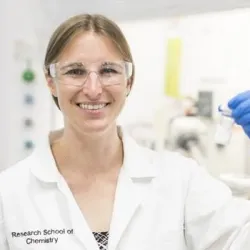
Professor Lara Malins is a Westpac Research Fellow and Snow Fellow at the Malins Lab , Research School of Chemistry, Australian National University. She obtained her BA in Chemistry at Boston University (2009) and PhD at The University of Sydney (2012) under Professor Richard Payne, focusing on peptide ligation strategies. After a National Institutes of Health (NIH) postdoctoral fellowship with Professor Phil Baran at Scripps Research, she launched her independent career at ANU in 2017 with an ARC DECRA award. Specializes in synthetic chemistry for drug discovery , peptide therapeutics , and natural product synthesis Research themes include bioconjugation , electrochemical methods , and cell-penetrating peptides Her lab develops chemoselective reactions and underutilized functional group strategies for biomolecule modification Her 15 most recent publications span topics from antimalarial drug delivery to antisense oligonucleotide conjugates , with method development in native chemical ligation and bicyclobutane cycloadditions . Recipient of 10+ awards including RACI Cornforth Medal and ACT Young Tall Poppy Award. Key Collaborations : Payne Group (University of Sydney), AstraZeneca Supervision : 18+ students including PhD candidates and honours students
Dr Jason X. Wang serves as Lecturer in Sustainable Supply Chain Management within the Operations Management and Decision Sciences department at the University of Sheffield's Management School. Previously holding the position of MBA Programme Leader and Senior Lecturer at the University of Huddersfield, his academic focus centers on sustainable operations and supply chain innovation. His research program investigates sustainable and circular supply chain management through two primary lenses: customer-driven sustainability practices integrating carbon neutrality and circular product design, and blockchain technology applications enhancing supply chain transparency and resilience. This work extends to sustainability innovation in construction through prefabricated systems, addressing sector-specific challenges in environmental performance optimization. Analysis of his 15 most recent publications (2017-2025) reveals consistent emphasis on sustainability measurement, with significant application of event study methodology to quantify market reactions to environmental initiatives. Recent work increasingly employs advanced analytical techniques like fuzzy DEMATEL for barrier analysis, while maintaining strong focus on blockchain implementation challenges and decarbonization strategies across multiple industries. Dr Wang actively supervises PhD candidates in quantitative blockchain applications for sustainable supply chains and supply chain finance. His current research funding includes: £16,000 grant from The Productivity Institute investigating SME decision-making in technology-driven logistics productivity ESRC/The Productivity Institute project on strategic productivity for business leadership teams He contributes to the academic community as Editorial Review Board member for Journal of Supply Chain Management and IEEE Transactions on Engineering Management, while serving as Guest Editor for Transportation Research Part E and Senior Editor for Cogent Business & Management. Dr Wang is an active member of the Supply Chain, Operations and Logistics Applied Research Centre, where he develops industry collaborations including vehicle recovery services in New Zealand and UK motorsport sector sustainability initiatives.
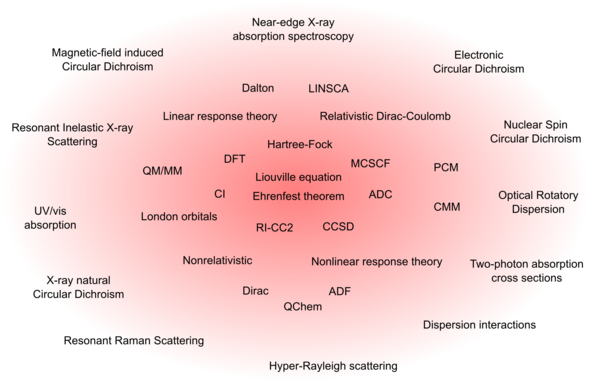
Patrick Norman is a Professor and Head of the Division of Theoretical Chemistry and Biology at KTH Royal Institute of Technology, Stockholm, Sweden. He also serves as Director of the PDC Center for High Performance Computing. His research focuses on advanced time-dependent molecular response theory methods, with applications in optical and X-ray spectroscopy. Coordinates VeloxChem and Gator HPC software projects Leads EU-EIC project OMICSENS (2023–2026) for lung cancer biosensors Principal Investigator in EU-ITN COSINE (2018–2021) and KAW network CoTXS (2014–2019) His theoretical work includes resonance convergent response theory via Liouville equations and Ehrenfest theorem, implemented in quantum chemistry software for linear/nonlinear spectroscopy. He co-authored the graduate textbook Principles and Practices of Molecular Properties (Wiley, 2018) and organizes international PhD schools on molecular response properties. Recent publications emphasize fragment state optimization, solvation effects, chiral luminescent materials, and amyloid ligand binding simulations. His work bridges quantum chemistry, HPC, and biomedical applications through tools like Gator and VeloxChem .