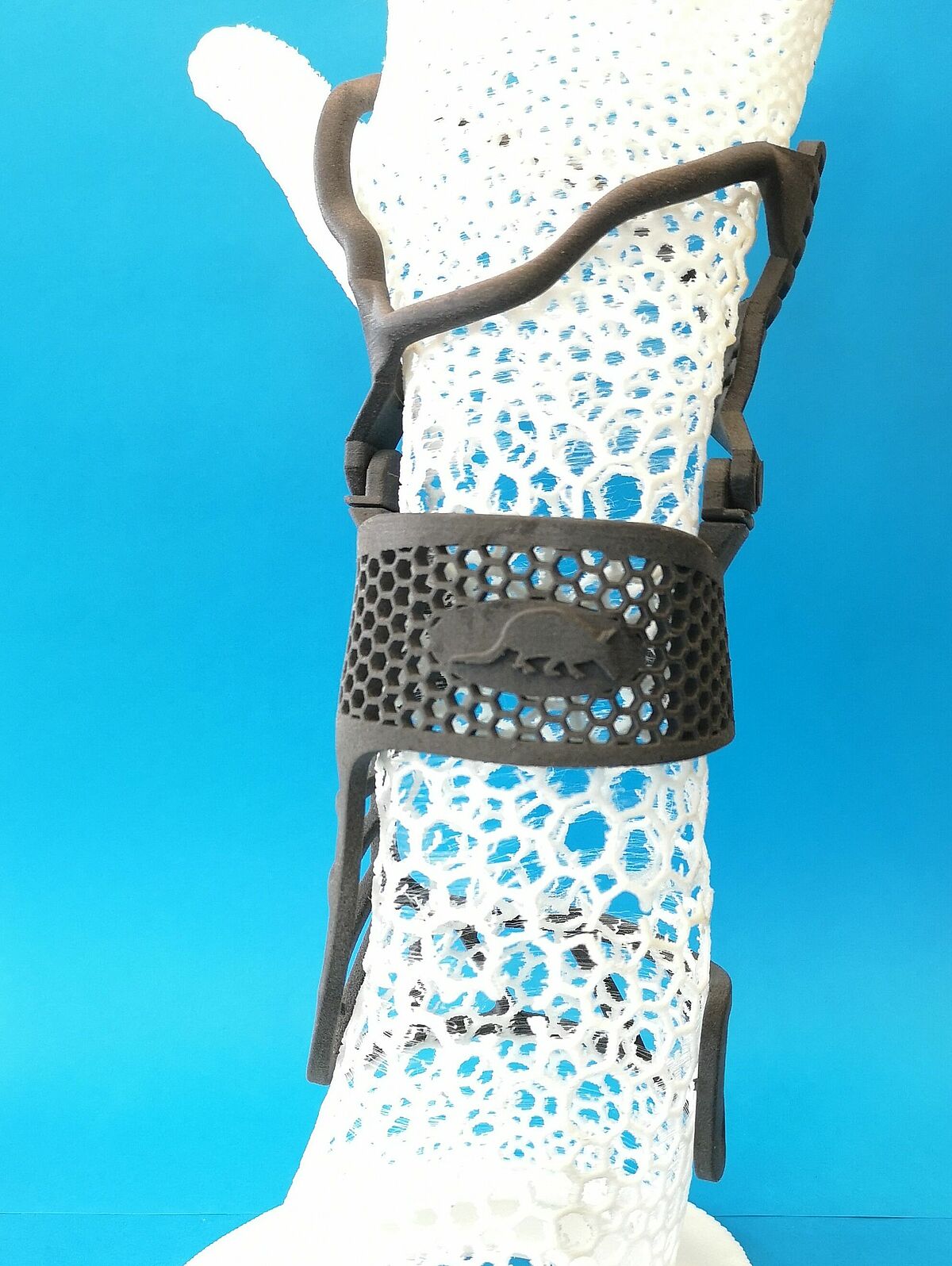
Jouni Partanen is a Professor at Aalto University's Department of Energy and Mechanical Engineering within the College of Engineering. His research focuses on advanced production technologies including Additive Manufacturing (3D-Printing), modern laser processing, and micromachining. Research Group: Materiaaleista tuotteiksi Specialization: Integration of AI in manufacturing processes Sustainability emphasis: Biochar-reinforced materials and carbon footprint reduction His work spans from fundamental material behavior analysis to industrial applications, particularly in metal additive manufacturing and composite fabrication. Recent research explores corrosion resistance in lattice structures and multiscale photopolymerization techniques. Publications highlight interdisciplinary approaches combining mechanical engineering with biomedical applications (e.g., patient-specific implants) and environmental health studies on industrial 3D printing emissions.
Dr. Iason Sideris is affiliated with ETH Zürich's Department of Neue Fertigungstechnologien (New Manufacturing Technologies), holding a Researcher position within the Professorship for Advanced Manufacturing. His work focuses on advancing additive manufacturing techniques, particularly in path planning optimization, temperature control, and material processing. He contributes to fields like Direct Energy Deposition, Wire-Arc Additive Manufacturing (WAAM), and data-driven finite volume methods. Key Research Areas: Additive Manufacturing, Thermal Modeling, Process Optimization, Materials Science Recent research emphasizes scalable path planning for temperature uniformity in AM processes, with publications addressing challenges in WAAM thermal management and real-time simulation methods. His work combines computational modeling with experimental validation to enhance manufacturing efficiency and material properties.
Desiderio Kovar is a Professor at the University of Texas at Austin holding the BFGoodrich Professorship in Materials Engineering and the Distinguished Teaching Professor title within the Department of Mechanical Engineering at the Cockrell School of Engineering. He is affiliated with the Texas Materials Institute, the Center for Electromechanics, and is a core member of the Center for Additive Manufacturing and Design Innovation. Dr. Kovar currently serves as the Associate Chair for Academics for the Mechanical Engineering Department. Dr. Kovar's research focuses on the interface between materials science and engineering and additive manufacturing, with particular expertise in ceramic processing. His work encompasses Advanced Design and Manufacturing, Advanced Materials Science and Engineering, and Nano and Micro-scale Engineering. He teaches undergraduate and graduate classes in the Materials Engineering area, having developed the Materials Science and Engineering minor in 2018, the first minor in Engineering at UT Austin. His recent publications (2023-2025) demonstrate a strong focus on ceramic additive manufacturing processes, particularly Selective Laser Flash Sintering and Micro-Cold Spray technologies. These works explore fundamental mechanisms of high-velocity particle impact, sintering kinetics, and process optimization for ceramic film and part production, reflecting his pioneering work in direct ceramic additive manufacturing without polymer binders. Dr. Kovar has received numerous prestigious awards for his teaching and research: Engineering Foundation Young Faculty Excellence Award (2000) Teaching Excellence Award from the Student Engineering Council (2000) Cockrell School of Engineering's Jack and Maxine Zarrow Family K-16 Teaching Innovation Award (2014) Lockheed Martin Aeronautics Company Award for Excellence in Engineering Teaching (2016) Mechanical Engineering Department's Teaching Award (2016) University of Texas' Outstanding Graduate Advisor (2012) Inducted into the University of Texas at Austin's Academy of Distinguished Teachers (2019) Dr. Kovar has supervised 47 undergraduate students, 21 MS theses, and 17 Ph.D. dissertations, and currently supervises 12 graduate students and one undergraduate student. His research has been generously funded by the National Science Foundation, Los Alamos National Laboratory, Sandia National Laboratory, the Army Research Laboratory, the Office of Naval Research, the US Department of Energy, and various corporate sponsors. In 2013, he founded the Cockrell School's Longhorn Maker Studio, which evolved into Texas Inventionworks. Dr. Kovar leads the Kovar Research Group which currently includes multiple graduate students and postdoctoral researchers working across three main research thrusts: Additive Manufacturing of Ceramics by Selective Laser Flash Sintering, Additive Manufacturing of Ceramics by Indirect Selective Laser Sintering, and Direct Writing of Patterned Films and Devices using the Micro-cold Spray Process.
Professor David C. Dunand is a faculty member in the Department of Materials Science and Engineering at Northwestern University , where he leads the Dunand Research Group . His work focuses on mechanical metallurgy of advanced metallic materials, including alloys, composites, and foams, with applications in energy-efficient transportation and biomaterials. He also investigates additive manufacturing techniques like laser powder-bed fusion and 3D ink extrusion. Research Interests: Physical and mechanical metallurgy of multiphase metals Additive manufacturing (ink extrusion, selective laser melting) Green/sustainable metal production In situ X-ray tomography for microstructure analysis Metallic foams and scaffolds Thermoelectric materials Recent Publications show expertise in redox cycling stability, precipitation strengthening, and hierarchical microstructures, with applications in batteries, shape-memory alloys, and high-entropy systems. Awards: TMS Fellow (2012) Structural Materials Division Distinguished Scientist/Engineering Award (2008) Fellow, ASM International (2007) Department Teacher of the Year (1998) He has held leadership roles including Co-Director of the Initiative for Sustainability and Energy at Northwestern (2008-2015) and Visiting Professor at École Polytechnique Fédérale de Lausanne (2000). The group operates a SISMA MYSINT 100 laser powder bed fusion machine and collaborates extensively.
Kaka Ma is an Associate Professor in the Department of Materials Science & Engineering at Texas A&M University, specializing in advanced materials processing for energy systems and extreme environments through powder-based synthesis, additive manufacturing, and sintering technologies. Educational Background: Ph.D. in Materials Science and Engineering, University of California, Davis (2010) B.S. in Materials Science and Engineering, University of Science and Technology of China (2006) His research focuses on powder-based synthesis of metals/ceramics, laser directed energy deposition, field-assisted sintering technology (FAST), thermionic/thermoelectric energy conversion materials, and ultrahigh-temperature/hypersonic environment applications, with strong emphasis on sustainability in materials engineering. Recent publications demonstrate expertise in creating functionally graded materials via controlled thermal gradients and powder morphology optimization. Analysis of 2021-2025 publications reveals dominant trends in spark plasma sintering parameter optimization, additive manufacturing of titanium alloys, high-entropy carbide development, and nanoparticle synthesis for energy applications, consistently linking processing parameters to microstructure-property relationships in extreme-condition materials. Scientific Awards: TMS Light Metals/Extraction & Processing Subject Award – Recycling (2020) Professional memberships include The Minerals, Metals and Materials Society (TMS) and America Makes. While specific advising details and grant information are not documented in the provided materials, his extensive collaborative publication record indicates active mentorship of graduate researchers and successful acquisition of research funding. No dedicated laboratory facilities or research team structures are specified in the source documentation.
Auezhan Amanov is an Associate Professor at the Faculty of Engineering and Natural Sciences, Tampere University, specializing in the Engineering Materials Science (EMS) department. His research focuses on tribology, surface engineering, and advanced materials processing. He leads the 'Tribology and Surface Modification' research group, aiming to enhance machine element performance through surface treatments and manufacturing innovations. Dr. Amanov is an active member of international tribology societies (STLE, JAST, KTS), chairing the 'Surface Engineering' committee at STLE. His work emphasizes improving wear resistance, fatigue life, and tribological performance of materials like titanium alloys, high-entropy alloys, and thermal spray coatings. His research integrates additive manufacturing, laser-based processes, and severe plastic deformation techniques to optimize material properties. Key contributions include studies on ultrasonic nanocrystal surface modification (UNSM) for enhancing mechanical and tribological characteristics. Collaborations with industries and academic institutions globally drive his mission to translate research into practical solutions for manufacturing efficiency and sustainable development. Dr. Amanov holds an h-index of 34 (Google Scholar) and has authored numerous peer-reviewed articles on materials science and tribology advancements. Teaching responsibilities include tribology and fatigue-related courses, reflecting his expertise in both academic and applied engineering domains. His vision includes advancing circular economy practices through bearing restoration technologies and improving 'Made in Finland' manufacturing competitiveness through material science innovations.
Gary Koenig is Associate Professor of Chemical Engineering at the University of Virginia. His research program focuses on advanced materials for energy storage systems, particularly lithium-ion batteries and flow batteries. He holds a PhD from University of Wisconsin-Madison and completed postdoctoral research at Argonne National Laboratory. His group develops novel electrode architectures, including thick sintered electrodes and all-active-material designs, to improve battery energy density and rate capability. Research spans materials synthesis, electrochemical characterization, and transport modeling to overcome limitations in current energy storage technologies. Honors include the NSF CAREER Award (2017) and Fulbright Research Fellowship (2020). Recent publications examine electrode processing techniques, lithium extraction methods, and transport phenomena in battery systems. His work demonstrates innovations in electrode design that enable higher energy densities while maintaining cycling stability. He has taught courses including Applied Statistics, Chemical Reaction Engineering, and Energy Technology Options.
Jason Trelewicz is a Professor at Stony Brook University’s Department of Chemical & Molecular Engineering and holds joint faculty status at Oak Ridge National Laboratory. His research focuses on interface-engineered materials for extreme environments, leveraging advanced processing, characterization tools, and multiscale modeling. He received his Ph.D. in Materials Science from MIT (2008) and previously served as Research Director at MesoScribe Technologies. His work emphasizes fusion materials, nanocrystalline alloys, additive manufacturing, and radiation effects. Awards include the DOE Early Career Award (2017), NSF CAREER Award (2016), and multiple best paper awards (2022). His lab, the Engineered Microstructures and Radiation Effects Laboratory, explores topics like ceramic composite moderators and plasma-facing materials. Education: Ph.D., Materials Science & Engineering, MIT (2008) Affiliations: Oak Ridge National Laboratory (Joint Faculty) Key research areas include thermal-mechanical evaluation of fusion reactor components, alloy design for additive manufacturing, and radiation tolerance of nanocrystalline materials. He has pioneered studies on helium bubble dynamics in tungsten and stability of doped nanocrystalline alloys. Awards: DOE Early Career Award, NSF CAREER Award, 2022 Best Paper Awards in Nuclear Materials and Asian Ceramics. Grants/Projects: Supported by DOE, NSF, and collaborative initiatives with Japan (FRONTIER). His group investigates corrosion behavior in 3D-printed steels and develops novel composite moderators for high-temperature reactors. Ongoing work includes multiscale modeling for fusion materials and in-situ TEM studies of irradiation effects.
Carolyn Conner Seepersad serves as the J. Mike Walker Professor of Mechanical Engineering at the University of Texas at Austin and directs the Center for Additive Manufacturing and Design Innovation. She holds membership in the U.T. System Academy of Distinguished Teachers and maintains active leadership in the additive manufacturing community through roles such as co-organizer of the Solid Freeform Fabrication Symposium and ASME Design Engineering Division Executive Committee membership. Her academic credentials include: PhD in Mechanical Engineering from Georgia Tech (2004) MA/BA in Philosophy, Politics and Economics from Oxford University (1998, Rhodes Scholar) BS in Mechanical Engineering from West Virginia University (1996) Dr. Seepersad's research centers on computational design methodologies and additive manufacturing innovation , with particular expertise in simulation-based design of complex systems, environmentally conscious product development, and materials engineering. Her work bridges theoretical design frameworks with practical manufacturing applications, emphasizing sustainability and performance optimization across aerospace, automotive, and energy systems. Current projects explore reactive extrusion additive manufacturing, negative stiffness materials, and machine learning integration for process-aware design. Analysis of her 15 most recent publications reveals a dominant focus on process innovation in additive manufacturing (70%), particularly stereolithography and selective laser sintering, with growing emphasis on data-driven design approaches (20%) and sustainable engineering applications (10%). Her work demonstrates consistent progression from fundamental material design toward integrated system optimization and industrial scalability. Her scientific recognition includes: International Outstanding Young Researcher Award in Freeform and Additive Manufacturing (2009) UT System Regents’ Teaching Award (2010) ASME Design Automation Committee Outstanding Young Investigator Award (2010) ASEE Outstanding New Mechanical Engineering Educator Award (2013) Multiple ASME and ASEE best paper awards U.T. System Academy of Distinguished Teachers membership Dr. Seepersad maintains an extensive advising portfolio with 48 graduate students (16 PhD, 24 MS, and 8 current) plus 2 postdoctoral researchers, reflecting sustained research productivity and educational impact. Her Product, Process, and Materials Design Lab fosters interdisciplinary collaboration between mechanical engineering, materials science, and computational design teams.
Dr.-Ing. Horst Hill is a Lecturer for Additive Manufacturing at Georg Agricola University of Applied Sciences (THGA) since March 2022, where he teaches in the Master's program "Material Engineering & Industrial Heritage Conservation". Additionally, he serves as Head of Special Materials at Deutsche Edelstahlwerke GmbH (since 2017), overseeing approximately 70 employees in the development of specialty steels and materials. Education: Diploma in Mechanical Engineering (specialization in materials engineering) from Ruhr University Bochum (2003-2008, overall grade: 1.5) Dr.-Ing. (PhD) from Ruhr University Bochum, Department of Materials Science (2008-2011), with dissertation on "Novel metal matrix composites (MMC) to increase the service life of wear-stressed tools in the polymer processing industry" (grade: very good) Research Interests: Dr. Hill's expertise lies at the intersection of advanced materials science and manufacturing technologies. His primary research focuses on additive manufacturing processes , particularly the development of new materials for 3D printing applications. He specializes in metal matrix composites (MMCs) with enhanced wear and corrosion resistance, specialty steels for demanding industrial applications, and powder metallurgy techniques for producing high-performance materials. His work bridges fundamental materials research with practical industrial applications in polymer processing, tooling, and energy sectors. His research encompasses the entire value chain from material design and process optimization to application-specific performance evaluation, with particular emphasis on sustainable manufacturing practices and resource efficiency in materials production. Research Trends: Dr. Hill's publication record demonstrates a clear evolution from fundamental materials research to applied additive manufacturing technologies. His early work (2009-2012) focused on understanding sintering behaviors, microstructural design, and performance optimization of metal matrix composites and plastic mold steels. From 2015 onwards, his research shifted toward additive manufacturing applications, exploring novel materials for 3D printing, graded material structures, and process-specific material developments. Recent publications (2021-2022) showcase cutting-edge work in high-strength austenitic materials for additive manufacturing and compositionally graded structures, reflecting the rapid advancement in the field. Professional Affiliations: Georg Agricola University of Applied Sciences (THGA) - Lecturer for Additive Manufacturing (since 03/2022) AiF e.V. - Reviewer for Subgroup 7.4 "Additive Manufacturing" (since 01/2022) Düsseldorf University of Applied Sciences (HSD) - Teaching assignment in Materials Engineering (09/2021-02/2022) Deutsche Edelstahlwerke GmbH - Various roles including Head of Special Materials (since 2012) Industrial Leadership: At Deutsche Edelstahlwerke, Dr. Hill leads the Special Materials division with approximately 70 employees, focusing on developing and producing high-performance specialty steels and metal matrix composites. His team works on innovative solutions for demanding applications in polymer processing, tooling, and other industrial sectors, combining advanced metallurgy with cutting-edge manufacturing technologies.
Joseph J. Beaman is Professor and Cockrell Family Dean's Chair in Engineering Excellence in the Walker Department of Mechanical Engineering at The University of Texas at Austin, where he has served since 1979 and chaired the department from 2000-2011. A pioneer in additive manufacturing, he coined the term Solid Freeform Fabrication (SFF) in 1987 and initiated academic research in the field in 1985, developing the foundational Selective Laser Sintering (SLS) process in his laboratory. His educational background includes: B.S.M.E. with high honors from The University of Texas at Austin (1972) Sc.D. in nonlinear control from Massachusetts Institute of Technology Professor Beaman's research spans additive manufacturing, control systems, and materials engineering, with seminal contributions to SFF technology that enabled rapid prototyping and manufacturing across medical, automotive, and industrial applications. His work encompasses materials processing, laser scanning, thermal control, direct metal fabrication, and biomedical applications, driving the emergence of a global industry. Analysis of his publications (2004-2012) reveals evolving focus from core SLS development to cross-disciplinary applications in metallurgical process control (electroslag remelting) and energy systems (fuel cell membrane modeling), while maintaining additive manufacturing as the central theme. Keywords consistently include materials science, control theory, and advanced manufacturing across diverse subfields. His distinguished honors include: National Science Foundation Presidential Young Investigator Award (1984, inaugural year) Distinguished Mechanical Engineer (2011) DuPont Young Faculty Award and Engineering Foundation Awards (1984, 1988) Multiple Best Paper Awards across engineering journals As an academic entrepreneur, Beaman co-founded DTM Corporation (now 3D Systems) and served as Advanced Development head (1990-1992), mentoring graduate students who became key inventors in SLS commercialization. His research has been supported by NSF and industry grants, while his leadership extended to chairing the World Technology Evaluation Center panel on Additive/Subtractive Manufacturing (2003) and serving on international assessment panels. His laboratory established UT Austin as the birthplace of academic SLS research, fostering industry-academia collaboration that directly enabled commercialization of rapid manufacturing systems now used globally for complex part production impossible with conventional methods.
Scott L. Anderson is a Professor in the Department of Chemistry at the University of Utah, with a distinguished career in nanoparticle chemistry and catalysis. He received his B.A. from Rice University (1977), Ph.D. from UC Berkeley (1981), and trained at Stanford (1981-1983). His research focuses on size-dependent catalytic behavior, high-temperature reaction kinetics, and advanced analytical techniques like single nanoparticle mass spectrometry. Chair, Division of Chemical Physics, American Physical Society (2018-2019) ACS Physical Division Award in Experimental Physical Chemistry (2016) Robert W. Parry Teaching Award (2015) Fellow of the American Association for the Advancement of Science (2011) Distinguished Scholarly and Creative Research Award (2007) His work spans cluster model catalysts, oxidation mechanisms, and functional nanoparticle synthesis, with significant contributions to understanding coking resistance, sintering suppression, and surface interactions. He has held visiting positions at institutions in Japan, Germany, and France, and currently serves as Associate Director for Surface Analysis and Nano-imaging at the Utah Nanofab. Selected publications reveal a focus on nanoscale catalysis, thermal stability of nanoparticles, and innovative applications of mass spectrometry. His research bridges fundamental studies of cluster reactivity and practical applications in energy and materials science.
Prof. Dr.-Ing. Mark Vehse is a full-time faculty member and Professor in the Department of Mechanical Engineering at Stralsund University of Applied Sciences. He is actively involved in teaching courses such as CAD and Machine Elements, Systematic Product Development, and Additive Manufacturing. His research focuses on digital product development, additive manufacturing technologies, and their applications in health technology and biomedical engineering. He leads working groups including 'Digital Product Development & Additive Manufacturing' and 'Digital Product Development & Autonomous Robotics Group.' Prof. Vehse's expertise includes advanced 3D CAD systems, hydrogel fabrication for medical applications, and laser-based micro-manufacturing techniques. His laboratories include the CAD pool, additive manufacturing facilities, and a cleanroom technology setup. He is also the university's representative in the Fachbereichtag Maschinenbau e.V. (FBTM eV), emphasizing his role in mechanical engineering academia. His recent publications highlight innovations in additive manufacturing for healthcare, polymer-based orthotic devices, and drug delivery systems using 3D-printed scaffolds. His work bridges mechanical engineering with biomedical applications, focusing on material science, precision manufacturing, and product lifecycle management.
Stan F.S.P. Looijmans is an Assistant Professor at the Processing and Performance of Materials group within the Department of Mechanical Engineering at Eindhoven University of Technology (TU/e). His research focuses on bridging the gap between processing-induced structure formation and mechanical properties in semi-crystalline polymers, with a particular emphasis on advanced characterization techniques and multiscale modeling. Academic Background : BSc and MSc in Mechanical Engineering (TU/e), PhD in 2023 on adhesion-modified polypropylene composites Research Tools : Synchrotron X-ray/infrared radiation, microscale mechanical testing, numerical simulations His work explores key areas such as: Crystallization in additive manufacturing Structure formation under extreme conditions Micromechanical testing of composites Contact mechanics phenomena Local failure prediction in semi-crystalline systems Recent publications highlight his expertise in polymer crystallization kinetics, fiber-reinforced composites, and processing-structure-property relationships. Notably, his 2025 work on PLA stereocomplexation and PP/HDPE blends demonstrates innovative approaches to microstructure engineering. He contributes to education through courses in mechanical characterization of materials and soft materials processing.
Sagar Nikam is a Lecturer at Ulster University's School of Computing, Engineering and Intelligent Systems, specializing in additive manufacturing and laser processing technologies. He works at the Derry~Londonderry campus in Magee, Northern Ireland. PhD in Engineering from Indian Institute of Technology Indore (2018) MSc from National Institute of Technology Tiruchirappalli (2013) BSc from Shivaji University (2010) His research focuses on additive manufacturing processes , particularly laser directed energy deposition and powder bed fusion technologies. He develops image processing algorithms and computer vision systems for real-time defect detection in biomedical-grade alloys, employing artificial intelligence techniques like YOLO-based object detection models. His work addresses critical aspects such as: Melt pool dynamics and spatter particle analysis Thermal modeling incorporating Marangoni convection effects Finite element simulation of deposition processes Process parameter optimization using genetic algorithms Recent projects include Digital twin-based process monitoring systems funded by the Department for the Economy (UK Government), collaborating with colleagues like Dr. Deepika Nikam, Dr. David Kerr, and Prof. Sean Coleman.