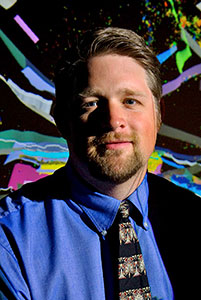
Sarah Billington is the UPS Foundation Professor of Civil and Environmental Engineering at Stanford University and a Senior Fellow at the Woods Institute for the Environment. Her research program focuses on sustainable building design, human wellbeing, and ethical supply chain practices. Education: PhD, University of Texas at Austin, Structural Engineering (1997) MSE, University of Texas at Austin, Structural Engineering (1994) BSE, Princeton University, Civil Engineering & Operations Research (1990) Her lab employs interdisciplinary methods to study how built environments impact human physical, psychological, and social wellbeing. Current projects include developing tools to quantify nature exposure in buildings, exploring affordable housing's role in wellbeing, and using AI to assess forced labor risks in material supply chains. While no longer active in this area, her group previously pioneered research on sustainable construction materials like bio-based composites and ductile cement-based composites. Her recent publications address topics such as nature integration in architecture, workplace design optimization, and health impacts of building materials. The Billington Lab at Stanford fosters collaborative team science, welcoming partnerships to advance occupant-centric engineering solutions.
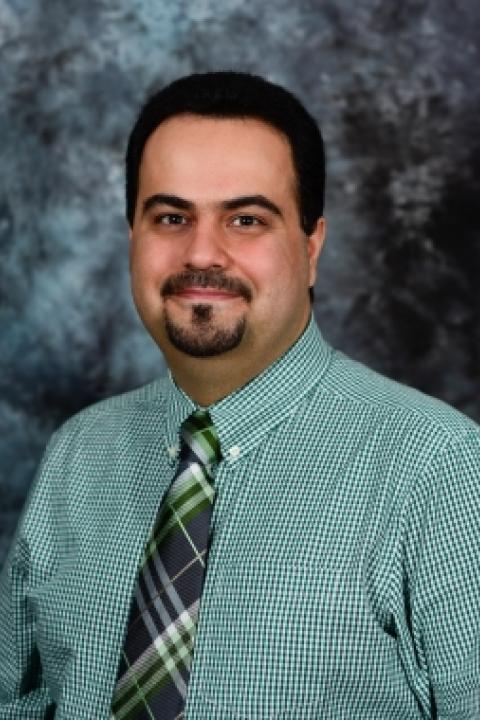
Majid Ghayoomi is a Professor and Civil Engineering Undergraduate Coordinator in the Department of Civil and Environmental Engineering at the University of New Hampshire's College of Engineering and Physical Sciences. His research focuses on geotechnical engineering and geomechanics, particularly unsaturated soil mechanics and geotechnical earthquake engineering. He teaches courses such as Soil Mechanics, Engineering Behavior of Soils, and Geotechnical Modeling. Dr. Ghayoomi holds a Ph.D. from the University of Colorado at Boulder, an M.S. from Sharif University, and a B.S. from the University of Tehran. His research interests include bioremediation, hazards mitigation, soil-structure interaction, and materials testing. He leads the Geotechnical Modeling and Innovation lab, advancing bio-inspired solutions and remote sensing applications in geotechnical systems. His recent work emphasizes climate change impacts on seismic resilience, microbial stabilization of soils, and satellite-based soil moisture monitoring. Key contributions include studies on liquefaction mitigation, seismic site response, and infrastructure vulnerability in dynamic environments. His research spans theoretical, experimental (centrifuge modeling), and computational approaches to address complex geotechnical challenges.
California State University, Long BeachUnited States
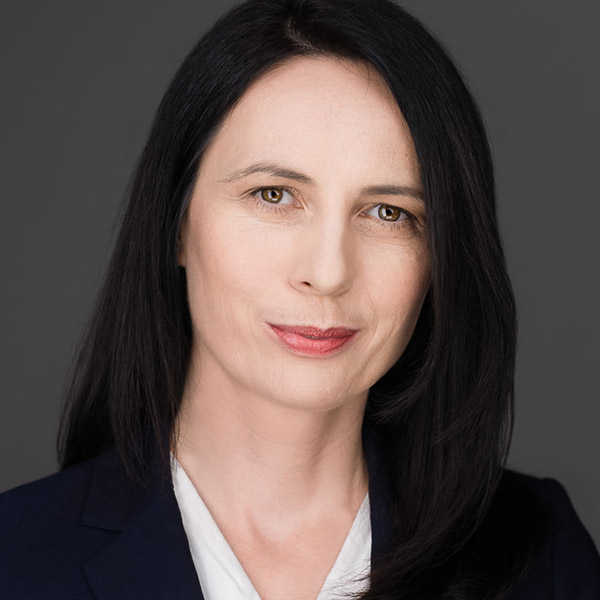
Vesna Terzic is a Professor in the Department of Civil Engineering and Construction Engineering Management at California State University Long Beach's College of Engineering. Her research specializes in seismic performance assessment, infrastructure resilience, and probabilistic risk analysis of structures. Education includes a PhD in Structural Engineering from UC Berkeley, MS in Earthquake Engineering from Ss. Cyril and Methodius University, and BS in Structural Engineering from University of Belgrade. Research focuses on developing advanced computational frameworks for evaluating post-earthquake functionality of buildings and bridges. Her work integrates performance-based engineering with resilience quantification, emphasizing practical applications for seismic design and retrofitting. Recent publications demonstrate consistent focus on functional recovery modeling, structural health monitoring, and optimization of protective systems. Research trends show progression from component-level analysis to regional recovery simulation frameworks. Major awards: ACI Chester Paul Siess Award for Excellence in Structural Research (2017) Popert Fellowship, UC Berkeley (2009) Professional service includes membership on FEMA P-58 project committees and contributions to OpenSees development. Current projects investigate soil-structure interaction effects on tall buildings and recovery-based design methodologies.
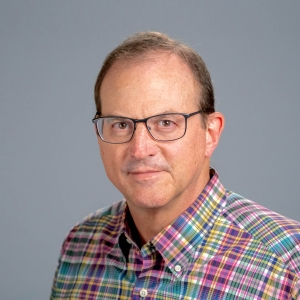
Eduardo Miranda is a Professor of Civil and Environmental Engineering at Stanford University. He specializes in structural engineering, with a focus on performance-based earthquake engineering. His work involves analyzing ground motion impacts on structures and society, and developing methods to improve seismic design and construction. He holds a PhD from the University of California, Berkeley (1991), an MSc from UC Berkeley (1988), and a Civil Engineering degree from UNAM (1986). Education: PhD in Structural Engineering, UC Berkeley (1991) MSc in Structural Engineering, UC Berkeley (1988) Civil Engineer, National Autonomous University of Mexico (UNAM) (1986) Research Interests: His primary research areas include seismic risk assessment, ground motion analysis, and the development of computational tools for structural analysis. He investigates the directional effects of earthquakes on building responses and has contributed to methodologies for regional seismic risk evaluation. His work also focuses on improving seismic isolation techniques and nonstructural component design. Recent Research Trends: Miranda’s recent publications emphasize directional ground motion effects, particularly in earthquakes like those in Türkiye and Taiwan. He explores novel friction models for seismic isolation bearings and evaluates the seismic performance of structures on soft soils. His work bridges theoretical analysis and practical application, aiming to enhance building resilience. Advising & Grants: No specific grants or advisees are listed, but his research is funded through collaborations with institutions like EERI and StEER for field assessments and computational studies. Labs/Teams: Collaborates with the Stanford Earthquake Engineering Research (StEER) Group, contributing to post-earthquake reconnaissance reports and regional risk assessments.
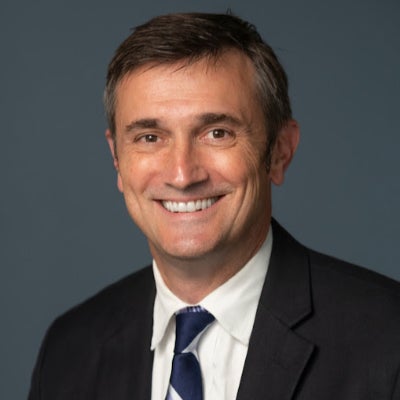
Jonathan D. Bray is the Faculty Chair in Earthquake Engineering Excellence and a Distinguished Professor of Civil and Environmental Engineering at the University of California, Berkeley . He is a globally recognized authority in earthquake and geotechnical engineering, with research spanning seismic performance of earth structures, liquefaction, ground failure, and earthquake fault rupture effects. Education: Bray earned his Ph.D. in Geotechnical Engineering from UC Berkeley (1990), M.S. in Structural Engineering from Stanford University (1981), and B.S. from the United States Military Academy (1980). Research Interests: His work focuses on earthquake engineering , geotechnical engineering , physical and numerical modeling , and environmental geotechnics . Key areas include seismic site response, liquefaction of soils, seismic slope stability, and post-earthquake reconnaissance. Contributions: Bray has developed widely used procedures for seismic slope displacement and liquefaction-induced building settlement. He created the NSF-sponsored GEER Association to capture post-earthquake data. His work has influenced seismic design codes and practices globally. Awards & Recognition: He is a member of the U.S. National Academy of Engineering and a Fellow of the American Society of Civil Engineers (ASCE) . His accolades include the Seed Medal , Terzaghi Award , Ishihara Lecture , Peck Award , Joyner Lecture , Prakash Award , Huber Research Prize , Packard Foundation Fellowship , and the NSF Presidential Young Investigator Award . Grants & Projects: Bray has led major projects funded by the NSF , California Energy Commission , U.S. Geological Survey , and Caltrans , totaling millions in research funding. Advising & Mentorship: He has supervised over 30 Ph.D. students, significantly shaping the next generation of earthquake engineers.
Professor Emily So serves as Deputy Head of the School of Arts and Humanities at the University of Cambridge and directs the Cambridge University Centre for Risk in the Built Environment (CURBE). A chartered civil engineer with extensive field experience, she holds leadership roles in the Open-Oxford-Cambridge AHRC Doctoral Training Partnership and chairs the Faculty EDI Committee. Her research focuses on urban risk and resilience , particularly in earthquake-prone regions. Combining structural engineering with epidemiological approaches, she develops innovative casualty estimation models and engages directly with affected communities worldwide. Her work spans seismic safety, disaster epidemiology, and remote sensing applications for rapid damage assessment. Professor So's publication trends reveal strong emphasis on machine learning for disaster risk modeling , with recent work featuring graph neural networks, deep clustering for urban morphology, and LSTM-based population forecasting. Her research bridges engineering, social sciences, and data science to address resilience in developing nations. 2010 Shah Family Innovation Prize (Earthquake Engineering Research Institute) Fellow of the Institution of Civil Engineers (FICE) Scientific Advisory Group for Emergencies (SAGE) member advising UK government As Director of CURBE, she leads interdisciplinary collaborations with EEFIT, Global Earthquake Model (GEM), World Bank, and USGS. Her field investigations following major earthquakes inform practical solutions for vulnerable communities, notably contributing to the 2017 World Building of the Year design in China. Current work includes sabbatical research for 2025-2026 focused on decolonizing architectural approaches to disaster resilience. Professor So maintains active roles in professional organizations and international disaster response frameworks, with her CURBE team developing methodologies now implemented globally for seismic safety improvements.
University of Illinois Urbana-ChampaignUnited States
Paolo Gardoni is the Alfredo H. Ang Family Professor and an Excellence Faculty Scholar in the Department of Civil and Environmental Engineering at the University of Illinois Urbana-Champaign, with additional professorial appointments in Industrial & Enterprise Systems Engineering and Biomedical & Translational Sciences. He also serves as Director of the MAE Center and Editor-in-Chief of Reliability Engineering & System Safety. Education Ph.D. in Civil Engineering, University of California, Berkeley (2002) M.A. in Statistics, University of California, Berkeley (2001) M.Eng. in Structural Engineering, University of Tokyo (1997) Laurea (BS+MS equivalent) in Structural Engineering, Politecnico di Milano (1997) Research Interests Gardoni’s scholarship integrates probabilistic methods with large-scale infrastructure systems to advance reliability, risk, and life-cycle analysis. His work quantifies the performance of deteriorating systems under natural and anthropogenic hazards, models societal impacts of disasters, and develops decision frameworks for sustainable and resilient infrastructure. He also examines ethical, social, and legal dimensions of risk, and investigates optimal strategies for hazard mitigation, disaster recovery, and climate adaptation. Across more than 250 refereed journal papers, he has advanced sub-fields ranging from probabilistic mechanics and earthquake engineering to catastrophe bond pricing and engineering ethics, leveraging tools such as stochastic differential equations, Bayesian networks, and physics-informed machine learning. Awards & Honors Alfredo Ang Award on Risk Analysis and Management of Civil Infrastructure (ASCE, 2021) Best Paper Awards in ASCE Journal of Sustainable Water in the Built Environment (2019) and Geotechnical Research (2018 Telford Premium Prize) Fellowships and named professorships: Alfredo H. Ang Family Professor, Excellence Faculty Scholar, and courtesy or honorary professorships at Tsinghua, IIT Guwahati, Tongji, Jianghan, and Loughborough universities. Research Leadership & Funding Gardoni has secured over $58 million in research funding from NSF, DHS, NIST, USAID, Qatar National Research Fund, and other agencies. He directs the MAE Center—formerly an NSF Engineering Research Center—focused on multi-hazard engineering approaches, and is Editor-in-Chief of Reliability Engineering & System Safety (Elsevier, IF 9.4). He founded and formerly led the journal Sustainable and Resilient Infrastructure (Taylor & Francis) and serves on editorial boards of nine additional journals. Advising & Mentorship He has graduated 27 PhD and 35 Master’s students, many of whom now hold faculty positions worldwide. His group maintains an active pipeline of doctoral and post-doctoral researchers working on resilience analytics, infrastructure monitoring, and risk-informed decision-making. Laboratories & Collaborations He leads the MAE Center and is affiliated with the Critical Infrastructure Resilience Institute (CIRI) and the Biomedical and Translational Sciences group. International collaborations span the UK (Loughborough), India (IIT Guwahati), and China (Tsinghua, Tongji, Jianghan), fostering cross-disciplinary research in reliability and resilience engineering.
Professor Hong Hao is a John Curtin Distinguished Professor at Curtin University, affiliated with the School of Civil and Mechanical Engineering and the Curtin Research Centre for Infrastructural Monitoring & Protection. His expertise spans Structural Dynamics, Earthquake Engineering, Blast and Impact Engineering, and Structural Health Monitoring. He holds prestigious roles like Fellow of ATSE, ISEAM, and ASCE, and has led organizations such as the International Association of Protective Structures and the Australian Earthquake Engineering Society. Education: BE (Tianjin University, 1982), MSc (UC Berkeley, 1985), PhD (UC Berkeley, 1989). Awards include the Tan Chin Tuan Fellowship and multiple Ko Medals. He has authored over 200 journal articles, with recent work focusing on blast-resistant materials, seismic fragility, and AI-driven structural health monitoring. His research emphasizes resilient infrastructure, including metaconcrete structures, corrosion-resistant materials, and sensor-based damage detection. Ongoing projects involve smart tunnel safety under BLEVE explosions and modular building systems.
Dr. John Francis Clinton is the Director of Seismic Networks and Head of the Earthquake Monitoring Section at the Swiss Seismological Service (SED), ETH Zurich. He leads the Marsquake Service for NASA's InSight mission and oversees Switzerland's broadband and strong-motion seismic networks. His expertise spans earthquake early warning systems, seismic instrumentation, and glacial seismology. Clinton is also a Co-Investigator on the Mars InSight mission and involved in international projects like EPOS and RAMSIS. Education PhD in Civil Engineering (Minor in Geophysics), California Institute of Technology (2004) MSc in Civil Engineering, California Institute of Technology (1998) BEng in Civil Engineering, University College Dublin (1997) Research Interests Dr. Clinton focuses on real-time seismology, seismic instrument design, structural health monitoring, and glacial seismology. His work bridges engineering applications with geophysical data analysis, particularly in earthquake early warning systems and induced seismicity studies. He collaborates internationally on projects such as the Valais Near Fault Observatory and Nicaragua’s Earthquake Early Warning development. Publications Overview His 15 most recent papers (2011–2015) highlight advancements in seismic network optimization, Marsquake detection algorithms, and glacial icequake mechanisms. Key themes include improving early warning accuracy, understanding subglacial dynamics, and validating high-rate GPS for structural monitoring. Awards & Memberships Member, Swiss Academy of Sciences (since 2008) Member, IRIS Quality Assurance Advisory Committee (since 2013) Chair, European Integrated Data Archives (EIDA) (2013–2015) Labs & Teams Clinton directs the SED’s Earthquake Monitoring team and collaborates with ETH Zurich’s Geophysics Masters Program. His group manages Switzerland’s seismic networks and leads the Marsquake Service, which analyzes InSight lander data for Martian seismic events.
Yehuda Ben-Zion is a Professor of Earth Sciences at the University of Southern California (USC), affiliated with the Dornsife College of Letters, Arts and Sciences. He serves as Director of the Statewide California Earthquake Center (SCEC). His expertise lies in geophysics and seismology, with a focus on earthquake mechanics, fault dynamics, and seismic hazard assessment. He holds a Ph.D. in Geophysics and Seismology from USC (1990) and a B.S. in Geology and Physics from The Hebrew University of Jerusalem (1982). Research interests include physics of earthquakes and faults, high-resolution fault zone imaging, earthquake source properties, and dynamic rupture processes. Recent work emphasizes multi-scale modeling of rupture zones, seismic velocity monitoring using anthropogenic signals (e.g., train tremors), and probabilistic seismic hazard analysis frameworks like CyberShake. He leads projects such as Quakeworx, an open-source earthquake simulation platform, and investigates fault zone architecture in regions like the San Andreas, San Jacinto, and Marmara faults. His studies address critical questions about large earthquake mechanisms, ground motion prediction, and the interplay between tectonic stress and seismicity patterns. He has pioneered the use of dense seismic arrays and machine learning to analyze seismic data, advancing understanding of fault zone processes and their implications for hazard mitigation.
Giuseppe Carlo Marano is a Full Professor at the Department of Structural, Building and Geotechnical Engineering at Politecnico di Torino. He is also a component of the SISCON Interdepartmental Center for Infrastructure Safety. With expertise in civil and structural engineering, his work focuses on machine learning applications, seismic risk reduction, and sustainable structural optimization. Education Graduated cum laude in Structural Engineering from Polytechnic University of Bari PhD in Structural Engineering from University of Florence (2000) Research Interests Marano's research spans structural optimization, seismic engineering, and machine learning applications in civil infrastructure. He develops advanced computational models for: Seismic retrofitting of existing structures Optimization of steel and masonry structures Recycled materials in concrete production AI-driven structural health monitoring Multiobjective design methodologies Publication Trends His recent work emphasizes: Machine learning for concrete mix design and damage assessment Optimization of gridshells and arch structures Seismic isolation systems and vibration control Sustainable construction practices with recycled materials Multiobjective genetic algorithms for structural design Scientific Recognitions National Scientific Qualification - First Band (2013, MIUR Italy) Certificate of Appreciation for Outstanding Lecture (2012, China) Academic Contributions As an educator, he teaches: Consolidamento Strutturale (Structural Consolidation) Dinamica delle Vibrazioni Random (Random Vibration Dynamics) Progettazione Generativa (Generative Design) He also leads Challenge@PoliTo initiatives and contributes to national infrastructure safety regulations. Research Projects ADAPT4CE - Adaptive Digital Systems for Circular Economy (2025-2028) AI-ENVISERS - AI for Seismic Retrofit Environmental Impact (2023-2025) ADDOPTML - Additive Manufacturing Optimization (2021-2025)
Christopher D.P. Baxter is a Professor and Department Chair of Civil and Environmental Engineering at the College of Engineering, University of Rhode Island , with expertise in geotechnical engineering, offshore wind energy, and coastal resilience. He holds a Ph.D. in Civil Engineering from Virginia Tech (1999), an M.S. from Purdue University (1994), and a B.S. from Tufts University (1990). Research Focus: Geotechnical characterization of marine sediments, liquefaction resistance analysis, fiber-optic sensing for infrastructure monitoring, and coastal protection systems. Recent Publications: 15+ articles (2011–2025) covering topics like shear wave velocity, offshore wind foundation dynamics, and tsunami hazard modeling. Grants: Led projects on offshore wind monitoring (2019–2024) and fiber-optic seismic sensing (2021–2023). Key Collaborations: Work with teams on submarine landslide analysis, coastal dune reinforcement, and Rhode Island infrastructure resilience. His work bridges experimental geomechanics with practical coastal engineering solutions.
John W. van de Lindt is the Harold H. Short Endowed Chair Professor in Civil and Environmental Engineering at Colorado State University and Co-director of the NIST Center of Excellence for Risk-Based Community Resilience Planning. His research develops performance-based engineering frameworks for natural hazards including earthquakes, tsunamis, hurricanes, and tornadoes. Research integrates physical testing (full-scale shake tables), computational modeling, and field reconnaissance to quantify community resilience. Key areas include: multi-hazard fragility assessment; coupled physical-socio-economic recovery modeling; climate adaptation strategies; and resilient timber structural systems. Recent projects include longitudinal tornado impact studies, earthquake-tsunami risk assessment for coastal communities, and life-cycle analysis of sustainable buildings. Publications document innovations in resilience-informed design, validation of recovery models using disaster reconnaissance, and development of the IN-CORE computational platform for community resilience planning. Research consistently bridges structural engineering with social science for multidisciplinary disaster impact reduction. Awards include ASCE Fellow (2019), Ernest E. Howard Award (2017), and multiple best paper awards. Van de Lindt has led disaster reconnaissance following major US events including the 2021 Midwest tornado outbreak.
John H. Shaw is the Harry C. Dudley Professor of Structural and Economic Geology and Professor of Environmental Science & Engineering at Harvard University's School of Engineering and Applied Sciences (SEAS). He specializes in structural geology, earthquake hazards, and geomechanics, with a focus on thrust fault systems, fault-related folding, and seismic risk assessment in regions like California and China. His research integrates field observations, 3D modeling, and geomechanical simulations to understand fault dynamics and their implications for societal safety. Shaw's work emphasizes quantitative analysis of fault geometry, slip rates, and rupture processes. Key projects include modeling ground deformation during earthquakes, assessing seismic hazards in fold-thrust belts, and investigating reservoir-induced seismicity. He leads the Structural Geology & Earth Resources Group and contributes to collaborative initiatives like the Southern California Earthquake Center (SCEC). His articles highlight advancements in fault system modeling, including 3D structural reconstructions, distinct element method applications, and coupling geomechanical models with fluid flow simulations. Recent studies focus on the Wilmington blind-thrust fault beneath Los Angeles, the Ventura fault system, and tectonic evolution of the Canadian Rockies and Qaidam Basin. Shaw's research also addresses interdisciplinary challenges such as stochastic velocity modeling for earthquake ground motion prediction and developing open-source tools like the SCEC Unified Community Velocity Model (UCVM). His work bridges fundamental structural geology with applied seismic hazard mitigation strategies.
Prof. Stefan Wiemer is the Director of the Swiss Seismological Service (SED) and holds the Chair of Seismology at ETH Zurich's Department of Earth and Planetary Science. He obtained a geophysics diploma from Ruhr University Bochum (1992) and a PhD from the University of Alaska Fairbanks (1997). His research focuses on earthquake processes, probabilistic hazard assessments, induced seismicity, and geothermal energy applications. He has published over 200 articles and supervised 30 PhD students, while also lecturing at the University of Bern. Key Roles: Member of ERC Grants Evaluation Panel (2015–present) Scientific Advisor to GFZ German Research Center for Geosciences (2021–present) President of Swiss Geophysical Commission Projects: Leader of Switzerland's national earthquake risk model Coordinator of EU-funded RISE (risk assessments) and DEEP (geothermal de-risking) projects Principal Investigator for ERC Synergy grant FEAR (BedrettoLab fault experiments) His research spans operational earthquake forecasting, CO2 storage monitoring, and the BedrettoLab underground experiments. He has won the Humboldt Foundation Fellowship (1997) and contributed to international initiatives like the Dutch Mining Effects Panel. Teaching includes ETH's Geophysics I course. Scientific contributions include developing seismic hazard models (ERM-CH23), real-time induced seismicity forecasting frameworks, and innovative techniques for fault dynamics analysis. His work integrates field data, laboratory experiments, and computational modeling to address both natural and human-induced seismic risks.