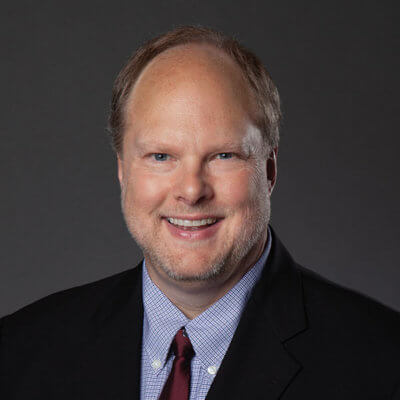
Eileen Martin is an Associate Professor in the Department of Geophysics and Applied Math and Statistics at the Colorado School of Mines. Her research focuses on near-surface geophysics, environmental monitoring, and the application of distributed acoustic sensing (DAS) technology. She leads projects involving fiber-optic sensing for permafrost degradation, urban seismic monitoring, and mining safety. Martin has developed open-source tools like DASCore and contributes to scalable computational methods for geophysical data analysis. Education: PhD (2018) in Computational and Mathematical Engineering from Stanford University; MS (2017) in Geophysics from Stanford; BS (2012) in Mathematics and Physics from UT Austin. Research interests include fiber-optic sensing systems, seismic imaging, data-intensive computing, and applications in environmental science. Her work bridges geophysics with computational methods, emphasizing real-world deployment in challenging environments like arctic permafrost sites and underground mines. Her recent work explores DAS for glacier monitoring, mine seismicity detection, and urban infrastructure assessment. Collaborative projects include Arctic permafrost monitoring and developing public datasets for geoscience research (PubDAS repository). Grants and lab activities include NSF CAREER funding for scalable computational seismology and partnerships with industry on fiber-optic monitoring solutions.
Dr. Mourad Zeghal is a Professor in the Department of Civil and Environmental Engineering at Rensselaer Polytechnic Institute (RPI). His research focuses on computational geomechanics, seismic response monitoring, and geotechnical system identification. He leads projects addressing liquefaction mitigation, multiscale modeling of geosystems, and development of advanced computational tools for geotechnical analysis. Dr. Zeghal collaborates with RPI's Center for Network for Earthquake Engineering Simulation (CEES), Scientific Computation Research Center (SCOREC), and Inverse Problems Center (IPRPI). His work emphasizes reducing risks from natural hazards through improved design tools and model validation. Key projects include the Liquefaction Experiments and Analysis Projects (LEAP), which use centrifuge testing and machine learning to analyze soil behavior under seismic loads. Dr. Zeghal's research integrates experimental data with numerical simulations to enhance understanding of soil-structure interaction and lateral spreading during earthquakes. Research Interests: Soil liquefaction, multiscale modeling, inverse problem methods, computational geomechanics Key Collaborations: CEES, SCOREC, IPRPI, and global research networks Focus Areas: Centrifuge testing, model validation, seismic hazard mitigation His recent publications (2023–2025) highlight advancements in quantifying uncertainty in soil response, analyzing LEAP centrifuge experiments, and developing machine learning approaches for model calibration. Dr. Zeghal actively engages with industry and government labs to translate research into practical engineering solutions.
Prof. Philipp Reiss is a Professor of Lunar and Planetary Exploration Technologies at the Technical University of Munich (TUM), part of the TUM School of Engineering and Design. His academic journey includes a doctorate in lunar exploration (2018) and postdoctoral leadership of a research group, followed by ESA work on lunar mission instruments. He was appointed to his current role in 2022. Education: Bachelor's/Master's in Aerospace Engineering from Bremen University of Applied Sciences and TUM Doctorate in Lunar Exploration (TUM, 2018) Research Focus: Development of instruments for in-situ resource characterization (e.g., water detection on the Moon) Simulation of heat/mass transport in extraterrestrial environments Technologies for extreme environment exploration Legal and ethical frameworks for space resource utilization Recent Article Trends: Recent work emphasizes lunar water cycle analysis, space resource extraction technologies, and ESA mission instrument development. Key projects include PROSPECT payload design and thermal extraction of volatiles from regolith. Awards and Roles: ERC Grant Awardee (2024), Honorary Fellow at TUM Institute for Advanced Study Principal Investigator at ORIGINS Excellence Cluster (2022–present) Member of ESA’s PROSPECT science team (2019–present) Contributions to UN space resource legal discussions Advising & Grants: Supervises research projects on lunar rover systems and resource utilization. Secured funding through ERC grants and ESA collaborations. Advises on international space policy initiatives. Labs/Teams: Leads the Lunar and Planetary Exploration Professorship group at TUM, collaborating with ESA, JAXA, and the European Lunar Symposium. Active in developing planetary exploration tools like the PROSPECT permittivity sensor and MULE instrumentation.
University of Illinois Urbana-ChampaignUnited States
Youssef M A Hashash is the W. W. Grainger Chair and Professor in the Department of Civil and Environmental Engineering at the University of Illinois. His research focuses on geotechnical and earthquake engineering, with emphasis on seismic site response analysis, soil-structure interaction, and advanced computational methods like the Discrete Element Method (DEM). He has led projects on infrastructure resilience, including studies of buried water reservoirs, railway systems, and post-earthquake reconnaissance. Hashash has developed influential models for site amplification in Central and Eastern North America, contributing to seismic hazard assessments. His work integrates experimental centrifuge testing, numerical simulations, and field data. Notable contributions include guidelines for implementing NGA-East ground motion models and advancements in pore-water pressure generation models for liquefaction evaluation. Key Research Areas: Ground movement, seismic response, soil dynamics, and geotechnical data systems Major Projects: NGA-East Geotechnical Working Group, Beirut Explosion Analysis, and LA Metro Tunnel Projects Recipient of prestigious awards including the NAE Membership (2022), PECASE (2000), and Walter L. Huber Prize (2006), he collaborates internationally on earthquake engineering and geotechnical innovations. His lab develops tools like the DEEPSOIL software for nonlinear site response analysis and explores AI applications in geotechnical data interpretation.
Walter Szeliga is a Professor and Department Chair at Central Washington University. He holds a Ph.D. from the University of Colorado (2010). His research focuses on seismology, GPS, and InSAR technologies, with emphasis on earthquake early warning systems, crustal deformation monitoring, and natural hazards mitigation. Dr. Szeliga leads efforts in integrating real-time geodetic data streams for disaster response and has contributed to the development of ShakeAlert® systems. His work spans global geophysical networks, ionospheric perturbations, and paleotsunami studies. Key research interests include: Real-time GNSS applications for seismic monitoring Crustal deformation analysis using InSAR and GPS Earthquake source characterization through multi-method approaches Historical seismotectonic reconstructions Disaster forecasting and early warning system optimization Recent studies highlight advancements in trapping atmospheric lee waves detection via GNSS, volcanic plume dynamics during the 2022 Tonga eruption, and long-term paleotsunami records in Chile. His work bridges geophysical instrumentation with computational modeling to address critical questions in tectonic processes and hazard assessment. Scientific contributions include 50+ peer-reviewed articles on topics ranging from Cascadia subduction zone dynamics to global navigation satellite system innovations. His research has implications for civil infrastructure resilience, space weather impacts, and international geohazard collaboration frameworks.
California State University, Long BeachUnited States
Dr. Lisa Star is Professor in the Civil Engineering and Construction Engineering Management Department at California State University, Long Beach. She holds BS, MS, and PhD degrees in Civil/Geotechnical Engineering from UCLA. Research specializes in soil-structure interaction effects during seismic events, employing large-scale field testing and advanced instrumentation. Key research areas include: Dynamic soil-foundation response characterization Geotechnical sensor implementation for infrastructure projects Tunneling-induced ground movement prediction Applied projects involve Los Angeles Metro tunneling operations, where she evaluates excavation impacts and ground behavior in complex soil conditions.
Frédérick Massin is a researcher at ETH Zürich's Swiss Seismological Service (SED), specializing in seismology, earthquake early warning systems, and volcanic monitoring. He is affiliated with the Bedretto Underground Lab (BULGG) and contributes to global seismic research. His work focuses on developing advanced algorithms for rapid earthquake rupture characterization (e.g., FinDer), improving earthquake early warning (EEW) systems in regions like Central America and New Zealand, and analyzing seismic data to enhance disaster preparedness. Key research areas include: Earthquake Source Physics and Real-Time Modeling Seismic Data Center Innovation and Global Networks Volcanic Seismicity and Lahar Detection Socio-Technical Aspects of EEW Systems Recent projects involve assessing EEW impacts in Central America, improving seismic catalogues (FEAR-1), and investigating lake ice seismicity. He collaborates internationally on initiatives such as the Nepal School Seismology Network and Yellowstone volcano-tectonic studies.
South Dakota School of Mines and TechnologyUnited States
Zhi Ye is an Assistant Professor in the Department of Geology and Geological Engineering at South Dakota School of Mines and Technology (SDM). He holds a Ph.D. in Petroleum & Geological Engineering from the University of Oklahoma, a D.Eng. from China University of Petroleum, and a B.S. from Yangtze University. Prior to joining SDM, he served as a Research Scientist at the University of Oklahoma and a Centennial Research Fellow at the University of Alaska Fairbanks. His research focuses on reservoir geomechanics, rock mechanics, and experimental rock deformation, with applications in geo-energy recovery and storage. Key areas include hydraulic fracturing, in-situ stress determination, induced seismicity, and THMC (thermo-hydro-mechanical-chemical) processes in subsurface energy systems. His work integrates geomechanics, geophysics, and engineering to improve understanding of coupled processes in energy reservoirs and environmental impacts. In 2019, he received the prestigious Rock Mechanics Research Award from the American Rock Mechanics Association (ARMA) for his contributions to geomechanical research. His teaching spans reservoir geomechanics, drilling engineering, production engineering, and subsurface energy storage. He actively collaborates with projects like Utah FORGE to advance geothermal energy and unconventional reservoir technologies. His research emphasizes practical applications, such as optimizing borehole thermal energy storage, assessing fracture stimulation efficiency, and mitigating induced seismicity risks. His interdisciplinary approach bridges laboratory experiments and field-scale reservoir modeling to address challenges in subsurface energy systems.
Kenneth H. Stokoe is a Professor and the Jennie C. and Milton T. Graves Chair in Engineering at The University of Texas at Austin's Department of Civil Engineering. He holds a Ph.D. in Civil Engineering from the University of Michigan (1972), with prior academic roles including Cockrell Family Regents Chair and Brunswick-Abernathy Regents Professor. His expertise spans geotechnical earthquake engineering, soil dynamics, and non-destructive testing of geotechnical systems. He has pioneered advancements such as the crosshole seismic method for shear wave velocity measurement (ASTM D4428M standard), the RCTS laboratory testing system, and the SASW (Spectral-Analysis-of-Surface-Waves) method for field seismic evaluation. His research has been applied globally, including at Yucca Mountain (Nuclear Waste Repository), Hanford (Waste Treatment Plant), and numerous airport/runway projects. He also developed the Rolling Dynamic Deflectometer (RDD) for pavement stiffness profiling. Dr. Stokoe has led major NSF-funded projects, including the NEES (Network for Earthquake Engineering Simulation) program's large-scale mobile testing equipment. He is affiliated with 8+ professional societies and has authored over 150 publications. Awards include the Walter L. Huber Prize, National Academy of Engineering membership, and the Harold Mooney Award for seismic innovations. His academic career spans 45+ years with a focus on advancing geotechnical engineering through field and lab innovations, seismic site characterization, and infrastructure resilience. Current research emphasizes deep seismic profiling, real-time pavement assessment, and in-situ soil liquefaction testing.
Patricia Clayton, Ph.D., PE, is an Associate Professor specializing in structural and natural hazards engineering. Her office is located at 455 Vine Street, Bldg 60 South, Rm 4512, and she can be reached via phone at 336.702.1924. She holds a B.S. in Civil Engineering from North Carolina State University (2007), an M.S. (2010) and Ph.D. (2013) in Civil Engineering from the University of Washington. Her research focuses on: Hazard-resistant structural technologies Multi-scale modeling of natural hazard impacts Applications of 3D printing in construction Computational modeling and data analysis Small-scale structural testing methodologies She maintains active investigations in earthquake engineering and structural resilience. Recent publications (2022-2025) demonstrate three primary research streams: Structural Seismic Performance : Innovations in steel connections, composite systems, and deployable structures Engineering Education : Remote teaching pedagogy and inclusive curriculum development Disaster Technology : AI-enhanced damage assessment and field instrumentation Her work consistently integrates experimental validation with practical applications.
Dr. Agathoklis Giaralis is a Senior Lecturer in Structural Engineering within the Department of Civil Engineering at the School of Engineering and Mathematical Sciences, City, University of London. He earned his PhD in Civil & Environmental Engineering from Rice University, USA, in 2008, following an MSc and a 5-year Diploma (Ptychion) in Structural Engineering from Aristotle University of Thessaloniki, Greece. He is a Fellow of the Higher Education Academy, UK. PhD, Civil & Environmental Engineering, Rice University, USA (2008) MSc, Seismic Design of Structures, Aristotle University of Thessaloniki, Greece (2004) Ptychion (5 yr Diploma), Civil/Structural Engineering, Aristotle University of Thessaloniki, Greece (2003) Dr. Giaralis's research is centered on nonlinear stochastic dynamics and time-frequency signal analysis , applied to critical areas such as earthquake engineering , seismic structural design and assessment , structural health monitoring (SHM) , and passive vibration control . His work is pioneering in the development and application of inerter-based vibration control systems, such as the Tuned Mass-Damper-Inerter (TMDI), for enhancing the resilience of structures. He also explores compressive sensing and low-power wireless sensors for sustainable SHM, as well as digital twinning and machine learning in wind engineering. His recent research has significant implications for offshore wind turbines and urban wind comfort. An analysis of his 15 most recent publications reveals a consistent and cutting-edge research trajectory focused on the optimization and application of inerter-based devices for structural control. The work spans from developing analytical tuning formulas for TMDIs to conducting experimental validation on shaking tables and exploring novel applications in offshore wind turbines and composite floors. A strong emphasis is placed on performance-based design , uncertainty quantification , and practical implementation for real-world infrastructure. His scientific contributions have been recognized by prestigious awards, including the Fulbright Exchange Student Program scholarship for his PhD studies and a Fellowship from the Higher Education Academy . He is also a member of several leading professional organizations such as the American Society of Civil Engineers (ASCE) and the Society for Earthquake and Civil Engineering Dynamics (SECED). Dr. Giaralis is actively involved in research funding and academic mentorship. He has secured significant grants from Innovate UK and the EPSRC to support his work on machine learning-based design and optimal inerter configurations. He supervises a cohort of PhD students whose theses focus on advanced topics like adaptive control of bridge joints, inerter-based energy harvesting, and seismic assessment using digital twins. He also leads the Smart Structures and Structural Health Monitoring Research Unit , driving collaborative research in smart infrastructure technologies.
Chris Whidden is an Assistant Professor in the Faculty of Computer Science at Dalhousie University, where he leads research in algorithms and bioinformatics. His work bridges theoretical computer science with practical applications in computational biology and ocean data analytics. Whidden's research interests include approximation and fixed-parameter algorithms, computational biology, evolutionary trees and networks, graph theory, hybridization and lateral gene transfer, NP-hardness, and ocean data analytics. He develops efficient algorithms and software to solve NP-hard problems, particularly in the context of phylogenetics and large-scale biological data. His work applies both theoretical algorithm design and practical software engineering to create novel solutions for understanding biodiversity, bacterial and viral evolution, and oceanographic systems. His recent publications reflect a strong trend toward interdisciplinary research, combining deep learning and machine learning with oceanographic data analysis, fish detection and classification, echosounder data processing, and environmental monitoring. Many of his algorithmic contributions focus on phylogenetic tree comparison, including SPR distances, maximum agreement forests, and supertree construction. He has developed several widely used software tools such as rspr, SPR Supertrees, uspr, and phylogenetic topographer. NSERC Killam Trusts Tula Foundation NSF Simons Foundation (via Life Sciences Research Foundation) DeepSense (industry-academic collaboration) He is actively involved in mentoring and has funding available for PhD and MCS students in computer science, particularly in algorithms, bioinformatics, and data analytics. He teaches courses such as Algorithm Engineering (CSCI 4118/6105), Software Development (CSCI 2134), and Design and Analysis of Algorithms (CSCI 3110). Whidden has collaborated extensively with industry through DeepSense, working on projects that apply data analytics and machine learning to the ocean sector, including predictive modeling for ocean buoys, automated fish detection, and tidal energy monitoring.
Darin Hayton is an Associate Professor of History at Haverford College, specializing in the history of the sciences of the stars and mathematical sciences in pre-modern Europe and Byzantium. His research examines the intersection of science, politics, and courtly culture. Education: Ph.D. in History and Philosophy of Science, University of Notre Dame M.A. in History, C.S.U. Long Beach B.Sc. in Chemistry, C.S.U. Long Beach Research Interests: Professor Hayton investigates how rulers like Emperor Maximilian I employed astrology as a political tool and how Byzantine scholars like Nikephorus Gregoras revived mathematical sciences in Constantinople. His work also explores the cultural and pedagogical dimensions of astrology, astrolabes, and early scientific instruments. Teaching: He offers courses such as Introduction to the History of Science , History of the Scientific Revolution , and Science of the Stars before the Telescope , blending mathematical astronomy with cultural contexts. Key Publications: The Crown and the Cosmos. Astrology and the Politics of Maximilian I (University of Pittsburgh Press, 2015) Recent articles on Byzantine astrolabes, comets in Renaissance Hungary, and astrology in 1970s counterculture. Affiliations: Member of the Editorial Board for Lever Press, an open-access scholarly press.
Tracy Camp is a Professor in the Department of Computer Science at Colorado School of Mines, College of Applied Science and Engineering. With a distinguished career spanning over three decades, she has established herself as a leading researcher in wireless networking, mobility modeling, and computing education. Her work has evolved from foundational research in mobile ad hoc networks to impactful contributions in broadening participation in computing. Dr. Camp's research interests span wireless networking, mobility modeling, machine learning applications in networking, and computer science education. Initially focusing on mobility models for ad hoc networks, she published seminal work including the widely cited survey 'A survey of mobility models for ad hoc network research' (2002). More recently, her work has shifted toward computing education, particularly broadening participation in computing, K-12 teacher preparation, and supporting underrepresented students through scholarship programs like S-STEM. Her recent publications reveal a strong emphasis on machine learning applications for network security, particularly in analyzing encrypted messaging applications and smart device traffic. Simultaneously, she has become a national leader in departmental strategies for broadening participation in computing, developing frameworks for BPC (Broadening Participation in Computing) plans that are now required by the NSF. Dr. Camp has been instrumental in developing the CS@Mines program, creating successful scholarship ecosystems for low-income and underrepresented students, and leading Colorado's strategic approach to prepare K-12 computer science teachers. Her work bridges technical research with practical educational initiatives that address critical challenges in the computing field. She has served in leadership roles for major computing education conferences including SIGCSE, where she has contributed to shaping the national conversation about computing education, enrollment surges, and diversity in the field. Her collaborative work with organizations like CRA-W (Computing Research Association-Women) demonstrates her commitment to addressing systemic issues in computing.
Erik Johnson is a Professor of Civil Engineering at an unspecified university, affiliated with the Sonny Astani Department of Civil and Environmental Engineering. He has held leadership roles such as Associate Chair, Interim Chair, and currently serves as Vice Dean for Academic Programs. His research focuses on smart structures, structural vibration control, and computationally-efficient simulation algorithms for dynamical systems, with applications in controllable damping devices and seismic mitigation. Education: B.S., M.S., Ph.D. in Aeronautical and Astronautical Engineering (University of Illinois at Urbana-Champaign), Graduate Certificate in Biblical Studies (Trinity Evangelical Divinity School) Professional Affiliations: Senior Member of AIAA; Member of ASCE and ASME; Chair of ASCE technical committees; Associate Editor, ASCE Journal of Engineering Mechanics His work spans disciplines including control theory, structural engineering, and computational methods. Articles highlight Bayesian approaches, inverse problems, and sensor placement optimization under uncertainty. Erik contributes to advancing seismic resilience and mechatronic systems for civil infrastructure. Scientific Awards: 2001 NSF CAREER Award, 2005 International Association for Structural Safety and Reliability Medal, 2016 University of Illinois Distinguished AE Alumnus Award