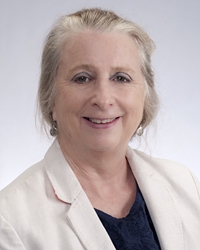
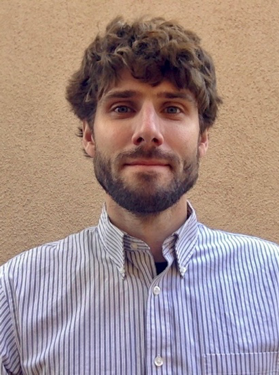
Dr. Farshid Rahmani is a Lecturer at the School of Property, Construction and Project Management (PCPM), RMIT University, Australia. His research and teaching focus on Construction Procurement , Relational Contracting , and Agile Project Management . He supervises Masters and PhD students in areas including Early Contractor Involvement (ECI) Alliances Public-Private Partnerships (PPP) Collaborative Delivery Systems . His recent publications explore agile frameworks for building adaptation, sustainable materials like recycled concrete, and team dynamics in large infrastructure projects. Key themes include modular construction , project lifecycle management , and innovative material usage . He actively applies Grounded Theory and Abductive Reasoning in construction management research.
Professor Hing-Ho Tsang is the Chair in Civil and Structural Engineering at the University of Dundee, with over a decade of academic experience in Australia and Hong Kong. His research focuses on advancing sustainable infrastructure solutions, earthquake resilience, and green technologies to enhance building and infrastructure safety against natural disasters. He holds a Chartered Professional Engineer (CPEng) certification and advises governments and industries on building codes and seismic design guidelines. Tsang chairs the Global Network for Geotechnical Seismic Isolation (GSI) and serves as the Australian National Delegate to the International Association for Earthquake Engineering (IAEE). His expertise spans geotechnical seismic isolation, recycled materials in construction, and structural dynamics, contributing to UN Sustainable Development Goals (SDGs) like resilient infrastructure, circular economy, and climate action. With over 200 publications and a career-long impact ranking in Civil Engineering, Tsang has received prestigious awards including the R W Chapman Medal and Research Impact Award. Research Focus: Seismic design, sustainable construction, bio-inspired materials, and geotechnical isolation systems. Awards: Top Cited Article (2021–2022), Teaching Excellence Award (2022), and multiple international recognitions. Leadership Roles: Editorial board member for Geosynthetics International , organizer of the 18th World Conference on Earthquake Engineering technical session. His work emphasizes equity-driven engineering solutions, fostering inclusive and disaster-resilient communities. Current projects include innovative modular building systems and AI-driven seismic response models.
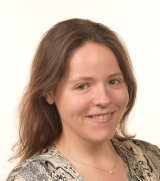
Erin Bell is a Professor in the Department of Civil and Environmental Engineering at the University of New Hampshire . She holds a Ph.D. in Structural Engineering from Tufts University and has extensive experience in structural health monitoring, finite element modeling, and infrastructure sustainability. B.C.E., Georgia Institute of Technology M.S., Civil Engineering, Tufts University Ph.D., Structural Engineering, Tufts University Her research focuses on structural health monitoring, bridge condition assessment, and integrating AI techniques like artificial neural networks and deep reinforcement learning for infrastructure asset management. Recent work includes equitable maintenance strategies for aging bridges in flood-prone zones and tidal energy conversion for sustainable bridge monitoring systems. Key trends in her publications include the application of machine learning to structural analysis, finite element model calibration, and climate change adaptation in transportation infrastructure. She has led projects on deep reinforcement learning for bridge scour maintenance, modal-based uncertainty quantification, and multi-scale modeling of steel bridges. Grants and Collaborations : Erin Bell has secured funding from the National Science Foundation (NSF) , US Department of Energy (DOE) , and New Hampshire Department of Transportation . Notable projects include the Living Bridge initiative for tidal energy-powered smart infrastructure and statewide data exchange systems for bridge condition assessment.
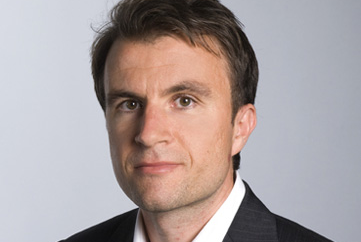
Dr. Thomas Goebel is an Assistant Professor at the Center for Earthquake Research and Information (CERI), University of Memphis. He holds a PhD from the University of Southern California (2013). His research focuses on induced seismicity, fault structure, and earthquake source processes, integrating rock mechanics, seismology, and hydrogeology. Key projects include studies on fault roughness effects, aftershock clustering, and induced seismicity mitigation. He leads the Earthquake Physics Group (EPG), comprising 1 PostDoc and 5 graduate students, and collaborates internationally on volcano monitoring and geothermal energy projects. Dr. Goebel has received the 2023 Tigers Ascending to Excellence Award. Education: PhD in Earth Sciences, University of Southern California, 2013. Research interests emphasize interdisciplinary approaches to understanding stress storage/release in the crust, earthquake size prediction, and fault responses to fluid perturbations. His work bridges laboratory experiments, numerical modeling, and statistical analyses to address fundamental seismological questions. Recent publications highlight contributions to induced seismicity spatial footprints, laboratory-based aftershock dynamics, and volcano-seismic network development. He actively mentors students, with recent accolades including NSF internships and travel awards. Labs/Teams: Earthquake Physics Group (EPG) at CERI, collaborating with institutions in France, El Salvador, and the U.S. on projects like volcanic seismic networks and fault hydrology studies.
Douglas Dreger is a Professor in the Department of Earth and Planetary Science at the University of California, Berkeley. His research focuses on seismic source analysis, wave propagation, Earth structure, and geophysical inverse problems. He primarily uses waveform data to investigate earthquake mechanics, stress orientations, and fluid-faulting interactions. Email: dreger@seismo.berkeley.edu His work spans diverse tectonic and geothermal environments, including the Ridgecrest earthquake sequence, Mendocino Triple Junction, North Korean nuclear tests, and The Geysers geothermal field. Recent studies examine graviquake hypotheses, long-period volcanic tremors, and stress drop validation through advanced inversion techniques. Dreger's publications reveal a strong emphasis on moment tensor inversion, fault geometry modeling, and seismic hazard assessment. He has contributed to understanding earthquake rupture heterogeneity, coseismic deformation, and 3D seismic simulations for hazard scenarios.
Professor Patrice Rey is a faculty member at the School of Geosciences, The University of Sydney. He holds the rank of Professor and specializes in geodynamics, tectonics, and landscape evolution. With an international career spanning 12 institutions across three continents, his research focuses on continental rifting, mantle dynamics, metamorphic processes, and the interplay between climate and tectonics. Notable projects include studies on Australia’s geological history, the formation of precious opal, and the dynamics of early Earth geodynamics. His work bridges field geology, numerical modeling, and geophysical analysis. Key research themes include gravitational collapse in cratons, the role of isostasy in fold belt evolution, and the impact of dynamic topography on sedimentary systems. He has contributed to interdisciplinary projects such as the Perseverance Mars mission, highlighting connections between Earth’s geology and Martian surface processes. Recent publications emphasize continental crust evolution, landscape dynamics, and the integration of virtual reality tools in geological education. He leads research teams funded by grants like the Australian Research Council (DP22 and LP20 projects), focusing on mineral systems and Proterozoic rift basins. His media presence includes BBC documentaries and NOVA series, showcasing his expertise in continental evolution and planetary geology.
Koroush Shirvan is the Atlantic Richfield Career Development Professor in Energy Studies and a tenured faculty member in MIT's Department of Nuclear Science and Engineering within the School of Engineering. Joined in July 2017, he directs the Reactor Technology Course for Utility Executives and leads the Fission Materials in Extreme Environments Lab. His work bridges nuclear engineering with practical industrial applications for decarbonization. His research focuses on reactor design economics, materials testing under irradiation, nuclear safety, and boiling heat transfer. He accelerates innovations in nuclear fuels, small modular reactors, and space propulsion through multi-scale physics integration. Current projects include accident-tolerant fuels, high-temperature materials for microreactors, and AI-driven optimization of reactor systems. His approach combines experimental irradiation testing at MITR with advanced computational modeling. Recent publications reveal strong trends toward economic nuclear deployment via advanced fuel technologies and small modular reactors. AI/ML applications dominate optimization research, particularly for core reload and uncertainty quantification. Materials science under extreme conditions remains central, with growing emphasis on space nuclear applications and horizontal reactor configurations for cost reduction. His scientific recognition includes: Nuclear News 40 under 40 (2024) American Nuclear Society Landis Young Member Engineering Achievement Award (2023) American Nuclear Society Reactor Technology Award (2022) Teaching responsibilities span Sustainable Energy (22.811/081), Graduate Reactor Physics, and Nuclear Design courses. Research grants support experimental programs at MIT Reactor Lab and computational frameworks for reactor-to-repository analysis. He mentors students through senior design projects and graduate research in nuclear fuel cycles. He directs the Fission Materials in Extreme Environments Lab and co-leads MIT's Space Nuclear initiative with AeroAstro. The team conducts irradiation experiments using MITR's high-temperature hydrogen flow capabilities and advanced diagnostics for post-irradiation examination. Current thrusts include nuclear thermal rocket materials testing and fission surface power development for lunar/Mars missions.
Brandon Schmandt is a Professor in the Department of Earth, Environmental and Planetary Sciences at Rice University, where he leads research using seismology to investigate Earth systems. His work integrates interdisciplinary approaches, data science, and numerical modeling to study tectonic processes, magmatic systems, and environmental interactions. His educational background includes a PhD in Geological Sciences from the University of Oregon (2011) and a BA in Environmental Studies from Warren Wilson College (2006). Dr. Schmandt's research focuses on seismology, tectonics, volcanology, and surface processes , with emphasis on seismic imaging of subsurface structures. His group employs innovative time-series analysis and field projects to resolve geologic history and contemporary Earth dynamics, particularly examining fault zones, magmatic reservoirs, and deep convective processes. Key methodologies include dense seismic arrays and machine learning applications. Analysis of his recent publications (2023-2025) reveals dominant trends in seismic event discrimination (earthquakes vs. explosions), magmatic system imaging (Yellowstone, Cascades), and global mantle structure studies. There is strong emphasis on induced seismicity, machine learning applications, and high-resolution imaging of Earth's discontinuities using dense arrays. His distinguished honors include: Aki Award of the AGU Seismology Section GSA Donath Medal AGU Macelwane Medal Body Dr. Schmandt directs an active research group conducting field projects across diverse settings including the Raton Basin, Yellowstone, Antarctica, and the Caribbean. While specific student advisees and grant details aren't provided in available materials, his group's work involves collaborative data collection, advanced computational modeling, and development of novel seismic analysis techniques applicable to both natural and anthropogenic seismic sources. The research program maintains focus on magmatic systems beneath volcanic regions, induced seismicity mechanisms, and global mantle structure using dense node arrays and interdisciplinary approaches to address fundamental questions in Earth dynamics.
Benoît Valley is a Full Professor at the University of Neuchâtel's Faculty of Science and Director of the Centre for Hydrogeology and Geothermics (CHYN). He specializes in geomechanics, geothermics, and hydrogeology, focusing on stress and fracture characterization in rock masses. His work addresses geothermal energy, CO2 storage, and nuclear waste sequestration. Education: PhD from ETH Zurich (2007), followed by research roles at MIRARCO Canada and ETH Zurich. Appointed to University of Neuchâtel in 2014 as Assistant Professor, promoted to Full Professor in 2020. Research interests include stress field dynamics, hydraulic stimulation, and fracture network analysis. Awards include the Bernard Kübler and Jean Landry Prize (2002). Teaching includes courses on geosciences, hydrogeology, and geothermal energy at undergraduate and graduate levels. Key initiatives: Leadership in CHYN, involvement in Swiss geoscience platforms, and contributions to projects like SPINE (EU-funded) and TIBEX (SFOE-funded). Labs: Established the Geothermics and Geomechanics Laboratory at CHYN, focusing on deep geothermal systems and reservoir engineering.
Dr. Susan D. Hovorka is a Research Professor at the Bureau of Economic Geology, The University of Texas at Austin, specializing in geological techniques for environmental applications. She focuses on subsurface permeability dynamics in both tight and highly transmissive systems, with a primary emphasis on geological carbon sequestration and CO₂ storage security. Ph.D. in Geology (1990), The University of Texas at Austin M.A. in Geology (1981), The University of Texas at Austin B.A. in Geology (1974), Earlham College Her research addresses critical challenges in carbon geological storage, including: Characterizing salt formations as containment materials Analyzing carbonate fabrics for karst aquifer flow understanding Field CO₂ injection experiments for sequestration assessment Developing composite confining systems for secure CO₂ retention The articles she has contributed to since 2002 demonstrate a consistent focus on: Carbon capture and storage (CCS) technologies Reservoir pressure dynamics and fault permeability Permit-ready site workflows and risk mitigation Geological analogs from petroleum systems Dr. Hovorka actively collaborates with institutions like the Gulf Coast Carbon Center (GCCC) and participates in international CCS initiatives. Her work integrates sedimentology, geophysics, and environmental policy to advance subsurface carbon management solutions.
Daniele Casagrande is an Assistant Professor of Wood Engineering at the University of Trento, Italy, and an Adjunct Professor of Structural Engineering at the University of Ottawa, affiliated with the Faculty of Engineering and the Department of Civil Engineering. His expertise lies in the seismic performance and structural dynamics of timber-based systems. Education: Ph.D. in Civil and Mechanical Structural Systems Engineering, University of Trento, Italy Postgraduate Diploma in Seismic Behavior of Structures, University of Trieste, Italy M.Sc., University of Trento, Italy BASc., University of Trento, Italy His research focuses on the seismic behavior of timber structures , including dynamic response, timber connections under cyclic loading, hybrid wood-steel systems, and the development of simplified analytical and numerical models for lateral load analysis. He has contributed to innovative designs for post-emergency timber housing and conducted full-scale vibration table tests and laboratory experiments on shear walls and mechanical connections. Daniele is actively involved in international standards development, serving on the Italian Committee on Timber Structures and contributing to the revision of Eurocode 5 and the timber chapter of Eurocode 8 . He currently leads a working group within the COST CA20139 action on holistic design of tall timber buildings, focusing on accidental load scenarios. Professional Engagement: Member, Italian Committee on Timber Structures Working Group Leader, COST CA20139 (Accidental Loads in Tall Timber Buildings) Collaborator in national and international research projects (e.g., University of Ottawa and National Research Council of Italy) Participant in professional training courses and seminars for civil engineers He has published in peer-reviewed journals and conference proceedings, with research impacting both academic and practical applications in structural timber engineering.
Guy G. Drijkoningen is an Associate Professor in Applied Geophysics at Delft University of Technology (TU Delft), Faculty of Civil Engineering and Geosciences. He is actively involved in teaching and research within the Department of Applied Geophysics & Petrophysics. Education: MSc, Delft University of Technology, The Netherlands PhD, Cambridge University, UK Research Focus: His work centers on Seismic Experiments & Modelling , particularly in exploration and shallow-subsurface contexts. Key areas include: Seismic data acquisition on land Continuous seismic monitoring Shallow shear-wave imaging (land and marine) Seismic wave propagation in porous media Current projects leverage advanced sensor networks (e.g., LOFAR), full-waveform inversion for tunnel-boring machines, and novel vibrator technologies. Publications Trend: Recent works (2011–2016) emphasize seismic modeling, inversion techniques, and experimental validation across marine and terrestrial environments. Topics span poroelastic wave theory, ambient-noise interferometry, and innovative seismic source design, reflecting a blend of theoretical and applied geophysics. Scientific Awards: Best-paper award Geophysics 2015 for "A seismic vertical vibrator driven by linear synchronous motors" Professional Memberships & Editorial Roles: Member: Society of Exploration Geophysicists (SEG) Member: European Association of Geoscientists and Engineers (EAGE) Associate Editor: Geophysics Teaching: He teaches undergraduate and graduate courses including Introduction to Geophysics, Reflection Seismology, and specialized PhD-level modules on seismic data analysis.
Dr. Marina Bock is a Chartered Civil Engineer and Lecturer in Civil Engineering at Aston University's College of Engineering and Physical Sciences. She specializes in structural engineering with expertise in metallic structures, additive manufacturing, and numerical modeling. Currently accepting PhD students, her work bridges academic research and industry applications in sustainable construction. Her educational background includes: PG Cert in Building and Design and Construction Technology, University of Wolverhampton (2017-2018) PhD in Local Buckling and Web Crippling Response of Stainless Steels, Universitat Politècnica de Catalunya (2010-2015) MSc in Patch Loading of Hybrid Plate Girders, Universitat Politècnica de Catalunya (2004-2010) Dr. Bock's research integrates laboratory experiments and numerical modeling to advance metallic structural systems, with pioneering work in additive manufacturing for construction. Her investigations span stainless steel design code development, corrosion prevention in reinforced concrete using hydrogels, and cold-formed steel behavior. Recent projects focus on sustainable infrastructure solutions through novel composite materials. Analysis of her 2022-2025 publications reveals dominant themes in additive manufactured aluminum structures, cold-formed steel design methodologies, and sustainable paving materials for urban heat island mitigation. Her work consistently addresses practical engineering challenges through experimental validation and code-compliant design solutions. Scientific recognition includes: IStructE Academic Research Award Commendation (2021) for research on aluminum SHS/RHS under biaxial bending Dr. Bock has secured significant research funding including a Royal Society Research Grant (£20k, 2023) for additive manufactured Al7075 aluminum and Innovate UK funding (£437k) for UV-reflective resin-based paving. Previous internal projects (£20k) focused on structural aluminum applications. She supervises PhD research in additive manufacturing and corrosion prevention while maintaining industry collaborations. Her experimental work utilizes advanced university laboratories for structural testing, with collaborations spanning European research consortia and industrial partners. Current projects involve multi-institutional teams developing reusable structural systems and solar-energy-harvesting building envelopes.
Niklas Linde is a full professor at the University of Lausanne's Faculty of Geosciences and Environment, leading the Department of Earth Sciences. He holds a PhD in Geophysics from Uppsala University (2005) and has held roles including Assistant Professor (2008), Associate Professor (2013), and Full Professor (2019). His research focuses on transforming geophysical signals into realistic hydrogeological models with rigorous uncertainty quantification. Key areas include probabilistic inversion, Bayesian methods, and geostatistical modeling applied to environmental and subsurface processes. Education: PhD in Geophysics (Uppsala University, 2005), postdoctoral positions at Lawrence Berkeley National Lab (USA), CNRS-CEREGE (France), and ETH Zurich (Switzerland). He joined UNIL in 2008 as an Assistant Professor in Environmental Geophysics. Research interests span geophysical inversion techniques, subsurface heterogeneity characterization, and the integration of geophysical and hydrological data. Current projects emphasize Bayesian approaches for model selection and rare event estimation, supported by grants from the European Commission and Swiss National Science Foundation. Collaborations involve international teams addressing challenges in hydrogeology, rock fracture dynamics, and 4D hydrogeology. Publications reflect advancements in inverse problem solving, stochastic simulation, and machine learning applications. His work bridges theory and practice, with field studies in alpine environments, fractured media, and environmental monitoring. Students under his supervision have explored topics like deep generative networks and Bayesian hydrogeological inversion. Advising: Supervised over a dozen PhD students, including recent works on variational Bayesian methods and geophysical data fusion. Grants include projects on uncertainty quantification and experimental design. Active in scientific societies and editorial roles, contributing to methodological advancements in Earth sciences.
Brandon Schmandt is a Professor in the Department of Earth and Planetary Sciences at the University of New Mexico. His research focuses on geophysics, seismology, tectonics, structural geology, and volcanology. He holds a Ph.D. from the University of Oregon (2011). His research group specializes in seismic imaging methods to study subsurface structures related to tectonic and magmatic processes. They analyze seismic data from both fieldwork and public archives, with applications to earthquake mechanics, magma storage, and explosion discrimination. Recent work emphasizes continental magmatic systems, induced seismicity in the Raton Basin, and Yellowstone's magmatic architecture. Collaborative projects include seismic array deployments and machine learning applications for signal analysis. No scientific awards are explicitly listed in the provided texts. His advising includes undergraduate and graduate students such as Wilgus, Stairs, and Maguire. No specific grants or labs are mentioned beyond his departmental affiliation.