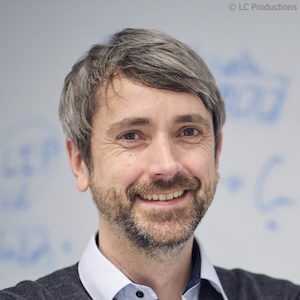
Gias Uddin is an Associate Professor at York University's Lassonde School of Engineering and an Adjunct Professor at the University of Calgary . His research bridges Software Engineering (SE) and Artificial Intelligence (AI) , focusing on AI Trustworthiness Assessment (SE4AI) and AI-Driven Productivity Tools (AI4SE) . PhD in Software Engineering & AI, McGill University (2018) MSc in Software Engineering, Queen’s University (2008) BSc in Computer Science & Engineering, Bangladesh University of Engineering and Technology (2004) His research explores: Metamorphic Relations for LLM Hallucination Detection AI-Enhanced Software Documentation Foundational Models for Runtime System Modernization Developer-Centric AI Tooling Recent article trends show expertise in LLM Trustworthiness , Low-Code Platforms , and IoT Developer Communities . Awards include Distinguished Paper at FSE 2025 , multiple IBM Champion recognitions, and York Research Award . He leads the Data Intensive Software Analytics (DISA) Lab and mentors PhD students in SE-AI Intersections .
Pradeep Lall is the MacFarlane Endowed Distinguished Professor and Alumni Professor in the Department of Mechanical Engineering at Auburn University’s Samuel Ginn College of Engineering. He serves as Director of the Auburn University Electronics Packaging Research Institute (EPRI) and holds a joint courtesy appointment in the Department of Electrical and Computer Engineering. A leader in flexible hybrid electronics and harsh environment systems, Dr. Lall has built a world-renowned research program focused on additive manufacturing, electronics reliability, and sustainable materials. Ph.D. in Mechanical Engineering, University of Maryland M.B.A. in Finance and Strategy, Northwestern University M.S. in Mechanical Engineering, University of Maryland B.E. in Mechanical Engineering, Delhi College of Engineering Dr. Lall’s research centers on Flexible Hybrid Electronics (FHE) , Harsh Environment Electronics , Semiconductor Packaging , and Prognostics Health Management . His work leverages additive manufacturing techniques such as Aerosol-Jet, InkJet, and screen printing to develop conformal, robust, and sustainable electronic systems. His innovations include the Flexible Biometric Band for monitoring workers in hazardous environments and additively printed antennas for aerospace applications. His recent focus includes eliminating PFAS from electronics and developing water-based inks for eco-friendly manufacturing. The 15 most recent publications reflect a strong trend toward sustainability , additive manufacturing , and real-world applications in defense, aerospace, automotive, and healthcare. His work bridges fundamental research with industrial realization, particularly through partnerships with NextFlex and federal agencies. Themes include reliability under shock and vibration, sensor development for extreme environments, and workforce training in advanced manufacturing. Dr. Lall has received numerous scientific honors, including: SMTA Founder’s Award (2024) SEMI FlexTech R&D Achievements Award (2023) ASME Avram Bar-Cohen Memorial Medal (2022) IEEE Biedenbach Outstanding Engineering Educator Award (2020) IEEE Sustained Technical Contributions Award (2018) NSF Alex Schwarzkopf Prize (2016) Fellow of ASME, IEEE, NextFlex, and Alabama Academy of Science Dr. Lall has secured over $2 million in annual research funding from SRC, NSF, and NextFlex, leading large-scale projects on sustainable electronics and workforce development. He mentors numerous graduate and undergraduate students and leads the NSF-CAVE3 Center. As founding faculty advisor of the SMTA student chapter, he promotes student engagement in electronics manufacturing. His lab, EPRI, features a full prototyping line for additive electronics and collaborates with industry and government to advance domestic manufacturing capabilities. EPRI, under Dr. Lall’s leadership, partners with the Auburn University Research and Technology Park, the Office of Economic Development, and multiple colleges to drive technology commercialization and workforce education in electronic packaging. The institute is at the forefront of the national effort to reestablish U.S. leadership in semiconductor packaging and advanced electronics manufacturing.
Dr. Theophilus A. Benson is a Professor of Electrical and Computer Engineering at Carnegie Mellon University (CMU) and CMU-Africa. His research focuses on improving network performance and availability in data centers, clouds, and edge networks. He leads projects addressing the digital divide in Africa through initiatives like the African Internet Observatory (AIO), which analyzes connectivity challenges and infrastructure resilience. His work spans programmable networks (eBPF/P4), CDN optimizations, and network management frameworks. Education: B.S. from Tufts University, Ph.D. from University of Wisconsin-Madison, Postdoc at Princeton University. Research Interests: Network state management, programmable substrates, digital equity, measurement systems, and network security. His group develops tools like NetEdit (eBPF management), JSBench (mobile web performance), and the African Internet Observatory's probe network. Recent Trends: Publications emphasize eBPF management frameworks, African network analysis, and data-driven CDN improvements. Key projects include subsea cable impact studies, QUIC protocol analysis, and deploying measurement probes across Africa. Awards: NSF CAREER Award, Google/FA Faculty Awards, SIGCOMM Test of Time Award, and DARPA ISAT membership. Advising & Grants: Active in mentoring MS/PhD students and postdocs. Current grants include NSF funding for data-driven web performance and IoT security. Collaborations with Meta and industry partners enhance real-world system deployments. Labs & Teams: Leads the AIO initiative with local African stakeholders. Research group includes collaborators from National Taiwan University and partnerships with institutions like TU Delft (keynote on eBPF).
Fabrizio Lombardi is the ITC Endowed Professor at Northeastern University's Department of Electrical and Computer Engineering, part of the College of Engineering. He previously held faculty positions at Texas Tech University, University of Colorado-Boulder, and Texas A&M University. He earned his B.Sc. from the University of Essex (1977), M.Sc. and Ph.D. from the University of London (1982). His research focuses on fault-tolerant computing, VLSI CAD, quantum computing, and configurable computing systems. He has led major projects like the NSF-funded Neural-Network-based Stochastic Computing Architectures for Machine Learning . He holds leadership roles including President of the IEEE Nanotechnology Council (2022-2023), IEEE Computer Society Vice President (2021), and IEEE PSPB member. His 200+ publications span IEEE Transactions on Computers, Nanotechnology, and Design & Test. Awards include IEEE Fellow, Søren Buus Outstanding Research Award, and multiple research fellowships. His work bridges theory and application, emphasizing defect-tolerant nanosystems and energy-efficient computing hardware. Recent innovations include approximate computing methodologies and secure PUF-based hardware designs.
Stefan Nagy is an Assistant Professor at the Kahlert School of Computing at the University of Utah . He holds a Ph.D. in Computer Science from Virginia Tech (2022) and a B.S. in Computer Science from the University of Illinois Urbana-Champaign (2016). His primary research focuses on Software Engineering , Software Quality Assurance , and Computer Systems , with specific interests in program analysis, automated bug discovery, and efficient quality assurance for opaque systems. He teaches courses such as CS 4440: Introduction to Computer Security and CS 5963/6963: Applied Software Security Testing . His recent publications (2025) include work on fuzzing frameworks for binary-to-C decompilers, automated API harness generation, and kernel fuzzing configuration optimization. He advises students in these areas and collaborates with groups like the Utah Software Security Group. He is affiliated with the FuTURES 3 Lab and maintains a research website with full publication details. His work addresses challenges in closed-source software analysis, security ethics, and digital forensics.
Professor Christopher Price serves as Deputy Director of the NIHR Applied Research Collaboration (ARC) North East and North Cumbria (NENC) and holds the position of Professor of Stroke and Applied Health Research at Newcastle University's Faculty of Medical Sciences. He also functions as the NIHR's National Specialty Lead for Stroke and maintains a clinical role as a Stroke Medicine Consultant with the Northumbria Healthcare NHS Foundation Trust. Professor Price completed his medical training with an MB ChB (hons) from Birmingham in 1992, earned his MD from Newcastle University in 2003, and became a Fellow of the Royal College of Physicians (FRCP) in 2006 while simultaneously completing his MClinEd at Newcastle. As a clinical researcher, Professor Price specializes in developing and implementing interventions that improve emergency stroke treatment access. His work focuses on three main pillars: clinical trials of non-pharmaceutical technologies in stroke care, translational studies of diagnostics, and evaluation of service provision models. He has pioneered ambulance-based clinical trials evaluating novel point-of-care diagnostics and enhanced clinical assessment processes for suspected stroke patients. His research extends to stroke recovery, where he investigates innovative approaches like wristband accelerometry to encourage upper limb activity and collect recovery biomarker data. The Stroke Association has recognized his contributions with the HRH Princess Margaret Senior Reader Fellowship. Professor Price's recent publications reveal a strategic shift toward system-level interventions addressing the entire stroke care pathway. His work increasingly examines mobile stroke units, health equity in stroke care, and implementation challenges of new treatment pathways across the NHS. There's a clear progression from individual diagnostic tools toward comprehensive service redesign that considers geographic accessibility, cost-effectiveness, and patient-centered outcomes. The Stroke Association HRH Princess Margaret Senior Reader Fellowship Stroke Association HRH Princess Margaret Research Development Fellow Professor Price has mentored several doctoral researchers including Graham McClelland (focusing on stroke mimic probability scores), Eugene Tsang (researching post-stroke dementia), and Sarah Moore (investigating physical activity interventions after stroke). He has secured substantial research funding totaling millions of pounds from major organizations including the Medical Research Council, Innovate UK, NIHR, and The Stroke Association. His most significant grants include the £3 million RATULS trial on robot-assisted upper limb rehabilitation after stroke and the £1.96 million NIHR Programme Grant for 'Promoting Effective And Rapid Stroke Care,' which evaluated enhanced paramedic assessment processes for stroke patients. Professor Price leads the Stroke Research Group within Newcastle University's Population Health Sciences Institute. His team maintains strong collaborations with national and international academic institutions, industry partners, the North East Ambulance Service, and multiple NHS Trusts. The group has gained particular recognition for its innovative ambulance-based clinical trials, including the landmark PASTA trial published in JAMA Neurology, which demonstrated how enhanced paramedic assessment improves thrombolysis delivery during emergency stroke care.
Dr. Andrzej Ożadowicz is a University Professor at the Department of Power Electronics and Automation of Energy Conversion Systems within the Faculty of Electrical Engineering, Automatics, Computer Science and Biomedical Engineering at AGH University of Science and Technology in Kraków, Poland. His office is located in room 510, building C-1, with contact details including phone +48 12 617 50 11 and email ozadow@agh.edu.pl. He holds PhD, DSc, and Engineering degrees, reflecting his dual expertise in academic research and practical engineering applications. His research spans Power Electronics, Building Automation, Smart Grids, and IoT-driven energy systems. Key interests include energy efficiency optimization through digital twins and BIM, distributed energy resource integration , and AI-enhanced demand management . Notably, he pioneers applications of deep reinforcement learning in home energy systems and develops frameworks for Smart Readiness Indicator implementation. His work bridges theoretical innovation with practical case studies in building thermal modeling and dynamic façade systems. Recent publications (2021-2025) reveal three dominant trends: (1) Convergence of digital twin technology with building automation for real-time energy management; (2) Critical analysis of IoT security and interoperability in smart infrastructure; (3) Pedagogical innovations in engineering education through blended learning methodologies post-COVID-19. His scholarly output demonstrates consistent focus on energy transition challenges and smart grid evolution. Professor Ożadowicz actively contributes to the Discipline Council for Automation, Electronics, Electrical Engineering and Space Technologies at AGH. He is instrumental in the AutBudNet initiative —a network of certified laboratories for energy efficiency assessment that implements "learning by doing" principles in building automation education. His work with this consortium emphasizes practical validation of smart grid technologies and demand response systems.
Jodi Halpern is a full-time Professor at the University of California, Berkeley, and a co-founder of the Kavli Center for Ethics, Science and the Public (2022). She serves as Faculty Director of BERGIT (Berkeley Group for Ethics and Regulation of Innovative Technologies) and actively consults for organizations including the Federal Reserve Bank of San Francisco, Kaiser Permanente, Intel, Salesforce, and the Mayor’s Office of Los Angeles. Halpern’s work bridges psychiatry, philosophy, and bioethics to address empathy in leadership, AI ethics, and gene editing. Professor at UC Berkeley Co-founded Kavli Center (2022) Faculty Director of BERGIT Consults for tech, healthcare, and government entities Halpern’s research focuses on empathic curiosity as a tool for conflict resolution and trust-building in healthcare, post-war reconciliation, and AI ethics. Her current projects include Engineering Empathy (investigating AI’s impact on emotional relationships), Gene Editing from Bench to Bedside (exploring scientists’ beliefs about gene editing), and Remaking the Self in the Wake of Illness (narratives of adaptation to illness). She integrates philosophical analysis with empirical research in psychology, neuroscience, and behavioral economics. Her notable scientific awards include the 2022 Guggenheim Fellowship in Health and Medicine, the 2019 Chancellor’s Chair at UC Berkeley, and the Yale University Award for the best PhD of significance to humanity across disciplines. Halpern received her MD and PhD through the NIH Medical Scientist Training Program Award , completed psychiatry residency at UCLA, and held fellowships at Princeton, Greenwall, and Townsend centers.
Nathorn Chaiyakunapruk is a Professor in the Department of Pharmacotherapy at the University of Utah College of Pharmacy . He holds an adjunct appointment in Population Health Sciences and serves on multiple institutional committees including the Global Health Steering Committee and Health Economics Core at CTSI . His academic leadership extends to international roles with the World Health Organization and founding initiatives like the ISPOR Asia Consortium . Education : PhD in Pharmaceutical Outcomes Research, University of Washington PharmD, University of Wisconsin-Madison BS in Pharmaceutical Science, Chulalongkorn University Research Interests span health technology assessment , global health economics , and evidence synthesis . His work applies methodologies like network meta-analysis and umbrella reviews to address health equity, infectious disease modeling, and pharmaceutical policy. Recent studies focus on social determinants of health and vaccine economic value . Article Trends highlight collaborations in AI-assisted systematic reviews , vaccine rollout optimization , and health disparities . His publications frequently address cost-effectiveness and global health burden across infectious and non-communicable diseases. Scientific Awards : Senior Class (P4) Distinguished Teacher (2022) NRCT Outstanding Research Award (2019, 2012) Monash University PVC Research Award (2015) Nagai Research Foundation Awards (2006-2010) ISPOR Task Force Leadership (CHEERS 2022) Teaching & Service : Courses include Systematic Review and Meta-analysis and Global Health Policy . He chairs the Asia Pacific Evidence-based Medicine Network and advises WHO on vaccine economics and Thailand’s National Health Security Office on pharmaceutical policy.
Professor Roslyn Boyd serves as Scientific Director of the Queensland Cerebral Palsy and Rehabilitation Research Centre (QCPRRC) at the University of Queensland's School of Medicine. She leads a substantial multidisciplinary team of 38 researchers and provides clinical research leadership to 60 clinicians across the Queensland Paediatric Rehabilitation Service based at the Queensland Children's Hospital. As an NHMRC Leadership Fellow, Professor Boyd has established herself as an internationally recognized expert in cerebral palsy research and rehabilitation. Professor Boyd completed her primary training as a physiotherapist in Australia and London before earning her PhD in neuroscience at La Trobe University, the Brain Research Institute, and the Murdoch Children's Research Institute in Melbourne, for which she received the Premier's Commendation from the Victorian Government. She joined the University of Queensland in 2007 as a Smart State Fellowship recipient and has since led major research initiatives including an EBrain program grant funded by the Queensland Government Department of Innovation. Her research program focuses on three critical areas: the early natural history of motor and brain development in preschool children with cerebral palsy, novel rehabilitation approaches for children with hemiplegia, and early detection and intervention for infants at high risk of cerebral palsy. These research streams, all funded by the National Health and Medical Research Council of Australia, employ advanced brain imaging techniques including functional imaging, Diffusion Imaging, and Functional Connectivity to assess neuroplasticity changes resulting from therapeutic interventions. Her work bridges neuroscience, rehabilitation science, and clinical practice to develop evidence-based approaches that improve outcomes for children with neurodevelopmental conditions. Professor Boyd's extensive publication record of over 340 peer-reviewed manuscripts demonstrates a consistent focus on improving assessment methods, intervention efficacy, and early detection strategies for cerebral palsy. Her research spans from basic neuroscience investigations to large-scale clinical trials and implementation studies, creating a comprehensive evidence base that informs clinical practice worldwide. The publications reveal a growing emphasis on early intervention, neuroimaging biomarkers, and family-centered approaches to rehabilitation. Professor Boyd has received significant recognition for her contributions to the field, most notably the prestigious Gayle Arnold Award from the American Academy of Cerebral Palsy and Developmental Medicine, which she has received three times. This repeated honor underscores her international standing and the impact of her research on clinical practice. As an NHMRC Leadership Fellow, she represents the highest tier of Australian health and medical researchers. Through her leadership of major research programs and collaborations, Professor Boyd has secured over $40 million in research funding, enabling large-scale projects that directly impact clinical practice. Her work with multidisciplinary teams has produced evidence that informs clinical guidelines and treatment approaches used by healthcare professionals globally. She actively mentors junior researchers and clinicians, fostering the next generation of experts in pediatric rehabilitation. The Queensland Cerebral Palsy Rehabilitation and Research Centre, under Professor Boyd's direction, serves as a vital hub for translational research, connecting scientific discovery with clinical application. The center's work with the Centre for Extracellular Vesicle Nanomedicine demonstrates interdisciplinary reach beyond traditional cerebral palsy research, exploring innovative approaches to understanding and treating neurodevelopmental conditions.
Jan Engelhardt serves as Assistant Professor in the Department of Wind and Energy Systems at the Technical University of Denmark (DTU), specializing in e-mobility and prosumer integration within power and energy systems. His work directly contributes to UN Sustainable Development Goals through grid modernization and renewable energy integration. His research focuses on electric vehicle-grid integration , with core expertise in battery energy storage systems, DC microgrids, and virtual power plants. Key investigation areas include smart charging architectures for EV clusters, frequency response services, phase balancing techniques, and V2X management strategies. His experimental approach combines theoretical modeling with real-world validation of control systems for enhanced grid stability. Recent publications demonstrate a clear trend toward distributed control solutions for electric vehicle clusters, emphasizing user-centric scheduling while providing grid services. His work increasingly incorporates experimental validation of frequency control architectures and explores high-power reconfigurable battery applications for fast-charging infrastructure. Dr. Engelhardt actively supervises PhD candidates on projects including Hybrid Energy Solutions (EV charging and battery storage synergies) and Provision of Grid Services through EV Aggregation. He participates in major EU initiatives like EV4EU (Electric Vehicles Management for Carbon Neutrality in Europe) and GREAT (GRid Enhancement for Ancillaries in Tomorrow’s power systems), securing substantial research funding through Horizon Europe frameworks.
Bernard S. Black serves as Professor of Finance at Kellogg School of Management and the Nicholas D. Chabraja Professor at Northwestern University School of Law, holding a joint appointment since 2010. He concurrently serves as managing director of the Social Science Research Network and founding chairman of the annual Conference on Empirical Legal Studies. His academic foundation includes: B.A. from Princeton University M.A. in physics from University of California at Berkeley J.D. from Stanford Law School Prior academic roles encompass Professor of Law at Stanford Law School (1998-2004) and Columbia Law School (1988-1998). His research centers on empirical analysis of law-finance interactions, with emphasis on corporate governance frameworks in emerging economies, securities regulation, and medical malpractice systems. Methodologically, he integrates legal scholarship with quantitative finance approaches. Recent publications (2016-2022) demonstrate sustained focus on corporate governance validity testing, causal inference methodologies, and cross-country comparative studies—particularly examining Brazil and BRIK nations. Key themes include board structure efficacy, shareholder rights enforcement, and institutional determinants of market value in developing economies. No scientific awards were documented in source materials. While specific student advisees remain unlisted, Professor Black's extensive co-authorship record (including books like The Law and Finance of Corporate Acquisitions ) indicates active research mentorship. His leadership of the Social Science Research Network and Conference on Empirical Legal Studies constitutes significant community-building beyond traditional advising. He directs the Social Science Research Network as managing director and founded the Conference on Empirical Legal Studies, creating platforms for interdisciplinary law-finance scholarship dissemination.
Katherine L. Milkman (Katy) is the James G. Dinan Professor at the Wharton School of the University of Pennsylvania, with secondary appointments in Penn's Perelman School of Medicine and School of Arts & Sciences. She co-founded and co-directs the Behavior Change for Good Initiative, a research center dedicated to advancing the science of lasting behavior change. Her work integrates economics and psychology to address challenges like savings, exercise adherence, vaccination rates, and discrimination through large-scale field experiments. Education: PhD in Computer Science and Business from Harvard University; Bachelor's degree (summa cum laude) in Operations Research and Financial Engineering from Princeton University. Research Focus: Milkman's research leverages big data and behavioral science to understand decision-making failures (e.g., self-control, discrimination) and design scalable interventions. Her recent work emphasizes: Nudge-based strategies for education, health, and finance Diversity enhancement in organizational settings Habit formation through incentive structures Publication Trends: Her 15 most recent articles (2022-2025) primarily involve megastudies testing behavioral interventions. Key themes include: leveraging email/reminders to improve math education and vaccination rates; addressing loan delinquency through nudges; and using stereotyping dynamics to increase diversity in hiring. Over 80% employ field experiments across healthcare, finance, and education sectors. Awards & Honors: Thinkers50 Top Management Thinker (2021, 2023) Schmidt Futures Innovation Fellow (2022) Fellow, Association for Psychological Science (2020) Multiple teaching awards from Wharton (2015, 2016) William F. O’Dell Award for impactful research (2017) Advisory & Grants: Milkman has advised major organizations including The White House, Google, Walmart, and the U.S. Department of Defense. Her Behavior Change for Good Initiative secures funding for large-scale social impact research. She hosts Schwab's behavioral economics podcast Choiceology and contributes to policy through op-eds in The New York Times and Scientific American . Labs & Teams: Co-directs the Behavior Change for Good Initiative, collaborating with interdisciplinary researchers (e.g., Angela Duckworth, Sendhil Mullainathan) on longitudinal studies. The initiative designs and tests interventions across health, education, and savings domains.
Dr. Nebahat Aral is a Lecturer in the Department of Materials Science and Nanotechnology Engineering at Yeditepe University's Faculty of Engineering. Her research focuses on Textile Science and Engineering, Nanotechnology, and Radiation Shielding Materials. She has contributed to advancements in coated fabrics for X-ray protection, nanofiber development, and sustainable composites. Education: PhD (2016) in Textile Engineering, Istanbul Technical University - Thesis: Design of an Alternative Textile Material to Lead Aprons Master's (2009) in Textile Engineering, Istanbul Technical University - Thesis: Investigation of Performance Properties of Composites Made from Textile Waste BSc (2006) in Textile Engineering, Uludağ University Research Trends: Recent publications highlight her work on essential oil-infused coaxial nanofibers, biodegradable food packaging films, and ionizing radiation protection using bismuth oxide and pomegranate peel powder. Her studies bridge Textile Engineering with Nanotechnology and Environmental Sustainability. Grants and Projects: She has secured funding through TÜBİTAK projects (1004, 3501, 2219) and institutional grants, focusing on radiation shielding, biodegradable composites, and medical textiles. Leadership: Dr. Aral has served as Deputy Head of Department at Yeditepe University and Program Coordinator at Istanbul Kavram Vocational School and Istanbul Gelisim University. Patents: Co-inventor of a patent for X-ray shielding textile materials with nano-powder with Istanbul Technical University.
Prof. Dr. Johannes Kinder is a Professor and Chair of Programming Languages and Artificial Intelligence at the Institute of Informatics , Ludwig Maximilian University of Munich. His research focuses on software security through program analysis and machine learning, particularly targeting malware detection , vulnerability analysis , and reverse engineering . He has held faculty positions at Royal Holloway, University of London, and Bundeswehr University Munich. Research Interests include: Securing software systems via program and machine learning techniques Detection of software vulnerabilities and malware Preventing exploitation through binary analysis Applications of formal methods in systems security Recent Publications highlight advancements in binary function embedding , malware detection in npm , and speculative execution attack modeling . His work appears in top venues like USENIX Security and IEEE S&P . Education : Diplom from TU Munich (2005), Doctorate from TU Darmstadt (2010). Professional Roles : General Chair, ACM CCS 2019 Doctoral Symposium Chair, ESSoS 2016 Program Committee member for NDSS 2026, IEEE S&P 2022-2025