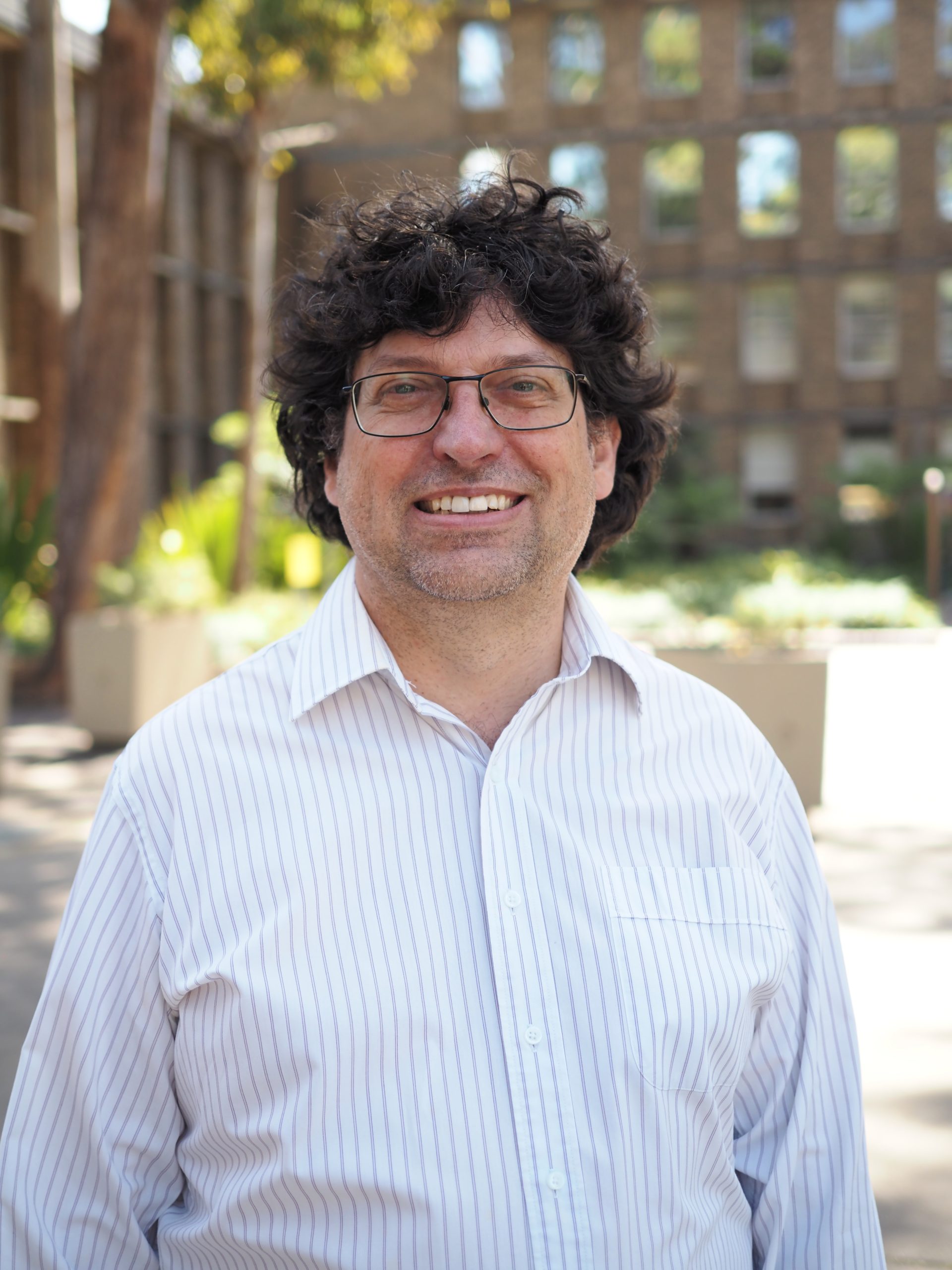
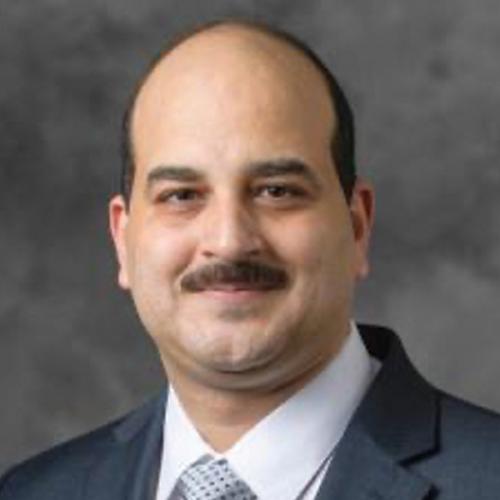
Federico Silvestro is a Full Professor at the University of Genoa , affiliated with the Naval, Electrical, Electronic and Telecommunications Engineering Department . His academic roles include being a Course Coordinator, Department Council Member, and Deputy Director of DITEN. His research focuses on Power systems stability and control Cybersecurity in energy networks Electric propulsion for marine applications Optimal energy storage and microgrid design Integration of renewable energy in maritime contexts Recent publications highlight trends in data-driven power system analysis , DC microgrid modeling , cybersecurity for virtual power plants , and advanced energy management strategies for maritime and port systems. Email: federico.silvestro@unige.it He leads the ENET-RT Lab , focusing on real-time power systems simulation and co-simulation platforms for marine and grid applications.
Christian Unkelbach is Professor of Social Psychology at the Department of Psychology, Faculty of Humanities, University of Cologne, where he leads the Unkelbach Group. His research spans multiple domains of social and cognitive psychology with significant contributions to understanding evaluative processes. His primary research interests include Social Cognition, Evaluative Judgments, Information Ecologies, Stereotypes and Prejudice, Evaluative Learning, Fluency Effects, and Sport Psychology. Unkelbach's work examines how humans process evaluative information in social contexts, with particular focus on the truth-by-repetition effect , evaluative conditioning , and cognitive ecological frameworks that explain why certain information patterns dominate social cognition. His research demonstrates how repetition increases belief in information , how attributes become associated through mere pairings , and why positive information is processed more efficiently than negative information. Analysis of his recent publications reveals a consistent trajectory examining the relativity of social cognition , truth effects across contexts , and metacognitive awareness of cognitive biases . His work increasingly integrates cross-linguistic perspectives and examines real-world applications in media consumption and social judgment. Honorary Doctorate from UCLouvain (2025) ISCON Best Paper Award 2020 Speaker of DFG Research Unit FOR2150 'Relativity in Social Cognition' (2017-2021) Emmy Noether Research Grant (DFG, 2009-2013) Feodor Lynen Research Scholarship (Alexander von Humboldt Foundation) Fulbright Scholarship Unkelbach has advised numerous doctoral researchers including Andreas Miculka, Anne Irena Weitzel, Felix Speckmann, Lea Sperlich, and Tabea Zorn. His research group has secured multiple C-SEB grants for projects examining social cognition phenomena. The Unkelbach Group maintains active collaborations with international researchers across Europe and North America, with recent work funded through the DFG Research Unit on Relativity in Social Cognition. The Unkelbach Group laboratory at Richard-Strauss-Str. 2 in Cologne comprises postdoctoral researchers, doctoral candidates, and student assistants working on experimental paradigms examining evaluative learning, truth effects, and social judgment processes. Current projects investigate cross-linguistic truth effects, metacognitive monitoring of repetition effects, and ecological validity in social cognition frameworks.
Barbara Bigliardi is an Associate Professor at the Department of Engineering and Architecture, University of Parma, with national scientific qualification for full professor in Economic-Management Engineering (SSD ING-IND/35). She serves as President of the Management Engineering Program at University of Parma and Director of Bachelor's/Master's programs at University of San Marino, co-leading double-degree initiatives between the two institutions. Over 100 publications (57 SCOPUS-indexed) with H-index=20 Editorial roles: Cambridge Scholars Publishing (2019), MDPI Sustainability, Sci, European Journal of Innovation Management Key research areas: Open Innovation, Technology Transfer, Food Industry Innovation, Industry 4.0, Supply Chain Sustainability Recent Publications (2024-2025) demonstrate leadership in: Industry 4.0 integration with circular economy AI applications in public administration and healthcare Digitalization of food supply chains Green startup resource orchestration Simulation-based optimization in remanufacturing Sustainable additive manufacturing Scientific Recognition : 2005 Emerald Highly Commended Award 2013 Most Cited Paper in Trends in Food Science & Technology 2019 Highly Cited Paper in Review of Policy Research Research Leadership includes: National Observatory on Start-ups (President since 2021) National Observatory on Reputation (Vice President since 2019) INAIL-funded mobile risk assessment systems (2018-2020) INAF space technology transfer projects (2018-present) Academic Contributions : Supervised over 300 theses Deputy Coordinator of Industrial Engineering Doctoral Program Director of Management Engineering Programs (Parma & San Marino) Founder of academic spin-offs: Sistemi per il marketing di contenuto S.r.l. (2016-present), Univenture SrL (2006-2010)
Adrot Anouck is a Lecturer in Management Research at PSL University, focusing on crisis management, organizational improvisation, and disaster risk reduction. Her work bridges information systems with emergency response, emphasizing cross-border resilience and digital transformation in extreme situations. Key Research Themes: Crisis management, organizational resilience, information systems in disaster contexts, cross-border cooperation, and digital decision-making under uncertainty. Her publications span journals like Expert Systems with Applications and Information Systems Journal , with recent studies on portfolio management under uncertainties and data sharing barriers in disaster risk reduction. She has contributed to book chapters and conference proceedings at venues such as the Academy of Management and EGOS Colloquium, exploring topics like measurement practices during the COVID-19 pandemic and the role of technology in crisis response. Adrot collaborates extensively with researchers across disciplines, including Moriceau, Karanasios, and Friedrich. While no explicit awards or student advising details are provided in the text, her work highlights the interplay between structure, action, and digital tools in enhancing organizational resilience.
Dr. Tamas Mona is a Postdoctoral Research Associate in the Department of Plant Sciences at the University of Cambridge , affiliated with the Epidemiology and Modelling Group . His work focuses on environmental suitability models for large-scale epidemiological forecasting, particularly in wheat rust outbreaks across Africa, the Middle East, and Asia. Collaborations include the UK Met Office, CIMMYT, and institutions in Ethiopia, Kenya, Bangladesh, and Nepal. PhD in Environmental Sciences (2019), Eötvös Loránd University MSc in Meteorology (2013), Eötvös Loránd University BSc in Physics with Meteorology (2011), Eötvös Loránd University Research interests integrate meteorological applications with epidemiological models to predict crop disease outbreaks. Key projects involve tracking transmission pathways for stem rust pathogens and analyzing how irrigation creates green bridges for intercontinental pathogen spread. Publications emphasize environmental science and computational epidemiology . Current collaborations span Sub-Saharan Africa (EIAR, ATI, KARLO) and South Asia (BWMRI, NARC) through initiatives like the Global Food Security IRC . Modeling frameworks developed by Mona contribute to policy advisory systems for emerging pest threats, aligning with DEFRA and UK government strategies.
Dr. Shuangshuang Jin is an Associate Professor in the School of Computing with a joint appointment in the Department of Electrical and Computer Engineering at Clemson University's College of Engineering, Computing and Applied Sciences. Previously, she served as a Senior Research Scientist at Pacific Northwest National Laboratory. Her educational background includes a Ph.D. in Computer Science (2007), M.S. in Computer Science (2003) from Washington State University, and a B.S. in Computer Science (2001) from Wuhan University. Ph.D., 2007 - Washington State University, Computer Science M.S., 2003 - Washington State University, Computer Science B.S., 2001 - Wuhan University, Computer Science Dr. Jin specializes in high-performance computing (HPC), distributed and parallel computing, general-purpose computation on graphical processing units (GPGPU), and HPC-based big data analysis, machine learning, scientific computation, and visualization. Her research focuses on applying these technologies to electrical engineering (power and energy systems, power electronics), automotive engineering, systems biology, and computer graphics. She leads the High-Performance Computing Enabled Science and Engineering (HPCeSE) Lab, where she supervises six PhD students working on HPC implementations for power system dynamic simulation, GridPACK application development, data-driven model-based smart control of power electronics converters, and other cutting-edge projects. Her recent publications demonstrate expertise in accelerating power system simulations, PV inverter reliability assessment, edge computing for power systems, and virtual prototyping of vehicle powertrain systems. The research trends show increasing focus on GPU acceleration, real-time simulation capabilities, and integration of HPC with emerging power system challenges. Junior Faculty Excellence in Teaching award (2021) Churchill Carter Fellowship (2022-2023) Zucker Graduate Education Center PhD Grant (2023) Doctoral Dissertation Completion Award (2023-2024) Outstanding Masters Student in Computer Science award (2022) Dr. Jin has successfully secured multiple grants from DOE, DOD, and other agencies for projects including 'Vehicle Propulsion Digital Twins', 'GridPACK-Wind', and 'Tool for Reliability Assessment of Critical Electronics in PV (TRACE-PV)'. She has advised numerous PhD and Master's students who have gone on to positions at national laboratories and industry. Her HPCeSE Lab maintains strong connections with Pacific Northwest National Laboratory, Fermi National Accelerator Laboratory, and other research institutions, providing students with valuable internship opportunities. Dr. Jin leads the High-Performance Computing Enabled Science and Engineering (HPCeSE) Lab at Clemson University, which focuses on developing optimized HPC-based parallel programming algorithms and architectures to solve complex scientific and engineering domain problems. The lab works on smart grid modeling and simulation, power electronics reliability assessment, ground vehicle systems prototyping, and advanced grid analytics, utilizing OpenMP, MPI, Pthreads, and CUDA/OpenCL on various computing platforms.
Professor Carsten Welsch is a leading physicist in accelerator science and technology at the University of Liverpool. He founded the QUASAR Group in 2008 and served as Head of the Physics Department from 2016 to 2023. His work bridges cutting-edge research in antimatter physics, beam diagnostics, and innovative accelerator design with strategic leadership in education and international collaboration. PhD in Accelerator Physics, University of Frankfurt Postdoc, Max Planck Institute for Nuclear Physics CERN Fellow (2005) His research focuses on low-energy antimatter physics , plasma wakefield acceleration , and dielectric laser accelerators , with applications in medicine and global challenges. Recent publications highlight advancements in betatron radiation modeling, positronium cooling, and plasma-driven acceleration techniques. He has secured over 25M€ in EU funding for networks like AVA and EuPRAXIA, trained 100+ Marie Curie Fellows, and founded D-Beam Ltd for beam instrumentation. Awards include the Viddy Platinum Award (2022) and Helmholtz-University YIG Award (2006). As Director of the LIV.INNO Center for Doctoral Training, he champions data-intensive science education. His outreach efforts have impacted millions globally, emphasizing discovery science and accelerator technology's societal benefits.
Professor Jason Evans is a leading climate scientist at the University of New South Wales (UNSW), serving as Chief Investigator at the Climate Change Research Centre. He completed his undergraduate degrees in physics and mathematics at Newcastle University in 1996 and earned his PhD in Environmental Management from the Australian National University in 2001. After six years as a postdoctoral and research fellow at Yale University, he returned to Australia in 2007 to join UNSW's Climate Change Research Centre. Education: Bachelor's degrees in Physics and Mathematics, Newcastle University (1996) PhD in Environmental Management, Australian National University (2001) Research Interests: Professor Evans specializes in regional climate dynamics, focusing on land-atmosphere interactions and the water cycle in the context of climate change. His research integrates advanced modeling tools with extensive observational datasets, particularly emphasizing satellite-based remote sensing and earth observations . His work addresses critical questions about regional climate change impacts, including urban climate dynamics, extreme weather events, drought mechanisms, and renewable energy implications under changing climate conditions. His research spans multiple interconnected domains: from developing novel approaches for moisture source identification using Lagrangian methods , to investigating flash drought prediction using deep learning techniques , and evaluating the performance of high-resolution climate simulations across diverse geographical regions including Australia, Alaska, and Saudi Arabia. Scientific Recognition: Lead Author, IPCC Special Report on Climate Change, Desertification, Land Degradation, Sustainable Land Management, Food Security, and Greenhouse Gas Fluxes in Terrestrial Ecosystems Member, Science Advisory Team for CORDEX (World Climate Research Programme) Editor, Journal of Climate (2016-2022) Fellow, Modelling and Simulation Society of Australia and New Zealand (2020) Biennial Medal, Modelling and Simulation Society of Australia and New Zealand (2021) Fellow, Royal Society of New South Wales (2021) Research Impact and Contributions: Professor Evans has made significant contributions to understanding regional climate change through his extensive publication record of over 50 articles since 2021. His work has advanced knowledge in areas including urban climate dynamics , drought mechanisms and prediction , extreme weather events , and renewable energy impacts under climate change . His research has informed climate policy through his role as a Lead Author for the IPCC and his involvement with international climate research initiatives like CORDEX.
Prof. Dr. Stefan Eicker is a Professor and Chairholder of Business Information Systems and Software Engineering at the Faculty of Computer Science, University of Duisburg-Essen, Germany. He has held this position since April 2004, following previous academic appointments at the Technical University of Clausthal, the University of Essen, and other German institutions. His research spans multiple domains within information systems and software engineering, with a particular focus on digital transformation and emerging technologies. Prof. Eicker's research interests center around Smart Products , Service Systems , Internet of Things , and Platform Economics . His work explores how digital technologies transform traditional business models and create new value propositions. He has developed taxonomies for smart services and investigated quality factors in self-tracking solutions, demonstrating his interdisciplinary approach that bridges technical and business perspectives. His research particularly emphasizes the integration of physical and digital components in modern products and services. His recent publications (2019-2024) reveal a strong focus on digital platform economies, smart services, and IoT applications. The research shows a clear trajectory toward understanding value creation mechanisms in digital ecosystems, with increasing attention to practical applications in energy systems, self-tracking technologies, and business model innovation. His work often involves collaboration with colleagues like Gero Strobel and Tobias Brogt, indicating an active research group focused on digital transformation. Prof. Eicker has contributed significantly to the academic community through his extensive publication record spanning nearly two decades, with work appearing in journals, conference proceedings, and edited volumes. His research bridges theoretical frameworks with practical applications in business contexts. He maintains an active role in academic administration and education at the University of Duisburg-Essen, where he has contributed to curriculum development and the implementation of systems for managing academic information. His work on the bolognaT3 system demonstrates his commitment to improving academic processes through technology.
Dr Sean Anderson is a Senior Lecturer at the Department of Automatic Control and Systems Engineering , University of Sheffield , with over 15 years of experience in interdisciplinary research spanning robotics, control systems, and computational biology. He earned his MEng and PhD from the University of Sheffield, focusing on control systems and chemical engineering. Education: MEng in Control Systems Engineering, University of Sheffield (2001) PhD in Chemical and Process Engineering, University of Sheffield (2005) Research Interests include: Bioinspired robotics Adaptive and optimal control in biological systems Nonlinear system identification Computational neuroscience Acoustic and visual sensor fusion for localization His recent publications highlight innovations in robotic localization in hazardous environments, interpretable deep learning for control systems, acoustic sensing technologies, and data-driven modeling of complex systems. Key projects involve autonomous navigation in pipe networks, turbulence modeling, and biomedical signal processing. Grants and Funding: He has secured major grants from EU H2020 (£4M), EU FP7 (£2.9M), and EPSRC (£5.7M), focusing on bioinspired control algorithms, robotic safety, and infrastructure assessment. Teaching: He leads the ACS61011 Deep Learning module, emphasizing practical applications in robotics and signal processing.
Dr. Emad Elwakil is a Professor and Associate Head for Graduate Programs and Research at the Purdue Polytechnic Institute, Purdue University. He is a certified Professional Engineer (PE), Certified Cost Professional (CCP), and Project Management Professional (PMP) with extensive experience in infrastructure management, construction management, and organizational performance assessment. Education: Ph.D. in Construction Engineering and Management/Building Engineering, Concordia University, Montreal, Canada M.Sc. in Construction Engineering and Management/Civil Engineering B.Sc. in Civil Engineering Dr. Elwakil's research focuses on Infrastructure/Asset Management, Simulation and Modeling, Risk Management, Construction Management, Disaster Restoration & Reconstruction Management, and Water Infrastructure Management. His work integrates advanced computational methods like fuzzy logic, machine learning, and stochastic modeling to address complex challenges in construction and infrastructure systems. He has made significant contributions to understanding organizational performance in construction, water infrastructure management, and post-disaster recovery processes. His publications reveal a strong trend toward applying artificial intelligence and advanced modeling techniques to infrastructure management problems, particularly in water distribution systems, bridge and tunnel condition assessment, and disaster recovery housing. There's a clear progression from theoretical models to practical applications that address real-world infrastructure challenges with increasing sophistication in methodology. Scientific Awards: 2021 Purdue University Faculty Scholar 2019 Purdue University Seed of Success Award 2018 Purdue University ProSTAR's Featured Faculty Member 2018 Purdue Polytechnic Institute Exceptional Early Career for Outstanding Undergraduate Teaching Award 2018 The School of Construction Management Outstanding Faculty Awards (Discovery and Learning) 2017 The School of Construction Management Exceptional Early Career Teaching Award 2014 The School of Construction Management Outstanding Faculty in Discovery Award Dr. Elwakil has demonstrated exceptional mentorship, having chaired or co-chaired 7 PhD students and 28 thesis and non-thesis MSc students while serving on 11 additional graduate committees. His grant success is substantial, with nearly $1 million secured as sole principal investigator and $14.7 million as principal investigator with collaborators, demonstrating his ability to secure significant research funding for complex infrastructure projects. As Associate Editor for two ASCE journals and active reviewer for multiple prominent engineering journals, Dr. Elwakil plays a significant role in advancing scholarship in civil engineering and construction management. His industry experience with USAID projects, Caltrans, and Infrastructure Canada provides valuable practical context for his academic work.
Maria Mushtaq is an Associate Professor at Telecom Paris , affiliated with the Information Processing and Communication Laboratory (LTCI) and the Secure and Safe Hardware (SSH) Lab . She received her PhD in Information Security from the University of South Brittany, France (2019) and completed 2 years of postdoctoral research at LIRMM, University of Montpellier under the CNRS excellence post-doc grant. Research Focus: Microarchitectural vulnerability assessment, runtime mitigation against side/covert-channel attacks, cryptanalysis, OS-based security primitives, and hardware-software interface security Technical Expertise: Cache timing attacks, transient execution attacks (Spectre/Meltdown), Hardware Performance Counter analysis, gem5 simulation Her recent work involves RISC-V security analysis using gem5 simulations and machine learning for attack detection. She serves as Guest Editor for the Journal of Applied Sciences special issue on Side Channel Attacks in Embedded Systems and has been on the Program Committee for the European Test Symposium (2020-2021). 2021 HiPEAC Collaboration Grant recipient Organized IP Paris Winter School on Microarchitectural Security (2022) Active in international conferences as panelist and keynote speaker
Ken B. Johnson, MD, MS is a Professor in the Department of Anesthesiology at the University of Utah School of Medicine, where he has served on faculty since completing residency in 1999. His clinical expertise spans regional anesthesia, acute pain management, processed electroencephalogram monitoring, and neuromuscular blockade monitoring. His research program focuses on: Genetics and epigenetics of pain pathways Clinical pharmacology of anesthetic agents Medical device development for monitoring and simulation Simulation-based experiential learning for all medical trainees Analysis of his 15 most recent publications reveals dominant themes in pharmacokinetic-pharmacodynamic modeling (40% of works), opioid-related pain management (30%), and innovative monitoring techniques (20%). His work consistently bridges basic science with clinical applications, particularly in trauma scenarios and perioperative optimization. Professional recognition includes: Editorial board membership for Anesthesia and Analgesia Leadership in American Society of Anesthesiologists Simulation Education Role as standardized oral board examiner for American Board of Anesthesiology Dr. Johnson's educational leadership extends to curriculum development for medical students through faculty, with emphasis on simulation-based training for airway management and crisis response. His collaborative research spans multiple departments including Orthopedics and Pharmacology, with recent focus on genetic determinants of pain response in joint replacement patients.
Prof. Dr. Jochen Garcke is a faculty member at the Institute for Numerical Simulation, University of Bonn, with a dual affiliation at Fraunhofer SCAI's Department of Numerical Data-Based Prediction. His work bridges numerical simulation and machine learning, focusing on high-dimensional problems, sparse grids, and optimal control. Key research themes: Sparse grids, machine learning for simulations, reinforcement learning, uncertainty quantification Teaching includes courses on Numerical Methods in Science and Technology and Scientific Computing , emphasizing practical machine learning applications. Recent publications explore hybrid models combining data-driven and physics-based approaches in automotive engineering, wind turbines, and geoscientific modeling. His group employs adaptive sparse grids, graph algorithms, and spectral methods to tackle challenges in crash simulations, fluctuating renewable energy systems, and turbulent flow analysis. Collaborations span Fraunhofer SCAI and industry 4.0 initiatives.
Yang Yang is an Assistant Professor of Chemistry at the University of Wisconsin-Madison , focusing on electronic structure theory and nuclear quantum effects in molecular systems. He leads the Yang Group , a theoretical and computational team specializing in the Constrained Nuclear-Electronic Orbital (CNEO) framework for accurate quantum simulations. B.S. in Chemistry and Physics, Peking University (2011) Ph.D., Duke University (2016) Postdoctoral Associate, University of Illinois at Urbana-Champaign and Yale University (2016–2019) His research spans method development in multicomponent quantum theory , excited states theory , and practical quantum chemistry calculations . Recent work includes landmark papers in Journal of Chemical Theory and Computation on CNEO-based reaction rate calculations and quantum computation applications. The Yang Group has secured NSF funding (2024) for CNEO integration into computational software. Publications emphasize nuclear quantum delocalization effects , vibrational spectra modeling , and nonadiabatic dynamics . NSF Grant (2024) for CNEO software integration Awards at 2024 ACS Fall Meeting Current advisees include graduate students Haoran Chen , Lin Han , Zhe Liu , Yiwen Wang , and Yuzhe Zhang . The group also collaborates with postdoctoral researchers like Zehua Chen and Tanner Culpitt .