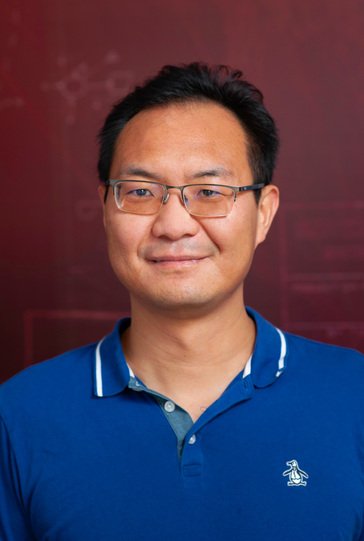
Ju Sun is an Assistant Professor at the University of Minnesota, Twin Cities, in the Computer Science & Engineering department. He leads the Group of Learning, Optimization, Vision, Healthcare, and X (GLOVEX) and plays key roles in the UMN Data Science Initiative (DSI), Program for Clinical AI, and AI-CLIMATE institute. Research Focus : Theoretical foundations of machine learning, computer vision, and numerical optimization with applications in healthcare, inverse problems, and medical imaging. Grants : $4.5M+ in funding including NSF ACED Program and NIH R01 grants for constrained deep learning and imbalanced classification. Teaching & Leadership : Featured in UMN seminars and AI institutes, with affiliations across Electrical and Computer Engineering, Health Informatics, and Medical School. Recent Publications address inverse problems, federated learning, imbalanced classification, and phase retrieval using deep generative priors and diffusion models. His group website details these innovations. Scientific Awards : McKnight Land-Grant Professorship (2025–2027) 2021 AAAI New Faculty Highlights Advising : Mentored three PhD graduates now at Meta, Amazon, and UCLA. Collaborations span medicine, materials science, and biomedical engineering, integrating physics-informed constraints into AI.
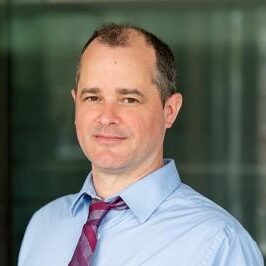
Dustin Tingley is a Professor of Government at Harvard University and holds a joint appointment at the Harvard Kennedy School of Public Policy . He serves as Interim Vice Provost for Advances in Learning and directs the Data Science and Technology Group and the Harvard Initiative on Learning and Teaching . He earned a PhD in Politics from Princeton and a BA in political science and math from the University of Rochester. Key Roles : Deputy Vice Provost (past), Chair of Harvard's Standing Committee on Climate Education Research Focus : Climate change politics, data science, causal inference, and international political economy His recent work explores the political economy of climate transitions , public opinion on carbon policies , and machine learning applications in social sciences . He co-founded ABLConnect , a repository for active learning pedagogy, and organized conferences on causal mechanisms , teaching with AI , and equitable classrooms . Awards : Gladys M. Kammerer Award (2015) for co-authored book Sailing the Water’s Edge Notable Publications : Uncertain Futures: How to Unlock the Climate Impasse (2023, with Alex Gazmararian) The Political Economy of the Clean Energy Transition (2025)
John C. Doyle is the Jean-Lou Chameau Professor of Control and Dynamical Systems, Electrical Engineering, and BioEngineering at the California Institute of Technology (Caltech), where he holds appointments in the Division of Engineering and Applied Science with primary affiliation in the Control and Dynamical Systems Department. His research bridges theoretical foundations with applications across biological, technological, medical, and ecological networks. He earned a BS and MS in Electrical Engineering from MIT (1977) and a PhD in Mathematics from UC Berkeley (1984), followed by consultancy at Honeywell Systems and Research Center (1976-1990). MIT: BS & MS in Electrical Engineering (1977) UC Berkeley: PhD in Mathematics (1984) Doyle's research centers on universal laws and architectures in complex systems, emphasizing robustness-efficiency tradeoffs, speed-accuracy tradeoffs (SATs), diversity-enabled sweet spots (DeSS), bowtie/hourglass structures, and evolvability. His work pioneers System Level Synthesis (SLS) for control systems with sparse, local, saturating, delayed, noisy, quantized, and distributed (SLSDNQD) components, integrating control theory, computation, communication, and machine learning to address challenges from neural networks to infrastructure resilience. Key concepts include virtualization, horizontal transfer, and virality in multiscale systems. Analysis of his publication trends reveals consistent interdisciplinary impact across neuroscience (brain connectivity modeling), systems biology (metabolic oscillations), network science (internet topology), and physics (turbulence, earthquakes), with recurring themes of robust-efficiency limits and architectural principles governing complex networks. His work demonstrates exceptional translation from abstract theory to practical tools like the Matlab Robust Control Toolbox and Systems Biology Markup Language (SBML). His scientific recognition includes: 1990 IEEE Baker Prize (ranked among top 10 most important mathematics papers 1981-1993) Three IEEE Automatic Control Transactions Awards (1998, 1999, 2021) ACM Sigcomm Paper Prize (2004) and Test of Time Award (2016) IEEE Control Systems Field Award (2004) Multiple early-career honors including IEEE Centennial Outstanding Young Engineer (1984) Doyle has mentored generations of students whose contributions include foundational software tools adopted globally. His research has secured sustained funding from NSF, NIH, and other agencies supporting theoretical advances in control frameworks and their applications to biomedical systems, network infrastructure, and environmental modeling. The SBML initiative exemplifies his group's impact in standardizing computational biology research. He leads a highly collaborative research ecosystem at Caltech that integrates engineers, biologists, neuroscientists, and computer scientists to develop universal principles for complex networks. Current efforts focus on translating theoretical insights into health technologies, resilient infrastructure, and climate-responsive systems through the application of robust-efficiency frameworks to emerging challenges in cyber-physical and biological domains.
Alexander Summers is an Associate Professor at the Department of Computer Science , University of British Columbia . He joined UBC in March 2020 after serving as a Senior Researcher (Oberassistent) at ETH Zurich from 2014-2020. His research bridges Programming Languages , Formal Methods , and Software Engineering , with a focus on automated verification tools for heap-based and concurrent programs. MSc Joint Mathematics and Computer Science, Imperial College London (2004) PhD Computer Science, Imperial College London (2009) Postdoc, ETH Zurich (2009-2014) Summers leads the Prusti Project , developing deductive verification tools for Rust, and contributes to the Viper Project for intermediate verification languages. His work addresses challenges in: Memory safety and concurrency verification Ownership models and aliasing control Automated reasoning with SMT solvers Resource-oriented programming specifications Debugging verification condition quantifiers Formal validation of verification infrastructure His research has been recognized with a Amazon Research Award and ACM SIGPLAN Distinguished Paper Awards . He teaches courses like Advanced Software Engineering and Program Verifiers and Program Verification , and supervises graduate students in formal verification and Rust-related research.
Dr. Mario Rebosura serves as a Postdoctoral Research Fellow at the Australian Centre for Water and Environmental Biotechnology (ACE), part of the Faculty of Engineering, Architecture and Information Technology at the University of Queensland. His work bridges fundamental research and practical engineering solutions for sustainable urban water systems. His academic credentials include: Bachelor of Science in Chemical Engineering (2009) from the University of the Philippines Los Banos Masters of Engineering in Environmental Engineering (2012) from the Catholic University of Korea PhD in Chemical Engineering (2020) from the University of Queensland Rebosura specializes in integrated urban water management with emphasis on anaerobic technologies and resource recovery. His research investigates iron salt applications throughout urban water cycles, contaminant fate analysis, and advanced wastewater treatment processes. He combines chemical engineering principles with environmental science to develop circular economy solutions that transform waste streams into valuable resources while improving infrastructure resilience. His publication record reveals consistent focus on optimizing iron-based interventions across the urban water system—from sewer networks to treatment plants—with recent expansion into micropollutant management and enhanced anaerobic digestion. This trajectory demonstrates increasing sophistication in addressing complex water-energy-resource nexus challenges through interdisciplinary experimentation. Rebosura actively contributes to scholarly discourse as Editor for the International Research Journal on Innovations in Engineering, Science and Technology and as a reviewer for leading water research journals. His conference presentations have generated international recognition through speaking invitations and workshop leadership. He has secured significant research funding including: Australian Research Council project 'An integrated approach to iron salt use in urban water systems' (2014–2019) Meat & Livestock Australia initiative 'Wastes to Profits: Advanced Anaerobic Digestion' (2018–2022) As a core member of ACE, Rebosura leverages world-class facilities for laboratory and pilot-scale water research, collaborating within multidisciplinary teams to advance sustainable water management solutions for global challenges.
Christiane Fellbaum serves as Lecturer with Rank of Professor in Princeton University's Program in Linguistics and Department of Computer Science, where she has been a senior research scholar since returning in 1987 after postdoctoral work at the University of Paris. Her foundational contributions to computational linguistics include co-developing WordNet and co-founding the Global WordNet Association. Her educational background features: Ph.D. in Linguistics, Princeton University (1980) Postdoctoral Fellowship, University of Paris Fellbaum's research integrates theoretical linguistics with computational applications, specializing in lexical semantics, corpus analysis, and semantic network construction. Her work bridges computational linguistics and lexicography through projects like WordNet and Medical WordNet, with recent emphasis on multilingual resources, bias analysis in embeddings, and African language technology development. She examines semantic phenomena including idioms, verb alternations, and emotion scales through both corpus linguistics and formal ontological frameworks. Analysis of her publication trajectory reveals sustained innovation in lexical resource development since the 2000s, evolving from foundational WordNet studies to contemporary work on large language model adaptation and social bias mitigation. Current research demonstrates increasing interdisciplinary collaboration across NLP, cognitive science, and social justice applications. Her scientific recognition includes: Wolfgang Paul Prize from the German Humboldt Foundation (2001) Antonio Zampolli Prize (2006) Fellbaum has secured continuous research funding from the U.S. National Science Foundation, European Union Seventh Framework, Frank Moss Foundation, and Tim Gill Foundation. She actively mentors junior researchers through Princeton's Independent Work seminars and hosts the North American Computational Linguistics Olympiad (NACLO), while leading major international collaborations including the KYOTO and SIERA European projects. As director of the WordNet project and permanent fellow at the Berlin-Brandenburg Academy of Sciences, she maintains leadership in global lexical resource initiatives through the Princeton Language and Intelligence initiative and Natural and Artificial Minds research group.
Steffi Haag is a Professor of Digital Innovation and Entrepreneurship at the Institute of Computer Science , Heinrich Heine University Düsseldorf (HHU) . She bridges the Faculty of Mathematics and Natural Sciences and Faculty of Business Administration and Economics , collaborating with the Center for Entrepreneurship Düsseldorf (CEDUS) to inspire tech startups. Her research focuses on sustainable information systems, digital experiences, and business models. Steffi Haag’s research integrates Shadow IT , Usable Cybersecurity , and Digital Idea Management . Her work emphasizes theoretical , quantitative , qualitative , and mixed-methods research , including experimental and survey methodologies. Steffi Haag’s publications (2018–2024) span Information Systems , Cybersecurity , Digital Twins , and Sustainable Design . Common themes include Shadow IT dynamics , user behavior in security , and innovation management . Hermann Gutmann Award for special scientific achievements (2023) Schöller Fellow (2020) HMD Best Paper Award (2018) Research Award in Data Protection and Data Security (2017) Dissertation Prize (2017) Steffi Haag has secured grants such as the TU Darmstadt Postdoctoral Fellowship for Female Researchers (2016–2018) and Deloitte Foundation Fellowship (2009–2011). She actively moderates conferences and serves as Associate Editor of Business & Information Systems Engineering .
Luca Iocchi is a Full Professor at Sapienza University of Rome, where he teaches in the Master in Artificial Intelligence and Robotics program. He is affiliated with the Department of Computer, Control, and Management Engineering and the Faculty of Engineering of Information, Computer Science and Statistics. Iocchi serves as an Associate Editor for Artificial Intelligence Journal and has been the scientific coordinator of Spoke of PNRR project FAIR (Future AI Research). His educational background includes: Master in Engineering in Computer Science (Laurea in Ingegneria Informatica) cum Laude, Sapienza Università di Roma, 1995 PhD in Engineering in Computer Science (Dottorato in Ingegneria Informatica), Sapienza Università di Roma, 1999 Professor Iocchi's research focuses on cognitive robotics, task planning, multi-robot coordination, robot perception, robot learning, human-robot interaction, and social robotics. His work has significant applications in security, surveillance, and environmental monitoring. He has published over 200 referred papers with an h-index of 46 (Google Scholar). His research bridges theoretical AI with practical robotic systems operating in real-world environments, with a particular emphasis on developing intelligent systems that can interact effectively with humans. His recent publications show a strong trend toward multi-agent reinforcement learning, trust modeling in human-AI teams, UAV coordination, and planning systems. There's a clear focus on making robotic systems more reliable, efficient, and capable of operating in complex real-world scenarios like healthcare facilities and smart cities. His work increasingly integrates formal planning approaches with machine learning techniques. Professor Iocchi has received numerous scientific awards: 1999 Top Paper Award WebNet'99 2006 Best Paper Award RoboCup 2006 2008 Best Robotics Demo Award AAMAS 2008 2014 Best Paper Award For Engineering Contribution RoboCup 2014 2017 RoboCup@Home SSPL 2017 - 3rd place 2018 Canada-Italy Innovation Award 2019 Best Paper Award For Engineering Contribution RoboCup 2019 As an academic advisor, Iocchi has directed the PhD Program in Engineering in Computer Science from 2020 to 2023. He has been Principal Investigator for numerous research projects including SciRoc (European Robotics League), AI4EU (European AI project), BUBBLES, AIPlan4EU, ROSITA, Trust Your Agents, and FAIR. His research has been supported by EU H2020 programs, national grants, and industry collaborations, demonstrating strong connections between academia and practical applications. Professor Iocchi is actively involved with the Cognitive Cooperating Robots Lab (LabRoCoCo) and is a key member of the RoboCup Federation, having served as Vice-President from 2019 to 2024. He has played a significant role in benchmarking domestic service robots through RoboCup@Home and the European Robotics League Service Robots (ERL-SR), which he helped establish. His leadership in organizing international scientific robot competitions has been instrumental in advancing the field of service robotics.
Dr. Cristina Rosell is a Professor and Head of the Department of Food and Human Nutritional Sciences at the Faculty of Agricultural and Food Sciences, University of Manitoba. Her research focuses on grain-based food innovation, starch properties, and sustainable bakery processes. Education: PhD and BSc in Pharmacy from Universidad Complutense de Madrid, Spain Dr. Rosell specializes in cereal science, enzymatic food modification, and gluten-free product development. Her current projects include optimizing bakery processes with computational tools, tracing rice supply chains via blockchain, and integrating bioactives into gluten-free foods. Her work bridges food chemistry, nutritional science, and industrial bakery technology. Her recent research trends emphasize gluten-free bread using legume and root starches, starch-plant compound interactions , and sustainable food processing via microwave-assisted extraction, high-pressure treatments, and fermentation. Key subfields include dough rheology, polyphenol bioactivity, and techno-functional ingredient development. Dr. Rosell’s teaching includes graduate seminars in food science (HNSC 7130). She supervises graduate students in breadmaking, starch hydrolysis, and functional food design. Her lab explores grain quality, enzymatic treatments, and bakery product optimization through interdisciplinary approaches combining chemistry, nutrition, and process engineering.
Miguel Rodrigues is a Professor of Information Theory and Processing at University College London's Department of Electronic & Electrical Engineering. He leads the Information, Inference and Machine Learning Lab at UCL and serves as the founder and director of the master programme in Integrated Machine Learning Systems. Rodrigues is also the UCL Turing University Lead and a Turing Fellow with the Alan Turing Institute, the UK National Institute of Data Science and Artificial Intelligence. His academic background includes an undergraduate degree in Electrical and Computer Engineering from the Faculty of Engineering of the University of Porto, Portugal, and a PhD in Electronic and Electrical Engineering from University College London. He has held appointments at prestigious institutions worldwide including Cambridge University, Princeton University, Duke University, and the University of Porto. Dr. Rodrigues's research spans information theory, information processing, and machine learning. His work has attracted over £5 million in funding from competitive national and international funding bodies and resulted in more than 250 publications with over 8000 citations in leading journals and conferences, including top AI venues like NeurIPS, ICML, and ICLR. His recent publications demonstrate a strong focus on multimodal learning, machine learning security, climate modeling with satellite data, and applications of AI in healthcare and precision medicine. His work shows increasing interdisciplinary collaboration across fields from climate science to pharmaceutical engineering. IEEE Communications and Information Theory Societies Joint Paper Award 2011 Fellow of the Institute of Electronics and Electrical Engineers (IEEE) Prize for Merit from the University of Porto Prize Engenheiro Cristian Spratley Prize Engenheiro Antonio de Almeida Fellowships from the Portuguese Foundation for Science and Technology Fellowships from the Foundation Calouste Gulbenkian Dr. Rodrigues has served as Editor for IEEE BITS – The Information Theory Magazine and IEEE Transactions on Information Theory, among other editorial roles. He consults widely in machine learning and AI with government institutions, funding agencies, industry, and startups, and sits on committees responsible for AI standardization such as the BSI Art/1 working group. His leadership extends to directing research labs and educational programs focused on advancing machine learning systems. He leads the Information, Inference and Machine Learning Lab at UCL, which focuses on fundamental aspects of information theory and their applications to machine learning and data processing. The lab works on both theoretical foundations and practical implementations of learning systems.
Distinguished Professor Peter Ralph is a faculty member at the University of Technology Sydney (UTS), holding the position of Professor of Marine Biology within the Faculty of Science and serving as the Executive Director of the Climate Change Cluster (C3). He is also the founder of the NSW Deep Green Biotech Hub and an influential member of global initiatives such as UNESCO’s Blue Carbon Scientific Working Group and the Czech Academy of Sciences’ Global Change Research Centre. Leadership Roles: Director of the Climate Change Cluster, Deputy-Chair of Sydney Institute of Marine Sciences. Research Collaborations: Partnerships with CSIRO, industry, NGOs, and international institutions. Key Contributions: Over 280 publications and $15M+ in research funding. His research focuses on algae-based solutions to climate change and sustainability, including carbon capture, bioplastic production, waste-water remediation, and circular bio-economy models. He explores advanced manufacturing through Industry 4.0 integration and zero-waste bio-refinery approaches, while also advancing algal phenomics using automated high-throughput screening systems. Recent articles highlight innovations in AI-driven biorefinery optimization, microalgal bioprospecting, and mutagenesis techniques for rare earth element extraction. His work bridges environmental science with engineering, addressing challenges in algae cultivation scalability and commercialization. Scientific Awards: 2012 and 2018 UTS Vice-Chancellor’s Research Excellence Awards. Peter has secured major grants, including the Fermentalg PhD Project on Microalgae Screening, PNG Natural Seafood’s Macroalgae Product Development, and the Winifred Trust Foundation’s Aquaculture initiative. His research teams collaborate across disciplines to transform algae into sustainable resources for food, energy, and biomanufacturing. He leads UTS’s Climate Change Cluster (C3), a hub for interdisciplinary climate research, and actively promotes algae-building technologies and carbon storage innovations through biomasonry products.
Stephanie Gil is an Assistant Professor of Computer Science at the Harvard John A. Paulson School of Engineering and Applied Sciences. Her research focuses on artificial intelligence, robotics, and distributed systems, particularly addressing challenges in multi-agent coordination, resilience to adversarial attacks, and wireless communication for autonomous systems. She leads the REACT Lab, advancing research in resilient multi-robot networks and cyber-physical systems. Her work integrates machine learning, control theory, and wireless sensing to solve problems such as whale tracking via autonomous robots, proactive multi-robot routing, and decentralized exploration without explicit information exchange. She has received prestigious awards, including the DARPA Young Faculty Award (2024) and the Amazon Research Award (2021). Key research areas include resilient distributed optimization, trust-centered coordination in multi-agent systems, and leveraging wireless signals (e.g., WiFi-CSI) for sensing and bearing estimation. Her contributions span both theoretical frameworks and practical implementations, with a focus on real-world applications like autonomous rideshare routing and environmental monitoring. Dr. Gil’s research also explores trust and cybersecurity in dynamic networks, with publications on crowd vetting, malicious robot detection, and adaptive communication strategies. She collaborates on interdisciplinary projects, such as Project CETI, combining AI and robotics for ecological studies.
Professor Guoxiu Wang is a Distinguished Professor and Industry Laureate Fellow at the University of Technology Sydney (UTS), leading the Centre for Clean Energy Technology. His expertise spans battery technologies, materials chemistry, and electrochemistry, with a focus on lithium-ion, sodium-ion, and other advanced energy storage systems. He holds prestigious fellowships, including from the Royal Society of Chemistry and the European Academy of Sciences. His research has been recognized through numerous awards, including being listed as a Highly Cited Researcher since 2018. Research Interests: Professor Wang’s work addresses challenges in energy storage through innovative materials design, including electrode materials for sodium-ion and lithium-sulfur batteries, MXenes, and electrolyte development. His team explores strategies to enhance battery performance, such as heterostructure engineering and defect-rich catalysts. Publications & Impact: With over 750 refereed papers, including in Nature Energy , Advanced Materials , and Angewandte Chemie , his work has garnered >78,000 citations (H-index 153/165). Recent trends focus on sodium-ion battery materials, MXene-based capacitors, and sustainable energy solutions like osmotic energy harvesting. Awards & Leadership: Awards include Fellowships from the Royal Society of Chemistry (2017), International Society of Electrochemistry (2018), and European Academy of Sciences (2020). He serves as an Associate Editor for Energy Storage Materials and Electrochemical Energy Reviews , and leads international collaborations, including a Royal Society Wolfson Visiting Fellowship at the University of Manchester (2024–2026). Grants & Supervision: Secured significant external grants, with active supervision of PhD/Masters students in battery technologies. His labs prioritize sustainable energy solutions and advanced material synthesis. Labs & Teams: Directs the Centre for Clean Energy Technology, fostering interdisciplinary research to advance clean energy technologies, from novel battery designs to electrochemical catalysts for CO2 and nitrate conversion.
Fabian E. Bustamante is a Professor of Computer Science at the McCormick School of Engineering, Northwestern University. His research focuses on experimental analysis of large-scale Internet networks and distributed systems, emphasizing network measurement, infrastructure characterization, and system design improvements. He leads the AquaLab research group. Education: Ph.D. Computer Science, Georgia Institute of Technology (200?) M.S. Computer Science, Georgia Institute of Technology Licenciado en Ciencias de la Computacion, Universidad Nacional de la Patagonia San Juan Bosco, Argentina Analista Programador Universitario, same university Research Interests: Professor Bustamante's work spans network survivability, crisis-driven network analysis (e.g., Venezuela's internet), and re-architecting internet infrastructure. His lab develops tools to improve network visibility and system resilience. Recent Work Trends: 2023-2024 publications emphasize geopolitical network impacts, infrastructure interdependencies, and latency optimization across global networks. His team collaborates with institutions like ACM and Springer on measurement-driven system redesign. Lab/Team: AquaLab focuses on applied networking research with real-world deployment implications. Current projects include crisis network analysis and internet topology optimization.
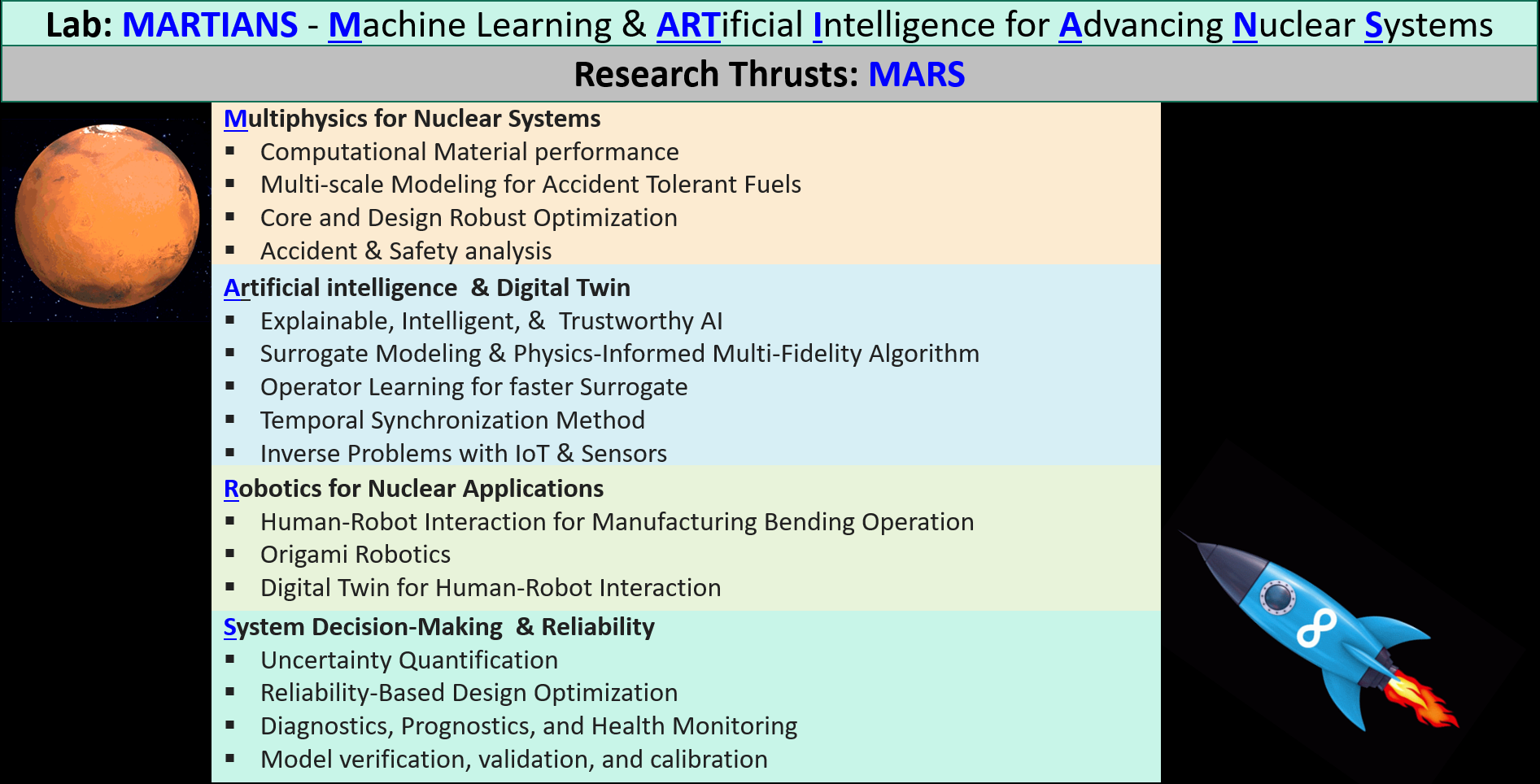
Syed Bahauddin Alam is an Assistant Professor at the University of Illinois Urbana-Champaign (UIUC) in the Nuclear, Plasma & Radiological Engineering department. He holds appointments in the Grainger College of Engineering and the National Center for Supercomputing Applications (NCSA). His research focuses on AI-driven digital twins, uncertainty quantification, and cybersecurity for nuclear systems. Education: B.Sc. in Electrical and Electronics Engineering, Bangladesh University of Engineering and Technology (BUET), 2011 MPhil in Nuclear Energy, University of Cambridge, 2013 PhD in Nuclear Engineering, University of Cambridge, 2018 Research Interests: AI and Digital Twins for Nuclear Energy Multiscale Modeling with Uncertainty Quantification Cybersecurity for Nuclear Systems Sensors and Instrumentation for Reactor Monitoring His work emphasizes explainable AI (XAI), physics-informed machine learning, and robust design optimization. Key contributions include AI-powered digital twins for nuclear systems, which received global media coverage and top 5% Altmetric scores. Awards & Honors: 2025 Dean’s Award for Excellence in Research (UIUC) 2024 Illinois Innovation Award Finalist 2022-2021 Outstanding Teaching Award (Missouri S&T) 2017 Cambridge Philosophical Society Research Studentship Award Grants & Funding: $700,000 U.S. Nuclear Regulatory Commission (NRC) Distinguished Faculty Development Award (2024) $2 million DOE grant for nuclear fuel storage solutions (2023) $500,000 NRC R&D Grant (2024) Labs & Teams: Leads the MARTIANS Lab (Machine Learning and ARTificial Intelligence for Advancing Nuclear Systems), focusing on hybrid data-physics-driven AI and explainable machine learning for nuclear engineering challenges.