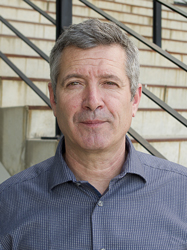
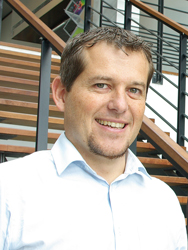
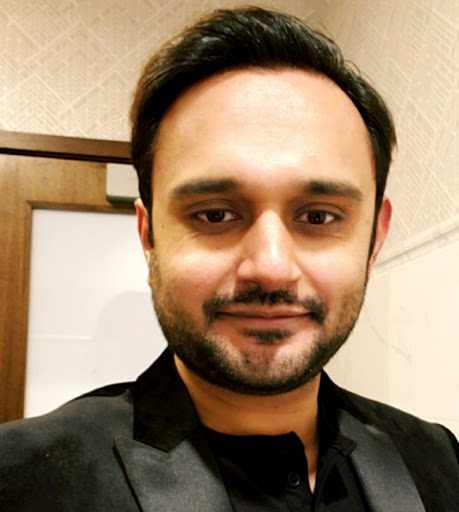
Yue Hu is an Assistant Professor at the University of Waterloo, affiliated with the Faculty of Engineering. His research focuses on Human-Robot Interaction (HRI), assistive robotics, and control systems with a particular emphasis on safety, adaptability, and user experience. Key areas include robot emotional expressions, physical interaction safety, and real-time systems for social robots. He leads the Active and Interactive Robotics Lab , developing solutions for mobility assistance, teleoperation systems, and cybersecurity in robotics. His work integrates biomechanical modeling, computer vision, and machine learning to create robots that better understand and adapt to human needs. Notable projects include real-time pose estimation for mobility support, encrypted network traffic analysis for robot security, and personality shaping in social robots. He emphasizes ethical design and human factors in robotics, conducting studies on refugee education and unanticipated robot actions. Yue Hu holds a full-time faculty position and collaborates with industry and academic partners to advance assistive technologies and interactive systems. His research bridges theoretical foundations with practical applications, aiming to improve quality of life through innovative robotic solutions.
Benjamin Carrion Schaefer is an Assistant Professor of Electrical Engineering at the University of Texas at Dallas (UTD), affiliated with the Erik Jonsson School of Engineering and Computer Science. His research focuses on reconfigurable computing, FPGA-based systems, and hardware security. He holds a PhD in Electrical Engineering from the University of Birmingham, UK (2003). His work emphasizes high-level synthesis (HLS), electronic design automation (EDA), and secure hardware design. Key research interests include FPGA optimization, embedded systems security, and accelerating runtime reconfiguration in CGRAs. His recent publications address challenges in cloud-based split logic synthesis, mitigating side-channel attacks on legacy hardware, and HLS-driven RTL bug detection. He leads research on resource-sharing architectures like MOSAIC and PEPA for performance enhancement in embedded processors. No scientific awards are explicitly listed, but his contributions to hardware-aware design automation highlight his technical expertise. Advising and grant details are not provided in the text. Schaefer is associated with a lab at UTD, though specific lab name or focus areas are not detailed here.
Xing-Dong Yang is an Associate Professor of Computer Science at Simon Fraser University (SFU) and holds an adjunct appointment as Assistant Professor at Dartmouth College. He directs the XDiscovery Lab and focuses on Human-Computer Interaction (HCI), particularly in developing interactive systems for smart everyday objects such as wearables, garments, and appliances. His research emphasizes accessibility for visually impaired users and prototyping tools for non-specialists. He earned his PhD from the University of Alberta, following degrees from the University of Manitoba and University of Alberta. Affiliations: Simon Fraser University (School of Computing Science), Dartmouth College (Adjunct) Education: PhD, Computer Science, University of Alberta MS, Computer Science, University of Alberta BS, Computer Science, University of Manitoba His research explores novel interactive systems, including tactile interfaces for education, assistive technologies for visual impairments, and innovative input methods for wearables. Key projects include MakeBronze (cultural preservation through interactive crafts), AccessibleCircuits (inclusive electronics for blind users), and systems like iWood and MicroFluID that merge materials science with HCI. His work has been recognized with awards such as the Best Paper Award at UIST'19 and multiple Honorable Mentions at CHI and UIST conferences. He advises a dynamic team of PhD and MSc students, emphasizing hands-on prototyping and industry collaborations through internships at companies like Google, Microsoft, and Apple. Yang has secured grants including an NSF CRII grant for device modulation and an NSF CSR Large grant for health-focused earpiece technology. His lab fosters interdisciplinary innovation, bridging computer science with design, engineering, and cultural studies.
Prof. Mohammed Khalid is a Professor in the Department of Electrical and Computer Engineering at the University of Windsor. He specializes in FPGA-based systems, network-on-chip architectures, and hardware acceleration for signal processing applications. His leadership roles include serving on the executive committee of IEEE Canada. His research focuses on optimizing cryptographic hardware, automotive embedded systems, and efficient algorithm implementations on FPGAs. Key contributions include advancements in PUF-based security mechanisms, high-speed elliptic curve processors, and FPGA-accelerated machine learning algorithms. He has led projects in automotive radar systems and AUTOSAR configuration tools. His work emphasizes practical applications of hardware-software co-design principles. Research Highlights : Development of novel FPGA architectures for real-time signal processing Innovative approaches to resource-efficient cryptographic hardware Pioneering work on hybrid NoC architectures for multi-FPGA systems Awards : IEEE Windsor Section Award (2019) for group leadership Best Student Paper Award (2024) for supervised research by Mohit Sharma Prof. Khalid's 150+ publications span FPGA design methodologies, adaptive signal processing, and embedded systems security. His research group collaborates with industry partners to advance automotive electronics and IoT applications.
James S. Plank is a Professor in the Department of Electrical Engineering and Computer Science at the University of Tennessee. He holds a PhD from Princeton University (1993) and has been at UT since 1993. His research focuses on fault-tolerant computing, erasure coding, distributed systems, and neuromorphic computing. He teaches programming courses from introductory to graduate levels and has won multiple teaching awards, including seven departmental awards, the College of Arts and Sciences Senior Faculty Teaching Award, and the Chancellor’s Citation for Excellence in Teaching. Plank is a member of the IEEE Computer Society and has contributed to open-source software like JGraph and Jerasure. His recent research emphasizes neuromorphic computing systems, including projects like NeuroPong and RISP Neuroprocessor. He collaborates with industry and academia on storage systems, checkpointing, and hardware-software co-design. Plank advises numerous graduate and undergraduate students, evident in his annual summer student gallery. He has secured grants such as the NSF-funded "Ground-roaming autonomous neuromorphic targeter" (2020). His lab, Neuromorphic UT, explores applications in control systems, vision, and robotics. Plank’s contributions to erasure coding and storage reliability include seminal works like the RAID-6 Liberation Code and SD codes for mixed failure modes.
Dr. Jordan Shropshire is the Lawrence Minto Sylvestre Endowed Chair in Computing and a Professor in the Information Systems and Technology Department at the University of South Alabama's School of Computing. His academic journey includes a Ph.D. in Management Information Systems from Mississippi State University (2008) and a B.S. in Business Administration from the University of Florida (2004). Dr. Shropshire's research focuses on cybersecurity, data center management, cloud computing, IoT ecosystems, and systems architecture. His work addresses critical challenges such as post-quantum cryptography, embedded system vulnerabilities, and compliance frameworks for autonomous systems. He has also contributed to studies on developer platform risks, real-time operating system security, and AI-driven systems hardening. Education: Ph.D. – Management Information Systems, Mississippi State University, 2008 B.S. – Business Administration, University of Florida, 2004 His teaching career spans roles at the University of South Alabama (2008–present) and Georgia Southern University, where he held tenure (2008–2014). His publications emphasize practical cybersecurity solutions, including tools for drone compliance and frameworks for secure cloud infrastructure. He has also explored behavioral aspects of security policy adherence and IT professional retention. Dr. Shropshire's work often bridges theoretical research and real-world implementation, with a focus on mitigating emerging threats in cloud systems, IoT, and embedded devices. His research has been supported by grants such as the NSF TWC Small Grant for hypervisor security detection techniques.
MA Dong is an Assistant Professor at the School of Computing and Information Systems (SCIS) at Singapore Management University (SMU). He holds a PhD from the University of New South Wales (2020), and was a postdoctoral researcher at the University of Cambridge. His research focuses on mobile computing, wearable-based human sensing systems, and health monitoring using embedded machine learning. He is also a visiting researcher at the University of Cambridge since April 2025 and will join as an Associate Professor there in 2026. Education: PhD (UNSW), MEng and BEng (Central South University). Research Interests: Wearable systems for health monitoring (e.g., respiratory rate tracking, gait analysis), robust physiological sensing, tiny machine learning on embedded devices, and human-computer interaction through earables. His work emphasizes practical implementations of wearable technology for real-world scenarios, such as smart earbuds for authentication, health tracking, and activity sensing. Publications: Over 50+ peer-reviewed articles in top venues like MobiCom, PerCom, CHI, and Nature journals. Key topics include earable technology, ECG-text multimodal learning, and energy-efficient sensing systems. Awards: Google South Asia Research Award (2024), Mark Weiser Best Paper Awards (2024, 2025), and EPFL Engineering Ph.D. Summit recognition. Students: Advising PhD candidates Xiao Ma, PHAM Hung Manh, and Changshuo Hu. Also hosts visiting scholars from Shandong University and Beijing Institute of Technology.
Professor Roger Woods is a prominent academic and researcher affiliated with Queen's University Belfast's School of Electronics, Electrical Engineering and Computer Science, part of the Faculty of Engineering and Physical Sciences. He holds the rank of Professor and is actively involved in advancing research and innovation in embedded systems, FPGA technologies, and AI-driven solutions for industry challenges. His work emphasizes practical applications through close collaboration with industry partners. His research interests span novel computing architectures (e.g., multi-precision and edge computing), FPGA-based systems for data analytics, and secure IoT communication protocols. Notably, he co-founded and serves as Chief Scientist of Analytics Engines Ltd, a data analytics company. He has led significant initiatives like the Kelvin-2 Tier-4 High Performance Computing centre and contributed to semiconductor reviews through EFutures. Professor Woods has been recognized with prestigious awards, including the IET Northern Ireland Engineering Excellence Award and IEEE Fellowship. He has supervised numerous PhD students focusing on topics like FPGA-based image processing, secure wireless communications, and embedded AI platforms. His publications reflect interdisciplinary strengths in hardware acceleration, physical layer security, and structural health monitoring. Key Collaborations : Projects with industry and institutions on semiconductor design, bridge monitoring, and AI hardware. Grants : Principal Investigator for multiple research grants, including Core Equipment Awards for advanced instrumentation. Labs/Teams : Active in Queen's Advanced MicroEngineering Centre and the EFutures network.
Dr. David Laverty is a Reader at Queen’s University Belfast in the School of Electronics, Electrical Engineering and Computer Science. His research focuses on Smart Grids, Cyber Security of Critical Infrastructure, and Power System Instrumentation. He is the founder of the OpenPMU project, an open-source Phasor Measurement Unit, and has contributed to advancements in precision time transfer and software-defined networking in power systems. Dr. Laverty has secured over £3M in research funding and holds an h-index of 22 with over 100 publications. He actively supervises PhD students in areas such as smart grid telecommunications, distributed energy resources, and secure information systems. His work aligns with UN Sustainable Development Goals, particularly in clean energy and infrastructure. Awards include the 2017 Premium Award for Best Paper in IET Generation, Transmission & Distribution and the 2022 BEST PAPER AWARD. His research projects, such as the Fusion/Electricity Exchange DAC, address challenges in smart grid infrastructure and cyber-physical systems. Dr. Laverty also engages in public outreach through initiatives like the Electric DeLorean project.
Christian Haubelt is a Professor at the Institute of Computer and Network Engineering, School of Engineering, University of Rostock, Germany. He is actively engaged in research and teaching in the areas of embedded and cyber-physical systems, smart implants, and IoT. His work is supported by multiple national and international projects including ELAINE (SFB 1270), SmILE (EU), 6G-Health (BMBF), and GenerIoT (BMBF). His research interests include: Embedded and Cyber-Physical Systems Smart Sensors and Smart Implants System-Level Design Methodologies SystemC-based Modeling and Verification Design Space Exploration and Multi-Objective Optimization Industrial Internet of Things and 6G for Healthcare His recent publications focus on real-time communication protocols, 5G/6G localization, smart implants, and secure IoT systems. Trends show a strong emphasis on integrating embedded systems with medical and industrial applications, particularly leveraging TSN, MQTT-SN, and OPC UA for reliable and secure communication. His work bridges theoretical modeling with practical implementation in safety-critical domains. Christian Haubelt has supervised multiple researchers including Michael Nast, Benjamin Rother, Nico Kalis, and Nico Graumüller. He leads several funded research projects such as ELAINE, SmILE, 6G-Health, and SUSTAIN, which focus on smart implants, secure IoT, and next-generation medical systems. These projects involve collaboration with DFG, EU, and BMBF. He is involved in the following research labs and teams: Embedded Systems and Cyber-Physical Systems Group Smart Implants Research Team (SmILE, ELAINE) 6G-Health Localization Team Industrial IoT Security (SUSTAIN, CargoAssist)
Dr. Liang (Leon) Dong is an Associate Professor in the Department of Electrical and Computer Engineering at Baylor University, where he conducts research and teaches in the areas of signal processing, wireless communications, and artificial intelligence. He leads the Laboratory of Signal Processing, Communications, and Artificial Intelligence, fostering innovation in next-generation communication systems, IoT, and AI-driven applications. PhD, Electrical & Computer Engineering, The University of Texas at Austin (2002) MS, Electrical & Computer Engineering, The University of Texas at Austin (1998) BS, Applied Physics with Minor in Computer Engineering, Shanghai Jiao Tong University (1996) Dr. Dong's research focuses on advancing digital signal processing and wireless communications, with strong emphasis on artificial intelligence applications. His work spans NextG wireless systems , IoT and smart cities , cyber-physical system security , and AI in healthcare and industrial automation . He applies deep learning to domains such as autonomous driving and drug discovery, and investigates energy-efficient, secure, and reliable communication protocols. The recent publications highlight a strong trend toward integrating AI into traditional signal processing and communications. Topics include mRNA vaccine stability prediction , smart city infrastructures , secure cyber-physical systems , and deep learning for biomedical and industrial applications . His work bridges theoretical innovation with real-world impact in defense, transportation, and public health. Dr. Dong has earned recognition as a Senior Member of IEEE and a Member of the American Physical Society. He has also served as Faculty Advisor for Baylor University's InterVarsity chapter. Senior Member, Institute of Electrical and Electronics Engineers (IEEE) Member, American Physical Society (APS) He has successfully advised numerous graduate and undergraduate students, many of whom now hold academic and industry positions at institutions like Stanford, Intel, NASA, L3Harris, and Cummins. His research is generously supported by Baylor's VP for Research, the National Science Foundation, NASA, the Department of Defense (TARDEC), the Michigan Department of Transportation, and industry leaders including Intel, L3Harris, ExxonMobil, and Denso. He actively mentors students through research assistantships and senior design projects. Dr. Dong leads the Laboratory of Signal Processing, Communications, and Artificial Intelligence, which provides a collaborative environment for advancing research in signal processing, communications, and AI. The lab supports graduate and post-doctoral researchers and offers opportunities for undergraduate involvement in AI programming, circuit design, and embedded systems.
Włodzimierz Kasprzak is a Professor at the Institute of Control and Computation Engineering, Faculty of Electronics and Information Technology, Warsaw University of Technology. His research focuses on computer vision, robotics, human-computer interaction, and machine learning. He has contributed to advancements in human action classification, skeleton-based feature analysis, and multimodal interface design. Research Highlights: Development of lightweight classification models for human actions in video using skeleton-based features. Advances in multi-stream fusion techniques for image and video analysis. Design of embodied agent systems for cybersecurity event visualization and control. Awards and Recognition: 2024: Individual First Class Rector's Award for Scientific Achievements (2022-2023) 2021: Medal of the Commission of National Education 2011: Golden Cross of Merit His work integrates theoretical contributions with practical applications in robotics, surveillance systems, and human-centered technologies.
Professor Jean-Luc Dugelay is a faculty member at EURECOM's Digital Security Department, specializing in facial image processing, image forensics, and biometrics. He holds a PhD in Image Processing from the University of Rennes (1992) and is a Fellow of IEEE (2012) and IAPR (2018). His research focuses on security applications like deepfake detection, privacy protection, and multi-spectral imaging. He leads projects on UAV surveillance, cross-spectrum face recognition, and deepfake countermeasures. Education: PhD in Image Processing (1992, University of Rennes), HDR (2013, University of Nice). Notable projects include HEIMDALL (deepfake detection), CONVERGE (transport security), and ImVerif (image forensics). His work on biometric systems and digital watermarking has been recognized with awards like the SEE Blondel Medal (2010). Research interests span facial analysis, video surveillance, and thermal imaging. He has advised students on topics like age estimation via GANs and cross-spectrum face recognition. Key publications include work on deepfake detection (IPAS 2025), thermal-to-visible face conversion, and event-based vision systems.
Raphaël Troncy is an Assistant Professor at EURECOM's Data Science Department, specializing in Semantic Web technologies, Knowledge Graphs, and Natural Language Understanding. He teaches courses like 'Human-computer interaction for the Web' and 'Semantic Web technologies.' His research focuses on semantic data integration, knowledge graph applications, and recommender systems. Notable projects include DOREMUS (musical work graph), entity2rec (knowledge graph-based recommendations), and 3cixty (city exploration knowledge bases). He actively contributes to semantic web challenges and conferences, winning multiple awards including the 2018 Best Poster Award at ESWC and 2015 First Prize in the Semantic Web Challenge. Troncy's work spans cultural heritage digitization (e.g., Odeuropa olfactory data modeling), cybersecurity anomaly detection (NORIA-O ontology), and interdisciplinary projects like SILKNOW's silk textile knowledge graph. He leads development of tools like DAGOBAH for semantic table interpretation and KG Explorer for knowledge graph exploration. Education: Not explicitly stated in text Labs/Teams: Active in EURECOM's Data Science group, collaborating on projects involving knowledge graphs, AI, and semantic technologies
Rohan Tabish is an Assistant Professor in the Department of Computer Science at the University of Illinois at Urbana-Champaign (UIUC), specializing in real-time systems, embedded systems, and cybersecurity. His work focuses on developing predictable and secure software frameworks for multi-core and heterogeneous architectures. Education: Ph.D. in Computer Science and Engineering Master's in Computer Science and Engineering B.Sc. in Electrical Engineering with Telecommunications specialization Research Interests: Real-Time Task Scheduling Fault Tolerance in Embedded Systems Inter-Core Communication Frameworks Memory Bandwidth Management Cyber-Physical Systems Scratchpad-Centric Operating Systems Awards: Outstanding Paper & Best Paper Award (RTSS 2020) Outstanding Paper & Best Student Paper Award (RTSS 2020) Best Presentation Award (RTAS 2016) Nominated for Best Paper Award (ECRTS 2019) Teaching: CS 431: Embedded Systems (Instructor, 2015-2018) CS 424: Real-Time Systems (Instructor, 2019) CS 438: Communication Networks (TA, 2019) Labs/Teams: Active member of the Real-Time Systems Lab (RTSL) at UIUC, focusing on safety-critical embedded systems and real-time software frameworks.